Q&A with Rebecca Chamian Ribaudo, Crossing Division Street
/
This book tells the overlooked American story of Italian immigrants, Black American migrants and generations to follow who lived cheek to jowl in Chicago’s mixed-race neighborhood called Little Sicily, Little Hell and later, Cabrini-Green, captured in pop culture on television and film in Good Times, Candyman, Hoop Dreams and the like. What drew you to the neighborhood of Cabrini-Green in Chicago for the setting of this book?
When I first moved to Chicago more than thirty years ago and saw the towers of Cabrini-Green, I wanted to understand the history. What was the story behind this neighborhood defined by massive, sixteen and nineteen-story high-rises with fenced-in hallways where children could be seen looking down upon the world? Who was Cabrini? And Green? When I looked on a map of the area and saw “Little Sicily,” I began to research, and the story came from there. This was all at a time in our nation when individual and group identity were becoming increasingly inseparable. I wanted to understand how a neighborhood of Italian immigrants and Black American migrants lived side by side, negotiating their identities in the tumult of a changing America, through segregation, poverty, riots, wars, the civil rights era, and a modern-day project rooted in the hope of a great society.
What is Cabrini-Green like today and how is it like other similar housing developments in major cities in America? How have residents been displaced, if at all, due to gentrification?
Cabrini-Green is an increasingly gentrified neighborhood with a Target in the middle and Whole Foods nearby. The public housing model of concentrated populations living in towers was ultimately deemed a failure due to many factors, including neglect, de facto segregation, and violence. The towers were taken down between 1995 and 2011. At its peak, Cabrini had 15,000 residents. Today, all that is left of the Cabrini-Green housing projects are 140 of the original Row House units. Two schools remain as well as a couple of churches.
In terms of displacement, the Row Houses were completed in 1942 to house war workers, which displaced the Sicilians who lived there in tenements. Each group displaced the one that came before, before Cabrini was complete in 1962, the neighborhood was predominantly Sicilian, and before that, Swedish and German, and before that, Irish. Historically referred to as the slums, the Row Houses symbolized something greater for Chicago. Today, the neighborhood is mixed income with many newly developed buildings. Those displaced were moved to other neighborhoods with Section 8 housing or to other public housing communities.
Cabrin’s towers represented an experiment that included the South Side’s Robert Taylor Homes, nearly twice Cabrini’s population, similar high-rise developments along Chicago’s State Street Corridor and the West Side, as well as developments in other cities, including Pruitt-Igoe in St. Louis. Today, policies favor low- and mid-rise, mixed-income developments, housing vouchers, and more integrated neighborhoods.
Dubbed a modern Atlas Shrugged meets The Human Stain, this book inspires conversations around issues of individual vs. group identity, assimilation vs. multiculturalism and self-determination vs. inherited destiny. How have Philip Roth and Ayn Rand influenced your writings?
Both Roth and Rand tackled moral questions around individual and collective identity through fiction in ways that influenced my work in different ways. Ayn Rand was able to bring millions of readers into her theory of Objectivism and views on individual versus collective identity through her well-known novels, Atlas Shrugged and The Fountainhead, as well as works such as We the Living and Anthem. My novel directly grapples with Rand’s ideas, putting them to the test in areas that she did not take on in her fiction, including motherhood, children, and the smallest collective there is, family.
By contrast, Roth was less of a philosopher and more of a literary writer; his worldview is not laid out as a comprehensive philosophy like Rand’s Objectivism. Through compelling prose, Roth was able to tackle issues of identity through individual situations that readers could imagine themselves in. During my years of study, Roth was regularly cited as the gold standard, influencing how I think of fiction not only as entertainment but as a means of asking readers to grapple with the complexity of real-life characters in real-world situations. Most relevant to my work, The Human Stain captures the complexity of racial identity and the choices we make to hide or use our heritage for advancement or survival.
Crossing Division Street, with a strong female protagonist at the heart of a multigenerational story whose core tension is philosophical, sits between the Roth and Rand approaches to literature.
With this story of interracial adoption, how did the issues of race, ethnicity, oppression, religion and privilege come into play?
Not everyone agrees that what is right for our society is right for their own community, family, or home. While in theory most support integration unconditionally on a societal level, when it comes to family formation and transracial adoption, it’s a different matter altogether. Questions arise around a child’s loss of heritage, a parent’s ability to relate to a child of a different background, and whether parents of a different background can prepare a child for issues they may face due to their race, ethnicity, or religion, including discrimination. Underneath these questions are narratives around oppression, privilege, and who has the right to parent children based on the groups to which they belong. Terms such as “cultural genocide” are used to describe the erasure of culture through adoption. In Crossing Division Street, the protagonist, Sidone, becomes entangled in high-profile transracial adoption trial and is accused of cultural incompetence. Her principles, the ones that have guided her life, reject using race as a proxy for worth under any circumstance. Yet, if she agrees in this one instance to compromise her values, she could win the trial. What’s at stake is her career, her family’s deepest secret, a little girl, and the only man she’s ever loved.
Which part of the book or character was the most difficult and/or moving to write and why?
There is a scene near the end of the novel in which the main character’s father, Salvatore, relives a painful part of his past. He is recounting a lifetime of struggle that his daughter never knew. He goes back to the Korean War where his unit is attacked and he’s left alone, bleeding to death in the snow, surrounded by the enemy. Going through that horror, the Battle of Chosin Reservoir, was difficult. Just the research alone, how those men—no, those boys—were ambushed and fought devastating battles in the freezing cold yet never surrendered. All for their fellow Marines and for their country. And we have this man recounting what’s called the Forgotten War, and then something he finds out years after the war ends that changes his entire life, something unbearable to discover as a father. To see his daughter, Sidone, to imagine her watching her father, her papa, what she is going through as he reveals truths that become hers to own and carry forward. It’s clear that the burden of knowledge is being shifted onto her. That was a hard scene. A lifetime of secrets, betrayals, and loyalties from father to daughter. Chapter 46. Your readers will understand when the get there.
Early on in the book, there are two scenes historically connected to the victimization of Black Americans: the 1891 lynching and the 1907 swing scene. Why did you focus on Sicilians here?
The lynching of eleven Sicilians in 1891, one of the largest mass lynchings in U.S. history, is not well known, but is an important part of America’s history, a time when discrimination against Italians, while not comparable to Black Americans, was prevalent and color lines not distinct. This discrimination carried over into the neighborhoods of northern cities as “dark” Sicilian immigrants replaced groups such as the Irish, Germans, and Swedes. The 1907 swing scene captures the color-based violence against the Sicilians in a changing Chicago neighborhood. The two scenes were included as important to understanding the dynamic of a country, and then a mixed neighborhood, where color lines were not black and white, but relative to one another. And the scenes also help capture why color didn’t matter to Sidone’s great-grandfather, Maurizio, a witness to the 1891 lynchings. Maurizio finds common cause with and supports his black neighbors, while his son, Nico, responds differently. After seeing his baby sister pushed off a swing by Swedish girls, Nico does all he can to separate himself from his Sicilian heritage and black neighbors, determined to define his and family’s place in America as white.
Maurizio and his son Nico Natali experience America in very different ways. Explain the first vs. second generation tension between the two.
Before I answer, a caveat in this novel, as true to life, each individual responds differently to their circumstances, so this answer does not speak to how all first and second generations in America respond—it’s a story of one father and one son in late-1800s / early-1900s America.
In Crossing Division Street, Sidone’s immigrant great-grandparents, Maurizio and Carlotta, are first generation. Maurizio is a migrant worker, and both he and Carlotta work alongside Black Americans on a Louisiana sugarcane plantation. They have escaped poverty and violence in Sicily and come to America with the hope of a better life. When they migrate to Chicago, to Little Sicily, they work long hours in difficult conditions to feed their growing family. Carlotta works in a garment factory while Maurizio is a ragman who ascends to becoming a street sweeper. They are grateful for the opportunity, and sacrifice for the next generation.
The second generation is Nico Natali, Maurizio’s son. Nico never experienced America’s South, and so instead of having empathy for Black Americans, or feeling any sense of commonality, he becomes resentful. When Nico is discriminated against by Swedish neighbors, he realizes it’s because of his dark skin. He then starts to separate himself from the neighborhood’s black population, including from an older woman who has been like a mother to him.
Nico also resents America, seeing it as a place inhospitable to Italians and having an economy to which he doesn’t have access. As a result, Nico turns away from America in many ways, romanticizing Italy as his true homeland and refusing to take over his father’s job of street sweeping. Instead, Nico joins the mafia to make “real” money in a white society that doesn’t accept him as an equal.
And so, we have this tension between the first-generation immigrant who is grateful for America and sees himself as sharing a common bond with Black Americans, and the second generation who resents America, chooses violent and dishonest work, and openly discriminates in an effort separate himself as different and superior. It is survival in many ways, but also the result of not having known the struggle.
In 1965, the network premiere of Judgment at Nuremberg was interrupted by footage from Bloody Sunday. Explain this scene in the book as it relates to America and the overall message of the novel?
This was something true that happened in 1965, during the ABC network premiere of Judgment at Nuremberg, a film about the trial of German judges who had enforced Nazi race laws. The film is interrupted by scenes from what became known as Bloody Sunday. In Selma, Alabama, six hundred protesters marching against discrimination in voting practices were attacked by state troopers with clubs, bullwhips, and tear gas. An estimated forty-eight million people were watching the Judgment at Nuremberg film when ABC cut to the Selma footage. The juxtaposition was stark, and both viewers and commentators drew parallels immediately.
In the novel, Sidone is a young girl watching the television with her parents. Her father Salvatore wants her to watch Judgment at Nuremberg so that she can start to understand history and the tendencies of man. Her mother Rosa thinks history is a waste of time and believes the family should focus on current civil rights issues. As they sit down, Rosa presses Sidone to tell her father what is going on in Alabama. And then, the film is interrupted. We have this tension between the past and the present, and Sidone is in the middle. This where Sidone sits in the novel, between the past and present, and within the conflicts and tendencies that endure.
The hospital scene is a turning point for all of the characters involved. Explain why what happened in the hospital is so pivotal to the arc of these characters and direction of the book.
Without giving too much away, the hospital scene forces four of the main characters to make decisions that challenge their values and what I would also call their moral identity—the character and essence of who they are and believe themselves to be. That latter part is important, the self-conception of being a morally correct and good person. What happens in this scene changes their lives forever, both as they relate to one another and how they live with themselves. We have these times in our lives when something happens, times we must make a choice that either betrays or stays true to our values and sense of self. It’s a threshold moment that changes all that comes afterward relationships, self-worth, who we choose to become and to love, what we believe, and what we understand to be or justify as moral and true. This scene is that moment for these characters. As readers, we go through their struggles, there is no easy answer, and one person’s commandment may be another’s unforgivable sin.
Religion and God are present throughout the novel without it being an overtly religious or dogmatic book. Can you explain the role of religion in the novel?
We each live by a moral code, whether it’s written in scripture, prescribed by a societal framework, or held quietly within as conscience. The novel, moving throughout America’s history, cannot adequately portray the choices of characters without including the moral frameworks operating around them. As characters navigate choices within and outside God and religion, those who have not earnestly interrogated their beliefs are forced to do so. And this is really the core tension at the heart of the novel. The main character, Sidone, after a life-changing event, decides to put her group identities behind her in favor of pure Randian, rationalistic individualism. She leaves racial, ethnic, and even her religious group behind, seeing herself as independent from not only her heritage, but from anything higher. In the end, she ends up embodying this core tension can pure individualism as a moral code ever comport with a sense of shared humanity, or even the tenet that all men are created equal.
The Korean War scene is powerful on many levels. Explain its purpose and how it relates to the larger themes of the book.
The Korean War was a fight against the spread of communism. One can dispute the true intent of any war, but at the time, there was a battle between communism and the free world, so we have that tension underlying the scene and the novel—the individual and individual freedoms versus total equality via the collective, the group.
In this scene, Sidone’s father Salvatore recounts his time as a Marine in Korea. His fellow Marine, Jemmy, is a Black American from the South in an era of Jim Crow segregation—buses, schools, restaurants, theaters, much of daily life. Living a segregated life without equal treatment at home, Jemmy is integrated into a white unit in a war against the promise of total equality for all. In trying to reconcile all of this, there’s a part of the scene where Jemmy says, “We got liberty without equality. Blacks ain’t yet equal in America, but at least we got a chance at it. Now equality without liberty, there ain’t no hope for any of us with that.”
So, this one scene raises questions around liberty and equality that also show up throughout the novel. We also have idealism and narratives around the war, what each side represents, in tension with the reality on the ground. That is a theme not only in war, but in our lives and throughout the novel.
Will your next book focus on more of America’s little-known stories that aren’t told in our history books?
I am drawn to the messy stories of individuals and how they navigate a country that’s still very much an experiment, 250 years in. So yes, my next book will explore similar themes through America’s little-known stories, but through a story that starts in another country. In Crossing Division Street, the characters are here, navigating America. I’m working on a novel that pulls that tension outside the U.S., to a history that begins in the Mideast and crosses into America. I am drawn to stories that reveal truths about the human condition, and stories that cross boundaries, so this next story will ask some difficult questions about the borders we erect in our narratives, not only about our fellow Americans, but about those beyond our shores. Crossing Division Street is one novel, but it is also a theme for my writings. I have some other ideas in this spirit that I am working on as well, but the one that crosses national boundaries is probably the novel I will finish next.
Where can readers find you and learn more about your book?
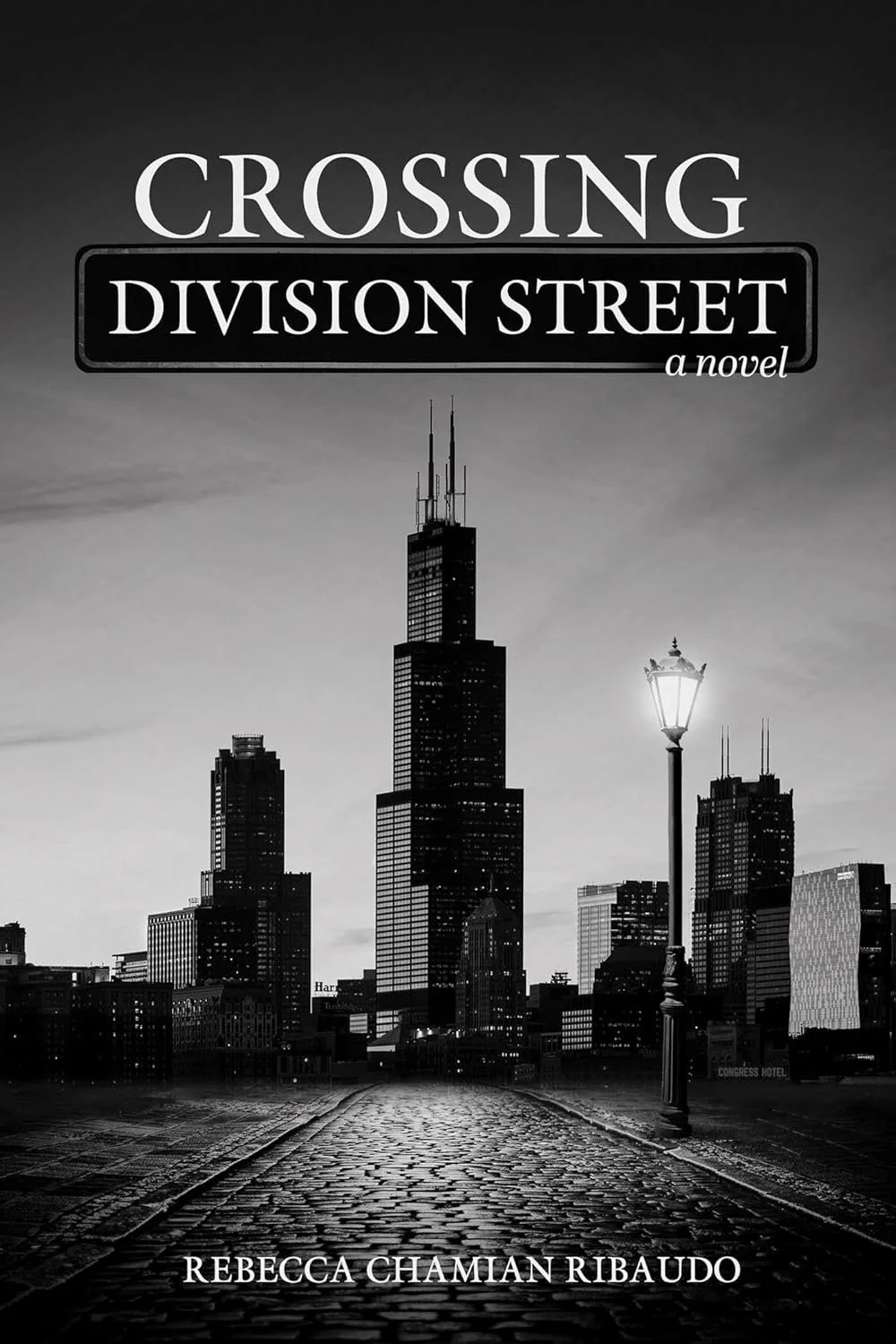
Crossing Division Street is available at Amazon, Barnes & Noble, Bookshop.org, and wherever books are sold! For more information, readers can visit crossingdivisionstreet.com and follow on Instagram @crossingdivisionstreet
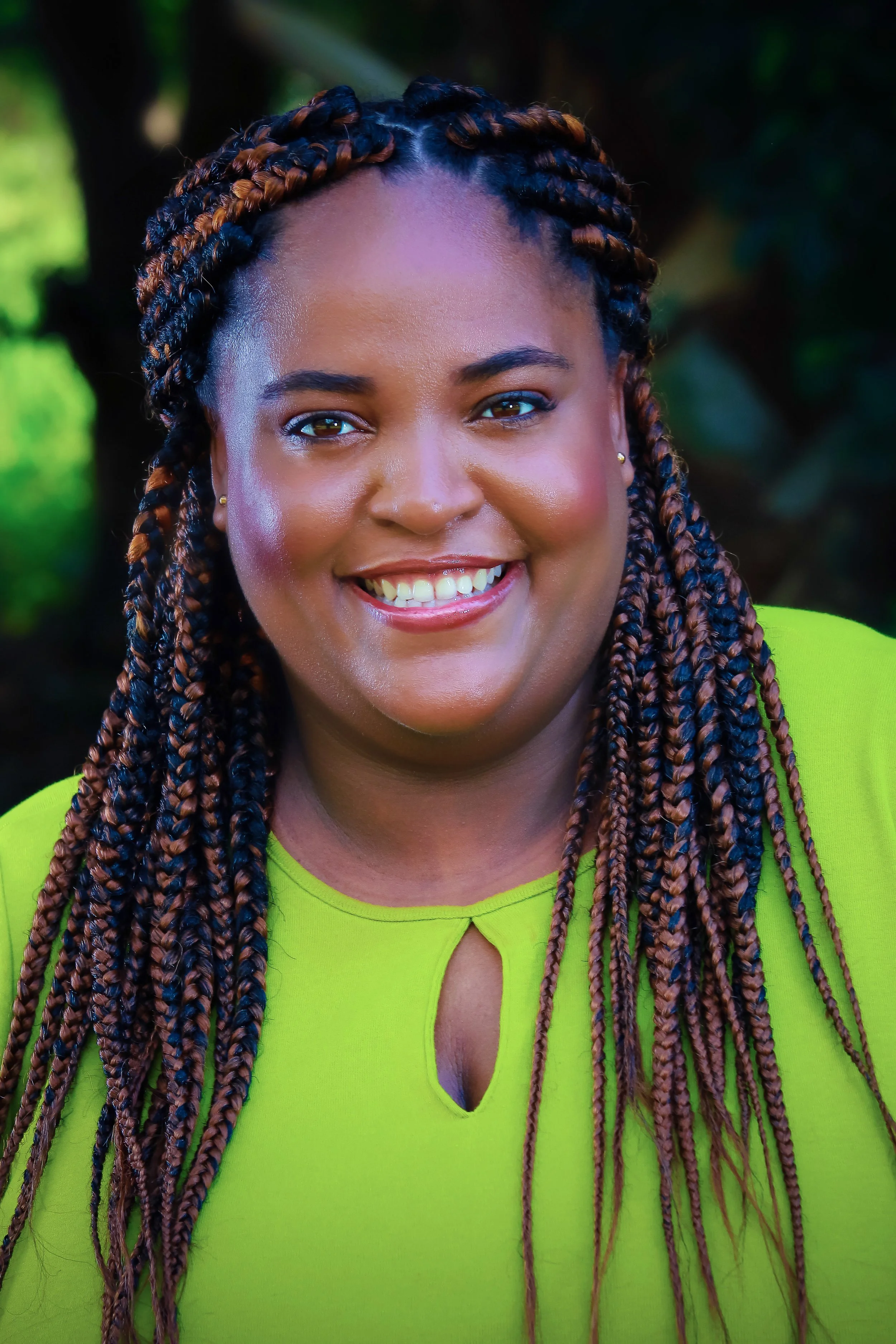
Rebecca Chamian Ribaudo is a Chicago-based author, nonprofit leader, free-speech advocate and mother. After a career as a marketing executive and consultant, she is authoring novels for independent thinkers. She was recently elected by and served all Harvard alumni as an Elected Director and continues to serve on select committees. She also leads and advises organizations committed to free speech, civil rights and women’s freedoms globally. She lives in downtown Chicago with her husband and two daughters – one in college and one in the U.S. Navy.