Q & A with author Bryan Miller

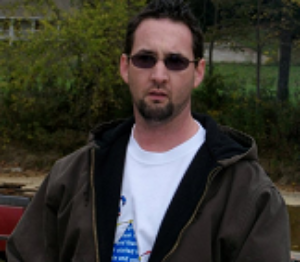
Bryan Miller, currently living in Kentucky as a clinical counselor, has recently published a science fiction novel. I'm pleased to have him stop by and chat about writing and his debut "Kyrathaba Rising". 

What inspired you to become an author?

I've always been a creative person. I write computer software, song
lyrics, etc. And I've always been an avid reader, especially of
science- and fantasy-fiction. I recently had an extended period of
leave from work, and one of the things I decided to use my extra
free-time on was writing a book.

Now that you have your first novel under your belt, how do you feel about the writing process? Was it everything you expected?

Writing is like a serious exercise regime at a gym. It's arduous, but you derive a sense of pleasure and accomplishment from it. I wrote Kyrathaba Rising in about six weeks' time. To do that, I had to really
discipline myself to work on it daily, whether I felt like it or not. That's not to say that I found it unenjoyable. Overall, I found it intensely satisfying, especially those moments where my book was
approved and made available for sale on various sites.

What was the hardest part of writing your book?

I'm a seat-of-the-pants author, so coming up with a story arc wasn't difficult. The hard part for me, is disciplining myself to spend the actual time at the keyboard. I imagine I'm not the only author of whom this is true.

Your first novel, Kyrthaba Rising, has such an interesting name. How did you come up with it? What inspired the theme of it?

In college, a bunch of us played Dungeons & Dragons. We were into "world-building", and the setting I designed as a "Dungeon Master" for my players was a world named "Kyrathaba". The book, "Kyrathaba Rising" takes a slightly different angle on how this "world" came into being, one I hope readers enjoy. The theme was inspired by my love of science-fiction, fantasy-fiction and my history of playing role-playing games.

As a science fiction author, are there any authors out there that have inspired or influenced your writing?

Asimov. Heinlein. Clarke. Those are the Big Three. Also, Neal Asher, Neal Stephenson, David Baxter, David Brin, and Gregory Benford.

If you had to do it all over again, would you change anything in your latest book?

Not really. I've had a minority of reviewers complain about it ending on a cliffhanger. But hey, that's intentional. I wanted to "leave 'em hanging", eager for the sequel.

Did you learn anything from writing your book and what was it?

My respect for authors in general increased, as I personally experienced the sort of self-discipline required to produce a novel-length work. I also learned a few things about lasers, composite
materials, androids, etc., as I researched for those elements that were in my novel.

Do you have any advice for other writers?

Yes. Show. Don't tell. Author Nat Russo has a great article expounding
upon this: http://www.nat-russo.com/2013/10/eliminate-unnecessary-stage-directions.html


Q & A with Author Paul A Bussard

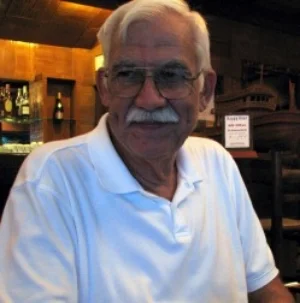
After years of being an avid fan of Science Fiction, author Paul A. Bussard decided to write his own stories. I am pleased to have him stop by and chat about his work and being an author.

When did you know you wanted to become an author?

I started writing in ’93, but quickly discovered that I didn't have the skills needed to write publishable fiction. The first story I wrote was full of every kind of error made by amateur writers. It took another ten years for me to acquire the skills and polish them to the point I felt I could write good fiction. By then, I had a story in my head that wanted to be told, and I wanted to tell it. Voila, Stinger Stars.
 
Now that you have published your first novel, was it everything you had hoped?

Absolutely. It was fun to write—a lot of work, but fun. I liked the story so much, I was determined to get it published so I could share it. Okay, that sounds conceited, but I’ll leave it up to readers whether I’m justly proud or not. BTW—the cover is way beyond what I hoped for.
 
What inspired you to write science fiction? 

I started reading science fiction 50+ years ago with Jules Verne’s 20,000 Leagues Under The Sea and got hooked. Once hooked, I read everything I could, particularly by Heinlein, Asimov, Pohl, and other primarily hard science fiction writers. Reading those wonderful stories planted a lot of ideas in my mind, making me ask: what if? That question is the basis of almost every science fiction story written.
 
How did you come up with the title? 

Stinger Star is the common name for the critter I invented, Pyramis nana (dwarf pyramid). The star has a pyramid-shaped body and looks somewhat like a four-armed starfish, only more three-dimensional. The similarity ends there, though. The appendages are not arms—they’re hollow with a digestive system inside, and there are three eyes and a beak at the tip of each one. Yes, that means they have four heads, each one looking like the one on the cover of my book. The “stinger” part comes from the way they defend themselves. They don’t actually sting—they bite and then inject the contents of their stomachs into the wound. Yikes!
 
What was the hardest part of writing your book? 

The ending was difficult—not only the writing part, but the thought of not writing (about Stinger Stars) any more. I had become very fond of my characters, and in particular, my critters. They had only just begun to show their stuff. I want very much to write a sequel, but only if it does justice to Stinger Stars. There are way too many sequels out there that are second in quality as well as sequence.
 
Did you learn anything from writing your book and what was it? 

I’ve heard other writers say it, and I have to agree—characters can take over a story and move it in directions you never thought of. That’s not necessarily bad, but it plays havoc with a story outline, if you were working from one. My characters, especially the stars, made me change the story line several times.
 
What books have most influenced your life?

Heinlein’s The Moon Is A Harsh Mistress had a huge influence on me. I even took a post-grad course in Artificial Intelligence, because the idea of computers becoming self-aware fascinated me. I suspect that I may live to see the day it actually happens (provided I and the world behave ourselves).
 
Who is your favorite author and what is it about their work that resonates with you?

I have to tap Robert A. Heinlein again. He was a principled man and taught—even preached—his philosophy in his writing. Stinger Stars contains a lot of subtle and not-so-subtle messages that reflect my philosophy. Man is not immortal, but memes will endure as long as there are minds to ponder them. Leave your mark. Write!
 
Have you ever hated something you wrote? 

Hate, no. Dislike, yes. That happens all the time. The “somethings” just never make it into a final draft. Some of my early writing was dreadful. It still happens, but it’s easy to get rid of the evidence, nowadays. Click!
 
Do you have any advice for other writers? 

Persevere! That advice applies to a lot of endeavors, but the process of writing, getting published, and sold is loaded with roadblocks that discourage many a potential writer. If you've got a story in you, get it out, and don’t stop until you have!


For more information on Paul, you connect with him:
http://www.pabwriter.com/
https://www.facebook.com/paul.bussard.9

Q & A with Author T Wynn

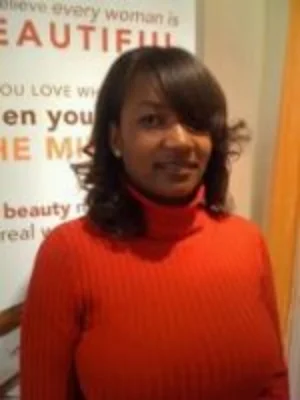
T Wynn, an avid reader, currently lives in Georgia with her husband and children. As an author who currently has two published books under her belt, I'm pleased to have her stop by and chat her work and being an author.

What inspired you to write your first book?
 
I have always wanted to write a book, but in the beginning I was not sure of what I should write about.  So, I finally decided to write about something that I knew about, which was marriage because in this day and time the divorce statics are so high, and I felt that I had great advice to give.

How did you come up with the title?
 
I had a different title for my book in the beginning, but when I was writing the chapter on finance, and I was discussing wedding expenses, I came up with the quote "make sure your love is bigger than your wedding!".  Then I thought about it and decided that I should make that the title because it sounded really catchy, and it focused on the main foundation of what a relationship should have which is love.

Writing about love can be tough, what experiences did you draw from to write about it?
 
I drew from my own personal experience of being married for over 17 years, and from the love and respect that my husband and I have had for each other throughout all of those years.  I know that no relationship is perfect and you will have ups and downs, but love can help you conquer most issues if it is true love.  Which in my book I discuss what true love really is.

Is there a message in your book that you want people to take away?
 
I want people to know the difference between a temporary relationship and a lifetime relationship, especially if they are thinking about marriage, because all romances are not meant to be lifetime commitments.

What was the hardest part writing your book?
 
The hardest part was making sure that I expressed my views and advice without making my readers feel like I was preaching or making it seem as though my life and relationship is perfect.  I just wanted to make sure that they knew the difference between a good relationship and a bad relationship.

You had recently released a second book, which was fiction, do you find yourself in the future wanting to explore other genres? If so, what genres do you see yourself writing?
 
I have thought about writing a horror story because I love reading those types of books, and you can just go in so many different directions with them.

Since you are an avid reader, what book are you currently reading?
 
"Every Sistah Wants It" is the book that I just finished reading.  I am still trying to decided what I want to read next.

What authors have you be inspired by?
 
Kimberla Lawson Roby, Zane, Stephen King, E. Lynn Harris, Eric Jerome Dickey, Mary Higgins Clark, and there are a few more.  As you can see I have a very diverse palate when it comes to what I read and who I am inspired by.

Do you have any advice for other writers?
 
Write from your heart and don't worry about what people may say, because you will never make everyone happy, so just make sure that you are happy about what you write.


Q & A with Author Ann Morris

5001532.jpg

Ann Morris, a teacher and community worker, has a passion for encouraging children to read. As an author who is bilingual, that has allowed her the opportunity to work with many from different cultures. I'm please to have Ann chat with me about being an educator, author, and writing.

What inspired you to become a bilingual author? 

I have always had stories to tell.  Many I have kept in my heart for years, and others develop as time continues.  I was a Spanish teacher at the High School level (Levels I-IV), and I always scoured resources for books in Spanish to give my students additional motivation, and to prove that Spanish was a real language, not just an academic subject.  As I worked more with students learning English, I learned that the reverse was also true.  Books are not only written for natives of those languages, but for learners.  I am a learner and always will be.  Languages fascinate me.  I hope someday to reach the point where I may do the same with a new language.

Is there anything you find particularly challenging in your writing dual languages? 

I write Children’s Books.  I always include curious children and positive adult role models.  There is always a teaching moment or a lesson.  That part is fun.  The challenging part is rewriting (not translating) the story in Spanish.  I publish each book separately, as I do not want to have people compare for translation, but understand the meaning of the same story in both languages.

Do you have a specific writing style?

I write simply, usually for 5-8 year-olds in English, but my message is multi-level, so the stories are enjoyed by children of all ages.  Many stories are from or inspired by true life experiences.  I love to have adults understand the multi-level meanings and appreciate what I have attempted to convey.

What is your favorite theme to write about? 

Children and adult role models with a learning experience.  This applies to learners of all ages and makes the books intergenerational.

As an educator, what messages in your books do you want readers to grasp? 

I portray understanding, learning, positive adult-child relationships, and most of all, acceptance of what is new and different.  I was extremely pleased and honored this year to be recognized by the Moms Choice Awards. I learned that my efforts are valued.

What books or authors have influenced your writing? 

Some of the many authors that have influenced my writing are Maya Angelou, Emily Dickenson, Dr. Seuss, and Beatrix Potter.  I respect authors who write with the purpose of educating and making learning fun.  I applaud authors who have a love of learning, experience, and a universal way of expression.  I adore authors who care about those less privileged and want to reach everyone.

Are you currently working on anything? 

I’m always working on something!  I have several stories in various stages of development with various ways of portraying messages.  I keep an open mind and am always adding story ideas to my repertoire.

Do you have any advice for other writers?

Write what you know about, or learn about it thoroughly before you write about it.  There is always someone who knows more than you about any given topic.  This is why I like to write my stories based on personal experiences.  I do sometimes alter the story line to include a learning lesson, but I always research it well before I attempt to portray it to others.

Always be prepared to continue learning.  As we wish our readers to learn, we should realize that we always continue to learn.  That is the key to life.


Q & A with Author Jenny Benjamin

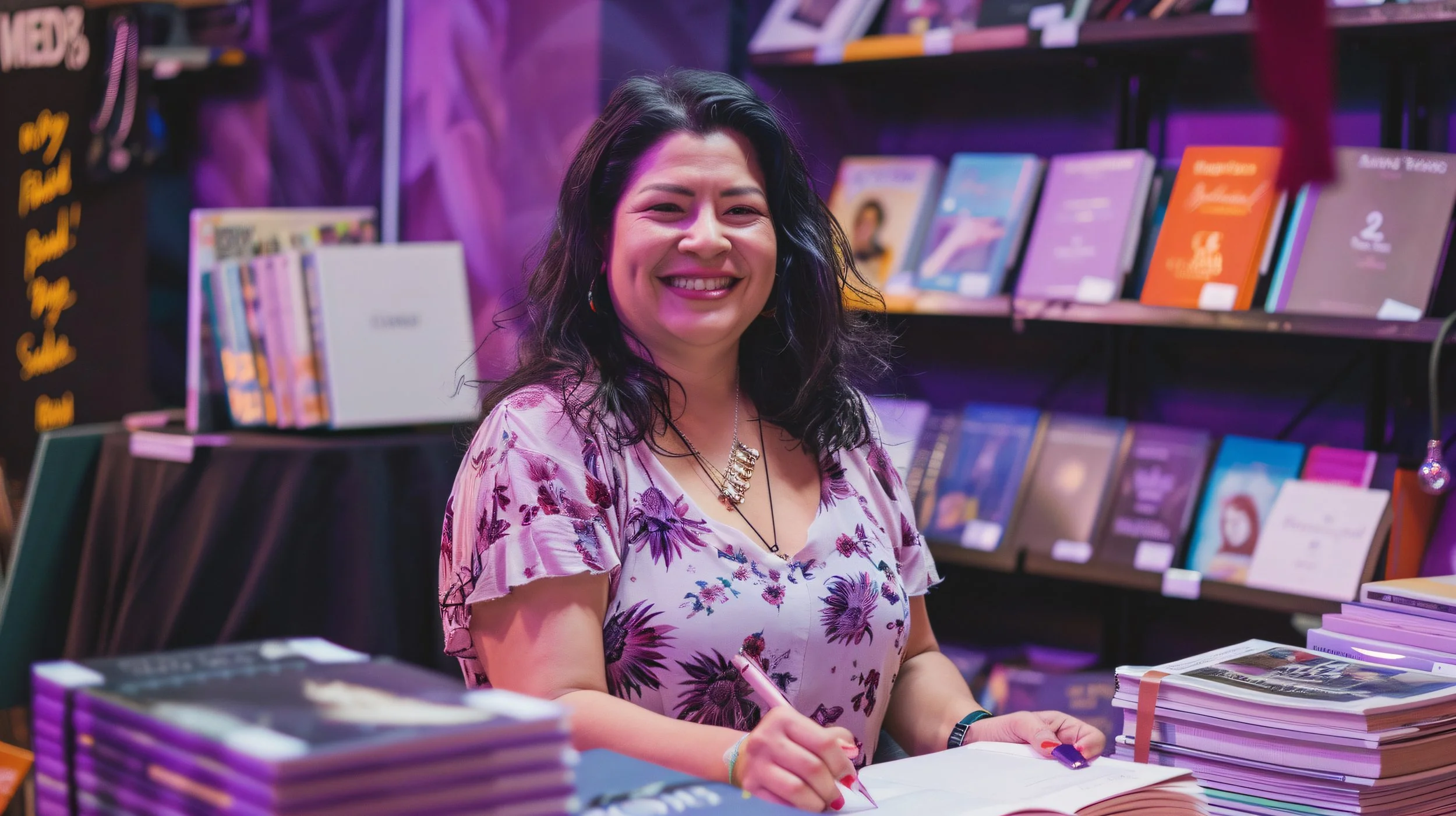
Jenny Benjamin, a Milwaukee native, currently is a freelance writer and former educator with an extensive portfolio. Adding author to her belt, she has written a book called, "The Most Amazing." I'm pleased to have her stop by and chat about her work being an author.

What inspired you to become an author and write your first book? 

I have been writing for so long, and I had a couple of unfinished novels under my belt. After I had my third daughter, and I was starting to write as a freelancer for educational companies, I made writing and finishing a novel a priority. For me, it works well to write fiction and freelance because when I have to wait to hear back from an editor, I go to my fiction.

You were once an educator, how do you feel that has impacted your career as a writer? 

I think teaching is in everything people do. Personally, teaching has taught me how to listen, read people, and how to move them with stories. I worked very hard at getting my students to enjoy books and stories. I tried to engage my kids, and I asked myself: how can I get them into the book I was teaching? I transferred that to my own writing where I constantly ask myself: how will I get readers to want to turn the page?

Do you have a specific writing style? 

I don’t think I do, but I’m probably wrong about that! I really try to get into the head of my point of view character, so I aspire to make my writing styles match that head.

How did you come up with the title of your novel? What inspired the way you told your story? 

I had a few other titles before I settled on This Most Amazing, which is an inversion of words in the first line of an E.E. Cummings poem, “I thank You God for most this amazing.”

It took me a long time to come up with the way to tell this story. I wrote about Vincenzo in different forms for over ten years: a failed start to a novel about my grandmother and several poems. Once the character of Dahlia came to me in 2009, the structure of the two timelines fell into place.

What were the challenges in bringing your characters to life? 

Since I had two time periods in the novel, I had different challenges for each timeline. For the characters set in 1797 Italy, I researched and worked hard to make them compelling for a modern reader with having authentic, historically accurate details. Sometimes I would get obsessed with something, say, tallow candle making, because I had started by exploring what kind of candle was in Vincenzo’s, the soldier in 1797, hand. I would have to rein myself in and get back on the track of writing the story. For the contemporary time period, I spent a good deal of time trying to bring Jonas, Dahlia’s love interest, to life. She’s a strong, dominant character, and I had to re-write Jonas in many scenes so he had some meat and wasn't a one-trick pony type of character.

Did you learn anything from writing your book and what was it? 

I learned countless things from writing this book. So much research went into the 1797 timeline it’s hard to catalog all the nuggets of new knowledge! I brushed up on my Italian. I learned about painting with oils, and I read a lot about the history of food in Italy along with pouring over my Italian cook books or my late Italian grandmother’s recipes.

Who is your favorite author and what is it that really strikes you about their work? 

It is hard for me to select one author as a favorite. One favorite, who really could be named the “top” one, is Zora Neale Hurston. I taught Their Eyes Were Watching God to my high school students for years, and each time I learned something new about writing and reading. We read a lot of the dialog out loud and had so much fun. I also love how she puts it all out there – her writing is so full of life and love!

What books have most influenced your life most? 

Their Eyes Were Watching God by Zora Neale Hurston

Jane Eyre by Charlotte Bronte

Price and Prejudice and Persuasion by Jane Austen

The Epic of Gilgamesh

Inferno  by  Dante Alighieri, translated by Robert Pinsky

Tao Te Ching by Lao-tzu, translated by Stephen Mitchell

Resurrection by Tucker Malarkey

April in Paris by Michael Wallner

Anything by Anita Shreve, Michael Cunningham, Margaret Atwood, and Ariana Franklin

Can you share a little of your current work with us? 

I am pitching my young adult trilogy (The Terrian Books) to agents and editors. The main crux of the trilogy is seventeen-year-old, African-American  Jesse Woods and his two friends realize they have special powers given to them from an ancient alien species that has pretended to be humanity’s gods since the inception of human religions. The friends must go to this planet to stop a war that could destroy humanity.

Also, I’ve completed the first draft of another novel for adults. In this novel, the main character, Heather Finch, is a forty-two-year-old widow re-learning how to live after caring for her brain-injured husband for three years. Embarking on a new writing retreat in Scotland, Heather Finch finds mysterious happenings at her Scottish Highland cottage, which may include new love.
Do you have any advice for other writers?

Set a base amount of words to write every day. My base amount is 400 words a day, at the very least. On difficult days, I bleed the words, but on good days, they spill out of me, and I surpass the minimum, feeling very accomplished. Those boosts keep you writing. Revise, but don’t get stuck to where you never send anything out. None of your writing has a chance of getting published if it is not in the world. Also, if you get a personalized rejection, take what is useful, don’t dwell on the stingers, and move on. Be confident in your work and your ideas. Don’t give up. Don’t stop.


Q & A with Author Marc Prey

Marc Prey, from an early age, developed a love of reading and writing. His career spans from working in the industries of newspaper, film, and now print as an author with the debut "When It Comes to Spooning, I'm a Fork." I'm pleased to have him stop by and chat about his work as a writer and his book.

Have you always wanted to be a writer?

Well, not from the moment of birth, but certainly from a very young age.  As a child, I wrote colorful stories on multi-colored notebook paper.  As a teen, I spewed out reams of angst-filled poetry and pretentious short stories.  In college, I dreamt of writing the Great American Novel while completing an English major.  Even when I later went to work as a lawyer, it was writing briefs and memoranda that gave me the most satisfaction.  Once I discovered I could make a living as a writer, the law didn't stand a chance.

Is there a particular author or book that inspired your career?

I consider myself a humorist.  As such, the writer I have always looked up to, and derived the most inspiration from, is Dave Barry.  Not only is he terrifically funny, he also happens to be a first-class storyteller.  In the realm of fiction, I would cite Elmore Leonard and Neil Gaiman as inspirational, particularly in their ability to create worlds that draw you in and refuse to let you leave.

How was the transition from being a screenwriter to author?

Seamless.  Over the years, I have delved into many forms of writing, from essays to short stories, comic strips to graphic novels, songs to plays, often working simultaneously on material in multiple formats and genres.  Authoring a book of humor essays was a natural outgrowth of my interests and experience.

How did you come up with the title?

The title is lifted from one of the thirty-nine stories in the book.  Over the years, my wife has tried her best to get me to spoon her while we sleep, and I have done my best to avoid the position like I do a telemarketer.  During one of these episodes, she demanded to know why I couldn't spoon her.  I happened to say, “Maybe it's because I'm a fork.”  After she replied, “You're something that begins with an 'F' all right,” I made a mental note to write a new essay based upon this conversation.  Of course, the essay's title was “When It Comes to Spooning, “I'm a Fork.”

The book was absolutely hilarious. What inspired you to write your book?

For many years, I wrote a humor blog around my experiences as a husband and father.  I would post a weekly essay, and people seemed to respond favorably.  Basically, I would reflect on what I had messed up that week, pick the funniest incident (there were always many to choose from) and post the write-up on my blog.  The stories covered a period of time from the day I met my future bride to my oldest boy reaching his teen years.  However, life eventually got in the way, and I was forced to stop writing the blog.  As the years passed, fans of the blog regularly suggested that I take the stories and publish them as a book.  To humor them, I compiled the best stories into a manuscript, added some new material, and sent the product to a few publishers.  To my surprise, each responded favorably.

Once you finished writing, did you learn anything about yourself?

As I wrote the essays that eventually provided the meat of the book, I quickly realized that having a healthy sense of humor, including an unbridled ability to laugh at one's self, provides the basis for a successful relationship, whether with one's spouse or offspring.

This book definitely has tv written all over it. If your book was made for tv, who would you want to play you? 

Funny you ask.  As I write this, my screenwriting agent is actually shopping the book to television and cable networks as a potential sitcom.  While I consider this to be a long-shot, it's certainly fun to dream.  One of my favorite television actors happens to be a fellow Michigander – Tim Allen.  If I could pick anyone to play me in a television series based upon my book, Tim would be my first, second and third choice.  Of course, he would have to leave his current hit TV series, but that is a minor detail.

Are you currently working on anything that you can share?

At the moment, I am working on a new feature film screenplay about a shy and reclusive boy who, while reading a mysterious, old comic book, comes across a curious ad: Send in twenty bucks and receive back a real, live monster.  When he does so, not only does receive a monster, he ends up with a best friend.  Of course, hijinx and hilarity ensue.

Since your background is in writing, what advice can you share with those who would like to pursue as a career?

I will answer this while wearing my screenwriter's cap.  Read as many scripts as you can get your hands on, particularly those written by professionals.  Study them.  Tear them apart.  Learn from them.  And while you are doing this, write, write and rewrite, your own scripts.  Each screenplay you write will be better than the last.  Eventually, when you feel like you have acquired a degree of mastery over the craft, send them out into the world.  This could mean entering your best work in screenwriting competitions, querying producers and agents or hiring a professional to critique your work.  And, while you do this, continue to keep reading and writing.