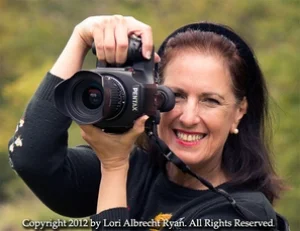
Writing with a Photographer’s Eye by Sally Wiener Grotta

Photography and writing. 

For many, those two disciplines appear to be opposite ends of the creative spectrum. But for me, they are two sides of my creative balance beam.  As I have written previously, "My photography and my writing inform and strengthen each other, coming, as they do, from the same instinct for storytelling. Capturing the small details, the nuanced gesture, the ambience of the moment and the hidden meaning, in words or pictures, that's what makes me feel excited to be alive. Of course, then I get to manipulate it, to express the essential core... as I see it." 

But what it is to write with a photographer’s eye? And how can writers, who may or may not be photographers, develop that level of visual, visceral narrative?

Here is an exercise that I sometimes suggest to my workshop audiences: Keep a notebook with you at all times, and write down descriptions of the most mundane things you see around you. Have only one description per page. Then, rewrite it and rewrite it again and again, unearthing all the physical details of that moment, place or thing. 

For instance, suppose you see sun shining through a window into an otherwise dark room. A photographer (and a good writer) will see much more than those basic facts. She might see stripes of light, creating a crosswalk pattern on the dusty, scarred old wood of the floor. Or, dust motes floating in the searing, sudden white beam that disappears when a cloud drifts by.

If you see an old dog asleep in a yard, perhaps he’s a golden retriever with white old-man fringes around his muzzle and tuffs of torn fur exposing his mottled pink/brown belly. His eyes flutter, his paws twitch and I hear small puppy-like yaps. Is he dreaming?

Ignore any emotional elements for the moment. Just focus on what you can see. (Okay, I can’t see the dreaming, but that is what dogs do when they dream. Right?) The emotions will become evident from the physical.

Even as you become more comfortable with writing these kinds of descriptions, keep your notebook with you and write in it every chance you get. Those little details that you find around you will texture your fictional narrative with imagery that readers can hold in their mind’s eye, as they get lost in your story.

Sally Wiener Grotta has been making her living as a freelance writer and photographer for quite a number of years. Her most recent short story “The Broken Bottle” is available on this website as a free download. (She is also the author of the novel “Jo Joe” (http://www.pixelhallpress.com/jo_joe.html), which is definitely a novel that any reader will want to embrace the beautiful story told. Her next novel “The Winter Boy” will be published in autumn, 2014. ( http://www.pixelhallpress.com/the_winter_boy.html.

You may connect with Sally at http://www.grotta.net/blog.htm  or on Facebook (www.Facebook.com/SallyWienerGrotta) or twitter (@SallyWGrotta). Her American Hands photography may be seen at /www.AmHands.com

Finding Your Voice: Writing in First Person or Third Person Point of View by Karen-Ann Stewart

Being a new author has many daunting moments, all memorable and full of valuable lessons of what not to do (or to do) with your next book.  One of my most overwhelming decisions was deciding whether or not to use third person point of view (POV) or first person POV.  With my debut novel, Saving Rain, I began writing in first person, in Raina’s voice, but then decided that I wanted Kas’ emotions felt and known by the readers as well.  I struggled with the decision of how to present the story of abuse, human trafficking, and beautiful, redeeming love in the most powerful manner.  In the end, I decided to begin Saving Rain in the poignant first person voice of five-year-old Raina, then switch to third person for the remainder of the trilogy in order for the reader to “see” each character’s thoughts and emotions throughout the story.  

With the issues behind The Rain Trilogy, I really wanted readers to connect with the story and see each character’s battle with the depravity of tracking down leaders in human trafficking rings and witnessing the aftermath and effects of the abuse survivors were subjected to.  Both main characters, Kas and Raina, had major obstacles to overcome in their developing relationship, and writing in third person allowed me to convey Raina’s journey to overcome her horrific past while also showing Kas’ struggle to help Raina heal and move forward without controlling her actions.  There are many supporting characters in the trilogy, so third person worked best.

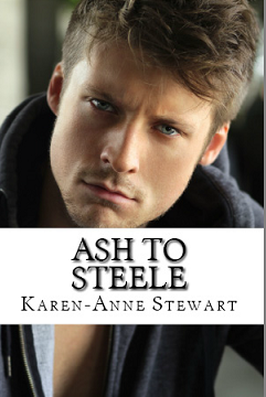
When I began writing my newest released novel, Ash to Steele, I faced the same challenge of trying to figure out how to best present the story of Breck and Emma to the readers.  I knew that I wanted to write this story in first person POV, but I bounced worse than a ball on a Foosball table on whether or not to write the story in Emma’s POV, Breck’s POV, or both.  I drove myself insane and changed the POV several times before finally deciding on doing alternating POVs, beginning Ash to Steele in Emma’s voice and alternating throughout the story before ending with Breck’s voice.  I’m thrilled with how the story came to life in Ash to Steele by focusing on one character’s thoughts at a time, showing the very different views and beliefs of the main characters and what happens in this story of bad boy meets good girl and rocks her world before she rips his right out from underneath him in their own words.  

While writing Ash to Steele, I fell in love with first person POV and how connected I became to Breck and Emma.  I will always hold a special place in my heart for Kas and Raina in The Rain Trilogy for many reasons, mostly due to their being my first and with how Kas is my version of the perfect man, hot, sexy, protective to the point of bossy at times, and downright fierce in how he will go through hell and back to protect his girl.  I wholeheartedly stand behind writing the trilogy in third person, but I don’t see myself writing another story in third person anytime in the near future, quite possibly ever. I learned a valuable lesson with Ash to Steele and how Breck and Emma came to life through connecting so closely to their convictions, flaws, raw emotions, and seeing them through their eyes as they told their story in their own voices.  There’s just something powerful about internalizing a story read in the character’s perspective.  

I had the most entertaining, wicked time writing Ash to Steele in two very different voices and now I’m hooked to alternating between the hero (hmmm….not sure hero best describes Breck, at least not at first) and the heroine.  It was a blast getting to step into the mind of Breck, Casanova to every woman and a god to every man, and telling his story of how Emma drives him insane wanting to love and hate her while she becomes his sweetest hell.  Breck’s pure masculinity and cockiness were my favorite part of writing his story and I adored counteracting that with Emma’s quiet strength and innocence and letting her character to breathe life in how she told her torment of trying to hold onto to who she is while losing herself to Breck more each day. 


Karen-Anne Stewart is a new author and has only recently discovered that she is now addicted to writing. Her first novel, Saving Rain, was originally going to be a single novel, but it quickly turned into a trilogy. She fell in love with the characters and had to continue the story. Saving Rain is a new adult contemporary romance meant for readers 18 and older. 
 
She lives in the mountains with her family. She loves to read, hike, and travel when she is not writing. She is a sucker for romance, especially a book with a strong alpha male who has a sensitive side. She also enjoys a good mystery and thrillers. 
 
Her favorite author is James Patterson; he is an amazing writer. 
 
With being a newbie, she is just learning all the ropes, but is loving the wild ride. She plans to write for as long as her fingers have dexterity. 


Book Information

Emma 
Who I am and all I believe is marred with just one glance into angry, steel blue eyes. He seems 
to control my air, my ability to breathe. He makes me crave everything I know is a sin. Pure 
becomes tainted and lines are blurred. It's my fault; I'm the one who isn't strong enough. I've 
been damaged...broken. Breck's words haunt me...'There's a consequence for every choice you 
make.' 
 
Breck 
I've had so many women I can't even remember over half of their names, but none of them are 
mine; I make damn sure of that. I take what I desire and never look back. I don't need or want 
anyone, ever...not until I met Emma. Those eyes bore into what's left of my soul and her touch 
sears me, weakens me. I want to hate her for that. She is my ruin...my sweetest hell. 

What Is Noir Romance? by Laura Oliva

"You’re a bitter little lady."
"It’s a bitter little world."
- Paul Henereid and Joan Bennett, "Hollow Triumph"

Romance is not a genre most people associate with "grit."

When you mention "romance," those who consider themselves serious readers usually roll their eyes (whether or not this is fair is a subject for another post).  Romance? they say.  Give me a real book.  Romance means fluffy characters, weak plotlines, fantasy locales.

Right?

I love a love story.  But the trappings of "romance" always left me cold.  I don't want some sweet, good-hearted heroine who just knows -knows- there's a good person beneath our hero's gruff exterior.

I want Lauren Bacall.  You know how to whistle, Steve?  Give me a fast-talking, quick-with-a-quip dame who knows how to handle a piece (wink, wink).

Nor do I want a hero custom-made for a female audience.  Men don't get all flowery when they're talking to a woman.  Men don't narrate their inner struggle before they tell their girl they love her (and if they do, it sure as shit doesn't sound like Shakespeare).  Men don't turn into Longfellow when they make love.

Hell, men don't "make love." Men...

So give me a hero who... Who is a little selfish and a bit of a brute, who doesn't always play nice.  Who doesn't always act like a hero.  Who leaves the toilet seat up and has a mouth like a moderately well-educated longshoreman.  Who respects his own moral code, if not always the law.

Now let's say you've given me these people -these hard, harsh, deliciously damaged people.  Where are you going to stick them?  Not in a resort (okay, maybe if it's a shitty resort).

You're going to stick them in a place where life is tough.  Where joy is fleeting, morality is a luxury, and love is a joke.  A place designed to separate the wheat from the chaff.  Where the weak are crushed and the strong don't fare much better.

So what is noir romance?

Noir romance is all these things.  Cynical characters.  Antagonistic locations.  Warped people with warped problems that have no simple solutions.  People who are just trying to survive.  Sometimes they do the right thing, but it's usually by accident.

These are people who by all rights should never fall in love.  But they do.  And when they do, it's explosive.

I don't know about you, but I've had enough of the fluffy stuff.  I love a love story, but bring on the pain.  Bring on the night.

Bring on the noir.

Want more of Laura's writing?  You can find all her books (including her new noir romance series) on her Amazon Author Page.


A Day in the Life of an Author by Bianca Sloane

5:00 a.m. – The alarm goes off.  “I Gotta Feeling,” by the Black Eyed Peas is playing.  I gotta feeling I may have been smoking crack when I set the alarm last night.

5:30 a.m. – The alarm goes off again.  Was I really serious when I said I would get up early and work out today?  “Bust a Move,” by Young MC is playing. Ugh.  Now the DJis trying to motivate me?

6:00 a.m. – Okay, I’ll do a hard stop at 5:00 p.m. and get my workout in.  “Dead or Alive,” by Bon Jovi is playing.  Start singing along in my head.

6:45 a.m.  – Well, now I’m hungry, so I maybe I will get up.  The DJ is talking, which quickly brings my hand down on the snooze button.  

7:15 a.m. – Alright, I really DO need to get up now.

7:20 a.m. – The morning ritual (sans workout) commences: brush teeth, get on the scale (ugh – why?), drink a glass of water to quell hunger, scroll through the BlackBerry to look at all the emails that came in overnight, mess around on Facebook, glance at Twitter, check sales, look at GoodReads.

8:00 a.m. – Still haven’t eaten.  Make scrambled eggs, toast and tea.  Watch “Frasier” reruns on Lifetime while eating.  Frasier and his new girlfriend, Charlotte, are trapped in the country with some extras from “Deliverance,” while Niles interviews the physical therapist that he thinks is the stripper and Daphne interviews the stripper she thinks is the nanny.  Hilarity ensues.

8:30 a.m. – Shower and dress.  Even when you work from home, the rule is, you always shower. ALWAYS.

9:00 a.m. – At my desk, which faces a corner in my living room.  Make out my to-do list for the day.

9:15 a.m. – Actually start working; answering emails, working on blog posts, check Amazon, muse on what to post on Facebook.  Check BN.com.

10:15 a.m. – Open up WIP to go over it with a fine tooth comb to start assessing the massive plot holes.  Write down my findings in my trusty notebook.  Gosh these pages are filling up fast.

11:30 a.m. – Mess around on Facebook.  Just for 15 minutes.

12:00 p.m. – Boy, did I go down a rabbit hole.  Resume p(l)ot hole assessment.

12:30 p.m. – Hunger strikes.  Grab an apple. Mess around on Twitter.  Just for 15 minutes. 

1:00 p.m. – And yet another rabbit hole.  Get back to the holes that matter and resume work on WIP.

2:00 p.m. – Realize I’m starving.  Lunch awaits.  Salmon and salad. Vain attempt to make the scale like me tomorrow.  Watch the “Real Housewives of Beverly Hills” episode that’s been on my DVR for almost a week.  

2:15 p.m. – My head hurts. 

3:00 p.m. – Back to work.  

3:40 p.m. – Work, work, work, work.  Oh, wait, I haven’t been on Pinterest yet today…

4:15 p.m. – Okay, really, I should get back to work.  Right after I check out PEOPLE.com and EW.com…

4:30 p.m. – Back to work.

5:30 p.m. – Oh, who am I kidding – I’m not going to work out today.  Like Scarlett O’Hara says, tomorrow is another day.  Besides, I’m on a roll—I’m figuring out the problems with my WIP.  Whew!

6:00 p.m. – Think about what to have for dinner.  Start texting with best friend, start finalizing weekend plans with some other girlfriends.  

6:30 p.m. – Still haven’t eaten.  Decisions: leftover pepperoni pizza or salmon?

6:32 p.m. – Pizza.  Duh.

6:45 p.m. – Watch today’s “General Hospital,” and fast-forward through half of it.  Do they have to put all the storylines I don’t like in one episode?

7:30 p.m.  – Can’t stop thinking about WIP.  Open it back up and start combing through it again.

9:30 p.m. – Oooh – “Frasier!”

10:30 p.m. – Stick a fork in me.  

10:45 p.m. – Wait…what time am I setting the alarm for tomorrow?


My Real Writer's Life by Dyane Forde

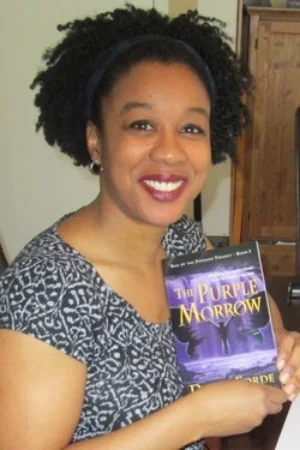
Being a writer is tough. I’ve written stories and whatnot most of my life, but my journey to write and publish books began nearly four years ago. When I started, my biggest concern was figuring out how to turn my ideas into a story long enough to be considered ‘a book’. I spent hour after hour reading, writing, editing and reviewing works by other people, having my own works critiqued and all of it was rewarding but exhausting. But I loved to write and the dream of publishing kept me going.

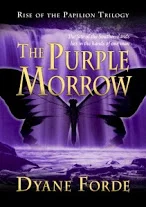
Speed ahead to today. I've three books written, one of which is published (The Purple Morrow), have three others in progress and plenty of short stories in my portfolio. I’ve been busy. But that’s not all. Everyone knows that writing a book is only the beginning. An author must have a platform, must be integrated in social media to connect with readers and other professionals in the market. You have to have a business plan, must devote hours to this thing that might have started out as a hobby but has now become a realizable Dream. This is the hard part. It’s the stuff that sucks your energy dry, takes away from the time needed to write, and in some cases, even drains away some—or all--of the excitement of even being a writer.

So this is where I’ve been these last few weeks. When The Purple Morrow came out, the days of being an ‘aspiring author’ ended and I became a ‘published author’. Money is now involved because I have copies of my book to sell. I have to get out into the community and connect with local merchants, you know, build a local reputation for myself. This is a career I’m trying to build, after all, one that will hopefully thrive online as well as in the ‘real world.’ It’s great and fun, yet it’s also daunting.

One morning, I awoke in a panic. I’d been off my marketing/promotional game for a few weeks and suddenly didn't know what my game plan was anymore. My head swirled with all the blog posts about what I SHOULD be doing, but I was paralyzed by the sheer enormity of it all—I was overwhelmed. For me, when that happens I know it’s either time to Act or to Bail. I chose to Act. I started by emailing some contacts I’d been procrastinating.

That led me on to something else. There was a certain book store I’d been trying to get a hold of but hadn't been able to find the number to. Then, my mother left me an excited message: she’d been to the bookstore and told the owner about my book and he was interested in selling it on consignment. Being a little shy to make a cold call, I’d put it off. A few days later I emailed him but got no answer, probably because of Christmas. So this morning, I bucked up and called. What an amazing surprise! This wonderful, cheerful woman answered, and guess what? At that exact moment, she’d just opened my email to read! 30 minutes later, I’d dressed, packed up the kids and was driving 40 minutes to the book store.

Now, why’s this important? Talking with her and seeing how excited she was about the book reignited my own excitement about what I was doing and why I did it. It reminded me of the anticipation of holding a brand new book in my hand and not being able to wait to dig into it. Then my kids got into it.

“Mom, in your next book, can you write about a lizard?” asked my 7-year-old.

I smiled and said, “Baby, the last story you helped me with had a dragon. That’s sorta like a lizard.”

But the joy I saw in my kids’ eyes and smiles touched me. They were proud to talk to the book store clerk about my books and stories, so much so that they wanted to help with the upcoming ones. On the way home, my 9-year-old started making up a story (for me) about—yes, a dragon--and before I knew it, he was up to chapter 5! It was a great story filled with knights and volcanoes and a kind, old dragon sitting atop a massive pile of gold. I just smiled to myself as I drove and realized that this was my true writing life. Writing is more than following a business plan, or trying to find the best marketing strategies, or getting frustrated about not being able to find inspiration for a project. It’s the impact my stories have on other people, the positive feedback I get from a reader, the excitement I hear in a person’s voice when they ask about the sequel. It’s the imagination triggered in my children when they are given the confidence to dream because of what I have chosen to do. Writing really can touch people’s lives.

How about you? Have you had a similar experience? Has all the running around gotten the best of you, and how did you manage to overcome it? What does writing mean to you?


Dyane Forde’s love of writing began with an early interest in reading and of words in general. She was always amazed at how linking words together in different ways had unexpected and pleasing results on others. People enjoyed what she created! This sparked a life-long desire to write all types of things, from short stories, novels, flash fiction, poetry…she enjoys trying genres and forms of writing which are different from what she’s used to; every story or book represents new joys and challenges. Dyane views writing as an amazing and intimate communication tool, meaning that it becomes a means through which she seeks to connect with others on a level deeper than intellect.

Dyane is a social worker by profession. Learning to see the world through other people’s eyes as well as sharing in their pain has influenced and enriched her as a person, as well as her writing. She is also a wife, and mother to two children, a cat named JackJack and a dog named Sparky.

She can be reached at her writing blog at www.droppedpebbles.wordpress.com, where her other writing projects, and information and samples of her upcoming books can be found.

Please write! Dyane loves to hear from her readers.
Twitter | Facebook Goodreads Tumblr | LinkedIn | Authonomy Google +

The Rovers had been sent to decimate the Southernlands. Instead, they awoke its savior.

Ten years have passed since the Rover army tore through the Southernlands, leaving behind a trail of devastation and death. Most believed the attacks were random acts of brutality. The wise, however, knew the truth: the Rovers sought to destroy the one thing powerful enough to thwart their conquest. They were searching for the Papilion. 

A new commander, bent on completing the mission left unfinished by his predecessors, leads the Rovers back into the Southernlands. Fierce and determined, he comes armed with a precious artifact and a secret purpose. 

While the Southernlands reel under the new terror, the Purple Morrow, a harbinger of hope, appears to Jeru, an unsuspecting and solitary clan hunter. Finding himself enmeshed in a series of incredible events beyond his control, Jeru is compelled to take the first steps towards discovering his ultimate destiny.

Five Things I Learned About Men by Gale Martin

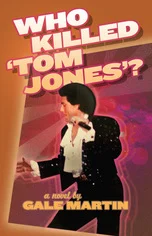
Ellie Overton, my viewpoint character in Who Killed ‘Tom Jones’?, is twenty-eight years old, never married, and longing for one of those white-hot romances she’s read all about in romance novels. So, Ellie is intrigued by each man who crosses her path. And I made sure I threw as many men into her path as possible. That meant creating male love interests with different personalities and motivations, which required doing some research about men—a tough job, I know, but someone had to do it. 

Here are some of the things I learned:

1.       The most important factors men look for in women are a positive outlook and self-confidence. Women who think knock-out looks are their greatest asset are probably putting way too much pressure on their physical features at the expense of developing other desirable and enduring qualities. Besides giving Ellie fulfilling relationships with the senior citizens she worked with, I also gave Ellie an essentially upbeat outlook on life and the chance to improve her self-confidence.

2.       Men's feelings change much faster than women's. There are more points at which men may fall out of love with their wives and girlfriends and fall in love with someone else as compared to women. The men in Who Killed ‘Tom Jones’? fall hard for Ellie, and initially, she has trouble accepting their feelings. Of course, Ellie will make mistakes, but I did give her the chance to learn an invaluable lesson during the book--not to take a man or his feelings for granted. 

3.       Men want their women to talk less about the relationship they’re in and simple enjoy being in it. It isn’t Ellie’s tendency to dissect a man’s feelings or beat the proverbial horse to death. Still, she hasn’t had many enduring relationships in her young life, so she has to learn it does no good to make a relationship harder than it has to be.

4.       Men have different ways of expressing love. Not all men speak the same love languages. Many are either hard-wired or conditioned to express themselves using another love language besides words, the language women very often use. Some men say "I love you" by doing things for their women. Some do so by giving them things. Ellie has an extraordinary chance to learn all the wonderful and peculiar ways of not just one but three men in this novel.

5.       Ninety-three percent of men would marry the same woman all over again. That statistic says a great deal about the value and importance of the institution of marriage today. No wonder my protagonist Ellie Overton hasn’t given up on the idea of getting hitched to the right guy.


Gale Martin is an award-winning writer of contemporary fiction who plied her childhood penchant for telling tall tales into a legitimate literary pursuit once she hit midlife. She began writing her first novel at age eleven, finishing it three and a half decades later.

Her first novel, DON JUAN IN HANKEY, PA, is a humorous homage to Don Giovanni, Mozart's famous tragicomic opera about the last two days of Don Juan's life. It was named a Finalist in the 2012 National Indie Excellence Awards for New Fiction. Her second novel GRACE UNEXPECTED is wryly witty women's fiction featuring Grace Savage, a 30-something protagonist with a heart of gold, wrapped in lead.

Gale would commit a misdemeanor to score some Babybel cheese and goes weak-kneed for hummingbirds. She is a wife and mother of one and a communications director by profession. 

She blogs about opera--the art form, not the platform and is an opera reviewer for Bachtrack, an online site featuring classical performance worldwide. She can name any aria in three notes. Okay, five notes, perfectly sung, with full orchestration.

She has a master of arts in creative writing from Wilkes University. She lives in Lancaster County, Pennsylvania, which serves as a rich source of inspiration for her writing.


Book Information

In Gale Martin's newest novel, Ellie Overton is a 28-year-old rest home receptionist with a pussycat nose who also happens to be gaga for the pop singer Tom Jones. Regrettably single, she is desperate to have a white-hot love relationship, like those she's read about in romance novels. Following an astrological hunch, she attends a Tom Jones Festival and meets an available young impersonator with more looks and personality than talent. Though he's knocked out of the contest, he's still in the running to become Ellie's blue-eyed soul mate--until he's accused of killing off the competition. It's not unusual that the handsome police detective working the case is spending more time pursuing Ellie than collaring suspects. So, she enlists some wily and witty rest home residents to help find the real murderer. Will Ellie crack the case? Must she forfeit her best chance for lasting love to solve the crime?