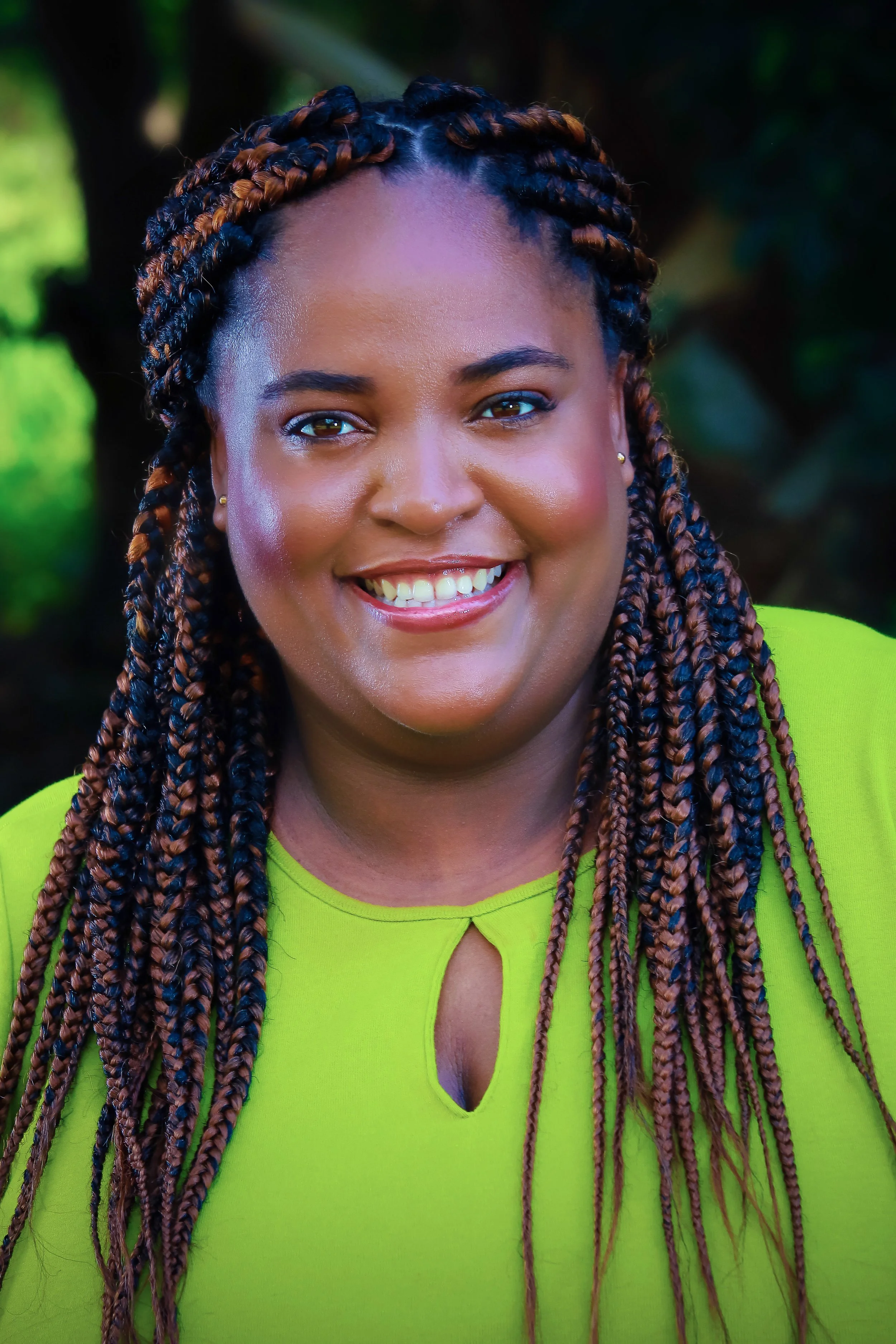
How music helped the characters in MATING FOR LIFE become real featuring Author Marissa Stapley

There’s something about the characters in Mating for Life—sisters Fiona, Ilsa and Liane, their mother, Helen, and the women surrounding them—that feel very real to me. I’m aware that I made them up, that I created them in my mind and then gave them life on the page only. And yet, somehow, I feel like I see them everywhere. I’ve had to stop myself from approaching women on the street and saying crazy things like, “Ilsa?! It’s you! I knew we’d meet in person one day!” or “Liane! Hi! Want to grab a coffee?”

I think part of what has made these characters so real is that they came from a very authentic place inside me. I started writing Mating for Life when I had reached a point in my life where I believed everything was supposed to come together. Husband? Check. Two kids? Check. House? Check. Perfect life? … Not exactly. The truth is that no matter what point we’re at in our lives, we all have our challenges, we all have our instincts to fight or embrace, and we’re all trying to write ourselves a happy ending—but learning in the process that this is anything but a simple task.

As I wrote about these women that I identified with so strongly—Liane, with her rose-colored perception of love tempered by harsh reality; Ilsa, struggling to align her bohemian, pre-child self with the person she feels she’s supposed to be; Fiona, with her fierce devotion to her family and the impossible standards she’s set for herself; and Helen, who, even in her sixties, isn’t quite sure who she is—the music I listened to helped set the mood for every writing session. I got to know my characters through these songs. (Think about your best friend in the world: you probably know what her favorite song is, right? Or maybe there’s a certain song that makes you think of your mom, or sister, or favorite aunt. It’s the same with these women and me.)
Eventually, I created playlists for each character (Liane’s a bit of a hipster-folkie, Ilsa listens to a lot of Tori Amos, Fiona has a grudging appreciation for Joni Mitchell that she inherited from her mother, and Helen divides her time between Bob Dylan, Melanie, and Jefferson Airplane) and I’m sharing some of these songs with you now. This music helped bring the characters in my novel to life, and I hope you’ll feel the same as you listen and read.


Have a listen to the Playlist 
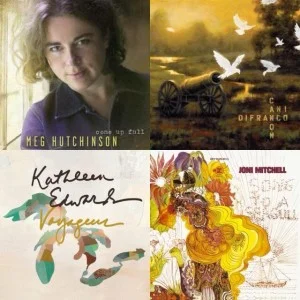

Marissa Stapley is a writer and former magazine editor who contributes to Elle, The Globe and Mail and The National Post, among others.  She also teaches writing at the University of Toronto and editing at Centennial College.  She lives in Toronto with her husband and two young children–and she has the same birthday L.M. Montgomery.

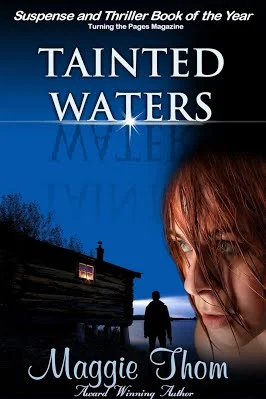
10 Tips for Becoming a Better Writer by Maggie Thom

There are so many different types and styles of writing and people do it for many reasons. No matter what you are writing or why you are writing though there are ways to become a better writer.

1. Be willing to edit and rewrite and edit and rewrite. Do not expect the first draft to be the final draft. Good writing takes practice and lots of rewrites.

2. Get feedback on your writing - share it with other writers and with other readers.

3. Know that when someone is giving you feedback (whether nicely or not), it is only their opinion, do not take it personally. Take what you can from their feedback to learn from it and let the rest go.

4. Take some writing courses, there is always something to be learned from them.

5. Read a lot, not only in what you are writing but other styles and other genres. Figure out what you like and don't like.

6. When you read something that really grabs your attention, analyze it. What made it so good?

7. Experiment with your writing - try a different style, write in a different tense, write about something you normally wouldn't - it can show you many different aspects to your writing. Be adventurous.
8. If one writing project is keeping you stuck, switch up what you're writing. Go write something else and come back to that piece at a later time.

9. Practice - write, write, write... it sounds easy but it really is about taking time to sit down and just write about anything.

10. At some point you need to take the leap and put yourself out there. No matter what you write there is an audience waiting to read it and it will be your greatest learning.

Writing is an adventure that is meant to be enjoyed not endured. Happy Writing.


Award winning author, Maggie Thom, took the challenge and leapt off, leaving a fulltime, twenty year career in management, to write full time. After publishing her first suspense/thriller book Captured Lies, October 2012, she published her second novel, Tainted Waters, April, 2013. Tainted Waters went on to win 2013 Suspense and Thriller Book of the Year through Turning the Pages Magazine and Captured Lies won book of the Month through LAS Reviews (February 2014). She published her third novel, Deceitful Truths (The Caspian Wine Series - Book 2), March 2014. An avid reader and writer her whole life, she decided to break the monotony of wishing to be an author by making it happen. She is a wholehearted nature lover and likes nothing better than to take a book, hike to a remote spot by a river or waterfalls and read. Married to her best friend, she is learning that humor, love and patience help her navigate her way through her twins’ teen years.


He didn’t commit suicide but who’s going to believe her...

Frustrated at being fired from her latest job and overwhelmed by her consolatory family, Sam decides to move to the family’s cabin at the lake. A place she hasn’t been since her dad committed suicide there, twenty years before. Or did he? Snooping is something she’s good at but someone seems to be taking offense to her looking too closely at what has been happening at the lake. What she discovers is shocking. Now she must uncover what’s real and what’s not. All that she learned growing up, may be false.

Keegan, who has recently moved to the area to finish his latest book, is also trying to find out if his grandfather, who’d passed away ten years before, died of natural causes or was murdered? The descendants of the four families, who own the land around the lagoon, are dying off.

Since Sam and Keegan are the only ones questioning the deaths, they find themselves working together to seek the truth. Are people being murdered? Who would benefit from their deaths? Why would there be barricades and armed guards at the north end of the lake? To stay alive, Sam and Keegan must find the answers and convince others, before more people are killed... including them.

The Big Oof by Teri Anne Stanley

tas.jpg

Why do people read romance? Well, I don’t know why other people read it, but I read it for the “oof.”

Yeah, the “Oh, my!” parts can be nice, too, when they’re well done and not all throbbing love nubs and dripping lady-flowers. Believe me. I love a good “Oh, my!” as much as the next person.
But it’s the “oof” that makes a romance worthwhile. It’s that feeling in my gut—kind of a solar-plexus spasm (sounds pleasant, doesn’t it?)— when two people connect—usually when the hero lays it all out there, or the heroine sees what he’s unwilling to lay out there—that’s when I get the “oof.”

It’s that part of LOVER AWAKENED by JR Ward, where Bella finds Zsadist in the shower, trying to scrub his own skin off, because he wants to be worthy of her, to be clean enough to be with her. *sigh* Golly, I love a good, screwed up hero, and Zsadist is my all time prize winner on that score.

It’s that part of every one of Suzanne Brockmann’s books, but if you need an example, how’s about  HOT TARGET when Jane realizes that Cosmo isn’t at her house because he doesn’t like her, he’s avoiding her because he does like her?

And just saying it like that—“because he does like her”— doesn’t get it for you, does it? Nope. You’ve gotta read the whole first half of the book. You’ve got to see how much Cosmo and Jane struggle through getting off on the wrong foot, to earning each other’s respect, to seeing big, strong silent Cosmo have to reveal his feelings. That’s where the “oof” comes from.
Tell me what your favorite “oof” moments are. I’m planning to fall and break an ankle so I can spend a month on the couch reading and dissecting books to see if I can find the formula for the “oof.”


Teri Anne Stanley has been writing since she could hold a crayon--though learning to read was a huge turning point in her growth as a writer. Teri's first stories involved her favorite Saturday morning cartoon characters, followed by her favorite teen idols.  She has also authored a recipe column (The Three Ingredient Gourmet), and scientific articles (Guess which was more interesting!).  Now she writes fun, sexy romance filled with love, angst, and nekkid parts.

Teri's career has included sex therapy for rats, making posing suits for female body builders, and helping amputee amphibians recover to their full potential. She currently supplements her writing income as a neuroscience research assistant.  Along with a variety of teenagers and dogs, she and Mr. Stanley live just outside of Sugartit, which is—honest to God—between Beaverlick, and Rabbit Hash, Kentucky. 


Website | Facebook | Twitter | Amazon | Barnes and Noble | Goodreads


Former undercover cop Mike Gibson has been lying low, working as a maintenance man to put his troubled younger brother through college. But when a beautiful scientist enlists Mike’s help to repair the damage done to her lab by a group of vandals, Mike finds that his, and his brother's pasts, are about to be brought to light. 

Laura Kane was happy having a secret crush on the hot maintenance man at Tucker University, but when the drug she was studying is stolen, Laura has a chance to get to know Mike in person. The problem is, he seems to know more about what's going on than any maintenance man should. But then the drug turns up in the wrong hands, and Mike and Laura have to decide if their own chemistry will help, or hinder, the race to save innocent lives. 


Excerpt

He was not for her. Nerdy scientist girls had to stay away from hot guys with big, muscle-y arms and white smiles. So why the heck couldn’t she stop looking back at the biology building?

She shook herself. What was wrong with her? She had to get out of here. She could lust after him from a distance. That would be fine. Safe. He could be her pretend lover. She turned the key and threw the car into gear. With one last glance over her shoulder toward her new imaginary boyfriend, she stomped her foot on the accelerator. And promptly shot backward over the curb, knocking over a trash can, which wound up wedged under the rear bumper.

“Gack!” She put the car in park and jumped out to survey the damage. Rounding the back end and seeing the trash can, she shrieked and stepped out of the way of a family of possums—a mom and three…teenagers? They tottered about, blinking in the bright morning sunshine.

“Whoa, careful!” Maintenance Man Mike was suddenly there, grabbing Lauren’s upper arms and shifting

her out of the way of the scraggly little things. “Are you okay?”

“I’m fine,” she said. “But the kids—I ran over their house!” One of the little ones clung to its mother’s fur, but two others careened blindly away from the scene of the home wrecking.

“I tell you what,” Mike said. “You pull your car forward, off the trash can, then we’ll see if we can’t help ’em out.”

“Okay.” Lauren’s heartbeat started to slow and beat a regular rhythm. Except where Mike had touched her arms. There, her skin seemed to be throbbing and tingling.

Sheesh.

She moved her car forward and off of the sidewalk, then went back to Mike and the possum. Fortunately, there were no other faculty members’ cars in the lot yet. What would she have told them? No, I wasn’t texting anddriving. I was mentally undressing a stranger.

Please, God…don’t let it be her drug they were talking about on the news. After Crawford left, Mike stopped fiddling with settings on the centrifuge. He straightened and turned to lean against a clean section of counter. Crossing his arms, he glared at Lauren.

“What?” She realized she’d crossed her arms, too, and stood with a hip cocked out. Defensive much? “Let’s have it.”

“You lied.”

“About what?”

“What’s missing. Those pellet things you showed me yesterday. They’re all gone.”

Damn.

“Yeah. You wanna start talking?” He uncrossed his arms and moved toward Lauren. He smelled of fabric softener again, like the day before. What single guy used fabric softener?

“Are you married?” Ugh. Did she really say that?

That slowed him down, though. “What? No. I live with my brother. I told you that last night.” He took another step into her personal space. “Why did you lie?”

Instead of feeling intimidated, she found herself uncrossing her arms and putting her hands behind her to hold on to the ledge. “How’s the cat doing?”

“Howled all night. Dylan threatened to poison it.”

“Dylan did? But he’s such an animal lover!”

“Shows you how much of a head case that cat is.” He pinned her in place with that dark stare. “Why did you lie?”

He was so close that she could feel his heat. How much closer was he going to get? When she took a  deep breath, her breasts brushed his chest. Which caused her to take another deep breath. Not on purpose, of course. His eyes heated. She could smell coffee now. She licked her lips, and his nostrils flared. He bent his head closer. She needed to answer his question, but what should she say? If she didn’t answer, would he…what, kiss it out of her? He should work for the CIA. Or the FBI. As part of the Threaten to Kiss Information From Witnesses Unit -

Does It Work With a Married Couple as the Hero and Heroine? featuring Susan Rae

As my bio states, I love writing romantic suspense. I grew up on Nancy Drew and Hardy Boys novels and later moved on to Tom Clancy, James Patterson, Nora Roberts and Mary Higgins Clark, just to name a few of my favorite suspense authors. Add to those my fair share of bodice-ripper reads and I guess it was just natural for me to choose to write in the RS genre where I could combine a passionate love story with a gritty suspense tale. 

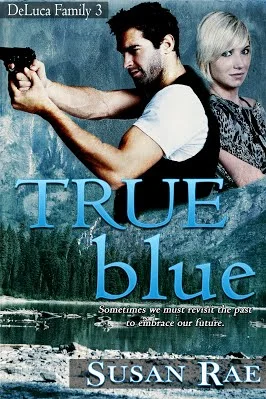
However, TRUE blue is not your typical romantic suspense. I had created the characters of Joey and Andi DeLuca in my award winning debut novel, heartbeats.  Both are key figures in the investigations in heartbeats and in book two of the DeLuca Family Series, ICE blue. But, the thing is, when I wrote heartbeats, I had no idea it was going to be the beginning of a series.  After writing it, though, I realized I had created an entire family of interesting characters that was ripe for the picking.

In ICE blue, I chose Angela, one of the DeLuca siblings and a Chicago Paramedic as the heroine. For TRUE blue, I really wanted to tell Joey and Andi’s story.  However, Joey and Andi are married--to each other. Joey is the oldest of the DeLuca siblings. He followed in his father’s footsteps and is now a Lieutenant Detective on the Chicago Police Department. Andi is a tough hitting detective in her own right.

But married? Could I write a romantic suspense novel with a married couple as the main characters? Sure, I thought, why not. I like a good challenge. Besides, some of the most memorable sleuths in movies and television are married couples; dare I say Nick and Nora Charles, or “Hart to Hart,” or today’s Castle and Beckett?  Oh, right…they’re not married yet, but they soon will be.

And yes, that’s all well and good for the movies and TV, but a steamy romance novel? Most romance novels end in “I do,” but I thought it would be fun to explore what happens after the “Happily Ever After.” What if we checked in seven years later? Do married couples still have steamy sex? I certainly hope so! I would even venture to suggest that the need to keep the sex fun and exciting is heightened in a marriage versus other relationships because there is more at stake in trying to keep a marriage together. In TRUE blue, I explore how two police officers with very demanding careers and a three-year-old son keep the fire burning in this frenzied, mixed-up world we all live in. Add to that a childhood sweetheart returned to town and a twenty-four year old murder mystery, shake well, and the sparks begin to fly. 

I truly enjoyed writing TRUE blue and telling Joey and Andi’s story. I think you’ll enjoy it too. I believe I’ve packed in plenty of mystery, suspense, and drama in the DeLuca Family to keep you turning the pages. And in case you haven’t read heartbeats or ICE blue yet, don’t fret.  All the DeLuca Family Series novels can be enjoyed as stand-alone novels.
Thank you for spending this time with me. To read more about my writing and my books, please visit me at www.susanrae.com


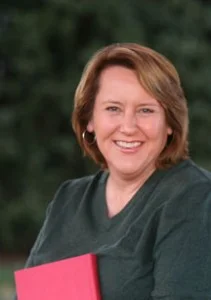
Susan Rae grew up in the suburbs of Chicago and received her Bachelor of Arts Degree from Columbia College, Missouri with an emphasis in creative writing. She penned her first melodrama in fifth grade for a Girl Scout Drama badge. Complete with hero, heroine, and dastardly villain, it wasn’t so different, really, than the romantic suspense she writes now.

“I love writing romantic suspense because it allows me to combine a sexy, passionate love story with a gritty suspense tale—in my opinion, the best of both worlds.  It also allows me to express my appreciation for the outdoors in the settings that I recreate on the page.”

Freefall,  Susan’s second novel, takes place in Wisconsin's Kettle Moraine Forest and beautiful Door County.  ICE blue returns to the busy streets of Chicago and the shores of Lake Michigan to continue the story of the DeLuca family which began in her award winning first novel, heartbeats. InTRUE blue, the third book in the DeLuca Family series, Susan was thrilled when it became apparent that her characters must take a trip to Montana’s majestic Glacier National Park. 

When she is not sketching characters, you might find Susan on the golf course working on her handicap, or traveling around the country seeking out new settings for her novels with her husband and empty nest puppies, Ginger and Nikute. 


Sometimes we must revisit the past to embrace our future.

Twenty-four years ago, the murder of a Chicago police officer changed Joey DeLuca’s life.  He lost his best friend and first love, Meghan McConnell, when her mother whisked her out of town.  Now, on the eve of another officer’s death, Meghan is back and about to step into his life again.

There is very little gray in Joey's line of work as a Lt. Detective--it is either black or white, right or wrong. But Meghan’s insistence on finding answers to her father's murder threatens those beliefs and throws his marriage to CPD Detective Andi, his career, and the entire DeLuca family in jeopardy when new revelations come to light.

Can Joey save his marriage, solve the murder, and keep his family together all at the same time?

The third book in the DeLuca Family Series, TRUE blue can also be enjoyed as a stand-alone novel.

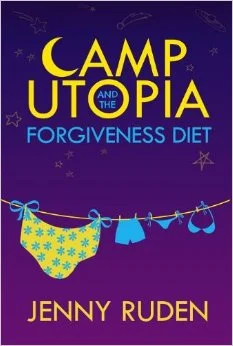
5 Things You Should Know About Camp Utopia & The Forgiveness Diet by Jenny Ruden

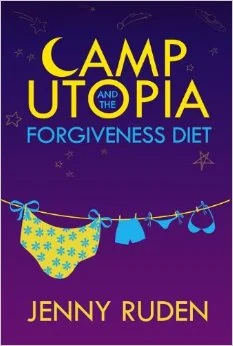
5 Things You Should Know About CAMP UTOPIA & THE FORGIVENESS DIET by Jenny Ruden
 
1.   It took an embarrassingly long time to write.
 
2.   Promotes self-acceptance and health among people of all shapes and sizes.
 
3.   Features a really cute guy who appreciates a funny, smart girl who does not wear a size 2.
 
4.   Finds the extraordinary in people and situations that might otherwise be deemed ordinary.
 
5.   Promises at least a 5 lb weight loss by the time you finish the book (not true, but, by the end, you probably won’t care about a 5 lb weight loss anyway!)


Jenny Ruden has published short stories and essays in Nerve, Salon, Eclectica Magazine, Literary Mama and High Desert Journal. She won an Orlando award for creative nonfiction, was named a finalist in Glimmertrain’s short fiction contest, and has been nominated for the Pushcart prize two years in a row. She has worked with teenagers for over ten years as a teacher of Reading, Writing and GED, and has an MFA in Fiction from the University of Oregon. She lives with her husband, two daughters, two basset hounds and cat in Albuquerque, New Mexico.

She does a flawless impersonation of a normal person. Don’t be fooled. She’s a writer.


Sixteen-year-old Baltimore teen Bethany Stern knows the only way out of spending her summer at Camp Utopia, a fat camp in Northern California, is weight-loss. Desperate, she tries The Forgiveness Diet, the latest fad whose infomercial promises that all she has to do is forgive her deadbeat dad, her scandalous sister, and the teenage magician next door and (unrequited) love of her life. But when the diet fails and her camp nemesis delivers the ultimate blow, Bee bids sayonara to Camp-not-Utopian-at-all to begin what she believes will be her “real” summer adventure, only to learn that running away isn’t as easy—or as healing—as it seems.

Her wry and honest voice bring humor and poignancy for anyone, fat or thin, tired of hearing “you’d be so pretty if…[insert unwelcome judgment about your appearance from loved one or perfect stranger].”

Amazon | B&N | Twitter | Facebook | Website | Goodreads

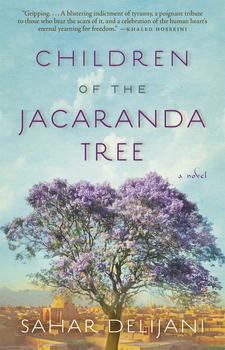
Behind The Children of the Jacaranda Tree featuring Author Sahar Delijani

In the summer of 1988, the last year of Iran-Iraq war, around 4,000 to 12,000 political prisoners were executed in prisons of Iran by the newly established Islamic regime. The bodies of these prisoners were dumped into mass graves and into oblivion.

An unprecedented political purge in modern Iranian history, this massacre marked the extent of which the regime was willing to go to fully establish power. A dictatorship was born in Iran.

My parents, who had been arrested in 1983 because of their political activism against the regime, were released before this atrocity took place. My father just six months earlier. My uncle, however, was still in prison. He was executed that summer; his body too was dumped into an unmarked mass grave.

My childhood was accompanied by these stories, told in hushed voices, at homes, at night with friends of my parents who had all been cellmates in the infamous Evin Prison. Outside of this circle of shared stories, no one spoke about it. No one mentioned it. No one seemed to know. And us, children of these dissidents, heard these stories. We were never the direct interlocutors, but our nightly games were surrounded by the hum of these murmuring conversations that we knew we could never repeat outside of our houses. For although our parents laughed and smiled and spoke in soft tones to reassure us that everything was fine, we could still sense the fear, the grief and the apprehension in their voices. And we knew we had to do whatever we could to protect our mothers and our fathers.

When I began to write Children of the Jacaranda Tree, I had three very specific children in mind: my brother, my cousin, and I. The three children who were raised by my grandparents and aunt while our parents were languishing in Evin Prison. Then slowly, my thoughts were ridden with voices of other children, all children of revolutionaries soon to become children of the persecuted, the imprisoned, the executed. Some of these voices were based on children I knew, some were rising in bits and pieces in my imagination. But what we all had in common, both the real and the imaginary, was that we were all children without parents. Some for a few months, some for a few years, and some forever.

And yet, I could not speak about the children without beginning with the parents. Our lives were intricately and relentlessly connected. What we are today is a continuation of what our parents were thirty years before on the eve of the Iranian revolution. That is when I began speaking to my parents. I spoke to my mother about my birth in prison, to my father about a bracelet of date stones he had made for me while in jail, about my executed uncle I had never come to know, an uncle whose memory was as undeniable and present as it was silent and subdued. What my parents told me gave me enough ground to speak of them and of us, and of an event that not only changed the life of my family forever but inexorably changed the course of history in Iran.


Sahar Delijani was born in Tehran’s Evin Prison in 1983 and grew up in California, where she graduated from the University of California, Berkeley.  She makes her home with her husband in Turin Italy.  Children of the Jacaranda Tree is her first novel; it has been translated into twenty-seven languages and published in more than seventy-five countries.  Find out more at SaharDelijani.com/en.


Amazon
Barnes and Noble

Neda is born in Evin Prison, where her mother is allowed to nurse her for months before the arms of a guard appear at the cell door one day and, simply, take her away. Omid, at age three, witnesses the arrests of his political activist parents from his perch at their kitchen table, yogurt dripping from his fingertips. More than twenty years after the violent, bloody purge that took place inside Tehran’s prisons, Sheida learns that her father was one of those executed, that the silent void firmly planted between her and her mother all these years was not just the sad loss that comes with death but the anguish, the horror, of murder.

Neda, Omid, and Sheida are just three of the many unforgettable characters in Sahar Delijani’s startling debut novel, Children of the Jacaranda Tree. Set in post-revolutionary Iran, from 1983 to 2011, it follows a group of mothers, fathers, children, and lovers, some connected by family, others brought together by the tide of history that forces its way into their lives. Finally, years later, it is the next generation that is left with the burden of the past and their country’s tenuous future as a new wave of protest and political strife begins.

Based on the harrowing experiences of Sahar Delijani, her family and friends, Children of the Jacaranda Tree is a stunningly evocative look at the intimate side of revolution. Told from alternating perspectives that connect to Iran’s current political stirrings while vividly recounting a past that must never be forgotten, it is a moving, timely drama about three generations of men and women moved by love, inspired by poetry, and motivated by dreams of justice and freedom.