Q&A with author Matt Cook

What inspired you to become a writer?

At six, I knew I wanted to tell stories. My family was taking a road trip through Europe. Sitting in the car and looking out at the mountains, shores, forests, and castles, I began drawing maps of fantasy worlds and naming specific places and people. My love of knights and wizards gave rise to a fantasy novel called Tovar’s Enchantment, which I finished in 2001 and rewrote into a longer and quite different book, completed four years later. Around that time, I was becoming more interested in writing and reading real-world stories, particularly involving espionage.  

You have an interesting background that involves magic. Tell us about it.

My grandfather was always pulling coins out of my ear when I was little. My dad, too, often showed me tricks involving science. And I was enchanted with wizards, in the midst of creating a fantasy story. An interest in magic came naturally. As a teenager, I became a member of the Magic Castle Junior Society and began performing professionally at private parties for Hollywood celebrities. The wonderful thing about magic is that it helps overcome the language barrier. In travel, magic has helped me communicate with people when we don’t use the same words. Mystery is universal. A deck of cards is the best universal translator you can find. 

Your debut thriller, Sabotage, comes out in September. Tells us about it. 

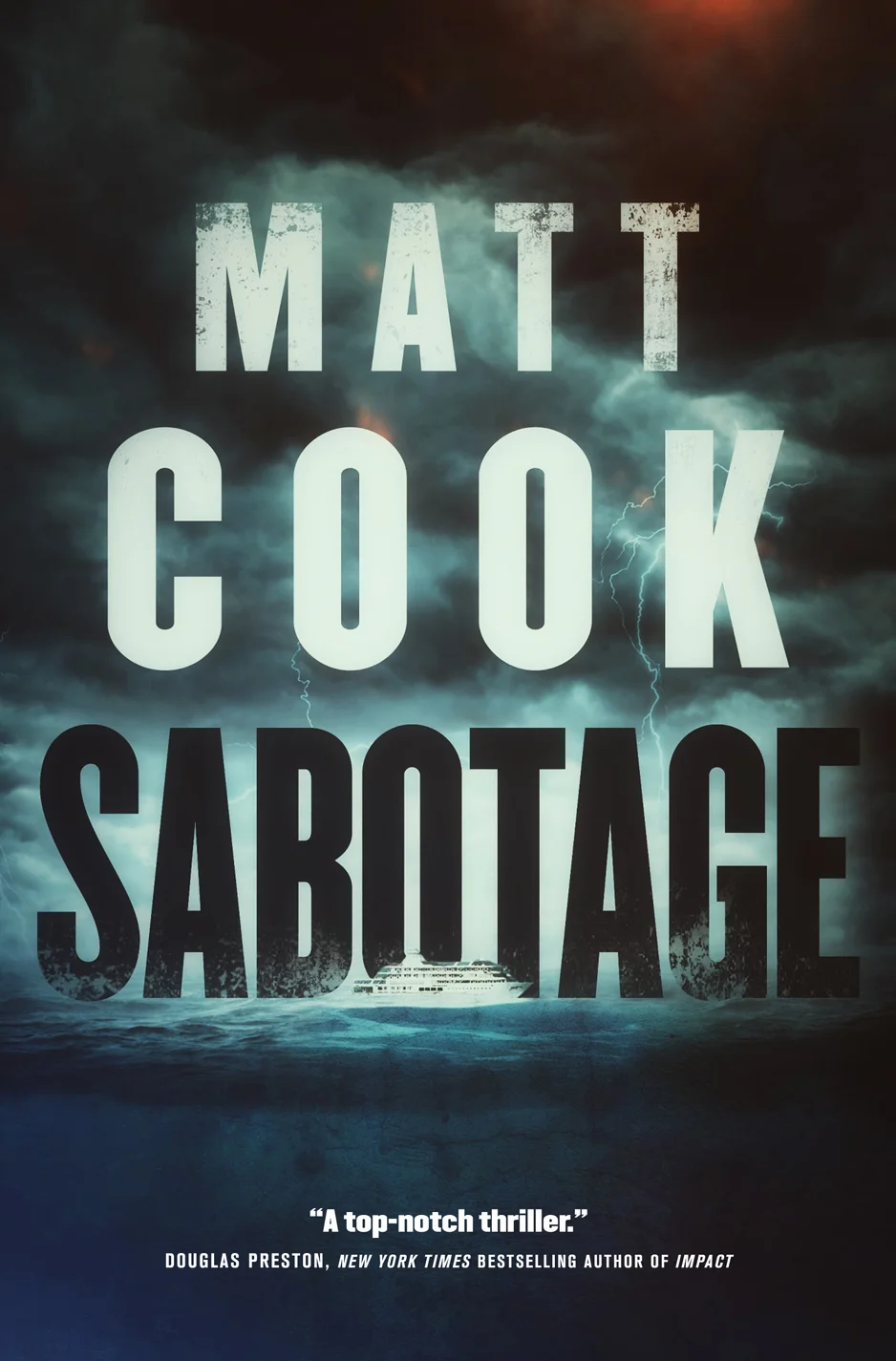
Sabotage is a story of espionage on the high seas, arriving September 9, 2014 from Forge Books. In the story, an extortionist commandeers a weapons technology that could alter the international balance of power. Nothing is known about him, other than his alias: “Viking.” Trapped in a bidding war for the technology with terrorist conspirators, the responsible defense corporation can’t touch him as long as he controls a hijacked cruise ship in the North Atlantic. The key to bringing him down may lie in the disappearance of Stanford professor Malcolm Clare, a celebrated aviator, entrepreneur, and aerospace engineer. 

Searching for Clare is doctoral candidate Austin Hardy, who seeks out the man’s daughter, Victoria—a fellow student with a secret that sweeps them to Saint Petersburg. Aided by a team of graduate students on campus, they must devise Trojan horses and outfox an assassin to unravel the extortionist’s scheme. Failure would ensure economic disaster for the United States.

The story also follows a former Air Force combat weatherman, Jake Rove, who is one of three thousand passengers held hostage aboard the luxury liner. He’s determined to weaken the ship’s hijackers. He evades detection, dives by night, and communicates intelligence to the Stanford team on land as they uncover a trail of deception and sabotage. 

What are you currently reading? 

Dome City Blues by Jeff Edwards. A fan of his military fiction, I’m also loving his foray into futurism as seen through the eyes of a grieving former detective, who gets drawn into a dark and unusual case in a futuristic world where people must live under domes for protection.  
 
Having accomplished your first book, what is your reflection of the process? Would you have done anything differently? 

In writing Sabotage, I wish I had spent more time creating dramatic conflict, rather than thinking so much about the action. It’s helpful to identify the source of the biggest thrills. If you think about some of the greatest thrill scenes you’ve ever read or watched in film, they aren’t necessarily the action or fight scenes. The most exciting scenes are often those that offer the threat of action—at any moment, the tension could boil over and cause a fight. Once the fight starts, all bets are off, and much of the tension is already satisfied, even as the fight continues. 

The biggest thrills come from dramatic conflict between characters. By dramatic conflict, I mean the discovery of a clash or alignment of motivations, or the threat or anticipation of such a discovery. For example, in Ken Follett’s Pillars of the Earth, after Jack sets fire to the old cathedral to create work for his family, the reader is left wondering for the rest of the book when someone will uncover his act of arson. In his book Whiteout, you have a band of thieves taken in during a storm, who have stolen from the family that took them in, and readers wonder when and how the family will discover their treachery. 

If you were stranded on island and could only take three books, what would they be?

The best three island survival guides available! Okay, assuming fiction: (1) Atlas Shrugged by Ayn Rand; with a cast of multi-dimensional characters, the book offers a thorough examination of the role of the mind in man’s life, a complete philosophy, and a portrayal of the author’s ideal man. (2) Catch-22 by Joseph Heller, for endless laughs. (3) The Pillars of the Earth by Ken Follett, a meticulously researched medieval drama whose themes of love, dedication, and tenacity were especially moving to me. 

Are you currently working on anything that you can share?

At this point, just a tease: The next book is not a sequel. It’s darker, and set in a different time. The research has been fascinating. 

Any advice for aspiring authors?

“Writing” a novel seems like it should entail putting words on a page, but the critical part comes before the first word is written. Give yourself plenty of time to think through your theme, plot, and most importantly, characters. Develop them from the inside out before you start the manuscript. Consider giving each major character a two-to-four page biography. The content may or may not appear in the final product, but structuring your thoughts will help you achieve consistency and dimensionality of character. 

If you want to get more information on Matt, you can reach him on his website or Facebook!

About the Book

A cruise ship loses power in the North Atlantic. A satellite launches in the South Pacific. Professor Malcolm Clare—celebrated aviator, entrepreneur, and aerospace engineer—disappears from Stanford University and wakes up aboard an unknown jet, minutes before the aircraft plunges into the high seas.

An extortionist code-named “Viking” has seized control of a private warfare technology, pitting a U.S. defense corporation against terrorist conspirators in a bidding war. His leverage: a threat to destroy the luxury liner and its 3,000 passengers.

Stanford doctoral student Austin Hardy, probing the disappearance of his professor, seeks out Malcolm Clare’s daughter Victoria, an icy brunette with a secret that sweeps them to Saint Petersburg. Helped by a team of graduates on campus, they must devise Trojan horses, outfox an assassin, escape murder in Bruges, and sidestep treachery in order to unravel Viking’s scheme. Failure would ensure economic armageddon in the United States.

Both on U.S. soil and thousands of miles away, the story roars into action at supersonic speed. Filled with an enigmatic cast of characters, Sabotage, Matt Cook’s debut novel, is a sure thrill ride for those who love the puzzles of technology, cryptology, and people. 
Q & A with author Nancy Christie

The characters in the stories all seem a little (in some case, a lot!) wounded or vulnerable. What draws you to write about these types of characters?

I’m not entirely sure. It’s not like I set out to write stories about odd, eccentric or unstable people. It’s just, for some reason, I am drawn to those types of people—perhaps it’s one of those “There, but for the grace of God” things.

My fiction—or at least, my short fiction—tends to be about people who are damaged in some way—by what they have done to themselves or by what was done to them, by what they have received, what they gave up, or what was taken from them. They are, for the most part, struggling to navigate through dangerous waters. Some survive and move forward toward land, some are just treading water, and some don’t even know that they have lost the battle and are, even now, drowning.

I feel sorry for those people, wish I could do something for them, and perhaps, in the writing of their stories, that is what I am doing. Because somewhere out there, there is a real person who is held in thrall by his or her obsessions, who is controlled by past or present circumstances, who wants to live a happy, normal, balanced life but finds that the tightrope of life vibrates too much and maintaining equilibrium is but a dream.

“Dream”—and there it is again. The idea of what we want and what we have. For some of us—perhaps for most of us—the former is the dream and the latter is the reality and never the twain shall meet.

Where did the idea of the cover art for TRAVELING LEFT OF CENTER come from?

From the very beginning—even before I knew it would be a book!—I had an image in mind for the book cover. The cover is a literal interpretation of each character’s metaphorical journey on the road of life. Some of them zig-zag across the center line only to pull back to the right side at the last moment, while others cross once and never make it back in time. And then, there are the few who are merrily driving right down the center, every now and then drifting first to the left and then to the right, blissfully unaware that they are courting disaster. When I shared the concept with my publisher, it took only a few tweaks before we had the “ah hah!” moment and said “This is it!” and after a few revisions, we successfully “birthed” this book cover!

You made a reference to your “short fiction”—does that mean there is a novel or two kicking around in your writer’s closet? And are those characters damaged as well?

Yes—two that I have finished and several more in various stages of creation. And no, those characters are more normal (whatever that means!) although they too have their own battles. But those battles are, in a sense, more conventional—trying to figure what they want out of life, trying to carve a new identity and role when circumstances alter.

I don’t think I could sustain a story line like “Annabelle” for fifty or sixty-thousand words. It’s not a writing thing but a temperament thing—it would exhaust me psychologically to become so immersed for so long in that type of story. When I write, I live with my characters. It would be too draining to live with Annabelle or Sarah in “Skating on Thin Ice” for months or years on end.

What was your “writer dream”—your goal— when you began to write? Has it changed over the years?

I don’t think I had a dream. Certainly, I never pictured myself holding a book with my name on it. Writing is such a natural part of me that I never thought about it as an occupation or a goal, any more than I would think about breathing as a profession. It was just something I did.

Of course now, with two books—TRAVELING LEFT OF CENTER and my non-fiction book, THE GIFTS OF CHANGE— in print and two short stories as e-books plus others that have been published in literary journals, I do have a dream or two. Great reviews in The Times. Accolades from well-known literary fiction writers. An award or two to stick somewhere on my bookshelf—next to about a dozen foreign translations of my collection!

Or maybe my accountant telling me that my royalties have pushed me into a different income bracket!

Where do you do most of your writing?

I’d love to say that I write on some special paper in some special notebook using some special pen but the reality is I am a keyboard writer. I hate to transcribe and sometimes can’t even read my own notes, so I write using the computer. But most of the times, the ideas for the story come when I am far from my electronic secretary. I’m out on a run or mowing the lawn or driving along somewhere and, for no reason whatsoever, the opening lines of dialogue fill my mind and it’s off to the races! Sometimes, if it will be awhile before I can get back o the computer, I have to stop myself from going too far lest I forget all the good parts!

Do you have a theme you return to time and again?

Probably change. I mean, that is the constant we all face, isn’t it? We are only fooling ourselves if we think we can control everything that happens to us. So, that being the case, what do we do? How do we handle change—happy change, sad change, confusing change? That’s the predicament my characters find themselves in.

What do you want your writer’s epitaph to be?

Just two words: “Fiction Writer”


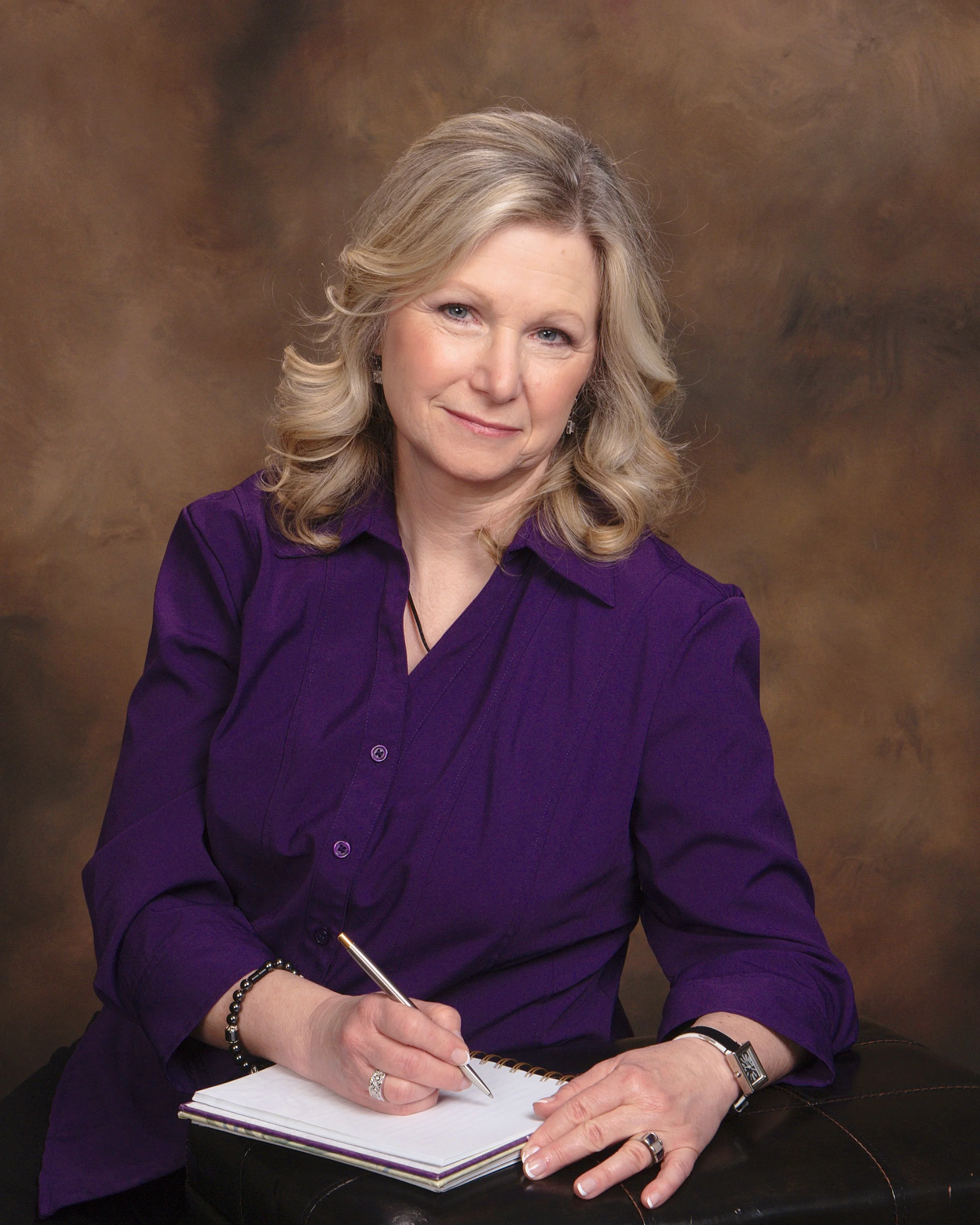
Nancy Christie is a professional writer, whose credits include both fiction and non-fiction. In addition to her fiction collection, TRAVELING LEFT OF CENTER, and two short story e-books, ANNABELLE and ALICE IN WONDERLAND (all published by Pixel Hall Press), her short stories can be found in literary publications such as EWR: Short Stories, Hypertext, Full of Crow, Fiction365, Red Fez, Wanderings, The Chaffin Journal and Xtreme.

Her inspirational book, THE GIFTS OF CHANGE, (Beyond Words/Atria) encourages readers to take a closer look at how they deal with the inevitability of change and ways in which they can use change to gain a new perspective, re-evaluate their goals and reconsider their options. Christie’s essays have also appeared in Woman’s Day, Stress-Free Living, Succeed, Experience Life, Tai Chi and Writer’s Digest. She is currently working on several other book projects, including a novel and a book for writers.

A member of the American Society of Journalists and Authors and Short Fiction Writers Guild (SFWG), Christie teaches workshops at writing conferences and schools across the country and hosts the monthly Monday Night Writers group in Canfield, Ohio.

Visit her website at www.nancychristie.com or connect with her on Facebook, Twitter, LinkedIn or at her writing blogs: Finding Fran, The Writer’s Place and One on One.


Website: www.nancychristie.com

Blogs:

Finding Fran http://www.nancychristie.com/findingfran

The Writer’s Place http://www.nancychristie.com/writersplace/

One on One http://www.nancychristie.com/oneonone/

Make a Change http://www.nancychristie.com/makeachange/

Social media links:

Facebook: http://www.facebook.com/nancychristie.writer

Google+: http://gplus.to/nancychristie

LinkedIn: http://www.linkedin.com/in/nancychristie/

Twitter: http://www.twitter.com/NChristie_OH  @NChristie_OH

Q & A with author Claudia H. Long

cl.jpg

What inspired you to become and author?

I've written for so long I almost can't imagine not writing. Many of my earlier books were written under a pen name, because I'm also a lawyer and I wasn't sure that my professional and authorial lives could mix. When Josefina's Sin (Atria/Simon & Schuster) came out in 2011, I realized I was ready for the big time, and since then have written under my own name.
 
Writing is one of the best ways to express the world within. It's not just telling people how you as the author feel, but it's a way to paint pictures with words, share a world that others may not inhabit, and at some level reflect the conflicts and major issues in life.
 
What led you to choose your genre?

I know this sounds corny but historical fiction chose me. I set out to write a story and the story took place a long time ago. I was fascinated by the time and place, and my characters happened to live there. I didn't know about all the "rules" of writing historical fiction, I just wrote. Now, of course, I know.
 
Genre is a funny thing, though. If it takes place more than fifty years ago, and is fiction, it's historical fiction. If there's even a breath of love, and the book is written by a woman, it's historical romance. If it's written by a man, not so much! Yet love inspires so much of men's work, and somehow it's not "romance." So I go with Fiction and let the genres work it out!
 
How much research goes into your work?

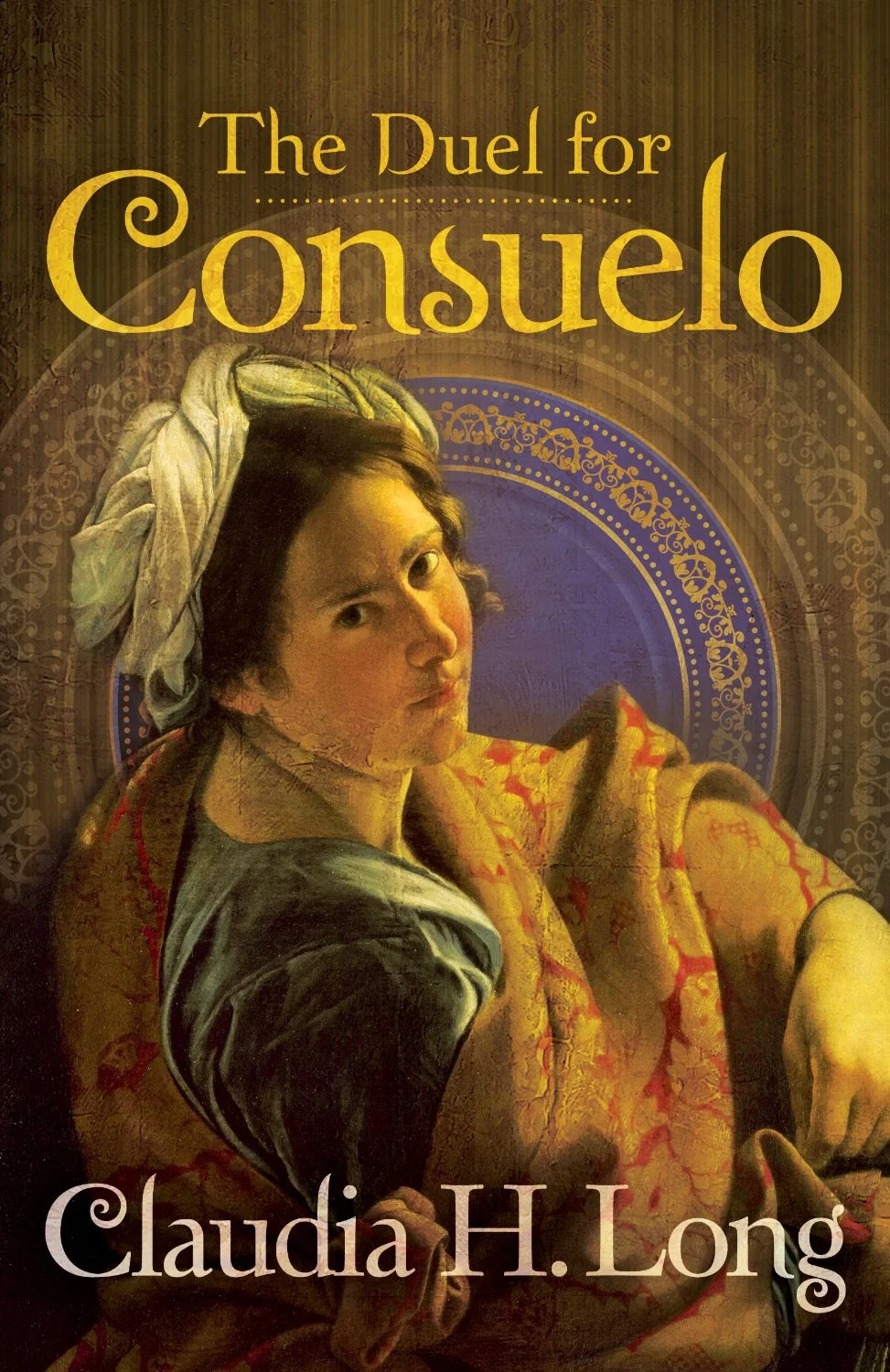
Oh, an enormous amount! With Josefina's Sin I had written my college thesis on Sor Juana Inés de la Cruz, a poet in the late 1600s in Mexico, so I knew the era well. But for The Duel for Consuelo I researched the Conversos (converts at the point of a sword during the Inquisition) and the Secret Jews or Crypto-Jews of Mexico. I spent about a year researching Consuelo and even now I find myself going off on tangents of research. There's so much to know about that difficult, complex issue.
 
The Duel for Consuelo, takes us into the early 17th century Mexico and into the Inquisition. Give us an insight into why this period inspired this story?
 
As practically everyone knows, the Jews were exiled from Spain in 1492, at the time that the Muslims were expelled as well. Persecution had gone on for centuries, of course, but Jews, Christians and Muslims lived in an uneasy peace until the expulsion edicts finally put an end to co-existing. 
 
But not all Jews left the only homes they had ever known. Having lived in Spain for four hundred years, it was as much their country as America can be to any of us. Contradictory edicts made it impossible to leave, mandatory to leave, requiring conversion, denying the merits of the conversion, all with the drumbeat of confiscation of wealth behind the acts. So not only were Jews required to leave or convert, they often were prevented from exercising either choice. If they were "lucky" they converted and eventually got out, often as financial advisers, to the New World.
 
Two-hundred-and-fifty years later, Consuelo would be a distant descendant of the original converts. But the strain of the old religion ran deep, and families could still be forced to "prove" their allegiance to the new religion. Any hint of Judaizing, or secretly practicing their old religion, was ruthlessly ferreted out by the Inquisition, which led Conversos to the practice of haciendo sábado, or "doing the Sabbath." This involved ostentatiously working on Saturday so the neighbors could see them, eating pork in public, and putting on other displays of Christianity.
 
1711 was a tumultuous year in New Spain. The new Viceroy, Duke of Linares, arrived ready to clean out corruption. Of course, that was a monumental and thankless task as those with funds, long used to a free hand, opposed him at every juncture. Throughout Europe the Enlightenment movement was growing, but in Spain, both a cash-strapped king who had waged war with France, England, and Holland, and the weakening Inquisition used their last gasps of power to stifle any "new thinking." Those new thinkers, unflatteringly called novaderos, looked to the rest of Europe for inspiration in the burgeoning sciences, streamlined poetry and prose, and a new social order.  In Mexico, ideological change was slower to come, but the freedoms of being far from the source made for independent and at time strange ways of thinking.
 
Consuelo is caught between both worlds. She lives in fear of discovery, all the while not knowing much about the beliefs of a secret Jew. She's a Catholic in her mind, but when the consequences of her heritage come home to roost she is forced to make the most difficult choices of her life.
 
What is the hardest thing about writing historical fiction?

Every now and then a detail trips you up! For instance, mangoes came to Mexico in the 1730s. So you wouldn't have a mango tree in 1690, but you could have one in 1740.
Also, some people rely only on popular sites, such as Wikipedia, for their historical knowledge, and in-depth research often turns up conflicting views or facts that don't square with popular knowledge. This occasionally upsets some people's cozy view of the past, and they can get upset when your story doesn't square with their somewhat superficial understanding of what "really happened" three or four hundred years ago.
But fiction, especially "historical fiction", lives in the interstices of history, creating story from the spaces between the facts.
 
What authors have you been inspired by?
 
The list is long! Gabriel Garcia Marquez, the most wonderful writer in the world (just sayin'), Julio Cortazar for his complexity, Elizabeth Peters with her wonderful and exquisitely researched Amelia Peabody mysteries, David Liss—an historical fiction writer of the highest order. They have inspired me, and comforted me with their books, and given me great pleasure.
 
Do you have any advice for upcoming writers?

Oh, yes indeed!
1. Ask yourself at every juncture: Is this interesting to anyone other than me? Why? If it's only interesting to you, that's wonderful for a personal diary. To reach beyond it has to captivate others.
2. Edit, edit, edit. Make sure your grammar is right. I can't tell you how many times I have cringed, reading "He gave the book to he and I," or "I recalled how him and me used to walk along…"
3. Nanowrimo. www.nanowrimo.org is the greatest boon to writers who struggle with the censor at the end of their fingers, the censor that stops them from writing what is truly interesting or meaningful. In Nanowrimo, you write a 50,000 word novel in a month (November.) Then, of course, you spend a year re-writing it (see 1 and 2 above!) but it forces you to get it on paper, or on the screen. At the end there's no prize, no one reads your work, but you have the first draft of your novel done. Every book I've ever written, whether under my own name or a pen name, was first drafted in Nanowrimo.


Claudia Long is a highly caffeinated, terminally optimistic married lady living in Northern California. She writes about early 1700’s Mexico and modern day and roaring 20′s California. Claudia practices law as a mediator for employment disputes and business collapses, has two formerly rambunctious–now grown kids, and owns four dogs and a cat. Her first mainstream novel was Josefina’s Sin, published by Simon & Schuster in 2011. Her second one, The Harlot’s Pen, was published with Devine Destinies in February 2014. Claudia grew up in Mexico City and New York, and she now lives in California.

For more information please visit Claudia H. Long’s website and blog. You can also connect with her on FacebookTwitter, and Pinterest.


Book Summary

History, love, and faith combine in a gripping novel set in early 1700’s Mexico. In this second passionate and thrilling story of the Castillo family, the daughter of a secret Jew is caught between love and the burdens of a despised and threatened religion. The Enlightenment is making slow in-roads, but Consuelo’s world is still under the dark cloud of the Inquisition. Forced to choose between protecting her ailing mother and the love of dashing Juan Carlos Castillo, Consuelo’s personal dilemma reflects the conflicts of history as they unfold in 1711 Mexico.

A rich, romantic story illuminating the timeless complexities of family, faith, and love.

Don't Let Rejections Get You Down (Yea, Right) by Rosalind James

“Dear Author: Thank you for your submission. Unfortunately . . .” And your heart sinks again.

You tell yourself that Gone With the Wind was rejected 38 times. That over a hundred publishers turned down Meg Cabot’s The Princess Diaries. That Tom Clancy, after everyone else had said no, finally found a publisher for The Hunt for Red October—the Naval Institute Press.

But still, what you’re hearing is that your book stinks. And that nobody, anywhere, will ever love it. So how do you keep from getting discouraged? Here are some thoughts that may help.

  1. Publishers are risk-averse. Also agents. I worked in the publishing industry for 20 years, and have been on the other end of this one many times. If a publisher thinks a book has a 40% chance of making $100,000, he will take that bet over a 5% chance of making $2 million. What does this mean? More of the same! They want more of what’s been selling lately (BDSM romance, anyone?), because it’s too hard to predict what will sell tomorrow.

  2. Success stories. I decided to self-publish on the day a major agent told me that she enjoyed my book very much, but “New Zealand rugby” would be too tough of a hook in the U.S. market. Avon’s new ebook line turned me down on the day I offered that same book for free on KDP Select and gave away over 14,000 copies. I sold 2,000 books in my first month, and 20,000 books in my fifth. And I’m not the only one. Being turned down by agents and publishers doesn’t mean your book isn’t good, or that the public (as opposed to the publishers) won’t buy it. You can choose either to keep trying, keep polishing your query and your manuscript, sending out a few queries at a time until you land that fish, or …

  3. Consider self-publishing. We are living in a unique moment when the barriers to entry have come crashing down. Yes, this means some books are being published that probably shouldn’t be. But it also means that authors whose books sat rejected for years are putting them out there, and guess what? People want to read them!

  4. The downside: What downside? If your book succeeds, the publishers may come to you. (It happened to me!) Maybe you’ll finance a little bit more writing time. And if it doesn’t sell much, what have you lost? Some time and the money for (I hope) a professionally designed book cover and professional editing. So make sure your book is the very best you can make it, do your research on producing and marketing your work, and give it a try.

  5. Keep writing! Whichever way you choose to go, don’t stop writing. If people whose opinions you genuinely trust are telling you your work is good, and you believe in your heart of hearts that it is, you owe it to yourself to keep going, and to find a way to put your books out there for the market to judge. Nobody’s tombstone ever said, “I wish I hadn’t pursued my dream.”

Helen Keller said it best. “Life is either a daring adventure or nothing. Security does not exist in nature, nor do the children of men as a whole experience it. Avoiding danger is no safer in the long run than exposure.”


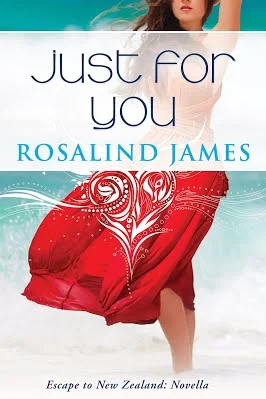
Rosalind James, the bestselling author of the Escape to New Zealand and Kincaids series, is a former marketing executive who discovered her muse after several years of living and working in paradise--also known as Australia and New Zealand. Now, she spends her days writing about delicious rugby players, reality shows, corporate intrigue, and all sorts of other wonderful things, and having more fun doing it than should be legal.

Website | Facebook | Twitter | Amazon

Book Summary

No shirt, no shoes, no … problems?

Hemi Ranapia isn’t looking for love. Fun, yes. Love, not so much. But a summer fishing holiday to laid-back Russell could turn out to be more adventure than this good-time boy ever bargained for.

Reka Harata hasn't forgotten the disastrously sexy rugby star she met a year ago, no matter how much she wishes she could. Too bad Hemi keeps refusing to be left in her past.

Sometimes, especially in New Zealand’s Maori Northland, it really does take a village. And sometimes it just takes a little faith.

Q& A with author Lisa Marie Rice

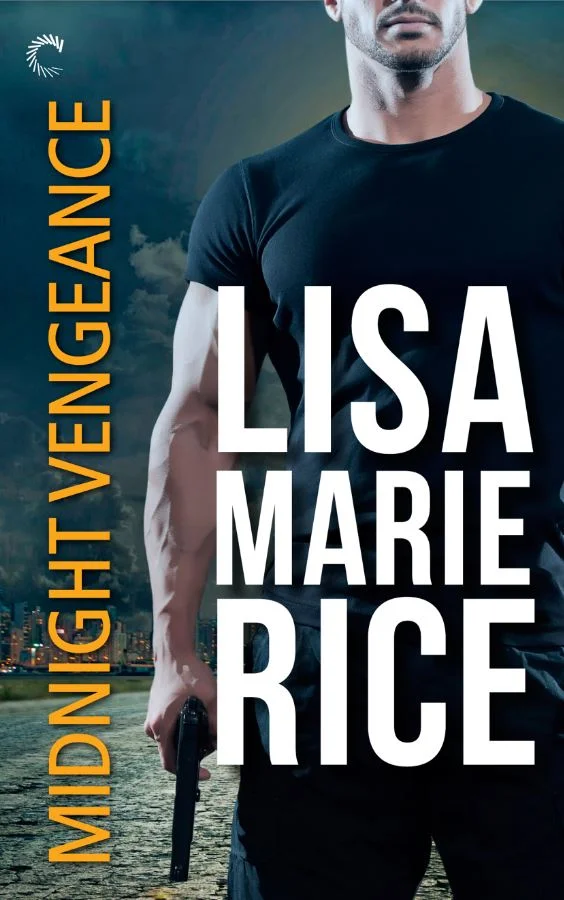
Can you tell us about your new release, Midnight Vengeance?

    Oh yeah, gladly! This is one of my favorite books, probably because it gestated so long. We first met Jacko a couple of books ago, a really rough and tough former SEAL whose molecules were rearranged when he spent an hour listening to his boss’s wife playing the harp. Allegra’s music is beautiful, ethereal, miles away from the heavy metal that is Jacko’s usual soundtrack.

    You start a novel at a moment of change for the characters. Jacko has been wildly attracted to a beautiful woman who is worlds away from his usual casual girlfriends—biker chicks who like it rough. Lauren isn’t anything like them and clearly he’s not her type either. Jacko should stay far, far away from someone like Lauren and he would—if he could. The thing is—he can’t.

    No matter how many times he tells himself to walk away from her, his feet simply won’t obey. Which is crazy, right? Because what would a beautiful woman, a frigging artist, want with him?

    And Lauren in turn doesn’t quite know what to do with Jacko. She’s not his type. His type is young and fast and stacked. Sure, Jacko is around a lot. A lot. Every time she turns around, it seems, there he is. Helping her, driving her around, just…there.

    Now how much fun is this scenario? Two people from different walks of life circling each other, each scared to make a move.

    Luckily, a homicidal maniac steps in and acts as Cupid.

    Jacko is just taken unawares by the depths of his feelings. He has no place to put them, no space in his head that recognizes them. But the feelings are there and they are real.

    Jacko is unlike anyone Lauren has ever met. Her former boyfriends were high-born and gently bred and their shooting skills and combat skills never entered the equation.

    But Jacko has hidden depths and when danger comes knocking Lauren has a chance to see just what Jacko is made of.

    What made you start writing sexy romantic suspense?

      My inspiration came from books more than movies, actually. Writers such as Nora Roberts and Suzanne Brockmann really fired me up. Somehow Hollywood has yet to do really deep and really good romantic suspense. Maybe because a romantic suspense gives equal space to hero and heroine—it’s a journey of two people-- and movies focus more on the heroes.

      To me, writing sexy romantic suspense is a no brainer. Make it over the top in every way. Make the hero and heroine super brave and smart, make the villains heart-stoppingly dangerous, make the love story burn bright with romantic and sexual energy.

      Do you have any say in the cover designs for your books?

        Some say, sure. Writers usually aren’t visually gifted and there is often a disconnect between the impression we want to give and the cover. But covers aren’t supposed to reflect the story, they reflect the mood. We went through a couple of iterations with the cover of Midnight Vengeance and I must say that I love it. It conveys the dark gritty mood perfectly.

        You’ve said before that it is really fun “being” your heroines while writing about them. Can you tell us about the process of becoming your character?

          Heroines are often a little idealized, just as romance heroes are idealized. I like putting myself into the head of my heroines and I loved being Lauren. She’s under huge stress and on the run. She’s in survival mode and her life is stripped bare, completely raw. She has to see to the heart of things which is why she can completely appreciate Jacko, a man whose path she wouldn’t ordinarily cross in normal life. But her life isn’t normal. She is forced to see things more clearly and she sees Jacko—sees his strength and deep character and sense of loyalty.

          When I sat down and ‘became’ Lauren I put myself in the shoes of a young woman in constant danger and I became very grateful for all the good things in my life and for the fact that I didn’t have a crazy guy gunning for me.

          Of course, if you do happen to have a crazy guy gunning for you, having a guy like Jacko by your side, in love with you and more than willing to give his life for you, would be a big plus.

          Writing these books I also get to live through these intense love affairs and that is a huge plus!

          How do you make the transition from writing about one character in a book to the next character in a new book?

            Well, that’s fairly easy, because a new character will have a completely different background and will react in completely different ways to things. In my new Midnight book, Midnight Promises, the heroine is facing a completely different challenge and has a different backstory. Lauren is artistic and outgoing, Felicity is a genius, a computer nerd, uneasy around people. Creating different characters is why writing books is so satisfying.
            All of your heroines are very artsy people. Do you have any other creative interests besides writing?

              I have a lot of interests—art, music, films. I think my heroines are artsy also in contrast to the hero, they bring something new into the hero’s life. They say opposites attract, but more than attracting, they complement. My guys are mostly badass tough guys. Cross them and you’ll be sorry. But most of them haven’t had much contact with the softer side of life, with the beauty and grace of life and when their women introduce them to these aspects they are blown away.

              Do you ever have to do any research when it comes to your character’s professions?

              I think anyone who has read my books realizes that I do a lot of research. I mean a lot. Many of my heroes are former military and I have done a lot of reading of soldiers’ memoirs and books on geopolitics. I also happen to find them fascinating. I’ve had scientist heroines and I make a point of reading up on at least the basics of their professions. I research everything in as much detail as I can because I like to give details in my writing, I try to make the reader feel like she is right there with the hero and heroine, saving each other and saving the day.

              Which male character have you fallen in love with the most?

                I always fall in love with the last character I wrote, so I’d have to say Jacko, definitely. However, I am starting to fall in love with the hero of my next Midnight book, Metal. He’s rough and tough and with a soft heart. He could never hurt a woman but if you are his enemy—watch out.

                Where is your favorite place to write?

                  Definitely my favorite place to write is my study. I have a fabulous study that looks out over a gorgeous terrace and treetops and in the distance a sweeping valley. The Ionian Sea is a bright blue line on the horizon and if I had binoculars strong enough, I could 15 miles away the Greek temple where Pythagorus taught math.

                  What’s your favorite scene between Jacko and Lauren?

                    I must say my favorite scene is at the beginning when they get together for the first time. Jacko has been dancing around Lauren for months and finally—it’s time! That first kiss changes everything.

                    Who would you choose to play these two characters in a movie?

                    I have two actors who would be perfect and actually I kept googling their images. For Jacko, a young Vin Diesel, who is both tough and tender

                    http://www.imdb.com/name/nm0004874/

                    For Lauren a blue-eyed Kristen Kreuk who has exactly that delicate yet strong vibe happening:

                    http://www.imdb.com/name/nm0471036/

                    What advice can you give for aspiring writers?

                      It sounds trite but write write write and read read read. The usual estimate is that you have to write a million words of bad writing to start writing well. I know it sounds like a lot but most prolific writers wrote a lot before they started publishing. Nowadays you can write fan fiction and join writing groups and you should just write your heart out. And one day, it’s as if you slipped into a new and higher gear, and the writing takes off.

                      Read a lot, always. Study writers you admire, figure out how they manage to keep you enthralled and touch your heart. It’s a gift but it is also a technique. Learn all the techniques then pare away what doesn’t work for you until you have the beating heart of what you are meant to write.

                      Do you agree that writing at a later age is better because you have more life experience behind you?

                        Yes, absolutely. You need to have lived a lot before you can infuse your characters with life. You need to have travelled widely, studied profoundly, you should have your heart broken a couple of times, been betrayed, been astonished by acts of generosity, have admired wisdom. Live life to the fullest is a good maxim for anyone, not just writers.

                        If you weren’t writing books, what else would you like to do?

                          Well, I had a previous life as a simultaneous interpreter and translator, so this is Life 2.0. I travelled extensively, interpreted fascinating people, including heads of state, worked for international institutions and learned how the world works. So I guess you could say I’ve already ticked off everything on my Bucket List and now I’m doing precisely what I was meant to do. I love writing books and hope to die right in the middle of writing another romance!

                          What are you working on next?

                            I’m writing the sequel to Midnight Vengeance, Midnight Promises, and I am having a ton of fun. Look for it in January 2015!


                            Lisa Marie Rice is eternally 30 years old and will never age. She is tall and willowy and beautiful. Men drop at her feet like ripe pears. She has won every major book prize in the world. She is a black belt with advanced degrees in archaeology, nuclear physics, and Tibetan literature. She is a concert pianist. Did I mention her Nobel Prize? Of course, Lisa Marie Rice is a virtual woman who exists only at the keyboard when writing erotic romance. She disappears when the monitor winks off.


                            To read an an excerpt from this book, just click on the book:

                            Morton “Jacko” Jackman isn’t afraid of anything. He’s a former Navy SEAL sniper who has been in more firefights than most people have had hot meals and there’s one thing he knows for sure. Lauren Dare scares the crap out of him.
                             
                            Gorgeous, talented and refined, she’s the type of woman who would never be interested in a roughneck like him. So he’s loved her fiercely in secret, taken her art classes and kept a watchful but comfortable distance. Until now.
                             
                            Lauren had finally found a home in Portland, far from her real identity, far from the memories of her mother’s death, and far from the reaches of the drugged-out psycho who’s already tried to kill her twice. One tiny misstep—a single photograph—has shattered it all. She has no choice but to run again, but this time she’ll give herself a proper farewell: one night with Jacko.
                             
                            Their highly charged emotional encounter changes everything. In Jacko’s arms there cannot be fear, there can only be pleasure. Anyone wishing her harm will have to pass through him—and Jacko is a hard man to kill.

                            Magical & Marvelous by Arthur Powers

                            “In Latin America,” says my friend, Bernardo Aparício, “magic-realism is simply realism.”

                            In 1969, I went to Brazil a thorough rationalist and agnostic.  Academically successful, I had completed my first year at Harvard Law School, then taken a leave of absence.  I returned to Harvard five years later to finish school, but I was in many ways a changed man.

                            Part  of the change came from living and working with people for whom the “supernatural” is simply part of life.  Bernardo is right – Latin Americans do not generally distinguish between what we call the “supernatural” and the natural: all is part of a single whole.  I’ll illustrate with a true story.

                            In the 1980s, my wife, Brenda, and I were living in a small village on the Araguaia River, in the eastern Amazon basin.  We were ministering to a rural parish that the Franciscan priests were able to visit only once a month.   Our good friend, Fr. Tom Jones (OFM) was called back to the United States, and asked us if we would take care of his canary.  So the canary came and lived in a cage on our veranda, and blessed us with song.

                            One morning a parishoner, Dona Jaíra, came to talk with Brenda about parish matters.  Dona Jaíra was an intelligent woman, raised in the region and active in the rosary group.  As she was leaving, they walked out onto the veranda.  Brenda looked at the cage and saw that the canary was lying on the floor, apparently sick or dying.

                            “Someone has given the canary the evil eye,” Dona Jaíra said.  Then, after a moment, “Do you mind if I cure it?”

                            “Please,” my wife responded.  We loved the canary.  “Do anything you can.”

                            Dona Jaíra went over to a bush in our garden, selected a small branch, plucked it and came back to the cage.  She inserted the branch into the cage so that it touched the canary.  She said a brief prayer.  The branch wilted; the canary stood up and began to sing.

                            Such an incident was not an isolated event.  A friend’s dead mother-in-law physically appeared to her, calmly asking that a mass be said so that she could rest in peace.   When a farm school we helped organize was plagued by poisonous snakes, a local curandeiro blessed three corners of the property and guaranteed that snakes would not bother it for the next two years – they didn’t.

                            Today our friend, Rich Davis – who also lived in Brazil – sent me a wonderful article from NPR - http://wboi.org/post/letter-beyond-grave-tale-love-murder-and-brazilian-law.   An ex-cop and a crime boss had a gunfight over a woman;  the crime boss was killed.   The court admitted as evidence a letter from a medium who had been contacted by the dead man.  The dead man acknowledged (from beyond the grave) that the fight had been his fault.   The ex-cop was acquitted.

                            Brazil – a marvelous and magical country.


                            Arthur Powers went to Brazil in 1969 and lived most his adult life there. From 1985 to 1997, he and his wife served with the Franciscan Friars in the Amazon, doing pastoral work and organizing subsistence farmers and rural workers’ unions in a region of violent land conflicts. The Powers currently live in Raleigh North Carolina.

                            Arthur received a Fellowship in Fiction from the Massachusetts Artists Foundation, three annual awards for short fiction from the Catholic Press Association, and 2nd place in the 2008 Tom Howard Fiction Contest. His poetry, fiction, and essays have appeared in many magazines & anthologies. He is the author of A Hero For The People: Stories From The Brazilian Backlands (Press 53, 2013) and The Book of Jotham (Tuscany Press, 2013).