Why Authors Walk Away From Good, Big 5 Publisher by Harry Bingham

I’ve been an author for more than fifteen years. My first book came out with HarperCollins in February 2000 and I’ve been going ever since. (I’m British and the book came out in the UK and elsewhere, though I’m a relative newbie in the US.)

Fifteen years might not sound such a long time, but I’ve already had two literary agents, four publishers, seven editors, and thirteen books—even more if you include things I’ve worked on as editor or ghost. More to the point, I’ve witnessed the publishing industry evolve through at least four different eras.

The first era—I just caught its tail end—was back when price discounting was still modest. Back then, publishers still had marketing cash to spend on actual marketing. HarperCollins spent about £50,000 ($75,000) on launching my very first book, with posters up at rail stations and airports, on the London Underground and elsewhere. I was lucky: those times were already ending.

Before long, retailers started to become more assertive. They slashed prices to lure consumers and sold space in their retail promotions to replace that lost income. The cash that had once been used to attract consumers was now going straight to bookshops to compensate them for the pain of all that discounting. No more posters, no more direct appeals to the consumer.

That was the second era, but it was still pre-Amazon, pre-ebook. And as that third era dawned—the Dawn of Bezos—it turned out that the actual digitization issue was easy. (E-reader technology? Get Amazon and Apple to invent something. Distribution? Leave it to Amazon and iTunes.) The thing that truly gave publishers sleepless nights was the risk that their traditional retail buyers would go extinct.

In both the US and the UK, Borders collapsed. Barnes & Noble and Waterstones, the book retail leaders in either country, were either loss-making or only marginally in profit, a situation which still persists.

Publishers were finding it increasingly hard to sell in print and to sell right across their front lists—but it soon turned out that they didn’t have to, either, or not the way they used to. The huge margins they made on ebooks more than made up for the loss of print revenues. The equally huge margins they made on their backlist ebook titles made up for the struggles of the frontliners.

In a weird, paradoxical way, Amazon provided both the threat (the rise of the ebook) and the solution (those giant margins).

The net result? It turns out that now, at the end of that third era, publishers are making more money than they ever have done before. All those tedious stories about Amazon wanting to swat publishers from existence somehow ignore the fact that Amazon is only marginally profitable, while the publishers are making a fortune. (And, yes, literary agents know how much money publishers are making, but they still haven’t managed to reverse the long decline in author incomes. No sign of that changing.)

But what about the author in all this? What does it mean for you? What has it meant for me?

Well, I don’t know. Anyone who claims to have answers is a fraud: the wheel is still in spin, the ball has yet to settle. But I do have a story that contains the seeds of an answer.

I said I’ve been through a number of different books, different editors. Well, I should really have added that I’ve been through a number of careers too. I started out writing financial thrillers. Those things morphed into historical fiction. Then I jumped over to nonfiction, both specialist and non-specialist. But I could never stay with nonfiction forever. I just liked telling stories too much. So I started writing a series of mystery novels, featuring a young Welsh detective, Fiona Griffiths.

Those books did really nicely, and still are. They sold in the UK, in the US, and to other publishers in Germany, France, Spain, Italy, and elsewhere. A production company optioned the rights to the first book and that book has already successfully been televised.

Which is nice. My career has had some ups and downs (more about that here if you’re interested), and it’s wonderful to be writing series fiction that’s performing strongly. It’s like having all the nice bits of being a writer (the writing) without all the worst bits (the massive financial insecurity).

Only there’s a twist in this tale, a twist that caught me totally by surprise.

In the US, my books were bought by Delacorte/Bantam Dell, part of Random House. I enjoyed a superb editor and the firm’s quite excellent production standards. I got some incredible reviews—that first book, Talking to the Dead, had starred reviews in Publishers Weekly and Kirkus and was a crime book of the year for the Boston Globe and theSeattle Times. What’s more, my ebook sales were strong enough that I’d earned out my author advance before the book had even come out in paperback. That’s good going.

As you can imagine, I was pretty pleased. An author’s turbulent life looked, for once, to be pretty calm. With hindsight, I was like the pretty teenager in the weird, creaky house who decided, “Nope, there’s nothing to worry about here.” The quiet bit before the horror starts.

Because the two books I did with Random sold well as ebooks, they pretty much failed in print. The $27 hardback isn’t an obviously desirable product for today’s crime/mystery reader—certainly not when debuts are concerned—and the book basically flunked. Because retailers couldn’t shift the hardback, they didn’t want to be burned twice, so they ordered the paperback only in very limited numbers. That too sold horribly.

What we had was a paradox—emblematic of that third era in publishing—where a book could have (a) great reviews, (b) a good author-publisher relationship, (c) excellent production quality, (d) strong ebook sales, yet (e) be a print failure. What were we to do?

To me, it was obvious that we needed to establish the series in stages. We’d start with ebooks, priced so as to attract the risk-averse buyer. Then, once we’d built a base, we’d start to issue affordably priced paperbacks. Then, once all that was strong enough, we’d offer the premium priced hardback too. Simple.

Only not. For one thing, Random House wasn’t set up to work like that. There were e-only imprints (Alibi) and there were hardback imprints (Delacorte). There wasn’t, and isn’t, an imprint able simply to publish a title in whatever was most natural to that author and that book.

And then too, if I was going to be published e-only by Random House, I would receive just 25% of net ebook receipts. That’s about 17% of the ebook’s cover price as opposed to more like 70% by simply publishing direct with Amazon. I couldn’t understand why I’d want to do that. I mean, yes, I’d have listened if they’d come to me saying, “Harry, I know giving up 75% of those net receipts sounds like a lot, but we’re going to add a whole ton of value to the publication process. We’re going to do a whole heap of things that you can’t do on your own. And here’s a stack of in-house data which shows that we can boost your sales way past the point you could achieve.”

They didn’t say that. They didn’t actually make any argument at all. When I said no to 25% royalties, that was it. No further conversation.

And I was OK with that. I very happily chose to self-publish the third book in the series—The Strange Death of Fiona Griffiths—and will accept whatever outcome the market cares to deliver. 

That book has just come out. It cost me about $2,000 to publish the book. That sum includes cover design, editorial work, manuscript conversion and some marketing activity—primarily an author blog tour and a paid Kirkus review. I know there’s debate in the indie community as to whether it makes sense to pay $425 for a Kirkus review, but the investment has come good for me. Kirkus described the book as “exceptional” and gave me some very quotable quotes. I don’t think you can easily quantify the impact of that review but, for me, I’m much happier marketing a book that has some potent third-party endorsements.

It’s way too soon in the publication process to evaluate whether my experiment has been successful, but my pre-orders were sufficiently good that I’d repaid my upfront investment on the day of publication itself. The advance I’d got from Random House was $30,000 per book, so I’ve a way to go before equalling that, but I don’t rule out succeeding. It’s just too soon to say.

And this, I think, will be the theme of this fourth era that’s now just possibly emerging. It’s a world where authors with plenty of Big 5 sales experience choose to say, “You know what, I’m not playing this game any more.” Where authors make a positive choice to walk away from the terms offered by good, regular publishers.

The much-published Claire Cook has already described on this blog her own journey away from the Big 5. Her story is different from mine, but it’s also the same. There are others too. On my own website, William Kowalski—a critically acclaimed bestselling author—talks about why he made a similar journey. A spatter of refuseniks.

The traffic isn’t only one way. Hugh Howey is the epitome of self-publishing success, but he was (rightly) happy to accept a huge print-only deal from Simon & Schuster. He’s also 100% conventionally published in the UK. There are plenty of other examples of self-pub authors who have decided to take all or part of their business over to the traditional model.

And that’s great. The fourth era isn’t one where Indie Publishers Destroy The Evil Big 5 Oligopoly, or vice versa. This new era of publishing is one where authors have a meaningful choice. What that choice is will depend on the author, the territory, the genre, and multiple other issues which will vary across every different situation.

For what it’s worth, I suspect that publishers will adapt fine: they’ve adapted to everything else.Agents too: they’re going to have to understand that their authors have more options than they did before, and that their agencies can’t necessarily take a cut of everything that moves. (Again, most agents will navigate this shift just fine: my own literary agent has shown immaculate integrity and professionalism.)

But the fact that some major players will be able to adapt doesn’t mean that nothing’s changed. On the contrary, from my own point of view, the ability to say, “Thank you, but no” to a massive publisher is an utterly revolutionary and liberating shift. And the more that authors move from trad-pub to self-pub and back again, the more publishers will be aware that things have changed. If they treat authors poorly—and they do far, far too often—they’ll need to bear in mind that the author in question now has a choice about where to take the next book, far more than was ever previously the case.

Of all the ages of publishing that I’ve lived through, this is the one I’m happiest to be part of. The one that feels most exciting, most aglow with promise.

Long live the revolution! And may you always find readers!

About Harry Bingham

Harry is currently writing a crime series, featuring a young Welsh detective, Fiona Griffiths. The series has sold to publishers in the UK (Orion), the US (Random House), as well as France, Germany, Italy, Spain, the Netherlands and elsewhere. The first novel was televised by Bonafide and broadcast on Sky Living. The novels are notable mostly for the strong voice and strange character of their protagonist. The first three titles in the series are Talking to the Dead, Love Story with Murders, and The Strange Death of FIona Griffiths.

You connect with Harry via: Website | Twitter

About The Strange Death of Fiona Griffiths
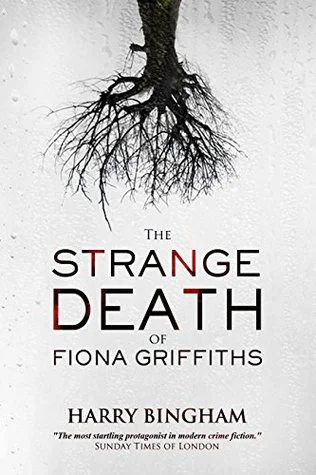
It started out as nothing much. A minor payroll fraud at a furniture store in South Wales. No homicide involved, no corpses. Detective Constable Fiona Griffiths fights to get free of the case, but loses. She’s tasked with the investigation.

She begins her enquiries, only to discover the corpse of a woman who’s starved to death. Looks further, and soon realizes that within the first, smaller crime, a vaster one looms: the most audacious theft in history.

Fiona’s bosses need a copper willing to go undercover, and they ask Fiona to play the role of a timid payroll clerk so that she can penetrate the criminal gang from within.

Fiona will be alone, she’ll be lethally vulnerable – and her fragile grip on ‘Planet Normal’ will be tested as never before …

Living With a Bronc Rider by Joanne Kennedy

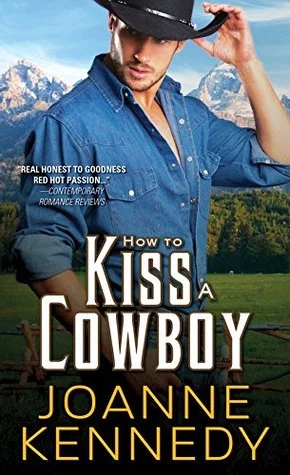
The love and determination of a rough-riding cowboy face off against the stubborn pride of a champion barrel racer in my latest Western romance How To Kiss A Cowboy. Bronc rider Brady Caine has always admired Suze Carlyle’s all-or-nothing riding style, and an unexpected night of romance reveals that she loves the way she rides—holding nothing back.

Suze knows better than to fall for a heartbreaker like Brady, but when he gets her an endorsement deal worth millions, she agrees to ride with him for a photo shoot. Brady’s reckless riding leads to an accident that threatens to end her career, and he vows to care for Suze until she’s back in the saddle. But how can she ever forgive the man who took away her one and only dream when it was almost within reach?

I love to write about rodeo. For me, there’s nothing more exciting than the roughstock riders. I love to watch the way the fringe on their fancy chaps flies as they catch the rhythm of a rank bronc’s bucking, and my heart flutters when they spring to the ground after the buzzer and wave their hat to the crowd.

If you’ve ever dreamed of romancing a cowboy and becoming part of this wild Western world, you need to understand the rodeo lifestyle isn’t easy. Sure, the good times are great, but there are a lot of challenges to face, and every rodeo high is balanced by a disappointing ride or a bad draw. Here’s a quick guide to some of the difficulties you’ll face, and how to be the kind of woman who wins a cowboy’s love.

Do’s and Don’ts of Life with a Bronc Rider

Do expect him to exit the arena high on life with energy to burn. When he climbs on that bronc, his system is amped up with more adrenaline than he can possibly burn before that eight-second buzzer. If you’re lucky, you’ll benefit from what’s left over by getting some riding time of your own!

Don’t expect him to take you out dancing every night after the rodeo. It might look like he just hops on a rides his heart out, but he’s as serious as any other professional athlete, and his job requires him to stay focused, well-rested, and fit. The cowboys who win are the ones you don’t see at the beer tents and bars.

Do expect to spend a lot of time on the road—or a lot of time alone, wondering where your bronc rider’s spending that extra adrenaline. Your choice—and I think it’s a pretty easy one. Long rides mean long conversations, and you’ll get to know your cowboy a whole lot better if you become his favorite traveling buddy. 

Don’t expect him to do all the driving. Those long nights driving dark highways from one rodeo to the next can be pretty sweet, with George Strait crooning on the radio and your cowboy sleeping beside you. That rough and tumble cowboy will look innocent and boyish when he’s sleeping, but he’ll wake up with a wicked grin on his face and you on his mind.

Do expect him to spend a lot of time with his buddies. They’re not just wasting time; they’re talking about scooters and bloopers, honest buckers and trash. They’re discussing floaters and loungers, chute fighters and high rollers, and they’ll poke fun at any cowboy who grabbed the apple while they shake their heads over that honker that threw them out the back door. If you didn’t understand a word of that, you’ll have more fun going out with your girlfriends than hanging out with him.

Don’t expect your cowboy to rise in the standings if you don’t give him time for these all-important conversations. What they’re talking about is how individual horses buck, and knowing what to expect from a rank bronc can mean the difference between a high-point ride and a wreck. It could even save your cowboy’s life someday, so let him swap stories all he wants—especially if he’s hanging out with experienced cowboys who tend to finish in the money.

And finally, the most important advice of all:

Do stay true to yourself. Don’t ever, ever let a man disrespect you, no matter how big his buckle is.

Don’t be clinging vine. Make your own friends and follow your own star while supporting him as much as you can.

Don’t  nag, sulk, whine, or complain about petty things.

Do love him for what he is—a hard-working, rough-riding, all-American cowboy who loves you.

About Joanne Kennedy

Joanne Kennedy's lifelong fascination with Wyoming's unique blend of past and present inspires her to write contemporary Western romances with traditional ranch settings. In 2010 she was nominated for a RITA award for One Fine Cowboy. At various times, Joanne has dabbled in horse training, chicken farming, and bridezilla wrangling at a department store wedding registry. Her fascination with literature led to careers in bookselling and writing. She lives with two dogs and a retired fighter pilot in Cheyenne, Wyoming.

You can connect with Joanne via: Website | Goodreads | Facebook

About How to Kiss a Cowboy

Between rodeo wins and endorsement deals, Saddle Bronc Champion Brady Caine is living a charmed life. But when he causes an accident that could end a promising barrel racer’s career, he decides that he’s done with loose women and wild rides. All he wants to do is erase his mistake by getting Suze Carlyle back in the saddle.

The last person barrel racer Suze wants to see on her doorstep is the man who ended her rodeo career, but she can’t help admire Brady’s persistence. Sparks fly between them, but when her barn is sabotaged she wonders if he’s really the straight shooter he seems to be…


Before You Say, “I Do" by Renee McCoy

Aside from Black History, the month of February is also known as the Love Month. Just walk into a store, just about any store during this time of the year, and you’ll find the shelves lined with teddy bears, balloons, and heart shaped candy boxes dressed in that telling symbolic color of red. Love is in the air, there are engagements waiting to happen, but what are some things you should do before you actually say those famous words, “I do”?

If you are contemplating an engagement, consider the following:

Ø  Be transparent

Ø  Listen to what they are saying, not what you want to hear

Ø  Trust your instinct

Ø  Talk about money (credit history, bank accounts)

Ø  Introduce them to your family

I don’t claim to be the guru of dating or the “go-to” person for singles. But I do remember what it was like to be single … and waiting. I know what it is like to date someone, think he is the one, only to discover some characteristic flaw that I was not willing to compromise on. Then again, why should I? Why should anyone “settle” for less than they really want from a mate? When you get married, there are enough compromises that are to be made, but the decision to be with someone for the rest of your life … the rest of your life, requires some deep thought and intense consideration. At least it did for me because when I decided to get married, the option for divorce was well … not an option. So, with that being the case I had to be wise in my decision to whom I was to marry.
So, you may already have your own ideas of what to do before you actually utter those words “I do”, committing yourself to someone legally as well as spiritually. Let me offer my two cents on the matter. I met my husband (then an unknown person to me) and we dated for four months, and then was married. It did not take five years, it did not include empty promises; it simply involved two people who were transparent enough to allow the other to see them for who they truly are. We talked for hours at a time, we went out on dates as well as stayed in and watched rented movies. We went to church together and we visited each other families during the holidays. This is where you really get to know someone. Meet up on a holiday like Thanksgiving or Christmas and observe the extended family members in action. There is bound to be someone around that will share a story or two that may interest you. Hopefully, this will make a positive impact on your relationship.

Be sure to talk about what you have and don’t have. Do you have bad credit? Do you have a stable, consistent income? Do you have a savings account? Is there money in that savings account? Sometimes you have to be specific about the questions you ask. You don’t want to later find that the savings account they said they had only has $5.00 in it. Or even worse, a negative balance! This was not the case with my husband, praise the Lord. I’m just offering some due diligence advice for those pondering marriage. Don’t assume anything, especially since you will be trusting this person with everything that you have.

Other important questions: Do you have children? Please don’t assume that because you don’t see children or pictures of children in their house that they don’t have any. Do you want to have children? Don’t be misled by the fact that they turn to mush around other people’s children that they want some of their own, ask specifically.

My husband and I both agreed on having children before we got married and we stuck pretty close to the timeline in which we wanted to have them. Today we have been married eight years, now with two toddlers running around the house.

So, you see, when you are open enough to let that person know you for who you are, your strengths and weakness, during your fashionable days as well as not so chic moments, and they still see the natural beauty beneath a made-up appearance, you’ve got yourself a winner! Be your own champion. It does not take compromising your principles to keep him or her. It does not take your pretending to be something you’re not to please them either. It takes an honest look at who you are and what you expect from that other person. Don’t marry with the hopes of they will change. Ninety-nine percent of the time, you are dating a person at their best. So, what comes after the vows is a work in progress

About the Author

RENEE MCCOY (known to readers as Renée Allen McCoy) is a loving wife and mother, an author, but most importantly a devoted Christian. Having traveled to many parts of the world, today she, her husband, and their two children make Mississippi home. She maintains a newsletter entitled Straight Up and a devotional blog entitled In His Name.
To date, she has penned seven books that include: The Fiery Furnace series (The Kiss of Judas, Confessions, and The Eleventh Hour), Soul Ties: Breaking Up with a Past That’s Killing Your Future (non-fiction), The Christmas Beau (A True Love Novella, #1), In the Presence of My Enemies, and Single, Saved, & Searching (A True Love Novella, #2). Renée has also written for the world renowned devotional, The Upper Room (Pocket Devotional), both in digital and print.

With a heart to tell stories that will not only entertain, Renée hopes to enlighten readers to capture the message and power of God’s saving grace. Feel free to visit her online at www.ReneeAllenMccoy.com.

You can connect with Renee via: Website | Facebook | Twitter

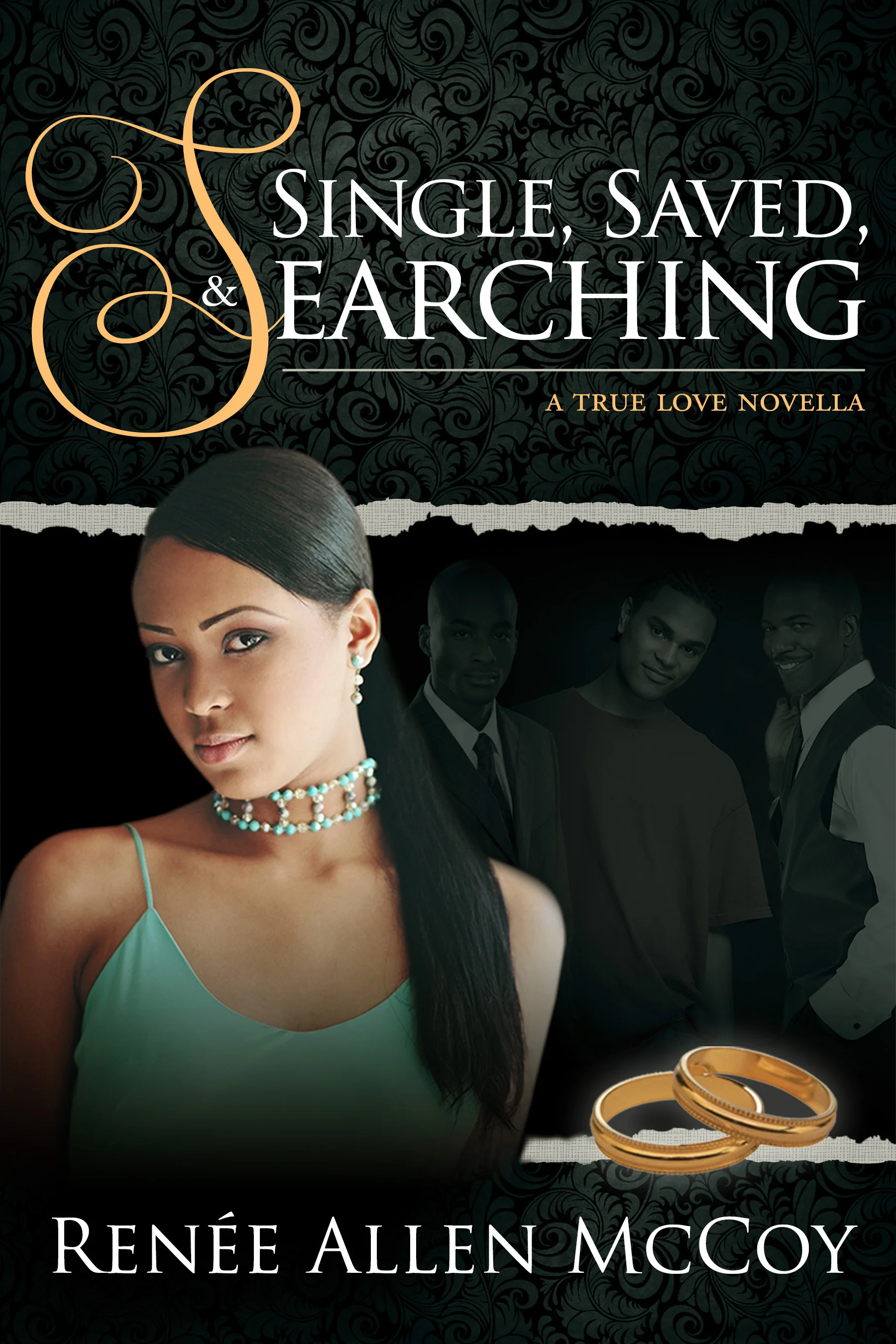
About Single, Saved and Searching

He who finds a wife finds a good thing, and obtains favor from the Lord. ~ Proverbs 18:22

“She’s getting married too?” asks the beautiful, intelligent, and single Elisha Maxwell who just received a wedding invitation from her last single best friend and her younger sister in the same week. As she stacks both invites on her kitchen countertop, she wonders when it will be her turn.

Challenged by a string of disappointing relationships, Elisha’s hope of finding Mr. Right leaves her feeling desperate and confused. Does such a man exist for her? In the wake of the most terrifying experience of her life, she is more determined now than ever to find him.

When she embarks upon a quest to change her single status to married, she finds something much more important along the way. Will she embrace the man of her dreams who seems the least likely of them all or go with someone who appeared to be her perfect match?

Single, Saved, & Searching is the second book in The True Love Novellas series.

Pages: 178 pages
Publisher: FaytheWorks Publishing LLC (December 23, 2014)

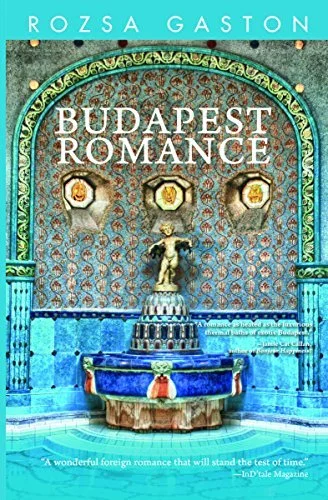
The Delights of Budapest's Thermal Bath Spas by Budapest Romance author Rozsa Gaston

Budapest in the off season? Why go? 

Budapest's thermal bath spas are reason enough. Over one hundred thermal springs located under Hungary's capital city feed waters rich in calcium, magnesium, sulfate, and bicarbonate to its numerous thermal bath spas. 

My inspiration for my latest novel, Budapest Romance? Three weeks spent in early December a few years ago in the thermal bath spas of the beloved city of my father's youth. I was there to settle his estate. By the time I left, I was changed forever by the unforgettable pleasure of bathing in Budapest's thermal bath spas. 

Foremost among them is the Széchenyi Baths, Europe's largest thermal spa. With three outdoor and fifteen indoor pools, the Széchenyi Baths is Budapest's largest public bath house and its least expensive, about $12 a day. Usually "best" and "least expensive" do not travel in the same company. In the case of the Széchenyi Baths, they do: safe for a tourist to visit alone and very clean too.

Located in Budapest's City Park, the Széchenyi Baths were designed in 1913 by Győző Czigler. Its front entrance features a rooftop border of magnificent sculptured figures looking rather playful, befitting the way spa-goers feel after a few hours of relaxation in the Széchenyi Baths' warm thermal waters. 
 
Budapest is known for its good food, fine wines, and gorgeous architecture, but I recommend it to you above all for its thermal bath spas. Other notable ones include the Gellért Baths, Rudas Baths, and Király Baths. The latter two were built in the 16th century by the Ottoman Turks and are worth visiting for the architecture alone. Budapest's thermal bath spas are open year round, with pools heated up to 104 degrees, indoors and outdoors. Airfare to Budapest in winter months? Deeply discounted. This experience is closer to being within your reach than you might imagine. 

But if time or funds do not permit, please linger awhile between the pages of Budapest Romance where more of Budapest's spiced yet sweet ambience awaits you. Budapest Romance came out in Dec. 2014 and is available in paperback or ebook editions on amazon.com or in audiobook format at www.audible.com/BudapestRomance. This 266-page contemporary sweet romance is about two foreigners finding each other in the thermal bath spas of Budapest: suitable for readers aged 16 and up.

Thank you for journeying with me here. May your 2015 be as effervescent as the warm thermal baths of Budapest. 

Cover photo of decorated arch in the Gellért Baths, Gellért Hotel, Budapest


Rozsa Gaston writes playful books on serious matters. Women getting what they want out of life is one of them. Her latest book Budapest Romance can be found on amazon.com or as an audiobook narrated by actress Romy Nordlinger of All My Children, One Life to Live at www.audible.com/BudapestRomance. Other books include Paris Adieu, Black is Not a Color, Running from Love, Dog Sitters and Lyric. Her upcoming novel is Sense of Touch, a fictionalized story of Anne of Brittany and Queen of France. 

You can reach Rozsa via: Website | Facebook | Twitter | Goodreads

About the Book

When Kati Dunai travels to Budapest to settle her father’s estate, the last thing on her mind is the pursuit of pleasure. She’s a busy international conference planner, her life rooted in Manhattan.

But from the moment she sets foot in the city of her father’s youth, it’s pleasure that pursues her. At the thermal bath spa hotel where she’s staying, she meets a Dutchman who reminds her of Béla Dunai, her Hungarian refugee father, who fled his homeland shortly after its 1956 revolution.

Jan Klassen is in Budapest to mend from a motorcycle accident. His scars have healed on the outside, but inside, he cannot forgive himself for the consequences his son now lives with forever.

Jan has never met a woman like Kati before. Her blend of New England restraint with gypsy spirit captivates him. While Jan introduces Kati to Budapest’s leisurely pace of life, Kati introduces Jan to her own leisurely pace of sensual exploration as their attraction to each other grows over six magical days.

When Kati returns to New York, their relationship continues. But it’s not just an ocean that separates them. Kati’s corporate job with frequent travel is the antithesis of the slow-paced pleasures she enjoyed in her father’s favorite city, one of Europe’s crown jewels.

Which will Kati put first—her new career or her new love; a man who reminds her of the father she never fully understood? And is it the Hungarian pleasure-loving side of herself that she really needs to understand before she can offer her heart to the man who has awakened her to who she truly is?

Buy the Book

Is It Teen Angst or Is It Depression? by Deborah Serani, Psy.D.

Depression is the most common mental illness among adolescents. Research tells us that 11% of teenagers have a diagnosable depressive disorder, but that only 1 in 5 teenagers get the help they need. So, how do parents know if their child is just going through teenage angst or dealing with a serious mental illness?
 
While moodiness, irritability and isolation are often hallmarks of teenage growing pains, it can be hard to realize where the line begins for mood disorders. The rule of thumb when dealing with depression is to examine three areas in a teen’s life to gauge what’s truly going on.  

Symptoms of Depression in Teenagers

While some of the following can be considered behaviors of a teen moving through the angst of adolescence, other symptoms are indicative of a more serious issue going on.  The first thing is for parents to become familiar with these symptoms.

Anger, hostility, outbursts
Argumentativeness
Changes in eating and sleeping – either too much or too little
Difficulty concentrating
Fatigue or lack of energy
Feelings of guilt or underserving of love
Giving things away
Grooming issues
Helplessness
Hopelessness
Irritability
Isolation
Lack of enthusiasm and motivation
Loss of interest in school work and/or activities
Low self-esteem
Minimizing or masking symptoms
Missing school
Negative thinking
Not enjoying things that used to bring happiness
Physical aches and pains
Poor grades
Reliance on alcohol or drugs to self-medicate
Retreating kinds of behaviors
Restlessness
Risk-taking behavior
Sadness
Self-harming behaviors
Sensitive to criticism
Spending a lot of time alone
Thoughts of death or suicide
Withdrawal from friends and family

Areas of Concern

The next thing parents need to do is look at several aspects in their child’s life. The following three areas are what clinicians look at when diagnosing. They involve the Intensity of feelings and behaviors; the Duration of these experiences and finally the Domains in which they take place.

1)      Intensity: This involves the kind of thoughts and feelings a teenager is experiencing. Do they come and go – meaning they’re here one day and gone the next?  Are they mild, but chronic in their presentation? Are they moderate, interfering with school, home and social experiences? Are they so disruptive that you teen can’t get out of bed, is self-harming or suicidal thinking is being expressed? Measuring the intensity will help determine if the issues are a passing mood or symptoms of a mood disorder.

2)      Duration. This looks at the timeline of experiences. Does the moodiness present suddenly and is gone moments later? Is it followed by many good days in a row? Or is it more chronic, presenting for longer periods of time without any breaks? If the duration of symptoms is two weeks or longer, there is likely a depressive disorder operating.

3)      Domains. Teen angst tends to get the best of us parents and teachers, but adolescents can reel it in with their friends or with others. Psychological disorders, however, are often pervasive, meaning they tend to present in nearly all situations and circumstances and are not controlled by will. So, a depressed teenager will likely have difficulties functioning in school, at home, with peers, in social events as well as with their own sense of self. 

What to Do Next

If you think your child is struggling with something more than the expected growing pains of teenage years, take your concerns immediately to your child’s pediatrician or a mental health professional in your community. Diagnosing depression and receiving treatment early can derail the seriousness of the disorder. Upwards of 80% of teenagers who begin treatment for a mood disorder respond to treatment.

About Deborah Serani

Dr. Deborah Serani the author of the award-winning books “Living with Depression” and “Depression and Your Child: A Guide for Parents and Caregivers.” She is also a go-to media expert on a variety of psychological issues. Her interviews can be found in ABC News, Newsday, Women’s Health & Fitness, The Chicago Tribune, The Daily Beast, The Associated Press, and radio station programs at CBS and NPR, just to name a few. She writes for Psychology Today, helms the "Ask the Therapist" column for Esperanza Magazine and has worked as a technical advisor for the NBC television show Law & Order: Special Victims Unit. A psychologist in practice twenty five years, Dr. Serani is also a professor at Adelphi University.

You can connect with Deborah via: Website | Facebook | Twitter | Goodreads

About Depression and Your Child: A Guide for Parents and Caregivers 

Seeing your child suffer in any way is a harrowing experience for any parent. Mental illness in children can be particularly draining due to the mystery surrounding it, and the issue of diagnosis at such a tender age. Depression and Your Child is an award-winning book that gives parents and caregivers a uniquely textured understanding of pediatric depression, its causes, its symptoms, and its treatments. Author Deborah Serani weaves her own personal experiences of being a depressed child along with her clinical experiences as a psychologist treating depressed children.

10 Things You Might Not Know About Janine A. Southard

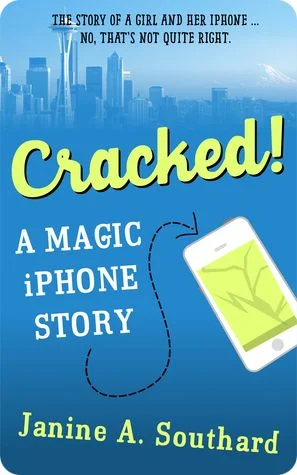
Other than being the author of the freshly released novel, Cracked! A Magic iPhone Story, here are some interesting facts.

  1. Janine was voted “Tyrannist for Life” of the Oxford Folklore and Fanfiction Society in 2005. Since leaving university, she hasn’t organized many meetings, possibly because she now resides in a different country. But maybe when she visits the UK this month…?
  2. Janine got really serious about narrative writing as a career in 2010, after working a freelancing job crafting stories and dialogue for videogames. She realized, “I can get paid to write this all day!” and so it was.
  3. She’s a semi-professional singer who’s performed Celtic folk-rock in auditoriums and classic rock hits in backyards.
  4. Janine believes she will someday be fluent in another language. So far, she’s closest in Spanish, Japanese, and Welsh. By which, she means she can get through a level 1 podcast lesson.
  5. Her all-time favorite TV show is the British classic Blake’s 7. If you’ve never heard of it, this show was the UK’s reply to Star Trek, so it’s full of space ships and bewildering alien cultures. Unlike its American counterpart, however, it’s super dark. You could call it Bleaks 7, if you wanted. As an example: the show improves after the eponymous character dies. No one is safe. (After this dark scifi classic, her next most beloved shows are currently Firefly, Gossip Girl season 2, and Yes, Minister.)
  6. Her favorite color is green. Which goes nicely with her red hair.
  7. Janine worked as an economic consultant before she became a writer. Her fiction always has an economic angle, even if she’s the only person who notices.
  8. Janine has lived in three countries: the US, the UK, and Japan. She used college as an excuse to go far from home.
  9. Janine’s favorite drink is Diet Caffeine-Free Coke. It just tastes the best.
  10. All Janine’s novels so far have been possible because of crowdsourced funds via Kickstarter. She owes great thanks to her many patrons of the arts who love a good science fiction adventure and believe in her ability to make that happen.

About the Author

Janine A. Southard is the IPPY award-winning author of the Hive Queen Saga, as well as other science fiction and young adult novels and novellas.

The Hive Queen Saga books blend cultural experimentation with epic as they follow a formalized Hive of teenagers on a voyage to new lands and new cultures where their own ways seem very strange. The first novel in the saga, Queen & Commander, has been described as “like Joss Whedon’s Firefly but for teenagers” by the YA’s Nightstand. The second book, Hive & Heist, is a classic heist tale set on a space station.

Queen & Commander received an IPPY (Independent Book Publishers) Award for science fiction ebooks in 2013. Outside the Hive Queen Saga, the science fiction novella These Convergent Stars was selected as the short ebook recommendation of the week at Tungsten Hippo on 29 January 2014.

All Southard’s books so far have been possible because of crowdsourced funds via Kickstarter. She owes great thanks to her many patrons of the arts who love a good science fiction adventure and believe in her ability to make that happen.

From her home in Seattle, she is currently working on a half-contemporary, half-fantasy novel for adults, Cracked! A Magic iPhone Story, which releases in early 2015.

You can connect with Janine via:  Website | Twitter | Goodreads
 

About the Book

can your phone do for you?

This is the story of a girl and her iPhone. No, that’s not quite right. This is the story of a middle-aged statistician and her best friend. Though she didn’t consider herself middle-aged. And the best friend was more of a roommate-with-whom-she’d-developed-a-friendship. And this description completely ignores the 6,000-year-old elf with whom the woman and her best friend enjoyed story gaming.

So let’s try this again.

This is the story of a woman who wished to find love, but who would rather play story games than actively look for it. Especially in the wake of a horrid break-up six months before from a man who had never sent her a single gift.

Until this Valentine’s Day, when she received a brand new iPhone in a box with his name on it.

Between story gaming and succumbing to the phone’s insidious sleekness, she learns that friendship trumps romance.

In Cracked! A Magic iPhone Story, award-winning author Janine A. Southard (a Seattle denizen) shows you how the geeks of Seattle live, provides a running and often-hilarious social commentary on today’s world, and reminds you that, so long as you have friends, you are never alone.