People Live Inside Us by Sharman Russell

People live inside us. Sometimes we talk to these people, and sometimes they answer back. Sometimes they are simply a presence, almost a dream, living in the darkness of the body. Sometimes they are four hundred years old, sun-blistered, whip-thin, speaking the Spanish dialect of sixteenth-century Seville—which would be the case with the real-life conquistador Álvar Núñez Cabeza de Vaca, a man who has intrigued me for decades, whose story I have read over and over, whom I have written about again and again, and who finally set up camp in my frontal lobe, roasting fish and roots, sketching maps in the sand, praying, scheming, surviving—as indomitable as a gust of wind, sea, and salt.
 
In 1528, Cabeza de Vaca was the Spanish treasurer of the Pánfilo de Narváez expedition which sailed into Tampa Bay, Florida with four ships, four hundred men, ten women, and eighty horses. Led by the incompetent Narváez, the men marched inland, got lost, built barges, limped along the Gulf of Mexico coastline, and shipwrecked near present-day Galveston Island. Almost everyone died. Among the diverse tribes of Texas, however, Cabeza de Vaca found new employment as a slave, healer, and trader. For eight years, naked and hungry, he was stripped of his identity and past. Finally he and three other former conquistadors began to walk west to the outposts of New Spain. They became known as the Children of the Sun, strangers who could heal the sick and raise the dead in an extraordinary traveling medicine man show that was orchestrated and accompanied by thousands of Native American followers. In northwestern Mexico, the Children of the Sun met up with Spanish slave hunters who promptly captured these followers and sent Cabeza de Vaca and his companions on to Mexico City and eventually back to Spain. In 1542, Cabeza de Vaca published his story as a report to the king of Spain, the first European description of the New World, rich with anthropological detail and a final plea to meet the natives “with kindness, the only certain way.”
 
For over four hundred years, we have interpreted the journey of Cabeza de Vaca—in numerous translations of his report to the king of Spain, in fictional accounts, and in film. For some of us, he is the first American adventure-hero telling the first American tale. He is our Odysseus, saint and sinner, mystic and conqueror rolled into one. From the perspective of Native America, he is part of a great and terrible transformation, their world overturned by new diseases and technologies.  First Contact. The “Old” and “New” meet in this story, and nothing is ever the same.
 
My new young adult novel Teresa of the New World is the culmination of my long-time fascination with Cabeza de Vaca, whom I first wrote about in 1996 in the collection of essays When the Land was Young: Reflections on American Archaeology.  Earlier, I had written about him in a literary adult novel, a manuscript I eventually abandoned, compressing most of its 300 pages into the first 40 pages of a book for young adults. In this new version, the sixteenth century of the American Southwest is a dreamscape of shape-shifters and loss and beauty. As the daughter of Cabeza de Vaca and a Capoque mother, Teresa is betrayed by her hero-father, sent to live as a kitchen servant in the household of a Spanish official, and alienated from the magic she knew as a child when she could listen to plants and animals and sink into the trickster earth. Plague stalks the land. Measles decimates native villages. And Teresa goes on her own journey, befriending a Spanish war horse and were-jaguar as she struggles to reclaim her power and sense of self.
 
But what surprised me is this: just as the book was being printed, when my publisher asked if I wanted a dedication page, I emailed back—as though this were an afterthought—yes, “To my father.” It had taken me thirty years to write this book and as long to see how much I am Teresa and how much my father is Cabeza de Vaca--which is really a statement about the un in my unconscious.  Or maybe, stranger, I am Cabeza de Vaca and my father, that young, heroic test pilot from Kansas, is Teresa. And really, strangest still, I am neither Teresa nor Cabeza de Vaca; instead they are people who live inside me. They have their own life, even as they have enriched mine.

About Sharman Russell

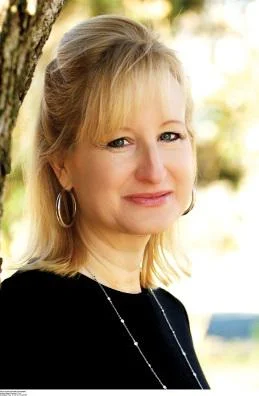
Sharman Apt Russell has lived in Southwestern deserts almost all her life and continues to be refreshed and amazed by the magic and beauty of this landscape. She has published over a dozen books translated into a dozen languages, including fiction and nonfiction. She teaches graduate writing classes at Western New Mexico University in Silver City, New Mexico and Antioch University in Los Angeles, California and has thrice served as the PEN West judge for their annual children’s literature award. Her own awards include a Rockefeller Fellowship, the Mountains and Plains Booksellers Award, a Pushcart Prize, and the Henry Joseph Jackson Award.

For more information visit Sharman Russell’s website. You can also find her on Facebook and Goodreads.

About Teresa of the New World
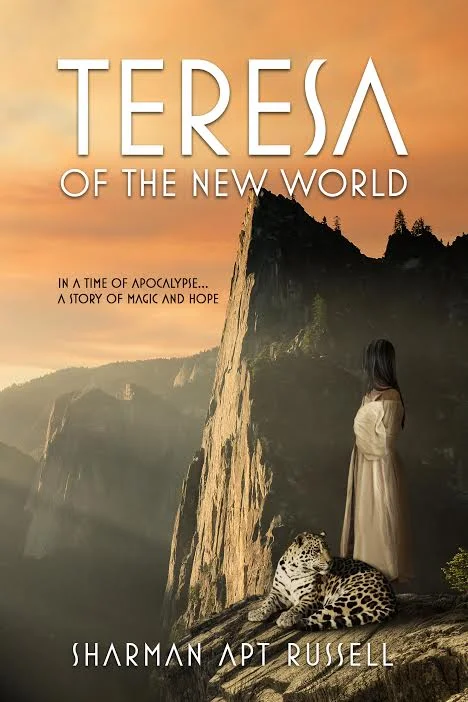
From the bestselling author of An Obsession with Butterflies comes a magical story of America in the time of the conquistadors.

In 1528, the real-life conquistador Cabeza de Vaca shipwrecked in the New World where he lived for eight years as a slave, trader, and shaman. In this lyrical weaving of history and myth, the adventurer takes his young daughter Teresa from her home in Texas to walk westward into the setting sun, their travels accompanied by miracles–visions and prophecies. But when Teresa reaches the outposts of New Spain, life is not what her father had promised.

As a kitchen servant in the household of a Spanish official, Teresa grows up estranged from the magic she knew as a child, when she could speak to the earth and listen to animals. When a new epidemic of measles devastates the area, the sixteen-year-old sets off on her own journey, befriending a Mayan were-jaguar who cannot control his shape-shifting and a warhorse abandoned by his Spanish owner. Now Teresa moves through a land stalked by Plague: smallpox as well as measles, typhus, and scarlet fever.

Soon it becomes clear that Teresa and her friends are being manipulated and driven by forces they do not understand. To save herself and others, Teresa will find herself listening again to the earth, sinking underground, swimming through limestone and fossil, opening to the power of root and stone. As she searches for her place in the New World, she will travel farther and deeper than she had ever imagined.

Rich in historical detail and scope, Teresa of the New World takes you into the dreamscape of the sixteenth-century American Southwest.
Top Ten Reasons to read Under the Spotlight by Angie Stanton

Top Ten Reasons to read Under the Spotlight

10.  Peter, Adam and Garrett all together

9.      Stolen cars

8.      Garrett Jamieson finally gets his due

7.      Unexpected death of a character

6.      Chicago

5.      Garrett goes to jail

4.      Christmas in July at a recording studio

3.      Emergency room visit

2.      Steven Hunter and the Graphic Angels make a memorable appearance

1.      Garrett meets his match in Riley Parks

About Angie Stanton

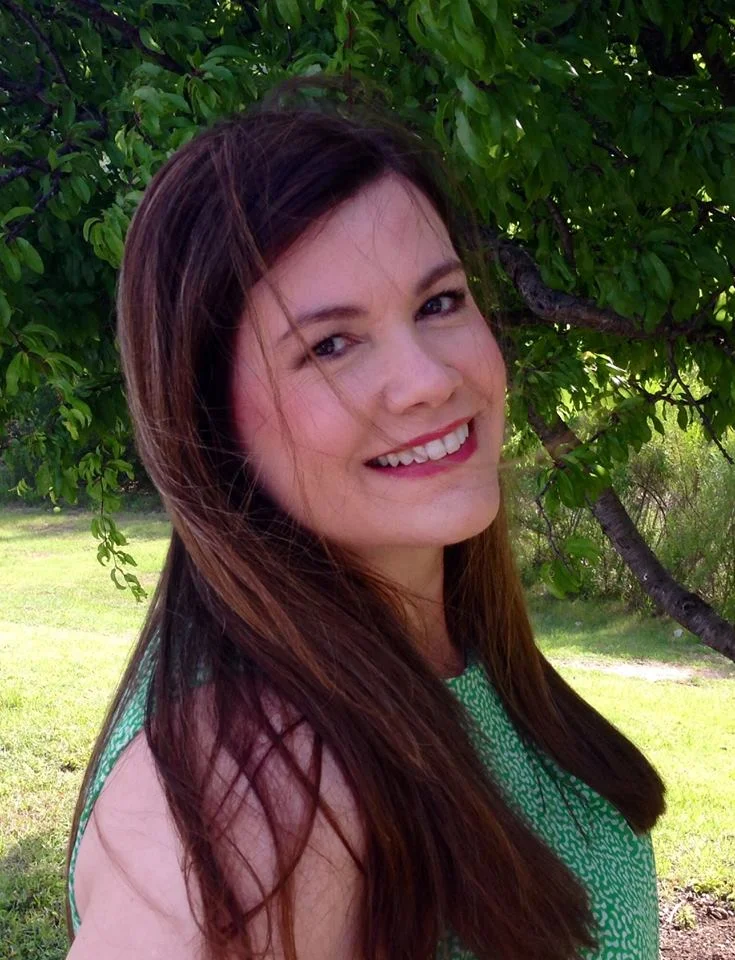
Angie Stanton never planned on writing books—she wanted to be a Rockette. However, growing up in rural America with her brothers’ 4-H pigs as pets, she found that dance didn’t quite work out. Instead, she became an avid daydreamer. After years of perfecting stories in her head, she began to write them down, and the rest is history. When not writing, she loves watching natural disaster movies, going to Broadway musicals, and dipping French fries in chocolate shakes.

Connect with Angie via: Blog | Twitter | Facebook | Author Goodreads | Instagram

About Under the Spotlight

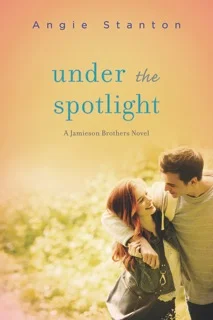
After an embarrassing stint on a reality-TV music competition years ago, Riley vowed never to sing again. Now she's behind the scenes, working at the prestigious Sound Sync recording studio, and life is looking up. But then Garrett Jamieson, the oldest brother in the famous Jamieson brothers band, crashes into her world.

Garrett has hit rock bottom, and he is desperate to reinvent himself. After calling in a few favors, he ends up working at Sound Sync to learn the ropes of record producing from the industry's best. And he can't believe his luck when he discovers that Riley has been keeping a secret—she is an amazing singer. By producing her album, he's sure to top the record charts again. But Garrett is forced to use every trick in his arsenal to persuade the sassy girl to record.

Riley refuses to sing—or even entertain the thought of it—and sparks fly as Garrett finally meets his match. But in the heat of the moment, one stolen kiss changes everything. Will Riley be the first person to finally rein Garrett in, or will Garrett succeed in getting Riley back under the spotlight?

Q&A with Tina Leonard, author of Heart of a Bull Rider

With more than 70 books and special projects to your name, how do you create such original storylines and characters time after time?

I love to write! And I love to create.  It honestly makes me happy! I can’t imagine not writing—I love getting to know readers and other authors, and the adventure is endlessly meaningful to me. So the creative process gets charged by making new friends and constantly admiring my writing sisters’ works. If I ever get a little rundown, I head to the beach for two days. It works! 

You’re known for ‘sexy hunks with attitude and heroines with plenty of sass.’ Do you consider this sass to be a part of your own personality as well?

When I read this question to my husband, he exclaimed, “Yes!” Women are supposed to be intelligent and fun and sassy. We’d be boring if we weren’t!

You have bull riders as the subject of quite a few of your romance novels. What draws you to this profession?

My teen years were spent in a town where there was a large FFA group. I never wanted to date the football players; I was much more interested in the FFA boys. Many of them were my friends. Several of the guys tried their hand at bull riding. I have a black-and-white photo of one of my boyfriends on a bull in mid-jump.  This was before PBR was huge and all the fun that goes along with it now. It was just small-town guys giving it their best shot. I admired that. But I’ve written about just as many other fields, too, like military heroes. Both my dads were in the military, and all my uncles. I was born on a military base. All my heroes work hard, no matter their profession—my heroes are tough and stubborn, but they’re always chivalrous!

What inspired you to create the story of the long-lost twins in HEART OF A BULL RIDER?

I thought it would be fun to see what would happen if two completely diverse worlds collided. What would they have in common?  Would they be able to relate to each other at all?  I liked the idea of the inherent conflict.  They had a lot to learn from each other, and about themselves.

What upcoming books or projects do you currently have underway?

I’ve just finished a Hell’s Outlaw trilogy for Random House Loveswept, which is releasing in May, and am starting a trilogy for Diversion Books about a magic wedding dress, and lots of small-town angst and drama.  And sex.  My heroes and heroines fight their attraction to each other, but great chemistry is hard to override.

About Tina Leonard

USA Today Bestselling and award-winning author Tina Leonard has sold over 3 million copies of her titles. She has made the USA Today Bestseller, Waldenbooks, Bookscan, and Ingrambook lists, and has written and contracted 71 books and special projects. She is best known for her sparkling sense of humor, endearing communities, snappy dialogue, and memorable characters that include sexy hunks with attitude and heroines with plenty of sass. For more information, visit www.tinaleonard.com or follow her on Twitter: @Tina_Leonard.

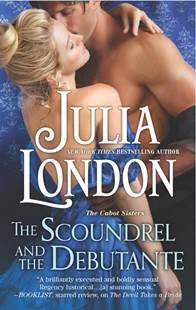
Q&A with Julia London, author of The Scoundrel and the Debutante

If you could live during any time period from the past, when would it be and why?

I guess it’s obvious that I would have to try living in the Regency era. But I would have to be among the wealthy. I wouldn’t want to be crammed into any tight living quarters with a lot of people and maybe even some animals. I would need one of those big Georgian mansions, a butler, a ladies’ maid, and a very handsome and rich husband. Oh, and the gowns. I would need a lot of those beautiful gowns. I have always been a student and fan of history, but, in the end, knowing what I know, I like the creature comforts of the twenty-first century.

How much research goes into writing historical romance?

That depends on the period. I have written so many historical romances set in a very confined time period (the Regency era spanned about twenty years), and have collected so many research books, that I have become a bit of a mini-expert in that time period. I know what was going on, and if I have any questions, I know exactly where to look to find the answer. However, I am starting a new historical series and setting it about one hundred years earlier, when Scotland and England united. I’m reading a couple of different books to get up to speed. But, unlike historical fiction, where the actual history is often a character in the story, in historical romance the history is always part of the background and not the main feature—the love story is—so a writer needs to know enough to set the tone, the milieu and the place, but doesn’t need to memorize any acts of Parliament or know the names of the king’s children.

About the Author

Julia London is the New York Times and USA Today bestselling author of more than thirty novels, including the Homecoming Ranch contemporary series, the Secrets of Hadley Green historical romance series, and numerous other works. She is a four-time finalist for the prestigious RITA Award for excellence in romantic fiction, and RT Bookclub award recipient for Best Historical Romance.  She lives in Austin, Texas.

Connect with Julia London via: Website | Facebook Twitter | Goodreads

About the Book

The dust of the Cabot sisters' shocking plans to rescue their family from certain ruin may have settled, but Prudence Cabot is left standing in the rubble of scandal. Now regarded as an unsuitable bride, she's tainted among the ton. Yet this unwilling wallflower is ripe for her own adventure. And when an irresistibly sexy American stranger on a desperate mission enlists her help, she simply can't deny the temptation.

The fate of Roan Matheson's family depends on how quickly he can find his runaway sister and persuade her to return to her betrothed. Scouring the rustic English countryside with the sensually wicked Prudence at his side—and in his bed—he's out of his element. But once Roan has a taste of the sizzling passion that can lead to forever, he must choose between his heart's obligations and its forbidden desires.

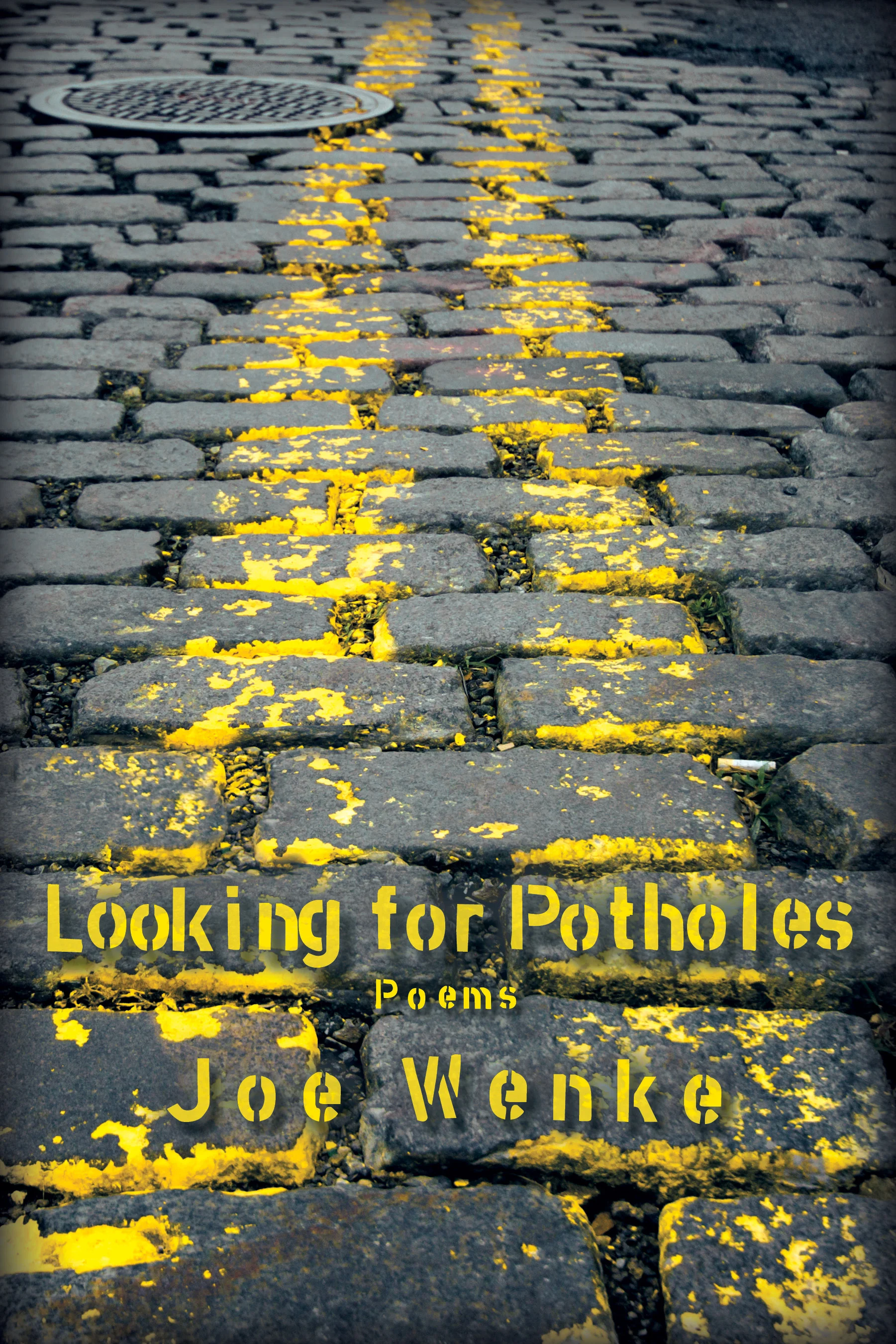
Q&A with Joe Wenke author of Looking For Potholes

Why did you decide to title your new collection of poems Looking For Potholes?

I like to use as a title one of the poems in a collection that captures my attitude or communicates one of the key themes of the collection as a whole. Looking for Potholes is about pushing limits, taking risks, causing trouble, shaking things up. I believe that one of the main purposes of art is to disturb, i.e., moving the reader existentially from one place to another. Poems can do a great job of disturbing in the sense of altering perception and consciousness. I think the poems in Potholes do exactly that.
 
Which poem in this collection resonates with you the most? Why?

Well, of course, they all do. They’re my babies. Obviously “Looking for Potholes” resonates with me for the reasons I just described, but if I had to single out one other poem in the collection, it would be “Stand Up.” It’s an activist poem about standing up for who we are as human beings, despite the risks—and there are many. I believe that the most radical thing any of us can do is to simply stand up every single day and be who we are. That’s what the poem is saying, and I believe it very deeply. 

In five words how would you describe your new collection of poetry?

It’s a book of revelations.
 
What was the biggest challenge while writing Looking For Potholes?

I had written poems sporadically over the years, but last July I suddenly began writing one poem after another. In September I published my first book of poetry, entitled Free Air. It’s a combination of the poems that I had written over the years and the new ones that just began exploding out of me last summer.  By the end of August I had written all of the poems that appear in Looking for Potholes, so the challenge was really just to stay open and relaxed and let the poems come. I’ve since written two more books of poetry, which I’ll be publishing in September and January. Another book is about two-thirds done.
 
In what ways has poetry touched your life? Is there a particular poem that has changed you in some way?

Poetry is an inspiration. It’s epiphanic and revelatory. It can change how we look at ourselves and how we experience the world. One poem that changed me and resonated with me is T. S. Eliot’s “The Waste Land.” I read it when I was young, and it’s of course one of the most powerful poems ever written in terms of the power of its imagery. So it blew my mind, as one would say back in the day, and it told me that, yes, you can use the power of the poetic imagination to capture the essence of human experience. That is a very inspiring thought, and I continue to carry that thought with me every single day.

About Joe Wenke

Joe Wenke is a writer, social critic and LGBTQI rights activist. He is the founder and publisher of Trans Über, a publishing company with a focus on promoting LGBTQ rights, free thought and equality for all people. In addition to Looking for Potholes: Poems, Wenke is the author of, The Human Agenda, The Talk Show, A Novel, Free Air: Poems; Papal Bull: An Ex-Catholic Calls Out the Catholic Church; You Got To Be Kidding! A Radical Satire of the Bible; and Mailer’s America.

About Looking For Potholes

You’ve probably never gone searching for potholes, but Joe Wenke celebrates the unusual practice in his new book LOOKING FOR POTHOLES. Instead of simply moving past these bumps in the road, Wenke examines these setbacks and obstacles with the clarity of a philosopher and takes a closer look at the potholes people carve out in their lives each day. No detail goes unnoticed in Wenke’s poetry as he tackles questions about identity, complacency, and how to make a home in a vast world. Wenke’s background in LGBTQI rights activism and social criticism prepared him for this collection of challenging poems. For those who love poetry that leaves you hanging on every line, Wenke’s writing style is nothing short of breathtaking.   

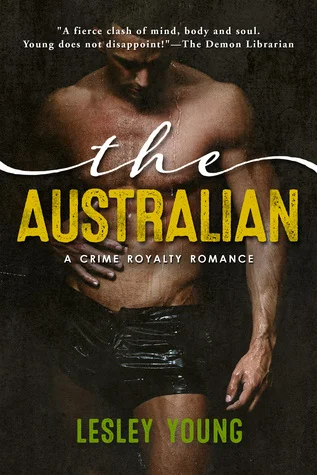
Three songs that fueled the fast-paced romantic suspense novel The Australian by Lesley Young

The second book in my stand-alone Crime Royalty Romance series features a shorter playlist than the first book (The Frenchman). But the songs I did listen to while writing The Australian were so integral that I will never be able to hear them again without pivotal scenes playing out in my head.

Here are the three key moments in the book that wouldn’t have happened without music.

Jace Knight . . .vulnerable

For most of The Australian, Charlie Sykes not only keeps playboy and international hotelier Jace Knight on his toes, she throws him right off his game. He’s so into her, but because she establishes boundaries from day one, he’s torn because it’s not clear to him that she does want him. Due to complicated circumstances, she ends up loving and leaving Jace, which confuses the hell out of him.

A couple of songs really helped me to write Jace true—a very masculine Aussie wearing his heart on his sleeve. Makes sense that the songs are rock alternative, almost-ballads. When I hear these tunes I can smell the humidity and beach, hear the roar of Jace’s motorcycle and absorb the angst of a very proud man humbled by fast-budding love. They include If I Had My Way by Big Sugar, and Deny by Default.

Charlie Sykes . . .falling in love

When Charlie, who doesn’t understand or cope with feelings very well, realizes she is falling in love with Mr. Knight, it isn’t a warm-fuzzy moment. It’s the exact the opposite—she’s terrified because she believes there are circumstances that prevent her from being with him. But the truth is, and hopefully readers suspect this, she’s really terrified because she doesn’t yet understand the glory of love.

Instead, love, as she’s been taught in her limited life experience, is a burden, a heavy weight, and Jace is not unlike a drug she has no control over. When she stares out her high-rise condo window down at Sydney’s harbor, her heart aching and her eyes wide with fear, this song plays on repeat in my mind—Addicted To You by Avicii.

Epiphany . . . the cost of loving Jace Knight

There is an extremely shocking and dangerous development that happens in the wild, Aussie outback. I won’t say what, but an intense, violent drama plays out. And this a pivotal moment in the novel, not just because it is a plot advancement, but because it is when Charlie experiences firsthand the true cost of loving a man like Jace.

Deep down inside, she is forced to admit being with him is a high-stakes game, entailing a life full of risk, precisely what she moved to Australia to avoid. She realizes how much she doesn’t want this, and begins the heart-wrenching journey to decide whether she can bear the price of loving him. The moment this realization dawns—the red, dusty earth, the smell of guns firing and sweat, and the heat from Jace’s eyes asking her to be brave, in more ways than one—plays in my mind every time I hear Love Runs Out by OneRepublic.

Thank you so much for featuring me on your blog. The series is stand-alone so don’t worry about whether you read The Australian or The Frenchman first. Stay in the know about new releases and great deals at LesleyYoungBooks.com.

About Lesley Young

Lesley Young is a genre-defying author of unforgettable heroines who experience thrilling life- and love-altering journeys. Her debut novel was Sky's End; her most recent stand-alone series, Crime Royalty Romance, includes The Frenchman and The Australian. She loves to hear from readers. 

You can connect with Lesley via: Website | Facebook | Twitter | Goodreads

About The Australian

Charlie Sykes takes everything and everyone at face value, and believes life would be a lot easier if everyone else did, too. Jace Knight, international Aussie hotelier and purported playboy, has never met anyone like the absurdly literal and obliviously beautiful American who applies to his personal assistant position. The trouble is, how do you seduce a woman whose definition of flirting comes straight out of the Merriam-Webster Dictionary? That, and he’s not the only one after Charlie. Seems Mr. Knight may not be a reformed criminal after all. Charlie soon finds herself caught up in a whirlwind of dangerous international espionage that takes her from the hip streets of Sydney to the majestic Great Barrier Reef and the wild, desolate outback. A terrible trap’s being laid, but how will Charlie protect herself and prevent a devastating betrayal when she can’t even sort out what her heart’s telling her?