Numbers: Fighting the Fear by Dr. John Gamble

NBI deals with different kinds of information abuse—one of the most important is numbers and statistics and the sneaky ways they are used to deceive and confuse us. I consider myself a numbers guy but also realize most of my students are not, in fact many are scared to death of numbers. This makes for angry, frustrated people. Let me work you through one example that can be helpful in dealing with the onslaught of numbers.

You see an ad on television (or on the Internet) that wants you to switch you car insurance from Gamma Insurance Company (GIC) to Kappa Mutual (KM). Let’s say you are happy with GIC—why in the world bother switching? The ad uses several things to try to get your attention:

1. First, the sales pitch if offered by one of your favorite movie actors, Sam Lockjaw. You trust Sam and he seems to believe in the product.

2. Here’s what Sam says, in a warm, sincere, convincing voice. I’ve been working with the good folks at Kappa Mutual for more than five years. They want  to earn your business. Did you know that people who switched to KM from Gamma Insurance on average saved $492. 
Here are the danger signals in the above:

What the hell qualifications does Sam Lockjaw to speak about automobile insurance. He does not even say he has Kappa Mutual for his own insurance. The ad does not disclose if he is getting paid for this endorsement. Take a wild guess if he is! 

Let’s assume for a minute, the $492 is accurate. What does that figure not tell us. It does not reveal the percent of the savings, over what time period—a year, five years, and we are left to assume you get exactly the same policy with Gamma. It might be, but I would not bet the farm on that one.

Let’s give Mr. Lockjaw and Kappa Mutual every benefit of the doubt by assuming the figures are per year and the insurance coverage is identical. So let’s all run to Kappa Mutual’s website. Not so fast. Anytime you see a figure, a number or a statistic, you’ve got to ask how was it calculated, what is it based upon. Sam’s actor-trained voice said: “those who switched saved an average of $492.” But you need to dig deeper. Who is likely to switch to Kappa? Is it those who call or go to their website and find they can save $15 a year— of course not? Those who save a lot of money are much more likely to switch. You must know how many switched not just the average savings. Even stranger, you might get comparably high figures for those switching from Gamma to Kappa Mutual with customers switching each year in both directions.

There are a number of lessons to be learned from this simple example. Be careful to ask what qualifications someone has to pitch a product. I call this the pitcher person problem, Second look hard at the numbers to see their origin and how they are calculated. Numbers can have a mystical quality to them— we often assume they are more precise and are calculated is a wise and reasonable way. Don’t be fooled— often they are distorted— look carefully and don’t be afraid to ask questions.

About the Author

Dr. John Gamble is Distinguished Professor of Political Science and International Law at Penn State’s Behrend College in Erie and Director of Honors Programs. He is the author of approximately 100 publications and recently won Penn State’s most prestigious award for teaching, the Milton S. Eisenhower Award for Distinguished Teaching.

Dr. Gamble has stuttered all of his life. As a result, he believes words are precious and should not be taken for granted; this motivated him to write NO BULL INFORMATION. His dream for the book is that parents and grandparents will teach their children and grandchildren NBI techniques and demand clear, concise information from political leaders and service and product providers.

About the Book
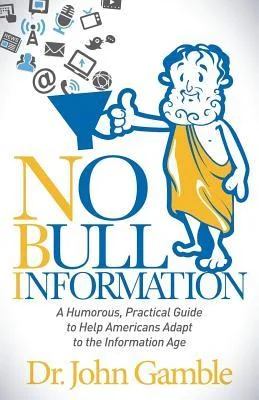
In his new book, NO BULL INFORMATION, Dr. John Gamble challenges readers to confront the Information Age by abandoning simplistic thinking and taking a measured approach that requires asking questions to analyze and understand complicated issues, to identify and avoid word traps, and to effectively dissect and comprehend numbers frequently used to confuse voters and consumers.

Gamble uses humor and a wise cartoon character, Arnbi, to guide the reader through the maze of political doublespeak, expert-celebrity pitches of products, and healthcare options, among other issues.

With a focus on helping Americans to become better prepared to deal with the massive amounts of information that they face on a daily basis, NO BULL INFORMATION (NBI) instructs readers in developing “a new type of literacy.” NBI seeks to create an educated citizenry that can sift through information, identify the facts, and determine the best way to manage those facts. Gamble asserts that the super citizens who accept the challenge of NBI will make better decisions, which will lead to a reduction in financial disasters and government inefficiency.

Gamble’s cartoon sidekick, Arnbi, supports the NBI movement by offering targeted advice that summarizes many of the key principles outlined in NO BULL INFORMATION, including:
•    Too bad, but “simple” is a square peg that seldom fits into the round hole that is our modern world.
•    Facts are necessary but they must be put into context (PUTFiC).
•    Vested interests are everywhere—recognize them.

Breaking down words and numbers is the foundation of NBI. In one section of the book, Gamble walks the reader through a basic lesson in understanding percentages and statistics. “You need to understand numbers enough not to be deceived.” In one intriguing illustration, Gamble compares the Pentagon’s budget of $700 billion to a two-liter bottle and a proposed $20 million in spending to one drop of water from an eyedropper placed in that bottle. “It is a helpful strategy for understanding large numbers that are thrown at us every day by politicians and salespeople.”

Stressing the necessity of analytical thinking, Gamble explores the use of words in “bull-laden” information and the need to guard against what the author calls “landmine words and phrases”; for example, quite frankly, my good friend, clinical studies prove, award winning, and as seen on TV.

Gamble uses guidance survey and focus cards to demonstrate how readers can practice NBI in their daily lives. The cards cover nine areas each (Survey cards: sampling, word warnings, vested interests, etc. Focus cards: infomercials, supermarkets, credit, etc.). The cards include questions that help the reader to analyze a particular situation (buying a new cell phone, for example) and offer guidance for making decisions.

“I have been a college professor for more than thirty years. I am convinced that there are serious problems with the way information is presented and understood,” Gamble says. “This affects all Americans. I am writing for and to them.”

The idea for NO BULL INFORMATION came to Gamble about ten years ago as he observed the difficulty his Penn State undergraduate students were having adjusting to the Information Age. “NBI was inspired by hundreds of students in scores of classes I have taught. It was an iterative process: a class inspired an idea for NBI that I took back to class to test before including it in the book.”

Gamble believes that people who read NO BULL INFORMATION will “gain a sense of empowerment, like a life preserver when we feel we are drowning in a mass of information.”

Buy the Book

amazon
barnes and noble

Love Lessons Learned from Pursued By the Rancher


What are some of the real-life romance lessons we can take away from the book? 

PURSUED BY THE RANCHER is all about second chances. No matter how bad the heartache (both the hero and heroine have suffered deep losses) and no matter how big the challenges (the heroine has special needs son), there is hope for the future. Finding a life partner, a true and lasting love, can heal those wounds and offer strength to build a beautiful forever – together.


About Catherine Mann

USA Today bestseller Catherine Mann has books in print in more than 20 countries with Desire, Romantic Suspense, HQN and other Harlequin lines. A six-time RITA finalist, she has won both the RITA and the Bookseller's Best Awards. Catherine resides in Florida with her aviator husband, their four children and a menagerie of pets.

 Connect with Catherine via: Website | Twitter Facebook

About the Book

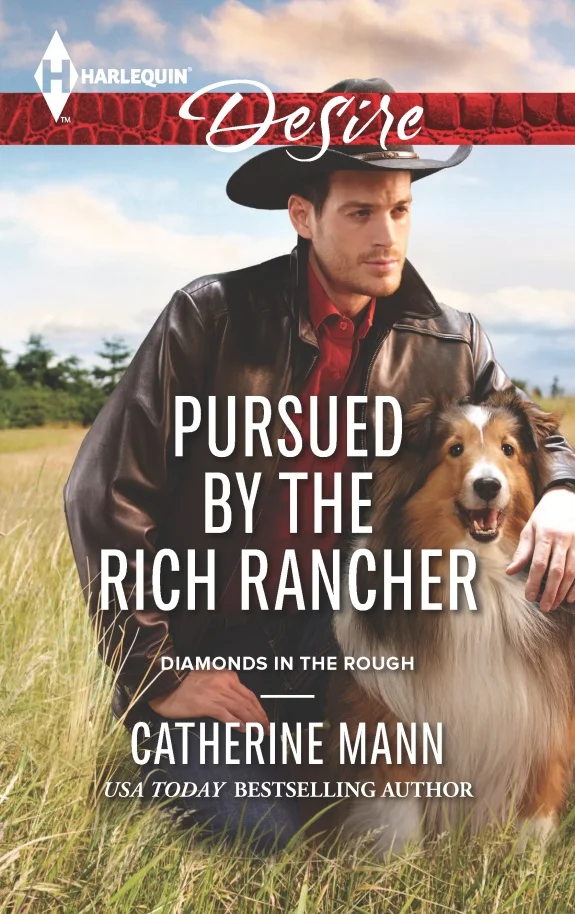
Single mom Nina Lowery has never understood the sex appeal of cowboys. Until she brings her son to a weeklong horse camp and meets the wealthy rancher in charge. Seduction isn't part of Alex McNair's plan to earn his piece of his family's estate. Yet plans have a way of changing. Nina and her little boy hold the key to Alex's future. Breaking the promise he made to his dying grandmother is not an option but neither is breaking Nina's heart.

Buy the Book

amazon
barnes and noble

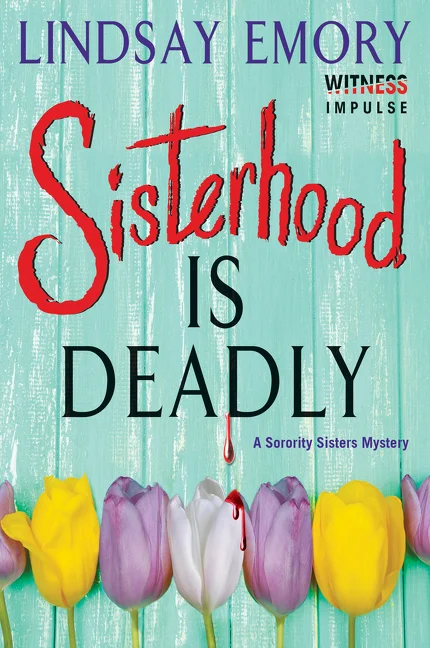
Sisterhood Is Powerful by Lindsay Emory

This slogan of the feminist movement is the first line of my book, SISTERHOOD IS DEADLY and something I (unfortunately) wrote in a lot of yearbooks in high school.  Anyone who has ever had a sister – biological or honorary – knows the inherent truth of those three words.  A woman would do anything for her sister, be it bringing over ice cream pints and magazines after a breakup with a boyfriend, lying to a guy about the sleepover they didn’t have the night before, or agreeing to be a maid of honor even when they can’t stand the groom. 

Much like my main character, Margot Blythe, I love seeing true friendships on screen and in books and in honor of the Delta Beta sisterhood that Margot so loves, I’ve compiled my personal Girlfriends Hall of Fame.

-    Leslie Knope and Ann Perkins, from Parks and Recreation.  They didn’t start off best friends, but they became legendary, enjoying traditions like Galentines Day, waffles, and scrapbooks memorializing every perfect friendship moment.  Need a pick me up? Check out any of the brilliant Tumblrs dedicated to these friends.  It’s like instant Prozac.

-    Rachel and Phoebe and Monica, from Friends.  Yes, even though the show was about six friends, the sisterhood between these two childhood friends was refreshingly realistic. Sometimes there would be a bit of competition, sometimes some sarcastic comments would be tossed around, but the girls always had each other’s backs.  High points: When the ladies bonded over the feminist book, Be Your Own Wind Keeper. And when the ladies fought valiantly to keep their apartment, although they learned that “transponster” was not actually Chandler’s profession.  Or a real word.

-    The crew from Bridesmaids.  Who said sisters have to come in twos? Although the main friendship starts off between Annie and Lillian, my favorite part about this movie was how the whole group learns to care for each other. Except they never get around to getting greased up and doing that whole Female Fight Club thing.

-    Hands down, my favorite female friends ever, in the history of all media has to be Anne Shirley and Diana Barry from Anne of Green Gables. After all, they personify “bosom friends,” kindred spirits to whom you can confide your inmost soul.  Even though Anne accidentally gets Diana into all sorts of trouble (like getting drunk on currant wine), they know that they bring out the best in each other.

In SISTERHOOD IS DEADLY, Margot’s goal is to have these kind of friendships.  Hopefully, she won’t let little things like fraternity prank wars and dead bodies get in her way.

About Lindsay Emory

Hi!  I’m a writer.  And a mom.  And a wife.  And a sniper.  And a pastry chef.  (Any Flight of the Conchords fans?  Anyone?)

I often speak without thinking.  My brain is stuffed full of useless trivia, which is really fun at parties and on  blogs (See, above.)  I live in Texas.  I’m a Diet Coke addict, and yes, I know it’s poison, and no, I’m not going to stop.  Yo hablo espanol.

But most importantly, I’m a writer.  I write because it’s been in my heart since my first grade teacher gave me a pencil, some paper and told me to sit in a closet and write.

Connect with Lindsay via website | Facebook | Twitter | Pinterest | Google +

About Sisterhood is Deadly

“We’ll be sisters ’til we die…”

Margot Blythe is a professional sorority girl. As a Sisterhood Mentor for her beloved Delta Beta, she travels to colleges around the country, advising on serious sorority issues (and picking up all the gossip along the way). Margot is thrilled when she’s invited back to her alma mater to assist the Delta Betas—but tragedy strikes when their chapter advisor drops dead during a meeting, sending shockwaves down sorority row.

Shaken by the death—especially when foul play is suspected—Margot has to step up. Appointed the honor of serving as temporary chapter advisor, she now must manage the drama of fifty frazzled sorority women with secrets to hide; protect the house from the annual fraternity pledge pranks, which are more ominous than they seem; and worst of all, combat the ruinous rumors surfacing about a Delta Beta phone sex ring. If she wants to keep rival sororities and a suspicious (but dangerously cute) local policeman from bringing Delta Beta’s reputation down, it’s up to Margot to find out the truth—about whether a sister could have committed such an unimaginable sin as murder.

A sassy debut for fans of Susan McBride and Meg Cabot

Buy the Book

amazon

EXCERPT

“Don’t say another word,” I said to the young woman being questioned. Her nose was red and puffy, her cheeks tear-stained, her chapter-worthy shift dress wrinkled and tired-looking.

“We were in the middle of something,” said the police officer. I turned to him, my hands on my hips. He wasn’t in uniform, but he wore a navy polo embroidered with the police insignia. A name tag identified him as “HATFIELD.”

“Mr. Hatfield,” I addressed him.

“Lieutenant Hatfield,” he corrected me.

“This is a minor. You can’t question a minor without a guardian or parent.” I’d read that somewhere in a manual. It seemed legit.

“She’s not under suspicion, Miss …”

“Blythe.” I provided my name with all the authority I could muster. I was the chapter’s Sisterhood Mentor, after all. “Margot Blythe.”

Hatfield’s head jerked back, a satisfying reaction. Funny how well people will respond to an authoritarian tone. “Ms. Blythe,” he started to say again. “I’m just talking to witnesses. This is a friendly conversation. Nobody’s under any suspicion.”

“Fine,” I said. “But I’m staying right here.” I wrapped an arm around the girl’s shoulder so she knew I was there for support and protection.

Hatfield didn’t welcome me, but he couldn’t do much about it. He looked back at his notes and started again.

“You said you were wrapping up the chapter meeting and the girls started to recite something …””

“Objection,” I said.

Hatfield raised his eyebrows at me. “What did you say?”

“Objection,” I repeated. Did he think I’d never seen Law & Order? I’d always liked the ‘order’ part better—more drama. I looked at the girl.

“Don’t answer that.”

Looking from me to the girl, Hatfield ignored me and repeated the question. “What were y’all reciting?”

“Objection!” I glared at him.

Hatfield looked stunned. “What in the world are you objecting to?”

“You’re asking about privileged information!”

“Was a lawyer there? A doctor? A priest?”

Now he was talking crazy. “Of course not,” I said. “You are asking about secret sorority rituals. We can't share those with anyone who has not been initiated, and that includes the police.”

Hatfield lowered his pad and pen and stared at me, like I was some kind of exotic tropical bird. “Who are you again?”

“Margot Blythe,” I repeated hotly.

“Got that,” he said. “I meant, why are you here?”

“I’m the designated Sisterhood Mentor to the Sutton chapter for the next six weeks. And in the unfortunate absence of the chapter advisor, it’s my duty, as the representative of the Delta Beta Executive Council, to advise these young ladies accordingly.”

His posture and expression remained hostile. “You can’t object to these questions,” he ground out.

“Do you see this badge?” I asked him, hooking a thumb into my suit lapel, where a small gold pin in the shape of a delta and a beta was prominently displayed. “This badge says I can object.”

Hatfield seemed to relax, which I took as a sign that he understood my position and was going to be reasonable. Then he took something out of his pants pocket: a gold shield. “Do you see this badge?”

And that was when I was arrested in front of an entire sorority chapter.


Breaking Into the Series Market by Christine Rimmer

First and foremost, to break into series romance, you need to read series romance.  And I mean, a lot of series romance.  Choose a line you love—or one you think you possibly could love—and collect as many recent titles as you can.  When I first targeted series romance, I read over 300 series romances to learn all I could about the books I planned to write.  I kept a file on each book I read, breaking down all the elements that go into a book: characters, conflicts, settings, hooks. I wanted to find the commonality among the books in a given line, so that I could deliver what the editors of that line are looking for.  You want to write a book that fills the requirements for the line you’ve chosen, yet does so in a way that feels fresh and new.  It’s a big challenge.  And it can be a fulfilling one.

At Harlequin, when your series book is ready to submit, you decide whether you want to use an agent or not.  In series, the advances you can get and the changes you can make to the boilerplate contract are not as broad-ranging as they are in mainstream, so you may feel perfectly comfortable dealing with day-to-day business issues and negotiations yourself.  I do. But if you like an expert handing all that stuff for you, that’s totally doable, too.

Also, when you write series romance, though you’re not required to think in terms of a continuing series of connected stories, you’re better off if you do.  Readers love connected stories and they’re more popular in the category market than they’ve ever been.  In fact, if you write for my line, Special Edition, every book you write will be part of an ongoing series. But if you see your book as a standalone, no problem.   Submit it. The editors are more than happy to work with you to help you see the spinoff potential in any story you write.
Best of luck in the series market—and happy writing!

About Christine Rimmer

A New York Times bestselling author, Christine Rimmer has written over ninety contemporary romances for Harlequin Books. Christine has won the Romantic Times BOOKreviews Reviewers Choice Award and has been nominated six times for the RITA Award. She lives in Oregon with her family. Visit Christine at http://www.christinerimmer.com.

You can connect with her via Twitter | Facebook

Is Self-Care Selfish? by Amber Khan

Mothers: Do you remember the last time you took a nice long, relaxing bath?

Do you feel guilty about indulging in such activities because it could be spend doing the leftover ironing or hoovering which you have been putting off for days?

“ There’s no problem so awful, that you can’t add some guilt to it and make it even worse.”
― Bill Watterson, from The Complete Calvin and Hobbes

I was at a conference day before yesterday, which happens to be a saturday. While networking, I met a lady & the subject of motherhood came up. When she found out that I have 2 young kids, immediately her tone changed from friendly to accusatory. Asking me shouldn’t I be at home with the kids being a weekend as we already don’t spend enough time with our kids in today’s hectic lives?

Firstly, don’t we mothers feel enough guilt ourselves that someone else, in fact another mother wishes to burden your conscious further?

So I said, I spend many a special moments with my kids but I don’t need to be with them every second of the day, week or month. I’m here because i wanted to be here. I feel no shame in spending time & money on my personal development & networking with the like-minded people (allbeit on a saturday). On this very day, my kids are spending quality time with their dad & their aunt, they’ll be fed & well looked after in my absence & when I return home, the joy of listening to all their stories would be immense. So what is so harmful to them in such a situation that I should be worried about & heading home right now?

Needless to say that our conversation was cut short & she left with a disapproving look on her face.

It is a common belief in the society that if a mother puts her needs before her kids than she is being selfish. Really? What good a mother be if she is feeling ill, stressed & exhausted? What good a mother be if she isn’t able to stimulate all her senses? What good a mother be if she’s neglecting her health? What good a mother be if she’s losing her mind in the vicious cycle of guilt?

PRESS STOP! Mothers, you need not feel guilty about looking after your needs, your health & well-being. Your family’s well-being depends on you (majority of the times) & hence YOUR well-being comes first.

About the Author

Amber Khan is a Lifestyle Mentor, Speaker, Author, sports enthusiast and a proud mum of three.

She is the founder of Guilt Free Living which provides tools for the mothers to help them live a fulfilling, healthy & energised lifestyle.

She has ran retreats, given talks and written articles on the importance of wellness and how to re-energise the tired minds and bodies of mothers.

Amber currently resides in London, UK with her husband and their three children.

Her latest book is the nonfiction/parenting/motherhood book, Guilt Free Motherhood: A 5-Step Guide to Reclaiming Your Time, Health & Well-Being.

You can connect with Amber via website | Facebook | Twitter

About Guilt Free Motherhood

“Own your happiness. Reclaim your well-being. Make a guilt-free lifestyle, your choice of living!

•    Do you think being a 'super mum' is your only option?
•    Do you neglect your own health while caring for others?
•    Do you struggle to maintain a happy work/life balance?
•    Do you often feel stressed and burnt-out? Then you may be suffering from 'Mummy Guilt'.

Guilt Free Motherhood will guide you to:•    Ignite your passion to bring balance to your life;
•    Take practical steps towards self-care;
•    De-clutter your space, schedules and relationships;
•    Let go of the 'super mum' and the 'control freak' inside of you;
•    Practical ways of recharging your batteries.

A mother's journey should not be, and need not be, a GUILT trip. Guilt Free Motherhood gives you the tools you need to start living a more contented, healthy and energised lifestyle today - right in the midst of motherhood.”

Buy the Book

amazon
barnes and noble

Excerpt

I think you’ll agree that the most important emotional issue a majority of mothers face, especially twenty-first century mothers, is the feeling of guilt. The spectrum of guilt is wide and varied, ranging from feeling guilty about not doing enough for your children, to feeling guilty about spending time or money on your own well-being, with hundreds more guilty feelings in between. I believe that a mother’s journey should not be, and need not be, a guilt trip. 

The purpose of this book is to show how a mother can live a refreshing, blissful and blossoming lifestyle through a guided five-step process by letting go of the mummy guilt that makes us sacrifice our health, career and relationships.  

Mummy guilt can be defined as the feeling of self-condemnation that we experience when thoughts of spending time and money on ourselves seem selfish. It can also be understood as the constant worry we feel for our kids which eventually turns into guilt. In fact, anyone caring for children is bound to experience similar guilty feelings. 

Mummy guilt can start as early as when the pink stripes show up on your pregnancy test. I used to feel guilty about anything when I was expecting my first child. The first trimester was very tough. I could hardly keep food down, felt nauseous and weak, and worried constantly how it would affect the growth of my baby. Guilt sowed its seeds in me at the very start of my motherhood journey.  

Later on, if I left kids at home with hubby for an hour or two, I felt guilty. When I went to work after dropping my baby at the nursery, I felt guilty. When I decided to be a stay-at-home mum, I felt guilt about abandoning my career. When I wanted to join the gym (to lose the extra 20kg I had gained during pregnancy) and regain my self-confidence, I felt guilty about spending that time and money on myself. Even going out (once in a blue moon) with friends, always turned into a guilt trip. Is a mother taking care of herself to keep her sanity and health, really a selfish act?  

Well in my case the lack of self-care eventually turned into health problems. Back problems, weak joints, weak and injury-prone muscles, and I was only in my twenties! Problems that, you’d normally associate with old age, maybe. For almost a decade I neglected my health; it eventually took my left knee giving way to make me realise that if I didn't take care of myself now, I would soon end up miserable, in pain and maybe even run out of recovery options. What good would I be to my family then? Will husband have to quit work simply to look after me and the kids?  

I know most of us are constrained by financial or support issues. I should know! Aged twenty-three, new mum, in a new country with no friends or family -- that was me over a decade ago. I tried to be a ‘supermum’ thinking I could manage it all. Even when my husband offered to help I’d often decline, thinking I could do it better because a job half done, or not finished to my standards, would only frustrate me more. I neglected my health, and felt stressed and exhausted most of the time. I was trapped by mummy guilt. 

Three Ways to Improve Social Media Results by Corey Perlman

With social media, if you’re not generating new leads or building stronger relationships with existing customers, then it’s just a hobby. And it you’re like me, the last thing you need is a new hobby.

This article will offer three ways for your company to see improved results with your social media efforts.

1. Fish where the fish are.

Where are your customers and potential customers spending time online? Are they active on Twitter? If not, why should you be? You don’t have to be on all social media sites. REPEAT: You don’t have to be on all social media sites.

Decide where your audience is spending time and plant your flag on those sites. If you’re typically targeting businesses, LinkedIn is probably the place you’ll want to spend the most time. With over a billion users on Facebook, chances are good that some of your prospects are active on that site.

Action: Ask 10 current customers to rank in order the sites that they spend the most time on. Use Facebook, LinkedIn, Twitter and Google+ as their choices. Follow up by asking how many times in the past month they’ve used each of those sites. You’ll notice a pattern and stay focused on the sites they ranked highest.

2. Be proud of your Digital Footprint.

When people go to the web and do research on your company, are they impressed by what they see?  Do you gain or lose credibility when someone visits your LinkedIn profile?  Today, most first impressions happen online and, with a little bit of effort, you can control much of what they see. Here are three quick ways to put your best digital foot forward:

a. Have an attractive, user-friendly Website. I don’t care what the other social media pundits say, your Website is still your most important piece of online real estate. It needs to look professional and give your visitors the info they’re looking for in a clear and concise way.  If there’s too much clutter, too little content, or just frustrating to use, it can sabotage your efforts in gaining new members. In my new book, Social Media Overload! I share the five Website mistakes that most businesses make and how to avoid them.

b. Increase your fans, followers and friends. If it’s a social media site like a Facebook fan page or LinkedIn profile, nothing says small, unpopular or old fashioned than low numbers. So work on getting lots of fans to your Facebook page, connections to your LinkedIn profile or followers to your Twitter account. Always build your numbers—they matter.

c. Improve Your LinkedIn Profile. As far as individual social media profiles go, LinkedIn is the place where people tend to go to check you out. Most of your information is public and your profile typically ranks well on the search engines when people search for your name. So it’s important to have a professional looking profile that sells you and your company.

Action: Here are four things you can do to give your LinkedIn profile a quick makeover:

1.    Upload a current photo. The key word there is current.

2.    Work on those connections. I want everyone reading this to get to at least 250  quality connections — preferably people that you know.

3.    Work on your professional summary. Your LinkedIn profile is not a resume. So your summary should not be a history of your work. Instead, share your role with your organization and some of the benefits to working with you. Talk in terms of your readers’ interests.

4.    Get three quality recommendations. These should be from customers who have benefited from working with you and include reasons why they value the relationship.

3. Be Known as a Thought-leader
What could you share or write about that your customers and prospects would deem interesting or valuable? You should ask yourself this question before you share anything on social media.

It doesn’t matter the channel. It could be your blog, Facebook page, LinkedIn profile or Twitter feed, I want you sharing information that will benefit your audience.

Over time, you’ll start to build trust and credibility with them.

This is, by far, the most effective way to sell your value and yourself. If you deliver this much great material on the web, imagine what they’ll get by working with you.

If you remember nothing else from this article, remember to always Make It About Them. It’s the golden rule to seeing results with social media.

About Corey Perlman

Corey Perlman is an entrepreneur, author and nationally-recognized social media expert. His most recent book, eBoot Camp, (Wiley) became an Amazon.com bestseller and received global attention with distribution in both China and India.

Corey’s company, eBoot Camp, Inc., provides digital marketing services to small and mid-size businesses. A proud member of the National Speaker’s Association (NSA), Corey conducts his critically acclaimed Social Media for Business Keynote to audiences around the world. He’s the proud father of a 3-year-old daughter who has already tweeted, has a YouTube channel, and asked for a Mark Zuckerberg doll for her birthday. The apple truly doesn’t fall far from the tree.

You can connect with Corey via Website | Facebook | Twitter

About Social Media Overload

You shouldn’t be on any social media site without a clear direction or purpose. This book will help you:

• Determine which sites are right for your business and ignore the rest
• Avoid website mistakes that are costing you business
• Attract more prospects by outperforming your competition on Google
• Stay “Top of Mind” with prospects using content marketing
• Strengthen customer relationships and earn referrals using Facebook and LinkedIn

Buy the Book

amazon
barnes and noble