A Heroine to Believe In by Michelle Bellon

Today I was asked, “How do you write an adventurous heroine?”

I paused, knowing they’ve read Rogue Alliance and they’re referring to Shyla, a rough around the edges, detective trying to escape her troubled childhood. Well, rough around the edges is putting it mildly. Let’s be honest. She’s a mess. And readers love her.

It’s such a good question. How could I adequately describe how I created this complex character? I had to stop and think back to what it means for me when I’m reading a new book and discover a fabulous female lead.

What I discovered is that what I love most about a good heroine is her flaws. Does that sound weird? Maybe it does at first but if you stop and think back to some of your favorite books, I think you’ll often discover that some of your favorite characters to read, even if you didn’t necessarily like them, were the ones who struggled with very real quirks and flaws. This is what makes them fascinating. This is what draws the reader in. This is what makes them real.

I’m finding myself more and more disappointed in a good number of books these days because of the fact that they are lacking the flawed aspects of their characters. It seems that a good majority of stories these days introduce the male protagonist and the female protagonist and immediately you sense there will be the formulaic romance to follow, which is fine, that’s a successful formula for a reason. We like romance! The trouble I have is how inclined we are now to write the fairytale version where no one has any real issues along the way. They may have trust issues, insecurities, they may struggle with a small secret, but in the end, it’s nothing real fascinating. It’s fairly boring.

Available on Amazon and Barnes and Noble

Available on Amazon and Barnes and Noble

So I ask myself, what do I like to read in a female lead? Well, she has to be tough yet vulnerable. I don’t know about you but I’m tired of reading about women who are so insecure they don’t know how to think their way out of a wet paper bag. I’m tired of reading about a woman who needs saved by a man. Now pause…I’m not saying I don’t like when a man can save a woman. We all love a good hero rescuing his woman scene. Who doesn’t? What I’m saying is that it’s still important to have your heroine be strong without her hero. It’s a fine balance, I know. It is a delicate dance to create a realistic female character these days because if you make her too strong you run the risk of destroying her femininity and then you just have a bad ass female with very little potential for other personality traits. In fact, for some readers it can be a turn-off. That’s when, as the creator of this character, you decide to show your heroines flaws and insecurities. You show what she’s afraid of under that tough exterior. You show what she struggles with. And by all means, you allow her to make mistakes.

So often now, you can be reading along, enjoying a book and you can actually sense the writer hesitating as they hold back their characters. Instead of allowing their female to make a real mistake, something that could be detrimental or even ethical, because they are so afraid of how it will make their reader feel, that their character won’t seem “perfect” anymore, so they keep it safe. I say go ahead, make the mistake! I want to read a book that has me at the edge of my seat saying, “Oh, my god! I can’t believe she just did that!” That’s how your character grows and learns and overcomes. That’s how your character endears the reader. That’s how your female lead becomes THE HEROINE!

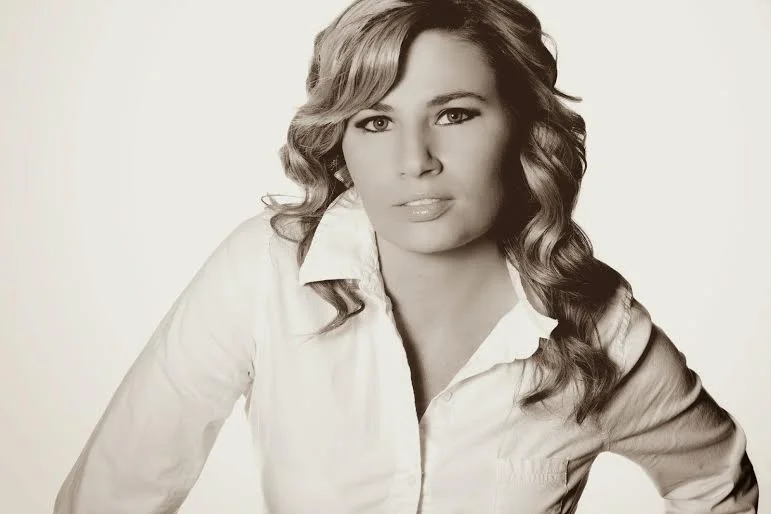
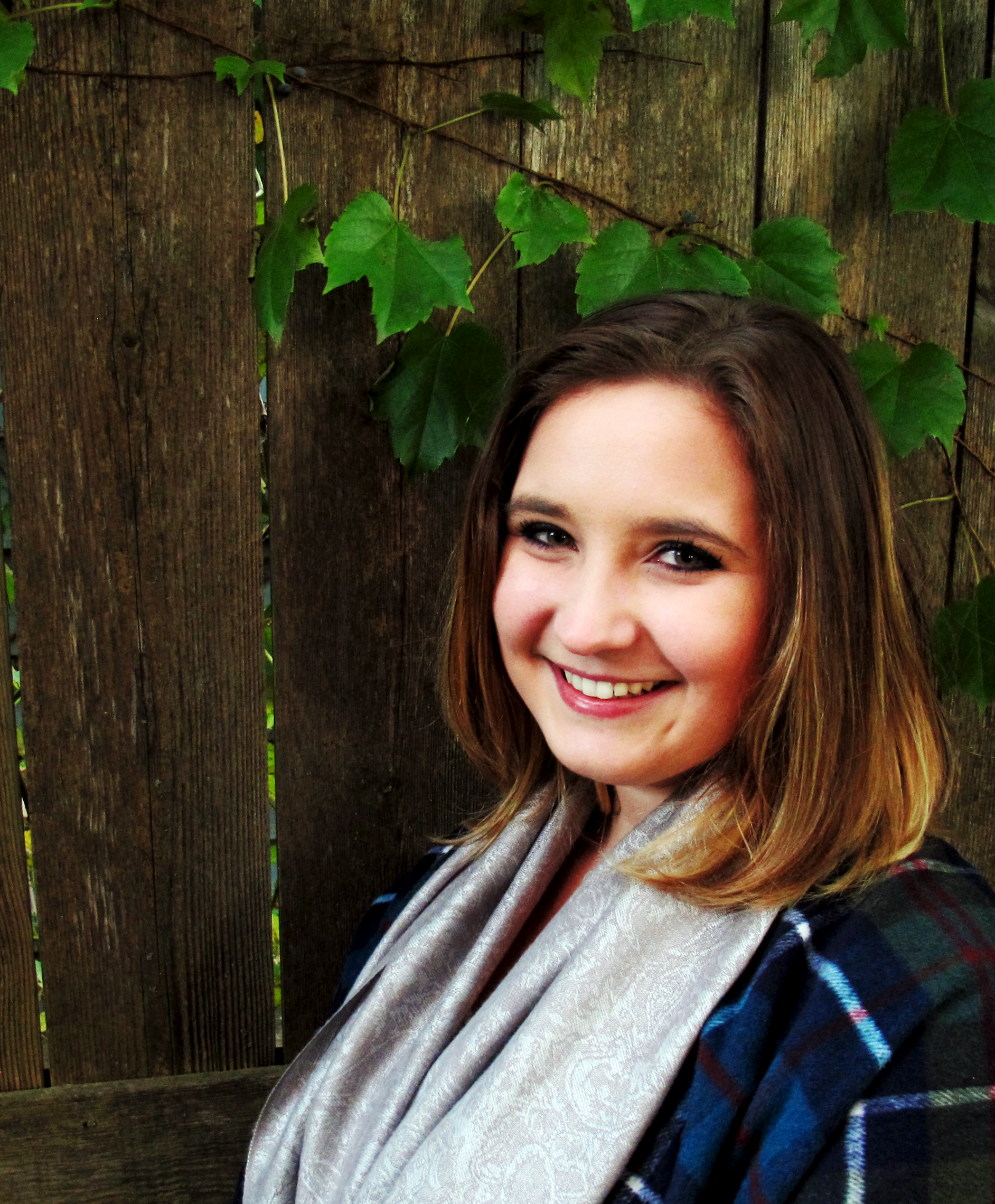
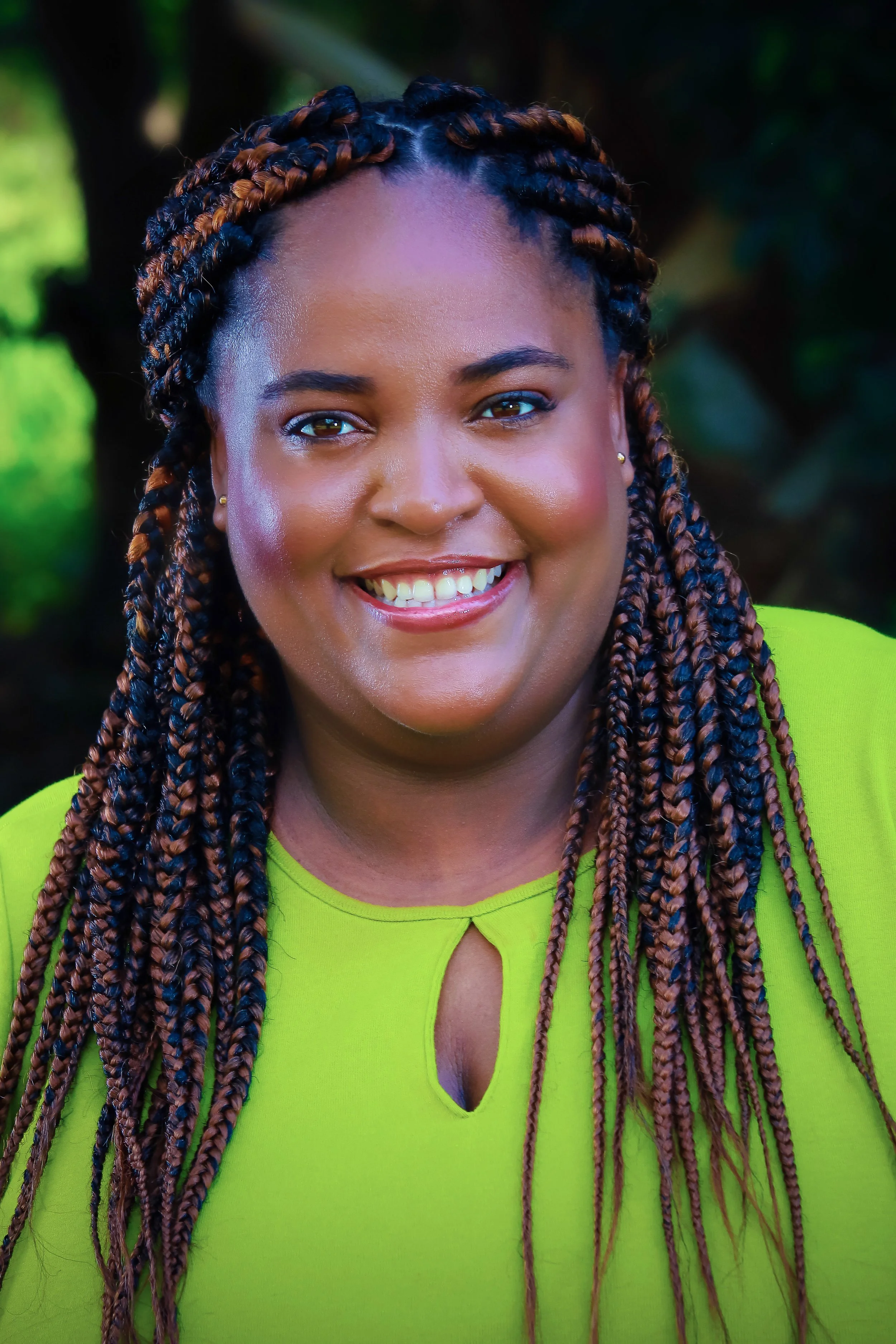
Michelle Bellon lives in the Pacific Northwest with her four children and boyfriend, Seth. She loves coffee and has an addiction to chapstick. 

She works at a surgery center as a registered nurse and in her spare time writes novels. She writes in the genres of romance suspense, young adult, women’s fiction, and literary fiction. She has won four literary awards to include making finalist in the New Age category in the USA Book Awards for her latest release, The Fire Inside.
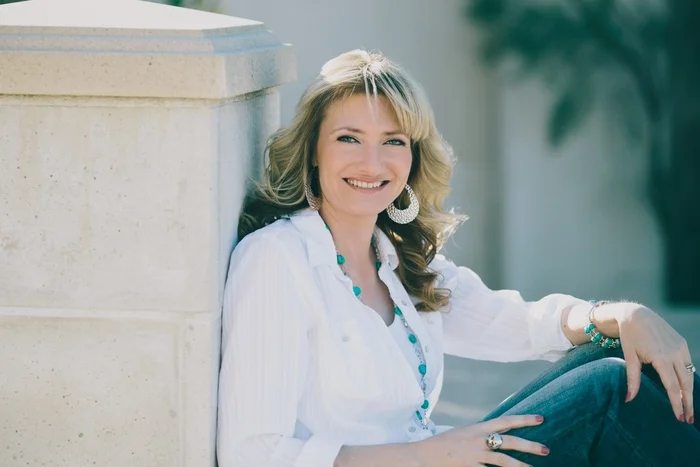
Connect with Michelle: Website | Facebook | Twitter

Q&A with BJ Daniels, Reunion at Cardwell Ranch

What’s your favorite love story? Fiction or non-fiction.

My husband and I had a lot of obstacles when we started out. But love really does conquer all. It’s an amazing love story that just keeps getting better.

You have to wear a t-shirt with one word on it for the rest of your life. Which word do you choose? 

I love this question. Cowgirl-Up. If that isn’t considered one word, then I would choose Persist.

What punctuation mark best describes your personality? Why?

Yep, it would be ! My life has been amazing. I wake up excited to see what the day will bring.

What was your favorite scene to write in Reunion at Cardwell Ranch? Why?

I loved the first scene where he sees the cat burglar running across the roofline. It was a pivotal point for Laramie. Once he decided to get involved, he was hooked – even before the kiss. 

What was the hardest scene to write? Why? 

After you’ve written more than 80 fight scenes...it is really hard to come up with something new and different. That was the hardest for me. I just want the bad guy caught and my hero and heroine to get together.

What is your favorite part of the day?

Mornings. I love waking up to sunshine. It just inspires me.

How did you choose to start writing in the Romance genre?

Actually it chose me. I wanted to write mysteries. But my first fiction sale was to Woman’s World magazine. I had to add romance and I realized I liked the relationship in my stories. About then Harlequin had just begun its Intrigue line. I figured they started it just for me. 

Is anything in Reunion at Cardwell Ranch based on real life experiences or purely all imagination?

All my books are pure fiction. However, we used to have a cabin in the Gallatin Canyon some miles from Big Sky (long before Big Sky). So it is easy to write about a place where I used to dress up like Davy Crockett and play cowboy and Indians. 

What did you find most useful in learning to write?  What was least useful or most destructive?

Writing a lot. I went to work for a newspaper so I had a lot of writing experience on deadlines. I learned to write tight and get to the point. I learned so much by writing and being edited and learning to edit myself.

The hardest part for most aspiring writers is finding the time to write.  It took me a while because I didn’t treat it like a job at first. Once I did, everything fell into place.

Do you write more by logic or intuition, or some combination of the two?  Summarize your writing process. 

My process is all intuition. I swear it comes from outer space and I just type in the stories.  I have no idea where it comes from since I am a true seat of the pants writer. But I love the process since I get to know my characters and the story as I write, so it is always a surprise for me too. 

B.J. DANIELS, a USA Today and New York Times bestselling author, wrote her first book after a career as an award-winning newspaper journalist and author of 37 published short stories. That first book, Odd Man Out, received a four and a half star review from Romantic Times magazine and went on to be nominated for Best Intrigue for that year. Since then she has won numerous awards including a career achievement award for romantic suspense and numerous nominations and awards for best book. Daniels lives in Montana with her husband, Parker, and two springer spaniels, Spot and Jem. When she isn’t writing, she snowboards, camps, boats and plays tennis. She is a member of Mystery Writers of America, Sisters in Crime, Thriller Writers, Kiss of Death and Romance Writers of America.

The Difficulty in Writing a Series by Karri Thompson

I personally love reading series, Harry Potter being my personal favorite, followed by The Lord of the Rings, and The Hunger Games. Since The Lord of the Rings Trilogy was published before I was born, I was able to read all three books in a row. I didn’t read Harry Potter or The Hunger Games until after I saw one or more of the movies, so even with those two contemporary series, I was able to read one book after the other. There was no waiting for the next book to be released.

In fact, I can’t remember ever reading a book and then having to wait for the next in the series, but I have done that for movies, so I think I have a pretty good idea what it feels like – excitement coupled with the frustration of having to wait, followed by the anticipation for the next book, and the build-up of tension as the release date comes closer. The waiting is what makes a series difficult for a reader, but when it comes to the writer, there are two different things that make it difficult, at least for me.

Those two things are making sure it is consistent, and then providing enough backstory for the reader who did not read the first book or books or the reader who doesn’t remember all of the details from the other book or books.

When I wrote the second book in the Van Winkle Series, ASCENDANCY, I had to keep flipping through the first book, MIRROR X, to make sure descriptions of revisited settings were similar. When it came to character descriptions, even though they were my characters, I found myself not remembering the eye colors of secondary characters or what color uniforms certain characters wore. I also had to check for things such as the spelling and capitalization of certain words I used. For example, I’d ask myself, “In MIRROR X, was the hospital Gen H1, GenH1, or Gen-H1?” It got the point that it was easier to download MIRROR X onto my Kindle, so I could type in a word and do a quick search in order to answer these questions more quickly. Making sure it was consistent wasn’t annoying, it was just time consuming, and when I’m writing, I want to keep going and not stop every few pages to check it against the another book or books in the series.

Providing just the right amount of back story is also difficult for me. I don’t want to add too much, which could slow down the plot and also get readers bored, since they already know those details. But at the same time, there needs to be enough to prompt the memories of people who have read the other books while giving enough backstory to fill in the reader who started the series, let’s say, with book two.

This is where a good editor becomes especially helpful. In the first pass of edits, my editor at Entangled publishing suggest where I need to add more backstory about a particular relationship or situation. She’ll also cut out backstory that she finds is unnecessary or will have me condense backstory that drags down the plot. When it came to ASCENDANCY, she also gave the manuscript to another editor to read – someone who did not read MIRROR X. If the editor was confused during certain scenes or with the relationships among characters, we knew that a new reader would be, too. I made the changes accordingly.

The same process is starting to happen right now as I’m working on the third book in The Van Winkle Project series, RELEGATION (working title). ASCENDANCY is on my Kindle for reference, and although I’m doing my best to put in enough backstory, there are experts who I know will make it just right for the reader.

When it comes to being consistent, the copy editor also plays a role in that area. Sometimes the copy editor will notice something that the editor and I didn’t catch. It always helps to have a fresh pair of eyes. 

As difficult as consistency and backstory may be when it comes to writing a series, I love writing them. It gives me a chance to revisit a world and its characters again and again, and I can only hope that readers love revisiting it, too.

Karri Thompson, a native of San Diego, California, grew up hanging out at the beach, playing sports, and eventually attending San Diego State University where she earned her bachelor’s degree in English and master’s degree in education.  When she’s not nerding out at San Diego Comic-Con or watching Star Wars and The Lord of the Rings movies for the umpteenth time, she can be seen doing normal people stuff like teaching high-school English, cooking delicious meals for her family (she attributes all of her culinary skills to the Food Network), and attending her son’s football games.  In her spare time, she writes young adult and new adult fiction, her biggest passion, and loves listening to hard rock music and going to concerts.  She hopes to live long and prosper, and that you will, too.

Connect with Karri: Website | Facebook | Twitter | Instagram: authorkarrithompso

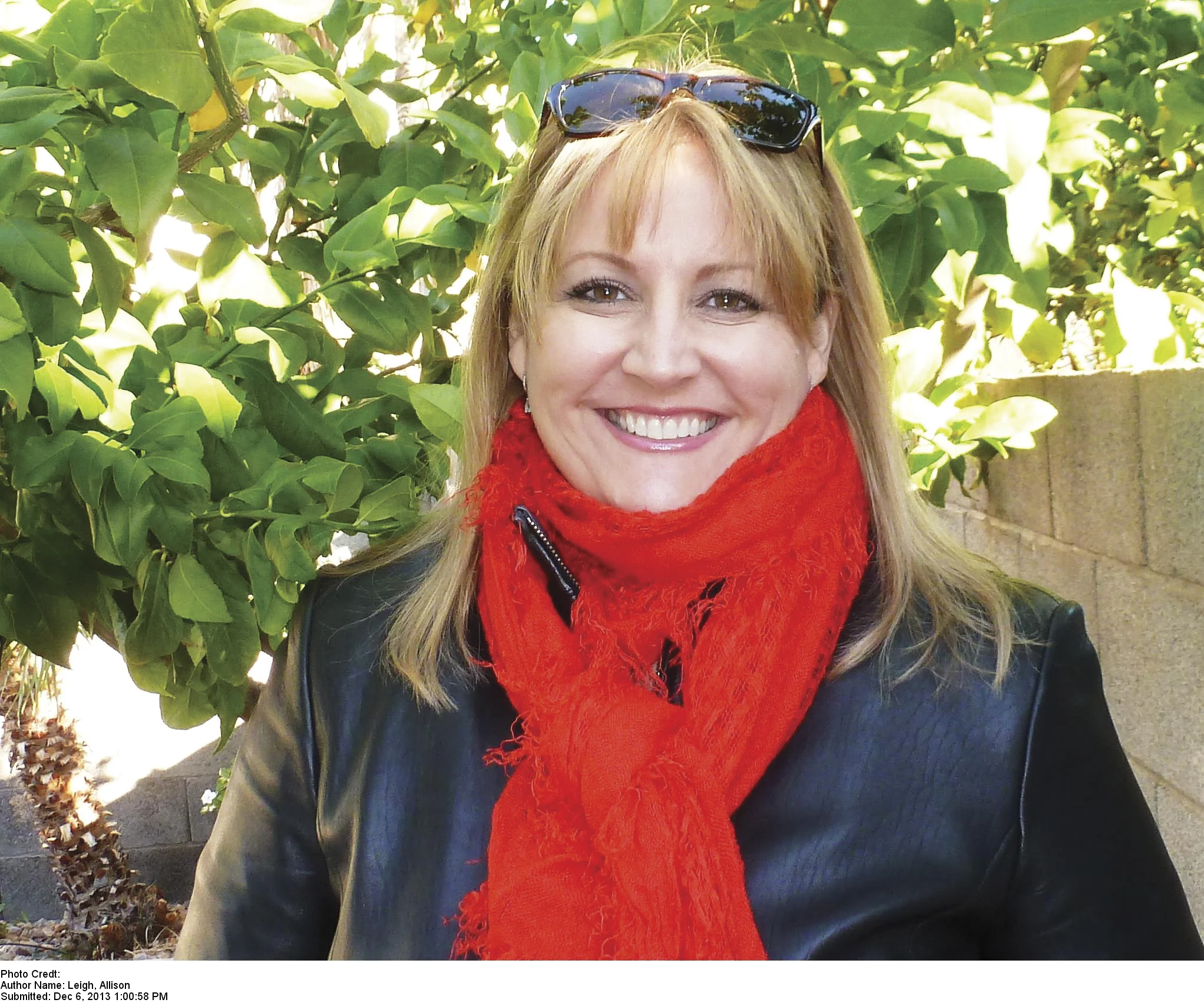
Q&A with Allison Leigh, Fortune’s Secret Heir

List two books you’ve read more than three times. 

The entire Harry Potter series.

Is anything in Fortune’s Secret Heir based on real life experiences or purely all imagination?  

Purely imagination.  Well, no.  Actually, there is a scene where my heroine takes a city bus; I’ve done that.  Ha!

What are some of your favorite words and why?  

Possibilities.  Why?  Because of all the possibilities!

You get a brilliant phrase/idea/thought at an inappropriate time (while driving, drifting off to sleep/in the shower). What do you do?  

My brilliant mind (ha) tells me that I’ll remember that brilliant notion.  Of course, I promptly forget the details.  If I’m really feeling ambitious, I’ll stop what I’m doing and write it down, or (hard to believe I’ll admit this) I will phone myself and leave a voice mail message.

What do you do when you are not writing?  

Think about writing.  I also have a full-time job outside of writing at a local non-profit working in the Finance department.  Very non-creative. That ought to mean my mind is balanced between writing and that, shouldn’t it?  Hmmm….

Where is one place you want to visit that you haven't been before?  

New York City!

Is there a certain type of scene that's harder for you to write than others? Love? Action? Racy?  

Love scenes can be a challenge, but not always.  Emotionally wrenching scenes can be exhausting, but not always.  The scenes that are the hardest to write are those where nothing important is going on.  Thus, the difficulty, and in all likelihood it means I need to go back and rework something so something important is happening.  When I’m at a dead end for some reason, it always means I’ve gone off course when I shouldn’t have.

How important are names to you in your books? Do you choose the names based on liking the way it sounds or the meaning?  

Names are important to me, and sometimes you end up with a character’s name you never intended.  A secondary character, for instance, who later unexpectedly becomes a hero or heroine.  Names help me form that vision in my head of my character.  Sometimes I go hunting for that ‘perfect’ name, flipping through my various name resources.  Sometimes it just hits me.  I wake up one morning, and think, “Aha!  Well, of course, that’s the name.”

What question do you wish that someone would ask about your book, but nobody has? Write it out here, then answer it.  

Frankly, I’m always surprised when someone has a question about one of my books.  My mind is a blank on this one!

What are you working on now? What is your next project?  

Presently, I’m working on a synopsis for my next Men of the Double-C Ranch-related stories. That, and trying to get my Christmas gifts wrapped on time…

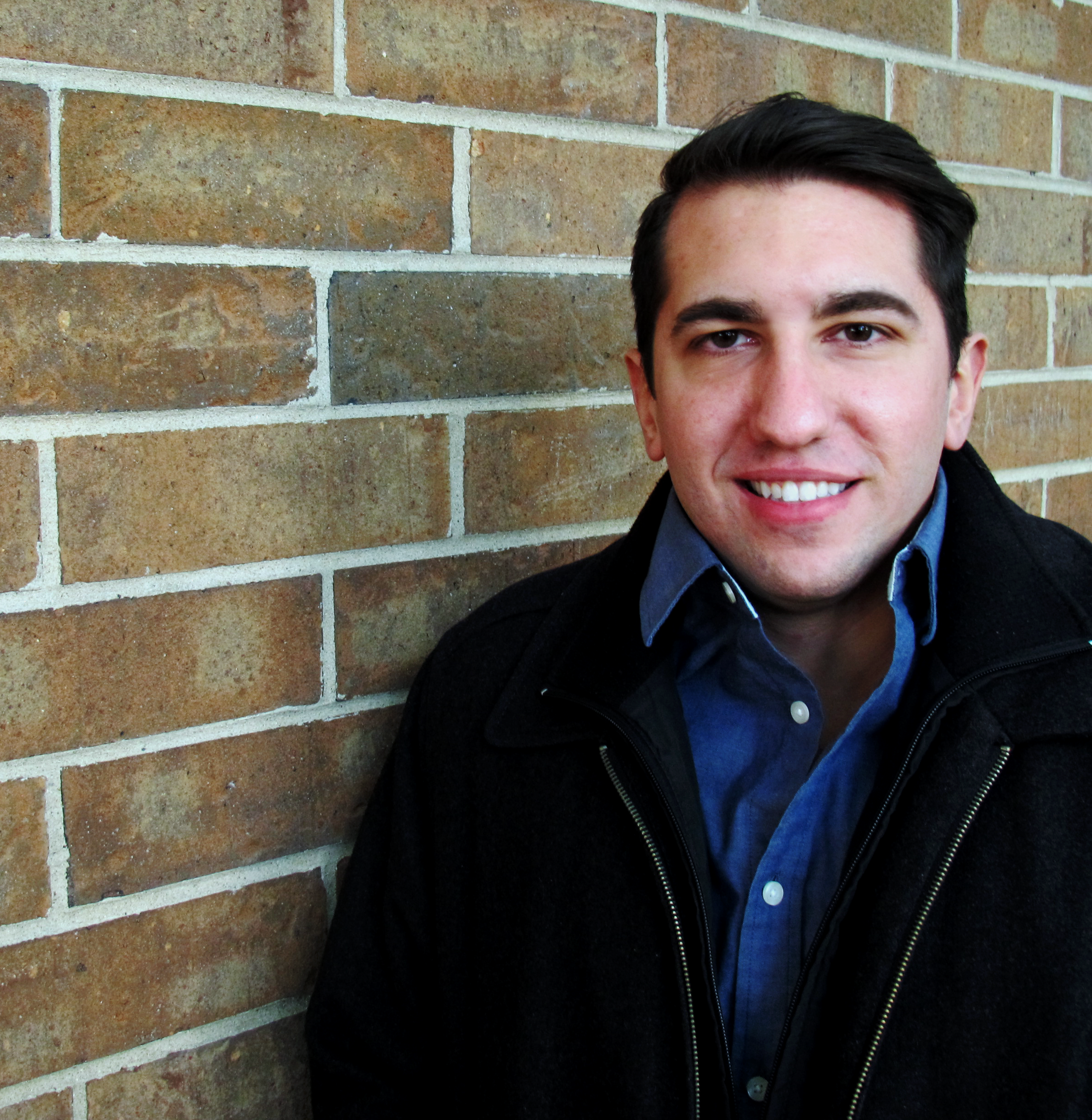
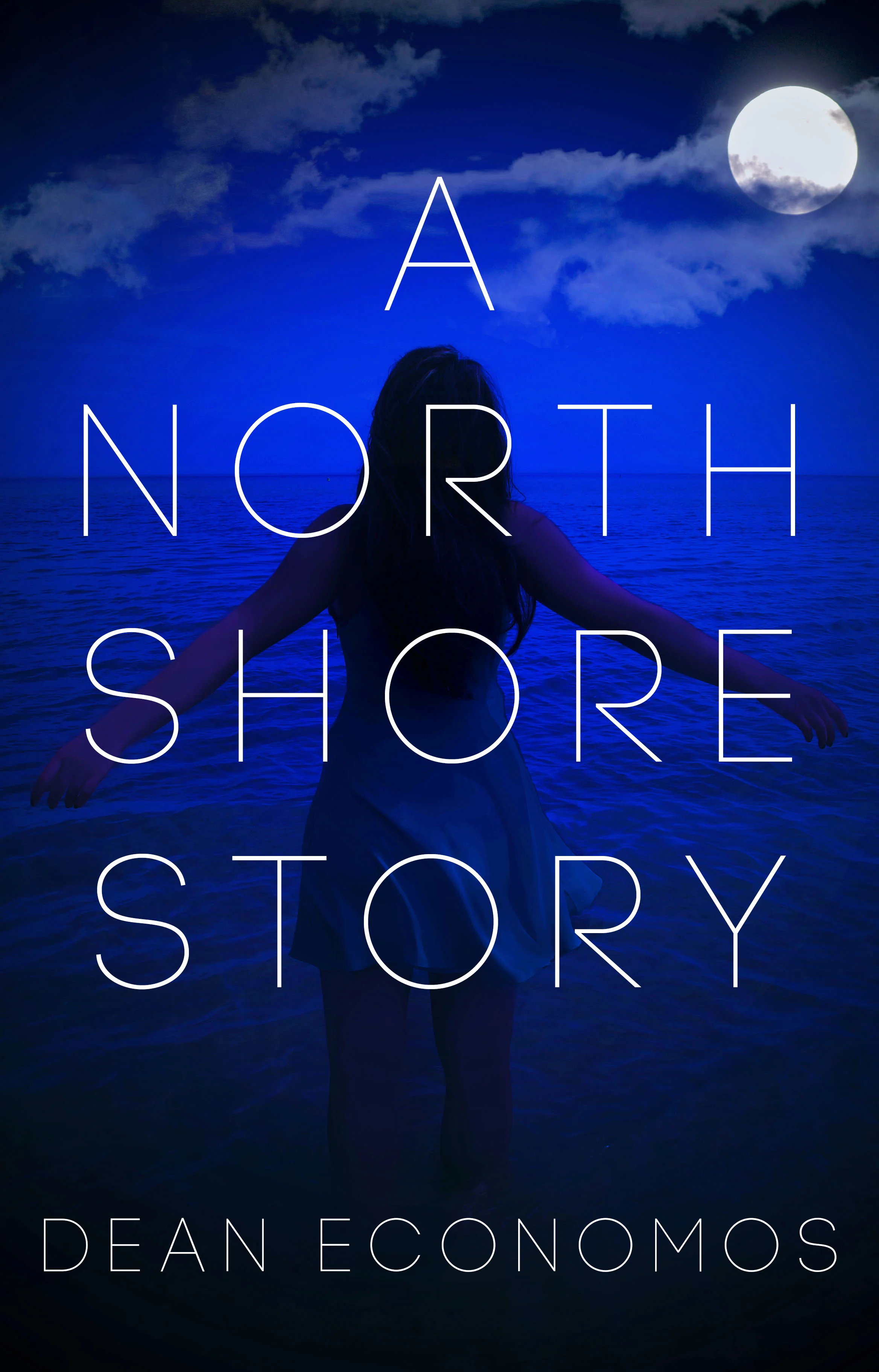
Q&A with Dean Economos and Alyssa Machinis, A North Shore Story

Give us some background, what did you do before writing this book?
 
I went to college at Loyola University Chicago and received my undergrad in Biology and a minor in Biostatistics. I then went on to receive my M.B.A. from Loyola’s Quinlan School of Business with a concentration in Entrepreneurship.
 
What were the events that inspired the book?
 
The book was inspired by different experiences growing up. Those key events and experiences were then intertwined with the more current events of our church’s media coverage.

Some parts of your book are things you actually experienced, they must have stuck with you for you to want to write about them years later. Did you always know you wanted to tell these stories?
 
I kind of had a premonition growing up that these events would be shared. My friends and I would always say we should’ve had a show like Laguna Beach, or something of that nature. So, in a way, I did think these stories would be told in one way or another, I just didn’t think I’d be the one to tell them.

Like other stories of turmoil, we are drawn to A North Shore Story because we can relate to the characters. Can you elaborate on what is relatable about the internal struggles of the book’s characters?
 
What makes these characters extremely relatable to readers are the confidence and relationship problems each one of them goes through, whether it be friendship or romantic. Some characters go through other internal struggles such as underage drinking, drug use, and sexual peer pressure. I think that everyone at one time or another has been in one of these circumstances.
 
What was your favorite part of writing this book?
 
Since this was my first book, I didn’t know what to expect. I thought I was supposed to have a template or well-thought out plan before writing anything. Instead, I jumped into it head-first and developed the story as I wrote. I feel that doing it this way allowed myself to be more creative and not stick to a “script” per say. I was even surprised at what I was able to create.
 
What inspired you to write this story so many years later?
 
What originally got my gears turning was the media’s coverage of our former priest and his embezzlement of church funds. I then started to think about our time growing up at our church and the events that our friends and I experienced. After pinpointing key events, I began formulating the plotline which now makes up A North Shore Story.

You know some of these characters in your waking life. Who was the most exciting to write? How have they changed because of what happened?
 
The most exciting character to write about was definitely Kate. Kate, and the girl who she’s based off of, has a very exciting personality and a distinct attitude. When our friend read the story, she loved how she was portrayed in the storyline. I think that she, along with the rest of our friends, have changed in that we’ve learned how to tackle the problems that Kate and the rest of the group are dealing with right now.

What strengths did you and Alyssa bring to the table to help one another write the book?
 
I felt more connected to writing the actual story. I was able to figure out and connect the different sub-plots of the book, while Alyssa is very familiar with novels and creative writing. With those skills, she helped make the book come alive.
 
Do you anticipate a sequel?
 
I’ve thrown ideas around in my head, and I’ve talked about it with Alyssa. We’re open to it, but haven’t started writing anything yet.

Tell us about your background, what have you done since the events that occurred that inspired A North Shore Story?
 
Well, I went to college at University of Illinois and graduated with a degree in Advertising and minors in both Business and Communications. Now I work at an advertising-technology company as a Digital Strategist.
 
What is your side of the story depicted in the book? Did you change the reality for the fiction version?
 
 My side of the story is depicted in the book, but it’s pretty separated from reality. The biggest and only consistency between my character and I are our driven personalities. 
 
What was the most difficult part about writing this book?
 
The most difficult part of writing the book was helping it come alive. The content was there, and the story was strong, but fostering the story from a passive standpoint into an active point of view was a challenge. 
 
What do you think the most important lesson from the book is?
 
The most important lesson from the book is to be confident in who you are. Don’t worry about what other people think because the fear of judgment can turn you into a person you don’t want to be.
 
What part of this story do you think appeals to young adult readers most?

I think what appeals to young adults about A North Shore Story are the pop culture references mixed with struggles that I think a majority of teens have experienced or encountered at some point in their lives.
 
Who is your favorite author? What were a few books that inspired your writing?
 
I don’t necessarily have a favorite author (I read a lot). However, I do think that J.K. Rowling’s writing style was very influential on my own. It’s also comforting to know that she had humble beginnings just like Dean and I have now. 
 
Do you think you’ll write another book?

Like Dean mentioned, we’ve talked about it a little bit. However, as of now we have not made any strides toward writing another book. 

Q&A with Maisey Yates, The Queen’s New Year Secret

What inspired you to explore the subject or theme of your book? 

I’ve never written a book about a married couple before, and I was really inspired to explore the marriage of convenience that didn’t turn to love quite as quickly as you often see in romance novels. Five years in, and Kairos and Tabitha have a lot of unexplored feelings and a LOT of anger. 

What punctuation mark best describes your personality? 

Why? Is an emoji considered punctuation these days? Because that opens up a lot more possibilities. 

Who is your favorite literary villain and why? 

I’m going with Conrad from Make You Mine by Jackie Ashenden. Trust me on that. 

You're hosting a dinner party, which five authors (dead or alive) would you invite? 

Well, I would have to say I’d invite Jackie Ashenden, Nicole Helm, Megan Crane and Jane Porter because that just sounds fun. We would get thrown out of the restaurant though. 

What is your favorite part of the day? 

I’m starting to enjoy weekday mornings. We get the kids up and out to school and then it’s just quiet time. Coffee, candles, and some time to get oriented to the day. 

What are five words that describe your writing process? 

Caffeinated, frantic, organic, character-driven. 

Is anything in The Queen’s New Year Secret based on real life experiences or purely all imagination? 

I think there are always elements of real life in fiction. No matter how high fantasy a story is, for me, the emotions are rooted in reality. For Kairos and Tabitha I was thinking a lot about marriage, and about communication. And about the choices we make in life to move past things – big and small – because clinging to them doesn’t benefit us. 

What did you find most useful in learning to write?  What was least useful or most destructive? 

I took creative writing in college and mostly learned there that taking yourself too seriously keeps books from getting finished. So that class wasn’t useful in the way it wanted to be! I’ve definitely learned a lot of craft and that’s been invaluable, but the key thing for me was to learn to just write, FINISH the manuscript, and then write another book. 

Which would you rather do: Never write another story or never read another book? 

I’d have to go with never reading (this is awful, by the way) only because I know if I read but never wrote but head would be so full of ideas it would be torture.   

What do you love about writing for Harlequin Presents? 

I love the fairy tale quality of the stories, rooted in deep, real emotion. I love writing about a king and queen who, like everyone else, need love, and need to learn how to forgive and let down their guards. I think that’s one thing that makes powerful heroes so compelling: He has everything, but still, without her and without love, it’s nothing. 

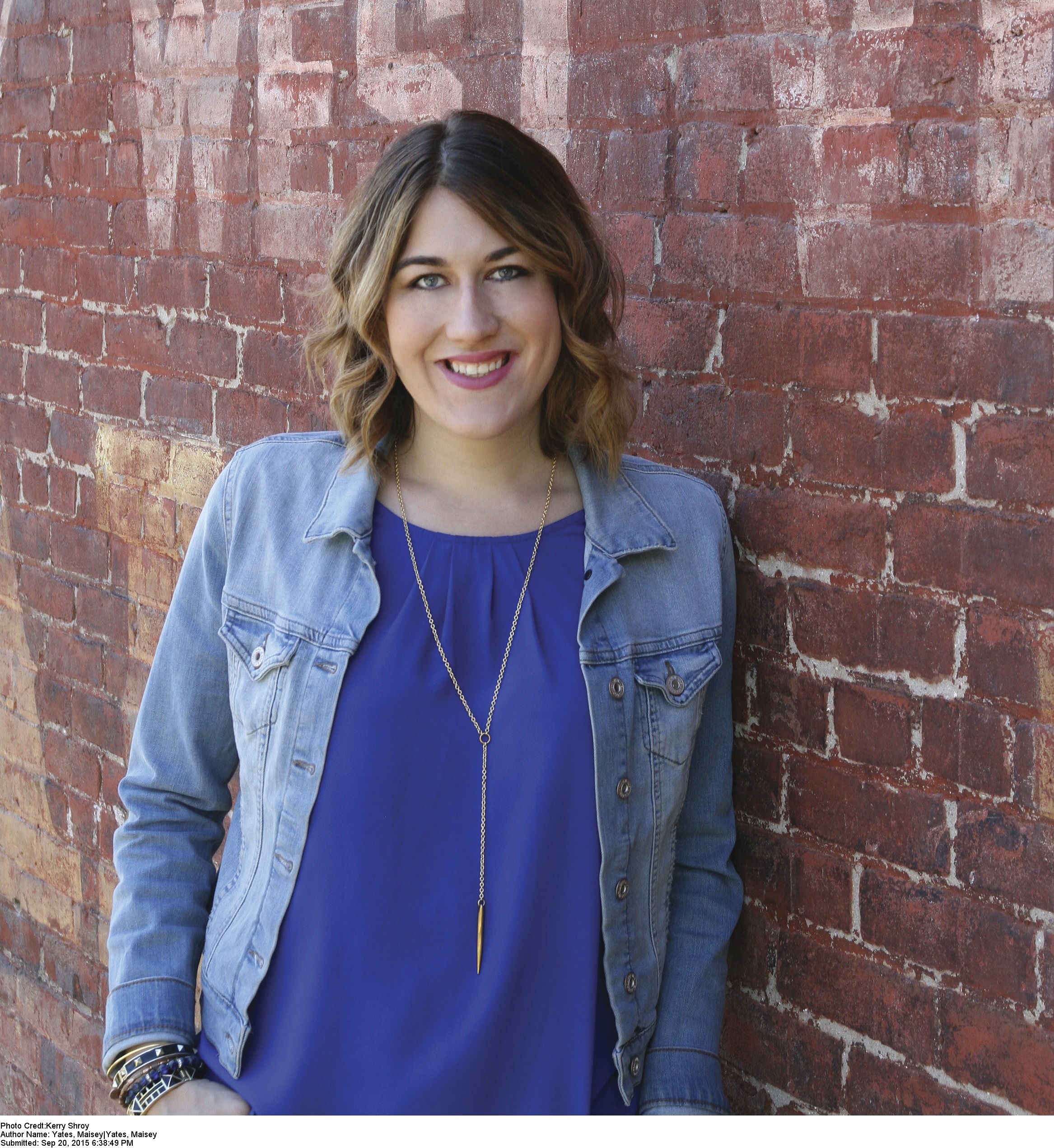
Maisey Yates is a USA TODAY bestselling author of more than thirty romance novels, including the Copper Ridge series. She has a coffee habit she has no interest in kicking, and a slight Pinterest addiction (those half-naked men are for research, she swears). She lives in rural Oregon with her three children and her husband, whose chiseled jaw and arresting features continue to make her swoon. When Maisey isn't writing she can be found singing in the grocery store, online shopping for shoes and probably not doing dishes.

Connect with Maisey on Website | Facebook | Twitter