Q&A with Shannon A. Thompson, Bad Bloods

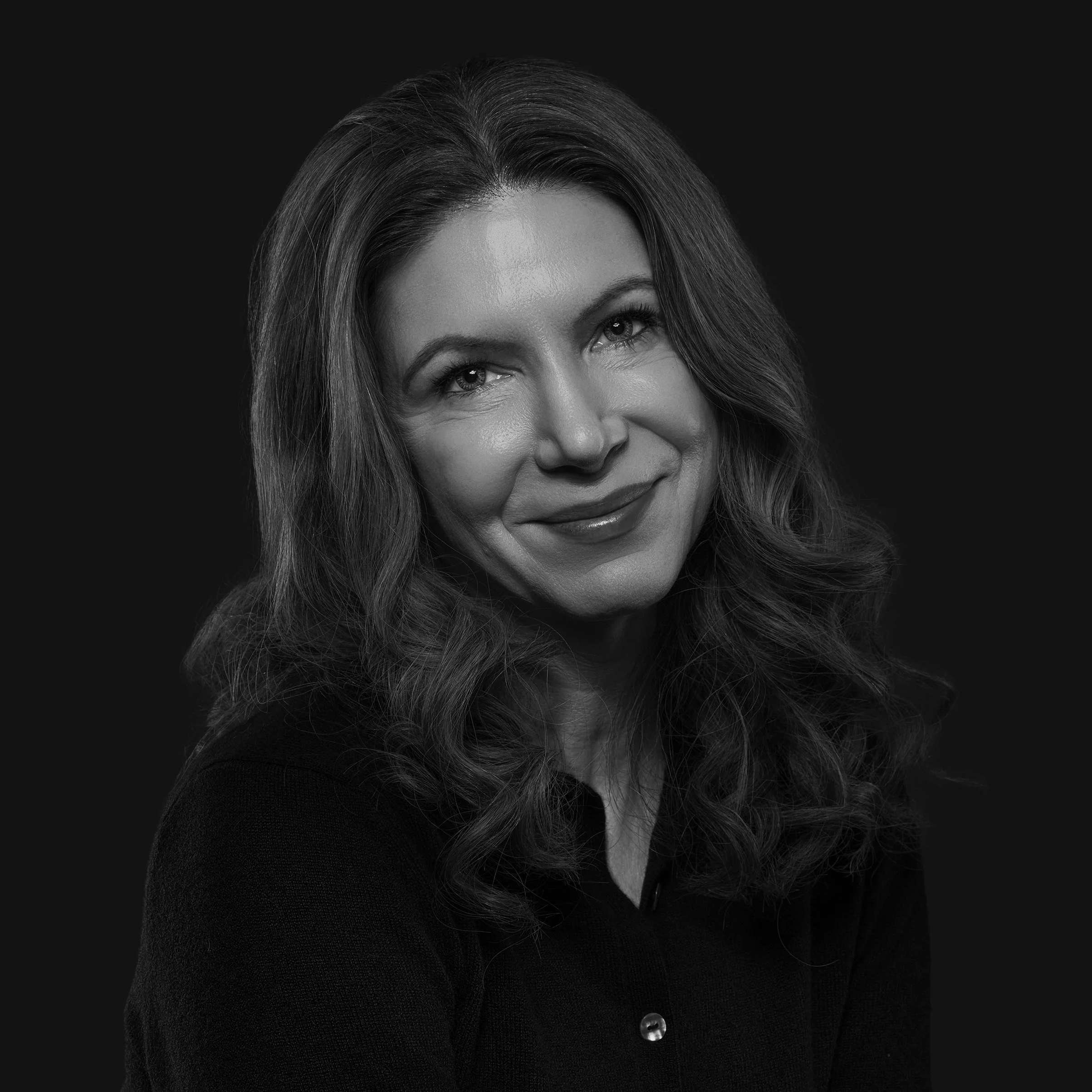
headshot (1).JPG

Tell us about the process of turning your book into an audiobook.

My favorite (and first) part about turning Bad Bloods into an audiobook was discussing my book with the narrator, Jonathan Johns. I let him know some exclusive behind-the-scenes info that
never made it into the book but was essential to understanding the characters. He was really receptive to it, and he truly understood what each person and scene represented. After he recorded, I listened to each scene and provided more notes. Then he recorded more, and now, we have an audiobook!

Do you believe certain types of writing translate better into audiobook format?

Yes, I think it’s absolutely possible—not to mention that there are readers who NEED audiobooks in order to access novels and other pieces of text, so audiobooks are extremely important.

Was a possible audiobook recording something you were conscious of while writing?

Yes and no. I always loved the idea of an audiobook, but I didn’t let it change my writing style. However, I always read all of my books out loud in the last editing phase to check the sound and overall flow, so that’s very similar. Sound is important.

How did you select your narrator?

My publisher sent me a few auditions, but Jonathan Johns stuck out the moment I heard his voice. He captured both the dark essence of the story and the characters’ individual voices. From the beginning, I felt as if he understood it more than anyone else, and he truly brought it to life.

How closely did you work with your narrator before and during the recording process? Did you give them any pronunciation tips or special insight into the characters?

Yes! I provided pronounciation for any words or names that might be difficult, but I definitely gave him insight into each character. Bad Bloods is very character heavy (and a character-driven story), and it was important to me that they were distinguishable and matched what I pictured when writing. He learned facts that will never even make it into the series. Why? Because those details often shape characters, but they might also be unseen details. I needed to know those details to create the prose, so I thought Jonathan would need to know them in order to create the audio. He absolutely nailed it!

Were there any real life inspirations behind your writing?

I think there is truth in all types of writing, including fantasy. For me, I originally wrote this book shortly after my mother died very suddenly. I was eleven, so I had a lot of anger and depression and confusion about how terrible things can happen to very young people. Those feelings are scattered throughout Bad Bloods, and to this day, Bad Bloods still feels like the closest books to my heart—probably because writing these books saved me when I was young.

Are you an audiobook listener? What about the audiobook format appeals to you?

Actually (eek), I’m not. I have a difficult time remembering anything when it’s in audio format. Even when I was a kid, I struggled to learn from lectures. I’ve always taught myself by reading materials. (Maybe my dad was right when he said I was a bad listener. Ha!) But I’m so glad it exists for those who need and love audiobooks.

What do you say to those who view listening to audiobooks as “cheating” or as inferior to “real reading”?

That’s just silly! Would anyone say the same thing to those who read brail? Or those who read a text in a different language aside from the original language the text was written in? Absolutely not. Audio books are another format that allow readers to access books. Reading is reading, no matter the format.

Do you have any tips for authors going through the process of turning their books into audiobooks?

Definitely communicate with your narrator. You have the same goal—to turn your book into the best audiobook it can be—so work together to reach that goal.

What’s next for you?

Hopefully the audiobook for Bad Bloods: November Snow, then Bad Bloods: July Thunder and Bad Bloods: July Lightning! I’m currently working on the third duology in the series, but I also have lots of other projects in the works. I’m looking forward to seeing the unknown future unfold!

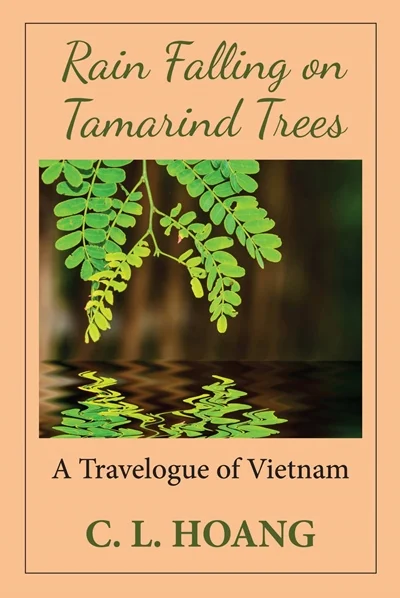
Rain Falling on Tamarind Trees: A Travelogue of Vietnam, by C. L. Hoang

AuthorPicture_short_400x500.jpg

By nature I am a slow planner, especially when it comes to long trips away from home. So imagine my surprise when in late 2016 I was presented with an opportunity to join a group tour to Southeast Asia, with the main focus on Vietnam, and I heard myself spontaneously blurt out, “Sign me up!”

It turned out to be one heck of a trip. Seventeen days in total, beginning and ending with a twenty-hour flight over an eight-thousand-mile stretch of ocean, across fifteen time zones and the International Date Line and a wide scale of climate changes. Most significant to me, it marked my first time traveling back to the ancestral homeland I hadn’t seen in over four decades.

This travelogue retraces the major segment of the tour—the final ten days—which took us on an itinerary of discovery through the length of Vietnam: from Saigon, my former hometown in the south where I grew up during the war, to Hoi-An, the best preserved medieval seaport in Southeast Asia; Hue, the ancient capital of imperial Vietnam, on the central coast; Halong Bay, a world-renowned natural wonder on the Gulf of Tonkin; and our final destination, Hanoi, the country’s thousand-year-old capital, in the north.

I tried not only to recapture the highlights of this whirlwind journey—with their historical background and mythical lore—but also to explore a few special sites that I wish we could have squeezed into our packed schedule. At times the travelogue may read like a journal because it is sprinkled throughout with all kinds of resurrected memories—of my own childhood, in a time and place long since gone.

The book contains many pictures, forty-three in all. Most were taken by me on this trip—so please kindly overlook imperfections—and the rest were generously contributed by family and friends who had visited there before. Color printing technology being where it is today, I was forced to limit the total number of pictures and pages to reduce the setup and printing fees. This is so the book can be reasonably priced for a wide audience, even though my personal inclination was to share every relevant and worthwhile photograph I have.

I also decided to include many historic names in Vietnamese, along with their English translations, of course. As it was in our age-old tradition, names were never merely names; they carried great meaning and were often used to promulgate noble aspirations. Over the millennia, many of these ancient names also took on an extra aura, as they became associated with momentous events that still resonate with the Vietnamese people to this day. By incorporating them into the travelogue in their original spellings, I strived to convey an intangible aspect of our heritage, one that extends beyond pictures and descriptive words.

To people who have read my Vietnam novel, Once upon a Mulberry Field (Willow Stream Publishing, 2014), this travelogue offers a glimpse of the story’s setting as it appears half a century later. For others, I hope it kindles your passion for travel and discovery and also provides you with a different view of this once ravaged land—and perhaps the inspiration to visit there some day. As the French writer Marcel Proust once reminded us, “The real voyage of discovery consists not in seeking new landscapes, but in having new eyes.”

This journey across the Pacific Ocean accomplished both for me.

About the Author: C. L. Hoang was born and raised in Vietnam during the war and came to the United States in the 1970s. He graduated with degrees in electrical engineering from Ohio University and the University of California, Berkeley, and earns his living as an electronic engineer, with eleven patents to his name. Books, history, and travel are his hobbies. His first book, Once upon a Mulberry Field, is an award-winning novel set at the height of the Vietnam War. It is followed by Rain Falling on Tamarind Trees, the travelogue of his recent return trip to the ancestral homeland.

Visit him at his website: www.mulberryfieldsforever.com or find him on Goodreads, Facebook, and Twitter @CLHoang

If I Knew Then What I Know Now About Writing by Charles Curtis

Charles-Curtis-300x225.jpg

I’ve spent most of my career as a sportswriter for magazines and, later, blogs. While there was some advanced planning involved if I was writing a longer feature, most of the time I had to react on the fly to what was happening at events or games and to write about it quickly. 

That was relevant when I sat down to write The Accidental Quarterback – I had one scene in mind that I just needed to put on paper (fun fact: It turned out to be the final chapter of the book, not the first!) right away. After that? I wrote the rest of the book from what I envisioned in my brain. I always saw the novel cinematically, as scenes in a movie inside my head that I would convert into chapters. 

But when I wrote myself into a corner or had no idea what to do next? That’s where an outline really could have come in handy. It took me weeks to dig myself out or to find a solution.

And that’s the big lesson here: Plan ahead! You’ll save time and mental energy if you work your plot out ahead of time. There’s also just something about seeing words on paper after you’ve rolled your ideas around in your mind for months. Maybe that chapter you had in mind that went off in a weird direction suddenly looks out of place in the context of your outline. It’s a lesson I only learned after finishing the second book of the Weirdo Academy series, The Impossible Pitcher.

If you like the thrill of flying by the seat of your pants, by all means, go for it. But I wish I’d known to plan my books before I wrote a single word of them.

Q&A with Parker S. Huntington, Asher Black

AB_Cover (1).png

How did you select your narrator?

Lacy and I connected through the Audio Loves group on Facebook. I posted in there, asking for narrator recommendations, since I was going through the process of putting an audition script up on ACX. She messaged me, and when I got her audition, I just knew she needed to be Lucy.

Were there any real life inspirations behind your writing? 

This is going to sound ridiculous, but Lucy is me—from our majors to our schooling to our geographic history to the mental rambling. I think that’s why I was able to write Asher Black so quickly. 

How do you manage to avoid burn-out? What do you do to maintain your enthusiasm for writing?

I’m working on my Master’s in Literature and Creative Writing right now, so I write a lot. I’m talking twenty-five thousand words a week. Minimum. But… what I write is often what I don’t want to write, which is actually how I avoid burn-out. After writing what I have to write for school, writing novels is a relief—an exercise that I thoroughly enjoy. 

Is there a particular part of this story that you feel is more resonating in the audiobook performance than in the book format? 

Lucy is a mental rambler. Seriously. She goes on and on about the most ridiculous things, from social commentary to her self-named “Horny Lucy”… And Lacy is able to bring her character to life, narrating the mental rambles with such skill, it feels like her voice is the voice in my head. Did I mention how blessed I am to have Lacy as the narrator?

What do you say to those who view listening to audiobooks as “cheating” or as inferior to “real reading”?

A while back, I encountered someone who wanted to read Asher Black, but she couldn’t due to her eyesight. I got to thinking: what can I do to make my book more accessible? This is where audiobooks come into play. It’s not about cheating or being inferior/superior. The reality is that, in today’s world, accessibility matters. People may choose to listen to audiobooks for so many reasons—it’s convenient, they commute, they have vision impairment, or they just plain like it. At the end of the day, who are we to judge other people’s choices? So long as we continue to make books accessible in every format, we’ll continue to promote reading… and isn’t that a great goal?
 
How did you celebrate after finishing this novel? 

I slept. A LOT. I wrote Asher Black in less than two weeks, which meant a lot of sleepless nights. By the time I was done, I was too exhausted to celebrate. It’s far from glamourous, I know, but hey—#authorproblems.

In your opinion, what are the pros and cons of writing a stand-alone novel vs. writing a series? 

For a standalone novel, you can be done with characters after writing, and you don’t have to worry about losing readers with each subsequent release. But as a writer (and reader), you get more time to delve into a world, and that’s an awesome experience for anyone.

Have any of your characters ever appeared in your dreams?

My God, Asher is the man of my dreams. Does that count?

What bits of advice would you give to aspiring authors?

I still consider myself an aspiring author, but I’d say to just do it. I spent a lot of time floundering and second guessing myself, wondering if I should take the risk (and it is a risk). But ultimately, I’ve been happier since deciding to do it. On a second note, writing is a business, and the best advice anyone could ever give, beyond craft advice, is to treat your writing like it’s a business. You have marketing, social media management, graphic design, customer service, business, writing, etc. to handle. It’ll be a lot to take care of, but if you’re on top of it, it’ll feel so rewarding.
 
What’s next for you?

I published the second book in the series in July, and I’m currently working on Bastiano Romano, book three in The Five Syndicates series. Once I’m done, I’ll work on the Turner Triplets trilogy!
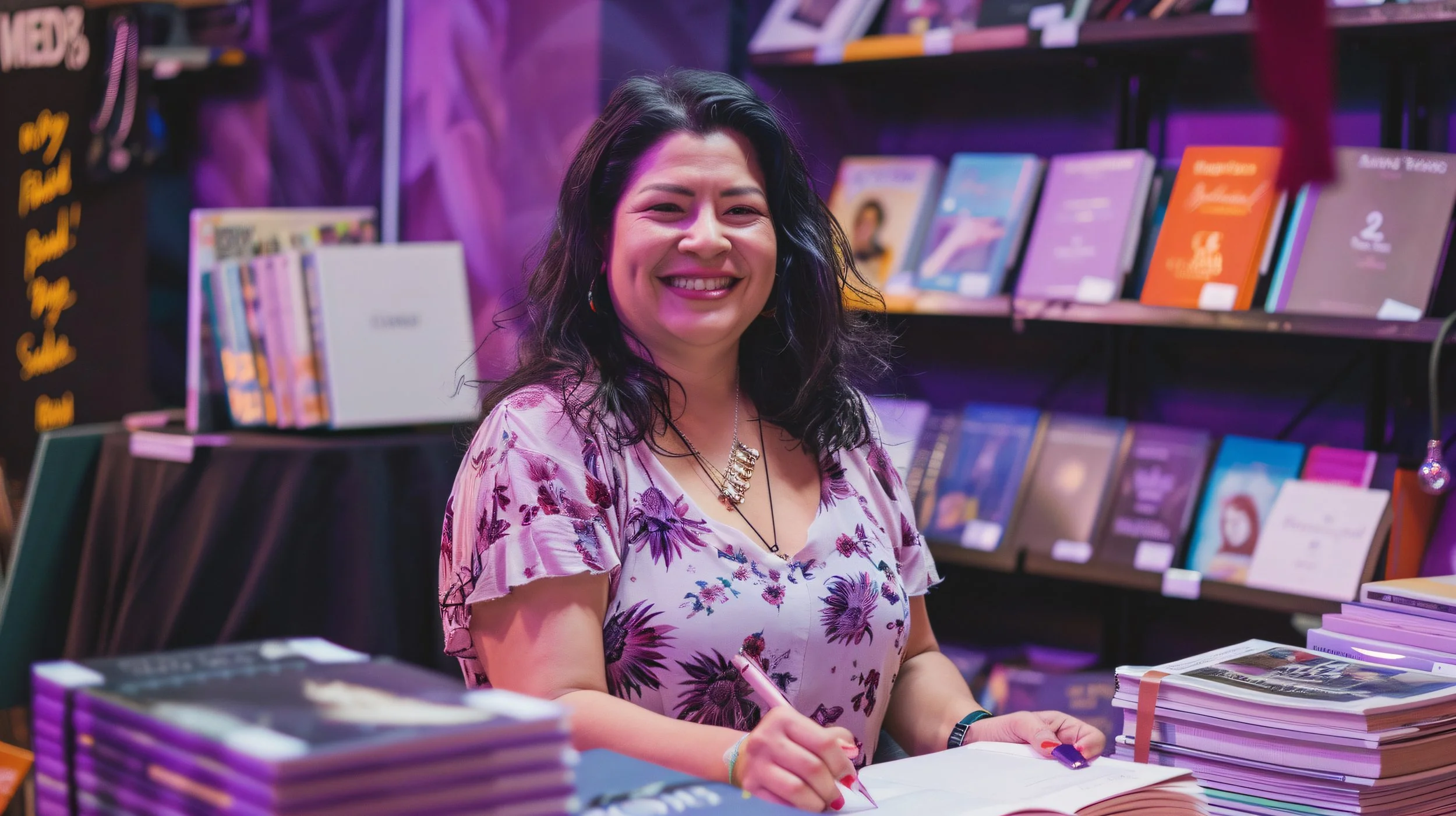
Q&A with Aundrea Mitchell, narrator of Beneath the Lake

AundreaMitchelHeader.png

When did you know you wanted to be an audiobook narrator?

I was listening to more and more audiobooks and I just kept getting the urge to do it.

How did you wind up narrating audiobooks? Was it always your goal or was it something you stumbled into by chance?

I just researched until I found ACX, and on their website it talked about what you needed, how to do it and I just went for it.

Did you find it difficult to “break into” audiobook narration? What skill/tool helped you the most when getting started?

No, it was not difficult to break in but to stay in is a totally different story.

A lot of narrators seem to have a background in theatre. Is that something you think is essential to a successful narration career?

I don’t know if it’s essential, I have a very limited background from when I was in school. I love theater. However now I do find training very important. Getting an instructor for the type of narration you want to perform, attend seminars and classes in both performance and audio
technology – you should really know how to use the equipment you are utilizing and some employers’ will only accept your work if you are using certain technology.

What type of training have you undergone?

I am seeing a coach for non-fiction (Sean Pratt-@SPPresents) and another for fiction (Andi Arndt - @andi_arndt). Between the two a variety of topics in narration and the business of narration are covered. I see improvement every time I have a session, which is really encouraging, I am lucky that although I may not have years of professional acting or collegiate acting training I am able to utilize my coaches to help me improve and to learn more about what it is that I do.

How do you manage to avoid burn-out? What do you do to maintain your enthusiasm for narrating?

For me it is a combination of things. Because of the performance aspect, if I am not feeing it, I try not to push through. I will walk away and do some of the many other things I am responsible for in real life. My hours are really flexible because I work out of a home studio, so sometimes it is just as simple as hanging out with the family. Other times, I find that listening to others narrate in the genre’s I work in really helps. Especially when they are good they will motivate me to want to get back in the booth.

Are you an audiobook listener? What about the audiobook format appeals to you?

Yes I am constantly listening! I love audiobooks! For me, I find myself listening while I am doing housework or playing the driver to the kids.

What are your favorite and least favorite parts of narrating an audiobook?

My favorite is recording, getting to immerse myself into another world. I also love the read through of the book; it really gets me excited and helps me to plan out where I am going to go. I guess editing is my least favorite part, but only in comparison to the other parts, I love to do it,
just not as much as performing or reading.

If you could narrate one book from your youth what would it be and why?

I Know Why the Caged Bird Sings – that book spoke to me in my soul on so many different levels I can’t even fully describe!

What do you say to those who view listening to audiobooks as “cheating” or as inferior to “real reading”?

Maybe to them, but as a mother of five kids, I know everyone does not learn the same way, receive things the same way and we are very lucky to live in a time that we have audiobooks as a way for people to enjoy books.

What’s next for you?

The Elk Riders Series Book 1 – In the Darkness Visible and Book 2 – Voyage of the Elawn by Ted Neil.

About Aundrea Mitchell

After receiving her B.S. and MBA with a concentration in Health Care Management, Aundrea fell madly in love and decided to start her family. Ten years and five children later she was quickly living the full time wife, mother and household management life. Needing a temporary escape from time to time Aundrea returned back to her first love - reading! After devouring everything she could get her hands on she thought, -what if she could mix her love of performance and literature in a professional capacity? Once getting involved in the world of book narration she quickly became hooked and when not with her family you can find her in her studio working hard to grow in her own storytelling
abilities.

Connect: Website | Facebook | Twitter: @A5Mitchell

Top 10 Dream Vacation Spots by J. Keller Ford

J. Keller Ford.jpg

I love to travel. There are so many places in the world I want to see, but whenever anyone asks me what I’d like to see most, these seem to top my list every time, especially #1.  Of course, if money weren’t an issue, pack me up with my pups and my hubby and set me on a cruise around the world with stops in every port possible. But, seeing as I currently live on a very tight budget, I’ll settle for these glorious getaways. Who wants to go with me?  Pack your suitcases and let’s go!

  1. New England in the Fall (who doesn’t love seeing the leaves change colors?)

  2. The Grand Canyon (photographs can’t do it justice)

  3. Ireland (all of it)

  4. Scotland (all of it)

  5. New Zealand (I want to stay in a hobbit house soooo bad!!)

  6. Alaska Cruise

  7. Italy (all of it)

  8. Bora Bora

  9. Amsterdam

  10. London