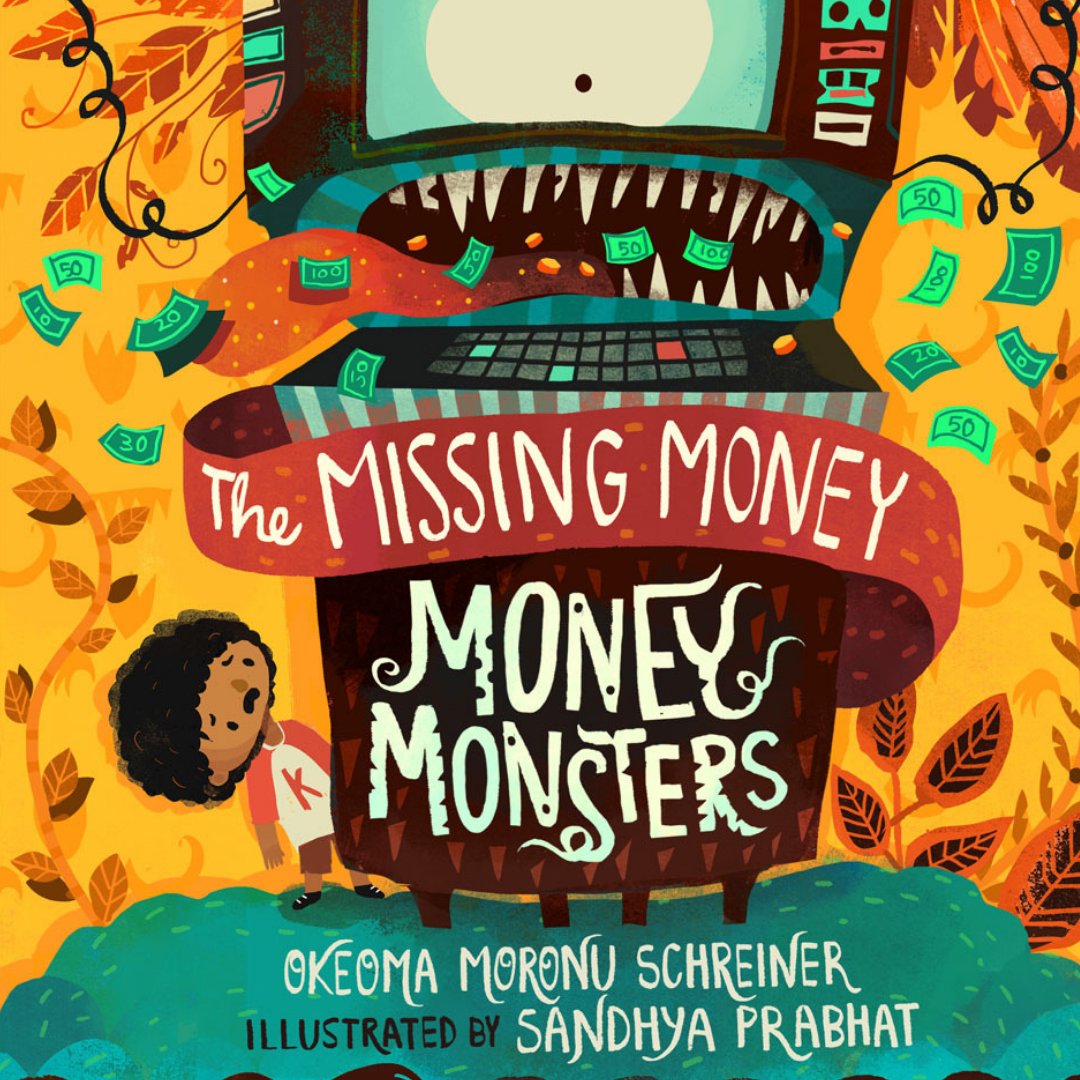
Q&A with Okeoma Moronu Schreiner, The Missing Money

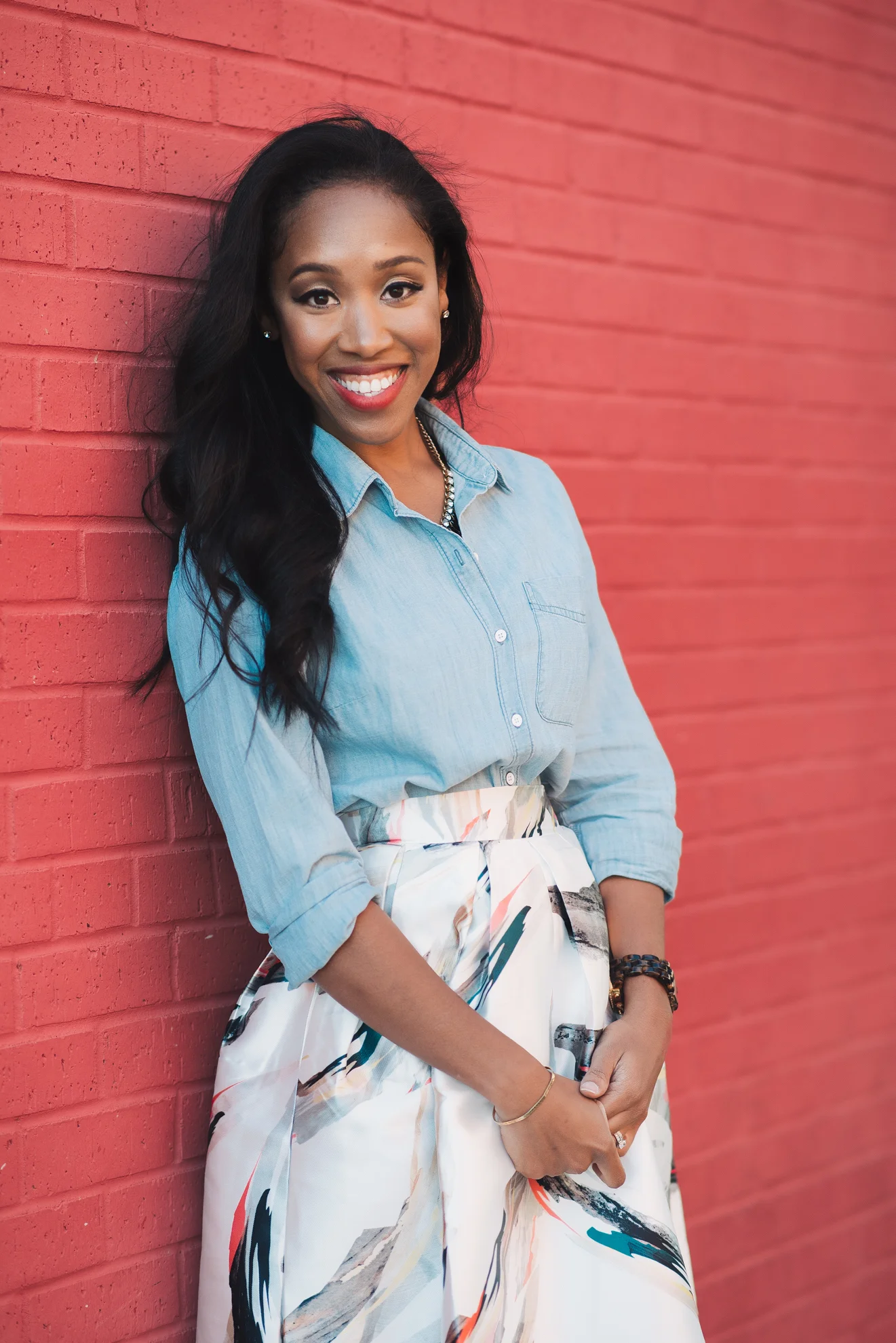
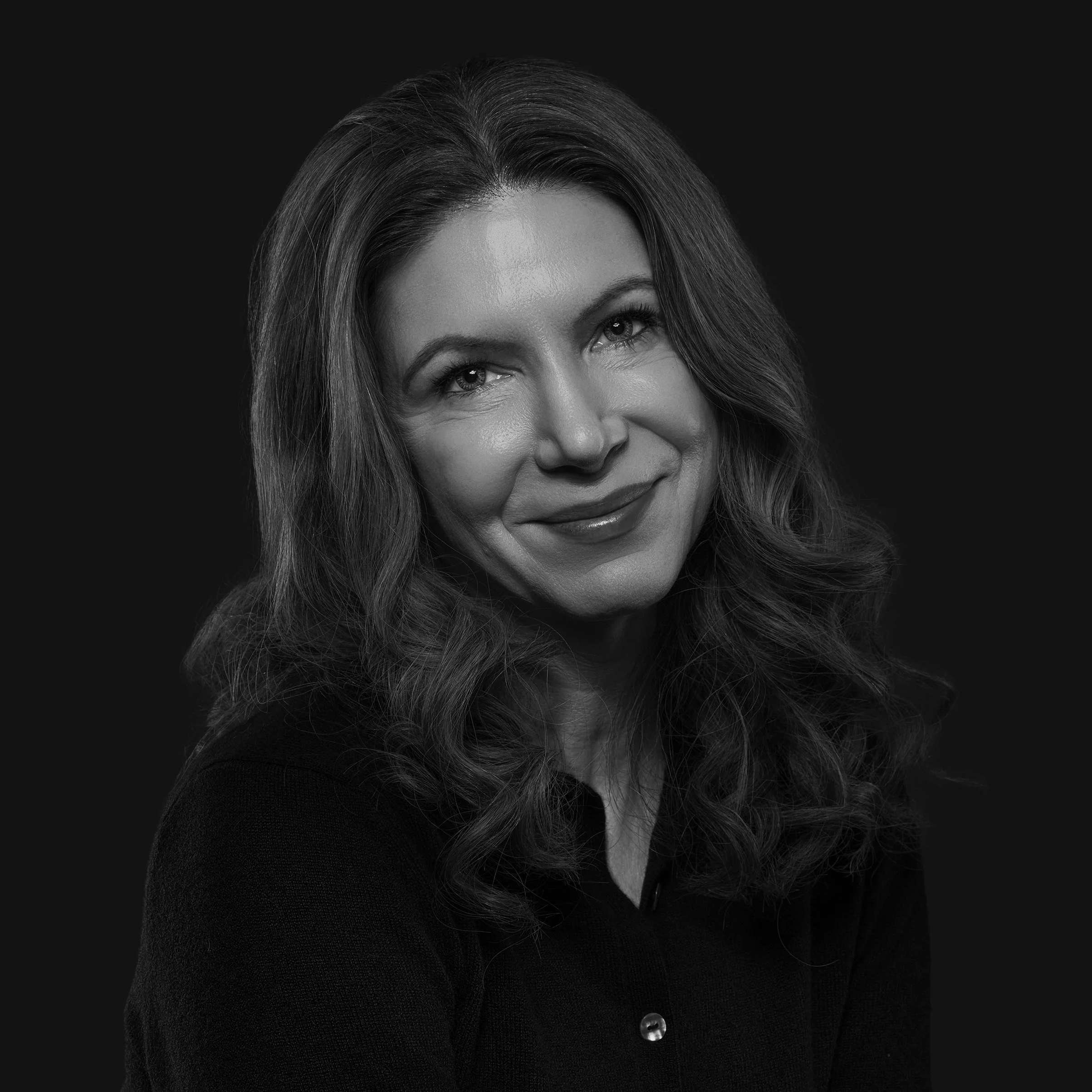
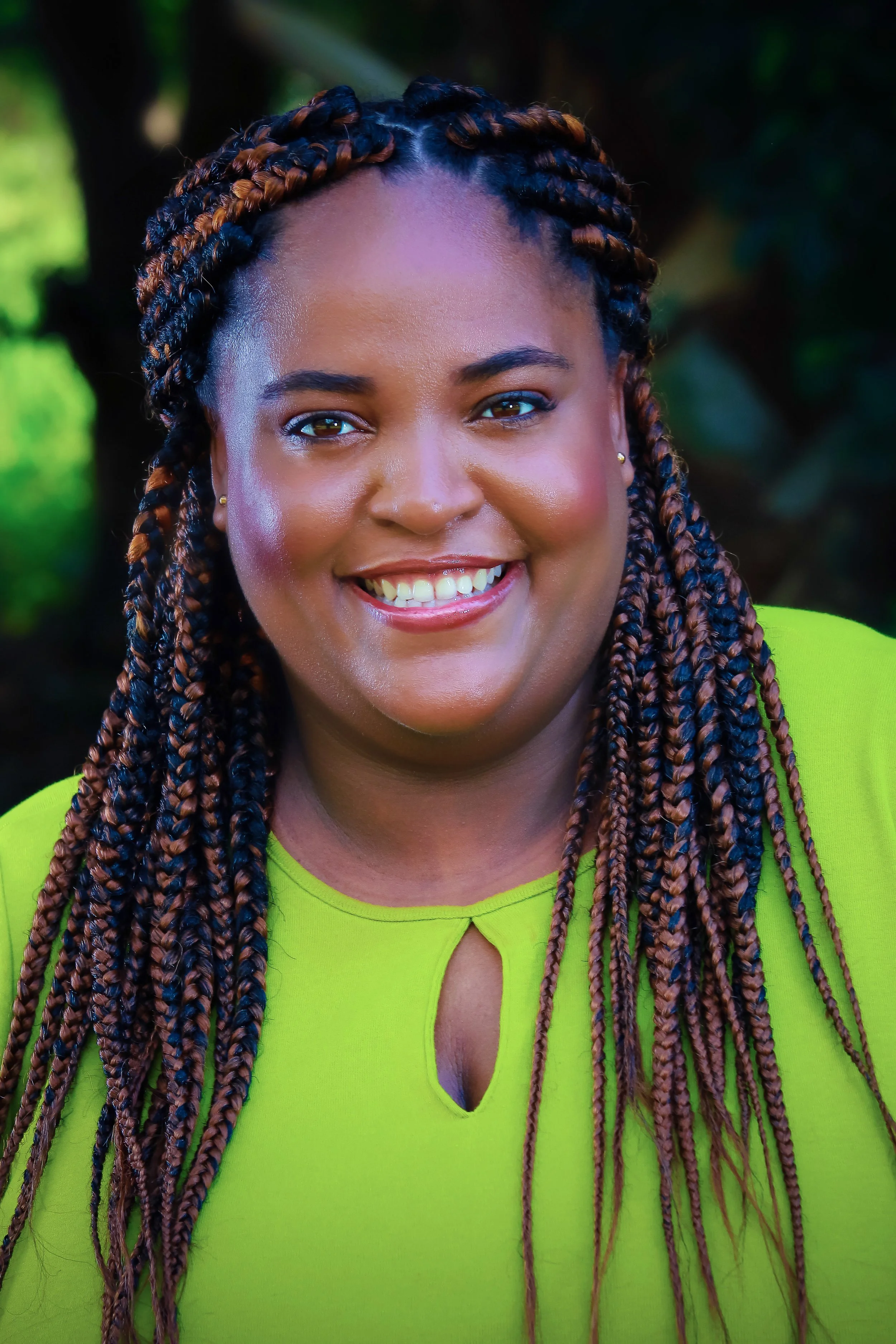
OkeomaHeadshot.jpg

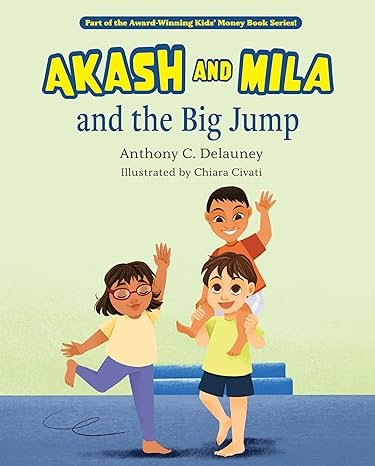
What inspired you to write a book series for children to help them understand the concept of money? 

I developed an interest in personal finance while paying off multiple six-figures of student loans and during that time I also had the pleasure of becoming a mother twice over. Like most mothers, I suppose I wanted to find a way to share my interests with my little ones and quickly learned there aren’t a ton of age-appropriate picture books that tackle modern money concepts. It’s, of course, important to just learn the basics of earning or saving money, but I wanted books that were set in a more modern context with banking apps, credit cards and online banks. Basically, I wanted to create a book that would help children understand the concept of money in a way that reflected the world in which they would be growing up. 

The books are beautifully illustrated. Why was it important for this to be a picture book? 

As a mother of two little ones, ages 3 and 5, there is nothing more precious and impactful than those moments spent together lost in the pages of beautifully illustrated picture book. I firmly believe that it is never too early to start introducing these basic money concepts but I wanted to do it in a way that would engage and capture little imaginations. 

How did financial literacy for young people become a passion of yours? 

Before I was a personal finance junkie, I was an elementary school teacher. I guess you could say that I’ve always had a passion for translating seemingly complex concepts into fun, educational content. 

What advice do you have for parents interested in starting these financial discussions with their children? 

Do it early and often. 

Why is it important to start these money talks with your children at a young age? 

The earlier you start these conversations the more comfortable you’ll be having them throughout the many seasons of parenthood. Truth is that the conversations will only get tougher and tougher as your children get older so you want to develop the language and comfort before it’s too late. Your children are internalizing “stories” and beliefs about money that may not be true and have the potential of impacting their financial lives forever. If we, as parents, don’t help shape those stories and beliefs, our children will create their own. 

What are some concrete steps parents can take while their children are young to start their children out on the right financial path? 

Take the time to involve them in your everyday money decisions. Whether it’s choosing between two products at the grocery store or choosing not to spend on something in order to save for a bigger goal, children will benefit from understanding how money decisions are made in everyday situations. 

Speak to them about in values, not figures. In our house, our kids know that the environment is very important to us so we’ll pay more for a product that is more sustainable and/or eco-friendly. Help your little ones understand your family’s values and how your money supports and reflects those values. 
But on Amazon

But on Amazon

Teach them contentment. This is a hard lesson that can take a lifetime to learn. In order to get your little one off on the right foot you can lead by example, help your children practice gratitude and teach them the value of giving. 

What are some of the financial terms that you encourage parents to teach their children? 

The first five basic terms that little ones should understand are: 

Earn – Discuss that money is earned through an exchange of goods and services. Sometimes when we’re out and about we’ll play a game called “who is at work?”, where my children try to point out people who are “at work” and try to guess how they earn their money. 

Save – Explain why it is important to save towards larger goals instead of spending money as quickly as it comes in. I would recommend using a clear money jar so little ones can see a visual representation of their money growing. 

Spend – Spending wisely means not just spending within your means but spending in alignment with your values. Teaching your kids about spending is a lesson in understanding what matters and making intentional decisions. 

Give – Help your little one develop a charitable heart and discourage a scarcity mindset. It’s also crucial to teach your little one how to let go and get rid of things they no longer need or value. 

Invest –This is the one most people struggle with the most but little ones should be introduced to the idea that there are things you can do with your money that can put more money back in your pocket! 

How do you think being confident with money at a young age helps children as they grow into adulthood? 

For me confidence doesn’t mean knowing all the answers. Confidence means believing that you can tackle any challenges that come along the way. By instilling in your child a sense of confidence around money topics, your little one will grow up to be someone who will explore money topics with a confidence that they are able to learn what they need to know to build a financial abundant future. 

The book also highlights a diverse group of characters. Why was that an important focus for you as well? 

We all know there is still a lack of diversity in children’s literature. As a woman of color raising biracial children, I wanted to create characters that reflected their reality. All children and families deserve to have access to books in which they are represented. It is also an opportunity for all children regardless of race to see examples of people of color managing money and doing it well. There was no way that I could write a book without this being a priority! 

Ultimately, what do you hope parents and children take away from the Money Monsters series? 

That money conversations don’t have to be scary! 

About the Author

Okeoma Moronu Schreiner is an attorney, wife, mother, and host of the nationally recognized, Happy Lawyer Project podcast. Now as an author, her goal is to guide parents in helping their children navigate the seemingly stressful wide world of money. The inspiration for her new children’s series, Money Monsters, stems from her own experience as a struggling young lawyer who had seen first-hand the difficult situations created by financial problems. Schreiner is an advocate for early education of finances and wants parents to instill comfort and confidence in their children regarding money issues.

Connect on Instagram: @finkidlit
Q&A with Nan Reinhardt, author of Meant to Be

Nan.png

Tell us about one of those defining, aha moments when, as a writer, you were in the place you needed to be.

If you mean those “oh, that’s how I’m going to write this scene!” moments, then for some weird reason they always seem to come to me when I’m driving of all things. It’s awkward because then I either have to stop in a parking lot or on the side of the road to make notes. Fortunately, I’m never without paper and pen. But if you mean, literally a place that I know is a story in itself, I’d say on my first trip to Frankfort, Michigan.

What heroine in what favorite book would you like to talk to, maybe have lunch or a glass of wine with?  What would you talk about?

Unquestionably, Anne Shirley and Marilla Cuthbert from Anne of Green Gables. Wouldn’t it be lovely to have tea with them on the porch at Green Gables and talk about Prince Edward Island and writing and Avonlea? Maybe Matthew and Gilbert might join us later. Sheer heaven!
If trends and marketing weren’t things you had to consider, what book would you like to write?

A NY Times bestseller? Seriously, I think I’m writing the books I want to write at the moment. I have a women’s fiction novel and a time-travel story in me, I’m sure, but right now they’re still brewing, so until one of them comes to the top of the cycle, I’ll continue with contemporary romance.

You’re not only a bestselling author but an editor as well. Do the two jobs ever get in each other’s way?

The editor slows down the writer, I’m afraid, and that’s often discouraging because I’m driven to reread what I write and to edit as I go along. That means sometimes I lose steam in storytelling. I’m working on that. 

Share a paragraph you’ve written that you particularly love—whatever the reason.

This is silly and it’s more than one paragraph, but I love the scene in Meant to Be when Sean and Megan are driving home from their disastrous double-date and he tries to explain Vinnie using an analogy from the movie Up. I loved his rationalization and her complete rejection of it. 

He glanced over at Meg, who appeared focused on navigating the curvy driveway into the winery property. “Here’s the thing”—he side-eyed her as she pulled into Char’s driveway—“Vin is like... like that dog in Up.”

She switched off the car and turned to face him, her expression incredulous. “What?”

“You know the dog in that movie Up? We watched it with Ali at Christmas?” His point was valid if she would just open her mind, so he explained further. “The dog had a great ball that he was playing with—having fun, enjoying himself. Loved that ball. Then a squirrel ran by and he was completely distracted, dropped the ball, and chased the squirrel.” He grinned, hoping to get some kind of positive reaction.

She rested her elbow on the steering wheel and cupped her chin in her palm. “So, I’m the ball in this scenario?”

“Yeah.”

“And Vin is the dog?”

He nodded. She was getting it.

“And Gia is what? The squirrel?”

He threw his hands up in exultation. “Yes, exactly.”

She gazed at him for a long moment, “I’ve heard you say some really dumb stuff over the years, Sean Flaherty, but that has to be the dumbest. Stop defending him.”

I know you researched heavily for both of your series. Do you remember anything particularly surprising you learned?

I was surprised when I learned that Indiana was one of the very first places that grew wine grapes and sold wine commercially. I had no idea our state was so steeped in wine history. 

Do you ever feel pressured to write something you don’t want to—by publishers, readers, or the little voice in the back of your mind?

I did when I first started writing and trying to sell romance. My agent sent me a book from another client of hers and told me to “write like this.” I tried, but it wasn’t me. That’s a big part of the reason I went indie with my Women of Willow Bay series. But Tule, my current publisher is amazing and gives me lots of freedom. I love working with them.

What’s something we don’t know about you?

I love Big Band music and the songs from the Great American Songbook. Sinatra, Crosby, Tony Bennett—they all make me swoony. I would love to learn how to dance the way they did back in the thirties and forties when that music was popular. I’m ashamed to admit that I don’t know much about today’s music or artists…I’m hopelessly stuck in the musical past. 

Tell us about your favorite day in all the world, whether it’s already happened or you’re still hoping.

This is so trite I know, but my best day ever was the day my son was born. We’d waited so long and tried so hard to have him. He’s been a blessing from the first moment he took a breath. 

You love traveling, right? So what’s on your bucket list for trips not yet taken?

Prince Edward Island with my bestie, Liz. We’re definitely going to do it in the next year or two. I’d love to go back to Ireland and France, but if it doesn’t happen, I’m okay with that. Liz and I do writing trips together once or twice a year and those satisfy the wanderlust.

A few short ones here just to get people acquainted:

Favorite color: Yellow

Favorite song: Anything from the Great American Songbook

Favorite movie: Little Women, the Denise DiNovi version with Susan Sarandon and Winona Ryder (Yes, I’m a true sap!)

Favorite wine: Armida Winery’s El Campo Estate Field-Blend zinfandel (I know that’s scary specific, but it is amazing wine!)

Coffee or tea? Coffee mostly, but I love Harney and Sons’s Paris tea

Any tattoos? Nope and nope it remains for all eternity.

Q&A with A.F. Brady, Once a Liar

AFBradyHeadShot 2.jpg

What inspired you to write ONCE A LIAR?

In some ways, the current state of the world inspired me to write about the way power corrupts people, and the personal tolls that can take, on both the corrupted, and those around him/her. I love writing difficult characters, because I find it so fun to climb into skin that’s so unlike my own. 

Has your real-life profession influenced your writing or your characters in any way?

Yes, in both ONCE A LIAR and my first book THE BLIND. I have almost two decades of experience working in the mental health field, and I’ve known some extremely interesting people, diagnosed with some very interesting illnesses. I wanted to use my writing career to shed light on some of these misunderstood illnesses, and my psychotherapy career helps to lend some authenticity to my writing. Many of the characters, settings and stories in both these books were drawn from real life, real people, real places. Details changes, of course. 

Peter is an incredibly complex character. What was it like to step into the mind of sociopath while writing this book?

At times it was scary, and other times it was a lot of fun. Peter is not at all like me, but he is like so many people I have known in my life. I have received countless emails from readers saying they have had a Peter in their life. I cringed (and even cried) quite a bit while I was entrenched in Peter’s mind. It’s a dark place in there. And the lobster scene, that wrecked me. 

At what point in your life did to become an author?

In a way, I’ve always wanted to be a writer, but I didn’t decide to go for it until I felt stable in my life; married, kids, house, etc. In this age of technology, you’re so exposed, and I wanted to make sure I had a good system to support me should it all go wrong, and I wanted to make sure I was mature enough and had a thick enough skin to manage the critics. 

What attracts you to the thriller genre?

The excitement. I am by no means an adrenaline junkie in life, but I love excitement, and I love figuring things out. I am an accidental detective all the time, and I really dig trying to work out secrets and lies and what’s behind the mask. Thrillers check all those boxes for me. 

Who or what shaped your love of writing?

Reading shaped my love of writing. I don’t have a favorite genre to read, I like to get my hands on everything as often as I can. I used to write poems a lot and I would often sit at my computer ranting about some issue I was having, and it was cathartic. I never wrote with the idea that I would have readers, so when I sold my first book, and I got a team behind me at Park Row, I learned how to be a professional writer, and how to take your audience into account.

If you could write your own death, how would you do it?

Something heroic, or self-sacrificing for sure. I used to have these daydreams all the time about being in some emergency situation where a guy with a gun busts into the bar I’m in, or the subway train car, and I take it upon myself to use my knowledge of psychology to diffuse the situation and save everyone. I would talk him down, convince him to let everyone go, or kill me instead of killing someone else. If I wrote my own death, I would definitely die saving other people. Noble, build me a statue, name a park after me kind of death. 

What’s the easiest career decision you’ve ever made?

To become a therapist. It’s absolutely the most rewarding and challenging thing imaginable. It makes me who I am, and I adore it. The next easiest was saying yes to a two-book deal when it was offered to me. 

Which fictional characters would you invite to a dinner party? 

Atticus Finch, Eloise, Sinan Khan (from ONCE A LIAR) and Aslan because they all remind me of my grandfather and I miss him. As I write this, I’m shocked that I picked two lawyers. Well… and a Lion. I guess I’ll make steaks. 

Success means something different for everyone. What does literary success look like to you?

Having something I wrote help someone to feel like they’re heard or understood. I would love to be a financially successful writer, or to have my books smash sales records, top bestseller lists, become movies, all of these kinds of things. But what has always felt the best for me are the personal stories of people reading my work and being emotionally and personally affected by it. That’s the dream for me. 

What struggles did you face while writing this book?

I was pregnant for the entire editing process, so I couldn’t have a drink and get away from Peter, and that was rough. I killed someone that I liked a lot in ONCE A LIAR, and that was really hard for me. (Which seems strange to say because why did I kill her if I liked her, but she had to die for the story to work.) Since I wrote Peter in the first person, I sometimes got entrenched in the thoughtlessness and carelessness, and it hurt me. I am such an empath, it got really tough sometimes to write the despicable things he did and thought.

We all hate criticism, but sometimes the harshest advice is also the most useful. What is the hardest piece of advice someone has given you?

I spent most of my life being a fixer. I compulsively want to help and save and fix and make better. The hardest piece of advice was when I was told to stop. Stop fixing everything, stop saving everyone. It’s not your job. And that hit me so hard. But, years later when I finally stopped, it became the most freeing thing imaginable. (And then I learned that I never saved anyone anyway, and I couldn’t fix things. Breath of fresh air to take that self-imposed pressure off, but it sure did suck to hear.)

What is your favorite, most underappreciated novel?

Karoo by Steve Tesich. I absolutely adore this book. 

What’s on your nightstand right now?

Me Talk Pretty One Day (David Sedaris) and old favorite that I go back to when I need a good chuckle.

Becoming (Michelle Obama)

Girl Wash Your Face (Rachel Hollis)

Eleanor Oliphant is Completely Fine (Gail Honeyman)

What’s next for you?

I’m finishing the third book, plotting and starting the fourth, and working on some other writing projects. I’m still in private practice, so I’m loving that as well. Raising kids and living life! Trying to get to as many Yankee games as I can this season. 


How the Writing Life Chose Me…No, Really by Rachel Schade

Rachel Schade_400x399.jpg

Every time I try to answer questions such as: When did you decide to become a writer? or When did you fall in love with reading? I struggle. The truth is, it’s hard to trace my love of all things bookish back to a beginning. My parents read to me as a child, which must have left the huge impression on me that everyone says reading to children can leave. 

To be honest, I barely remember learning how to read. I barely remember not knowing how. I remember pulling off any and every book from my first and second grade classroom shelves and devouring them at my desk in every spare moment I had. In fact, I stuffed my nose so literally in books that when the school coach stopped by my class once, he expressed a concern that I might have sight problems. 

I didn’t. I just liked to live with my nose literally stuck in a book, like Belle. I guess I was so caught up in whatever I was reading, I couldn’t help but hold it as closely as possible.

And as for writing? I know at the age of ten I was typing out short children’s mystery books on the family computer. I know at the age of eleven Tolkien’s The Lord of the Rings, which my mom read out loud to my brother and me, inspired me to begin writing my own fantasy novel, scribbled in endless notebook pages and then eventually typed on our computer. 

But when did it start? I don’t know. I’ve actually come across mini “books” I’d illustrated as a child and then, because I couldn’t write yet, dictated to my mom. So there you have it: proof I was even writing before I could actually write.

I guess the short and cliché answer is that writing and reading is an integral part of who I am. It’s been a lifelong passion, instilled in me by the parents who read to me. I simply can’t imagine my life without books! 

Q&A with Author A.B. Michaels, The Jade Hunters

5562.jpg

In The Jade Hunters, a lot of bad things happen because of a small pair of earrings.  Why pick those objects as the centerpiece of the action?

The tiger earrings, which were introduced in my historical novel The Depth of Beauty, are made of rare jade and would be valuable on their own. But as a symbol of an earlier period in Chinese history, their power would be much, much greater—and extremely deadly in the wrong hands.  I find it fascinating that innocuous objects can cause such destruction, which is why I chose them.

Both your male and female leads (Regina and Walker) have unusual fears, what some might call phobias. Why saddle each of them with such quirks?

For starters, I suffer from both of those neuroses all on my own! [laughs]. I thought it would be fun to explore those fears and how the characters cope with them. But I didn’t want it to be one-sided—that is, I wanted Reggie and Walker to be equally vulnerable and equally powerful in their willingness to help the other. But I will say, I hope I never have to face what I put them through! 

San Francisco is a beautiful city, but it has been in the news lately for having problems.  Why did you choose that as a setting for The Jade Hunters?

Both of my series take place in and around San Francisco – one is in present day and the other is during America’s Gilded Age (around the turn of the twentieth century). In fact, many of the characters in The Jade Hunters are descendants of characters from “The Golden City” series.  I grew up near the city so it’s very familiar to me—such a wonderful, fascinating place! I hope San Francisco’s board of supervisors can figure out how to help the homeless so that everyone (both visitors and residents) can exist in a safer, cleaner environment. 

What’s your next writing project?

Over the course of writing my two series, I’ve found I really enjoy the mystery aspects of the story. It’s a challenge to come up with a dire situation that isn’t immediately solved by the reader.  I’m also reluctant to let many of my characters go! So, I’m developing two different mystery series: one is set here in present day but has a “time slip” element. Leo Blunt, the private detective introduced in The Jade Hunters, meets his match and finds himself in all sorts of adventures as he pursues mysteries surrounding art objects and collectibles.  The other series, set in San Francisco after the great Earthquake of 1906, features the attorney Jonathan Perris and his assistants, whom readers met in The Price of Compassion.  I can’t wait to write them!

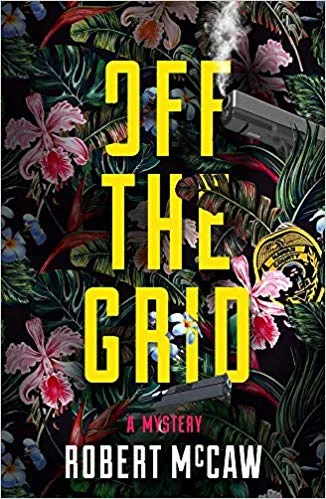
The Inspiration Behind Off the Grid by Robert McCaw

BobMcCaw_2019_Version_4 - Calli P. McCaw photographer.jpg

Readers sometimes ask me where I get my plot and character ideas. I believe that all good fiction is grounded in some germ of truth. That’s what makes stories believable. But truths from different sources can be twisted together to form believable fiction. The original inspiration for Off the Grid, for example, came from a painting my wife and I commissioned from an artist who lived in a remote part of the Big Island in a rather ramshackle house deep in a rain forest. The inside was cluttered with mismatched bric-a-brac, art supplies and partially finished paintings. I knew immediately that the house had a story to tell. The artist, an eccentric painter, exacting in rendering natural detail, was for me a character in waiting. That her husband had some sort of clandestine military background made the pair a writer’s dream.

Shortly thereafter, a small rural restaurant we frequented closed because the authorities arrested the proprietor as a fugitive from justice, and research revealed that the restauranteur was not the only wanted man hiding out in the backwaters of the Big Island. Other refugees from justice had been apprehended after living for years in remote corners of rural Hawaii. The merger of these two experiences led me to the first inklings of a story about two fugitives, an artist and an ex-military orchid grower, living in a remote dwelling off the grid.

The death of a pair of fugitives creates a mystery for the police who must discover their true identity and reconstruct their lost lives. I imagine the fugitives’ lives and create a trail of clues leading up the discovery of their identity and then to the reasons they are fugitives. But first they must be murdered and their bodies discovered.

I have long loved Hawaii Volcanoes National Park, where legend holds that Pele, the Hawaiian goddess of volcanic fires, lives and breathes. From the early 1960s until 2018, she erupted from Pu’u O’o launching successive waves of lava down the mountain and into the sea. Pele’s fury repeatedly propelled lava through the community of Royal Gardens until she consumed all of its sixty homes. Fortunately, no one died in these eruptions, but what a perfect place for a murderer to conceal a body . . . or worse.

My fugitives had to be running from something—something sensational—like an international incident involving clandestine players. An unresolved international crisis cloaked in mystery would be perfect. One such incident that had long intrigued me and about which I had read every scrap of information available in the press and government documents came immediately to mind. Voila. I had my fugitives and a credible reason for them to be hiding. I won’t identify the incident here. No spoilers.

Most people who visit the Big Island for the first time are surprised to learn that the slopes of its five volcanoes are dotted with herds of cattle, some tended by paniolos, descendant from Mexican or Spanish cowboys brought to the island to tend King Kamehameha cattle in the 1800s. I had a dear friend who worked on the Parker Ranch, the largest ranch in Hawaii. With a fictional makeover, he and his paniolos play important roles in the story. They are suspects . . . but did they orchestrate murder?

Buy on Amazon

Buy on Amazon

Criminal lawyers know that the police work closely with prosecutors whose responsibility is to win convictions. That part of Law and Order reflects reality. During my years as a practicing lawyer, I’ve both fought and assisted prosecutors, finding most to be hard working and ethical. Zeke Brown, the Hawaii County Prosecutor in Off the Grid, is a composite character pieced together from a handful of prosecutors I’ve admired. Zeke is armed with an arsenal of tactics I’ve seen used over the years. Like many prosecutors I’ve known, Zeke, who occupies an elective office, is not particularly fond of politicians. He’s one of my favorite characters and deserves a book of his own. Someday.

Chief detectives need friends and confidential sources. One such character came from the Suisan fish auction that used to take place in Hilo shortly after dawn most mornings. The man I call Hook Hao was the real-life Suisan auctioneer, a giant of man who used a short-shanked gaff to haul the catch from fishermen’s ice chests to the scales and then the sales floor. His size, his gaff, and his commanding presence on the auction floor made him a perfect model for a fictional character. And who is better positioned to inform for the police than a player in and around the Hilo Bay docks?

There are, of course, countless other moving parts to be assembled into a mystery novel, but more of them come from experiences than pure imagination.