For the Love of a Good Ghost Story by Terry Lynn Thomas

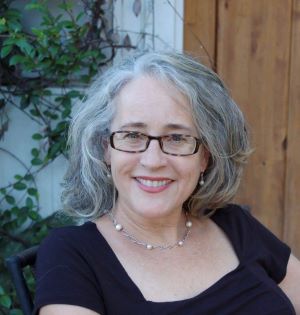
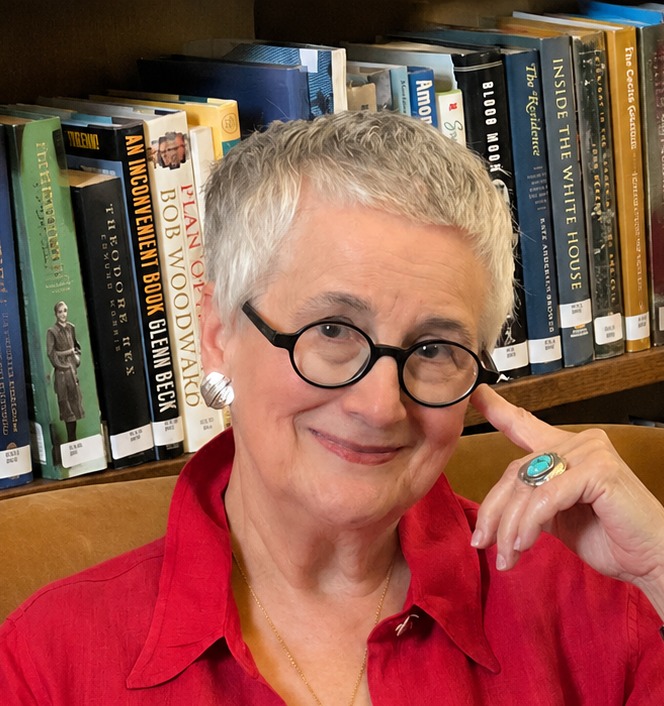
Terry Lynn Thomas.jpg

When the leaves start to turn and there’s a crispness in the air, I reach for a good ghost story. What better way to spend the cool evening than snuggled on the couch with a tale of  haunted houses, a damsel in distress, or a woe begotten lover. This love of ghost stories coupled with a passion for the Gothic novels of the mid-twentieth century inspired me to write the Sarah Bennett Mysteries, modern gothics sent in California during World War II. The first book in the series, The Spirit of Grace takes place exactly one year after Sarah’s mother fell to her death at Bennett House, Sarah’s ancestral home. Sarah is a strange you woman who has a history of mental illness. She hears things and sees things, and the family doctor is convinced – and has convinced her family – Sarah is unstable. Given her family’s position in the small northern California beachside town, Sarah has spent her life sequestered and very much alone. She wasn’t allowed to attend school, instead her family hired a live-in governess and took other steps to ensure that Sarah never associated with children her own age. The three books in the series, The Spirit of Grace, The Family Secret, and The Drowned Woman let us see Sarah as she untangles hidden family secrets and learns to use her gifts to help others. 

When I wrote the first book, The Spirit of Grace, I purposefully focussed on Sarah’s isolation, her strange behaviour, the way she didn’t conform to societal norms, and the difficulties this nonconformity caused her. As the series unfolded, especially the first two books, I was amazed at the way the actual houses became characters. Although Bennett House and The Geisler Institute (fashioned after the Whittier mansion in San Francisco) didn’t actually grow and learn a lesson as characters are required to do in a story, there was no denying the houses played a crucial role in both books. As I wrote, it occurred to me that the houses which featured in all the fabulous Gothic novels that I loved represented the memories of past experiences. When we read about the orphaned governess taking a job in an isolated house on the moors, the isolated house is what sets the actual tone of the book. 

Bennett House, which was built by Sarah’s great grandfather when he settled in Bennett Cove (the fictitious California town fashioned after Stinson Beach), played a huge role as Sarah unravels the true facts surrounding her mother’s murder. Many residents of Bennett Cove think Sarah (Spooky Sarah as her neighbours call her) pushed her mother to her death. When Sarah returns to Bennett House after a year in an asylum, to clear her name and find out what really happened the night her mother died, the sense of the crime and the memory of Sarah’s mother lend an eerie sense of foreboding to the book.

In The Family Secret, Sarah takes a job at The Geisler Institute, a psychiatric hospital in San Francisco. The Geisler Institute is set in the Whittier Mansion in San Francisco, a stately home that is allegedly haunted. (Read about the Whittier Mansion here.) There’s nothing quite as spooky as a psychiatric hospital, especially when your boss has a secret interest in your childhood. Sarah’s time at The Geisler Institute pushes her to confront her true identity and forces her to figure out her place in the world. 

I’ve moved on at this point in my career and now write more traditional mysteries, but the Sarah Bennett books will always have a special place in my heart. I hope you enjoy reading these modern Gothics as much as I enjoyed writing them.  

Cheers,

Terry 
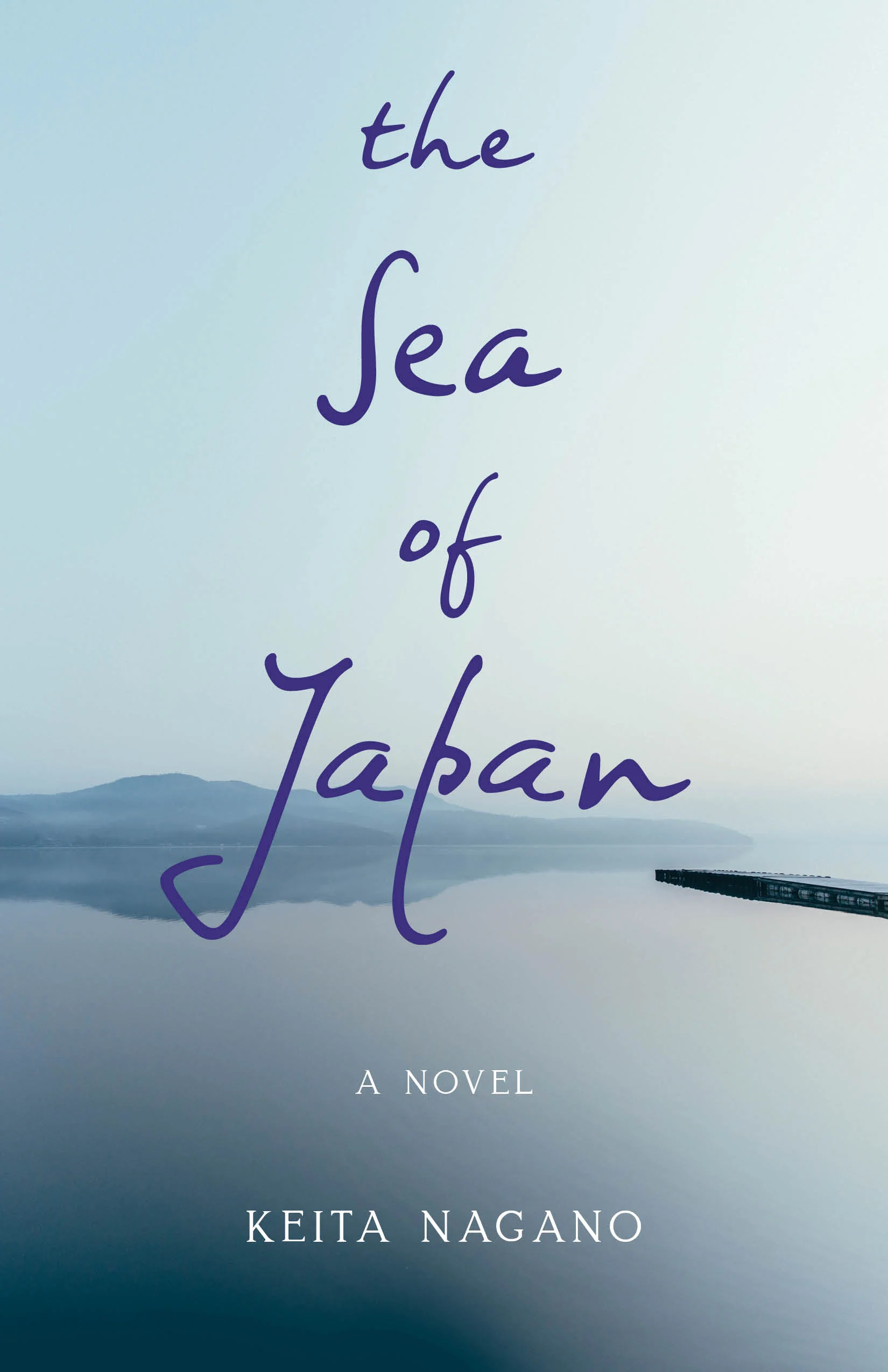
Q&A with Keita Nagano, The Sea of Japan

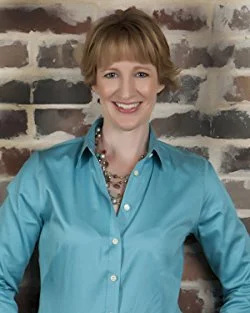
PRbythebook Shusuke head shot 2  2019.5.1.jpg

When did you first realize you wanted to be a writer? Or what first inspired you to write?

Like I mentioned, I got an award for my first novel at my junior high school. This was about a unique friendship between an underachieving teenager and a toddler with misfortune. In the following year, I received another award for the baseball drama. Having received awards for two years consecutively, my dream blew up and wanted to write more and professionally someday. I have continued writing since then.

What inspired your story?

I read a photo book about Japanese scenery. I saw the picture of firefly squids dive in Toyama bay. It is absolutely the most beautiful scene I have ever seen in my life. Mass of Firefly squids grow blue and dive to die, after they gave birth to new life. One can say that The Sea of Japan’s underlining story is life and death. If so, the beautiful mysterious billions of blue lights in the dark sea, on their final moment of the lives, is what inspired me most.

How does a new story idea come to you? Is it an event that sparks the plot or a character speaking to you?

Let me ask you this. What part of the story is the most important one for you? To me, the ending, is. Always. Thus, I always have a clear image of the ending. I write towards such ending. Yet, if I come up with a better alternative as I write, I do not hesitate.

Is there a message/theme in your novel that you want readers to grasp?

As the principle, “don’t tell, show it,” I would rather not to tell my message even though it has been here in my heart.

What was one of the most surprising things you learned in creating your books?

Every time I write book, I get surprised at how great novel is as a form of entertainment. Sure enough, we all love movies, it takes only two hours or so. But this entertainment, a book, either 5 hours or 10 hours, the enjoyment of the story gets amplified by the readers’ own sense of achievement. In any form of arts or entertainment, only books can convey this sense of joy. The readers truly put themselves in the shoes of the protagonists. It’s awesome!

What was your greatest challenge in writing this book?

Deep dive into the nuts and volts of the detail of the society I am writing. For example, when I write about fishery story, I really wanted to know their fishery methodology, how much they make, even how to date with women.

Who are some of your favorite authors?

I love Michael Connelly, not so much on Harry Bosh series, but The Lincoln Lawyer series. Also, I love Ernest Hemingway. I even transcribed “The old man and the sea,” every line. For my novel, I got often praised in my very simple writing style. One can find the influence from “The old man and the sea” easily. I went to pay respect to his Key West home and Idaho Ketchum grave yard. Lastly, I love “Love Story” by Erich Segal. The book was quoted in my novel. I also love all works of Yasunari Kawabata (a novel prized author, whose famous work is “Snow Country”).

What’s the best writing advice you have ever received?

If you start it, you finish it. The first draft seems the worst story you have ever read, but I can guarantee that the second one is better. By the seventh draft, you will feel good, and by the tenth, you feel your work is precious.

If your book was turned into a movie, who would you like to play the main characters?

Anna Kendrick for Lindsey. She is almost same age as Lindsey, and her mixture of defiance and inner smartness, and easy to be furious for unfairness is the right cast. More so, it is my dream that Clint Eastwood, my hero, plays Lindsey’s grandpa who is the best fisherman in America and sailed out to the Sea of Japan with Lindsey for his final fishing.

About the Author

Keita Nagano is an award-winning Japanese author who has lived almost equally in Nevada and Tokyo—more than twenty years in each place—and reflects the difference of the two cultures in his novels. He has a bachelor’s degree in economics from Keio University in Japan, as well as an MBA in global business and Ph.D. in management from Walden University in Minnesota. The pursuit of the authentic American experience is his hobby: he has been to all fifty states, all thirty major league ballparks, and the top sixty big cities in America. He has published seventeen business nonfiction and eight fiction books in Japan. In 2013, he received a Nikkei (Japanese Wall Street Journal) Award for Contemporary Novel for his missing-child thriller, Kamikakushi. He is also an official weekly columnist for Forbes Japan. Nagano lives in Henderson, Nevada, with his wife and Welsh corgi, and their teenage daughter is currently studying in Tennessee.

Q&A with Aven Ellis, The Modern Royal series

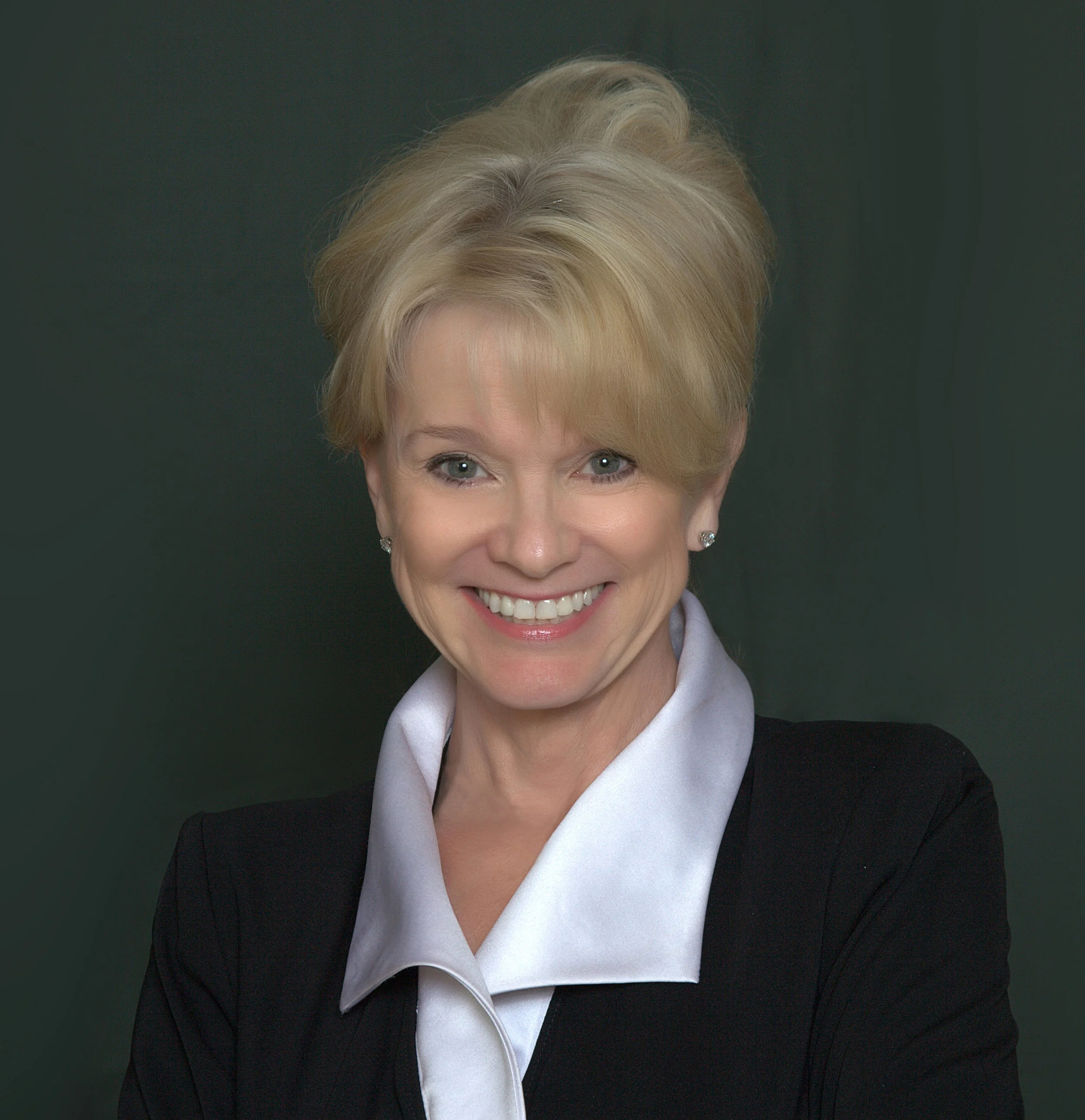
author profile pic.jpg

Are you an audiobook listener? What about the audiobook format appeals to you?

Yes, I’m always listening to a book-when I’m in my car, and right before bed. I love the audiobook format because it allows me to read at times when I can’t. As a writer, when I’m done writing for the day, my eyes need a break. Audiobooks fill that need nicely!

How did you select your narrator?

The Modern Royals Series is produced by Tantor, and they gave me a couple of narrators to choose from. But I requested Andrea because I heard a clip of her British accent and I knew she was perfect to carry the series forward! Her accent is so good I had a British friend ask if she was British! There’s no greater compliment than that!

Were there any real life inspirations behind your writing?

I have been fascinated with the British royal family since I was a tween. People always come to me to talk royals and finally another author said, “Why aren’t you writing a royal series? You would be perfect for that.” So I thought about it and decided I wanted to create an alternate reality British royal family. I use the real palaces and traditions in the books, and it’s been a tremendous research project to get those details right, but I absolutely love telling royal stories.

D6LFdwYX4AE4bCU.jpg

What gets you out of a writing slump? What about a reading slump?

If I get to a sticking point with my writing, I bounce ideas off my critique partners and beta team until the story is back in the right direction. For a reading slump-I’m lucky, I’ve never had one.

What do you say to those who view listening to audiobooks as “cheating” or as inferior to “real reading”?

If you are consuming a story, if you are enjoying escaping to another world, to me that’s all that matters. Personally, if you are listening to a one of my audiobooks you are consuming my story and that’s all that matters.

What’s next for you?

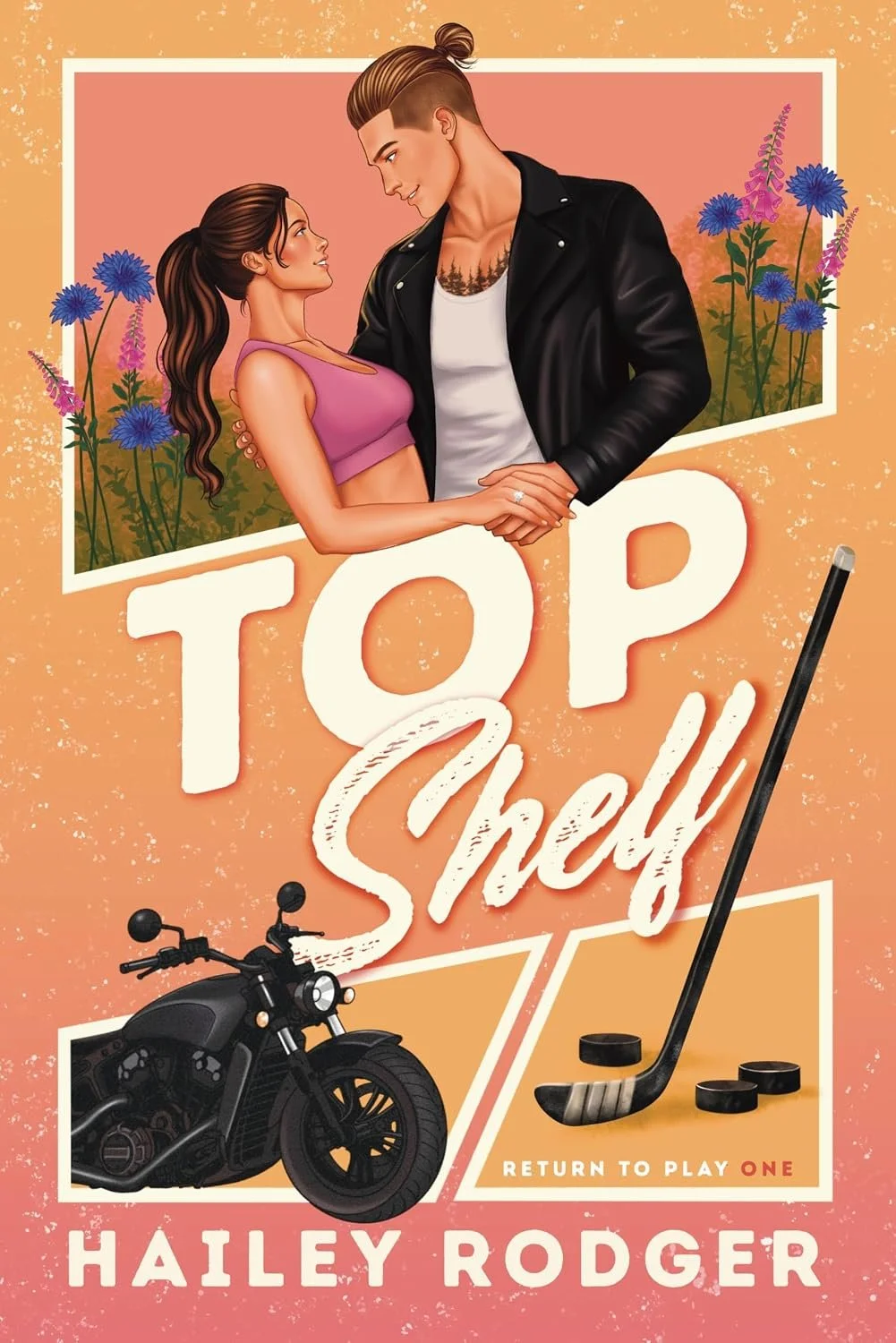
I’ll be releasing the third book in my Rinkside in the Rockies series-Outscored. That is a romantic comedy and yes, it will be in audio, too.

The Romance of Failure by Chris Saper

What is the best thing about writing? To me, it’s the same as the worst thing: riding the whiplash between peril and promise. I think that’s a fairly universal experience for people whose careers – and vocations- lie in the arts, whether fine art, literary art, or performing art. And with the exception of performing arts, our worlds can remain as private as we choose, until such time we decide to share them with a potentially hostile audience. We can fail countless times, but we also have countless opportunities to pick ourselves up and keep at it until we get it almost right. Not right, as in 100% perfect right, just the best it can be at that moment. And in the process, I think that those of us who make public our good, almost right, work, have learned to respect and embrace our natures, and temperaments. For me, that lesson’s been a path to freedom. I’ve tried it the other way – and that is a certain road to frustration.

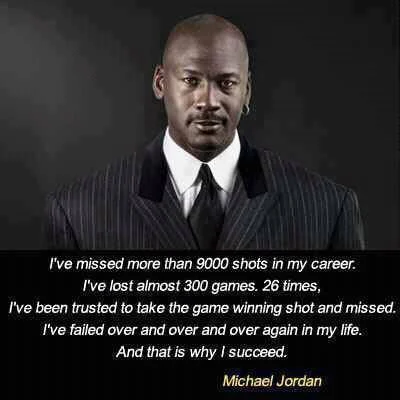
Let me give you an example. I’ve been commissioned portrait painter for almost thirty years. Several years ago, I gave the keynote address to a large gathering of artists and opened my PowerPoint with a moody black and white photo of Michael Jordan with just one word of text: FAILURE. I then recounted seeing an old Nike ad, also in black and white: Michael Jordan dribbling a basketball in an empty gym, as the only soundtrack. The text over went something like this: Michael Jordan has missed over 9,000 shots and 300 games. He was trusted to take the winning shot and missed 26 times. His words: “I have failed over and over and over again in my life. And that is why I succeed.”

That is a confidence that is generally hard earned over many years. Trusting your own process. “I’m smarter than this stupid canvas!” “This chapter is the worst piece of crap ever written and I will delete you!” So, yep, freedom. 

10462876_1058565220837509_9196511803563982013_n.jpg

I roll my eyes when I see writing quotes like “I was born to write.” “Without writing, I could not breathe.” Frankly I think that for the overwhelming, and I mean the overwhelming majority of writers, that’s just a bunch of nonsense. Nothing replaces good training and just doing the work. And a lot of it. Talent? Overrated. Do I think we need some? Sure, some. But it most surely isn’t the most important factor in success. Emil Zola said this: “The artist is nothing without the gift. But the gift is nothing without the work.” I can promise you that I have been a more successful artist than scores of other painters with way more ability-but the difference has been that I have been willing to fail. Over and over again.

Fast forward to the morning that I am writing this essay. For all the bluster and self-help tropes I can blather on about, I fight a crippling insecurity – my first novel is on the eve of being launched. I’m terrified that no one will like it. That I will wake up next week to find nothing but one-star reviews, written by people who only gave it one star because there wasn’t a negative star rating option. Or even worse, that no one even bothered to write even a horrible review because they didn’t care. Could this happen? Sure. But my adventure into fiction isn’t so much about someone else’s opinion. I loved starting with a blank Word document – with nothing. And making something. Maybe Collateral Carnage will languish in obscurity. But I did the best I could and I am happy with that.  And in any case, I can’t worry about what is now published, because I need to get started on the next book. And open up another beautiful, liberating, totally blank Word document. And maybe make the next book even better, because I understand the peril. It is limited and finite and it doesn’t frighten me. And because of that, only promise remains.

Connect with Chris: www.chrissaperauthor.com

Check out her book, Collateral Carnage on Amazon


Q&A with Stephen Puleston

10154906_303975246418568_489672101_n.jpg

Tell us about the process of turning your book into an audiobook.

I decided to commission the first two Inspector Drake novels into audiobooks at the end of 2018 as I wanted to offer the books to a wider audience. Audiobooks is one of the fastest growing sectors in publishing at the moment and I was interested to see if my books would prove popular. I had been approached by an American company with an offer to buy my audio rights but I decided that I wanted more control over the process. I knew that I needed a Welsh voice and Cardiff, the capital of Wales, is a thriving artistic centre where a lot of actors are based. I contacted a theatrical agency and I had a shortlist of three names that I knew were experienced voice-over artists. Luckily my first choice was available and he agreed to read the books. I knew from preliminary research that there are specialist sound studios in Cardiff and I was able to agree terms for them to record the Inspector Drake books. The whole process took several weeks.

Was a possible audiobook recording something you were conscious of while writing?

I wasn’t conscious of a possible audio recording when I was writing the first books in the Inspector Drake series but I am now. The second book Worse Than Dead has a number of tables which makes it very difficult for the listener to visualise the details contained in them. I know now that I will never include tables in a written book again!

How did you select your narrator?

I selected the narrator from a shortlist of three experienced voice-over actors who work in Wales and the United Kingdom. All three were bilingual actors and it was important for me that they were able to pronounce the Welsh place names correctly and understand the background of the novels.

How closely did you work with your narrator before and during the recording process? Did you give them any pronunciation tips or special insight into the characters?

Before the beginning of each recording I provided the actor with a detailed spreadsheet of each character with my outline of the accent that they should use. I was lucky enough to have sat in on some of the preliminary recording sessions where we were able to polish the various accents so they sounded exactly as I hoped.

If this title were being made into a TV series or movie, who would you cast to play the primary roles?

This would be every author’s dream of course. My reply is very easy – it would have to be Matthew Rhys. He is from Cardiff and is a Welsh speaker but he is also an extremely accomplished international actor having starred in The Americans for which he received two Golden Globe award nominations and a prime-time Emmy award. He’s also played Kevin Walker in the series brothers and sisters. He is about the right age to feature as Inspector Drake and I’m sure he would love to do a detective series.

What bits of advice would you give to aspiring authors?

Keep writing. Even if you finish the first novel and it’s been rejected then start the second. Get your work critiqued regularly it will help you improve.

What’s next for you?

I’m writing the eighth Inspector Drake novel at the moment which should be out in January 2020. And there should be more Inspector Drake audiobooks out towards the end of 2019. After that they will be ninth some time the same year. After that I shall be turning to detective Inspector Marco which is the second series I write.

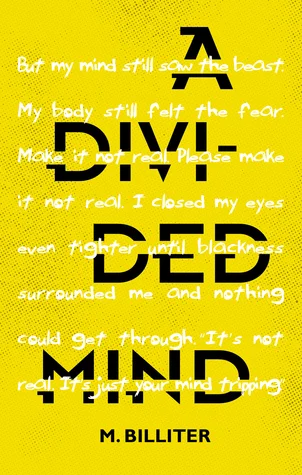
Q&A with M. Billiter,A Divided Mind

M.jpg

Tell us about yourself and how many books you have written.

Hello! I’m M. Billiter. “A Divided Mind,” is my 15th book, but my first work of domestic fiction. After writing more than a dozen romance stories, the universe brought a different type of story into my life that I knew had to be told and one I was uniquely qualified to write.

What is the name of your latest book and what inspired it?

“A Divided Mind,” started with a phone call. It was the day before a major college kickoff event I had helped plan for more than a year. I was crazily finalizing last-minute details when my son, Kyle, called saying he needed to talk. I still remember my exasperation from being bothered at work. What? What could it be now? With four children to support, I was finally getting my boots on the ground as an adjunct professor. My placement on the planning committee was a huge step forward in my career. An interruption at work meant a disruption in what I was trying to build.

When I pressed Kyle for an answer, he started to back away from the conversation. That's when I knew. I knew it was more than a phone call. And suddenly, I couldn't breathe or stop my mind from racing - pregnant girlfriend, drugs, failing a class? What I heard in reply wasn't at all what I expected.

“I’m hearing voices.”

Buy on Amazon

Buy on Amazon

I didn't understand what was happening to my son. I only knew I wanted it to go away. The campus event no longer mattered. In trying to build "something," I let what truly matters - family, children, home life - break down. As I sat in the waiting room at the counseling center while Kyle saw an emergency intake specialist, my only focus was on my little boy.

At, 6'1 my 18-year-old was far from little. He was my gentle giant, my brave heart. Together we navigated the world of mental health without any clue what was ahead. During this time, the journalist in me surfaced. I asked a lot of questions, which I wasn't always sure I wanted to know the answer.

By delving into the darkness, Kyle shared with me demons I never knew he battled. It was heartbreaking and heroic. The story we lived became the story we told - with a twist. What started as a quest for answers turned into, “A Divided Mind,” a fictionalized, chilling story of what could happen if a divided mind was left untreated.

Do you have any unusual writing habits?

Lately, I’ve traveled a lot for work. When random pockets of time present themselves, I’ll pull out my phone and start writing. The “Notes” section on my iPhone is my go-to for writing. Whether I’m in line for coffee or the Metro, a note is open and I’m text/typing or voice messaging into the folder. It’s amazing how much I can accomplish in a short period of time - like answering a Q&A for a book tour! I cut and paste the questions into the note section, answer them and then email myself the file. That’s key! I backup my work by emailing or texting myself the file.

What authors, or books have influenced you?

When Oprah began her book club, I discovered a lot of great authors – Tawni O’Dell (Backroads), Elizabeth Berg (Open House), or Wally Lamb (I Know This Much Is True). Her monthly book selections that focused on domestic fiction, women’s issues, and literary works were gems that expanded my library.

I’m also a admirer of short stories. Benjamin Percy’s short story work is phenomenal. Authors like Percy, O’Dell, Berg and Lamb, who are at the top of their game with superior craftmanship – character development, engaging plots, and emotion that is palpable – challenge me to put my best work on the page.

What are you working on now?

“The Divided Twin,” is a stand-alone work of domestic fiction. For readers of, “A Divided Mind,” the story picks up four years later in the lives of the Kovak family.

What is the best advice you have ever heard?

Hmmm. My sister likes to remind me of all the authors who didn’t hit it big until much later in their career, which always makes me laugh. However, what I’ve always remembered was something Alexandra “Bo” Fuller said during a writing conference in Jackson Hole, Wyoming, “Write to keep drunks awake around a campfire.” If I can do that, then I’ve done my job!

What are you reading now?

“What We Keep,” by Elizabeth Berg

What’s next for you as a writer?

The New York Times Bestseller’s List and a featured spot, in Oprah’s magazine. You know, nothing too big – just everything I dream and hope will happen!

If you were going to be stranded on a desert island and allowed to take 3 or 4 books with you what books would you bring?

“Time Traveler’s Wife,” by Audrey Niffenegger

“Open House,” by Elizabeth Berg

“Back Roads,” by Tawni O’Dell

Do you have any advice for new authors?

Chose to stop listening to that doubtful voice in your head. That voice is a bully that stops you from thinking and worse, creating.

Stand up to that voice. If your little brother or sister were being bullied, you’d stand up for them. Do the same with that voice. Talk to that doubt – address that doubt – with all you’ve already accomplished. Let all those certainties become your guiding belief.

Doubts are traitors that steal from us. Choose to stand up to those doubts. It’s our choices that show who we really are.

“On Writing,” by Stephen King

What inspires you to write?

I’m not going to lie – when I meet a reader, who shares with me something about my work they connected with – it makes the long nights, lost weekends, and all that time I devote to writing worth it. I’m so immensely grateful when readers take the time to approach me, email or leave a review – those connections feed my writer’s soul and inspires me to bring my “A” game.

Tell us about your writing process

I steal pockets of time – while I’m in line at Starbucks, in between work meetings, and always during my lunch hour – I write. Whether it’s on my phone, scribbled on meeting minutes, or on my laptop – I write. I don’t have a set number of words I write in a day, but I do focus on completing chapters within a day or two of starting one. Once I begin a new chapter, the storyline and characters consume my thoughts until I finish what they’ve started. And honestly, THAT’S the best part of writing – when the characters take over the story. I’ve often described myself as a stenographer because it often feels as though I’m simply transcribing what they show me.

What do you think about the future of book publishing?

Good question. Since my first book was agented and published in 2011, I’ve seen great changes. Authors have more accessibility to agents, editors, and publishers. As with any growth in an industry there are advantages and disadvantages. Vetting the source that will market your work and you as an author is paramount.