The Best Books for Kids Who Don’t Like to Read By A.J. Kormon

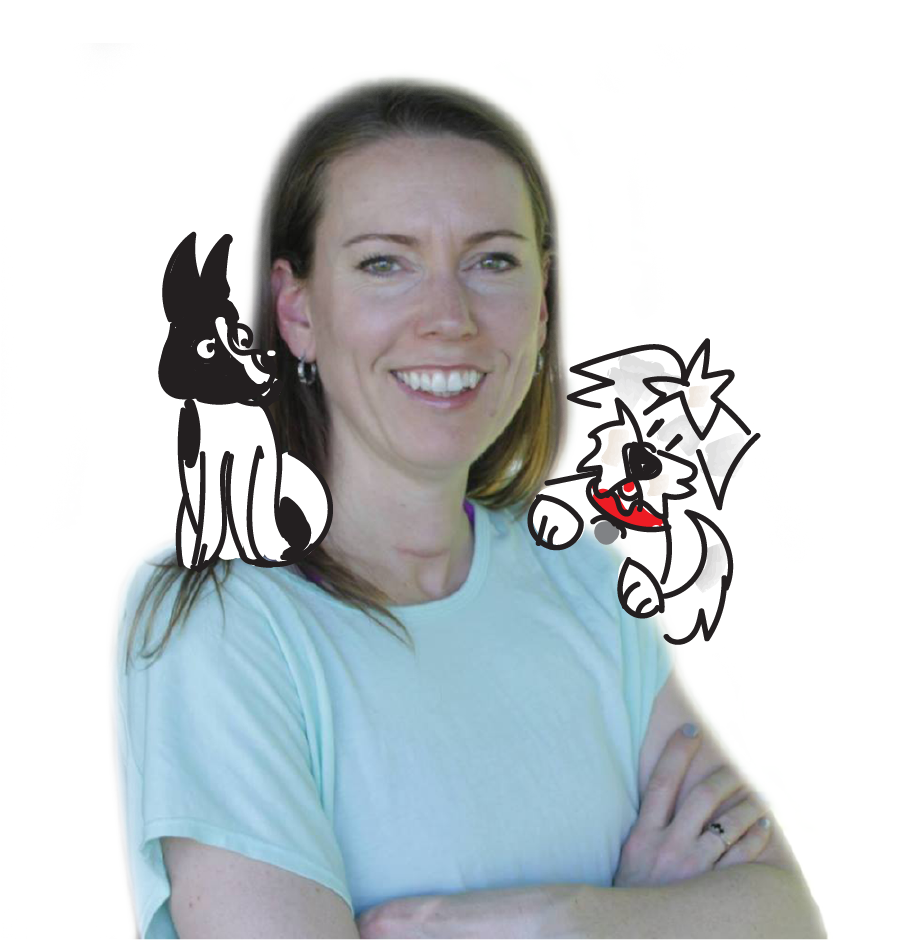
AJ Kormon Head Shot-01.png

My boys are 9 and 11 and they still prefer to have me read to them rather than read on their own. It’s not that they don’t like reading. They love stories, but they aren’t interested in sitting down and reading a book. At least, that’s what I thought until I caught them reading a few books on their own this summer. 

After trying so hard to find books they would pick up and flip through on their own, it was such a relief to spot them paging through books, eager to find out what happens in the story. If you have a child who doesn’t seem to enjoy reading, consider trying one of the books below. 

Diary of a Pug

Diary of a Pug is a series of five books with a sixth coming in spring 2022—all written by Kyla May. At first, I thought this series might be a little young for my boys, because it’s intended for 5- to 7-year-olds. But Bub the pug is such a lovable dog that tends to worry a lot. He’s very relatable and my boys have fallen in love with him and keep requesting the next book in the series. 

The illustrations are cute, and Bub has emotion bubbles over his head which help kids link the feelings to what’s happening in the story. And like many dogs, sometimes Bub farts, and of course, my boys think this is hilarious. Bub also has some complicated relationships with Nuts the squirrel and Duchess the cat which always makes the stories more interesting. 

Dog Man

My boys used to ask me to read Captain Underpants all the time, but now that they’ve discovered the Dog Man series by Dav Pilkey, they seem to prefer it. I think the attraction with Dog Man is the fantasy aspect. He’s half cop and half dog and he gets up to some crazy stuff that is downright silly and often physically impossible.  

As ridiculous as some of the stories are, Dav Pilkey still manages to weave some great lessons into his books. I also love how the Dog Man titles mimic classic literature. For example, Lord of the Fleas instead of Lord of the Flies and For Whom the Ball Rolls instead of For Whom the Bell Tolls

Bad Guys

The Bad Guys series by Aaron Blabey was recommended to me by a bookstore owner as being a great series for reluctant readers. With a title like “Bad Guys,” I was a little hesitant until she explained these are animals everyone is afraid of (wolves, snakes, sharks, etc.) trying to be good and help people. The result is pandemonium and hilarity. 

These books are downright silly, but I’ve never heard my kids laugh so hard while reading, so I don’t mind the silliness. The character Piranha has a problem with gas, so you can imagine what some of the laughter is all about. What I enjoy as a parent is that while these are illustrated books, and there are not a lot of words on the pages, the words often become part of the illustrations. Sometimes the words are also really big, making them easier to read. 

The Okay Witch

I discovered the Okay Witch series by Emma Steinkellner when searching the Libby app for graphic novels available as e-books through my library. As the title suggests, these books are about Moth, a thirteen-year-old who discovers she comes from a long line of witches. There’s even a hilarious talking cat who turns out to be an old friend of the family who’s been reincarnated. 

Doodleville

Doodleville by Chad Sell is another graphic novel I discovered through the Libby app. This story also has a touch of magic which I think is what my boys enjoyed about it. Drew is an artist whose doodles come to life and wreak havoc in Drew’s life. When Drew creates her most mischievous doodle yet, Drew and her art club friends must come together to create a plan to save Doodleville. 

This is a great story about coming together as a team to solve problems.

Cat Ninja

Cat Ninja by Matthew Cody is a graphic novel series available almost exclusively on the Epic reading app (although it looks like book one may be available as a paperback soon). At the time I’m writing this, there are over 15 Cat Ninja books available on Epic. These are read-to-me books where kids can listen and read along, or they can choose to turn off the audio and read the book themselves. 

You may have noticed a pattern here! These are all graphic novels, or in the case of Diary of a Pug, a beginning chapter book with lots of illustrations and bigger, more spaced out, printing. My boys love graphic novels because the pictures help them decode the story. I also caught them reading several audiobooks over the summer too. Graphic novels and audiobooks can help develop readers just as well as more traditional chapter books and middle-grade novels. 

I hope you check out some of the books above and your kids love them as much as mine do!

As a former accountant, AJ Kormon, started writing books about money to help explain the concept to her kids. As her kids got older, they showed signs of not wanting to read, so she enlisted their help creating a series for resistant readers. This is how the Halloway Hills Middle School Mysteries were born. When AJ isn't writing and cartooning, you'll find her losing to her kids at Uno.

About the Author

AJ Kormon started out writing books about money to help explain the concept to her kids. As her kids got older, they showed signs of not wanting to read, so she enlisted their help creating a series for resistant readers. This is how the Halloway Hills Middle School Mysteries were born. When AJ isn't writing and cartooning, you'll find her losing to her kids at Uno.

Find A.J. Kormon at: 

Website: www.ajkormon.com

BookBub: www.bookbub.com/profile/a-j-kormon

GoodReads: https://www.goodreads.com/author/show/20379395.A_J_Kormon

Instagram: https://www.instagram.com/ajkormon/
Guest Post: Renovated by Nikki Kiley

Nikki (1).jpeg
Renovated_Vellum.jpg

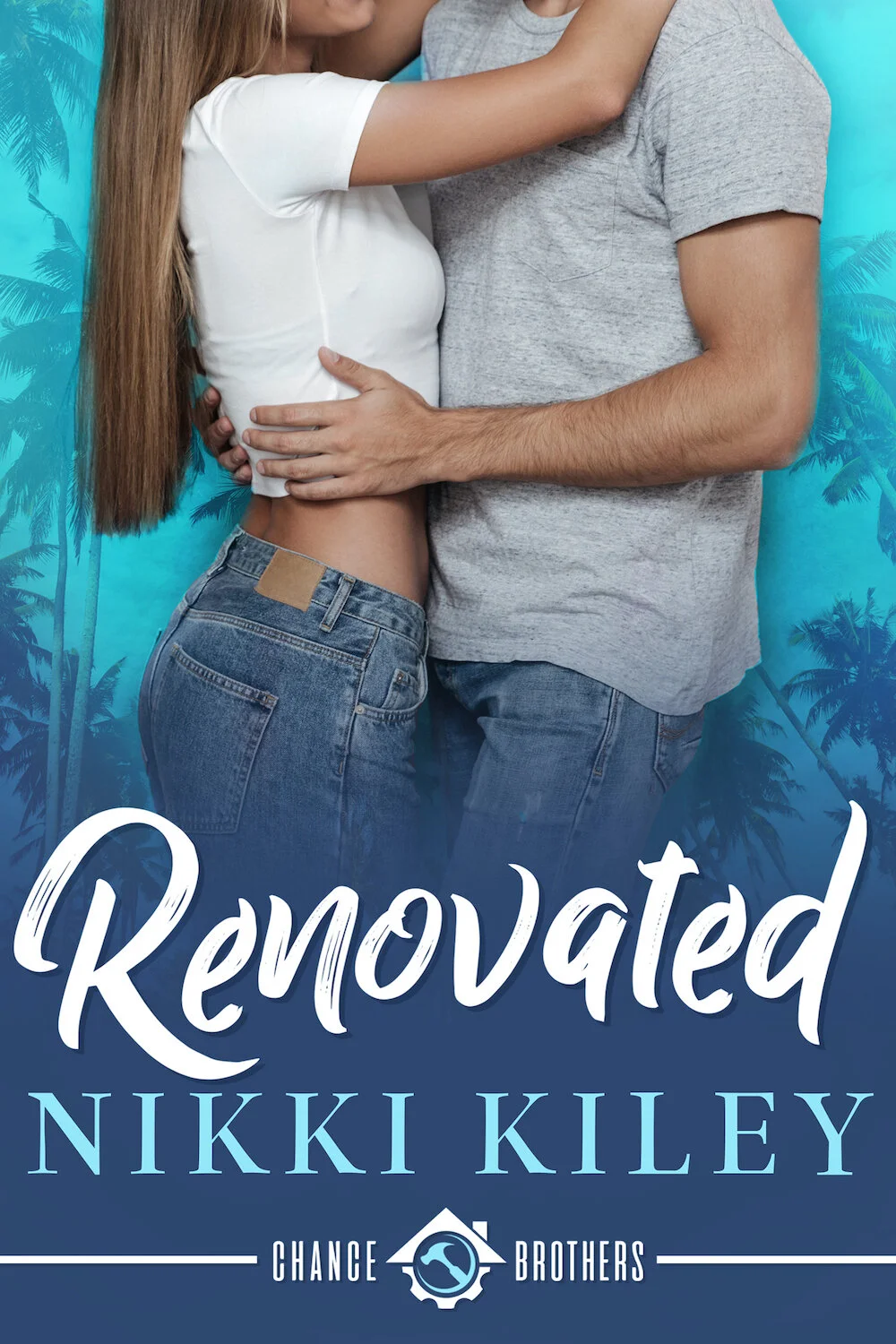
Renovated is a steamy contemporary workplace romance based in Miami and a fictional small town in Florida. My heroine Marisa is a Puerto Rican woman raised in Miami after her Cuban grandparents took her in at thirteen.

I touched upon the subject of gender-based violence in Renovated because, as a Puerto Rican woman myself, I have witnessed the crisis in my own country. 

In recent years, there has been a demand by citizens after the wave of deaths targeting women and transgender people. Puerto Rico has even declared a state of emergency to battle this situation, finding that the solution always starts with education.

It’s become such a crisis that the Governor has even created an executive order to protect and prevent gender-based violence. Unfortunately, women and transgender people have been victims of machismo, discrimination, and lack of education. Gender-based violence is not just a Puerto Rico problem. It’s greater than my 100 by 35-mile island. I am not a political person, but I’m not blind to what is happening outside my doorstep. 

As part of her healing process, Marisa Sanchez (My Heroine) gives back to her community by empowering women with the knowledge to take care of their own homes. Being able to fix a toilet or a stopped up sink, drywall, paint, or install tile, brings us back to the biblical concept of teaching a man to fish versus giving him the fish. She is teaching women that have gotten out of bad relationships to take care of themselves. Rely on their ability to figure out that you don’t need a Y chromosome to solve household issues. 

You can find her book on Amazon Kindle | Paperback

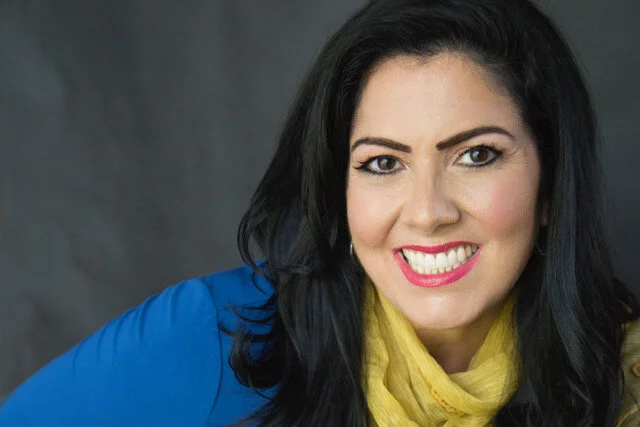
Q&A with Meg Nocero, Butterfly Awakens: A Memoir of Transformation Through Grief

MichelleCitrinStudios@-1183.jpeg

Where did you grow up /live now? What is your education/career background?

Both my parents were raised in large, tight-knit Italian-American families in New York. After they got married, when the United States entered the Vietnam War, and the Draft began, my father signed up to serve with the U.S. Navy as a doctor. So right before I was born, my mom and dad were given orders to report to the U.S. Naval Base in Orlando, Florida. And on December 1, 1969, my dad said that I arrived at the U.S. Naval Hospital singing like a joyful and loud nun in the Sunday choir.

We stayed in Orlando for the two years that my father completed his military service, then my mom, older sister Mary, and I returned to Yonkers, New York, where my dad could finish his residency at Bellevue Hospital in cardiology. Upon completion, one of my dad’s mentors in the Navy invited him to join a cardiology practice in Orlando—we all returned, this time with the addition of my little sister Aimee as well. So, from 3 years old until I went to Boston College at 18, that is where I grew up.

Because I applied to the American Field Service as an exchange student, I lived in Bucaramanga, Colombia, South America, during the summer before my senior year in high school. Falling in love with Latin culture, the music—merengue, salsa, cumbia, vallenato—and learning Spanish, I chose to continue studying romance languages in college to open up communication with more people. At Boston College, I traveled to Mexico, spent my junior semester abroad in Rome, Italy, and went on two mission trips: to Guayaquil, Ecuador, and Santo Domingo, Dominican Republic.

Graduating with a B.A. in Spanish/Italian, and not knowing what else to do, I applied to law school. Because there was a recession, there was an increase in applications for professional schools. After being waitlisted, when I did not get in, I decided to return to Orlando to figure out my next step—I took a GAP year in the 90s before it was even a thing.

Not really focused on a particular career path, after working in an office as an assistant, then as a translator and interpreter for international conferences, I decided to go back to school at UCF to take the pre-requisites to get my M.A. in International Studies. When I got into the Graduate Program at the University of Miami in 1992, I moved to Brickell Key and never left—I finally felt like I was home. Even after Hurricane Andrew blew through not even two weeks after I moved all my earthly belongings into my one-bedroom condo in Brickell Key II near downtown Miami and had to evacuate, I returned with my dog Alfredo Luigi. I fell in love with this big International city, the tropical feel, the dominant Latin culture, the wonderfully diverse people, and stayed. After receiving my J.D. in 1997, I married a fellow law school classmate who was also an Italian-American. I worked for the federal government as an immigration trial attorney for nearly 20 years, raised two awesome kids, and built a wonderful life in Miami—Miami is a significant part of my story in that this place has helped me become the passionate creative that I am today.

As a child, what did you want to be when you grew up?

When I was a child, I loved to design dresses and write. I cherished my black artist workbook where I created elegant ball gowns that I imagined wearing to fabulous galas where I would dance the night away. I got lost in the colors of painting and design, mostly princess gowns with full skirts and lots of tulles. I drew models with long flowing hair and delicate crowns on top of their heads. My mother was Miss New York in the Cherry Blossom Festival in Washington when she was 16. I remember being mesmerized by her elegant gown and especially the sparkly tiara on her head. She looked beautiful, confident, and regal. I always associated those adjectives with tiaras, probably why I am obsessed with wearing them whenever I get a chance. 

If I didn’t feel like drawing, I preferred to live in my imagination creating stories where I pretended I was a magical fairy granting wishes to anyone who sought my assistance. In my journals, I set out to discover the world, taking journeys to the far corners of the globe. Free to create, my active imagination opened magical doors where incredible stories were about to unfold. Other imaginary friends, the characters who kept me company, would greet me there, welcoming and joining me in celebration. Also, I even created a series called Hello, Fellow. Making up the life of a successful, attractive, and smart young lady, I set out to create beautiful stories. With each of these activities, I escaped my reality and entered a fantasy world far more appealing than what I faced as an awkward kid in school. The writing was always so empowering and inspirational in that I always believed that the world I made up could perhaps become my reality one day. 

Where/When do you best like to write?

I am creative. For me, writing, drawing, and singing have always been necessary therapeutic outlets. As a kid, I would carry a journal with me wherever I went to jot down my ideas, emote on the page, organize myself, and sketch. As an adult with many roles and responsibilities, I had to get intentional to be creative. As a Julia Cameron's Artist Way student, I love to begin my day writing my morning pages, three pages longhand, stream of consciousness writing that clears your head. Knowing that it only takes 20 minutes a day to give a story life, I schedule that into my life while riding my stationary bike every morning. This exercise is an active meditation for me. It allows me the opportunity to do something healthy for my body and my mind. And, when a story or writing piece grips me, I will stay up all hours into the night, capturing its essence and bringing it to life on the computer screen or longhand on paper.

In the end, I love dancing with different languages, words, music, innovation, creation, and beauty. Writing has allowed me to be vulnerable, sharing my story with others while infusing more joy, fun, and creativity into my life. For years, living up to other people's expectations and basing my worth upon the opinion of other people left me feeling empty. Writing empowered me to decide that I was tired of suffering; I made an active choice to follow my bliss and see where that would take me with happiness as the ultimate goal. So, whenever I get a chance, I make time to write more.

What do you think makes a good story?

I love a good story. It is magical when good music, books, or fantastic movies inspire me to think outside the box, offering hope, sometimes even getting a break from the world's stress.

A good storyteller brings me into their world, introduces me to incredible characters who become so real. She shows me beauty as she takes me on a journey to discover something new, evoking a full range of emotions. From laughter to tears, I appreciate when the writer is vulnerable to where I feel the story come alive off the pages. When I get to the last page or the end of the movie, a fantastic story stays with me inviting conversations that expand my mind and fills my soul.

When did you first realize you wanted to be a writer? Or what first inspired you to write?

What inspired your story?

In April of 2011, not only did I lose my mother to breast cancer, but I also lost my way. I retreated into my closet and did not want to come out and face a world without my mother. I showed up to my responsibilities at work and home, but I fell into a depression where I did not want to live anymore. It was a terrifying feeling. My kids were 2 and 8 years old when my mother passed away. I knew that I could not abandon them, but the sadness and disillusionment enveloped me. 

As an empath, someone who can absorb another individual's mental or emotional state, I am sensitive to the energies in this world. My mother grounded me when the world became too much. She was my safe place. When she died, I felt like my connection to my guide was cut off. I was left alone to navigate the confusing grieving process. Additionally, I burnt out from traveling back and forth from Miami to Orlando to help with her care while managing my own hectic family life, a full-time job as a federal immigration attorney, and raising young children. 

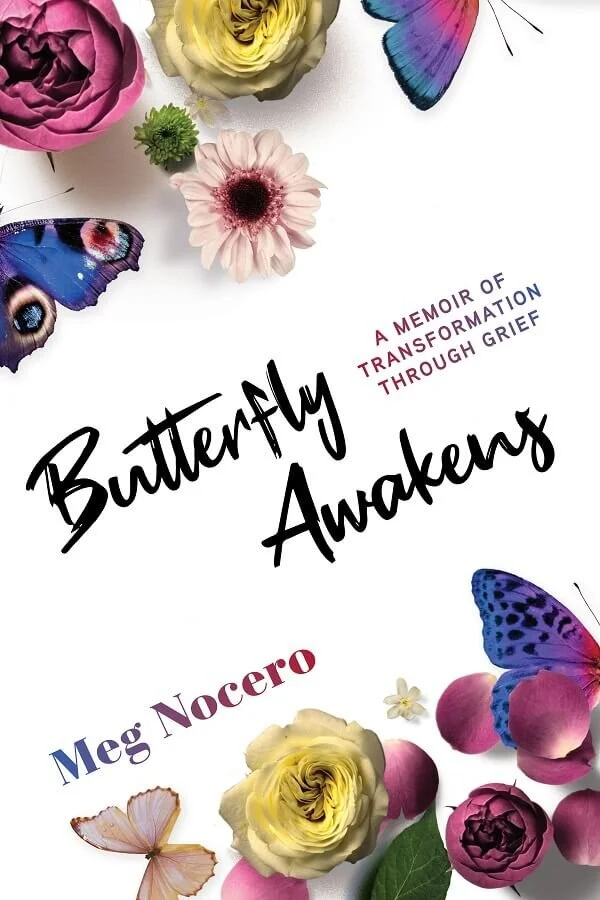
butterfly_awakens_r3.jpg

I have always had a journaling practice—using writing as a tool to work out so much. So I looked for a way to navigate the grieving process and started to write as a healing tool. I started simply. I would wake in the morning and read from a book that resonated with me. When a quote or a passage spoke to me, I grabbed my journal and channeled at least three pages of longhand about what I felt my mother would want to communicate to me about it. One day led to the next, and this routine led me to complete my guide that I would later call The Magical Guide to Bliss: Daily Keys to Unlock Your Dreams, Spirit & Inner Bliss. I intended to empower myself to figure out how to will myself back to life, step into the unknown, and wake up to life again. In addition to allowing me to feel connected to my mom, it helped me muster the courage to make a career change after 20 years as a federal prosecutor. The writing was the first step towards what helped me trust my transformation; it was my cocoon, a ,safe place to strengthen my budding wings so that I could imagine metamorphosis into a beautiful butterfly.

I remember thinking how easy it is to get stuck in life, far short of where I wanted,to be, and I felt trapped by pain and despaired that the suffering was all that there is; that bliss is just a myth. I started to get intentional with my life. Paying attention to the people, places, and things that would show up every day, I became excited about my present and future again. When I was at an all-time low, I begged the universal divine for assistance. I promised that when I did emerge triumphantly, I would share the vulnerability of my story to inspire others not to lose hope and give up on their dreams if they find themselves in darkness. I wanted my story of transformation through grief to one day be the light for others—the greatest gift is for someone to look at you and say, because of you, I didn't give up. That helped me fight my way out of my darkness. 

And, some of the events that occurred as I learned to love myself unconditionally were truly extraordinary. When Oprah's "Live the Life You Want 2014" came to Miami, it catapulted me to take the final step and truly live the life I wanted as a published author. One of my long-time dreams was to meet Oprah, one of my spiritual guides, and I was one of the lucky ones to get called up on stage with Oprah in Miami, and as they say, the rest is history; in this case, a trilogy—The Magical Guide to Bliss, Daily Keys to unlock Your Dreams, Spirit & Inner Bliss, Sparkle & Shine: 108 M.A.N.T.R.A.s to Brighten Your Day and Lighten Your Way and finally my memoir, Butterfly Awakens!

"I will never forget Oprah looking me in the eyes saying to me "this is your moment, Meg, don't miss it; it is time to live the life you want!" And so, I have! And the most fantastic thing is that I have brought many others with me. 

Is there a message/theme in your book that you want readers to grasp?

When I was moving through grief, I promised that I would keep going to share a better story for my life, healing myself and in service to others. The metamorphosis of the butterfly and the guidance of the lighthouse were symbols that stood foremost in my mind. Never giving up in this life, doing the hard things that surround transformation, and in the end embracing your inner beauty—not needing approval or permission from others to be here. I want other people to honestly know that there is always light, even in the darkness and that they are more than enough just as they are.

Who are some of your favorite authors?

Paulo Coelho, Liz Gilbert, Neville Goddard, Suzanne Simonetti, & Leslie Rasmussen

What’s the best writing advice you have ever received?

Sit down and commit to writing at least 20 minutes a day.

What is the one book no writer should be without?

Alchemist- Paulo Coelho and The Power of Awareness, Neville Goddard

You can grab a copy of her book on Amazon Kindle or Paperback

About the Author

You can connect with Meg at:

Website: www.megnocero.com

Facebook: www.facebook.com/meggiebliss

Instagram: @megnocero

Belle Boyd, Control of Women, Plus an 1860s Etiquette Quiz by Claire J. Griffin

RebelliousWomanCVR1600.jpg

A Rebellious Woman is biographical fiction, based on the life of a real woman, named Belle Boyd who lived from 1844 to 1900. Born in the part of Virginia that would form the breakaway state of West Virginia during the Civil War, Belle is best known as a reckless teenager who briefly spied for Stonewall Jackson. The story goes that she once ran across an active battlefield to deliver information, returning home with bullet holes in her petticoats.

But Belle was rebellious her entire life. She married three times and divorced twice. Between marriages, she supported herself and her children as an actress – also considered shocking. She even appeared on stage dressed in men’s clothing. None of this shocks us today, but in the mid-1800s these were acts of defiance that put Belle well outside the mainstream of acceptable female behavior. 

And what exactly was acceptable female behavior? It was during my researches about American life in the 1860s that I learned how extraordinary the era was in its attempts to control the lives of “ladies” (women above a certain social class). 

Ladies were controlled in part by burdensome clothing. Wide-skirted dresses weighing upwards of ten pounds; more than seven layers of underclothing; tightly laced corsets that could make it difficult to breathe; a contraption called a “cage crinoline” (to hold out their skirts) that was literally like wearing a bird cage. It is no exaggeration to say that women of this era were literally tied up and caged.

Strangely enough, at a time when sipping a half glass of wine was pushing the bounds of propriety, many women were made docile and obedient by the use of opiates. Laudanum, a potent mix of powdered opium and alcohol was widely available without a prescription. It was commonly dispensed in bottles just three inches high, small enough for a lady to slip into her pocket or drawstring purse and carry with her throughout the day. There is no evidence that Belle Boyd ever used opiates. Quite the contrary. She was a high energy woman who charted a life for herself that was full of freedom and adventure. However, it is well-documented that two other women of this period, Mary Todd Lincoln, and Varina, wife of Confederate president Jefferson Davis, both struggled with laudanum addiction during the Civil War.

In addition to oppressive clothing and easily available narcotics, the most direct way in which women were controlled was through a rigid system of etiquette. This strict code of conduct defined every aspect of female behavior including how a woman dressed, sat, walked, ate, spoke, and laughed.

How oppressive were these rules? To find out, take this “1860s Etiquette Quiz”, based on actual rules that appeared in advice books of the day. The questions are True/False. Answers appear at the end.

“1860s Etiquette Quiz”

  1. A lady was not permitted to sit with her legs crossed at the ankles or knees.  

  2. A lady was permitted to have a glass of wine at a private dinner party. 

  3. A lady was not permitted to laugh quietly in private conversation. 

  4. A lady was permitted to sing at a private party. 

  5. A lady was permitted to exclaim “Goodness gracious!” and “Mercy!” in private conversation. 

  6. A lady was permitted to be alone in a room with a gentleman for a few minutes, as long as he was a close family friend. 

  7. When out in public, a lady was not permitted to walk quickly, swing her arms, speak in a loud voice, or call to a friend on the other side of the street. 

  8. A lady traveling with a male companion was encouraged to give him her purse so he could pay any costs she incurred on her journey. 

  9. The following activities were permitted for ladies: sewing, knitting, embroidery, drawing, painting, playing a musical instrument, ballroom dancing, horseback riding. 

  10.  A lady was not permitted to go riding alone. 

  11.  If a lady was riding with a man, she was permitted to precede her escort over a   jump. 

  12. When riding with an escort, a lady was permitted to suggest the direction and set the pace of the ride. 

  13. For the sake of safety, under certain circumstances a lady was sometimes permitted to ride astride rather than sidesaddle. 

  14. When out walking, a lady was permitted to stop on the sidewalk in order to pull on her gloves or smooth her hair. 

  15.  In private conversation with a close friend and no one else present, a lady was permitted to roll her eyes. 

Answers: 1. True. 2. False. A half glass of wine might be permitted at home in honor of a special family occasion. 3. True. 4. True. Singing and playing an instrument were considered genteel social arts that allowed a lady to display her accomplishments to friends in a modest way. 5. False. No exclamations of any sort were allowed. 6. False. Being alone with a gentleman was permitted only if he was a family member. Or possibly if he was really, really old. 7. True. 8. True. This was encouraged because it allowed a lady to avoid interacting with low sorts of people, such as coach drivers and innkeepers. 9. True. These were all approved activities. 10. True. A lady seen riding without male supervision would raise questions about where she was going and what she intended to do when she got there. 11. False. 12. False. The male in the party would make all such decisions. The lady must follow his lead. 13. False. Riding sidesaddle could be dangerous, but the woman’s safety was never a consideration. 14. False. These were considered to be intimate dressing/grooming behaviors and therefore must never be performed in public. 15. False. Rolling your eyes was never permitted, although you might be doing that right now!

One thing these rules make clear is that in the context of Victorian society’s efforts to control women, Belle Boyd stands out as a scandalous figure. But today we can recognize her as a modern woman whose tragedy was to be born a century too soon.

For more information on etiquette, clothing, and women’s drug use in the 1860s, plus actual historical photos of Belle, please visit my website:

https://www.clairejgriffin.com

To buy A Rebellious Woman on :

Amazon Kindle

Paperback

To view a 3 minute video on Belle and her times:

https://www.youtube.com/watch?v=uKLsC6uuyOw 

More ways to connect with Claire:

Instagram - heyclaire2021

Twitter - @cgriffinwrites

Facebook - Claire J Griffin 

What Inspired Me to Write My Book by James Ruvalcaba, The Light Through the Pouring Rain

James R .jpg

Hello, I’m James Ruvalcaba, the author of The Light Through the Pouring Rain, and I’m here today to write about what inspired me to write my book. To give background to my book, I detail the trials and tribulations of enduring a cancer diagnosis. I go into detail about how my fiancée Anabel and I dealt with it and kept our eyes to the sky while using our faith in God to make it to the end. Unfortunately, my fiancée, Anabel didn’t make it and passed away, so now I tell our story on my own with hopes to carry on her legacy and be a testimony of God’s goodness. Today, I bring you my inspiration on why I decided to write my book.

In my final moments with my fiancée, I promised her that I would “continue to honor her legacy by telling our story together and would always speak her name at any given opportunity.” My inspiration to tell our story has so many layers to it, but my main reason is simply a promise.

I will never forget the last words I whispered to her while she was in a constant state of being conscious and unconscious. I will forever cherish our lasting moments together. The promise I made to her that day drives me to this day.

Promise by definition is a declaration or assurance that one will do a particular thing or that a particular thing will happen. I made a declaration to my fiancée two years ago, and two years later, I came through on that promise. So many times, I’ve experienced letdowns and broken promises, as I believe we all experience at one point or another, but I would be ashamed if I would break this promise. It drives me every single day to push forward with hopes to touch and inspire others in the world with not only getting through a cancer diagnosis but with perspectives and the constant sense of humor we used to get by day to day. I promise to anybody who is reading this blog, you will get through it, so please don’t get caught up in the would’ve, could’ve, and should’ve of the past, and please don’t get sidetracked by the anxieties of tomorrow. Just stay in the moment and take it one day at a time.

Connect with James:

Before he started writing romance stories, James worked with the special need’s population for 10 Years. He devoted his life giving back to the population. From school's to agencies and everything in between James has worked almost every job within the community. After that, during the pandemic James decided to start writing to pass the time, but to come through on his promise he made years earlier. He devoted his life to giving back, now he devotes his life to telling his stories.

Website: https://thelightthroughthepouringrain.com/

Twitter Handle: https://twitter.com/JamesMruvalcaba

Check out his book on Amazon

What is Love by Julia Vellucci

When it comes to novels, those that are mainly full of smut are those readers tend to lean more towards or mistake for love.

In my ongoing fantasy romance Love Tetralogy, I attempt to undo one of the many reasons people enjoy reading romance novels.

Love and lust are two completely different things. Someone could argue and say that a healthy and loving relationship can be full of much physical intimacy. This is true but in a romance novel that should not be all that is focused on as love is all about two people helping each other grow for the better and reach their full potential, something words and an emotional connection has a massive role in.

In my opinion, a healthy and loving relationship is all about your souls meeting, being so freeing to one another that it often feels as if you are dancing in the rain together, joyful and free. Love must touch every part of you, so it's only natural for it to also have a physical element to it. That however is not the entire picture as pleasure or desiring someone because they are attractive does not lead to happiness and can often be toxic.

The journey is what we should be reading about as it proves to us that the greatest things are worth waiting for. The journey to find that indescribable feeling that can best be compared to a rose, a main symbol used in my series, as true love consists of a combination of beauty and pain. It is when one overtakes the other that some reevaluating must take place.

In this ongoing series of four, it is not your traditional love tropes that are discussed as originality needs to find its way back into romance novels. Each book touches on a different kind of love. Book one, "Girl by the Tracks" emphasizes loving the beauty and beast within, our flaws that make us beautiful and make us who we are. Book two, "Boy by the Plate" highlights loving the unexpected life throws our way to bring us exactly where we are destined to be, who we are destined to become and teach us all the required lessons. Book three, "Woman by the Penthouse" focuses on the love to hate relationship with ourselves, our internal conflicts and emotions, and staying true to ourselves despite how tough what is going on inside may be.

These books are all available on Amazon of all countries as a paperback and ebook as well as on Ukiyoto Publishing's site and other online book stores if interested in giving it a try.

This series is recommended for anyone who enjoys a wholesome love story full of magical elements, and although some character's roles alter in this series, the world and themes do not alter, hence why it must be read in order. I'd highly recommend it for teens as with social media and TV putting lust and passion before true love, teens need to truly understand that before you can love or commit yourself to anyone, you must love and respect yourself and then let the right person come in your life in which you can exceed your full potential with and love and respect just as much.

This is a huge idea this series exhibits and the fact that these books consist of words of a teen herself, it is possible to live by them, even in a society where commitment to a lifelong partner is slowly fading.

I would love to hear your thoughts on my Love Tetralogy and hope it speaks to you and teaches you as much as it did for me when I wrote it and through the characters that are all relatable in some way or another. I noticed pieces of myself in the characters, some I have yet to fully carry out in my own life. Yet again, fiction is meant for us to learn from those that aren't us but could be us for better or for worse.

About the Author

Julia Vellucci is a 17-year-old girl, born and raised in Mississauga, Ontario, with five books published and a passion for the written craft. She is Italian by origin. She has never been good at visual art but her mom and younger sister both of whom she admires are definitely her creative endeavours as she was inspired by them to find a way to express her creative side, through writing. She discovered her love for creative writing over two years ago when she first began to bring fictional characters to life through the written craft thanks to a school book club she was part of and couldn't help but wanted to discover what made her characters unique and carry out their story until the very end. Julia's dream is to be able to inspire readers through her words as she believes words can project more than actions ever could.

Readers can visit her website at juliavellucci.weebly.com and find her on Instagram under the username juliavellucci_.