Q&A with Kimberly Belle, My Darling Husband

Your cover really draws you in. Are you involved with the cover process? What do you hope this cover tells potential readers?

Thank you! And I agree; the designers at Park Row really nailed this one. Typically, I don’t have a lot of involvement with the cover until it’s nearly finished, which means it’s already gotten approval from my editorial team as well as the folks in sales and marketing before I get to see it. That moment when the email lands in my inbox – A sneak peek at your cover! – is always so exciting. 

In my mind, what makes the My Darling Husband cover so strong is that it gives us a view of Jade’s face but none of her husband Cam’s, only a slice of his shoulder. For me, this makes Cam feel somewhat elusive, and it hopefully puts the reader on alert that things with him may not be what they seem. Especially in combination with the title, the image lets the reader know that the husband in this story may not be so darling after all. 

What research did you need to conduct for this book and how did you do it?

I did a lot of research around a couple of plot points that if I mentioned them here, would give a big chunk of the story away. What I can mention is my research around raising a child prodigy and the kinds of stresses that degree of talent can put on both the family and the child. Beatrix is nine and has played violin since she was a toddler, when she picked up one in the toy aisle at Target. As amazing as her talent is, it’s also a daily hurdle. Lessons, practice time, the drive to succeed, the pressure to not “waste” your talent by frittering away your time with normal childhood pursuits – it can all feel very isolating. She’s a brilliant, brave kid who is much more mature than she should be, as illustrated with this line: “Most parents want their children to grow up. Cam and I should have spent more time coaxing Beatrix to grow down.”  

What is your elevator pitch for My Darling Husband?

My Darling Husband is the story of a mother held captive with her two children in their own home while her husband scrambles for the ransom, and the masked invader who’s about to turn their family secrets into a public scandal.

Which came first, the story or the title?

I turned this book in as “Book #7” so definitely the story came first. Seven books in, and not one of my titles has ever stuck, so I’ve stopped worrying about what the story will be called when I’m writing it. My publisher has a fabulous team of experts who are so much more versed in the process than I am. While I’m only thinking of the story, they’re looking at big-picture items like comparable stories, market trends, which words are hitting a collective chord (remember all the books with “girl” in the title?). All this goes to say, they know what they’re doing, and I am happy to let them work their magic!

What is your favorite season and why?

My favorite season has always been fall. I never mind the shorter days and cooler air, all the more reason to light a fire and wrap myself up in an oversized sweater. For me, fall has all the bests–the best fashion and the best food (soup season!) and the best festivities, ones that are centered around family. That’s hands-down my favorite part of fall, when all my people are gathered under one roof.

Buy on Amazon Kindle | Audible | Hardcover | Paperback | Bookshop.org

Q&A with Jacquelyn Mitchard, The Good Son

What is your elevator pitch for the book?

When Thea’s college-age son is released from prison after serving time for killing his girlfriend, Thea must battle not only a community that hates him, but also her son’s despair. And then, she soon learns that the night of the girlfriend’s death is much more mysterious, and much more shocking, than she could ever have imagined.

What inspired the book?

Years before I ever wrote this story, I was in a coffee line at a big hotel where I was speaking at a writer’s conference. The woman in front of me dropped her book; I picked it up and asked if she was attending the conference. No, she said. She told me stayed at this hotel every weekend to visit her son, who was in prison and would be in prison for at least twenty more years. He was just nineteen years old. Oh no, I thought, oh no, don’t tell me why … but she did: Her son had murdered the only girl he ever loved, while so strung out on drugs that he didn’t even remember the death. She went on to say that one day, she was in their hometown cemetery bringing roses to the girl’s grave, when the girl’s mother appeared. The boy’s mother was terrified: What would happen? Would the woman shout at her, hit her? Instead, the two, who’d once been good friends, fell sobbing into each other’s arms. The mother of the lost girl then said the most heart-wrenching thing. “At least,” she told the boy’s mother, “You can still touch him.” When my agent heard the story, he said that it was impossible for me to make those characters sympathetic – but he now admits he was wrong.

Who is your favorite character in the book?

It’s Stefan, the boy who went to prison for murder. It was very hard to write about someone convicted of murder but he also was so filled with grief and remorse and, at 20, had no way to imagine any future at all.

Which character was the hardest to write? Easiest?

It was honestly hardest to create the main character, Thea, because to be effective at making a character come to life, you have to let yourself inhabit her emotions as fully as is possible – and I really didn’t want to imagine standing in her shoes. I once saw a speech by Sue Klebold, the mother of Dylan Klebold, one of the Columbine shooters. She said, of course, she still loved her son. And I knew there were people in that audience thinking, how could she? But I could not stop crying because I felt such pity for her and also admired her enormous courage. 

Who are some of your favorite authors?

Oh my goodness! That’s like asking, what’s your favorite song? Jhumpa Lahiri, Elizabeth Strout, Ann Patchett, Charles Finch, Hilary Mantel, Stephen King, Curtis Sittenfield, Kazuo Ishiguro, John le Carre, Celeste Ng, Dennis LeHane, Hilary St. John Mandel, Julia Phillips, Charles Portis, Betty Smith, Shirley Jackson, Julia Phillips, Colson Whitehead … I could do this all day.

What is the best part of writing for you?

It’s that rare time when I find a way to let the reader really see what I see and hear what I hear – not necessarily believe what I believe but … to find a way to bring the reader onto the same emotional wavelength

What is the hardest part of writing for you?

 Every single thing about it is hard for me. Coming up with the idea … fleshing out the idea … sustaining the narrative through all its peaks and valleys, writing the beginning, writing the end. Writing the ending is probably not quite so hard as the rest.

What is your writing set-up like? Do you have a designated writing space?

It’s my bed, on a lap desk. I burn through about one $25 lap desk a year, the kind with the flax seed or plastic bean bottom that fits over your legs. I once had an office but I just wandered around it, looking at the shelves.

Do you have a guilty music and/or entertainment pleasure?

Oh, I am a transfixed, unrepentant and abashed fan of true crime podcasts, true crime narratives, true crime anything, The Sopranos, Dexter, The Wire … while being truly terrified of being the victim of a crime of any kind.

Q&A with Suzanne Feldman, Sisters of the Great War

Your books have won quite a few awards. Do you ever feel pressure when you write a new book to make it an award winning book?

I do love awards and who doesn’t? (I’m striving for a Pulitzer!) But awards are sort of a wonderful perk for what I already love doing, which is making something big from a little spark of an idea. I think it’s a stretch to think to yourself, ‘I’m going to write something for THIS award.’ because what if the book doesn’t win anything? I’m much happier just writing and editing until I think it’s ready to go out into the world--then we’ll see how it does.

What inspired this book?

Sisters of the Great War was a four-year project that started one morning as I walked into my classroom at some pre-dawn hour. I’d been thinking about my next project after ‘Absalom’s Daughters’ and I knew I wanted to write a war story--but there were already so many books about WW2. So I thought, what about WW1? Could I write something epic yet intimate about that period? I wrote on a post-it: ‘WW1; epic yet intimate,’ and put it in my pocket. After school that day, I found the post-it and by some miracle, I still knew what I’d meant.

I started doing research and realized pretty quickly that the reason WW1 literature peaked with All Quiet on the Western Front was because it was a trench war, and over the space of four years, the trenches barely moved so there were very few ‘victories.’ The war itself was awful beyond description. Troops went out and were mowed down by new weapons, like the machine gun, tanks, and poisonous gas. It’s hard to write a glorious book about a barbaric war that had no real point, so I decided to explore the lives of the forgotten women--the nurses and ambulance drivers who were in the thick of the action, but not really mentioned in the movies and books about the period.

Where is your favorite place to write?

I have a room where I write, my ‘office.’ I have all my favorite art, my most-loved books, and a bed for my dog. I love being able to close the door and just get into the groove of writing, but I have been known to write in coffee shops and libraries. When I was teaching, when I would get an idea, I would write on a post-it and put it in my pocket, so, yes, technically I have written at work as well.

Do you have a writing routine?

My writing routine involves getting really wired on coffee in the morning and then taking a long walk with my dog, sometimes by the river and sometimes in the mountains. I get my ideas for the day in order, and the dog gets tired. Then I spend about four hours working on writing projects--sometimes novels, sometimes short stories, and drinking a lot more coffee. By then the dog has woken up, and we go out for another walk. I like to treat writing as a job. It’s not too exciting, but it works for me.

Are you a plotter or pantser when it comes to writing?

I’m a pantser and proud of it! I love not really knowing what’s going to happen, and I love the discovery of plot points and personalities that might not show up in an outline. My favorite part is when a character does something on the page that I never thought of, and I get to go with that. What’s funny is that as a teacher (before I retired) I needed a plan for everything!

What is a fun fact about you?

I was a high school art teacher for almost 30 years, and I am also a visual artist. I do a lot of abstract painting, which you can see on my Instagram account, Suzanne Feldman Author. I’ve taught every art class you can imagine, from darkroom photography to ceramics. I had a wonderful time teaching, and I loved nearly all of my students.

Lessons Behind Dash and Nikki and The Jellybean Game by Anthony C. Delauney

I am almost a week away from the official release of my first children's book, Dash and Nikki and The Jellybean Game and I want to share with you a secret I discovered when bringing this book to life. One of the key lessons in the Dash and Nikki story is the importance of patience. Two children are given an opportunity and also a choice. Eat ten jellybeans now, or wait and allow their jellybean piles to grow by five more jellybeans every hour until the end of the day.

As adults, we think the choice is clear and easy. We can envision how many jellybeans will exist at the end of the day or do the math to determine just how many we will have if we wait. Children’s minds are easily distracted. They can’t always imagine the future result because so much is swirling around in their curious heads.

While it seems like a simple concept, I would challenge all of you to consider just how hard it is as adults to apply the same concept of patience to the decisions we make every day. Jellybeans are tangible. We can see them and feel them. It’s easy to know how many you will have in the future if you play the game. The decisions we have to make as adults are usually not as tangible.

If you have to choose between fruit or a bag of chips when ordering lunch, you can’t see the calories, carbs, or fat that you put into your body with each choice. When investing for a future goal, you can’t imagine how the compounding growth of your investment will generate a much larger portfolio in the future.

Some individuals might say that I’m 100% wrong in what I just said. You can do the math. You can read the side labels of the chips bag to compare its calorie content to that of the fruit. You can use a financial calculator to determine what your investments will yield if you save a certain amount and it achieves a certain rate of return.

The key question is, “Do you?” Do you take the time to make an informed decision, or do you allow your hunger to get the better of you when ordering lunch? Do you stick to your workout schedule or find a reason to sleep in? Do you take the time to determine what you need to save to achieve your long-term financial planning goals, or do you allow the impulse purchase to win the day?

Every adult shares the same difficult choice that Dash and Nikki experience in the Jellybean Game. Do we allow the time to make an informed, unemotional decision when working toward our goals, or do we allow our emotions and the distractions of life to cloud our decision-making and rob us of our goals and our future dreams?

It’s not an easy path. Every day, more distractions seem to pop up to sidetrack us from working on our goals. It takes discipline, patience, and planning to stay on track. The sooner we learn how to recognize the emotions and distractions, the easier it becomes to subdue and overcome or avoid them.

Dash and Nikki and The Jellybean Game helps young children begin to develop the tools and behaviors needed to recognize these emotions and distractions. The earlier they understand that patience is a good thing and that immediate gratification is not always the best decision, the easier their lives will be as they enter adulthood and confront more critical choices and opportunities.

If you know a young child who could benefit from the lessons shared in Dash and Nikki and The Jellybean Game, please consider this book as a gift for the holidays. It will be the gift that keeps on giving!

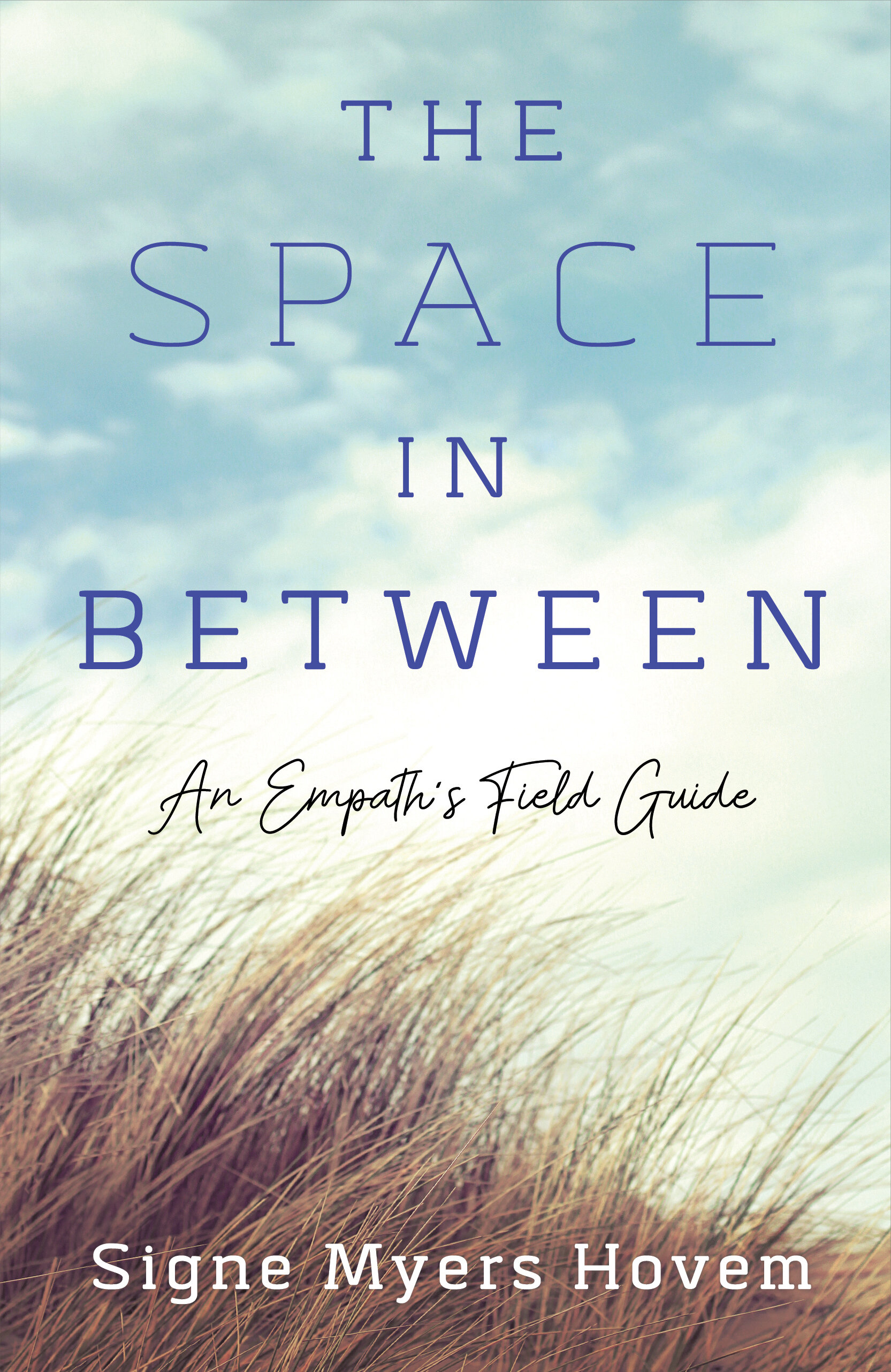
The Space in Between: An Empath’s Field Guide by Signe Myers Hovem

The-Space-in-Between-Signe-Myers.jpg

One of the blurbs offered for my book The Space in Between: An Empath’s Field Guide generously states that I “put words to the wordless,” which honestly, was the most gratifying praise I could have received. It also partly explains why it took me so long to write my book—nearly ten years of countless revisions, exploring how to articulate my intuitive sensory existence.

For many empathic persons the world can be confusing and isolating; particularly for those who are unaware that they receive extrasensory information from the environment and unwittingly accept what they feel as their own. Or for those who are aware that they are empathic, yet feel a disconnect due to a lack of definition and understanding of what that means within society. Most dictionaries, in fact, place the origin of “empath” in science fiction and fantasy, which hints at the difficulties people with such sensitivities and abilities face in communicating how they experience the world. 

How do you validate your sensory experiences of feeling emotions, thoughts, and physical discomfort of others when even the dictionary—the authority on language—only affords you an existence in science fiction or fantasy?

The effort of giving language, and thus form, to the nebulous-yet-visceral experiences of an empath undeniably challenged me. My intention throughout my writing process was to demystify the empathic experience for anyone, empath or not, and that meant I needed a way to let the reader into my world. The irony is not lost on me that “world building” is typically a task for fantasy and science fiction writers and not one for a nonfiction writer describing the physical world we all inhabit in the here and now. 

Hovem Cover.jpg

And there’s the rub; empathic or not, we don’t all inhabit the same view or perception of the world. Once I recognized that the dictionary’s definition of an empath revealed more about the collective mainstream beliefs and biases than what an empath was, beyond labeling it a paranormal ability, my book’s structure emerged, as did my sense of purpose. I would be a guide to the reader, supported by ancient Greek poet Pindar’s prompt, which has been my personal touchstone and is quoted in the early pages of my book: “Learn who you are and be such.”

How do we, as individuals, learn who we are? From an early age we are told who we are, or who we should be, by our family and our society. Though this telling may be more about safeguards than outright intentional suppression, this standardized approach to life influences the collective perception of what’s true and possible within human experience. Any person who envisions or experiences a contrary reality to the mainstream version will undoubtedly be pushed to question personal truths. At the very least, they will be challenged to be authentic in a world of conformity.

Self-awareness and acceptance are pivotal mindsets that, once embodied, open life up to self-actualization and authenticity. For an empath, that journey involves an evolutionary arc from being an overly sensitive person trying to survive in their environment by feeling separate, to becoming an engaged and functional empath who witnesses what’s out of balance and honors that connection. Along this arc is gaining the understanding that the physical world is an energetic expression. Intuition’s wheelhouse is the ability to sense the energetic realm, which is how an empath can sense others’ displaced and unprocessed emotions, thoughts and physical discomfort. 

Writing The Space in Between, I needed readers to grasp a unified sensory system that includes intuition—while removing the science fiction and fantasy bias. To build awareness of our relationship to the energetic world, I created field guides for five different landscapes: The Field of Reflection, The Field of Definition, The Field of Sensing, The Field of Experience and Awareness, and the Field of Mystery. Each of these fields provided me with insight and movement in my own journey toward a balanced perception of the world and my place in it as an empathic person, wired for extrasensory reception and connection. 

I hope readers, empath or not, will embrace the inherent wisdom offered by an empathic nature: the fundamental truth that we are sensory, energetic, creative, and multi-dimensional beings; and we are all connected.

The Space in Between: An Empath’s Field Guide offers questions for reflection at the end of each chapter, inviting the reader to understand their own sensitivities, their own capacity to care for themselves and others, and to embrace the larger conversation their sensory nature holds with the world and humanity. I hope they feel seen, heard and witnessed as I name and define my experience as an empath.

Buy on Amazon Kindle | Paperback | Bookshop.org
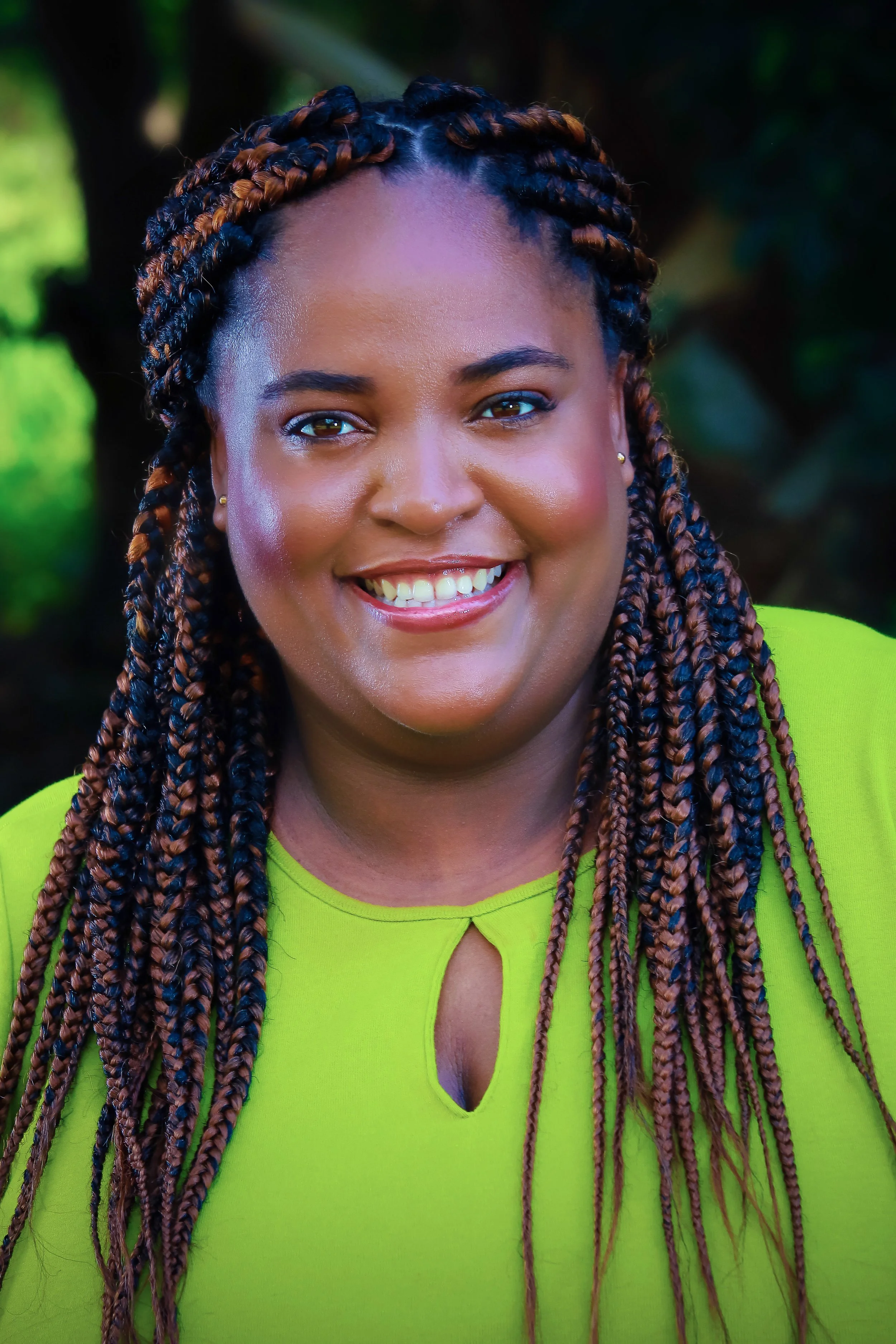
About the Author

Signe Myers Hovem is the author of The Space in Between: An Empaths Field Guide. She has created homes on five continents over twenty years, raised four uniquely sensitive children, pursued a special education lawsuit appealed to the US Supreme Court, volunteered in a hospice in Texas and an orphanage in Azerbaijan, worked as a spiritual counselor in Houston Texas, and taught workshops and trainings in the art of being an empath and the power of language in many countries around the world. She splits her time between Boulder, Colorado, and  Oslo, Norway. For more information, please visit https://www.smhovem.com 

Taking Chances and Finding Adventures in Midlife by Linda Jämsén

Author Photo (1).jpg

Do you ever feel that you are stuck in a rut, and wonder if there’s an alternative life waiting for you elsewhere that you need to catch up to? If so, you’re not alone. In 2017, 80% of Americans surveyed admitted they felt “stuck in a routine.” Although it can be frightening to move away from our comfort zones, my experience is that it can also be exhilarating. 

At age 41, I found myself at a crossroads when the birthday marriage proposal I had been expecting from my partner Hank didn’t happen. Broaching the subject of marriage and motherhood backfired in a big way, as Hank’s vision of the future was vastly different than mine. Devastated, I realized that if I stayed with him, our relationship would forever remain on his terms. While those “terms” weren’t disagreeable in the short term—he and I got along very well day-to-day—I knew it was only a matter of time before my frustration and disappointment reached the boiling point. I didn’t want to suppress those powerful emotions, only to have them emerge as angry regrets later. Even if I never found lasting love or had a child, staying with Hank and compromising my values surely sounded the death knell for my dreams

A confluence of events transpired to pave the way for my separation from Hank. After four years of part-time study, I completed the graduate management program at Radcliffe Seminars and was no longer geographically bound to Boston. I had also reached the end of the road professionally with my fundraising job and was already interviewing with other local nonprofits. Yet, while I went through the motions of looking for a new position, something kept nagging at me. Did I want to continue my life in a similar way as before, a kind of parallel one in which the view from my office changed slightly, as did the name of my boyfriend and street address? Wasn’t there something else I longed for?

Yes!

One look at the dust gathering on my Kawai grand piano was enough to convince me that I had been missing out. By becoming too focused on my job and furthering my education and career skills, I had neglected my piano playing and passion for music. Then there were all those faraway destinations I still longed to explore: Amsterdam, Turkey, Greece. I’d once been so ripe for adventure, so open to possibility. Had that part of me disappeared for good? For years, my pangs of wanderlust had been suppressed by Hank’s fear of flying, which ruled out overseas travel.

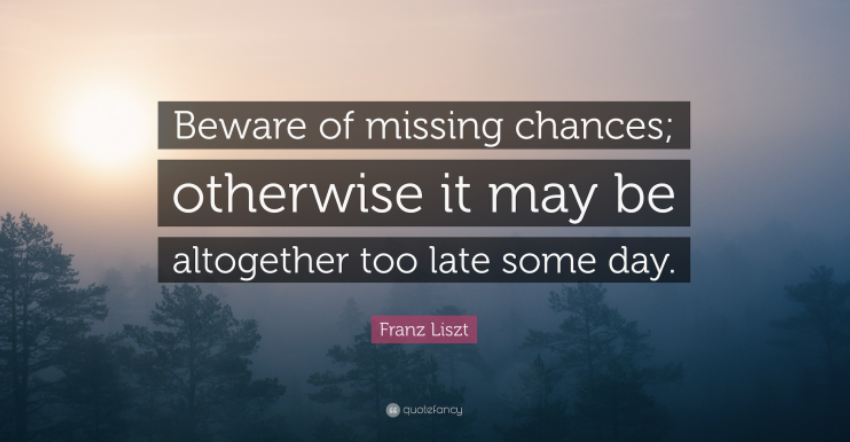
I recalled the quote by my musical idol, Hungarian composer-pianist Franz Liszt:  Beware of missing chances; otherwise, it may be altogether too late someday.” Missing changes … too late someday … Those sentiments resonated with me. Within six months, I broke up with Hank, left my job and career, and moved overseas to Budapest, land of Liszt. I’d finally decided to pay attention to that nagging feeling and make changes. By immersing myself in a new, exotic culture, I connected with the “old” me—the pianist, the romantic, the adventuress. I trained to become an English language teacher, volunteered at the Liszt Academy of Music, sang in a chorus, and traveled throughout Europe. After a few years, I met the love of my life, whose values clicked with mine, and am forever grateful I took a chance in my early forties.

I never looked back until I wrote about these experiences in Odyssey of Love: A Memoir of Seeking and Finding. If you accompany me on these adventures, I hope you will be inspired to begin advancing your longed-for goals. Don’t let your age or the wishes of others stop you. As one who took a leap of faith into an uncertain future and flourished, I know you can do it and am cheering you on!

Screenshot 2021-09-30 at 11.40.53.png