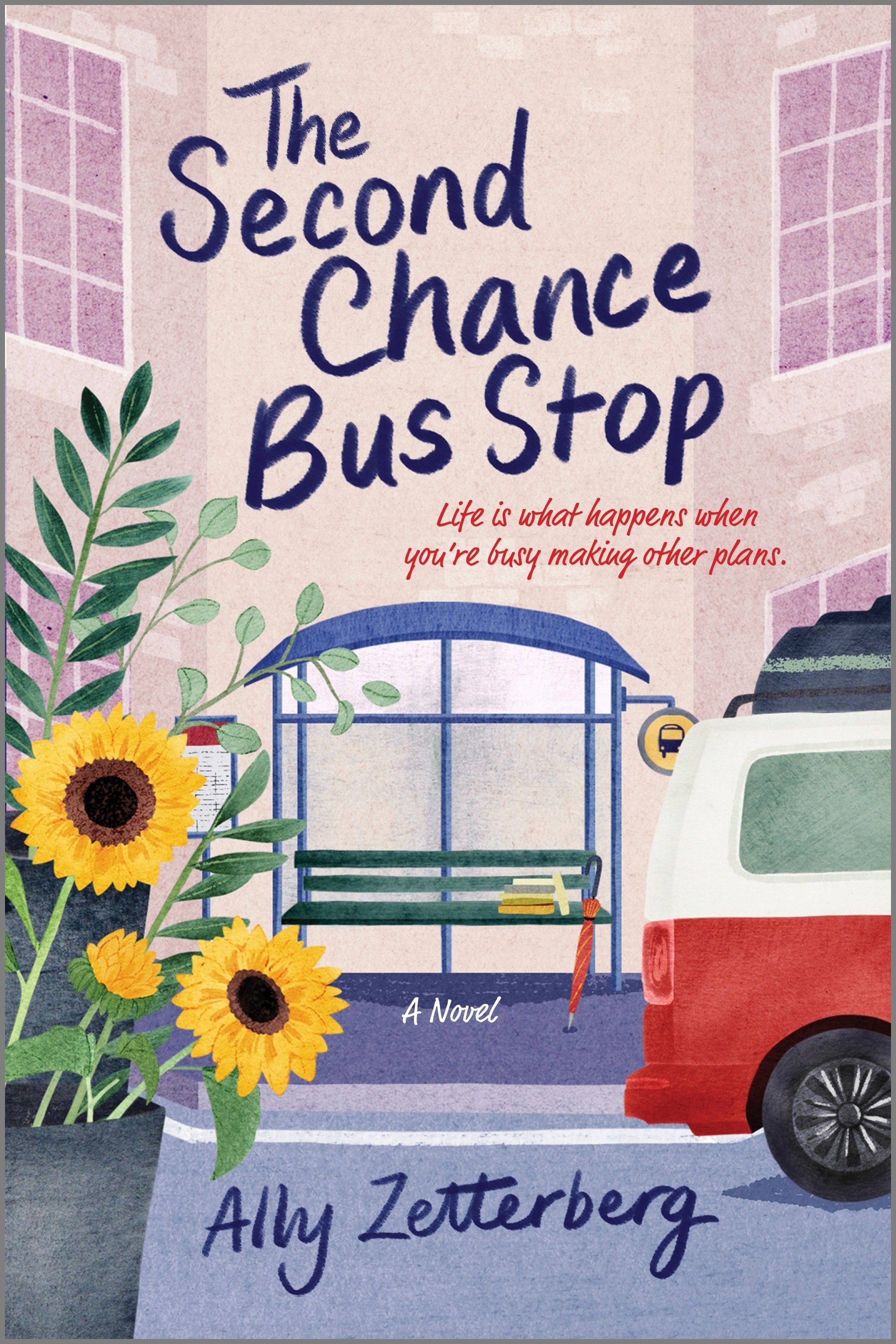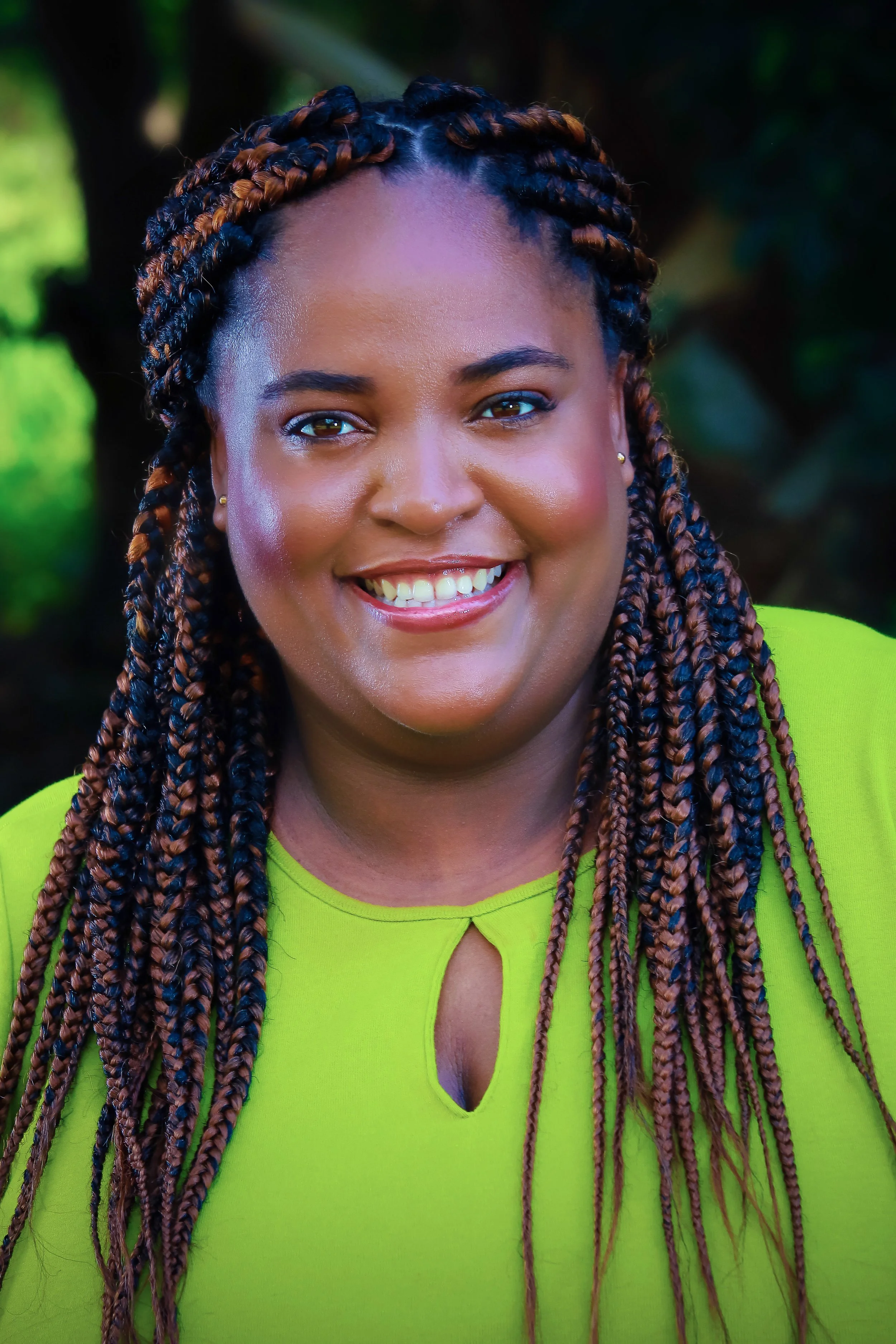
Spotlight: The Second Chance Bus Stop by Ally Zetterberg

For fans of Frederik Backman and Phaedra Patrick, a heartfelt and moving multiple POV tale that follows Sophia, who’s trying to save her favorite uncle’s flower shop; Blade, a devoted son looking for his mother’s long lost love; and Edith, who’s trying to hold on to her memories for as long as she can, from Ally Zetterberg, author of The Happiness Blueprint.

Edith has Alzheimer’s. The idea that she might someday forget her son, her life, even herself plagues her constantly. So there is something important she must do before the disease robs her of her memories: she has to find Sven, the love of her life whom she was supposed to meet on a bus stop bench twenty-seven years ago and run off with, but he never showed.

Her son, Blade, is struggling to keep an eye on her, to keep her safe. His mother’s full-time caregiver, he resents the fact, if he’s being honest, that he gave up his career and most of his life to look after her. But what wouldn’t he do for his mother? Track down her decades old flame so that she has a chance to finally understand why he never showed all those years ago, before her mind fails her? Sure, he can do that.

Sophia is desperately trying to keep her business afloat. Her uncle — her favorite person in the world — left his flower shop to her and her brothers after he died, but she seems to be the only one interested in keeping it; they would rather sell. But she can’t let that happen, can’t let the memory of him and the times they shared fade away. All she has to do is land a big job, big enough to show her family not only is the business worth saving but she’s the one to do it. So when an opportunity comes along that takes her all over Sweden, she can’t say no.

They say life is what happens when you’re busy making other plans. While Edith is desperately trying to hold on to her memories, she discovers friendship in a young woman who sits with her daily at the bus stop. While Blade is looking high and low all across Sweden for Sven, he learns to embrace his relationship with his mother more fully and see her for everything she is and is not. While Sophia is fighting to keep her uncle’s dream alive, she comes to terms with the way her parents treated her as a child, and the therapies forced upon her in response to her autism diagnosis. Life is happening all around them, and it’s a delight to watch these different stories unfold, to watch how their lives change, all while they were busy with something else. And much like with life, there’s so much good to be found in these pages.  

Excerpt

Prologue

I’m sitting on the kerb of a cobbled pavement, not far from the bus stop, feeling as old as I am: sixty-four. And I have felt like I was waiting for something my entire life. Even as a child I’d stare out the window, expecting something where there was nothing other than the cars lined against the road and the black bin bag on the ground, uncollected, because Mother had gotten the day muddled again. At first I thought it was a sign that things would fall into place and I could simply put my life on autopilot until they did. Perhaps it was a psycho- logical thing. Lately I’ve come to accept it’s more likely my mind playing tricks on me. Old age? Some kind of progressive disease? Who knows.

There is a breeze today on Hornton Street. I’ve counted thirty-one chewing gums on the ground, varying shades of dirt-marbled pink, grey and coal-black. People come and go, and I try to look for patterns. I always find patterns in every- thing, much like some people see the face of Baby Jesus or George Washington in potatoes. There have been four blonde ladies, so a brown-haired one must come soon. Or three men have walked past, so a child should be coming next. I’m try- ing to figure out after which sequence of passersby the one I’m waiting for will appear. And what he will say? I have been through it in my mind a hundred, a thousand—more than that—times.

‘Hello,’ he might say. Or, ‘I’ve missed you.’ Maybe, ‘So this is where you are.’

I’d like him to simply say, ‘You came.’ Smile wide. Or perhaps with a serious face.

Of course, I know he won’t say any of these things. People never say what you expect them to.

While I’m thinking, someone does come up to me. It’s a gentleman who works at Whole Foods on Kensington High Street.

‘How are you today?’ He hands me a five-pound note and walks on before I have time to answer the question or ob- ject to the note now nestled in my hand. I’m not broke. I’m broken-hearted.

Only two more hours until home-time now, when I board the bus and head back to the warmth of my house where my son will lecture me until he decides it’s no use and gives up. I ate the plate of lasagne he’d left me before I headed out this morning (it was a better breakfast than the lamb stew we had last week), moved my crossword to a new place and left a half-drunk cup of tea on the living room table. I even pulled off and f lushed half a metre of toilet paper down the loo. Extreme? Trust my son to notice any little trace I leave behind. Like this, for all he knows, I’ve had a productive day at home, eaten my lunch and had a bowel movement. As long as I’m back before he comes through the door I’ll be fine.

I glance at my watch. It’s 15.14, on 8 June, 2023. I’ve been waiting twenty-seven years.

Sophia

Svedala

When you kiss someone, as many as eighty million bacteria are transferred between mouths. This is for a ten-second kiss. Don’t get me started on those long, slobby affairs that happen in, say, backs of cabs or on doorsteps after a fourth date. But waitit gets worse. Couples who kiss more than nine times a day (first of all, who are these people? Do they not have to work? Or like, eat?) actually share communities of bacteria. So you don’t just share a home, you also share a saliva community. Which is, to cite my teenage self, GROSS.

It’s all I can think of as the perfectly handsome man in front of me who’s just treated me to dinner and half a bottle of wine leans in and tries to slide his tongue between my lips. I press them firmly shut. Because, well, bacterial transfer. He kind of moves to the side to see if there’s an opening there, and I’m forced to twitch my face to withhold. He gives up, draws back and looks at me.

His name is Ed, and he has brown eyes and hair that kind of shines without any hair product. He likes travelling and cars, works for a digital creator brand and wouldn’t mind settling down with the right woman. He seemed great; I was even willing to overlook his very clear You don’t seem Autistic at all greeting. On paper he looks good for me, a twenty-five-year- old woman who has blue eyes and hair like unruly yellow straw, is taller than most men, owns her own f lorist shop and wouldn’t mind having her first boyfriend right about now. Or yesterday. In fact, I’ve been trying for God knows how long to have my first boyfriend. But looking good on paper doesn’t always translate to real life.

‘Are you okay?’ he asks, shifting his weight back and forth as if he needs a wee.

‘I am okay.’ Roof over my head, no ongoing war or con- f lict threatening my livelihood, and I just ate a bowl of pasta. Sure, I very much wish I had one and a half million kroners to buy my brothers out of my f lower shop so that it was mine alone, but I can’t claim to not be okay. I’d call my cur- rent mental state slightly unhappy, but then lots of people go through their whole lives that way. My mother’s words come to me: When there are those worse off, we don’t complain. Sure, there are those worse off—some single ladies may not yet have discovered the Le Wand 3.0 vibrator.

‘We had a good date just now. And the one before.’ He starts to recap our dating history. Which, although brief, has shown great promise. He has only a few annoying habits, chews with his mouth closed and, as opposed to the man I dated previ- ously who I spotted in the town centre wearing socks and crocs and thus immediately cancelled, wears sneakers.

‘Yes.’ It’s true. I’ve enjoyed getting to know him. I may have even fantasised about pushing my body against his, feel- ing my chest stop heaving for a moment, grabbing his hand and placing it somewhere I’m practically aching to be touched and—‘But somehow you’re not that into me . . . ?’

‘That’s not it, Ed.’

I realise I have to give a reason. And that when I do, this will be over. Much like my teenage years when I would sneak back into my parents’ house even before curfew, tonight I’ll go back to my f lat still unkissed. I don’t like labels. Like Autistic or control freak. Anxious. Eating disorder. OCD. Those types of things. Somehow I collected these kinds of labels throughout childhood the way others collected Brownie badges. Hence I’ve made it my mission to appear as normal as I can to avoid accumulating more of them in adulthood.

So here I am. With the chance to get rid of one of my most stubborn labels: unkissed. It’s meant to be good, isn’t it? Otherwise people wouldn’t brave the bacteria. The eighty mil- lion of them. An army. An invasion. Foreign bodies in my body. Well  okay, I wouldn’t necessarily mind that last one. Can we skip straight to it?

Ed leans in again, and I finally blurt it out, ending any pros- pects of Ed and Sophia ever creating a bacterial community or any other form of community.

‘I’m sorry. I can’t do this.’

‘It’s okay, we can take it slow. Just kissing.’ He leans in again, completely unaware of, and not intending to find out, what it is I can’t do. I put my hand on his chest, and it drums against my palm. I don’t like it. It feels too excited—like a dog’s tail wagging. Drumdrumdrum.

‘I don’t kiss. I thought I could, but it turns out I can’t. I wrote it in one of my messages to you?’

He looks genuinely confused.

‘I thought that was some pun or turn-on technique. Hot girl wants to skip foreplay? Any guy is all in and down with that.’

Great. Remind me to add it to The Autistic’s Guide to Life’s chapter on getting the attention of a man: How to make your quirk work and really turn them on.

‘Well, no, it’s an actual no to kissing.’ We stare at each other for an awkward minute, as if we’re children checking who will blink first. I think about placing a hand on his body but am not sure where I’d put it. I leave my arms hanging by my side. He attempts a joke.

‘Sure you’re not some kind of a prostitute?’

It’s not a funny one, so I don’t reply. He shifts uncomfort- ably on the spot.

‘The no kissing. You know, Pretty Woman? I thought that’s what working girls do to not get attached.’

‘Ed, I am trying very hard to get attached. However, I do not wish to attach my lips to yours. That is the point I am desperately trying to make here. All other body parts would be okay to attach.’

‘Gotcha. Erm, listen. I’m all for attaching stuff and all, but . . . we may have different goals here.’

I want to argue that no, we do not have different goals (we both want a relationship) but rather different paths and ideas about how to achieve them (no lips versus lots of lips). But then I think of all the inspirational quotes I’ve ever been fed that say things like Enjoy the Journey. I think how others are usually uninterested in my different-looking journey. And it’s clear Ed won’t be coming along with me on my journey.

‘I’m going to go now,’ I say. ‘Thank you for the dinner, the wine and the ice cream.’

I am about to turn around and leave him there when I have second thoughts. Kissing is essential for getting attached. I can’t meet someone and get them to like me without that part of the deal. I pep-talk myself. If this is what you need to do, then go and bloody do it, Sophia, I hear my uncle’s voice saying. I’m fairly sure he wasn’t talking about kissing men named Ed, but I think his words apply in this scenario too. I have tried a lot of things in order to advance my life, to become a happier, more fulfilled version of myself. The one thing I’ve failed to try so far is a relationship. And I’m convinced that it’s the answer to this nagging feeling of not quite having it all. It must be.

So I decide to try. At least once. I’m twenty-five and get- ting a little antsy, not for love and marriage and cute babies and getting to romanticise sleep deprivation. But for someone to like, hold and do those things with. I will look up how long bacteria live, and I will survive it. There’s always mouthwash. I have it at home. Perhaps if I do it once he will be satisfied, and we won’t have to do it again. Okay. Ready.

I lean towards him, and that’s all the encouragement he needs. Excited to have changed my mind, to have converted me, he puts his hand behind my head intertwining my long hair with his fingers, and I can sense all my follicles protesting. Then he ravishes my mouth. Devours it. Heads into battle, bending open my defence and rushing his army of bacteria in via a wave of saliva. He tugs at my bottom lip, and I stiffen. It’s wet and horrid, and my brain can’t anticipate where his tongue will move next so every touch is a bloody horrendous surprise. A shock to my nervous system and a complete sensory over- load. And there are so many tastes. A hint of fresh mint. Deep tones of arabica coffee.

It’s awful.

And in that moment I promise myself to never kiss anyone again.

This is the first and last time.

I’m Sophia, collector of labels, and my most recent one is Single—Unhappily—for Bloody Life.

Buy on Amazon | Bookshop.org
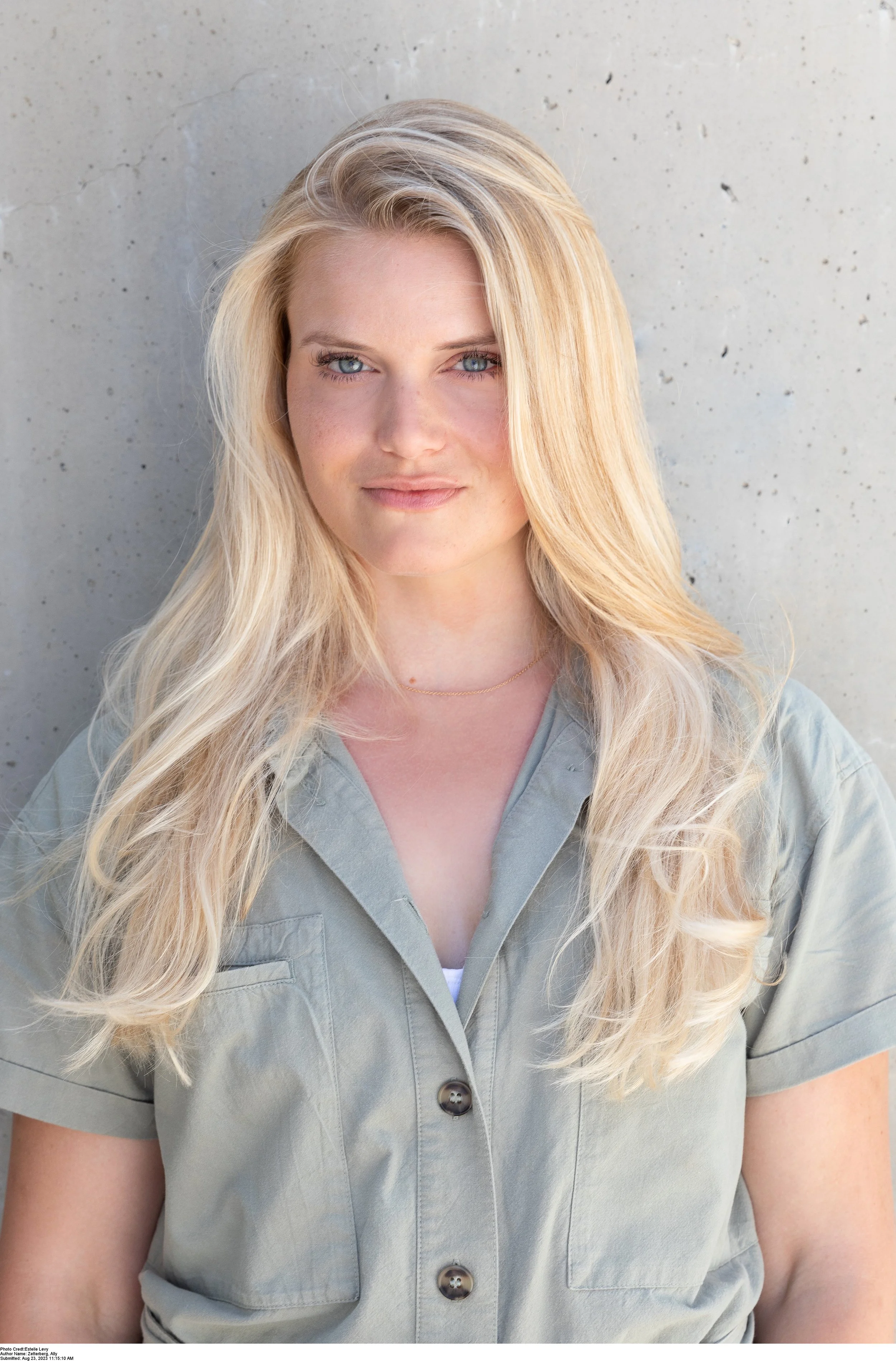
About the Author

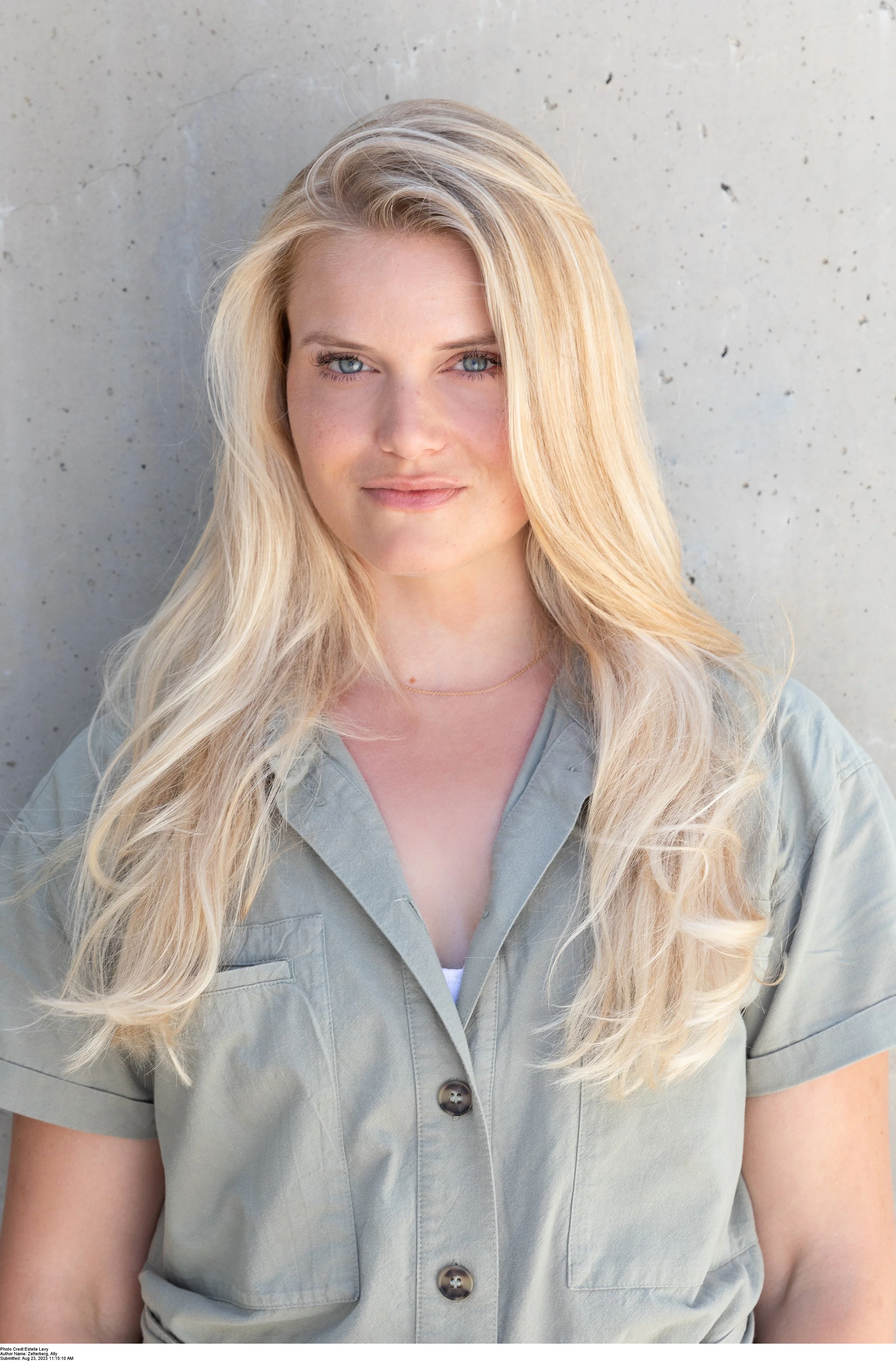
Ally Zetterberg is a British-Swedish writer. She spent ten years working internationally as a fashion model before becoming a full-time mum. Being neurodivergent herself and the mother of a child with Type 1 Diabetes, she is passionate about writing relatable characters and representing those living with medical conditions in commercial fiction. She speaks four languages and spends her days doing her best not to muddle them up.

Connect:

Author website: https://www.allyzetterberg.com/

Twitter: @AllyZetterberg

Instagram: @allyzetterbergauthor
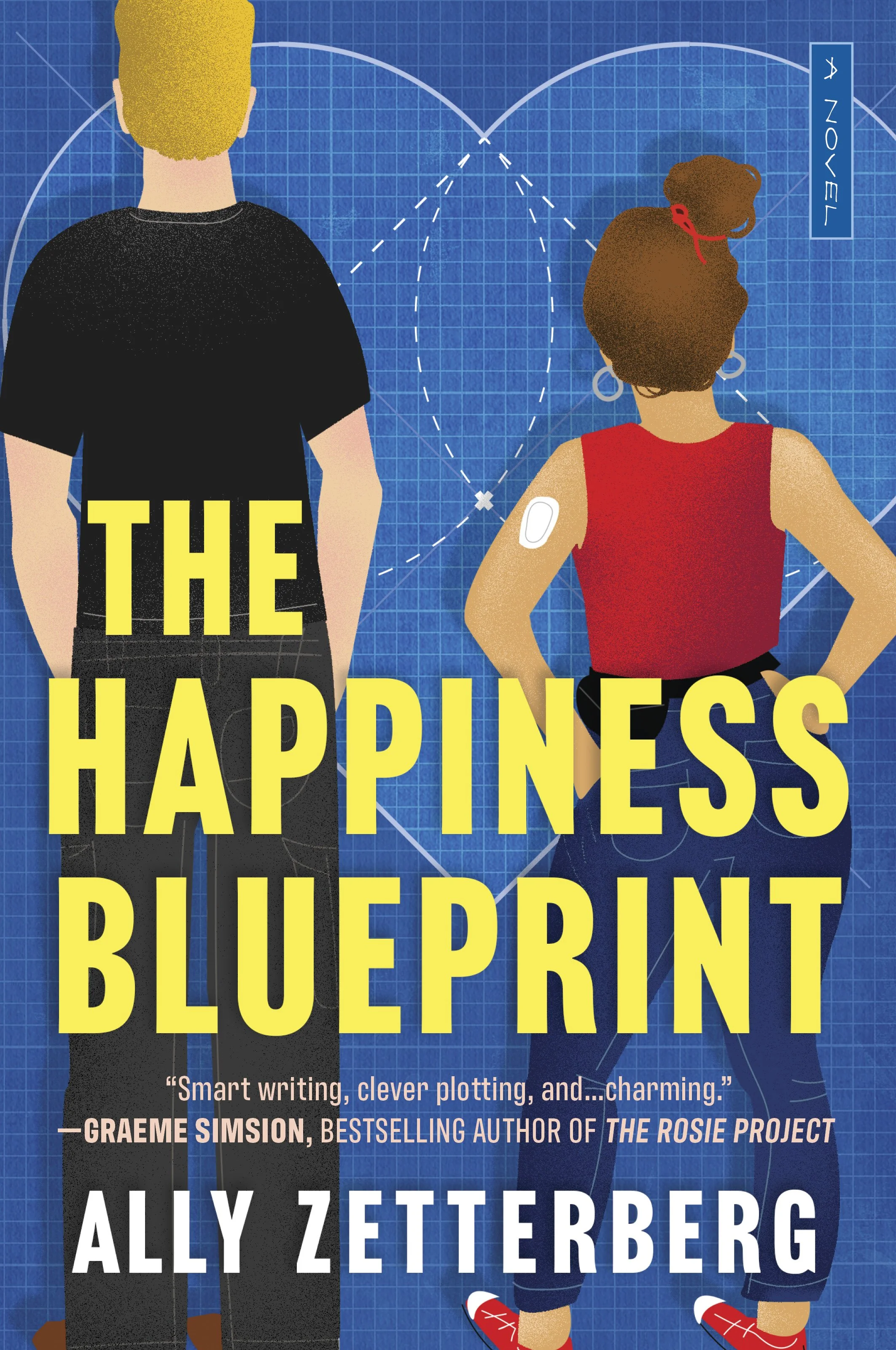
Spotlight: The Happiness Blueprint by Ally Zetterberg

Klara and Alex are having trouble connecting, but at least their calendars are in sync.

Klara—who’s always thought of herself as a little different, a sneaker in a world full of kitten heels and polished boots—is feeling a disconnect these days. She has type 1 diabetes, currently works in a dead-end job, and is in desperate need of a change. When her dad falls ill, Klara begrudgingly agrees to help run his small construction company while he recovers, even though it means moving back home and pushing the boundaries of her comfort zone to the extreme.

Alex has been a shell of himself since his brother died in an accident. He’s unemployed, has bills piling up, and is distant from friends and family. His therapist is encouraging him to keep things manageable by setting up a calendar, checking off tasks each day, and looking for work to help get him back on his feet. When an ad pops up for a carpenter position at a small construction company, he jumps at the chance to take a step forward.

Klara's and Alex’s stories unfold through a series of miscommunications in this clever and witty novel from debut author Ally Zetterberg that’s about finding acceptance and even love in unexpected places.

Excerpt

KLARA

Google: How do I run a construction company?

Sibling pairs are a bit like shoes from a lost and found. You put your hand in and can only hope to get two that match, knowing that two shoes are still better than one—at least you don’t have to walk around with one foot bare. In my parents’ case they won themselves a dust-covered Converse, perfectly functional and sturdy, and matched it with a glossy kitten heel that likes to look down at the flat sneaker.

I, the sneaker, speak.

“I have commitments, too!” I say, trying my best to sound as important as my sister, pretty sure I’m failing. I’ve said this exact sentence several times in the past twenty minutes, trying hard to be the winner of the Zoom tug-of-war, the holder of prime position and the central big square overshadowing the small ones. The current leader board has my sister, Saga, at the top followed by our mum as a close second.

“I have plans,” I say again, for a brief moment flitting onto the screen. Well, it is true. At least if Tuesday drinks and defrosting the freezer count. I can feel my blood pressure—actually, it’s more likely my blood sugarrising. Stay focused, Klara.

“It’s a family emergency,” Mum chips in yet again. Thanks for stating the obvious. As if we didn’t know that already.

I decide to revert to the technique when you go back to the beginning of the conversation, repeating it all, hoping you have magically missed the solution and that it will make itself known—loud and clear—the second time round.

“How long would his treatment be, again?” I ask, even though I know full well the details, having joined the oncology team at Dad’s appointment via FaceTime earlier that day. Three months. Dad is lucky. Just one surgery and then a course of innovative localized radiation to beat what is considered stage 1 of prostate cancer. He caught it early and will most likely be okay. I’m not too worried about Dad. Cancer is a poignant, scary word, but 1 is a harmless number, thin and unassuming. At the end of the call, we were asked if we had any questions, and I would have had plenty, but now I had a 1 and didn’t need any other explanation. I haven’t even googled it.

Saga doesn’t bother to repeat why she can’t do the job, which surprises me. She usually misses no chance to talk about her important academic career at a highly esteemed international university and just generally, you know, her full and perfect life. Got to have that work–life balance, Klara!

Right now, I’d settle for just having a life. Never mind a balanced one.

“I’m really sorry I can’t be there to support Dad myself. There’s just so much going on.” My sister’s face is filling the Zoom square to the point where it has no background. Now if that’s not a telling picture of Saga, Queen of Filling Up Every Room She Enters. Me, me, me.

“It’s only a few months. Think of it as a long holiday—you will even get paid! Really, it’s an opportunity.” I ponder this. Sweden is in no way my preferred holiday location. But a salary from my dad’s company would be an increase compared to what I currently earn. Nothing.

“Say I agree, I’m not saying I do, but if, how would I even do it? You need qualifications and skills to do that type of job,” I say.

At first, we had been so relieved to learn Dad’s good prognosis that we had forgotten everything else. Then Saga had pointed out the company. This tiny little inconvenience in rural Sweden with three employees that somehow needed to stay afloat while Dad was focusing on his health.

“Darling, you already work in property!” Mum says, before turning to loudly sip a lurid green smoothie. I can’t help but think that if this had happened five years ago, before The Divorce, we wouldn’t be having this discussion as she would still be there. Not in a Marbella condo with a widower named Inge who she met at her church choir. I push the thought away. It’s not Mum’s fault. If Dad doesn’t resent her, then neither should I.

“I work for a website that sells them. I don’t demolish, construct, or tile their bathrooms!” I mean, what does Dad even do? Definitely not something I have expertise in. Which is technical-support chatting (“No, you can’t place the properties in your online basket, Susan. You must call the listed agent for a viewing.”). Mostly I do nothing that remotely touches on property. Think of me as a helpful bot.

“Please, Klara. Someone has to do it. We need your answer soon,” Saga says. Oh no, not that line. Translation: you’ve got to do it, you are the little one, and I may have some shared responsibility, but in the end it’s on you, little sister. Like when we were kids and messed up the living room building a fort or a shop and the time came for tidying up. Someone has to do it, Klara. If my sister ever happened to commit murder, I bet you it would be my job to dispose of the body, due solely to my genetic link to her and our birth order.

“Let me see if I can make some arrangements,” I mutter.

“I didn’t want to say this, but… I thought you were on a break from work right now?” I can hear my sister’s smug smile even though her blurry screen prevents me from actually seeing it. She is well aware that people have breaks from relationships—not jobs. If it’s the latter, then it’s simply called unemployment. Or disciplinary suspension. Let’s not get into that, shall we.

“Wouldn’t it be nice to connect with old friends?” Mum attempts.

What friends? I think. The ones I had a decade ago have inevitably moved on and away. If I were an old lady, we would now have the sort of relationship that is marked only by the exchange of Christmas cards. Except I’m not, so there aren’t even the holiday greetings. If I were braver and funnier, even a faint shadow of my sister, I would have seen this coming and averted it by recruiting new friends. But this would have required actually socializing, going places with a frequency I’m not adapted to (I need rest days from socializing the way others do from the gym) and the ability to keep a conversation going without the help of alcohol.

I currently have a grand total of one friend: Alice, who is my housemate and who says hilarious things like “Yay, I got booked for a hand job!” (She has a side gig as a hand-and-foot model.) Mum and Saga both know this.

“Listen, I know it’s not what you want, although I’m not entirely sure what you actually do want. But quite frankly, it’s time that you pulled your weight.”

I look down at my waist before I realize that she is not talking about my BMI.

Then my nephew Harry—Saga’s primary excuse for dodging the Sweden bullet—starts howling like a wolf in the background, hitting a key only a toddler can master. The noise! Quickly, I make up my mind. “Okay, then.” The Harry siren goes off again.

“Right, that’s my cue to leave the call!” my sister shouts in a key only a mum can master. I swear parents teach their children to become a distraction at exactly the right time. It’s not fair that they all have an excuse to leave a boring Zoom call while the rest of us have to stay put and listen to the end.

“Fine. But you help out with what you can from over there. That’s the deal.” I insist on calling my sister’s new homeland by anything but its proper name. I’m well aware that it is childish behavior coming from an adult, however much she misses her sibling.

“Of course. Bye, then. Lifesaver!” Saga leaves the call.

The doctors will be saving Dad’s life, not me, I want to argue. But then I think of the convention to liken unpleasantness with death and consider the fact that it is perhaps Saga I have saved from Sweden.

“Mum?” No reply. She must have hit a button or lost connection. Her screen is empty. I’m left staring at just myself in the Zoom square, a sad sight of disheveled dark locks and eyebrows in a discontented frown. Finally occupying the prime position.

I toy with the idea of calling them both back up and demanding their attention. You and I need a word, I would say with authority. Well, literally just one word. No. But I do just that: think it, and nothing more.

Scheibe,” I say to screen me. One of the few words I’ve picked up from my sister and kept handy in my vocabulary. Unfortunately, I feel like I’ve had to use it almost daily during my twenty-six years in this world.

I guess I’m heading home to run my dad’s company. Great.

ALEX

Move between neighborhoods like I’m haunting them. Left too early for my appointment, and when I realized, I just kept walking. Possibly in circles, as I seem to be seeing a lot of very similar hip coffee shops. Notice after a while that I’m avoiding the bustling Möllevångstorget and its bronze monument named The Glory of Work. Lately, I’ve taken its presence as a personal insult.

It’s fucking freezing, and I curl my fingers into my hand, shielding them within my fist. The coat sleeves just about reach down and stop any icy wind from getting to them. Don’t mind being cold: reminds me I’m still capable of feeling things.

It’s 4:00 p.m. when I finally walk into the Malmö Psychotherapy Center. Dr. Hadid is wearing a bright blue headscarf with a flower pattern when I enter her room. It does brighten my mood ever so slightly; I much prefer medical professionals who are relaxed and colorful as opposed to the GP uniform of shirt, smart trousers, and loafers in shades of beige. Find myself counting the small delicate flowers on her head. Math is a good distraction and one of the things I still enjoy. Aware it may not be the coolest hobby for a twenty-nine-year-old. I get to sixteen before she interrupts me.

“How have you been doing, Alex?” she asks.

“Okay, I guess.”

“Did you do anything this weekend? Do you want to tell me a bit about your past week?”

Not really, but it’s a rhetorical question. They all are, and the whole purpose of me being here is to answer them, so obviously I speak. There seem to be a lot of rhetorical questions to answer when your brother dies.

“I went to my uncle’s funeral. What else? Had pizza five times. Capricciosa with added jalapeños. Aren’t jalapeños just the best spice ever? A little bit naughty, like telling-a-dirty-joke naughty, but not so full-on that you have to cover your ears. They challenge you, but don’t tip you over the edge. I like that in them.”

The corners of Dr. Hadid’s mouth move upward.

“The bin collection on our street seems to have moved to 5:00 a.m. I’m thinking about giving the company a call to complain.”

“Have you tried the earplugs we talked about?”

“I find that then my thoughts get louder, if that makes sense? I prefer to listen to the garbage truck than to my mind.” There is a flower on the windowsill; I wonder who waters it on weekends and am just about to ask when Dr. Hadid addresses me.

“I think it’s time to start making some plans. It’s been six months since Calle died and four since I started seeing you. You’re ready. It would give you structure and take the focus off the unhelpful thoughts.”

Notice that she’s using my brother’s nickname. Maybe she thinks she can get through to me, appear more familiar, if she doesn’t call him Carl.

“Plans? Like coffee with a friend?” That may be hard since my friends have taken a back seat recently. Somehow, me in sweatpants better suited for the laundry basket and holding a pizza box and a bag of chips isn’t their ideal Friday night. Or any other night of the week, for that matter. We talk around that for a while, and a possible route out of the idle existence of Netflix and Nil (the latter referring to my current account balance).

“Let’s start by entering to-dos into your calendar. I’ve seen success with this approach before. Do you have an iPhone?”

I shrug and nod simultaneously.

“Great. So you set yourself a challenge of entering three tasks per day. They can be simple, such as doing the dishes, going for a walk, or updating your CV. The important thing is that you set the intention—add it to the calendar—and then complete the task. How does that sound?”

“That’s fine, I guess.” Brush your teeth, do some reading, make the bed. Sounds like a to-do list for children. Next, she’ll be handing me a star-sticker reward chart. Got to take recovery seriously, though, so tell myself off for trivializing the very qualified professional’s advice.

Dr. Hadid is unaware of my thoughts and proceeds to write up notes on her screen.

“Good. We will move appointments from weekly to monthly, but please call me if you feel you need one sooner. My door is always open.” This makes me smile. If there is one thing a therapist’s door always is, it’s firmly closed. To guard the consultation room from the waiting room. I have one last question. An important one.

“What about the car and the ring?” I fiddle with the ill-fitting metal around my finger, sliding it up and down, my thoughts turning to something else through the motion, embarrassing, completely involuntary.

“I suggest keep them for now. One step at a time. I don’t see any harm in those two tokens if they give you comfort.”

We finish up with small talk about her daughter who is backpacking in Asia and how it gets dark already at 5:00 p.m. in Malmö this month, and then I enter the same way I came.

There are twenty-seven flowers on her headscarf.

Excerpted from The Happiness Blueprint by Ally Zetterberg. Copyright © 2024 by Ally Zetterberg Literary Ltd. Published by arrangement with Harlequin Books S.A.

Buy on Amazon Kindle | Audible | Paperback | Bookshop.org

About the Author

Ally Zetterberg is a British-Swedish writer. She spent ten years working internationally as a fashion model before becoming a full-time mum. Being neurodivergent herself and the mother of a child with Type 1 Diabetes, she is passionate about writing relatable characters and representing those living with medical conditions in commercial fiction. She speaks four languages and spends her days doing her best not to muddle them up.

Connect:

Author website: https://www.allyzetterberg.com/

Twitter: @allyzetterbergauthor
Instagram: @allyzetterbergauthor