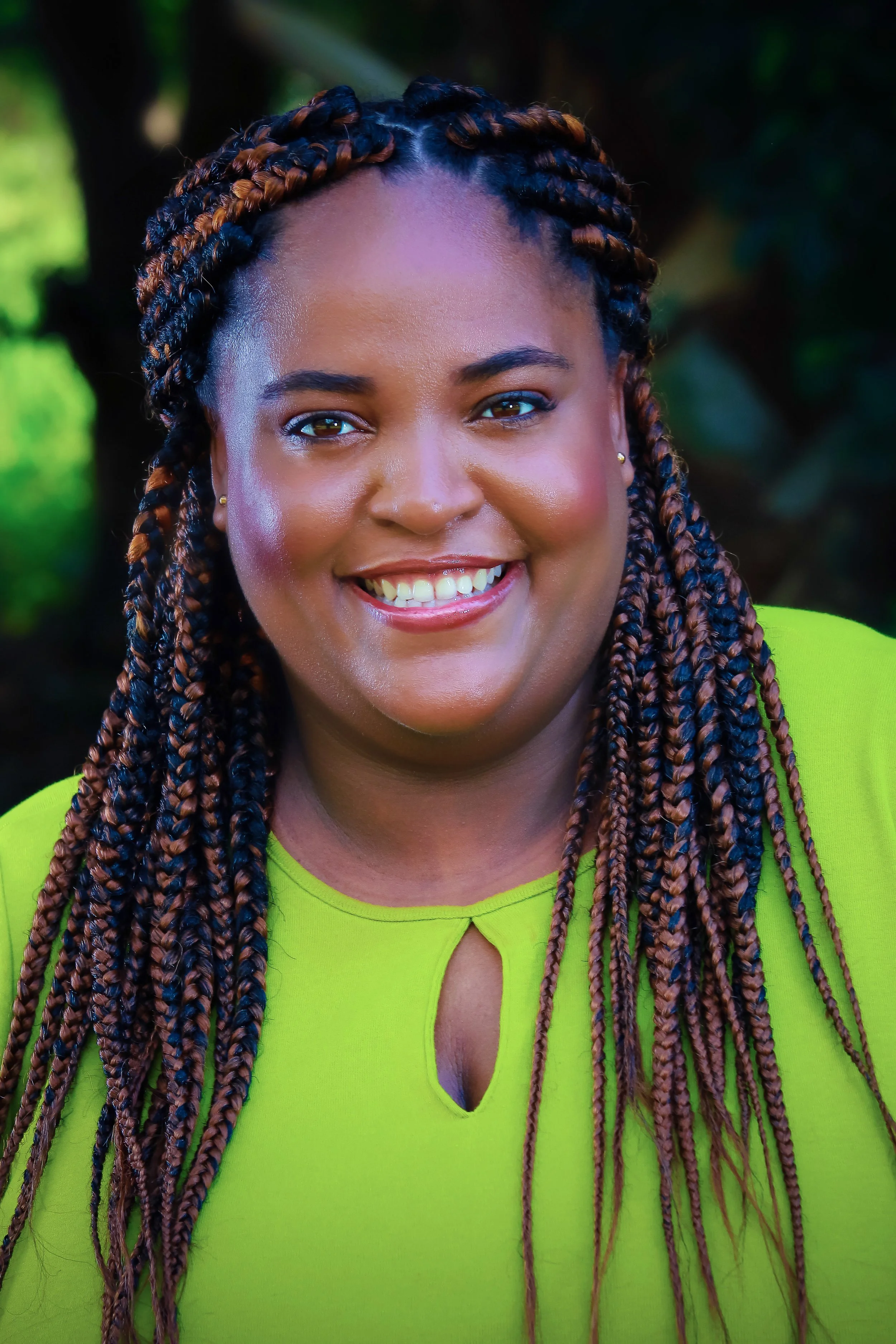
Spotlight: Grave Birds by Dana Elmendorf

Publication Date: July 1, 2025

Publisher: Harlequin Trade Publishing / MIRA

Grave birds haunt the cemeteries of Hawthorne, South Carolina, where Spanish moss drips from the trees and Southern charm hides ugly lies. Hollis Sutherland never knew these unique birds existed, not until she died and was brought back to life. The ghostly birds are manifestations of the dead’s unfinished business, and they know Hollis and her uncanny gift can set them free.

When a mysterious bachelor wanders into the small town, bizarre events begin to plague its wealthiest citizens—blood drips from dogwood blossoms, flocks of birds crash into houses, fire tornadoes descend from the sky. Hollis knows these are the omens her grandfather warned about, announcing the devil’s return. But despite Cain Landry’s eerie presence and the plague that has followed him, his handsome face and wicked charm win over the townsfolk. Even Hollis falls under his spell as they grow closer.

That is, until lies about the town’s past start to surface. The grave birds begin to show Hollis the dead’s ugly deeds from some twenty-five years ago and the horrible things people did to gain their wealth. Hollis can’t decide if Cain is some immortal hand of God, there to expose their sins, or if he’s a devil there to ruin them all. Either way, she’s determined to save her town and the people in it, whatever it takes.

Excerpt

PROLOGUE

Sometimes the dead have unfinished business. “You see it, don’t you, Hollis?” Mr. Royce Gentry’s deep, rumbling voice stamped the air with white puffs. He squatted

low next to my chair and nodded toward my grandaddy’s grave where his coffin was being lowered into the ground. The men, Grandaddy’s dearest friends, slowly filled in the dirt, one mournful shovelful at a time.

Cold frosted the morning dew into a thin white crust that covered the grass. There, off to the side, was a little bluebird, tethered to the earth by an invisible thread. It twittered a helpless, frantic sound as it desperately flapped, struggling to get loose. Delicate and transparent, it looked as if it was made of colored air. Muted, so the hues didn’t quite punch through. It was a pitiful sight, the poor thing trying so hard to get back up in the sky.

A ghost bird, I had first thought when I saw it. Until I looked around and found there were many, many more in the cemetery. 

It was a grave bird.

I swallowed hard and pretended I didn’t know what Mr. Gentry was talking about. “No, sir. I don’t see nothing,” I said as I continued to stare at the phantom.

He gave me a scrutinizing look. He saw the lie in my eyes. But he let it go, for the now anyways.

I was only eleven; I didn’t want to admit I was different. But I knew I was whether I liked it or not and would always be.

I had never so much as uttered a hello to Mr. Gentry until five days before. He’s the one who pulled me from the freezing river and brought me back to life. Not by means of magic or a miracle, but with science: medical resuscitation for thirty-two minutes.

But a miracle happened all the same.

The adults stood around my grandaddy’s grave, murmuring their condolences to my granny and my momma. It was that awkward moment after a funeral is finished where everyone seemed lost about what to do next, but we all knew we were going back to Granny’s house to a slew of casseroles and desserts that would barely get eaten. Two of my distant cousins, bored from the bother of my grandfather dying, kicked around a fallen pine cone over an even more distant relative’s nearby grave. Mrs. Yancey, our neighbor up the road, had just taken my twin brothers home since they were squalling something terrible, confused as to why we would trap Granddaddy in the ground. I watched as Mr. Gentry talked closely to Mrs. Belmont’s son, who was visiting from New York City, but his flirting, normally an immersed habit, was on autopilot as he watched me watching the grave bird. Could Mr. Gentry see it, too?

Mr. Gentry was a Southern gentleman, who put a great deal of care into perfecting the standard. His suits were custom-made from a tailor in Charleston, who drove up just to measure him, then hand-delivered the pieces when they were finished. It didn’t matter your standing in society, Mr. Gentry treated the most common among us as his equal.

He lived a lush lifestyle, filled with grand parties attended by foreign dignitaries, congressmen and anyone powerful he could gain favor with. Several times a year he traveled across Europe, something his job as a foreign consultant required of him. His friends, just as colorful as him, lived life to the fullest. A dedicated husband once, until his wife found interest in someone half her age. His two grown daughters, who didn’t respect his choice in who to love, eventually wanted nothing to do with him. I think it left a big hole in his heart and what drew him to help our family out.

In the weeks after the funeral, Mr. Gentry began to fill the empty space in our lives where Grandaddy once stood. It started with an offer to cover the funeral costs, a gesture my granny refused at first, but it was money we didn’t have and desperately needed. Then it was the crooked porch he insisted on fixing. Rolled up his starched white sleeves and did it himself, like hard labor was something he was used to doing. The henhouse fence got mended next. A tire on the tractor that hadn’t run in a year was replaced. Then our bellies grew accustomed to feeling full on fine meals he swore were simply leftovers from his latest dinner party. They were going to be tossed, and we were doing him a favor by taking them off his hands. Beef Wellington, with its buttery crust and tender meat center, so savory I’d melt in my chair from the sheer bliss of a single bite. It felt sacrilegious to eat lobster bisque from Granny’s cracked crockery, but that didn’t stop me from slurping up every last creamy bite. And nothing yanked me out of the bed faster than the sweet buttermilk and vanilla scent of beignets. If a stomach could smile, I’m sure mine did. And often, whenever Mr. Gentry needed his fridge clear.

There’s a bond that comes with somebody saving your life. Our friendship became something built on the purest of love. Where he had stepped into my life and filled the important role my grandaddy had once represented, I helped him heal the ache from being denied the chance to be a loving father.

A few months after my grandfather was put in the ground, Uncle Royce—who he eventually became—took me back out to the church’s cemetery. He sat me down on the graveyard bench, a place you go when you want to sit a spell with the dead. The mound of dirt from my grandfather’s grave had rounded from the heavy rain, slowly melting back into the earth.

He told me what I already knew, that I would be different now after the accident. He knew because the same thing had happened to him.

“You and I share something special,” Uncle Royce started his story. We were two people who had been clinically dead then brought back to life. Lazarus syndrome he said they called it. Only months ago for me. Near forty years for him.

He had died for twelve minutes. Knocked plum out of his shoes when a car hit him at twenty-two years old. He says he stood over himself, barefoot, watching them work on his body. He thought he was going to ascend into the bright light but instead was sucked back into his body and woke up a few days later in the hospital.

A chill shivered up my spine: it was almost exactly what I had experienced.

I had felt myself float up and away from the river; I was no longer cold and wet. Sad or scared. An aura of peace enveloped me—or rather became me.

It had seemed like I hovered there forever in that state of infinite understanding. A warmth emanated from above, a light formed from all that came before me.

From the bright light my grandfather’s voice reached out. His gentle words, simply known and not heard, urged me to go back. It wasn’t my time yet. My place was still at home.

In a swooping rush, I was vacuumed back inside myself. I spat up a gush of water. My lungs burned. My body was freezing cold again. And Mr. Gentry was smiling down on me saying, “That a girl. Get it all out.” Far off down the road an ambulance cried that it was coming.

“You know what I think they are?” Uncle Royce said now, pointing to all the birds who were trapped, defeated, most of the color leached from their feathers. I didn’t say anything, still not wanting to confirm that he was right, that I could see them. I just listened. “I think they’re a kind of representation—a manifestation— of the dead’s unresolved issues.” I didn’t know what he meant by that, but it sounded heavy and important, and that felt about right.

I could see it, in a way. Granddaddy had been mad at me before we went off the bridge. I’d stolen a gold-colored haircomb, complete with rhinestones across its curved top, as pretty as a peacock’s feathers, from Roy’s Drugstore. When Granddaddy found out, he had yanked me up by the arm, angry that the preacher’s granddaughter would shame her family in such a manner.

He was scolding on the truck ride home when I started crying about not having pretty things like the other girls at school. He paused his lecture for a minute, and I could tell this bothered him; I could see the way it saddened his eyes. He was the preacher at a poor country church where shoes were often scuffed, clothes mended instead of replaced, and a good meal was something scarce. Family and Jesus were what was important. I found I felt small next to all the wealthy girls who attended the big, fancy church with their new shoes, their starched dresses, the silk ribbons in their hair. It made my poverty stand out, and I didn’t like it.

Then Granddaddy said envy was one of the seven deadly sins, and I was setting myself up for a lifetime of grief by wanting others to love me for what I had instead of who I was. Shame welled over me, whether he intended it to or not. 

I was crying something fierce, but I knew he was right.

But hard lessons aren’t easy to accept. Instead of apologizing or even letting him know I understood, I told him I hated him. Screamed it as loud as my young lungs could. Couldn’t say who it shocked more, him or me. I wished those words back into my mouth as soon as they were out.

But it was too late.

A construction truck crossed the road on our right, not waiting long enough for other cars or paying enough attention. It smashed into the side of our truck and pushed us over the railing and off the bridge, down into the Greenie River.

“You should tell him you forgive him,” Uncle Royce said, pointing to the mound of earth under which my grandaddy now lay.

“Forgive him?” Clearly, he didn’t understand. I was the one who’d stolen something, who’d made my own grandaddy so ashamed, so disappointed. I was the one who’d spewed words of hate in our last moments together.

I had survived, and my grandaddy was dead.

If I hadn’t have stolen that comb, he never would have come to town to fetch me. 

He never would have died.

“He doesn’t want you to think it’s your fault. He feels bad he scolded you so severely over stealing that haircomb.”

I turned my head slowly toward Uncle Royce. He couldn’t have known about the comb: no one did. “How do you know about that?” I said on whispered breath, almost too faint to hear.

He looked me straight in the eye. “Because his grave bird showed me.”

Excerpted from GRAVE BIRDS by Dana Elmendorf. Copyright © 2025 by Dana Elmendorf. Published by MIRA, an imprint of HarperCollins.

Buy on Amazon | Bookshop.org

About the Author

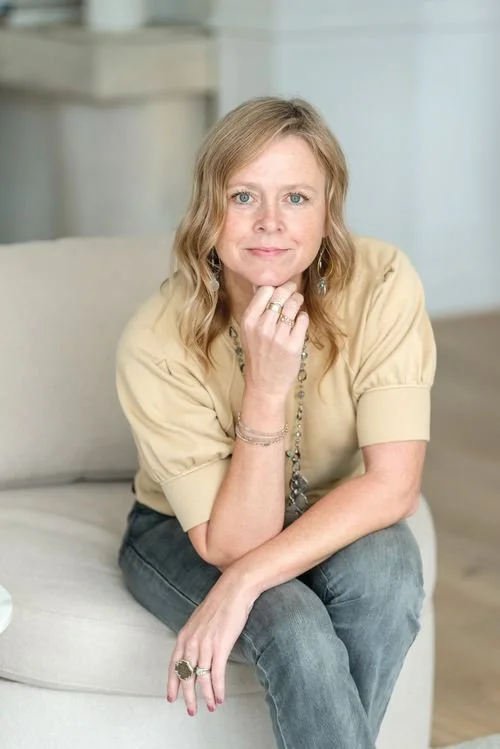
Dana Elmendorf was born and raised in small town in Tennessee. She now lives in Southern California with her husband, two boys and two dogs. When she isn’t exercising, she can be found geeking out with Mother Nature. After four years of college and an assortment of jobs, she wrote a contemporary YA novel and an adult fantasy.

Connect:

Author Website: https://www.danaelmendorf.com/p/home.html 

Instagram: https://www.instagram.com/danaelmendorf/ 

Facebook: https://www.facebook.com/DanaElmendorfAuthor/ 

Goodreads: https://www.goodreads.com/danaelmendorf

Spotlight: In the Hour of Crows by Dana Elmendorf

Publication Date: June 4, 2024

Publisher: Harlequin Trade Publishing / MIRA

An engrossing and atmospheric debut that follows young Weatherly Wilder as she uses her unique gift to solve her cousin’s mysterious murder and prove her own innocence, set in the beautiful wilds of Appalachia and imbued with magic realism.

In a small town in rural Georgia, Appalachian roots and traditions still run deep. Folks paint their houses blue to keep the spirits way. Black ferns grow, it’s said, where death will follow. And Weatherly Wilder’s grandmother is a local Granny Witch, relied on for help delivering babies, making herbal remedies, tending to the sick—and sometimes serving up a fatal dose of revenge when she deems it worthy. Hyper-religious, she rules Weatherly with an iron fist; because Weatherly has a rare and covetable gift: she’s a Death Talker. Weatherly, when called upon, can talk the death out of the dying; only once, never twice. But in her short twenty years on this Earth this gift has taken a toll, rooting her to the small town that only wants her around when they need her and resents her backwater ways when they don’t—and how could she ever leave, if it meant someone could die while she was gone?

Weatherly’s best friend and cousin, Adaire, also has a gift: she’s a Scryer; she can see the future reflected back in a dark surface, usually her scrying pan. Right before she’s hit and in a bicycle accident, Adaire saw something unnerving in the pan, that much Weatherly knows, and she is certain this is why the mayor killed her cousin—she doesn’t believe for a moment that it was an accident. But when the mayor’s son lays dying and Weatherly, for the first time, is unable to talk the death of him, the whole town suspects she was out for revenge, that she wouldn’t save him. Weatherly, with the help of Adaire’s spirit, sets out to prove her own innocence and find Adaire’s killer, no matter what it takes.

Excerpt

PROLOGUE

I was born in the woods in the hour of crows, when the day is no longer but the night is not yet. Grandmama Agnes brought me into this world with her bare hands. Just as her mother had taught her to do. Just as the mother before her taught. Just as she would teach me. Midwife, herbalist, superstitionist—all the practices of her Appalachian roots passed down for generations.

And a few new tricks picked up along the way.

Before Papaw died, he warned me Grandmama Agnes was wicked. He was wrong. It wasn’t just Grandmama who was wicked; so was I.

I knew it was true the night those twin babies died.

“Weatherly,” Grandmama’s sleep-weary voice woke me that night long ago. “Get your clothes on. Don’t forget your drawers.”

My Winnie the Pooh nightgown, ragged and thin, was something pillaged from the free-clothes bin at church. Laundry was hard to do often when water came from a well and washing powders cost money. So we saved our underwear for the daytime.

My ten-year-old bones ached from the death I talked out of the Bodine sisters earlier that day, the mucus still lodged in my throat. I barked a wet cough to bring it up.

“Here.” Grandmama handed me a blue perfume bottle with a stopper that did not match. I spat the death inside the bottle like always. The thick ooze slipped down the curved lip and blobbed at the bottom. A black dollop ready for someone else to swallow.

It smelled of rotting flesh and tasted like fear.

Sin Eater Oil, Grandmama called it, was like a truth serum for the soul. A few drops baked into a pie, you could find out if your neighbor stole your garden vegetables. Mixed with certain herbs, it enhanced their potency and enlivened the superstitious charms from Grandmama’s magic recipe box.

On a few occasions—no more than a handful of times—when consumed in full, its power was lethal.

Out in front of our cabin sat a shiny new Corvette with hubcaps that shimmered in the moonlight. Pacing on the porch, a shadow of a man. It wasn’t until he stepped into the light did I catch his face. Stone Rutledge. He was taller and thinner and snakier back then.

Bone Layer, a large hardened man who got his name from digging graves for the cemetery, dropped a pine box no longer than me into the back of our truck. He drove us everywhere we needed to be—seeing how Grandmama couldn’t see too good and I was only ten. The three of us followed Stone as his low-slung car dragged and scrapped the dirt road to a farmhouse deep in the woods.

An oil-lit lamp flickered inside. Cries of a woman in labor pushed out into the humid night. Georgia’s summer air was always thick. Suffocating, unbearable nights teeming with insects hell-bent on fighting porch lights.

A woman at the edge of panic for being left in charge greeted us at the door. Pearls draped her neck. Polish shined her perfect nails as she pulled and worked the strand. Her heels click-clacked as she paced the linoleum floor.

Grandmama didn’t bother with pleasantries. She shoved on past with her asphidity bag full of her herbs and midwife supplies and my Sin Eater Oil and went straight for the woman who was screaming. Bone Layer grabbed his shovel and disappeared into the woods.

In the house, I gathered the sheets and the clean towels and boiled the water. I’d never seen this kitchen before, but most things can be found in just about the same place as any other home.

“Why is that child here?” the rich woman, not too good at whispering, asked Stone. Her frightened eyes watched as I tasked out my duties.

“Doing her job. Drink this.” Stone shoved a glass of whiskey at her. She knocked it back with a swift tilt of her head, like tossing medicine down her throat, and handed back the glass for another.

Tiptoeing into the bedroom, I quietly poured the steaming water into the washbasin. The drugged moans of the lady spilled to the floor like a sad melody. A breeze snuck in through the inch of open window and licked the gauzy curtain that draped the bed.

When I turned to hand Grandmama the towels, I eyed the slick black blood that dripped down the sheets.

We weren’t here for a birthing.

We were called to assist with a misbirth.

Fear iced over me when I looked upon the mother.

Then, I saw on the dresser next to where Grandmama stood, two tiny swaddles, unmoving. A potato box sat on the floor. Grandmama slowly turned around at the sound of my sobbing—I hadn’t realized I’d started to cry. Her milky white eyes found mine like always, despite her part-blindness.

Swift and sharp she snatched me by my elbow. Her fingers dug into my flesh as she ushered me over to the dresser to see what I had caused.

“You’ve soured their souls,” she said in a low growl. I looked away, not wanting to see their underdeveloped bodies. Her bony hand grabbed my face. Her grip crushing my jaw as she forced me to look upon them. Black veins of my Sin Eater Oil streaked across their gnarled lifeless bodies. “This is your doing, child. There’ll be a price to pay for y’all going behind my back.” For me, and Aunt Violet.

Aunt Violet took some of my Sin Eater Oil weeks ago. I assumed it was for an ailing grandparent who was ready for Jesus; she never said who. She said not to tell. She said Grandmama wouldn’t even notice it was missing.

So I kept quiet. Told the thing in my gut that said it was wrong to shut up. But she gave my Sin Eater Oil to the woman writhing in pain in front of me, so she could kill her babies. Shame welled up inside me.

Desperately, I looked up to Grandmama. “Don’t let the Devil take me.”

Grandmama beamed, pleased with my fear. “There’s only one way to protect you, child.” The glint in her eyes sent a chill up my spine.

No. I shook my head. Not that—her promise of punishment, if ever I misused my gift. Tears slivered down my cheeks.

“It wasn’t me!” I choked out, but she only shook her head.

“We must cleanse your soul from this sin and free you from the Devil’s grasp. You must atone.” Grandmama rummaged through her bag and drew out two items: the match hissed to life as she set fire to a single crow claw. I closed my eyes and turned away, unable to watch. That didn’t stop me from knowing.

The mother’s head lolled over at the sound of my crying. Her red-rimmed eyes gazed my way. “You!” she snarled sloppily at me. Her hair, wild, stuck to the sweat on her face. The black veins of my Sin Eater Oil spiderwebbed across her belly, a permanent tattoo that matched that of her babies. “The Devil’s Seed Child,” the lady slurred from her vicious mouth. The breeze whipped the curtains in anger. Oh, that hate in her eyes. Hate for me.

Grandmama shoved me into the hall, where I was to stay put. The rich woman pushed in. The door opened once more, and that wooden potato box slid out.

The mother wailed as the rich lady cooed promises that things would be better someday. The door closed tight behind us, cries echoing off the walls.

I shared the dark with the slit of the light and wondered if she’d ever get her someday.

Quick as lightning, my eyes flitted to the box, then back to the ugly wallpaper dating the hallway. My curiosity poked me. It gnawed until I peeked inside.

There on their tiny bodies, the mark of a sinner. A crow’s claw burned on their chest. Same as the Death Talker birthmark over my heart. Grandmama branded them so Jesus would know I was to blame.

That woman was right—I was the Devil’s Seed Child.

So I ran.

I ran out the door and down the road.

I ran until my feet grew sore and then ran some more.

I ran until the salt dried on my face and the tears stopped coming.

I was rotten, always rotten. As long as my body made the Sin Eater Oil, I’d always be rotten. Exhausted, I fell to my knees. From my pocket, I pulled out the raggedy crow feather I now kept with me. I curled up on the side of the road between a tree and a stump, praying my wishes onto that feather.

Devil’s Seed Child, I whispered, and repeated in my mind.

It was comforting to own it, what I was. The rightful name for someone who could kill the most innocent among us.

I blew my wish on the feather and set it free in the wind.

A tiny object tumbled in front of my face. Shiny as the hubcaps on Stone’s car. A small gold ring with something scrolled on the flat front. I quirked my head sideways to straighten my view. A fancy script initial R.

“Don’t cry,” a young voice spoke. Perched on the rotting stump above, a boy, just a pinch older than I. Shorn dark hair and clothes of all black.

I smiled up at him, a thank-you for the gift.

“Weatherly!” A loud bark that could scare the night caused me to jump. Bone Layer had a voice that did that to people, though he didn’t use it often.

Over my head, a black wisp flew toward the star-filled sky, and the boy was gone. I snatched up the ring and buried it in my pocket as Bone Layer came to retrieve me. He scooped me up as easy as a doll. His shirt smelled of sweat and earth and bad things to come.

Grandmama’s punishment was meant to save me; I leaned into that comfort. Through the Lord’s work, she’d keep me safe. Protect me. If I strayed from her, I might lose my soul.

Grandmama was right; I must atone.

The truck headlights pierced the woods as Bone Layer walked deeper within them. Grandmama waited at the hole in the ground with the Bible in her hand and the potato box at her feet.

Stone and the rich woman watched curiously as they ushered the mother into their car. The wind howled through the trees. They exchanged horrid looks and hurried words, then fled back into the house, quick as thieves.

Bone Layer gently laid me in the pine box already lowered into the shallow hole he done dug. Deep enough to cover, not enough for forever.

“Will they go to Heaven?” I asked from the coffin, as Grandmama handed me one bundle, then the other. I nestled them into my chest. I had never seen something so little. Light as air in my arms. Tiny things. Things that never had a chance in this world. They smelled sickly sweet; a scent that made me want to retch.

Grandmama tucked my little Bible between my hands. I loved that Bible. Pale blue with crinkles in the spine from so much discovery. On the front, a picture of Jesus, telling a story to two little kids.

“Will they go to Heaven?” I asked again, panicked when she didn’t answer. Fear rose up in my throat, and I choked on my tears. Fear I would be held responsible if their souls were not saved.

Grandmama’s face was flat as she spoke the heartless truth. “They are born from sin, just like you. They were not wanted. They are not loved.” Her words stung like always.

“What if I love them? Will they go to Heaven if I love them?”

Her wrinkled lips tightened across her yellow and cracked teeth, insidious. “You must atone,” she answered instead. Then smiled, not with empathy but with pleasure; she was happy to deliver this punishment, glad of the chance to remind me of her power.

“I love them, Grandmama. I love them,” I professed with fierceness. I hoped it would be enough. To save their souls. To save my own. “I love them, Grandmama,” I proclaimed with all my earnest heart. To prove it, I smothered the tops of their heads with kisses. “I love them, Grandmama.” I kept repeating this. Kept kissing them as Bone Layer grabbed the lid to my pine box. He held it in his large hands, waiting for Grandmama to move out of his way.

“You believe me, don’t you?” I asked her. Fear and prayer filled every ounce of my body. If I loved them enough, they’d go to Heaven. If I atoned, maybe I would, too. I squeezed my eyes tight and swore my love over and over and over.

She frowned down on me. “I believe you, child. For sin always enjoys its own company.”

She promptly stood. Her black dress swished across the ground as she moved out of the way. Then Bone Layer shut out the light, fastening the lid to my box.

Muffled sounds of dirt scattered across the top as he buried me alive.

Excerpted from IN THE HOUR OF CROWS by Dana Elmendorf. Copyright © 2024 by Dana Elmendorf. Published by MIRA Books, an imprint of HarperCollins.

Buy on Amazon Kindle | Audible | Hardcover | Bookshop.org

About the Author

Dana Elmendorf was born and raised in small town in Tennessee. She now lives in Southern California with her husband, two boys and two dogs. When she isn’t exercising, she can be found geeking out with Mother Nature. After four years of college and an assortment of jobs, she wrote a contemporarty YA novel. This is her adult debut.

Connect:
Author website: https://www.danaelmendorf.com/p/home.html 

GoodReads: https://www.goodreads.com/author/show/12099732.Dana_Elmendorf  

Instagram: https://www.instagram.com/danaelmendorf/ 

Facebook: https://www.facebook.com/DanaElmendorfAuthor/