Spotlight: Miriam in the Shadows by John Winn Miller
/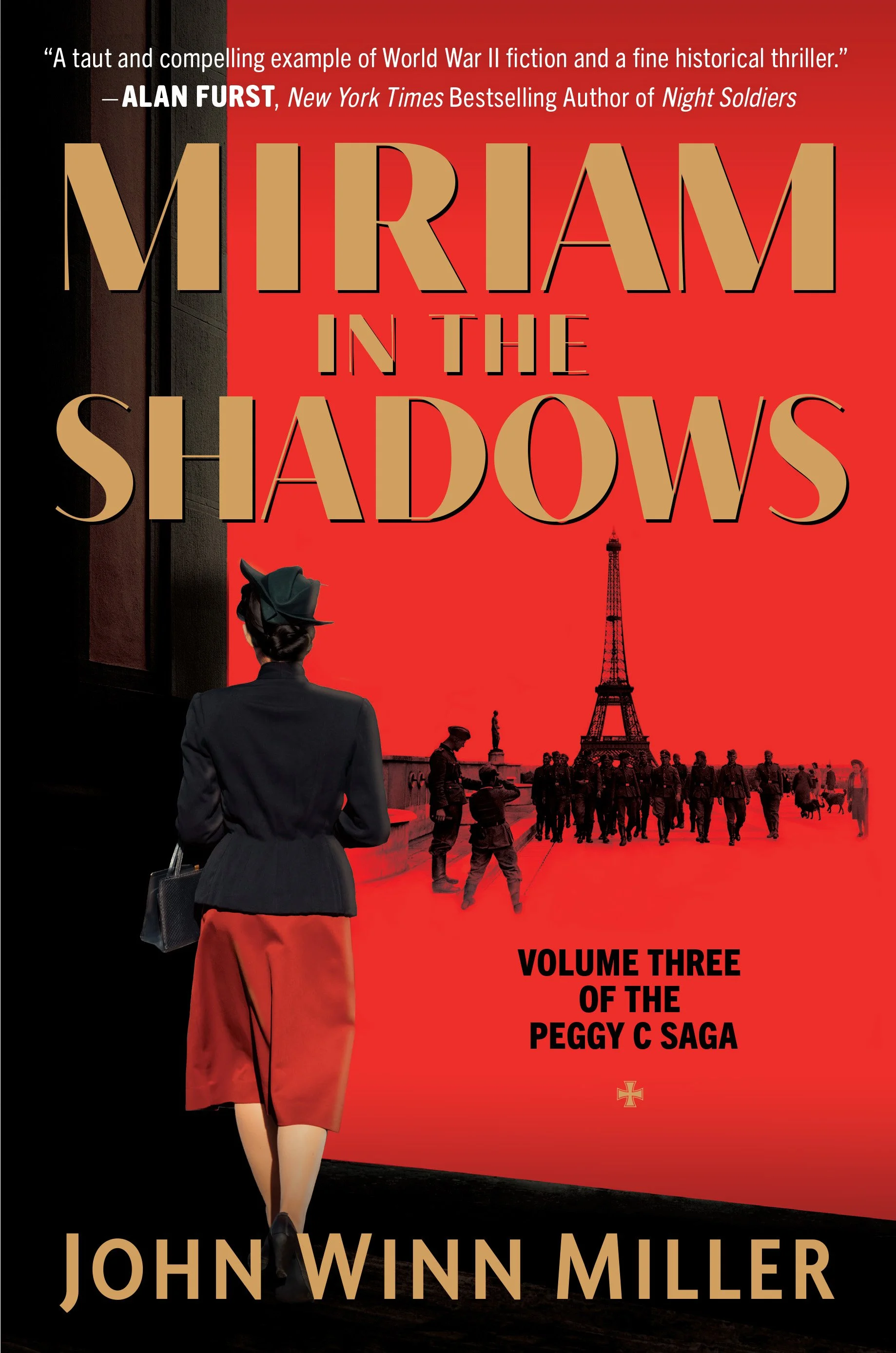
In Miriam in the Shadows, award-winning author John Winn Miller delivers a heart-pounding World War II thriller that explores the cost of resistance, betrayal, and survival.
Spring 1944. The world is holding its breath.
While the Allies prepare to storm the beaches, the real threat lies deep inside a Nazi-occupied coal mine in northern France, where the Third Reich races to arm V-2 rockets with radioactive warheads.If they succeed, London burns, and D-Day is over before it begins.
Enter Miriam Maduro—a 26-year-old Jewish mother from Amsterdam, trained at the British Special Operations Executive’s “gangster school” to be a saboteur and silent killer. Captured and tortured by the Nazis, she escaped—twice—with the help of Jake Rogers, an American cargo ship captain with secrets of his own.
The SOE taps into Miriam’s survivor’s guilt and maternal instinct to coerce her into one final mission: infiltrate the concentration camp/rocket facility disguised as an engineer’s assistant and destroy it from within. Meanwhile, Jake’s story runs parallel—recruited by Naval Intelligence officer Ian Fleming, only to be betrayed by real-life MI6 villain Claude Dansey, who uses Jake as bait to sabotage Miriam’s mission and destroy the hated SOE from the inside. When Miriam discovers Jake is a prisoner just miles away, she faces the ultimate question: Will she complete her mission and save D-Day, or save the man she loves?
Delivering high-stakes espionage, historical depth, and an unforgettable heroine, Miriam in the Shadows takes readers deep into the world of espionage, deception, and sabotage.
Excerpt
(From Miriam in the Shadows by John Winn Miller, published by June 2026 by Bancroft Press. Reprinted by permission.)
Miriam Maduro plunged through the nearly moonless night over Nazi-occupied northern France, her rigid body slicing through the air like a dagger until a bone-jarring yank of the static line ripped off her parachute’s cover, releasing the silk canopy.
It did not slow her down.
With only seconds to go before slamming into the unforgiving ground, she tugged and twisted the two risers connecting the harness to her parachute’s rigging lines, struggling to fix the Roman Candle, the dreaded part of a parachute canopy that had failed to open properly above her. After one last desperate yank, the canopy fluttered open fully, snapping her upward and slowing her descent.
Exhaling in relief, she glanced down just as she crashed into a treetop. Her canopy caught on the limbs and bounced her up and down like a yoyo as the harness straps cut into her thighs.
Now, after badly missing her landing site, she was on her own, dangling high above the pitch-black ground on a cool spring night. Her parachute rigging and canopy were hopelessly tangled in the outstretched branches of an oak tree. She retrieved a pistol from her jumpsuit and wrapped her hand tightly around the checkered walnut grip of the .32-caliber Colt.
All around her, tawny owls exchanged urgent hoots as if sounding an alarm in the early hours before dawn. In the dense shadows below the tree, twigs crunched and bushes swished. But no wind was blowing. Flashlight beams flittered among the leaves of nearby branches like twinkling Christmas tree lights. Footsteps approached, but it was too dark to see who it was. Shifting clouds and thick foliage blocked almost all the dim light from the sliver of a waning crescent moon.
Voices. Speaking German.
Soundlessly, Miriam pulled back the slide of her pistol to chamber a round, aimed down with both hands, and fought to control her breathing. She had only eight bullets. Seven were for the Germans.
I will not be taken alive again.
***
Miriam’s troubled journey began nearly three months earlier during a meeting in the Special Operations Executive’s headquarters in London convened by Maj. Gen. Colin Gubbins, the new chief of the secret intelligence service that Prime Minister Winston Churchill had created to “set Europe ablaze.” Its mission was to infiltrate British-trained agents into Nazi-occupied Europe to help local resistance groups sabotage the German war effort.
Gubbins glared from behind his desk, arms crossed over his chest, at the two feuding section chiefs sitting across from him in his office in the top floor of a six-story building at 64 Baker Street. It was one of six buildings commandeered by the SOE on Baker Street, not far from the fictional home of Sherlock Holmes at 221B Baker Street, giving rise to one of the agency’s nicknames as the “Baker Street Irregulars.”
“What’s this all about?” said Gubbins, known by the initials “CD,” in his clipped, gravelly voice thick with a Scottish brogue.
“Rhubarb,” said Lt. Col. Maurice Buckmaster, the head of SOE’s French section, puffing on a pipe.
Staring straight ahead, Maj. Seymour Bingham, the Rotterdam-born leader of the Netherlands Section, which gave its agents vegetable code names, said, “You can’t use Rhubarb.”
“Now, look here, old chap,” said Buckmaster, who pronounced English like an aristocrat and French like a native in his baritone voice. “Rhubarb is perfect for the job. Speaks fluent Dutch, French, and German, has almost all the necessary training, and has shown great initiative in the field.”
“Who is Rhubarb?” Gubbins said. “What’s his name?”
“Hers, sir,” Bingham said with a slight lisp reminiscent of Churchill’s.
“Well, who is she? Get on with it,” Gubbins said in an impatient voice, hovering between exasperation and irritation.
Bingham glanced at his smug peer from the French section and then back at Gubbins, apparently uneasy about violating SOE rules about the absolute separation of information and agents between sections. “Real or field name, CD?”
“Real,” said Gubbins, who had literally written the manuals on guerrilla warfare for resistance groups based on his time battling the Irish Republican Army and his experience in the Russian Civil War. Every agent had four names: their real one, one used in the field, and one for coded communications and identification. The fourth was a combination of their code name and their réseau, or circuit, a network in France established by a three-person SOE unit that recruited and trained local resistance members.
Bingham plucked a thick manila folder from his briefcase and slid it across the spotless, burled walnut desk to Gubbins, who shoved it back with an impatient sigh. “In your own words, man. I haven’t all day.”
“Very good, sir.” Bingham flipped open the file. “Her real name is Miriam Maduro. Twenty-six. She was expelled from medical school in Amsterdam when the Nazis invaded.”
“What for?”
“For being Jewish, sir.”
“I say, Colonel, is it wise to drop a Jew into France?” Gubbins said.
“Wouldn’t be the first, CD,” said Buckmaster, who oversaw more than eighty circuits and some 200 agents in France.
“Go on, Major,” Gubbins said.
“She and several of her family members were smuggled out of the Netherlands aboard an American tramp steamer shortly before Pearl Harbor and made it safely to Palestine. Joined the Jewish Parachutists of Mandate Palestine there.”
Buy on Amazon Kindle | Hardcover | Bookshop.org
About the Author
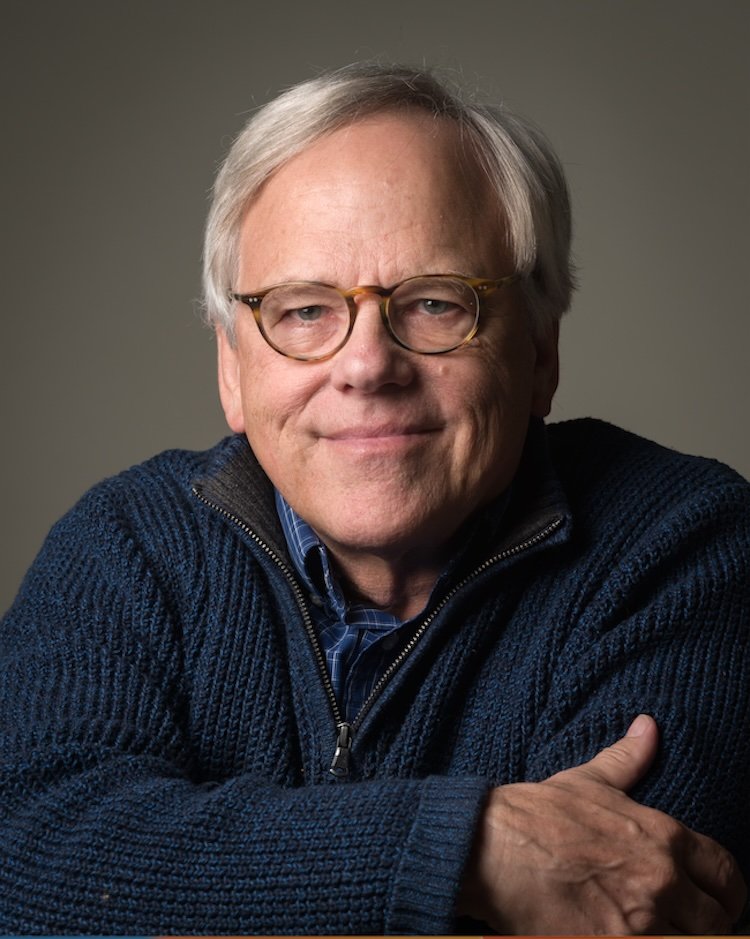
John Winn Miller is an award-winning investigative reporter (Pulitzer finalist), foreign correspondent, editor, newspaper publisher, screenwriter, movie producer, and novelist. He was named to the Kentucky Journalism Hall of Fame in 2026. The Lexington native also produced four indie films, including Band of Robbers, written and directed by Adam and Aaron Nee.
Miller has taught media literacy classes at his alma mater, the University of Kentucky, and Transylvania University. He is also a second-degree black belt in Shaolin karate. Miller and his wife, Margo, live in Lexington with two standard poodles and a Maine Coon cat. Their daughter Allison Miller is an actress- screenwriter-director who most recently starred in the ABC series, A Million Little Things.
Miriam in the Shadows is the third novel in his Peggy C series following The Hunt for Peggy C and Rescue Run.