Spotlight: Until There Was Us by Samantha Chase

He'll have to play his cards just right for her to take a chance on him…

Megan Montgomery has always been careful…except that one time she threw caution to the wind and hooked up with a sexy groomsman at her cousin's wedding. But that was two years ago—so why can't she stop thinking about Alex Rebat?

Alex has been living the good life. He loves his job, has a great circle of friends, and doesn't answer to anyone. The problem? There's only one woman he wants and she ran out on him after one amazing weekend. But now that Megan's coming back to town, Alex hopes he can convince her to take another chance on him…and on a future that can only be built together.

Excerpt

With a nod of agreement, everyone sprang into action, and as Alex headed toward the guest room, he had to remember to breathe. He didn’t miss the fact that she had practically dashed from the dinner table—no doubt to get away from him—but she couldn’t avoid him forever.

Hell, he wasn’t even going to let her avoid him for another five minutes.

“Hey,” he said softly as he ducked his head into the room. Her big brown eyes went wide at the sight of him, and those soft pink lips parted as she gasped.

“Oh! I…I didn’t think anyone was ready to start in here yet. I thought I’d…um…” But her words died away.

Smiling, Alex stepped into the room and explained the plan he and Zach had come up with.

“So…we’re supposed to start moving stuff into the office?” she asked.

Nodding, he looked around. The room was large with a queen-size bed, two nightstands, and a dresser. There was a flat-screen television mounted on the wall along with several pictures. Megan was moving some things into the dresser drawers and was doing her best to keep her back to him. Alex chuckled.

“What? What’s so funny?” she asked, still not turning around.

“You’re going to have to look at me eventually, you know,” he said casually and was pleasantly surprised when she did. She looked a little flushed and embarrassed, but at least she was looking at him.

“So you’ve been here a week already. How are you enjoying Portland?”

She returned her attention to her task. “I haven’t gone out sightseeing or anything yet. This whole week has been spent getting settled in at work. Summer’s been great with pointing out things on our way to work and all, but—”

“And you’re staying in the guesthouse?”

“For now. I was relieved to have a place to stay right away. It takes some of the pressure off so I can focus on work.”

Work. Yeah. That was a sore spot with him where she was concerned, and right now, he was kind of glad she wasn’t looking at him because he was certain his displeasure was written all over his face.

“I’ll start looking for a place of my own in the next couple of weeks, but it’s nice to not have to think about it yet. As it is, I have to buy a car.”

He looked at her oddly when she turned around to start moving other items into drawers. “Didn’t you bring anything with you from New York? I know it wouldn’t have been easy to drive cross-country, but it seems like you must have sold everything in order to move here.”

“I did,” she said as she closed a drawer. “The cost of moving all my furniture and keeping it in storage until I found a place wasn’t cost-effective. I figured I would start fresh when I got here.”

Nodding, he slid his hands into his pockets and waited to see if she would offer up any other information about herself without him prompting her.

But patience wasn’t his strong suit right now.

“So, how have you been?” he asked, stepping closer to her.

“Good.”

He chuckled softly. “Good,” he said. “Me too.”

She nodded and then moved to unplug the lamps. When she went to turn away from him, he placed a hand on her arm to stop her. She turned to him, and he saw every emotion she was feeling right there in her eyes. His heart melted a little, and he couldn’t help but smile.

“Hey,” he said softly.

That one word seemed to do the trick because she visibly relaxed.

“I was surprised when Zach told me you’d moved here,” he said quietly, his hand still on her. He wanted to skim it down her arm and take her hand in his, but he knew it was too soon for that. “I wish you had called and let me know.”

Megan took a step away, and he instantly missed the feel of her.

“Alex,” she began, “it’s been two years. I…it would have been weird to reach out to you after all that time.”

“Why?”

“Seriously? What if you were involved with someone? And why would I even assume you’d want to see me? After the way things ended—”

“Do you?” he interrupted, fairly blurting out the question.

She looked at him curiously. “Do I what?”

“Do you want to see me?”

Her brows furrowed. “I’m seeing you right now, Alex.”

He laughed. “I know, but…did you want to see me? Did you think about looking me up when you got settled?”

Her hesitation wasn’t encouraging.

“Alex…”

Then he stepped forward and reached for her hand. “Okay, it wasn’t fair of me to put you on the spot like that. But I want you to know I’m happy you’re here. I…I think about you a lot.” His eyes met hers, and he saw confusion in those dark-brown depths. “I mean it. I hated the way things ended between us.”

“I did too. But geography wasn’t on our side, and then my job, and…I don’t know… I don’t expect you to feel obligated to make something more of it than it was.”

Okay, that wasn’t what he was expecting, and this time it was he who stepped away. “What’s that supposed to mean?”

Megan sighed. “Look, I’m sure this is awkward for you because Zach’s a good friend and I’m his cousin. No one knows about us, so there’s nothing that says we have to do anything now—you’re off the hook. Zach will never know, so we’re free to be…acquaintances or something.”

Was she for real? Did she really have no idea that was the last thing he was looking for? Hell, he’d practically lived his life in limbo for the past two years because he couldn’t get her out of his mind! And now she was saying it didn’t mean anything?

Buy on Amazon | Barnes and Noble

Spotlight: Enduring Love by Danyelle Scroggins

Genre: Christian Fiction

No one ever truly realizes the power of their love, until love is tested and they have to endure things unimaginable and sometimes hurtful. And if the truth is declared, no one wants to but…

Sometimes we find ourselves standing in the test of love and this is exactly where Priscilla Marshall finds herself. Married to Steven since she graduated college, together they were the perfect couple. Both making successful business moves, both loved their choices, but one had a secret that could change their lives.

Priscilla, now forced to make a plan to secure her future, finds out that a plan without God involved is not a plan at all because “Many are the plans in a person’s heart, but it is the Lord’s purpose that prevails” (Proverbs 19:21).

What will God use to make this woman’s plan come full circle with His own, and after the test, will they find that they truly do have an Enduring Love?

Excerpt

Priscilla reasoned why God would choose her to be the carrier of life. Married for almost fifteen years, sexual pleasures only happened on special occasions. Often without romance, and starting with a touch here, feel there, and a real quick release on his part. The thought of making a baby vanished long ago.

In reality, indecisiveness plagued her like a severe toothache regarding being a wife or instead, being his wife. Her mind and ambitions settled on being the audacious executive she fancied herself. Relinquishing all thoughts of motherhood, that were now nowhere in the plan.

Many are the plans of man…but it is the Lord’s plans that prevail.

Dr. Thorpe’s private practice became her haven, the place where swift answers and solutions to her most pressing issues materialized. Today, he acted as the grim reaper delivering death-blows instead of solutions. Death to her plans, dreams, and her one hundred and thirty-five-pound figure. She worked hard for her body, and to destroy it for a child neither of them wanted put her in a complete stupor.

As she sat in a makeshift gown barely covering her breasts, Priscilla sighed. Moving to get more comfortable on the green leather table-bed covered with a sheet of wrinkled white paper, she felt hopeless. Priscilla swung her legs as though they could propel her into another space in time. She took a deep breath. Lumps in her throat seemed to suffocate her and caused her to give in to the explosive stream of tears cascading down her face.

How am I going to care for a child in the midst of running a company? Marshall’s Mortgage a premier mortgage company and her baby, her purpose that bequeathed her employees who became family. A creative concept and idea birthed right after leaving college with a degree in accounting and nourished with intensity and integrity. The thought of leaving it with anyone for more than a day or two frightened her. Because of this baby, she would have no choice.

“Priscilla? Are you alright?” Dr. Thorpe inquired.

Startled by his voice and still confused, she hadn’t noticed his return. “Dr. Thorpe, I’m not alright. This pregnancy is so unexpected. I thought maybe the flu or a virus. But this? I took a darn pill every day since Steven and I married. They’re supposed to prevent this. I don’t understand how it could happen,” she responded with a pant and sniffle between words.

“I’ve been an OB doctor for well over twenty years, and I promise I see women who swear they took their birth-control pill on time and still got pregnant. I know you are quite familiar with God and His work. And, I consider us close friends so I can say this.”

Priscilla nodded.

“No matter what and how we try, we can never abort the plans of God. He knows this child is going to gain a complete knowledge of Him. The Father chose you and Steven to protect, nurture, and train him or her in the way they should go. Priscilla instead of the questions why and how be excited, and grateful God chose you.”

“I don’t feel like this is something I want to do. I don’t even know if I can do it.”

Buy on Amazon | Barnes and Noble

About the Author

Danyelle is the Senior Pastor of New Vessels Ministries North in Shreveport, Louisiana, who is a dynamic author of both Christian fiction and non-fiction books. She studied Theology at Louisiana Baptist University, has a Psychology Degree from the University of Phoenix, an Interdisciplinary Degree in Psychology /Biblical Studies, and a Master’s in Religious Education from the Liberty University. She owns Divinely Sown Publishing LLC and is an avid reader. She is the wife of Pastor Reynard Scroggins and the mother of three.

Connect: Website | Twitter | Facebook

Audio Spotlight & Excerpt: Blueprint For a Kiss by Nancy Warren

Genre: Contemporary Romance
Series: Take A Chance, Book 3
Release date: Apr. 30, 2015

Synopsis: You can design a perfect life, then a woman comes along and messes it all up!

Prescott Chance is the go-to architect for the wealthy and famous, which has made him more wealthy and famous than he's ever wanted to be. He turns down more commissions than he accepts and is extremely private.

Holly Legere is barely making ends meet between rent and student loans. As an assistant to Alistair Rupert, the notoriously difficult industrialist, she works night and day for slave wages, hanging on in hopes of a promised promotion in his huge organization. When Alistair Rupert's wife decides she wants a Prescott Chance-designed house, and Prescott turns her down, it's Holly's job to make the choosy architect change his mind. And Holly is a very determined woman. In this modern romantic comedy, she'll go to any lengths to get him to design her boss a house, including pulling in his huge family for support.

This is the third book in the Take a Chance series, though the books stand alone.

Audio Excerpt

Blueprint For a Kiss

Buy on Amazon

About the Author: Nancy Warren

To stay updated on all things Nancy including new releases, recipes and bonus extras please sign up for Nancy Warren's newsletter at nancywarren.net. Nancy's a USA today bestselling author of more than 60 novels. Nancy's originally from Vancouver, Canada but she tends to wander. She currently lives in an 18th century house in Bath, England where she loves to pretend she's Jane Austen, or at least a character in a Jane Austen novel. When she's not writing, she's hiking, skiing, traveling or sipping wine. She's appeared on the front page of the New York Times (when her book, Speed Dating launched Harlequin's NASCAR series), has been a clue in a crossword puzzle (National Post, Canada) and she's been a finalist for the RITA award three times, honored by Romantic Times Magazine and often shares her love of writing in her popular workshops.

WebsiteTwitterFacebookPinterest


Teri Schnaubelt is an award-winning audiobook narrator and actor who has voiced nearly 200 audiobooks as well as many commercials and corporate videos. She mainly works from her home studio in the north Chicago suburbs and keeps in touch with the rest of the world via Facebook, Instagram and Twitter.

WebsiteTwitterFacebookInstagramYouTube

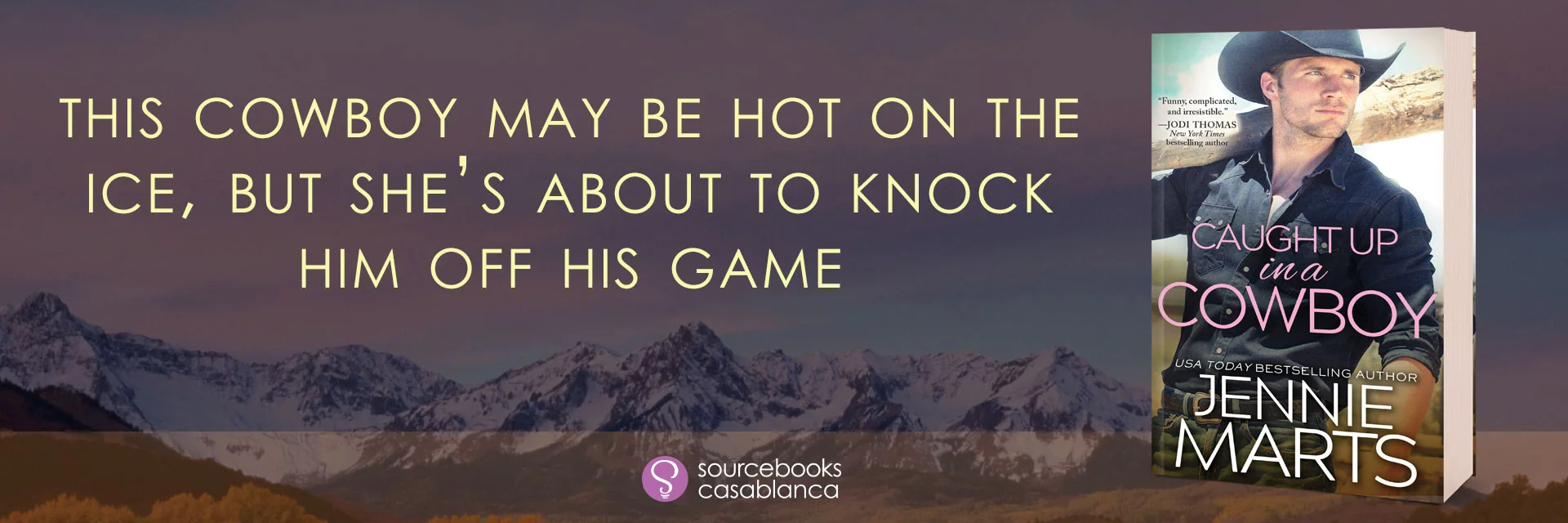
Spotlight: Caught Up in a Cowboy by Jennie Marts

Series: Cowboys of Creedence, #1
Pub Date: May 1, 2018
Genre: Contemporary Western  

Rockford James was raised as a tried-and-true cowboy in a town crazy about ice hockey. Rock is as hot on the ice as he is on a horse, and the NHL snapped him up. Now, injuries have permanently benched him. Body and pride wounded, he returns to his hometown ranch to find that a lot has changed. The one thing that hasn't? His feelings for high school sweetheart and girl-next-door Quinn Rivers.

Quinn had no choice but to get over Rock after he left. Teenaged and heartbroken, she had a rebound one night stand that ended in single motherhood. Now that Rock's back—and clamoring for a second chance—Quinn will do anything to avoid getting caught up in this oh-so-tempting cowboy…

Excerpt

He snuck a glance at her as he drove past the barn. Her wavy hair was pulled back in a ponytail, but wisps of it had come loose and fell across her neck in little curls. She looked good—really good. A thick chunk of regret settled in his gut, and he knew letting her go had been the biggest mistake of his life.

It wasn’t the first time he’d thought it. Images of Quinn haunted his dreams, and he often wondered what it would be like now if only he’d brought her with him instead of leaving her behind. If he had her to wave to in the stands at his games or to come home to at night instead of an empty house. But he’d screwed that up, and he felt the remorse every time he returned to Rivers Gulch.

He’d been young and arrogant—thought he had the world by the tail. Scouts had come sniffing around when he was in high school, inflating his head and his own self-importance. And once he started playing in the big leagues, everything about this small town—including Quinn—had just seemed…well…small. Too small for a big shot like him.

He was just a kid—and an idiot. But by the time he’d realized his mistake and come back for her, it was too late.

Hindsight was a mother.

And so was Quinn.

Easing the car up in front of the house, he took in the festive balloons and streamers tied to the railings along the porch. So much of the house looked the same, the long porch that ran the length of the house, the wooden rocking chairs, and the swing hanging from the end.

They’d spent a lot of time on that swing, his arm around her, talking and laughing, as his foot slowly pushed them back and forth.

She opened the car door, but he put a hand on her arm and offered her one of his most charming smiles. “It’s good to see you, Quinn. You look great. Even in a pirate outfit.”

Her eyes widened and she blinked at him, for once not having a sarcastic reply. He watched her throat shift as she swallowed, and he yearned to reach out and run his fingers along her slender neck.

“Well, thanks for the lift.” She turned away and stepped out of the car.

Pushing open his door, he got out and reached for the bicycle, lifting it out of the back seat before she had a chance. He carried it around and set it on the ground in front of her. “I’d like to meet him. You know, Max. If that’s okay.”

“You would?” Her voice was soft, almost hopeful, but still held a note of suspicion. “Why?”

He ran a hand through his hair and let out a sigh. He’d been rehearsing what he was going to say as they drove up to the ranch, but now his mouth had gone dry. The collar of his cotton T-shirt clung to his neck, and he didn’t know what to do with his hands.

Dang—he hadn’t had sweaty palms since he was in high school. He wiped them on his jeans. He was known for his charm and usually had a way with women, but not this woman. This one had him tongue-tied and nervous as a teenager.

He shoved his hands in his pockets. “Listen Quinn, I know I screwed up. I was young and stupid and a damn fool. And I’m sorrier than I could ever say. But I can’t go back and fix it. All I can do is move forward. I miss this place. I miss having you in my life. I’d like to at least be your friend.”

She opened her mouth, and he steeled himself for her to tell him to go jump in the lake. Or worse. But she didn’t. She looked up at him, her eyes searching his face, as if trying to decide if he was serious or not. “Why now? After all these years?”

He shrugged, his gaze drifting as he stared off at the distant green pastures. He’d let this go on too long, let the hurt fester. It was time to make amends—to at least try. He looked back at her, trying to express his sincerity. “Why not? Isn’t it about time?”

She swallowed again and gave a small nod of her head. A tiny flicker of hope lit in his gut as he waited for her response.

He could practically see her thinking—watch the emotions cross her face in the furrow of her brow and the way she chewed on her bottom lip. Oh man, he loved it when she did that—the way she sucked her bottom lip under her front teeth always did crazy things to his insides.

“Okay. We can try being friends.” She gave him a sidelong glance, the hint of a smile tugging at the corner of her mouth. “On one condition.”

Uh oh. Conditions were never good.

Buy on Amazon | Barnes and Noble

About the Author

Jennie Marts is the USA Today bestselling author of award-winning books filled with love, laughter, and always a happily ever after. She is living her own happily ever after in the mountains of Colorado with her husband, two dogs, and a parakeet that loves to tweet to the oldies. She’s addicted to Diet Coke, adores Cheetos, and believes you can’t have too many books, shoes, or friends. Find her online at jenniemarts.com.

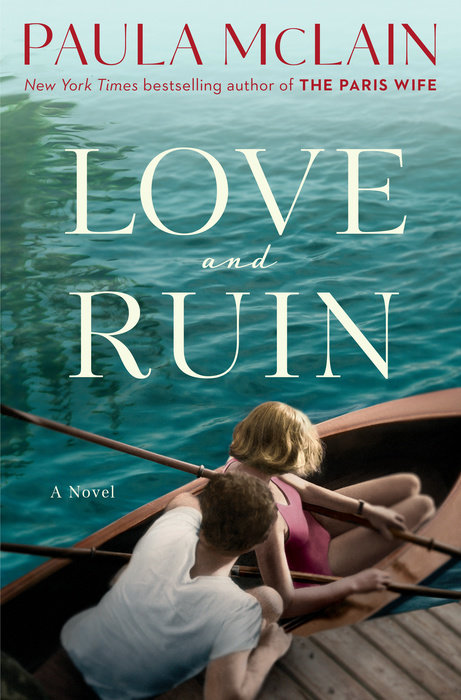
Read an excerpt from Love and Ruin by Paula McClain

The bestselling author of The Paris Wife returns to the subject of Ernest Hemingway in a novel about his passionate, stormy marriage to Martha Gellhorn—a fiercely independent, ambitious young woman who would become one of the greatest war correspondents of the twentieth century.

In 1937, twenty-eight-year-old Martha Gellhorn travels alone to Madrid to report on the atrocities of the Spanish Civil War and becomes drawn to the stories of ordinary people caught in the devastating conflict. It’s the adventure she’s been looking for and her chance to prove herself a worthy journalist in a field dominated by men. But she also finds herself unexpectedly—and uncontrollably—falling in love with Hemingway, a man on his way to becoming a legend.

In the shadow of the impending Second World War, and set against the turbulent backdrops of Madrid and Cuba, Martha and Ernest’s relationship and their professional careers ignite. But when Ernest publishes the biggest literary success of his career, For Whom the Bell Tolls, they are no longer equals, and Martha must make a choice: surrender to the confining demands of being a famous man’s wife or risk losing Ernest by forging a path as her own woman and writer. It is a dilemma that could force her to break his heart, and hers.

Heralded by Ann Patchett as “the new star of historical fiction,” Paula McLain brings Gellhorn’s story richly to life and captures her as a heroine for the ages: a woman who will risk absolutely everything to find her own voice.

Excerpt

Near dawn on July 13, 1936, as three assassins scaled a high garden wall in Tenerife hoping to catch the band of armed guards unaware, I was asleep in a tiny room in Stuttgart, waiting for my life to begin.

The killers were professionals. They moved without sound, slinking up hidden ropes, never looking at one another or thinking of anything but the next moment’s action. On cat’s feet, they fell from the wall to the ground, passing invisibly through the shadows and creeping softly toward their target.

It was like a symphony unfolding. Their plan was to take the guards one by one by slitting their throats. Then they would force the door beyond the veranda and climb the marble steps to the little girl’s room. María del Carmen, she was called, ten years old and sweetly sleeping until a rope would gag her quickly and pillows would crush over her small face. Then to the master bedroom, where they would dispatch the last few guards. Everything would be done without firing a single shot. The general and his beautiful wife wouldn’t need to stir even a little in their bed beyond the door, their bodies still as a painting by Velázquez, until death came.

All of this had been set in motion, but then one of the guards turned suddenly and machine-gun fire cut the night. The assassins scattered, barely escaping with their lives. The general woke at the sound of gunfire, but after hearing from his men what had happened, he only stumbled back to bed. Attempts on his life were not rare and particularly not just then, when he was on the cusp of the thing he’d waited for, as a tiger waits, just out of sight.

Five days later, the planned uprising in Morocco began. The general broadcast a message urging all military officers to join the insurgence and overthrow the Spanish government. Then he sent his wife and daughter into hiding in France, and was taken through the streets of Tenerife, where already the shooting had begun, to a waiting de Havilland Dragon Rapide. He wore civilian clothes and dark glasses and, by way of further disguise, had shaved off his familiar mustache.

It was nothing after all this for the trim little plane to take flight, ferrying its passenger to North Africa, where he would prepare the army that would soon overtake mainland Spain. On the way, he donned his uniform, crisp khaki with a red-and-gold belted sash. And just like that, he became General Francisco Franco, newly escaped from exile. Ready to start a war the whole world would be forced to finish.

And what was I doing then, at twenty-seven, when Franco made his play for Spain? Standing in a deepening shadow, as everyone was, whether they realized it or not.

German troops had recently marched into the Rhineland, and the Nuremberg Laws were being enforced, banning Jews from marrying or bearing children with “pure” Reich citizens, restricting them from public schools and certain businesses, and essentially branding them, along with Afro-Germans and Gypsies, enemies of the Volksgemeinschaft, so the Nazis could protect their Aryan blood in a race-based state. It was all so shocking and so absolutely wrong. And yet you could almost pretend it wasn’t happening by going on with your life and thinking it had nothing to do with you. 

I had lived in Paris on and off for years, trying to be a writer and also falling in love a lot, without being terribly successful at either. I was dying to write a character as glittering and sharp as Lady Brett from The Sun Also Rises, but since I couldn’t, I would settle for trying to be her. I wore long skirts with knit sweaters and sat in cafés smoking too much and crinkling my eyes and saying, “Hello, darling,” to near strangers. I ordered cocktails that were far too strong for me, and laughed at things that were desperate, and threw myself hard at experience, by which I mean married men. But the worst of it was walking home alone afterward under a smeary purple sky feeling not at all like Lady Brett but sad and lonely and thoroughly confused about what to do and who to be.

Something was missing in my life—in me—and I thought writing could fill it or fix it, or cure me of myself. It was only a notion I had, but I’d been following it faithfully, from St. Louis to New York, New York to Paris, Paris to Cannes, to Capri, and now to Stuttgart, where I meant to do research. I’d recently begun a novel about a young French couple that would do bold and important things in the name of political pacifism—go on strike with coal miners and endure the metal truncheons of the gendarmes, all in the name of social justice.

The story felt brave and serious to me when I was hunched over my notebooks in the Weltkriegsbibliothek, but there was a moment every day when I stepped out of the library and was confronted with the actual world. How naïve and hopeless the idea of pacifism seemed when the streets were full of brownshirts.

One day I was at the cinema when two Reich soldiers came through and dragged a young Jewish woman out of her seat in front of me and into the street by the back of her neck like a dog. The lights came down and the film reel began to spin, but I couldn’t be still in my chair and be entertained, not now. Walking back to my pension, I startled several times as I caught my reflection in a shopwindow. I looked Aryan enough, with my blond waves and light blue eyes and strong straight nose. I’d inherited my features from my parents, after all, who had easily passed as Protestant in anti-Semitic St. Louis. But there was Jewish blood in my family on both sides.

From Stuttgart, I moved on to Munich, where things grew even darker and more ominous. I read about Franco’s coup in Nazi newspapers, which recounted everything in a boasting, sneering way. The rapidly falling Republican regime was described as a pack of “Red Swine Dogs,” while Franco glowed, a prince of the Spanish people. Never mind that the government he and his henchmen were overthrowing was the product of the first democratic election in sixty years. Never mind that innocent people were being butchered so that a few could claim power and total dominion.

By the time I was back in Paris, Franco had declared martial law and vowed to “unite” Spain again at any cost, even if it meant slaughtering half the population. Most of Spain’s military had joined the Nationalists, while untrained civilians struggled to defend cities and villages. Pamplona, Ávila, Saragossa, Teruel, Segovia, and the whole of Navarre fell like dominoes before a month had passed. Anyone who spoke against the coup was a target. In the old Moorish city of Badajoz, the Nationalists marched almost two thousand into the Plaza de Toros—militiamen and peasant farmers, women and children—and opened fire with machine guns, leaving the bodies where they fell, and then pushing on to Toledo, where they would do the same.

Worse still were the terrible alliances being formed. Nazi Germany sent state-of-the-art Luftwaffe bomber planes and three thousand troops to Spain in exchange for mineral resources, raw copper and iron ore that would soon help Hitler with his own deadly goals. Submarines were sent and more bombers, hundreds of shiploads of supplies and skilled officers to train Franco’s men and sharpen their ability to kill and torture.

Mussolini came to Franco’s aid as well, “loaning” him eighty thousand troops and forming the third deadly prong of the Fascist triangle. And just like that, after years of sinister plotting, and almost overnight, Europe was a different place, and a more threatening one. It seemed anything could happen.

Stalin in the Soviet Union had his own agenda, but for the moment there was much to be gained by aiding Republican Spain. He waited to be joined by the major democracies in the West with arms to sell, but France’s government was bitterly divided, and Britain seemed more concerned with the salacious happenings between King Edward VIII and Wallis Simpson. In the States, Roosevelt was busy trying to manage the crippling effects of the Depression and also in the throes of his reelection campaign. And after all, there was much for America to debate in regard to Spain’s pleas for help. There were troubling rumors of arms being given to anarchists and labor-union militias if they would join the Republic’s cause—a difficult stance to support when there was already so much fear at home about communism.

Roosevelt decided on a blanket arms embargo, vowing to keep America out of foreign wars as long as possible. But for some of us who watched the shadows deepen all through that fall of 1936, there was no such thing as a foreign war. Nationalist forces spread through innocent villages, killing tens of thousands as they went. As they shelled the capital of Madrid, surrounding it on three sides, we felt responsible. The Republic of Spain had tried for democracy only to be slashed down and tortured. Why was it not our concern?

Slowly, slowly, and then all at once, thousands of people began to come forward as volunteers. International Brigades were formed out of troops from France and America, Canada, Australia, Mexico. Most of the men weren’t trained soldiers. Most, in fact, had never held a gun, and yet they grabbed what weapons they could—revolvers their fathers had left them, hunting guns, pistols, gas masks from the hardware store—and boarded trains, ships, cargo planes.

It was a beautiful crusade, and though I wasn’t immediately sure how I would find a role for myself, later I thought only this: 
It may be the luckiest and purest thing of all to see time sharpen to a single point. To feel the world rise up and shake you hard, insisting that you rise, too, somehow. Some way. That you come awake and stretch, painfully. That you change, completely and irrevocably—with whatever means are at your disposal—into the person you were always meant to be.

For me the war in Spain will always shine with the light of hard-won transformation. It was like falling in love. Or looking up into the sky to see a burning arrow, which screamed to be followed. It was that simple and complicated all at once. And if more would be set in motion than I could possibly predict or even imagine, I was still ready to say yes. And if I would soon lose my heart forever, never to retrieve it, lose absolutely everything—I was ready for that, too. My life seemed to be demanding it. It was calling me forward. There wasn’t any choice to be made, in the end. I would have to go to it, with my eyes wide open, and my hands open, too, willing to pay the price. 
 
Excerpted from Love and Ruin by Paula McLain. Copyright © 2018 by Paula McLain. All rights reserved. No part of this excerpt may be reproduced or reprinted without permission in writing from the publisher.

Buy on Amazon | Barnes and Noble

About the Author

Paula McLain is the New York Times bestselling author of the novels Circling the Sun, The Paris Wife, and A Ticket to Ride, the memoir Like Family: Growing Up in Other People’s Houses, and two collections of poetry. Her writing has appeared in The New York Times, Good Housekeeping, O: The Oprah Magazine, Town & Country, The Guardian, The Huffington Post, and elsewhere. She lives in Ohio with her family.
 

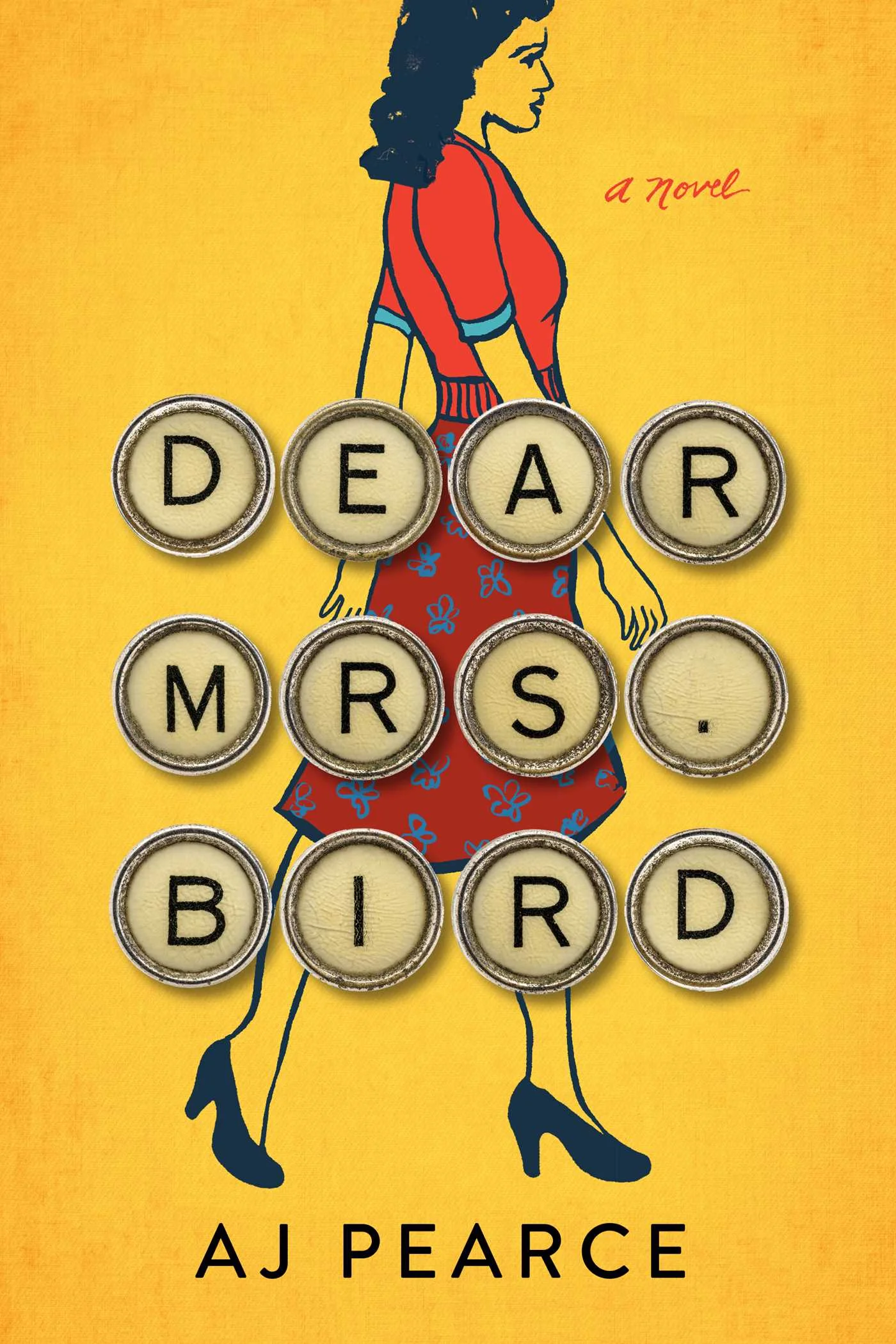
Spotlight: Dear Mrs. Bird by AJ Pearce

An irresistible debut set in London during World War II about an adventurous young woman who becomes a secret advice columnist— a warm, funny, and enormously moving story for fans of The Guernsey Literary and Potato Peel Pie Society and Lilac Girls.

London, 1940. Emmeline Lake is Doing Her Bit for the war effort, volunteering as a telephone operator with the Auxiliary Fire Services. When Emmy sees an advertisement for a job at the London Evening Chronicle, her dreams of becoming a Lady War Correspondent suddenly seem achievable. But the job turns out to be working as a typist for the fierce and renowned advice columnist, Henrietta Bird. Emmy is disappointed, but gamely bucks up and buckles down.

Mrs. Bird is very clear: letters containing any Unpleasantness must go straight in the bin. But when Emmy reads poignant notes from women who may have Gone Too Far with the wrong men, or who can’t bear to let their children be evacuated, she is unable to resist responding. As the German planes make their nightly raids, and London picks up the smoldering pieces each morning, Emmy secretly begins to write back to the readers who have poured out their troubles.

Prepare to fall head over heels for Emmy and her best friend, Bunty, who are gutsy and spirited, even in the face of a terrible blow. The irrepressible Emmy keeps writing letters in this hilarious and enormously moving tale of friendship, the kindness of strangers, and ordinary people in extraordinary times.

Buy on Amazon | Barnes and Noble

About the Author

AJ Pearce grew up in Hampshire, England. She studied at the University of Sussex and Northwestern University. A chance discovery of a 1939 women's magazine became the inspiration for her first novel, Dear Mrs. Bird. She lives in the south of England.