Spotlight: The Name of Red by Beena Khan

TourBanner_The Name of Red.jpg
COVER the name of red.jpeg

Two strangers on the same path.

Survivors. Companions.

They will be each other’s salvation.

On a rainy, winter night, a mysterious woman in a red dress seeking shelter comes inside the restaurant Kabir was busy working in —primarily the bar— and night after night, drink after drink, she comes back to the same spot. That is where he sees her for the first time.

Hundreds of patrons around her try to speak with her daily, but she dismisses them. It appears she wants to remain in a blissful peace alone with her booze and books. After seeing the mysterious woman reading a book, and because of his shy nature, Kabir gains entrance into her life by anonymously leaving books with notes for her.

The Name of Red is the story of two strangers, two different personalities who meet on a winter, rainy night who challenge each other. They have a connection which blossoms into a friendship due to their fondness of books. But they both have secrets that can bind them together or threaten their newfound relationship forever.

Excerpt

The restaurant Ferdaus was filled with a buzzing crowd.

The smoke around the people twisted and formed curls, illuminated under the bar lights. The atmosphere was a hazy cloud, lingering against their clothes. Several people came in seeking shelter from the pouring rain outside. The customers of the restaurant turned to look at the entrance door- bell jingling. They glanced at the large crowd coming as the glass door was pulled open, and they watched as someone newstepped in behind them.

The woman walked into the bar for the first time in the winter rain.

She didn’t have an umbrella on her; her little sleeveless dress ended at her ankles, fully drenched. Her wet dress clung to her body, showcasing the outlines of her curves. In one hand, she was carrying the skirt of her dress. Suddenly, she let it go, and her long, bare arms moved upwards as she tried to fix her damp hair which had darkened in intensity due to the rain. It fell past her shoulders, the strands sticking to her face. She attempted to comb through the tangles with her fingertips.

The men watched her movements hungrily, their eager faces drawn to her and at the sight of someone new. Their eyes trailed from her face, to her wet body, then back to the movements of her hands entwined in her hair. Under her arm, she carried a book and a trench coat. It appeared strange she wasn't wearing the coat when it was pouring outside and freezing in the middle of November. Men were left mesmerized by her, and she turned heads as she walked by. Something radiated from within her, drawing the men around her in. 

The women who were with some of these men noticed their gaze on the unfamiliar woman. Now they stared at her with jealousy and anger.

Who is she? they wondered.

Buy on Amazon | Barnes and Noble

About the Author

author image.jpg

Beena Khan lives in a suburb in Queens, New York in her apartment. She is 27 years old from Azad Kashmir, Pakistan. She is an immigrant who moved to New York when she was five years old. She currently holds a Masters Degree in Developmental Psychology from Cuny School of Professional Sciences. She enjoys reading, writing, and netflixing. This is her debut novel. 

Her website is www.beenakhan.com. Sign up for her newsletter where you can subscribe for book news, writing tips, upcoming releases, and exclusive content!

Instagram: @Beenaxkhan

Twitter: @Beenaxkhan

Facebook @Beenaxkhan

Goodreads Book: @Beenaxkhan

Newsletter: https://beenakhan.us19.list-manage.com/subscribe/post

Spotlight: The Bitter and Sweet of Cherry Season by Molly Fader

9781525804557_PRD2_proof.jpg

For fans of Robyn Carr, commercial women's fiction about three generations of women who come together at the family orchard to face secrets from the past and learn to believe in the power of hope and forgiveness.

In cherry season, anything is possible...Everything Hope knows about the Orchard House is from her late-mother's stories. So when she arrives at the Northern Michigan family estate late one night with a terrible secret and her ten-year-old daughter in tow, she's not sure if she'll be welcomed or turned away with a shotgun by the aunt she has never met.Hope's aunt, Peg, has lived in the Orchard House all her life, though the property has seen better days. She agrees to take Hope in if, in exchange, Hope helps with the cherry harvest—not exactly Hope's specialty, but she's out of options. As Hope works the orchard alongside her aunt, daughter, and a kind man she finds increasingly difficult to ignore, a new life begins to blossom. But the mistakes of the past are never far behind, and soon the women will find themselves fighting harder than ever for their family roots and for each other.

Excerpt

Chapter 1

HOPE

Night up in Northern Michigan was no joke. 

Hope had never seen a dark so dark. It had heft and dimension, like she was driving right into an abyss. She thought about waking up Tink in the back to show her, but the girl had finally fallen asleep and she needed the rest.  

And Hope needed a break. 

Who knew traveling with a completely silent, angry and traumatized ten-year-old could be so exhausting?

Hope’s phone had died when she got off the highway about twenty minutes ago. In those last few minutes of battery she had tried to memorize the directions: 

Left on Murray Street.

Slight right onto County Road 72. 

Your destination is five miles on the right. 

But County Road 72 wasn’t well marked and now she feared she was lost. Well, for sure she was lost; in the grand scheme of things she was totally off the map. 

But she was clinging to the one ratty thread of hope she had left in her hand. 

And then just as that tiny bit of thread started to slip out of her fingers, from the murk emerged a blue sign.

County Road 72.

The road took a long arcing right into the dark, and she unrolled her window, trying to keep herself awake. Adrenaline and gas station coffee could only do so much against two sleepless nights. 

Her yawn was so wide it split her lip. Again. Copper-tasting blood pooled in her mouth.

“Shit,” she breathed and pressed the last of the napkins against her mouth. She was even out of napkins. 

In the back, Tink woke up. Hope heard the change in her breathing. The sudden gasp like she was waking up from a nightmare. 

Or into one. Hard to say. 

“Hey,” Hope said, looking over her shoulder into the shadows of the back seat. Her daughter’s pale face like a moon slid into the space between the driver and passenger seats.  “We’re almost there.” Hope sounded like they were about to drive up to the gates of Disney World.

Tink rubbed her eyes. 

“Did you see the stars?” Hope’s voice climbed into that range she’d recently developed. Dementedly cheerful. Stepford Mom on helium. She winced at the sound of it. That wasn’t her. It wasn’t how she talked to Tink. And yet she couldn’t tune her voice back to normal. “There are so many of them. I don’t think I’ve ever seen so many stars.”

Tink ducked her head to look out the windshield and then turned to cock her head at an angle so she could look out the passenger windows.

They’d gone to an exhibit about the constellations at the Science Center a year ago and Tink still talked about it. Pointing up at Sirius like she’d discovered it herself.

“Aren’t those the pieties?” Hope got the name wrong on purpose, hoping for a snotty-toned correction from her miniature astronomer. Or at least a throat-clearing scoff. 

But no.

“Sooner or later you’re going to talk to me,” she said. “You’re going to open that mouth and all the words you haven’t said all day are gonna come pouring out.”

Silence.

“Do you want to ask me questions about where we’re going?” They were, after all, heading deep into Northern Michigan to a place she and Tink had never been, and Hope had never told her about until today. 

Tink rubbed her eyes again.

“Or maybe what happened…tonight?” Her gaze bounced between Tink and the road. 

When you’re older, you’ll understand. When you’re a mom, you’ll understand. She wanted to say that to her daughter, but she herself barely understood any of what had happened the last two days.  

Still silence. 

Hope tried a different angle. “I’m telling you, Tink. I know you and you can’t keep this up much longer. I’ll bet you ten bucks you say something to me in five…four…three…two…” She pulled in a breath that tasted like tears and blood. 

Please, honey. Please. 

“One.” She sighed. “Fine. You win.”

Her beat-up hatchback bounced over the uneven asphalt and Tink crawled from the backseat into the front, her elbow digging into Hope’s shoulder, her flip-flopped foot kicking her in the thigh. 

The degree of parenting it would take to stop Tink from doing that, or to discuss the potential dangers and legality of it, was completely beyond her. She was beyond pick your battles, into some new kind of wild west motherhood. Pretend there were no battles. 

They drove another five minutes until finally, ahead, there was a golden halo of light over the trees along the side of the road, and Hope slowed down. A gravel driveway snaked through the darkness and she took it on faith that it had been five miles. 

“This is it.”  

Please let this be it. 

The driveway opened up and there was a yellow-brick, two-story house. 

The Orchard House. That was what Mom called it in the few stories she’d told about growing up here. Actually, the words she used were The Goddamn Orchard House. 

It was a grand old-fashioned place with second-story windows like empty eyes staring down at them. White gingerbread nestled up in the corners of the roof, and there was a big wide porch with requisite rocking chairs.

Seriously, it was so charming, it could have been fake. 

The car rolled to a stop and Hope put it in park. Her maniacal new voice failed her, and she just sat there. Silent. 

Suddenly the front door opened and a dog – a big one, with big teeth – came bounding out. Cujo stopped at the top of the steps and started barking. Behind the dog came a woman in a blue robe carrying a shotgun.

Tink made a high panicked sound in her voice, climbing up in her seat.

Hope’s impulse was to turn the car around and get out of there. The problem was there was nowhere to turn around to. They had no place left to go. 

“It’s okay, honey,” Hope lied. She went as far as to put her hand over Tink’s bony knee, the knob of it fitting her palm like a baseball. “Everything’s going to be all right.”

More desperate than brave, Hope popped open the door. The dog’s bark, unmuffled by steel and glass, was honest-to-god blood curdling. “Hi!” she yelled, trying to be both cheerful and loud enough to be heard over the barking. 

“Get your hands up,” the woman on the porch shouted.  

Hope shoved her hands up through the crack between the door and the car and did a kind of jazz hands with her fingers.  

“What do you want?” the woman asked. 

“Are you Peg—”

“I can’t hear you.”

She stood up, her head reaching up over the door. “Are you Peg?”

“Never mind, me. Who the hell are you?” She pointed the business end of the gun toward them.

Hope quickly side-stepped away from the car door, and Tink reached across the driver’s seat and slammed it shut. 

The heavy thud of the engaged lock was unmistakeable. 

“You don’t know me—”

“No shit!”

“My name is Hope,” she said. 

The gun lowered and the woman’s face changed. From anger to something more careful. “Hope?”

“Yeah. I’m Denise’s girl. I’m…well, you’re my aunt?” \

Excerpted from The Bitter and Sweet of Cherry Season by Molly Fader, Copyright © 2020 by Molly Fader. Published by Graydon House Books.

Buy on Amazon | Audible | Barnes and Noble

About the Author

Molly Fader is the author of The McAvoy Sisters Book of Secrets. She is also the award-winning author of more than forty romance novels under the pennames Molly O'Keefe and M. O'Keefe. She grew up outside of Chicago and now lives in Toronto. Follow her on Twitter, @mollyokwrites.

Author Website: http://mollyfader.com/

TWITTER: @MollyOKwrites

FB: @MollyFader

Insta: @mokeefeauthor

Goodreads:  https://www.goodreads.com/author/show/18435981.Molly_Fader

Cover Reveal: Can’t Help Falling in Love and Last Beautiful Girl by Samantha Chase

Magnolia-Summer2020-Banner.jpg

Genre: Contemporary Romance

Release Date: Summer 2020

Book 5 - Can’t Help Falling in Love (August 10, 2020)

CantHelpFallingInLove-6x9ebook (1).jpg

Hunter Jones never thought that shared custody would be part of his life, but it’s the only way to make sure his son still has both parents in his life. But when his ex’s increasing unpredictability leads to a missed day care pick up, he’s not so sure shared custody is the best option anymore. Never mind that he’s now the one being accused of bad parenting by a total stranger.Violet Drake has zero patience for poor parenting. There’s nothing that angers her more than seeing parents behave in the same irresponsible way her own parents did throughout her childhood. But after going off on a perfect stranger late to pick up his son, her conscience gets the best of her and she realizes she may have been a little harsh.Violet is only supposed to be in Magnolia Sound for a short time to help out her best friend, so getting involved with a single dad is the absolute last thing she should be doing.Their timing is all kinds of wrong, but sometimes you just can’t help yourself.

Goodreads: https://geni.us/FallingInLove-GR 

Amazon: https://geni.us/FallingInLove-Amazon 

Apple: https://geni.us/FallingInLove-Apple 

Barnes & Noble: https://geni.us/FallingInLove-BN 

Kobo: https://geni.us/FallingInLove-Kobo 

Book 6 - Last Beautiful Girl (September 28, 2020)

LastBeautifulGirl-6x9ebook.jpg

Kyle Jones loves women. All women. And just because he’s seen all his siblings settle down it doesn’t mean he has any intention of following in their footsteps. After all, he’s happy to keep going through life like it’s one big party and getting tied down to someone would just get in the way of having a good time. Or so he thought until the one woman he could never forget returns to Magnolia Sound.Sydney Albright never thought she would become a mother by losing her sister and brother-in-law. But for the sake of her niece she’ll do whatever it takes, even move into the money pit that is her sister’s home. But the good thing about small towns is there’s always someone ready to help. She just never thought Kyle would be the one to land on her front porch to help with the renovations.Sydney vows she’ll never fall for Kyle again – the past is in the past and that’s right where it should stay. Never mind that she doesn’t even have the time to think about a relationship. But Kyle has other plans. He always said she was the first beautiful girl he loved and now he’s determined to also make her the last.

Goodreads: https://geni.us/LastBeautifulGirl-GR

Amazon: https://geni.us/LastBeautifulGirl-Amz 

Apple: https://geni.us/LastBeautifulGirlApple 

Barnes & Noble: https://geni.us/LastBeautifulGirl-BN 

Kobo: https://geni.us/LastBeautifulGirl-Kobo 

About the Author

Samantha Chase is a New York Times and USA Today bestseller of contemporary romance. She released her debut novel in 2011 and currently has more than forty titles under her belt! When she’s not working on a new story, she spends her time reading romances, playing way too many games of Scrabble or Solitaire on Facebook, wearing a tiara while playing with her sassy pug Maylene…oh, and spending time with her husband of 25 years and their two sons in North Carolina.

Website: https://www.chasing-romance.com/ 

Twitter: https://twitter.com/SamanthaChase3 

Facebook: https://www.facebook.com/SamanthaChaseFanClub/ 

Instagram: https://www.instagram.com/samanthachaseromance/ 

Newsletter: http://bit.ly/2xU05xE 

BookBub: https://www.bookbub.com/authors/samantha-chase

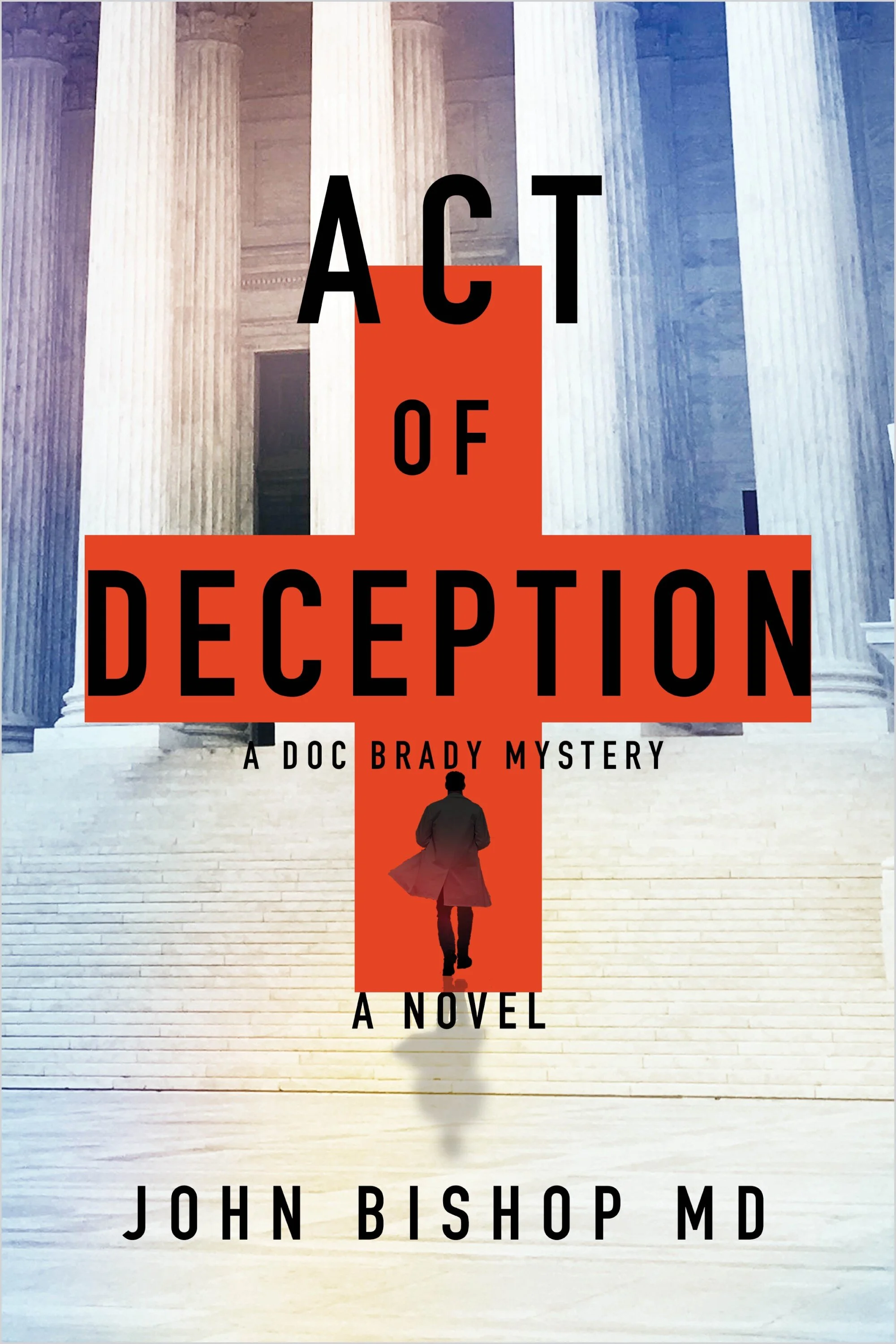
Spotlight: Act of Deception: A Medical Thriller by John Bishop

Act of Deception_2000w.jpg

Is it medical malpractice, or is the attorney just another ambulance chaser?

It’s 1995, and Houston orthopedic surgeon Dr. Jim Bob Brady has been sued for medical malpractice; a mysterious infection caused a knee replacement to end up as an amputation. Donovan Shaw, a ruthless plaintiff’s attorney, has taken the case and doesn’t seem bothered by the fact that he and Brady share a number of friends. “It’s not personal!” Shaw says. But it feels personal—especially when Shaw threatens, “I will do anything, and I mean anything, to win the case, even if I have to destroy you and that pretty wife of yours. I will stop at nothing. You remember that!”

And Brady isn’t the only one in his practice being sued. How is Shaw getting his inside information? Can the patients afford to say no to filing lawsuits, even if the claims aren’t valid? Through a series of twists and turns, and with the support of his wife Mary Louise and their professional investigator son J. J, Brady once again doggedly goes into “sleuth mode” to get to the truth of the matter—even after his life is put in jeopardy. Will he survive, only to find himself at the mercy of the wild and wooly Houston court system? Is this whole mess his fault? Or is there an act of deception involved?

Excerpted from Act of Deception: A Doc Brady Mystery. Copyright © 2020 by John Bishop. All rights reserved. Published by Mantid Press.

Friday, August 25, 1995

I awoke that Friday morning in a serious sweat, the kind that is not immediately relieved by rising and washing one’s face with cold water. I noted that the clock in the bathroom read 4:38, twenty-two minutes before my designated alarm setting. After staring at the clock for a minute, maybe two, I felt my right radial pulse. The accelerated throbbing confirmed that tachycardia was still my predominant rhythm. I decided to attend to ritualistic morning bathroom chores, make coffee, read the paper, and at least try to pretend that it was a normal Friday morning. 

Upon completion of the bathroom routine, as quietly as possible, I punched in the five-digit alarm code and started to leave the bedroom to go downstairs. Unfortunately, even the sound of punching in the numbers was unduly shrill, and it caused Mary Louise, my bride of twenty-four years, to stir. 

“Jim Bob?”

“Yes?”

“It’s not even five yet. Why are you up?”

“Couldn’t sleep. Woke up with the sweats again. Sorry to wake you. I thought I’d go downstairs, make some coffee, and sit outside and think for a while. Okay?” 

“Want some company?” 

Normally, I would never turn down such an offer. I loved my wife dearly. She was, in fact, my best friend. That particular morning, however, I responded in the negative. 

“I don’t want to hurt your feelings, sweetie, but this is just one of those times I need to collect my thoughts. Know what I mean?” 

“I do. I’m sorry you’re having to go through all this. It isn’t fair. After all you’ve done for everybody else. I know in my heart it will be all right, just maybe not today. Try not to get too upset. Promise?” 

“I’ll do my best.” I leaned down and kissed her warm cheek. She smelled so good, I considered taking off my robe and getting back into bed. I finally chose not to. “Go back to sleep. I’m not leaving until about eight o’clock.” 

I left her reluctantly and plodded downstairs barefooted, in my cotton robe, with lights still off, toward coffee heaven. I selected Twin Peaks Blend coffee beans, which we kept in the freezer to avoid staleness, ground them, and began the ten-minute process to achieve as perfect a cup of coffee as I could make. I waited on the back porch in my “spot,” a large white cane rocker. The month of August was a stifling time of year in Houston, even at that hour of the morning. The heat and humidity were almost unbearable during July, August, and early September. I turned on the outdoor ceiling fan that hovered above my chair and hoped it would make the weather more pleasant. It didn’t. 

I considered my life that morning. I, Dr. James Robert Brady, who had done my best to be a compassionate and dedicated orthopedic surgeon for the past seventeen years, was being sued for medical malpractice. I was not a neophyte when it came to lawsuits. I had been sued twice before, not an unusual occurrence in a city of four million people, with far too many law school graduates sitting in their quiet offices with nothing to do. The other two suits were quite minor and did not linger but were dismissed rather quickly, meaning over a year-or-two period. The current lawsuit, the cause of my awakening before five with the sweats and intense gastrointestinal distress, had not been dismissed. 

I stepped back inside to the relatively cool air, although during August even the air-conditioning system labored heavily. I poured my coffee into a large black mug with a removable top that allowed intermittent filling of the cup but twisted on securely so as not to spill during the drive to work. While I wasn’t yet ready to leave, I used the “to go” cup anyway, being a creature of habit, a trait inherited from my dear departed father, and one which drove even me to distraction on occasion. 

I returned to the French door to head back to the humidity and spotted Cat perched on the back doorstep, peering through the lowest windowpane, awaiting her breakfast. I sipped my coffee and prepared her Prime Feast in a disposable dish, probably not recyclable because I am sure it isn’t possible to remove the smell of mixed seafood, no matter what treatment is available at the nearest recycling plant. 

Strolling to the door, feast in hand, I greeted the discriminating feline. 

“Morning, Cat. I have your breakfast.” 

No response. Just a simple twitch of the sensitive nose. There was no tail-wagging or jumping on my bare leg to greet me, sure signs that man’s best friend loved you and missed you. Rather, Cat simply did what she did best. She remained aloof and distinctly noncommittal. I bent down, sat her dish on the patterned concrete deck, and stroked her damp fur as she sampled my selection. She did give me a brief look of gratitude, then resumed her nibbling. I returned to my chair and continued to assess my life and its worth. 

I was most critical of self that morning, pondering the effects of aging on a once-athletic physique. While Mary Louise considered me to be a handsome specimen, I lamented my shrinkage from six feet plus one inch to slightly less than the “manly” six feet. I continued to disguise my shortening by wearing Western boots, and only on weekends did I allow myself the comfort of high-topped athletic shoes—not that I used them for athletics. 

I remembered my previously full head of hair that had slowly thinned, especially at the front, to allow for enlargement of my forehead while a balding spot was created on the crown of my head. My sideburns were a little long and gray and transitioned to brown at an always-increasing distance from the top of my ears. I criticized the extra minute I spent every morning to carefully position my combed-straight-back locks over that bare spot I had grown to hate. 

I had begun to study myself each morning before showering to confirm that I indeed resembled Alfalfa of Little Rascals fame, with thin wisps of hair sticking straight up toward the heavens. I then reminded myself of my need to wear bifocals and of my need to start a workout program to slim my waist from its size 38—although I had noticed lately that the cleaners had been shrinking my best jeans. 

I tried to take comfort in Mary Louise’s love of what she called my “charming cleft chin” and “captivating smile” but was unsuccessful. I felt old that morning, which, along with words like useless, worthless, out-of-shape, and four-eyed, drove me to an even fouler mood than when I awoke to cold sweats and the dreaded digestive-tract blues. 

By six o’clock I was sweating again, that time from drinking an entire pot of coffee and from the oppressive heat that had already risen to a sultry 80 degrees with the humidity at drip level. I threw off my robe and dove into the pool, taking care to avoid a cervical spine injury in the four-foot-deep water. It did cool me off temporarily, so after two laps I simply stood in the healing waters, naturally, in the buff. As I reminisced over the treatment of the patient that had decided to sue me, the back door of the house opened and the Tipster bounded outside. He saw me in the pool and almost dove in with me. Fortunately, I was able to hold him back while I ruffled his shaggy mane and scratched his ears. At least he was glad to see me and acted as though we had been apart for years, not just the six hours since we had bid him good night. 

His official title was “Tippecanoe and Tyler Too,” a typical name given by a particular breeder who prized his full-blooded intelligent golden retrievers. But “Tip,” “Tipper,” or “the Tipster,” as Mary Louise intermittently called him, had failed the IQ test for well-bred dogs and was lovingly given to me by that grateful patient, who had many more golden retrievers than insurance dollars. 

Tip had been presented to me in the office five months previously at the end of the day as a surprise. The man didn’t ask me if I wanted a dog, but simply showed up at my office with a large, overly friendly seven-month-old golden retriever puppy. I still suspected that Fran and Rae, my faithful office staff, had somehow conspired with my darling wife to bring some new joy into my life. At the time, I was highly skeptical and hoped to rid myself of the constantly-shedding beast who had disrupted our lives. Over the next few months, however, I had grown to love, without restraint, this large, adorable dog, whose only faults were that he was too much a friend to strangers and a poor fetcher of dead birds. Neither flaw bothered me. I didn’t hunt much anymore, and we rarely had anyone to the house that I despised. Besides, considering we had yet to be burglarized, the Tipster’s camaraderie with those stealers of one’s things was an untested character defect. 

My mood improved significantly after seeing Tip, and I watched with interest as he bounded over to greet Cat with a friendly good morning. He had attempted to make Cat his new best friend every day since his arrival at our abode but had been miserably unsuccessful. Cat’s reaction to his energetic playfulness was to leap gracefully into the rocking chair next to mine, back herself up as far as possible to the rear of the chair, and wait. When Tip happily padded over to see her and put his whole head onto the seat of the chair, she would strike out at his sensitive nose with one of her front paws, prompting an episode of howling. For five months, this scenario had occurred each and every time the two animals had a backyard encounter. I believed that Cat had become bored with the whole routine and had actually become embarrassed at what seemed to be the retriever’s inability to learn. 

“Tip? Be careful over there. She scratches your nose every day! It’s so raw, you almost need stitches.” 

I obviously had lost my mind. I was talking to the dog as though he understood my every word. Just before pushing his fat head into the seat of the chair to smell the gray bundle of fur, though, he turned his head toward me and perked up his ears. I didn’t know if he had actually understood what I had said or simply had forgotten that I was in the pool, since he had wandered into the bushes to relieve himself before approaching Cat. He stared at me for a moment, seemed to consider what I had said, then pushed his tender, scarred nose toward the she-beast, and . . . I couldn’t believe it! She didn’t hurt him! He licked her fur, and Cat just stood there. I guessed she finally decided that Tip was harmless and just wanted to play. She might have also figured out that a large dog like that could be an impressive ally when trying to ward off neighborhood cats who strayed into her domain looking for a free meal. 

And so it was that on that hot, steamy morning in August, my cat and dog became friends. I thought that maybe Mary Louise was right, having told me repeatedly that everything would be okay. Alas, that small, backyard miracle was the only one I witnessed for a while. 

Buy on Amazon | Barnes and Noble

About the Author

Photo Credit: Greg Moredock

Photo Credit: Greg Moredock

John Bishop MD is the author of Act of Deception: A Doc Brady Mystery. Dr. Bishop has practiced orthopedic surgery in Houston, Texas, for 30 years. His Doc Brady medical thriller series is set in the changing environment of medicine in the 1990s. Drawing on his years of experience as a practicing surgeon, Bishop entertains readers using his unique insights into the medical world with all its challenges, intricacies, and complexities, while at the same time revealing the compassion and dedication of health care professionals. Dr. Bishop and his wife, Joan, reside in the Texas Hill Country. For more information, please visit https://johnbishopauthor.com

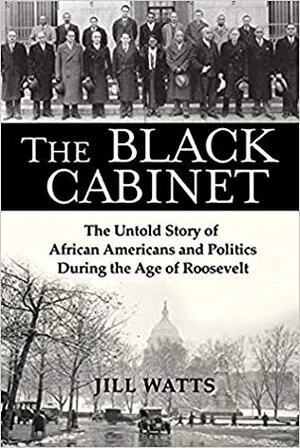
Spotlight: The Black Cabinet by Jill Watts

The Black Cabinet banner.jpg
52746469._SX318_SY475_.jpg

Offering a compelling history of the evolution, impact, and ultimate demise of a New-Deal-era hidden “cabinet” to Franklin Delano Roosevelt on racial affairs, historian Jill Watt’s THE BLACK CABINET: The Untold Story of African Americans and Politics During the Age of Roosevelt illuminates the progress of black citizenship between Reconstruction and the modern Civil Rights movement.

In 1932 in the midst of the Great Depression, Franklin Delano Roosevelt won the presidency with the help of key African American defectors from the Republican Party. At the time, most African Americans lived in poverty, denied citizenship rights and terrorized by white violence. As the New Deal began, a “black Brain Trust” joined the administration and began documenting and addressing the economic hardship and systemic inequalities African Americans faced. They became known as the Black Cabinet, but the environment they faced was reluctant, often hostile, to change.

“Will the New Deal be a square deal for the Negro?” The black press wondered. The Black Cabinet set out to devise solutions to the widespread exclusion of black people from its programs, whether by inventing tools to measure discrimination or by calling attention to the administration’s failures. Led by Mary McLeod Bethune, an educator and friend of Eleanor Roosevelt, they were instrumental to Roosevelt’s continued success with black voters. Operating mostly behind the scenes, they helped push Roosevelt to sign an executive order that outlawed discrimination in the defense industry. They saw victories—jobs and collective agriculture programs that lifted many from poverty—and defeats—the bulldozing of black neighborhoods to build public housing reserved only for whites; Roosevelt’s refusal to get behind federal anti-lynching legislation. The Black Cabinet never won official recognition from the president, and with his death, it disappeared from view. But it had changed history. Eventually, one of its members would go on to be the first African American cabinet secretary; another, the first African American federal judge and mentor to Thurgood Marshall.

Masterfully researched and dramatically told, THE BLACK CABINET brings to life a forgotten generation of leaders who fought post-Reconstruction racial apartheid and whose work served as a bridge that Civil Rights activists traveled to achieve the victories of the 1950s and ’60s.


AVAILABLE ON

AMAZON

The Black Cabinet is the first ever account of how African American appointees in the administration of Franklin Delano Roosevelt came together to form a unofficial advisory group that became known as the “Black Cabinet.”  It uncovers the story of a lost generation of African American federal appointees who provided a bridge between black leaders of the early twentieth century and the post-WWII Civil Rights Movement led by Martin Luther King.  The Black Cabinet members were the “hidden figures” of the New Deal and WWII era who pushed not only for African American rights but for the fulfillment and expansion of the promise of democracy to all Americans. 

Why was the Black Cabinet so important? Black Cabinet members fought for the inclusion of African Americans in New Deal programs designed to help the nation recover from the Great Depression, and for equal opportunities in the military and in the defense industry during WWII. They played a key role in rescuing the nation from the Great Depression. They were able to compel the government to introduce the first anti-discrimination clauses into federal contracts, and win jobs, agricultural, and educational assistance for African Americans and other citizens suffering from marginalization and impoverishment. They proposed universal health care, fought for public housing, successfully challenged segregation in the federal workplace, and campaigned against lynching. They paved the way for African Americans to shift their allegiance from the Republicans to the Democrats. They campaigned for better treatment of African Americans in the military including the celebrated Tuskegee Airmen.

Why haven’t we heard of the Black Cabinet?  Because they were an unofficial group and they often worked clandestinely. They faced enormous resistance and hostility from within the federal government and confronted a President who fretted that supporting black needs would alienate the powerful white southern wing of the Democratic party. When Black Cabinet members couldn’t get results internally, they turned to the African American press and black leaders to further their causes. Often, they covertly opposed policies put forward by the administration or by Congress and, as a couple of Black Cabinet members later remember, regularly feared for their jobs.  

Who were the leaders of the Black Cabinet?

  • The dynamic and indominable Mary McLeod Bethune:  Born to a sharecropping family, her parents had been enslaved.  She rose to become the founder of Bethune-Cookman College, a leader in the black women’s club movement, and, with her appointment in the New Deal, the first African American woman to head up a federal program. She took the reins of the Black Cabinet in 1936 and drove the group ahead in their battles for equality refusing to accept no as an answer from anyone, including the President.

  • The young and brilliant Robert Weaver: A member of Washington, D.C.’s black elite, he attended Harvard University where he became the first African American to earn a Ph.D. in economics.  Recruited early in the New Deal for his statistically compelling studies showing how the New Deal was actually hurting black Americans, Weaver continually argued that if any group was left behind economically, then the nation would never fully recover from economic crises. He would become the “brains” behind the Black Cabinet.”

  • Black Cabinet Pillars: Crusading newspaper editor, Robert Vann, a former Republican who led the defection of African Americans from the GOP and was appointed in the Justice Department; Alfred Edgar Smith, a scrappy Arkansan who grew up poor and rose to head one of the New Deal’s largest black jobs programs; Bill Hastie, boyhood friend of Robert Weaver and graduate of Harvard Law School who became the first African American federal judge; and Lucia Mae Pitts who became the first African American woman to serve as a secretary to a white federal administrator.

Who were the Black Cabinet’s main allies? 

  • Eleanor Roosevelt: The First Lady shared a deep friendship with Mary McLeod Bethune and she provided The Black Cabinet with access to the President. Outside of Bethune, none of the other Black Cabinet members met with FDR.  But Eleanor Roosevelt endeavored to get their requests to the President, even if it meant leaving a note on his nightstand.  

  • The White House Domestic Staff:  In particular, Elizabeth and Irvin McDuffie who respectively served as FDR’s maid and valet.  They often conveyed Black Cabinet messages and needs of the African American people directly to the President.

  • African American Leaders including the NAACP’s Walter White and union head A. Philip Randolph: The Black Cabinet looked to the NAACP to pressure FDR from the outside.   Several Black Cabinet members supported Randolph’s call for a March on Washington in 1941.  The March was postponed after FDR signed an order outlawing discrimination in defense employment (E.O 8802) but it was later revived and carried out by Randolph and Martin Luther King in 1963.

  • The African American Press:  Several members of the Black Cabinet had worked in journalism before joining the Roosevelt administration and collaborated with the black press through leaks and by providing information to black reporters

Buy on Amazon | Audible | Barnes and Noble

About the Author

nbs-9det_400x400.jpg

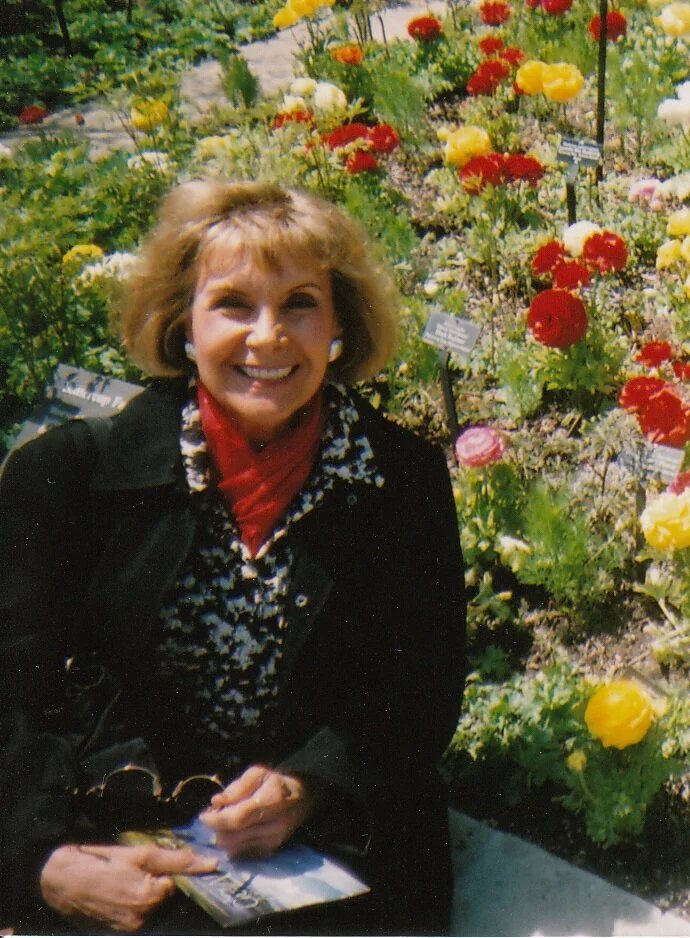
Jill Watts is a Professor of History at California State University San Marcos where she teaches United States Social and Cultural History, African American History, Film History, and Digital History. In addition to her forthcoming book The Black Cabinet: The Untold Story of African Americans and Politics During the Age of Roosevelt, Professor Watts is also the author of Hattie McDaniel: Black Ambition, White Hollywood; Mae West: An Icon in Black and White; and God, Harlem USA: The Father Divine Story. Her books on Hattie McDaniel and Father Divine have been optioned for film.

Professor Watts was raised in her father’s hometown of San Diego and grew up in the neighborhoods of Emerald Hills and Southeast San Diego. After earning a B.A. in History from UCSD, Professor Watts received an M.A. and Ph.D. from the University of California Los Angeles. Before returning to San Diego County to teach at California State University San Marcos, she taught at UCLA, Weber State University, Cornell University, and Santa Monica College. She was a fellow at Cornell University’s Society for the Humanities and, in 2017, was selected as a Brakebill Distinguished Professor at California State University San Marcos. She has served as the History Department’s Chair, the coordinator of the History Graduate Program, the program director of Film Studies, and the co-director of Women’s Studies.

More about Dr. Watts from Contemporary Authors @ Encyclopedia.com

CONNECT WITH JILL WATTS: WEBSITE | LINKEDIN | FACEBOOKTWITTER | INSTAGRAM

CONNECT WITH MOCHA GIRLS READ: FACEBOOK | TWITTER | INSTAGRAM

ENTER TO WIN

$25 Amazon Gift Card & The Black Cabinet ebook

CLICK HERE

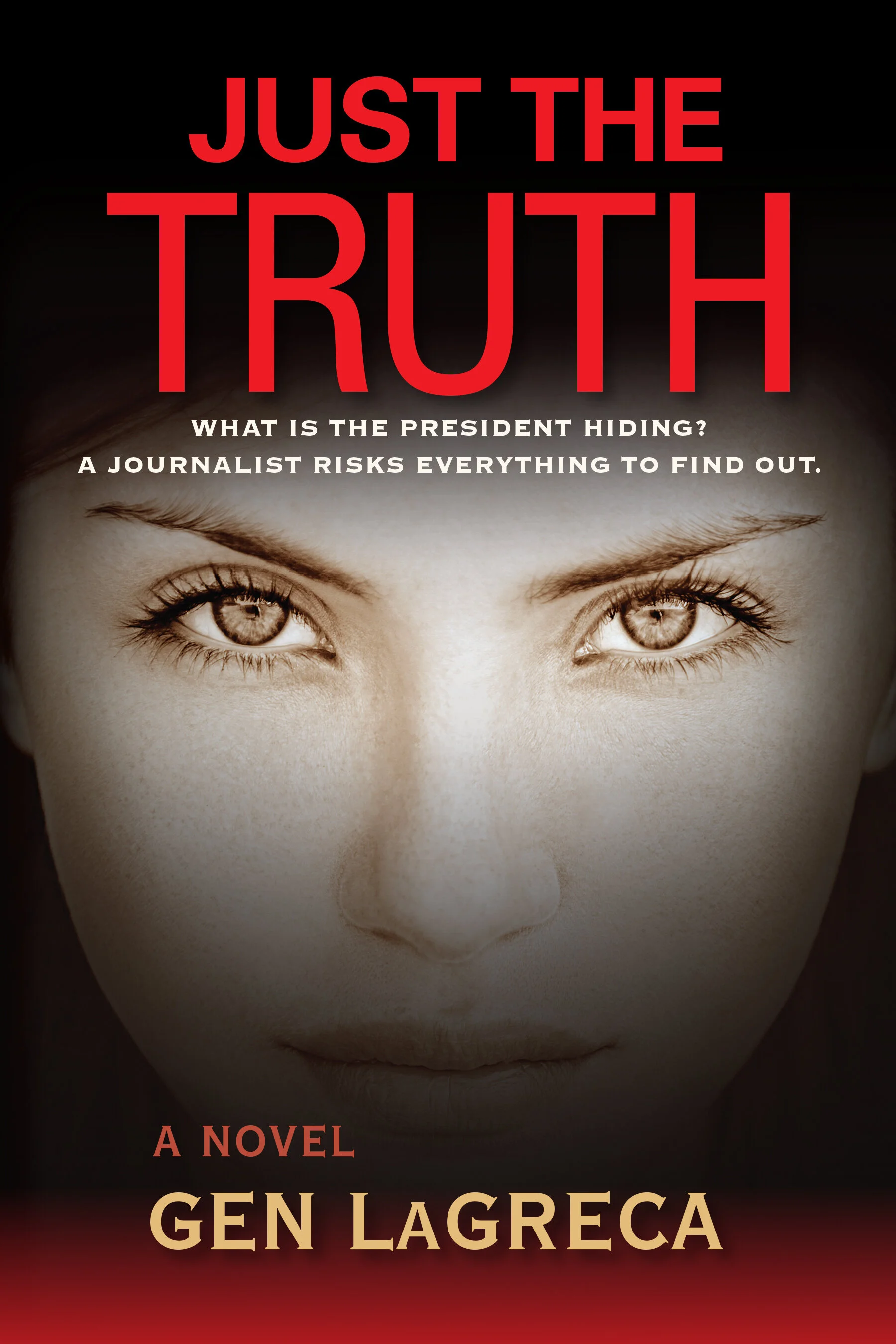
Spotlight: Just the Truth by Gen LaGreca

A newswoman battles powerful institutions, economic temptations, and social backlash to keep her commitment to the truth in a crumbling “free press.”

100 years after women were granted the right to vote and in the era of “fake news,” author Gen LaGreca has written a relevant political thriller, Just the Truth, about a woman with unwavering integrity fighting against the overpowering institutional and economic pressures compromising journalism, as she uncovers suspicious circumstances that just might manipulate an upcoming election. 

In Just the Truth, the businesses of Laura’s family-run corporation, Taninger Enterprises, are the subject of covert political retribution by public officials who abuse their power and the public trust by targeting political enemies. The Taninger family faces pressure to discourage Laura from investigating the president and his administration. Will the family members be pragmatic, try to avoid controversy, and cover up a huge scandal, or will they defend Laura? How can businesspersons and private citizens stand up to intimidation from powerful officials and partisan groups wishing to silence their views? 

Excerpt

Copyright © 2019 by Genevieve LaGreca. All rights reserved.

Cover by Watson Graphics

Available in paperback and ebook editions

Just the Truth

ISBN paperback: 978-0-97445795-6

This book is a work of fiction. Names, characters, places, and events are either products of the author’s imagination or are used fictitiously. Any resemblance to actual events, locales, or persons is purely coincidental.

Publisher’s email: service@wingedvictorypress.com

Prologue

His teacher had told him to stop asking so many questions. They disrupted the class, she’d said. Although he asked them in earnest, and she tried her best to reply, his questions too often pushed the bounds of her knowledge. She squirmed, and the children laughed. The little schoolhouse he attended in rural Virginia eventually became like a shoe that no longer fit the growing footprint of Julius Taninger’s intellectual curiosity.

At age ten, he’d decided he’d had enough of the place. Instead of going to school, he worked on his family’s small farm. On days when his chores were light, he walked the four miles of dirt road to town, where he borrowed books from the library of a local lawyer who took kindly to him. Julius devoured the titles he’d selected and returned them promptly, without so much as a smudge on any page, never wearing out the books—or his welcome. In 1948, with the country still recovering from the Second World War and his family nearly destitute, he read the histories of nations, the tomes of philosophers, and the classics in literature. These books lured him away from the dull landscape in which he chopped wood, fed hogs, and planted crops, toward a fresh canvas on which to paint his future.

At age fifteen, his fascination with the printed word drew him to the office of the town’s newspaper. He made himself useful by sweeping floors, emptying trash, filing papers, and doing other odd jobs without asking for or receiving any pay. The boss noticed his initiative and taught him how to set type and operate the press, which earned him a small salary. Soon he was contributing articles and making more money. After a hurricane struck the town, he set off another storm with his investigative reporting into a no-bid contract approved by the mayor for debris removal. He discovered that the contractor had a checkered past and the mayor was getting a kickback to ignore it. He also found that the mayor’s real talent lay in smearing anyone he perceived as an enemy. After the mayor and his friends launched a campaign to discredit the young reporter—“He’s a fool kid,” “He’s looking for attention,” “He just wants to make trouble,” “He lies”—no one believed Julius’s story. When the town turned against Julius, the editor pressured him to retract his accusations. When he refused, the editor fired him. Vindication came a year later when more evidence was uncovered, and the mayor and others involved in the scheme were tried and sent to jail. This experience spurred Julius’s drive to have his own paper—one that would never compromise the truth.

At age twenty, Julius Taninger’s footprint grew larger. He moved to Washington, DC, where he obtained a loan to buy his first newspaper, a struggling broadsheet named The Pulse of the People. He changed the name to Taninger News. The owner had a motto, which he never stated to his readers but shared with the young buyer: Capture the crowd at any price. Remembering how his former community had formed a gang of sorts that tried to crush him when he was a young reporter, he realized that his passions lay in capturing something else. He changed the motto to: Find the truth wherever it hides. Instead of keeping his slogan to himself as a marketing scheme, he printed it on the front page as a declaration.

Within a decade, he had increased the paper’s circulation to a national readership of millions, transforming his modest local daily into one of the highest-ranking newspapers in the country. He broadened the newspaper’s scope by adding top-notch reporters and correspondents in key cities around the country and the world. When he acquired thousands of acres of timberland in Canada, along with paper mills, power plants, and a fleet of ships to transport megatons of newsprint to his giant, never-still printing presses in Washington, DC, he developed a corporate empire spanning two countries. In subsequent years, he ventured into sports and entertainment and had a building erected to house his growing company’s headquarters. His holdings expanded to include television stations and a professional football team. Taninger News became part of a larger corporation, Taninger Enterprises.

Julius Taninger was tall, handsome, and rich. His quiet self-confidence gave the appearance of calm, except for restless gray eyes like two steely perpetual-motion machines that took in everything and missed nothing. His straight black hair fell of its own will across his forehead as the only part of him not subject to rigorous self-control. He was the town’s most striking bachelor, but no woman wanted him. His reputation for making enemies of the city’s most influential people kept the women away.

He kept his office on the newsroom floor, at the epicenter of the daily hurricane of activities that spewed the news, while the office suite designed for him on the top floor of his building sat idle.

When one of his major corporate advertisers was caught in a scandal, and his editor asked him if they should cover the story or ignore it, Julius replied, “Run it.”

When a powerful businessman-turned-politician tried to buy advertising space for his companies in exchange for favorable coverage of his political adventures, Julius replied, “We put our advertising columns up for sale, but we never sell editorial pages.”

When a small newspaper in Philadelphia was shut down by a new law spearheaded by a local politician to silence his enemies, Julius financed the publisher’s battle through the court system to get the law declared unconstitutional. He won.

When the president of the United States, in the heat of a reelection campaign, sent an aide to implore Julius to end his newspaper’s relentless attacks on the incumbent, and in exchange Taninger News would receive priority access to his administration and exclusive interviews with him, Julius replied, “No deal.”

When his fiery editorials excoriated the local mayor for proposing regulations and taxes harmful to business, Taninger Enterprises became victim to a truckers’ strike and a plant fire. After doing his own investigation, Julius discovered that the mayor was covertly driving the actions as retribution against a political enemy. The mayor feigned ignorance, claiming that coincidences happen. One actually did, and it was not to his honor’s liking. Julius had finally found a woman who admired him for the very qualities that scared off other prospects. She was the mayor’s daughter. To the indignation of her father, they eloped.

Julius refused invitations to the parties, golf games, and country clubs of the city’s social elite. He kept a chair's length away from the fangs and claws of the powerful, whom he oftentimes lashed in editorials printed in his newspaper. He signed those pieces with his iconic initials, affixed like a dare under his column: JT. Everyone called him JT, even his wife and the son and grandchildren they were to have.

His business and his life were inseparable. Other men would take their families on vacations—JT took his family along on business trips. Sharing the excitement and fascination for his work was JT’s version of family values. He took his son and later his grandchildren to corporate meetings with him, on trips to explore his vast properties, and on tours through his plants, explaining the business to them. When they grew up, they joined Taninger Enterprises.

Sometimes JT could be spotted by the newsstand outside his office building, where he found a quiet satisfaction in observing customers buy Taninger News and in seeing the stack of his newspapers dwindle on the shelf. Once, a father and child walked up to the newsstand while JT was there. The man took a copy of Taninger News from the stack. It had a photograph on the front page of the president of the United States with the leaders of the Senate and House of Representatives. As the customer paid for his purchase, his daughter, who looked to be about five years old, noticed the tall stranger watching them.

She pointed at the stack of papers and asked him, “What does a newspaper do?”

With the glower of a teacher reacting to delinquent students, JT gestured at the photograph of the nation’s leaders on the front page and replied, “It watches these rascals and keeps them in line.”

The years never softened Julius Taninger; instead, they hardened even more his crusty patina. Competitors feared him. Politicians smeared him. His wife revered him. As his son and grandchildren grew up in changing times and joined the business, they tolerated him, except for one granddaughter, who adored him. When other family members accused her of being just like her grandfather, they meant it as a criticism, but she took it as a compliment. Her name was Laura Taninger.

Buy on Amazon | Barnes and Noble

About the Author

Genevieve (Gen) LaGreca writes novels with innovative plots, strong romance, and themes that glorify individual freedom and independence. She has written novels of all different genres including historical, mystery and romance fiction as well as short stories. She is one of the successful new indie authors whose novels have topped the charts in the popular ebook format. Her three previously published novels, Noble Vision, A Dream of Daring, and Fugitive From Asteron have been Amazon Kindle Best Sellers and won 11 book awards.

Connect:

Website: https://wingedvictorypress.com

Facebook: https://www.facebook.com/profile.php?id=100010793046485 

LinkedIn: https://www.linkedin.com/in/gen-lagreca-5374684a/ 

Blog: http://genlagreca.blogspot.com