Spotlight: Act of Negligence by John Bishop MD

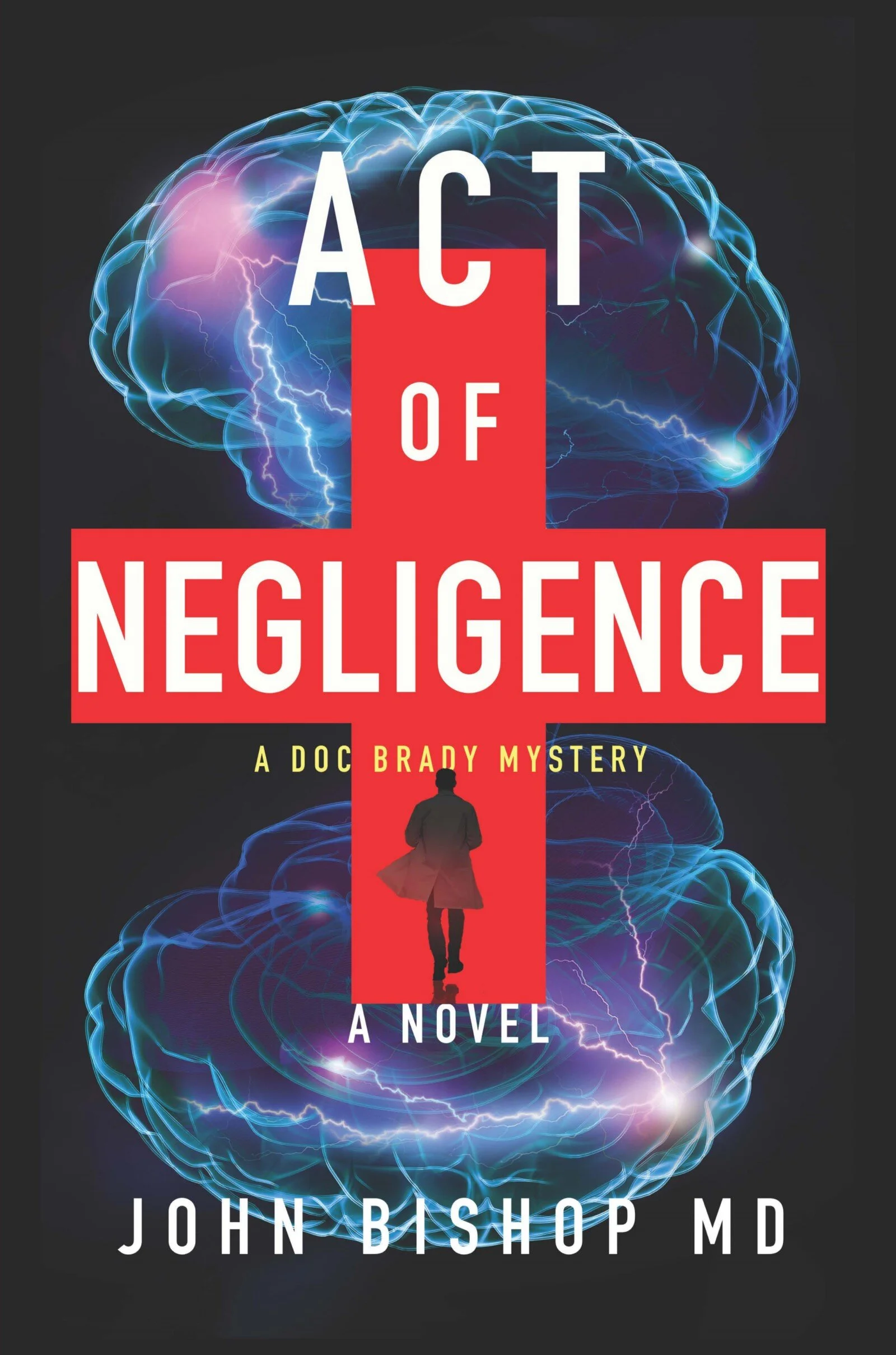
Act of Negligence cover.jpg

Something unusual is going on with the dementia patients at Pleasant View Nursing Home.

Dr. Jim Bob Brady, Houston orthopedic surgeon and amateur sleuth, finds himself in the midst of a different type of medical mystery. His friend and colleague, Dr. James Morgenstern, refers him a series of dementia patients with orthopedic problems from Pleasant View Nursing Home. Each patient dies, irrespective of the treatment, a situation that Doc Brady is unaccustomed to.

Each death prompts an autopsy, performed by another Brady colleague, Dr. Jeff Clarke, who discovers unusual brain pathology in each patient. Some of the tissue samples show nerve regeneration, a finding unheard of in dementia patients.

Doc Brady, enraged by the loss of his patients and obsessively curious about the pathologic findings, begins to investigate the nursing home, as well as its owner and CEO, Dr. Theodore Frazier. This leads Brady and Clarke on an adventure to discover the happenings at Pleasant View-an adventure that sees them running for their lives.

Excerpted from Act of Negligence. Copyright © 2021 by John Bishop. All rights reserved. Published by Mantid Press.

BEATRICE ADAMS 

Monday, May 15, 2000 

“Morning, Mrs. Adams. I’m Dr. Brady.”

There was no response from the patient in Room 823 of University Hospital. She was crouched on the bed, in position to leap toward the end of the bed in the direction of yours truly. I could not determine her age, but she definitely appeared to be a wild woman. Her hair was a combination of gray and silver, long and uncombed and in total disarray. She had a deeply lined face, leathery, with no makeup. Her brown eyes were frantic, and her head moved constantly to the right and left. She was clad only in an untied hospital gown which dwarfed her small frame. My guess? She wasn’t over five feet tall.

“Ms. Adams? Dr. Morgenstern asked me to stop by and see about your knee?”

She did not move or speak; she just continued squatting there in the hospital bed, bouncing slightly on her haunches, and staring at me while her head moved slowly to and fro.

I looked around the drab private room with thin out-of-date drapes and faded green-tinted walls. There were no flowers. I judged the patient to most likely be a nursing-home transfer. 

I made the safe move by backing out of the patient’s room, and I walked the twenty yards to the nurses’ station. The white-tiled floors were freshly waxed, but the medicinal smell was distinctly different from the surgical wing. There was an unpleasant pine scent in the air that could not hide the odor of decaying human beings and leaking body fluids. It was the smell of chronic illness and disease. 

“Cynthia?” I asked the head nurse on the medical ward, or so announced her name tag. She was sitting at the far side of the long nursing station desk performing the primary duty of a nursing supervisor: paperwork. She was an attractive Black woman in her mid-forties, I estimated. 

“Yes, sir?” 

“Dr. Morgenstern asked me to see Mrs. Adams in consultation. Room 823? What’s the matter with her? She won’t answer me. She just stares, sitting up in the bed on her haunches, bouncing.” 

She smiled and shook her head. “You must be a surgeon.”

“Yes, ma’am. Orthopedic. Dr. Jim Brady.”

“Cynthia Dumond. Mrs. Adams has Alzheimer’s. Sometimes she gets confused. Want me to come in the room with you? Maybe protect you?” she said with a smile. 

“Well, I wouldn’t mind the company,” I said, a little sheepishly. “Not that I was afraid or anything.” 

“She’s harmless, Doctor. She’s just old and confused.” 

We walked back to the hospital room together. The patient seemed to relax the moment she saw the head nurse, a familiar face. “Hello, Ms. Adams,” 

Cynthia said. “This is Dr. Brady. He needs to examine your . . .” She gazed at me, smiling again. “Your what?” “Her knee.” 

“Dr. Brady needs to look at your knee. Okay?” 

The patient had ceased shaking and bouncing, leaned back, slowly extended her legs, laid down, and became somewhat still. 

“Very good, Ms. Adams. Very good,” Cynthia said, grasping the elderly woman’s hand and holding it while she looked at me. “Go ahead, Doctor.” 

The woman’s right knee was quite swollen, with redness extending up and down her leg for about six inches in each direction. When I applied anything but gentle skin pressure, her leg seemed to spasm involuntarily. How in the world she had managed to crouch on the bed with her knee bent to that degree was mystifying. 

“Sorry, Ms. Adams,” I said, but continued my exam. The knee looked and felt infected, but those signs could also have represented a fracture or an acute arthritic inflammation such as gout, pseudo-gout, or rheumatoid arthritis, not to mention an array of exotic diseases. I tried to flex and extend the knee, but she resisted, either due to pain—although I wasn’t certain she had a normal discomfort threshold—or from a mechanical block due to swelling or some type of joint pathology. 

“What’s she in the hospital for?” I asked Nurse Cynthia. 

“Dehydration, malnutrition, and failure to thrive, the usual diagnoses for folks we get from the nursing home. The doctor who runs her particular facility sent her in.” 

“Who is it?”

“Dr. Frazier. Know him?”

“Nope. Should I?”

“No. It’s just that he sends his patients here in the end stages. Most of the folks that get admitted from his nursing home die soon after they arrive.” 

“Most of them are old and sick, aren’t they?”

“Yes.”

I looked at her expression while she continued to hold Mrs. Adams’s hand.

“Were you trying to make a point?”

“Not really.” She glanced at her watch. “Are you about through, Doctor Brady? I have quite a bit of work to do.” 

“Follow that paper trail, huh?” 

“Yes. That’s about all I have time for these days. Seems to get worse every month. Some new form to fill out, some new administrative directive to analyze. Whatever.” 

“I know the feeling. There isn’t much time to see the patients and take care of whatever ails them these days. If my secretary can’t justify to an insurance clerk why a patient needs an operation, then I have to waste my time on the phone explaining a revision hip replacement to someone without adequate training or experience. One of my partners told me yesterday about an insurance clerk that was giving him a bunch of—well, giving him a hard time—about performing a bunionectomy. He found out during the course of a fifteen-minute conversation that the woman didn’t know a bunion was on the foot. Her insurance code indicated it was a cyst on the back and she couldn’t find the criteria for removal in the hospital. She was insisting it had to be an office procedure, and only under a local anesthetic. Crazy, huh?” 

“Yes, sir. It’s a brave new world.”

“Sounds like a good book title, Nurse Cynthia.”

“I think it’s been done, Doctor.”

“Well, thanks for your help. I do appreciate it. Not every day the head nurse on a medical floor accompanies me on a consultation.” “My pleasure. You seem to be a concerned physician, an advocate for the patient, at least. As I remember, that’s why we all went into the healing arts.”

She turned to Mrs. Adams. “I’ll see you later, dear,” she said, patting the elderly woman’s forehead. Still holding the nurse’s other hand with her own wrinkled hand, Mrs. Adams kissed Cynthia’s fingers lightly, probably holding on for her life. 

I poured a cup of hospital-fresh coffee, also known as crankcase oil, and reviewed Beatrice Adams’s chart. I sat in a doctor’s dictation area behind the nursing station and looked at the face sheet first, being a curious sort. Her residence was listed as Pleasant View Nursing Home, Conroe, Texas. Conroe is a community of fifty thousand or so, about an hour north of Houston. I noticed that a Kenneth Adams was listed as next of kin and was to be notified in case of emergency. His phone number was prefixed by a “409” exchange, and I therefore assumed that he was a son or a brother and lived in Conroe as well. 

Mrs. Adams was fifty-seven years old, which was young to have a flagrant case of Alzheimer’s disease, a commonly-diagnosed malady that was due to atrophy of the brain’s cortical matter. That’s the tissue that allows one to recognize friends and relatives, to know the difference between going to the bathroom in the toilet versus in your underwear, and to know when it’s appropriate to wear clothes and when it isn’t. Alzheimer’s causes a patient to gradually become a mental vegetable but doesn’t affect the vital organs until the very end stages of the disease. In other words, the disease doesn’t kill you quickly, but it makes you worse than a small child—unfortunately, a very large and unruly child. 

It can, and often does, destroy the family unit, sons and daughters especially, who are caught between their own children and whichever parent is affected with the disease, which makes it in some ways worse than death. You can get over death, through grief, prayer, catharsis, and tincture of time. Taking care of an Alzheimer’s-affected parent can be a living hell, until they are bad enough that the patient must go to a nursing home. Then the abandonment guilt is hell, or so my friends and patients tell me. 

Mrs. Adams had been admitted to University Hospital one week before by my friend and personal physician, Dr. James Morgenstern. I guessed that either he had taken care of the patient or a family member in the past, or that Dr. Frazier, physician-owner or medical director of Pleasant View Nursing Home, had a referral relationship with Jimmy. 

Mrs. Adams’s initial blood work revealed hyponatremia (low sodium), hyperkalemia (high potassium), and a low hematocrit (anemia). Clinically, hypotension (low blood pressure), decreased skin turgor, and oliguria (reduced urine output) suggested a dehydration-like syndrome. For a nursing-home patient, that could either mean poor custodial care or failure of the patient to cooperate— refusing to drink, refusing to eat—or some combination of the two. Neither scenario was atypical of the plight of the elderly with a dementia-like illness. 

According to Dr. Morgenstern’s history, the patient had been diagnosed with Alzheimer’s disease six years before, at age fifty-one, which by most standards was very young for brain deterioration without a tumor. 

“Dr. Brady?” head nurse Cynthia asked, appearing beside my less-than-comfortable dictating chair. 

“Yes?” 

“I’m sorry to bother you, but might I have one of your business cards?” 

“Sure,” I said, handing her one from the top left pocket of my white clinical jacket. “Don’t ever apologize for bothering me if you’re trying to send me a patient.” 

She laughed. “It’s for my mother. She has terrible arthritis.” She paused and read the card. “You’re with the University Orthopedic Group?” 

“Yes. Twenty-two years.”

“If I might ask, where did you do your training?”

“I went to med school at Baylor, then did general and orthopedic surgery training here at the University Hospital. I then traveled to New York and spent a year studying hip and knee replacement surgery, then came back to Houston to the land of the free and the home of the brave.” 

“Is your practice limited to a certain area? I mean, do you just see patients with hip and knee arthritis?” 

“Yes. Unless, of course, it’s an emergency situation, like one of those rare weekends when I can’t find a young, hungry surgeon with six kids to cover emergency room call for me.” 

“Well, thanks,” she said, smiling. “I’ll be seeing you. I’ll bring my mother in.” 

“Thank YOU, Cynthia. By the way, I’m curious. Why me? I would think you see quite a few docs up here, and I would imagine that your mother has had arthritis for years. Why now?” 

Cynthia was an attractive, full-figured woman with close-cropped jet-black hair, a woman who made the required pantsuit nursing uniform look like a fashion statement. She looked me up and down as I sat there with Mrs. Adams’s chart in my lap, my legs crossed, holding the strong black cooling coffee. 

“You’re wearing cowboy boots. I figure that all you need is a white hat,” she said, turning and walking away. 

Not my sharp wit, nor my kind demeanor with her patient, nor my vast training and experience. 

My boots. 

Buy on Amazon Kindle | Paperback

About the Author:  

Image credit_ Greg Moredock.jpeg

John Bishop MD is the author of Act of Negligence: A Medical Thriller (A Doc Brady Mystery). Dr. Bishop has led a triple life. This orthopedic surgeon and keyboard musician has combined two of his talents into a third, as the author of the beloved Doc Brady mystery series. Beyond applying his medical expertise at a relatable and comprehensible level, Dr. Bishop, through his fictional counterpart Doc Brady, also infuses his books with his love of not only Houston and Galveston, Texas, but especially with his love for his adored wife. Bishop’s talented Doc Brady is confident yet humble; brilliant, yet a genuinely nice and funny guy who happens to have a knack for solving medical mysteries. Above all, he is the doctor who will cure you of your blues and boredom. Step into his world with the first four books of the series, and you’ll be clamoring for more. For more information, please visit https://johnbishopauthor.com

Spotlight: It Is What You Make of It by Justin McRoberts

Paperback : 208 pages

Justin McRoberts dares you to move beyond “it is what it is” thinking and become an agent of love and redemption in your household, neighborhood, and workplace.

“It is what it is”—a common phrase you hear and maybe even say yourself. But the truth is that there is not one square inch in the whole domain of our human existence that simply is what it is. Justin McRoberts invites you to embrace a new mindset: it is what you make of it.

With warmth, wisdom, and humor, McRoberts shares key moments from his twenty-plus years as an artist, church planter, pastor, singer-songwriter, author, neighbor, and father, passing on lessons and practices learned about making something good from what you’ve been given rather than simply accepting things as they are.
Thought-provoking but actionable, It Is What You Make of It declares that love doesn’t just win, mercy doesn’t just triumph, and light doesn’t just cast out shadow. Rather, such renewal requires the work of human hands and hearts committed to a vision of a world made right (or at least a little better). When we partner with God in these endeavors, we love the world well and honor the Creator in whose image we are made.

We will not be remembered for who our parents were or where we were born or what our socioeconomic circumstances were. We won’t be remembered for our natural talents and strengths or the opportunities we were given or the challenges we faced. In the end, each of us will be remembered for what we made with what we were given.

Excerpt

FIVE

Everybody Hurts, Everybody Matters

In the fall of 2010, I started the largest and most time- consuming and energy-sucking creative project of my life up to that point (and, God willing, ever). I didn’t know that when I started it. I just thought I’d throw together a few good ideas and have some fun! Then, I’d invite a small team of people to join with me, and the fun would be multiplied to partylike status. Only, this party was three people working way too many hours for nowhere near enough money while I disintegrated into the worst version of myself anyone at the “party” could have imagined.

Cue Richard Wagner–oriented party playlist.

The project was a combination of letter writing and essays and music and lyrics and visual art and documentary-style video and stress and passive aggres- sion and regular aggression and also personal reflections on relationships. Thematically, it was a celebration of community and a record of what my friends and family had made out of the circumstances and relationships God had gifted us. Eventually released in 2012 and called The CMYK Project, it turned out alright as a project. Sadly, it cost me a dear friend along the way.

One of the final phases of The CMYK Project involved the printing of a book. Actually, that’s only partially true; it was two books. Actually, that’s only partially true as well; it was really the same book in two formats. Somewhere in the process, we (and by “we” here, I mean “I”) decided on printing two versions of the same book; one version was just a regular-ole book with text on paper. The other was a two-hundred- page, full-color extravaganza featuring artwork and photography and interviews (which I didn’t mention in the description above, just like I didn’t mention it to my team when we were working on it) along with letters and essays. It’s probably also worth noting that we released the music on three separate EPs with three different covers and then selected a few songs from each of those EPs, rerecorded those songs, and tacked on even more songs to create a fourth musical aspect to the project—a full-length, full-band, studio-recorded album. So what we produced was . . .

a four-CD, twenty-five-song collection, a text-only book,

a full-color book,

three physical art installations by different artists in different cities,

video interviews with each of the visual artists, transcribed, printed versions of each of those inter-

views, and the gradual, tragic disintegration of every relationship.

Yeah, yeah, yeah. I know . . . It. Was. A. Lot.

The real fun begins with knowing that I’d never done anything like that before. In fact, I’d never made a book before, which was probably the most straight- forward part of the entire project. To make that portion of the project simpler and easier on us (and by “us” here, I mostly mean “me”), my art director and I sub- mitted the book-printing process to a large, reputable printing company. Having done what we thought was all the heavy lifting (writing, designing, formatting, arguing, walking away, and then returning to the same argument . . . blah, blah, blah), all that was left was to upload the book files; make the few, small adjustments we’d probably need to make; and then dance victori- ously as the book (along with every other aspect of the project) found its way into the hands, hearts, and minds of readers .

Three days after the first upload, we got a notifi- cation that there were things in need of fixing. Like I said, we expected this, and while the list of correc- tions was quite a bit longer than we’d anticipated, we happily fixed the book and uploaded it again, thrilled to be done with this massively too-big and costly, and also ridiculous to the point of being beyond description, project.

Three days after that, the printer responded a sec- ond time with a list of errors, several of which we were certain we’d fixed. So I called the printer’s customer ser- vice number . . . and I wasn’t kind. Not even a little bit. I was tired, and I felt that being tired somehow excused me from being kind. After feeling like I’d sufficiently communicated my frustration and disap- pointment, I hung up, and we dove into our third round of edits and fixes.

Then there was a fourth, and then a fifth, and a sixth, and eventually, the same two things started happen- ing every three to four days:

We received the same set of twenty-five notifications and necessary changes.

I ended up on the phone with customer service.

Over and over and over for weeks and weeks and weeks.

The only things that seemed to change were my level of frustration and the depth of insult I was there- fore prepared to dole out over the phone to the agent I spoke to.

This went on for twelve rounds.

Quick math: twelve rounds times three business days per round (which means we’re not counting weekends) means six-plus weeks, which, divided by seven days per week, factoring relational stress and a dwindling supply of bourbon = YIKES!!!

When that twelfth email came from the printer, I stared at my computer screen blankly until my art director spoke up. “I think I’ll call this time, okay?” said Gary. “I’m not as angry as you are.”

I left to run a few errands while he called the printer. When I got back, Gary told me he’d worked it all out. I wanted to know if “working it all out” meant he’d murdered anyone. He said no, which was slightly dis- appointing but probably for the best. What he meant by “working it all out” was that he’d asked to speak with a supervisor, just as I had. And just as had happened when I’d called, Gary was told they didn’t have supervisors. But then, instead of losing his cool and insulting the person on the other end of the call (my strategy), Gary calmly described our situation and history in detail and kindly but firmly asked who he should be talking to.

“You need a specialist,” the agent told him.

In eleven previous calls, I’d never even heard the word specialist much less been given the option to speak to one.

Gary said he held the line and was connected to someone we will call, for the purposes of this story, “the Specialist.” Gary described our situation, and the Specialist said she thought it was “really odd.” Gary assured her he was aware of how odd it was and then asked what we needed to do. The Specialist asked Gary to upload the file again.

“With all due respect,” Gary replied, “we’ve uploaded the file a dozen times now.”

“I can see that,” said the Specialist. “This time, I’ll stay on the phone with you and wait for it to hit our system. Then we can look at the file together.”

Ten minutes later, Gary and the Specialist were looking at the file together.

“Is your file supposed to be five-by-eight or six-by-nine?”

“It should be six-by-nine.”

The Specialist paused and then asked Gary if she could call him back. Twenty minutes later, she called back and told Gary what was actually going on. It wasn’t that their system had a glitch or that our file was corrupt or even that we were doing something tech- nically wrong.

It was much worse and far weirder than any of that. During one of the early phone calls in the editing process, I’d said something pretty horrible to one of the technicians. In turn, he’d reset the specs on our project from six-by-nine (which was correct) to five-by-eight, so that every time we uploaded the file, it would trigger dozens of warnings and be rejected. The technician had sabotaged our project. That’s a pretty horrible thing to do to someone. But he did it because I’d been horrible to him.

Now here’s what’s really funny (and by “funny” I mean painfully ironic and related to my social inepti- tude): the full title of the CMYK Project—the book plus three EPs plus full-length LP plus visual art plus video plus other book—was CMYK: The Process of Life

Together and was promoted as “a celebration of life in relationship.” It was chock-full of stories and anecdotes about getting along with and loving other people, par- ticularly where there were differences of opinion and experience. It was a project about my own process of learning to love people the way Jesus loved people.

So . . .

Can you imagine being the tech on the other end of the phone, staring at a chapter about the uncondi- tional love of God while the author of that chapter calls you names? Perhaps you’d think the love and kindness described in those pages weren’t for you. And if I’m honest, I certainly wasn’t offering them to that cus- tomer service agent, because in my mind he wasn’t a person but an instrument. I talked to him the way I talk to the car that won’t start or the software that freezes. His value was entirely predicated on how useful and helpful he was to me.

My encounter with that tech reminds me of one in the Gospel of Mark: the one about a woman whose body was healed when she simply touched the clothes Jesus was wearing. It’s a remarkable story in a lot of ways. First of all, that was quite an ensemble Jesus had on, right? I’ve got a few favorite shirts, but none of them have mystical healing properties. More significantly (and less jokingly), I am captivated by the choice Jesus made to stop and talk with the woman who touched “the hem of his garment” (Matthew 9:20). Because the way he handled the moment says far less about the clothes he had on or even his power to heal and far more about how important and valuable she was to him.

As the writer of Mark told it, a man named Jairus, whose daughter was dying, went to find Jesus to ask for help. Jesus was up to other things at the time, but he changed course when Jairus asked him to heal his daughter. That part makes sense to me. Jairus led a syn- agogue, which made him a big deal in social, political, and religious circles. Helping Jairus presented a legit- imate opportunity to heighten Jesus’ profile, prove a few folks wrong, and “get the message out,” as it were. But as Jesus was following Jairus back to his home, the trajectory of the story changed.

And a woman was there who had been subject to bleeding for twelve years. She had suffered a great deal under the care of many doctors and had spent all she had, yet instead of getting better she grew worse. When she heard about Jesus, she came up behind him in the crowd and touched his cloak, because she thought, “If I just touch his clothes, I will be healed.” Immediately her bleeding stopped and she felt in her body that she was freed from her suffering.” (Mark 5:25–29)

Jesus then asked about who touched him, which a few of his friends found a bit silly, seeing as though there was a whole mob of people jostling about and bumping into one another. But to Jesus (and this is the part that gets me), this woman wasn’t just another per- son in the crowd. Which is why I absolutely love the way the writer of Luke wrote about this same story. As he retold it, when Jesus asked about who touched him, she tried to stay hidden but eventually conceded that “she could not go unnoticed” (Luke 8:47).

How good is that?

“She could not go unnoticed.”

Jesus stopped, and along with him, the whole crowd that had been following him. I don’t know how long their conversation went on, because none of the writers who captured this moment provided that detail. But apparently it was long enough for Jesus to hear a lot of this woman’s story. She’d been sick and bleeding for twelve years with multiple medical failures along the way. The other thing the story makes clear is that Jesus was invested enough in the conversation that someone else had to interrupt him and let him know Jairus’s daughter had died.

Now, it’s significant that, once Jesus finally did arrive, he assured the people in Jairus’s household that, despite appearances, he had things in hand and could still heal Jairus’s young daughter. That says to me that Jesus had enough confidence in his ability to do the work he’d committed to that he could pause for a moment along the way and turn his full attention to a person he’d met so that “she didn’t go unnoticed.”

That customer service agent wasn’t just another per- son along the way, though I treated him like he was. Since the CMYK Project, I’ve learned that . . . the customer service agent helping me sort out font problems during manufacturing, the Apple Genius Bar employee helping restore my lost data, my web developer, the barista or bartender serving me while I write, the UPS or FedEx driver delivering proofs, the neighbor whose dog pops over to play ball while I’m editing, the dog herself who wants to pay ball . . .all these people are actually people (except the dog, who is not a person but thinks she is, so we’ll keep her on the list). They are, each of them, beloved ones of God with dreams and hopes and problems and opportunities and relationships and needs and gifts and strengths.

They are the kinds of people worth making great work for. Which also makes them the kinds of people worth stopping great work for, whether or not they’re directly part of that work process or not.

They aren’t stepping-stones on my path to success. They aren’t cogs in the wheel of my productivity. They aren’t part of my “system.”

Even (and especially) if they’re part of my team working to complete a project.

Remember a moment ago when I asked you to imagine being the technician on the other end of the phone, staring at an entry about the unconditional love of God while the author of that page yells at you and calls you names? Well, let’s take that one step further, shall we? Because that’s where the deeper learning les- son was for me.

Imagine being my art director, Gary, who took on that final phone call to put the project back on track after I’d derailed it with my anger. Imagine working for nearly two years on a project ostensibly celebrating the unifying love of God for people while watching your partner and project leader verbally abuse customer ser- vice agents over the phone and then carry that anger around the office every day. Maybe you’d lose respect for that person. Maybe you’d have a hard time trusting them as a leader or a friend. Maybe you might even decide that was the last time you’d work with that per- son or anyone like them if it meant being treated that way or being party to treating others that way.

You see, what I know now is that how I treat the people I work with . . . nope. Let me fix that:

What I know now is that how I love the people I work with and for and around says ten thousand times more about who I am than any project or job or end result, regardless of its effectiveness, beauty, impact, or market success. I’d rather make garbage work while honoring and maintaining great relationships than cre- ate bestselling work while becoming the kind of person nobody wants to be around.

It was and is the love in Jesus that was and is the source of healing, whether on the street in a crowd or in the back room of a powerful social figure—which is to say, Jesus was the same person wherever he went.

I want to live like that.

I want that kind of love to dictate the way I work. The way I’d addressed the young man at the print-ing agency had almost nothing to do with his job or position or the fact that I didn’t personally know him; it had everything to do with me and my character. Yes, the professional distance between us made it easier for me to be unkind, but the capacity to dehumanize some- one and use them for my own purposes was in me from the start. And here is something true: I don’t get to (and shouldn’t want to) make anything out of someone else’s life. That’s not my job. My vision isn’t big enough for your life. That’s God’s job. Only divine hands can make something out of a human life without belittling, stifling, and minimizing that person in the process.

About four years after that first book came out, my third book hit the shelves. It was a book of prayers I’d collected from my own practice, born out of trying to live more intentionally. Among them was the prayer I wrote shortly after the completion of The CMYK Project. It reads,

May the work I do never become more important to me than the people I get to work with or those I’m working for.

Taken from “It Is What You Make of It” by Justin McRoberts. Copyright 2021 by Justin McRoberts. Used with permission from Thomas Nelson.

Buy on Amazon Kindle | Audible | Paperback

About the Author

81VArsW-UL._US230_.jpg

Justin McRoberts lives in the Oakland–San Francisco Bay Area with his wife, Amy, and two children. He is the author of four books, including Prayer: 40 Days of Practice and May It Be So: 40 Days with the Lord’s Prayer. Justin’s sixteen albums and EPs have gained him a faithful audience among listeners nationwide since 1999.

Justin leans on his over twenty years in the arts and ministry to mentor and coach artists and pastors in person as well as over video calls. He is also the host of the podcast @ Sea with Justin McRoberts and co-founding pastor of Shelter-Vineyard Church Community in Concord, CA. Justin regularly travels to speak at churches and colleges, as well as leads retreats for ministry staff, college students, and young adults.

Connect with Justin: Website | Facebook | Twitter | Instagram

Cover Reveal: Aggie the Horrible vs. Max The Pompous Ass by Lisa Wells

AggieTheHorribleRevealBanner.png
AggietheHorriblevsMaxthePompousAss1600.jpg

Published by: Entangled: Amara
Publication date: July 19th 2021
Genres: Adult, Contemporary, Romance

Synopsis:

One’s playing a game. The other’s keeping score.

When wild-child Aggie Corelissen shows up for an interview with the last person she’d ever want to work for, golden-boy entrepreneur Max Treadwell, she has one goal—to not be offered the position. While she hates to disappoint the two matchmaking grandmothers who’d pressed Max to hire her, she wants nothing to do with a pity job. Besides, the guy could easily win Mr. Pompous Ass of the year.

The last thing Max wants is to offer Aggie a job. The woman, a mixture of bizarre and annoying, has gone through at least a half-dozen employers this year already. He might’ve promised Grandmother he’d hire her, but if Aggie doesn’t take it because he’s more than a little un-charming, that won’t be his fault. After all, his company is on the brink of a major land acquisition, and the last thing he needs is a screw-up as a personal assistant.

With neither of them willing to disappoint their grandmothers, the interview becomes the stuff of legends, and somehow, before either can blink, they’re suddenly stuck working together.

Aggie’s determined the only way out is to be the worst assistant ever and get fired…

Max knows his grandmother would kill him if he fired Aggie, so he’ll just have to be so awful she quits…

But what happens next, no one could have seen coming.

About the Author

Lisa.jpg

Lisa Wells writes romantic comedy with enough steam to fog your eyeglasses, your brain, and sometimes your Kindle screen. On the other hands, her eighty-year-old mother-in-law has read Lisa's steamiest book and lived to offer her commentary. Which went something like this: You used words I've never heard of...

She lives in Missouri with her husband and slightly-chunky rescue dog. Lisa loves dark chocolate, red wine, and those rare mornings when her skinny jeans fit. Which isn't often, considering the first two entries on her love-it list.

Connect:

https://www.bookbub.com/authors/lisa-wells

https://www.facebook.com/lisa.wells.737

https://www.instagram.com/lisawellsauthor/

http://lisawellsauthor.com/contact.html

https://twitter.com/lisawellsauthor

http://www.lisawellsauthor.com/

Spotlight: Courting His Amish Wife by Emma Miller

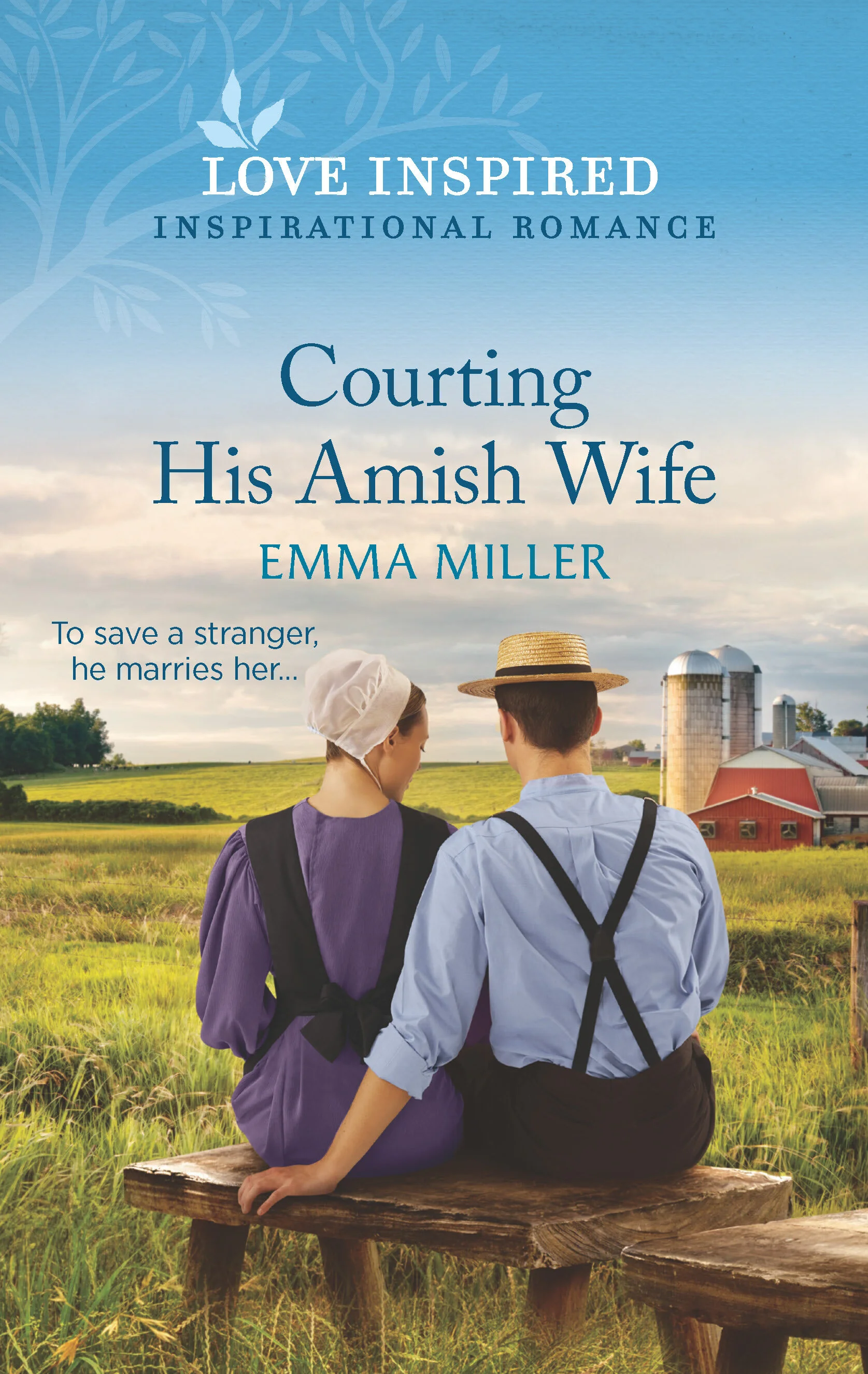
Courting His Amish Wife cover.jpg

He offers her his hand,

but will she ever take his heart?

When Levi Miller learns Eve Summy will be forced to marry her would-be attacker or get shunned, he marries her instead. Now husband and wife, but complete strangers, they must figure out how to live together in harmony. But with Levi’s family questioning the motives for their surprise wedding, getting to know each other—and possibly finding love along the way—is harder than they expected.

Excerpt

Through the trees, Eve spotted her father’s windmill and ran faster, ignoring the branches and underbrush that tore at her hair and scratched her arms and face. She took in great gulps of air, sobbing with relief as she sprinted the final distance. She had prayed to God over and over throughout the night. She had begged Him to see her home safely. Now the sun was breaking over the horizon, and she had made it the more than ten miles home in the dark.

Bursting from the edge of the woods, she hitched up her dirty and torn dress, the hem wet from the dew, and climbed over the fence. In her father’s pasture, she hurried past the horses and sheep, her gaze fixed on the white farmhouse ahead. If she could just make it to the house, her father would be there. She would be safe at last, and he would know what to do.

Trying to calm her pounding heart, Eve inhaled deeply. At last, her breath was coming more evenly. She wiped at her eyes with the torn sleeve of her favorite dress. She was safe. She was home. Her father would protect her.

At the gate into the barnyard, she let herself through and slowed to a walk as she neared the back porch. Her father’s beagle trotted toward her, barking in greeting. Through the windows, she could see into the kitchen where a light glowed from an oil lamp that hung over the table. Her father and sisters and brothers would be there waiting for her. As she climbed the steps to the porch, her wet sneakers squeaked. Hours ago, she had crossed a low spot in the woods and soaked her canvas shoes.

She had almost reached the door when it swung open.

“Dat,” she cried, throwing herself at him, bursting into tears. “Oh, Dat.”

“Dochter.” Her father grasped her by the shoulders, but instead of embracing her, he pushed her back. “Where have you been?” he demanded in Pennsylvania Deitsch. He looked her up and down, not in relief that she was safely home, but in anger. “Where is your prayer kapp?”

Eve raised her hand to her hair to find it uncovered. “Oh,” she cried. “I must have… I must have lost it in the woods somewhere.” She brushed back her brown hair that had come loose from the neat bun at the nape of her neck to fall in hanks around her face. She pulled a twig from her hair. “Dat. Something terrible happened. I—”

“Where have you been all night?” he boomed, becoming angrier with her by the second. “Who have you been with?” he shouted. “To sneak out of my house after I forbade you to go? I should beat you!”

When she looked up at him, Eve realized she had made a terrible mistake. It had taken her hours to find her way home. She had walked and run all night, choosing the long way home because she had been afraid to follow any main roads for fear Jemuel would find her. She had climbed fences, been scratched by briars and been chased by a feral dog. At one point, she had been lost and worried she had walked too far, or in the wrong direction. But she hadn’t given up because she knew that if she could make it home safely, everything would be all right.

But looking at her father’s stern face, at his long, thick gray beard and his angry eyes that stared at her from behind his wire-frame glasses, she realized she was wrong. She wasn’t safe. And perhaps she would never be so again because she knew what her father was going to say before the words came out of his mouth.

He pointed an accusing finger. “You will marry that boy!” Amon Summy shouted, spittle flying from his mouth.

Eve lowered her head, tears streaming down her cheeks as she prayed fervently to God again to help her.

Buy on Amazon Kindle | Paperback | Mass Paperback

About the Author

Emma Miller lives quietly in her old farmhouse in rural Delaware amid fertile fields and lush woodlands. Fortunate enough to be born into a family of strong faith, she grew up on a dairy farm, surrounded by loving parents, siblings, grandparents, aunts, uncles and cousins. Emma was educated in local schools, and once taught in an Amish schoolhouse much like the one at Seven Poplars. When she's not caring for her large family, reading and writing are her favorite pastimes.

Spotlight: Broken Cowboy by Jamie Schulz

BrokenCowboyBlitzBanner.png
Broken Cowboy- small.jpg

(The Montana Men, #1)

Publication date: June 7th 2021

Genres: Adult, Romance, Western

Synopsis:

Two lives cross in a fateful roadside encounter. When ranch life turns deadly, will their unexpected love survive?

Addie Malory is struggling to improve the rundown farm she bought. And though she knows she can’t do it alone, she won’t tolerate men who think they can just take advantage of a single woman. Worried all her hard work will amount to nothing, both her hopes and her heart lift when she hires a hunky capable ranch hand.

Cade Brody’s past has left him broken. Drifting between rodeos after a shocking betrayal, he’s grateful to the pretty farm girl and her offer of a job. But after thugs vandalize the property and harass his gorgeous new boss, he puts aside his wounded heart as his protective instincts ignite.

With Addie’s dream in danger under a barrage of financially damaging attacks, she wrestles with the risk of her red-hot feelings for her rugged employee. And when his own past returns to haunt him, Cade may have to choose between protecting the woman he loves and the healing reconciliation he’s wanted for years.

Buy on Amazon

About the Author

Jamie.jpg

Jamie Schulz lives in the beautiful Pacific Northwest with her family, her husband, and their fur babies. Writing has always been a big a part of her life, and she hopes to one day reach the best sellers lists.

Cowboys, ice cream, and reading almost any kind of romance are among her (not so) secret loves. To her, every one of her stories, no matter how dark, must have a happy ending, and she strives to make them impossible to put down until you get there.

She balances her free time between reading her favorite romance authors--in genres ranging from erotica and dark romance to sweet historicals and contemporary romance--and spending time with her family.

Connect:
http://www.jamieschulzauthor.com/

https://www.facebook.com/jamieschulzauthor/

https://www.instagram.com/thejamieschulz/

https://twitter.com/TheJamieSchulz

https://www.bookbub.com/authors/jamie-schulz

https://www.amazon.com/Jamie-Schulz/e/B07K7X6JV5/

https://www.goodreads.com/author/show/18580547.Jamie_Schulz

Spotlight: Two Kinds of Us by Sarah Sutton

TwoKindsOfUsBlitzBanner-copy.png
TKOU.jpg

Publication date: May 25th 2021

Genres: Contemporary, Romance, Young Adult

Synopsis:

In a life of diamond bracelets and country clubs, I’m the perfect daughter. I get all the right grades, volunteer at all the right organizations, apply to all the right colleges.

And I hate every second of it. At the rate my life is playing out, under the strict rule of my parents, politicians and housewives will be my future.

Until I meet Harry.

Harry’s a singer in a rock band with a voice so drop-dead sexy that I actually feel hypnotized. Doesn’t hurt that he’s hot either, and with the kind, flirty personality to match, it’s the perfect trifecta. And even better, he sees me as the me I want to be. The me who can break free of the life I’m trapped in, the me who can control my own future.

The only problem? He knows me as Stella, my fun, carefree alter-ego—so drastically different than Destelle, the one who is trapped in the life my parents rule for me.

But as we get closer, I realize Harry’s keeping a secret of his own, something related to his dark past that he’s trying to move on from, and when I find out, everything we’ve built could come crashing down.

Excerpt

After twisting off the cap, I took a long refreshing drink of the icy water, a relief from the heat of the club.

And then moved once more.

Harry still leaned against the wall near a trash can, and I turned the bottle cap over between my fingers as I got closer, watching the crowd weave in and out between us. A girl with pink hair obscured him for a moment, and then a guy with a mohawk moved in my way next. I waited until my path cleared, until no one stood between him and me.

Margot would’ve called me devious.

Honestly, it kind of felt as if I were a super-spy on a stakeout.

Crap, that sounded creepy.

When I was six feet away, the bottle cap slipped from my fingertips. 

It bounced away from me, knocking noiselessly against the ground. I lost it for a moment, the opaque lid blending in with the shadows, and then finally found where it came to rest. The momentum was better than I thought it’d be.

Fingers were already curling around it, and when I traced the arm up to find a face, Harry gazed back at me. 

Gosh, even from here I could see their color. So freaking blue. Like the waters in the Caribbean or something. For a moment, it left me a bit dazzled, Destelle’s personality breaking through. 

With an inward smile, I thought, Hook, line, sinker.

“Not sure how sanitary that is now,” I called over the music to him, stepping closer into his bubble of space. I kept my gaze laser-focused on the cap in his hand, shrugging on a shawl of nonchalance. “After rolling around on the floor, I mean. But thanks.”

“Yeah, probably shouldn’t put it back on your drink,” Harry agreed, and I looked to find his full lips curved into a half smile. His fingers brushed against my palm as he dropped the cap into it, and I curled my hand, pressing the plastic into my skin. “I recognize you.”

I jolted. “Uh, you do?”

“You come into Crushed Beanz,” he said. “You listen to us play.”

I hadn’t planned on him recognizing me. Great. Did he think I was some creepy fangirl? Then again, I had devised a plan to get his attention. Though, maybe he was the creepy one for recognizing me. We’d never spoken before, and yet he recognized my face? Maybe he was the creepy super-spy.

Either way, it was super flattering. He noticed me.

Buy on Amazon Kindle | Paperback

About the Author

Sarah.jpg

Sarah Sutton is a YA Romance author, bringing you stories about teenagers falling in love (sometimes with magic). She spends her days dreaming up ideas with her two adorable puppies by her side being cheerleaders (and mega distractions).

Connect:

https://twitter.com/SarahMaeSutton

https://www.sarah-sutton.com/

https://www.instagram.com/sarahmaesutton/

https://www.facebook.com/SarahMaeSutton/

https://www.sarah-sutton.com/members

https://www.goodreads.com/author/show/19703739.Sarah_Sutton