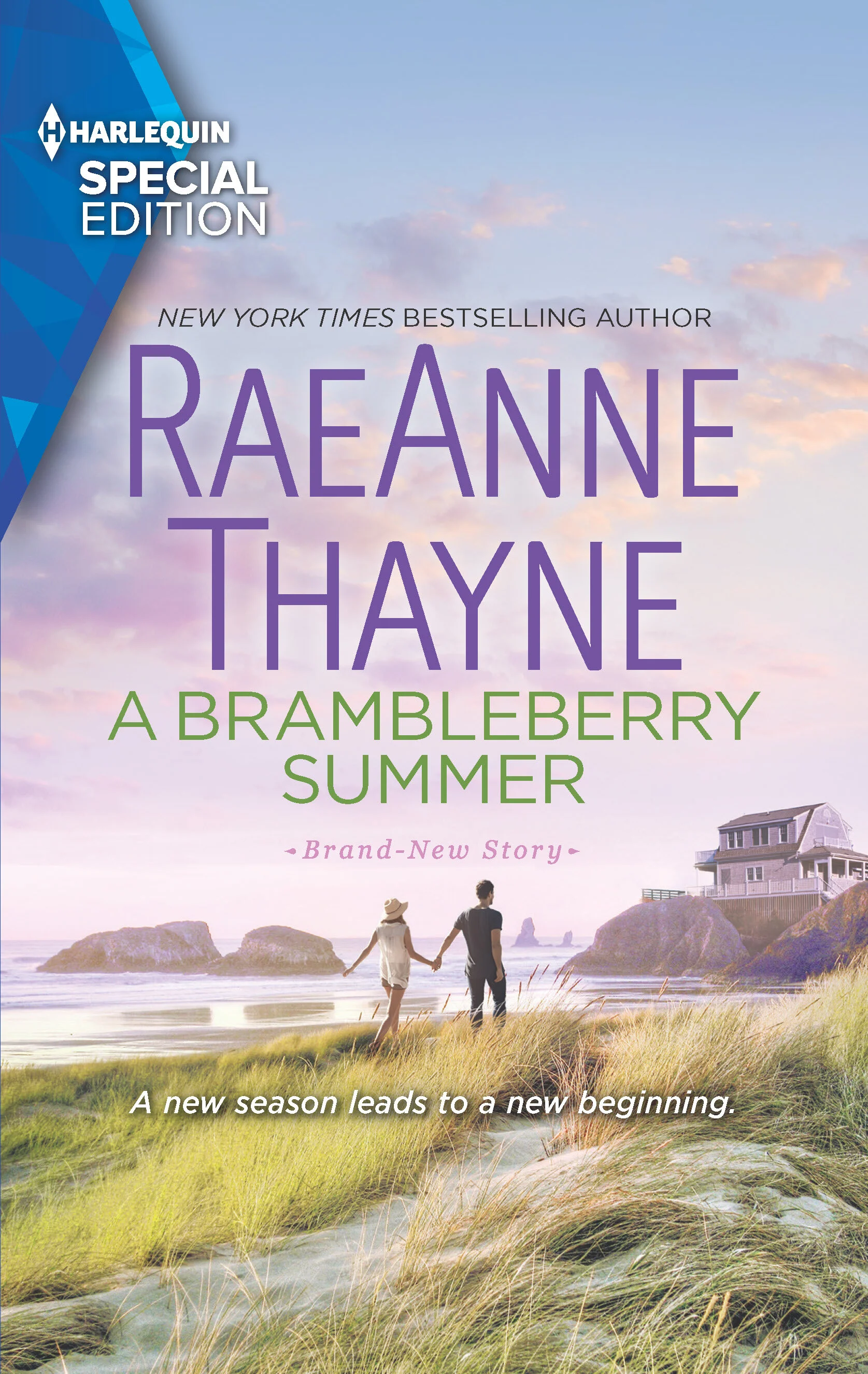
Spotlight: A Brambleberry Summer by RaeAnne Thayne

A Brambleberry Summer cover.jpg

Book Description

A new season leads to a new beginning in New York Times bestselling author RaeAnne Thayne's latest heartwarming romance!

Will the secrets of her past…

Prevent her from having the future she’s always wanted?

Rosa Galvez’s attraction to Officer Wyatt Townsend is as powerful as the moon’s pull on the tides. But with her past, Rosa knows better than to act on her feelings. When Wyatt and his adorable son become Brambleberry House’s newest tenants, Rosa finds her resolve slipping. Her solo life slowly becomes a sun-filled family adventure—until dark secrets threaten to break like a summer storm.

Excerpt

Now that the deed was done, Rosa was having second, third and fourth thoughts about Wyatt Townsend moving in downstairs.

Why had she ever thought this would work?

That evening as she pulled weeds in the backyard after leaving the store, she had to fight all her instincts that were urging her to call up Carrie right now and tell her she had made a mistake. The apartment was no longer available.

“There is no law against changing your mind, is there?” she asked out loud to Fiona, who was lying in the grass nearby, watching butterflies dance amid the climbing roses.

The dog gave her a curious look then turned back to her business, leaving Rosa to sigh. She yanked harder at a stubborn weed that had driven deep roots into the ground.

She would do nothing. She had given her word and could not back out now. Integrity, keeping her word, was important. She had learned that first from her own mother and then from her adopted parents.

Lauren and Daniel Galvez were two of the most honorable people she knew. They would never think of reneging on a promise and she couldn’t, either.

Yes, Wyatt made her extremely nervous. She did not want him moving in downstairs. But she had given her word to his sister. End of story.

Because of that, she would be gracious and welcoming to him and to his sweet son.

Thinking about Logan left her feeling a little bit better about the decision. He was a very adorable boy, with good manners and a ready smile.

It was not the boy’s fault that Wyatt made her so nervous.

She had almost talked herself into at least accepting the new status quo, when an SUV pulled up to the house a half hour later.

Fiona lifted her head to sniff the air, then rose and hurried over to the vehicle to greet the newcomers.

Rosa climbed to her feet a little more slowly, pulled off her gloves and swiped at her hair before she headed for the vehicle. She might be accepting of her new tenants, but summoning the same kind of enthusiasm her dog showed so readily would be a stretch.

When Rosa reached the vehicle, Logan was opening the back door and jumping to the ground, his little dog close behind.

Fiona barked a greeting, then leaned in to sniff the newcomer, tail wagging. The Townsends’ dog sniffed back, and a moment later, the two were circling each other with joy.

At least Fiona was happy to have them here.

“Hello, Logan,” Rosa said.

“Hi.” The boy beamed at her, showing off a gap in his teeth that she found adorable.

“Guess what?” he said. “We’re moving into your house! Dad says we can stay here until our house is done and I’ll have my own bedroom and won’t have to sleep in Aunt Carrie’s sewing room anymore.”

“This is so wonderful, no?” She smiled down at him, trying not to pay any attention to his father walking around the vehicle, looking big and serious and intimidating.

“What is the name of your dog?”

“This is Hank. Don’t worry. He’s nice.”

“I never doubted it for a minute,” she assured him. “Hello, Hank.”

She reached down to pet the dog, who responded by rolling over to have his belly scratched. Rosa loved him immediately.

“This is Fiona. She is also very nice.”

Logan grinned and petted Fiona’s long red coat.

Wouldn’t it be lovely if she only had to deal with the boy and the dog? Unfortunately, the boy had a father. She had to say something to Wyatt, at least. Bracing herself, she lifted her attention from the two dogs and the boy, and faced the man who always looked as if he could see through her skin and bones into her heart, and was not convinced he liked what he saw.

Buy on Amazon Kindle | Audible | Mass Paperback

About the Author

New York Times bestselling author RaeAnne Thayne finds inspiration in the beautiful northern Utah mountains where she lives with her family. Her books have won numerous honors, including six RITA Award nominations from Romance Writers of America and Career Achievement and Romance Pioneer awards from RT Book Reviews. She loves to hear from readers and can be reached through her website at www.raeannethayne.com.

Connect with the Author

Website: https://www.raeannethayne.com/

Facebook: https://www.facebook.com/AuthorRaeAnneThayne/

Twitter: https://twitter.com/raeannethayne

Instagram: https://www.instagram.com/raeannethayne/

Goodreads: https://www.goodreads.com/author/show/116118.RaeAnne_Thayne

Spotlight: The Perfect Murder by Kat Martin

The Perfect Murder Tour Banner.jpeg
12ca86dfca91496fb73aa779c47fcef7.jpg

Romantic Suspense

Publisher: HQN

Date Published: Jun 22, 2021

The eldest of the three wealthy Garrett brothers, Reese Garrett is in the middle of a major purchase for his multimillion-dollar oil and gas company, Garrett Resources. The Poseidon offshore drilling platform venture will greatly enhance the company’s value.

But when Reese is on a trip out to see the rig, his helicopter crashes, leaving him hospitalized and two men dead. It’s discovered the chopper was sabotaged, and Reese is determined to find out who’s behind the crash—and whether he was the intended target. Then, when his lover, Kenzie, is accused of her ex-husband’s murder—a man with a vested interest in the Poseidon deal—clues start pointing to a connection that puts Reese, Kenzie and her young son in the sights of a killer.

From the Texas heat to the Louisiana bayous, Reese and his brothers must track down the truth before the body count gets any higher.

Excerpt

Chapter One

Galveston, Texas

Last Day of July 

Seconds after the chopper lifted off the pad, Reese felt the odd vibration.  Along with the pilot and co-pilot and five members of the crew, the Eurocopter EC135 was headed for the Poseidon offshore drilling platform.  

For a moment, the ride leveled out and Reese relaxed against his seat.  As CEO of Garrett Resources, the billion-dollar oil and gas company he owned with his brothers, he was always searching for the right investment to expand company holdings, the reason he was flying out to the platform. 

For months he’d been working with Sea Titan Drilling, the owner of the offshore rig, to complete the five-hundred-million-dollar purchase, an extremely good value when the average price of a similar rig was around six-fifty.  

The vibration returned and with it came a grinding noise that put Reese on alert.  The men in the cabin began to glance back and forth and shift nervously in their seats.  A sharp jolt, then the chopper seemed to fall out of the sky.  It climbed again, began to dip and sway, dropped then climbed as the pilot fought for control. 

The pilot’s deep voice rumbled through the headset.  “We’ve got a problem.  I don’t want you to panic, but we need to find a place to set down.”  

There was definitely a problem, Reese thought, as the vibration continued to worsen.  The chopper was out of control and the whole cabin was shaking as if it would break apart any minute.  His pulse was hammering, his adrenalin pumping. 

 Along with the men in the crew who rode back and forth from the rig every few weeks, he stared out the window toward the ground.  They were no longer above the heliport.  Clearly the pilot was looking for an open space big enough to handle the thirty-six-foot blade span.  All Reese could see were the rooftops of warehouses and metal commercial buildings.

The chopper kept shaking.  The crew was grim-faced but resigned.  The pilot did something to take the pitch out of the rotors and the chopper started falling. 

“No need to worry,” the pilot said.  “We’ll auto-rotate down.  I’ve done it a dozen times.”

Auto rotate down.  Reese knew the concept, the technique helicopter pilots used to land when the engine failed.  The trick was to find a safe place to hit the ground.  

Both engines went silent.  The blades were flat now, the wind whistling through them, tying his stomach into a knot. 

“Brace for impact,” the pilot said.  Below them, Reese spotted an open flat slab of asphalt in the yard of a small trucking firm--the only possible landing site anywhere around.  Trouble was it didn’t look wide enough to handle the blades.  

At the last second, the pilot flared the helicopter in an effort to slow the descent, then the ground rushed up and the chopper hit with a jolt that wracked Reese’s whole body.

For an instant, he thought they were going to make it.  Then one of the spinning rotor blades hit the corner of a building and tore free.  The Plexiglas bubble shattered as the long metal blades exploded into a hundred deadly pieces, careening like knives through the air, slicing into buildings and the cabin of the helicopter.  

Reese didn’t feel the impact.  One moment he was conscious, then the world suddenly went black. 

Chapter Two

Four weeks later

Dallas, Texas

For McKenzie Haines, her day as Executive Assistant to Reese Garrett, CEO of Garrett Resources, started as usual.  After a few minutes spent with her assistant, Kenzie began her early morning briefing with Reese to go over his daily schedule and discuss what he needed her to do.

Seated across the desk from him in his spacious office, she waited as he finished an unexpected phone call.  With his wavy jet black hair and amazing blue eyes, Reese was one of the best-looking men Kenzie had ever seen.  Keenly intelligent and highly successful, he was a combination of virile masculinity and brooding reserve that attracted women of every age, shape, and size.

She could still see the faint scar on the side of his head near his temple from the helicopter crash that had killed two men and put Reese in the hospital.  

At the time of the accident, Kenzie had worked for the company only five months, but in that time, she had come to admire and respect her employer.  She could still recall her sharp stab of fear when his brother, Chase, had phoned to inform her of the accident.

Three days later, Reese was back at his desk, running the company with the iron control he was known for.  Unfortunately, even now, four weeks after the incident, NTSB investigators remained unable to pinpoint the cause of the crash.

Reese’s phone call ended and his dark head came up, his intense blue eyes swinging toward her, locking on her face.  No matter how she worked to ignore it, Kenzie always felt the impact.

“Where were we?” he asked.

“You wanted me to reschedule your visit to the offshore platform.”  

“Yes.  I’ve put it off too long already.”

“I probably shouldn’t say this, but after what happened, I don’t blame you.”

The corner of his mouth kicked up.  “Maybe not, but I want this deal done.  We’ve been working on it for months.  We need to finish our due-diligence and make it end.”

“Yes, sir.  Would you like me to go with you?”  Traveling with Reese when he needed her assistance was part of her job, though he hadn’t asked her to go with him the day of the crash, thank God.

One of his rare smiles appeared.  “You want to hold my hand in case I get scared in the chopper?”

Kenzie laughed, a little embarrassed he had hit so close to the truth.  She liked him, admired him.  He could have died that day.  “I just thought you might need me.”

“Not this time,” Reese said.

But Kenzie had watched him these past few weeks.  The helicopter crash still weighed heavily on his mind.  The authorities were investigating and so was Reese. 

Kenzie was certain Reese wouldn’t stop until he knew exactly what had happened that day--and why two good men were dead. 

Buy on Amazon Kindle | Audible | Hardcover

The Perfect Murder Book Banner.png

About the Author

f696ba5b438b4eb1b97208b0ba92aaee.jpg

New York Times bestselling author Kat Martin is a graduate of the University of California at Santa Barbara where she majored in Anthropology and also studied History. Currently residing in Missoula, Montana with her Western-author husband, L. J. Martin, Kat has written sixty-five Historical and Contemporary Romantic Suspense novels. More than sixteen million copies of her books are in print and she has been published in twenty foreign countries. Kat is currently at work on her next Romantic Suspense.

Connect:

Website: https://www.katmartin.com/

Facebook: https://www.facebook.com/KatMartinAuthor/

Twitter: https://twitter.com/katmartinauthor

Goodreads: https://www.goodreads.com/author/show/49381.Kat_Martin

Instagram: https://www.instagram.com/katmartinauthor/

Spotlight: Text in Show by Whitney Dineen & Melanie Summers

TextInShowBlitzBanner.png
Text in Show - for Amazon (1).jpg

(An Accidentally in Love Story, #4)
Publication date: June 10th 2021
Genres: Adult, Comedy, Contemporary, Romance

Synopsis:

It’s a dog text dog world…

Autumn Jones is at a crossroads. With no job offers in sight, she can either return to Koshkonong, Wisconsin to work at her dad’s feed store or she can move to New York and help her older sister Helen coordinate the Manhattan Kennel Club Show. She and Helen may fight like cats and dogs, but Autumn would rather live with a thousand Helens than go home after seven years of college.

Jack Campbell is the veterinarian to Manhattan’s elite. Despite their adoration, he does not love them back. In fact, he’s vowed never to date anyone who walks through the front door of his clinic. He spends his days caring for pampered poodles sporting diamond encrusted collars and placating their high maintenance owners. When he meets Autumn, he assumes she’s going to be another client with more money than brains.

Autumn is thrown into a bizarre world of highly competitive rich women who will do anything to win the coveted title of Best in Show at Manhattan’s most exclusive competition. With her haughty sister breathing down her neck, and a high-strung poodle following her everywhere she goes, she doesn’t have time for love, even if she does find herself face-to-face with America’s hottest vet every day.

Will Autumn run back to Wisconsin with her tail between her legs? Will Jack find out that appearances can be deceiving? Will Helen’s dog Fifi win Best in Show? Find out in the hysterical fourth edition of the Accidentally in Love Series, Text in Show.

Excerpt

The bell over the door chimes and a young woman walks in with a freshly groomed silver standard poodle, full-on with painted nails and a diamond collar that probably isn’t fake. I look from the dog to her owner, relieved that I don’t know either of them. My gut reaction is to despise her. Anyone who paints their dog’s nails is on my not happening list, even if she is really pretty—which she is. She’s totally got that trophy wife air about her, except there’s no giant rock on her finger, so she must be a wannabe trophy wife. Her dark blonde hair is up in a ponytail. She’s dressed in yoga pants and a fitted long-sleeved T-shirt for that cute girl-next-door look. She probably paid an extra hundred for that tiny hole near the bottom of her shirt, you know, to make it look like she’s not trying.

Aldo points to the door and yells, “NO DOGS!”

The chances that a woman like her will take no for an answer are about as good as me painting my own nails. In other words, it’s not happening.

She gives him a pathetic look, complete with puppy dog eyes. “I’m just here to pick up my order and I’m worried about leaving her outside.”

There it is. She’s clearly not used to hearing no and she’s about to put up a big fuss. I bet she’ll threaten to skewer them on Yelp before she leaves.

“No dogs. OUT!” Aldo shouts.

“Can you bring me the pizza then? It’s under the name Autumn.”

Autumn. That figures. These Upper East Side women always have chichi froufrou names.

The man in line turns to glare at her. “Would you mind waiting your turn?”

“Sorry, yeah,” she says, looking more flustered than I’m used to seeing in this neighborhood full of privilege.

Also, she just apologized and is now leaving without yelling, threatening, or telling him he just made the biggest mistake of his life. She must be very new at being filthy rich, but she’ll learn.

Autumn turns around to open the door, only to get caught up in the leash. I watch as she loses her balance, then flails her arms which, unfortunately for her, is the universal sign for “let’s wrestle” in the dog world. The poodle leaps up, wags her tail, and bounces as though agreeing to the terms of play. The owner’s weak words of “Celine, no!” mean nothing. In fact, the volume and panicked tone only excite the poodle more. Before I can get up to help her, the woman tips sideways and lands in a huge potted plant with the dog pinning her to the dirt and licking her face. “Celine Dion Josephine Bonaparte, get down girl,” she says, uselessly.

“That’s it, now you’ve upset my plant.” Aldo hollers. “Go!”

“I’m trying!” she calls back.

Oh, for … I get up and firmly take Celine Dion Josephine Bonaparte (what kind of name is that?) by the collar, lift her off Autumn, and firmly tell the canine, “Stay.”

Then I pluck the leash out of the woman’s hands and unravel her legs from it. Wow, she smells amazing. Or is that the poodle? Dear God, I hope it’s not the poodle because if so, I’ve got some very expensive years of therapy ahead of me.

Buy on Amazon Kindle | Paperback

Whitey (1).jpg

About the Authors

Whitney loves to laugh, play with her kids, bake, and eat french fries -- not always in that order.

Whitney is a multi-award-winning author of romcoms, non-fiction humor, and middle reader fiction. Basically, she writes whatever the voices in her head tell her to.

She lives in the beautiful Pacific Northwest with her husband, Jimmy, where they raise children, chickens, and organic vegetables.

Gold Medal winner at the International Readers' Favorite Awards, 2017.

Silver medal winner at the International Readers' Favorite Awards, 2015, 2016.

Finalist RONE Awards, 2016.

Finalist at the IRFA 2016, 2017.

Finalist at the Book Excellence Awards, 2017

Finalist Top Shelf Indie Book Awards, 2017

Connect:

https://whitneydineen.com/

https://twitter.com/whitneydineen

https://www.goodreads.com/author/show/8145525.Whitney_Dineen

https://www.instagram.com/whitneydineenauthor/

https://www.facebook.com/Whitney-Dineen-Author-11687019412/

Melanie (1).jpg

Melanie Summers also writes steamy romance as MJ Summers.

Melanie made a name for herself with her debut novel, Break in Two, a contemporary romance that cracked the Top 10 Paid on Amazon in both the UK and Canada, and the top 50 Paid in the USA. Her highly acclaimed Full Hearts Series was picked up by both Piatkus Entice (a division of Hachette UK) and HarperCollins Canada. Her first three books have been translated into Czech and Slovak by EuroMedia. Since 2013, she has written and published three novellas, and eight novels (of which seven have been published). She has sold over a quarter of a million books around the globe.

In her previous life (i.e. before having children), Melanie got her Bachelor of Science from the University of Alberta, then went on to work in the soul-sucking customer service industry for a large cellular network provider that shall remain nameless (unless you write her personally - then she'll dish). On her days off, she took courses and studied to become a Chartered Mediator. That designation landed her a job at the R.C.M.P. as the Alternative Dispute Resolution Coordinator for 'K' Division. Having had enough of mediating arguments between gun-toting police officers, she decided it was much safer to have children so she could continue her study of conflict in a weapon-free environment (and one which doesn't require makeup and/or nylons).

Melanie resides in Edmonton with her husband, three young children, and their adorable but neurotic one-eyed dog. When she's not writing novels, Melanie loves reading (obviously), snuggling up on the couch with her family for movie night (which would not be complete without lots of popcorn and milkshakes), and long walks in the woods near her house. She also spends a lot more time thinking about doing yoga than actually doing yoga, which is why most of her photos are taken 'from above'. She also loves shutting down restaurants with her girlfriends. Well, not literally shutting them down, like calling the health inspector or something--more like just staying until they turn the lights off.

She is represented by Suzanne Brandreth of The Cooke Agency International.

Connect:

https://mjsummersbooks.wordpress.com/

https://twitter.com/mjsummersbooks

https://www.instagram.com/mj_summers_author/

https://www.facebook.com/MJSummersAuthorPage

https://www.goodreads.com/author/show/17105602.Melanie_Summers

Spotlight: Building a Surprise Family by Anna J. Stewart

Building a Surprise Family cover.jpg

Book Description

An instant family…Is life-changing!

Pregnant construction supervisor Jo Bertoletti doesn’t need anyone’s help…or another heartbreak. So she’s putting handsome, kindhearted firefighter Ozzy Lakeman firmly into the friend zone. After all, she’s just passing through Butterfly Harbor, and her life is too complicated for a summer romance. But Ozzy feels an immediate connection. Can he convince the woman of his dreams to take a chance on building a forever family with him?

Excerpt

The truck’s engine suddenly went silent. Ozzy walked over to greet the driver. “That is a thing of beauty,” he said as the door opened and the driver dropped to the ground in front of him.

Every thought he had disappeared straight out of his head.

Tall, curvy and with sun-streaked blond hair knotted into a messy pile on top of her head, Butterfly Harbor’s latest arrival faced Ozzy with a wide, welcoming smile on her round face. Beneath the barely-there sunlight of the May morning, her skin seemed to glisten in the chilly air. She had light brown eyes, almost amber with flecks of gold that sparkled when she smiled. She wore snug jeans that accentuated everything a man like him enjoyed, sneakers that looked as if they’d been worn into the ground and a snug short-sleeved turquoise T-shirt that displayed a surprisingly round stomach.

The new foreman was a woman?

A pregnant forewoman?

“Didn’t realize there’d be a welcoming committee.” The woman closed the truck door and stepped up to him. “I know I wasn’t expected until next week, but I wanted to get a jump on settling in. I’m Jo Bertoletti. You are not Mayor Hamilton.” She gestured to Ozzy’s T-shirt with the BHFD logo on the front peeking out of his jacket.

“Ah, no, ma’am.” Ozzy shook her offered hand. Her skin felt rough and calloused, proving she was someone who was used to getting her hands dirty. Beneath that observation, a dull buzz shifted through his system. “I’m Ozzy Lakeman. I was in the diner when you drove down Monarch Lane. Just thought I’d come up and be the first to see what was happening here.” His own smile widened as something oddly definitive dinged. “I guess that makes me the welcoming committee.”

“I appreciate that, Ozzy Lakeman of the BHFD.” She beamed at him before her expression shifted into a knowing one. “Judging by the look on your face, I’m betting you weren’t expecting someone…like me.”

“I…uh.” There had to be a way to answer that without sounding like a complete sexist or jerk. “Like you?”

Jo snickered. “Don’t worry, Ozzy. Not the first time I’ve seen that reaction when I arrive on a site. And it’s not because of the little bun I’m baking in here. Bun in the oven. That’s such a weird phrase. Although come to think about it, I have spent my fair share of time waiting for my sourdough starter to develop.”

Ozzy could only nod. His ears were buzzing and his heart did an odd little skip and jolted in a manner he’d never felt anytime he’d swiped right.

Buy on Amazon Kindle | Mass Paperback

About the Author

USA Today and national bestselling author Anna J Stewart can't remember a time she didn't have a book in her hands or a story in her head. Early obsessions with Star Wars, Star Trek, and Wonder Woman set her on the path to creating sweet to sexy pulse-pounding romances for her independent heroines. Anna lives in Northern California where she deals with a serious Supernatural addiction and an overly affectionate cat named Snickers.

Connect with the Author

Website: https://www.authorannastewart.com/#

Facebook: https://www.facebook.com/AuthorAnnaJStewart

Twitter: https://twitter.com/ajstewartwriter

Instagram: https://www.instagram.com/annajstewart/

Goodreads: https://www.goodreads.com/author/show/8475995.Anna_J_Stewart

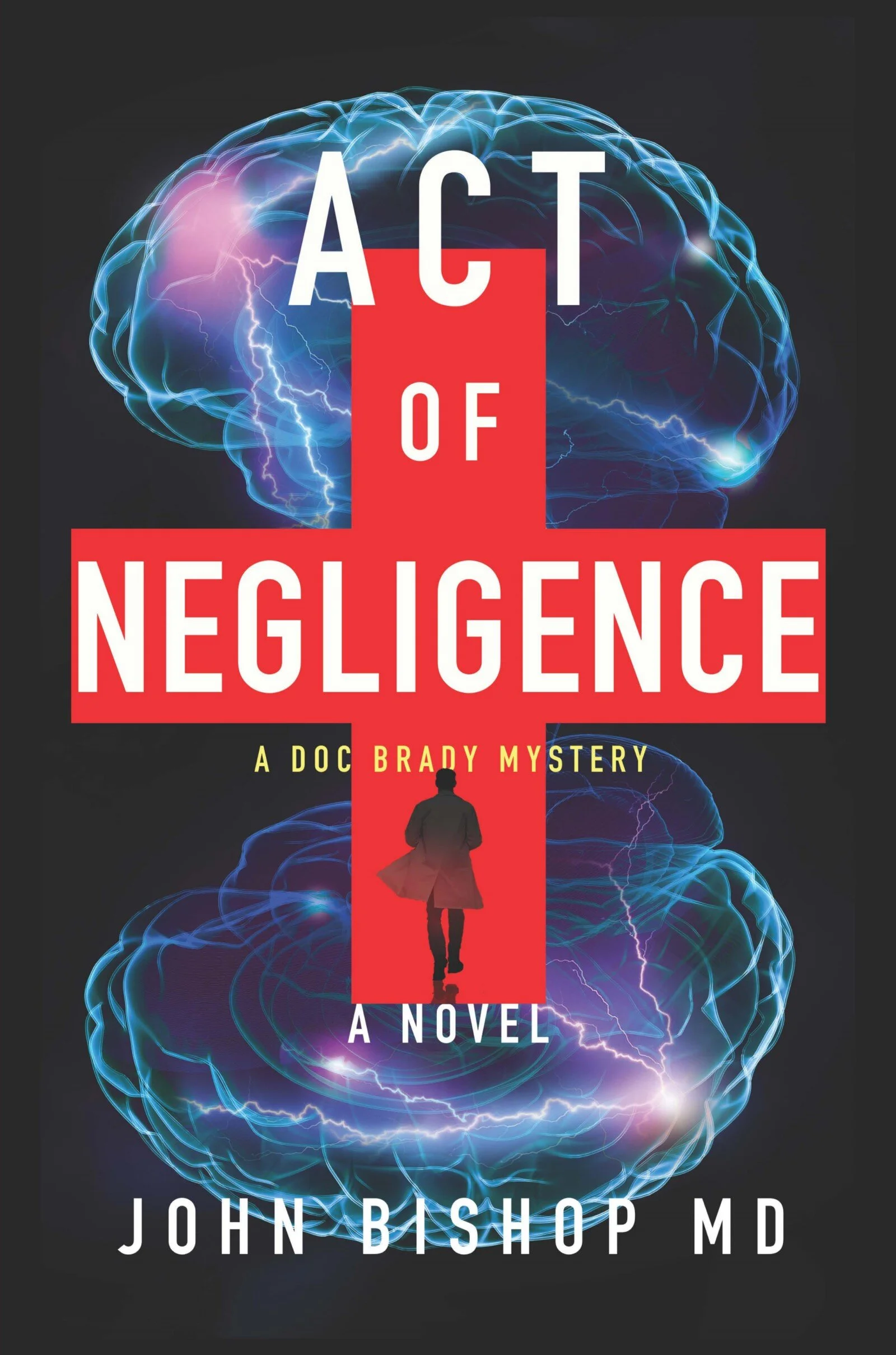
Spotlight: Act of Negligence by John Bishop MD

Act of Negligence cover.jpg

Something unusual is going on with the dementia patients at Pleasant View Nursing Home.

Dr. Jim Bob Brady, Houston orthopedic surgeon and amateur sleuth, finds himself in the midst of a different type of medical mystery. His friend and colleague, Dr. James Morgenstern, refers him a series of dementia patients with orthopedic problems from Pleasant View Nursing Home. Each patient dies, irrespective of the treatment, a situation that Doc Brady is unaccustomed to.

Each death prompts an autopsy, performed by another Brady colleague, Dr. Jeff Clarke, who discovers unusual brain pathology in each patient. Some of the tissue samples show nerve regeneration, a finding unheard of in dementia patients.

Doc Brady, enraged by the loss of his patients and obsessively curious about the pathologic findings, begins to investigate the nursing home, as well as its owner and CEO, Dr. Theodore Frazier. This leads Brady and Clarke on an adventure to discover the happenings at Pleasant View-an adventure that sees them running for their lives.

Excerpted from Act of Negligence. Copyright © 2021 by John Bishop. All rights reserved. Published by Mantid Press.

BEATRICE ADAMS 

Monday, May 15, 2000 

“Morning, Mrs. Adams. I’m Dr. Brady.”

There was no response from the patient in Room 823 of University Hospital. She was crouched on the bed, in position to leap toward the end of the bed in the direction of yours truly. I could not determine her age, but she definitely appeared to be a wild woman. Her hair was a combination of gray and silver, long and uncombed and in total disarray. She had a deeply lined face, leathery, with no makeup. Her brown eyes were frantic, and her head moved constantly to the right and left. She was clad only in an untied hospital gown which dwarfed her small frame. My guess? She wasn’t over five feet tall.

“Ms. Adams? Dr. Morgenstern asked me to stop by and see about your knee?”

She did not move or speak; she just continued squatting there in the hospital bed, bouncing slightly on her haunches, and staring at me while her head moved slowly to and fro.

I looked around the drab private room with thin out-of-date drapes and faded green-tinted walls. There were no flowers. I judged the patient to most likely be a nursing-home transfer. 

I made the safe move by backing out of the patient’s room, and I walked the twenty yards to the nurses’ station. The white-tiled floors were freshly waxed, but the medicinal smell was distinctly different from the surgical wing. There was an unpleasant pine scent in the air that could not hide the odor of decaying human beings and leaking body fluids. It was the smell of chronic illness and disease. 

“Cynthia?” I asked the head nurse on the medical ward, or so announced her name tag. She was sitting at the far side of the long nursing station desk performing the primary duty of a nursing supervisor: paperwork. She was an attractive Black woman in her mid-forties, I estimated. 

“Yes, sir?” 

“Dr. Morgenstern asked me to see Mrs. Adams in consultation. Room 823? What’s the matter with her? She won’t answer me. She just stares, sitting up in the bed on her haunches, bouncing.” 

She smiled and shook her head. “You must be a surgeon.”

“Yes, ma’am. Orthopedic. Dr. Jim Brady.”

“Cynthia Dumond. Mrs. Adams has Alzheimer’s. Sometimes she gets confused. Want me to come in the room with you? Maybe protect you?” she said with a smile. 

“Well, I wouldn’t mind the company,” I said, a little sheepishly. “Not that I was afraid or anything.” 

“She’s harmless, Doctor. She’s just old and confused.” 

We walked back to the hospital room together. The patient seemed to relax the moment she saw the head nurse, a familiar face. “Hello, Ms. Adams,” 

Cynthia said. “This is Dr. Brady. He needs to examine your . . .” She gazed at me, smiling again. “Your what?” “Her knee.” 

“Dr. Brady needs to look at your knee. Okay?” 

The patient had ceased shaking and bouncing, leaned back, slowly extended her legs, laid down, and became somewhat still. 

“Very good, Ms. Adams. Very good,” Cynthia said, grasping the elderly woman’s hand and holding it while she looked at me. “Go ahead, Doctor.” 

The woman’s right knee was quite swollen, with redness extending up and down her leg for about six inches in each direction. When I applied anything but gentle skin pressure, her leg seemed to spasm involuntarily. How in the world she had managed to crouch on the bed with her knee bent to that degree was mystifying. 

“Sorry, Ms. Adams,” I said, but continued my exam. The knee looked and felt infected, but those signs could also have represented a fracture or an acute arthritic inflammation such as gout, pseudo-gout, or rheumatoid arthritis, not to mention an array of exotic diseases. I tried to flex and extend the knee, but she resisted, either due to pain—although I wasn’t certain she had a normal discomfort threshold—or from a mechanical block due to swelling or some type of joint pathology. 

“What’s she in the hospital for?” I asked Nurse Cynthia. 

“Dehydration, malnutrition, and failure to thrive, the usual diagnoses for folks we get from the nursing home. The doctor who runs her particular facility sent her in.” 

“Who is it?”

“Dr. Frazier. Know him?”

“Nope. Should I?”

“No. It’s just that he sends his patients here in the end stages. Most of the folks that get admitted from his nursing home die soon after they arrive.” 

“Most of them are old and sick, aren’t they?”

“Yes.”

I looked at her expression while she continued to hold Mrs. Adams’s hand.

“Were you trying to make a point?”

“Not really.” She glanced at her watch. “Are you about through, Doctor Brady? I have quite a bit of work to do.” 

“Follow that paper trail, huh?” 

“Yes. That’s about all I have time for these days. Seems to get worse every month. Some new form to fill out, some new administrative directive to analyze. Whatever.” 

“I know the feeling. There isn’t much time to see the patients and take care of whatever ails them these days. If my secretary can’t justify to an insurance clerk why a patient needs an operation, then I have to waste my time on the phone explaining a revision hip replacement to someone without adequate training or experience. One of my partners told me yesterday about an insurance clerk that was giving him a bunch of—well, giving him a hard time—about performing a bunionectomy. He found out during the course of a fifteen-minute conversation that the woman didn’t know a bunion was on the foot. Her insurance code indicated it was a cyst on the back and she couldn’t find the criteria for removal in the hospital. She was insisting it had to be an office procedure, and only under a local anesthetic. Crazy, huh?” 

“Yes, sir. It’s a brave new world.”

“Sounds like a good book title, Nurse Cynthia.”

“I think it’s been done, Doctor.”

“Well, thanks for your help. I do appreciate it. Not every day the head nurse on a medical floor accompanies me on a consultation.” “My pleasure. You seem to be a concerned physician, an advocate for the patient, at least. As I remember, that’s why we all went into the healing arts.”

She turned to Mrs. Adams. “I’ll see you later, dear,” she said, patting the elderly woman’s forehead. Still holding the nurse’s other hand with her own wrinkled hand, Mrs. Adams kissed Cynthia’s fingers lightly, probably holding on for her life. 

I poured a cup of hospital-fresh coffee, also known as crankcase oil, and reviewed Beatrice Adams’s chart. I sat in a doctor’s dictation area behind the nursing station and looked at the face sheet first, being a curious sort. Her residence was listed as Pleasant View Nursing Home, Conroe, Texas. Conroe is a community of fifty thousand or so, about an hour north of Houston. I noticed that a Kenneth Adams was listed as next of kin and was to be notified in case of emergency. His phone number was prefixed by a “409” exchange, and I therefore assumed that he was a son or a brother and lived in Conroe as well. 

Mrs. Adams was fifty-seven years old, which was young to have a flagrant case of Alzheimer’s disease, a commonly-diagnosed malady that was due to atrophy of the brain’s cortical matter. That’s the tissue that allows one to recognize friends and relatives, to know the difference between going to the bathroom in the toilet versus in your underwear, and to know when it’s appropriate to wear clothes and when it isn’t. Alzheimer’s causes a patient to gradually become a mental vegetable but doesn’t affect the vital organs until the very end stages of the disease. In other words, the disease doesn’t kill you quickly, but it makes you worse than a small child—unfortunately, a very large and unruly child. 

It can, and often does, destroy the family unit, sons and daughters especially, who are caught between their own children and whichever parent is affected with the disease, which makes it in some ways worse than death. You can get over death, through grief, prayer, catharsis, and tincture of time. Taking care of an Alzheimer’s-affected parent can be a living hell, until they are bad enough that the patient must go to a nursing home. Then the abandonment guilt is hell, or so my friends and patients tell me. 

Mrs. Adams had been admitted to University Hospital one week before by my friend and personal physician, Dr. James Morgenstern. I guessed that either he had taken care of the patient or a family member in the past, or that Dr. Frazier, physician-owner or medical director of Pleasant View Nursing Home, had a referral relationship with Jimmy. 

Mrs. Adams’s initial blood work revealed hyponatremia (low sodium), hyperkalemia (high potassium), and a low hematocrit (anemia). Clinically, hypotension (low blood pressure), decreased skin turgor, and oliguria (reduced urine output) suggested a dehydration-like syndrome. For a nursing-home patient, that could either mean poor custodial care or failure of the patient to cooperate— refusing to drink, refusing to eat—or some combination of the two. Neither scenario was atypical of the plight of the elderly with a dementia-like illness. 

According to Dr. Morgenstern’s history, the patient had been diagnosed with Alzheimer’s disease six years before, at age fifty-one, which by most standards was very young for brain deterioration without a tumor. 

“Dr. Brady?” head nurse Cynthia asked, appearing beside my less-than-comfortable dictating chair. 

“Yes?” 

“I’m sorry to bother you, but might I have one of your business cards?” 

“Sure,” I said, handing her one from the top left pocket of my white clinical jacket. “Don’t ever apologize for bothering me if you’re trying to send me a patient.” 

She laughed. “It’s for my mother. She has terrible arthritis.” She paused and read the card. “You’re with the University Orthopedic Group?” 

“Yes. Twenty-two years.”

“If I might ask, where did you do your training?”

“I went to med school at Baylor, then did general and orthopedic surgery training here at the University Hospital. I then traveled to New York and spent a year studying hip and knee replacement surgery, then came back to Houston to the land of the free and the home of the brave.” 

“Is your practice limited to a certain area? I mean, do you just see patients with hip and knee arthritis?” 

“Yes. Unless, of course, it’s an emergency situation, like one of those rare weekends when I can’t find a young, hungry surgeon with six kids to cover emergency room call for me.” 

“Well, thanks,” she said, smiling. “I’ll be seeing you. I’ll bring my mother in.” 

“Thank YOU, Cynthia. By the way, I’m curious. Why me? I would think you see quite a few docs up here, and I would imagine that your mother has had arthritis for years. Why now?” 

Cynthia was an attractive, full-figured woman with close-cropped jet-black hair, a woman who made the required pantsuit nursing uniform look like a fashion statement. She looked me up and down as I sat there with Mrs. Adams’s chart in my lap, my legs crossed, holding the strong black cooling coffee. 

“You’re wearing cowboy boots. I figure that all you need is a white hat,” she said, turning and walking away. 

Not my sharp wit, nor my kind demeanor with her patient, nor my vast training and experience. 

My boots. 

Buy on Amazon Kindle | Paperback

About the Author:  

Image credit_ Greg Moredock.jpeg

John Bishop MD is the author of Act of Negligence: A Medical Thriller (A Doc Brady Mystery). Dr. Bishop has led a triple life. This orthopedic surgeon and keyboard musician has combined two of his talents into a third, as the author of the beloved Doc Brady mystery series. Beyond applying his medical expertise at a relatable and comprehensible level, Dr. Bishop, through his fictional counterpart Doc Brady, also infuses his books with his love of not only Houston and Galveston, Texas, but especially with his love for his adored wife. Bishop’s talented Doc Brady is confident yet humble; brilliant, yet a genuinely nice and funny guy who happens to have a knack for solving medical mysteries. Above all, he is the doctor who will cure you of your blues and boredom. Step into his world with the first four books of the series, and you’ll be clamoring for more. For more information, please visit https://johnbishopauthor.com

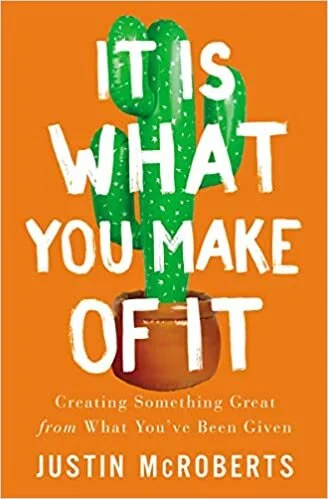
Spotlight: It Is What You Make of It by Justin McRoberts

Paperback : 208 pages

Justin McRoberts dares you to move beyond “it is what it is” thinking and become an agent of love and redemption in your household, neighborhood, and workplace.

“It is what it is”—a common phrase you hear and maybe even say yourself. But the truth is that there is not one square inch in the whole domain of our human existence that simply is what it is. Justin McRoberts invites you to embrace a new mindset: it is what you make of it.

With warmth, wisdom, and humor, McRoberts shares key moments from his twenty-plus years as an artist, church planter, pastor, singer-songwriter, author, neighbor, and father, passing on lessons and practices learned about making something good from what you’ve been given rather than simply accepting things as they are.

Thought-provoking but actionable, It Is What You Make of It declares that love doesn’t just win, mercy doesn’t just triumph, and light doesn’t just cast out shadow. Rather, such renewal requires the work of human hands and hearts committed to a vision of a world made right (or at least a little better). When we partner with God in these endeavors, we love the world well and honor the Creator in whose image we are made.

We will not be remembered for who our parents were or where we were born or what our socioeconomic circumstances were. We won’t be remembered for our natural talents and strengths or the opportunities we were given or the challenges we faced. In the end, each of us will be remembered for what we made with what we were given.

Excerpt

FIVE

Everybody Hurts, Everybody Matters

In the fall of 2010, I started the largest and most time- consuming and energy-sucking creative project of my life up to that point (and, God willing, ever). I didn’t know that when I started it. I just thought I’d throw together a few good ideas and have some fun! Then, I’d invite a small team of people to join with me, and the fun would be multiplied to partylike status. Only, this party was three people working way too many hours for nowhere near enough money while I disintegrated into the worst version of myself anyone at the “party” could have imagined.

Cue Richard Wagner–oriented party playlist.

The project was a combination of letter writing and essays and music and lyrics and visual art and documentary-style video and stress and passive aggres- sion and regular aggression and also personal reflections on relationships. Thematically, it was a celebration of community and a record of what my friends and family had made out of the circumstances and relationships God had gifted us. Eventually released in 2012 and called The CMYK Project, it turned out alright as a project. Sadly, it cost me a dear friend along the way.

One of the final phases of The CMYK Project involved the printing of a book. Actually, that’s only partially true; it was two books. Actually, that’s only partially true as well; it was really the same book in two formats. Somewhere in the process, we (and by “we” here, I mean “I”) decided on printing two versions of the same book; one version was just a regular-ole book with text on paper. The other was a two-hundred- page, full-color extravaganza featuring artwork and photography and interviews (which I didn’t mention in the description above, just like I didn’t mention it to my team when we were working on it) along with letters and essays. It’s probably also worth noting that we released the music on three separate EPs with three different covers and then selected a few songs from each of those EPs, rerecorded those songs, and tacked on even more songs to create a fourth musical aspect to the project—a full-length, full-band, studio-recorded album. So what we produced was . . .

a four-CD, twenty-five-song collection, a text-only book,

a full-color book,

three physical art installations by different artists in different cities,

video interviews with each of the visual artists, transcribed, printed versions of each of those inter-

views, and the gradual, tragic disintegration of every relationship.

Yeah, yeah, yeah. I know . . . It. Was. A. Lot.

The real fun begins with knowing that I’d never done anything like that before. In fact, I’d never made a book before, which was probably the most straight- forward part of the entire project. To make that portion of the project simpler and easier on us (and by “us” here, I mostly mean “me”), my art director and I sub- mitted the book-printing process to a large, reputable printing company. Having done what we thought was all the heavy lifting (writing, designing, formatting, arguing, walking away, and then returning to the same argument . . . blah, blah, blah), all that was left was to upload the book files; make the few, small adjustments we’d probably need to make; and then dance victori- ously as the book (along with every other aspect of the project) found its way into the hands, hearts, and minds of readers .

Three days after the first upload, we got a notifi- cation that there were things in need of fixing. Like I said, we expected this, and while the list of correc- tions was quite a bit longer than we’d anticipated, we happily fixed the book and uploaded it again, thrilled to be done with this massively too-big and costly, and also ridiculous to the point of being beyond description, project.

Three days after that, the printer responded a sec- ond time with a list of errors, several of which we were certain we’d fixed. So I called the printer’s customer ser- vice number . . . and I wasn’t kind. Not even a little bit. I was tired, and I felt that being tired somehow excused me from being kind. After feeling like I’d sufficiently communicated my frustration and disap- pointment, I hung up, and we dove into our third round of edits and fixes.

Then there was a fourth, and then a fifth, and a sixth, and eventually, the same two things started happen- ing every three to four days:

We received the same set of twenty-five notifications and necessary changes.

I ended up on the phone with customer service.

Over and over and over for weeks and weeks and weeks.

The only things that seemed to change were my level of frustration and the depth of insult I was there- fore prepared to dole out over the phone to the agent I spoke to.

This went on for twelve rounds.

Quick math: twelve rounds times three business days per round (which means we’re not counting weekends) means six-plus weeks, which, divided by seven days per week, factoring relational stress and a dwindling supply of bourbon = YIKES!!!

When that twelfth email came from the printer, I stared at my computer screen blankly until my art director spoke up. “I think I’ll call this time, okay?” said Gary. “I’m not as angry as you are.”

I left to run a few errands while he called the printer. When I got back, Gary told me he’d worked it all out. I wanted to know if “working it all out” meant he’d murdered anyone. He said no, which was slightly dis- appointing but probably for the best. What he meant by “working it all out” was that he’d asked to speak with a supervisor, just as I had. And just as had happened when I’d called, Gary was told they didn’t have supervisors. But then, instead of losing his cool and insulting the person on the other end of the call (my strategy), Gary calmly described our situation and history in detail and kindly but firmly asked who he should be talking to.

“You need a specialist,” the agent told him.

In eleven previous calls, I’d never even heard the word specialist much less been given the option to speak to one.

Gary said he held the line and was connected to someone we will call, for the purposes of this story, “the Specialist.” Gary described our situation, and the Specialist said she thought it was “really odd.” Gary assured her he was aware of how odd it was and then asked what we needed to do. The Specialist asked Gary to upload the file again.

“With all due respect,” Gary replied, “we’ve uploaded the file a dozen times now.”

“I can see that,” said the Specialist. “This time, I’ll stay on the phone with you and wait for it to hit our system. Then we can look at the file together.”

Ten minutes later, Gary and the Specialist were looking at the file together.

“Is your file supposed to be five-by-eight or six-by-nine?”

“It should be six-by-nine.”

The Specialist paused and then asked Gary if she could call him back. Twenty minutes later, she called back and told Gary what was actually going on. It wasn’t that their system had a glitch or that our file was corrupt or even that we were doing something tech- nically wrong.

It was much worse and far weirder than any of that. During one of the early phone calls in the editing process, I’d said something pretty horrible to one of the technicians. In turn, he’d reset the specs on our project from six-by-nine (which was correct) to five-by-eight, so that every time we uploaded the file, it would trigger dozens of warnings and be rejected. The technician had sabotaged our project. That’s a pretty horrible thing to do to someone. But he did it because I’d been horrible to him.

Now here’s what’s really funny (and by “funny” I mean painfully ironic and related to my social inepti- tude): the full title of the CMYK Project—the book plus three EPs plus full-length LP plus visual art plus video plus other book—was CMYK: The Process of Life

Together and was promoted as “a celebration of life in relationship.” It was chock-full of stories and anecdotes about getting along with and loving other people, par- ticularly where there were differences of opinion and experience. It was a project about my own process of learning to love people the way Jesus loved people.

So . . .

Can you imagine being the tech on the other end of the phone, staring at a chapter about the uncondi- tional love of God while the author of that chapter calls you names? Perhaps you’d think the love and kindness described in those pages weren’t for you. And if I’m honest, I certainly wasn’t offering them to that cus- tomer service agent, because in my mind he wasn’t a person but an instrument. I talked to him the way I talk to the car that won’t start or the software that freezes. His value was entirely predicated on how useful and helpful he was to me.

My encounter with that tech reminds me of one in the Gospel of Mark: the one about a woman whose body was healed when she simply touched the clothes Jesus was wearing. It’s a remarkable story in a lot of ways. First of all, that was quite an ensemble Jesus had on, right? I’ve got a few favorite shirts, but none of them have mystical healing properties. More significantly (and less jokingly), I am captivated by the choice Jesus made to stop and talk with the woman who touched “the hem of his garment” (Matthew 9:20). Because the way he handled the moment says far less about the clothes he had on or even his power to heal and far more about how important and valuable she was to him.

As the writer of Mark told it, a man named Jairus, whose daughter was dying, went to find Jesus to ask for help. Jesus was up to other things at the time, but he changed course when Jairus asked him to heal his daughter. That part makes sense to me. Jairus led a syn- agogue, which made him a big deal in social, political, and religious circles. Helping Jairus presented a legit- imate opportunity to heighten Jesus’ profile, prove a few folks wrong, and “get the message out,” as it were. But as Jesus was following Jairus back to his home, the trajectory of the story changed.

And a woman was there who had been subject to bleeding for twelve years. She had suffered a great deal under the care of many doctors and had spent all she had, yet instead of getting better she grew worse. When she heard about Jesus, she came up behind him in the crowd and touched his cloak, because she thought, “If I just touch his clothes, I will be healed.” Immediately her bleeding stopped and she felt in her body that she was freed from her suffering.” (Mark 5:25–29)

Jesus then asked about who touched him, which a few of his friends found a bit silly, seeing as though there was a whole mob of people jostling about and bumping into one another. But to Jesus (and this is the part that gets me), this woman wasn’t just another per- son in the crowd. Which is why I absolutely love the way the writer of Luke wrote about this same story. As he retold it, when Jesus asked about who touched him, she tried to stay hidden but eventually conceded that “she could not go unnoticed” (Luke 8:47).

How good is that?

“She could not go unnoticed.”

Jesus stopped, and along with him, the whole crowd that had been following him. I don’t know how long their conversation went on, because none of the writers who captured this moment provided that detail. But apparently it was long enough for Jesus to hear a lot of this woman’s story. She’d been sick and bleeding for twelve years with multiple medical failures along the way. The other thing the story makes clear is that Jesus was invested enough in the conversation that someone else had to interrupt him and let him know Jairus’s daughter had died.

Now, it’s significant that, once Jesus finally did arrive, he assured the people in Jairus’s household that, despite appearances, he had things in hand and could still heal Jairus’s young daughter. That says to me that Jesus had enough confidence in his ability to do the work he’d committed to that he could pause for a moment along the way and turn his full attention to a person he’d met so that “she didn’t go unnoticed.”

That customer service agent wasn’t just another per- son along the way, though I treated him like he was. Since the CMYK Project, I’ve learned that . . . the customer service agent helping me sort out font problems during manufacturing, the Apple Genius Bar employee helping restore my lost data, my web developer, the barista or bartender serving me while I write, the UPS or FedEx driver delivering proofs, the neighbor whose dog pops over to play ball while I’m editing, the dog herself who wants to pay ball . . .all these people are actually people (except the dog, who is not a person but thinks she is, so we’ll keep her on the list). They are, each of them, beloved ones of God with dreams and hopes and problems and opportunities and relationships and needs and gifts and strengths.

They are the kinds of people worth making great work for. Which also makes them the kinds of people worth stopping great work for, whether or not they’re directly part of that work process or not.

They aren’t stepping-stones on my path to success. They aren’t cogs in the wheel of my productivity. They aren’t part of my “system.”

Even (and especially) if they’re part of my team working to complete a project.

Remember a moment ago when I asked you to imagine being the technician on the other end of the phone, staring at an entry about the unconditional love of God while the author of that page yells at you and calls you names? Well, let’s take that one step further, shall we? Because that’s where the deeper learning les- son was for me.

Imagine being my art director, Gary, who took on that final phone call to put the project back on track after I’d derailed it with my anger. Imagine working for nearly two years on a project ostensibly celebrating the unifying love of God for people while watching your partner and project leader verbally abuse customer ser- vice agents over the phone and then carry that anger around the office every day. Maybe you’d lose respect for that person. Maybe you’d have a hard time trusting them as a leader or a friend. Maybe you might even decide that was the last time you’d work with that per- son or anyone like them if it meant being treated that way or being party to treating others that way.

You see, what I know now is that how I treat the people I work with . . . nope. Let me fix that:

What I know now is that how I love the people I work with and for and around says ten thousand times more about who I am than any project or job or end result, regardless of its effectiveness, beauty, impact, or market success. I’d rather make garbage work while honoring and maintaining great relationships than cre- ate bestselling work while becoming the kind of person nobody wants to be around.

It was and is the love in Jesus that was and is the source of healing, whether on the street in a crowd or in the back room of a powerful social figure—which is to say, Jesus was the same person wherever he went.

I want to live like that.

I want that kind of love to dictate the way I work. The way I’d addressed the young man at the print-ing agency had almost nothing to do with his job or position or the fact that I didn’t personally know him; it had everything to do with me and my character. Yes, the professional distance between us made it easier for me to be unkind, but the capacity to dehumanize some- one and use them for my own purposes was in me from the start. And here is something true: I don’t get to (and shouldn’t want to) make anything out of someone else’s life. That’s not my job. My vision isn’t big enough for your life. That’s God’s job. Only divine hands can make something out of a human life without belittling, stifling, and minimizing that person in the process.

About four years after that first book came out, my third book hit the shelves. It was a book of prayers I’d collected from my own practice, born out of trying to live more intentionally. Among them was the prayer I wrote shortly after the completion of The CMYK Project. It reads,

May the work I do never become more important to me than the people I get to work with or those I’m working for.

Taken from “It Is What You Make of It” by Justin McRoberts. Copyright 2021 by Justin McRoberts. Used with permission from Thomas Nelson.

Buy on Amazon Kindle | Audible | Paperback

About the Author

81VArsW-UL._US230_.jpg

Justin McRoberts lives in the Oakland–San Francisco Bay Area with his wife, Amy, and two children. He is the author of four books, including Prayer: 40 Days of Practice and May It Be So: 40 Days with the Lord’s Prayer. Justin’s sixteen albums and EPs have gained him a faithful audience among listeners nationwide since 1999.
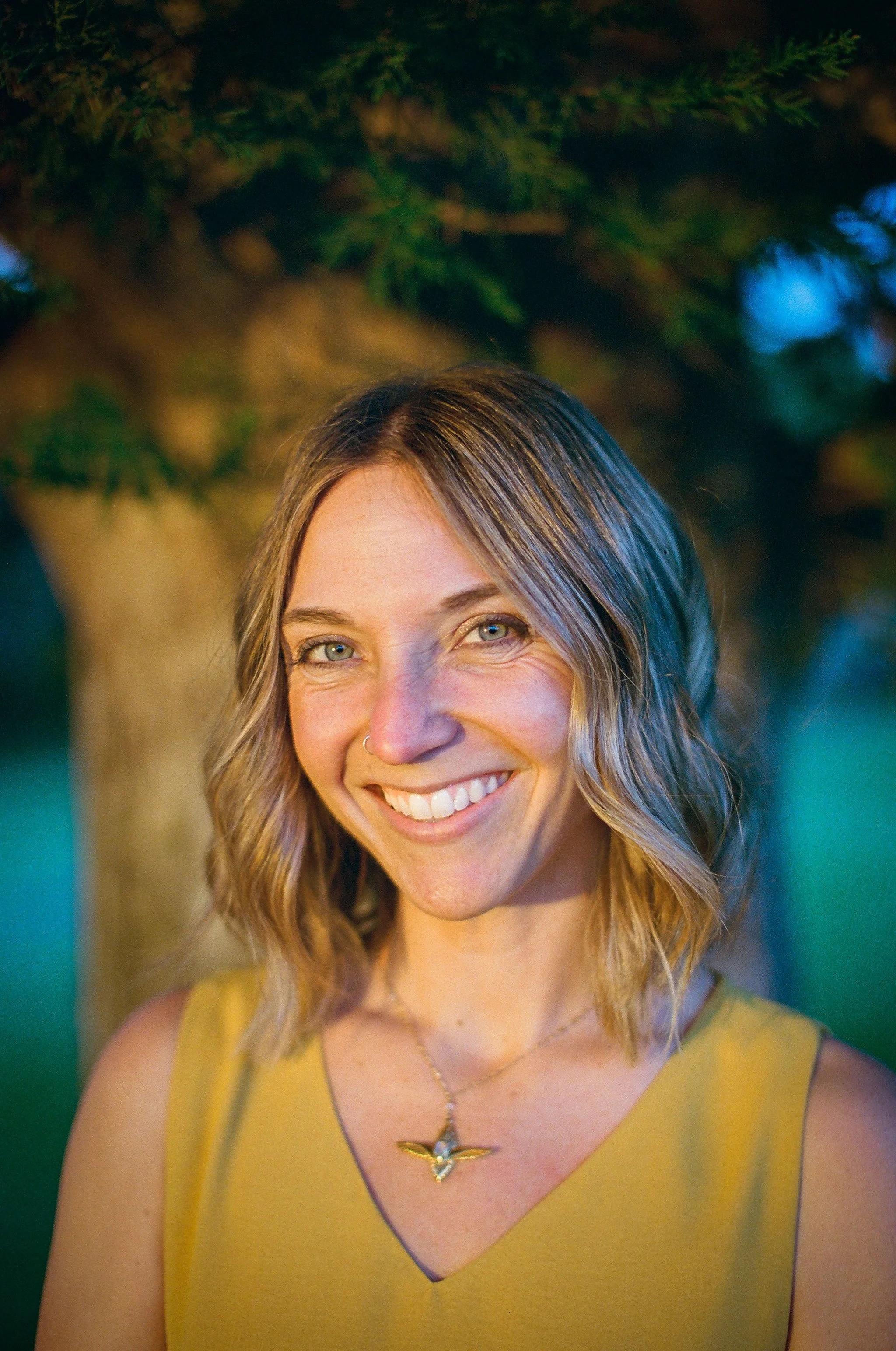
Justin leans on his over twenty years in the arts and ministry to mentor and coach artists and pastors in person as well as over video calls. He is also the host of the podcast @ Sea with Justin McRoberts and co-founding pastor of Shelter-Vineyard Church Community in Concord, CA. Justin regularly travels to speak at churches and colleges, as well as leads retreats for ministry staff, college students, and young adults.

Connect with Justin: Website | Facebook | Twitter | Instagram