Spotlight: Burner And Other Stories by Katrina Denza

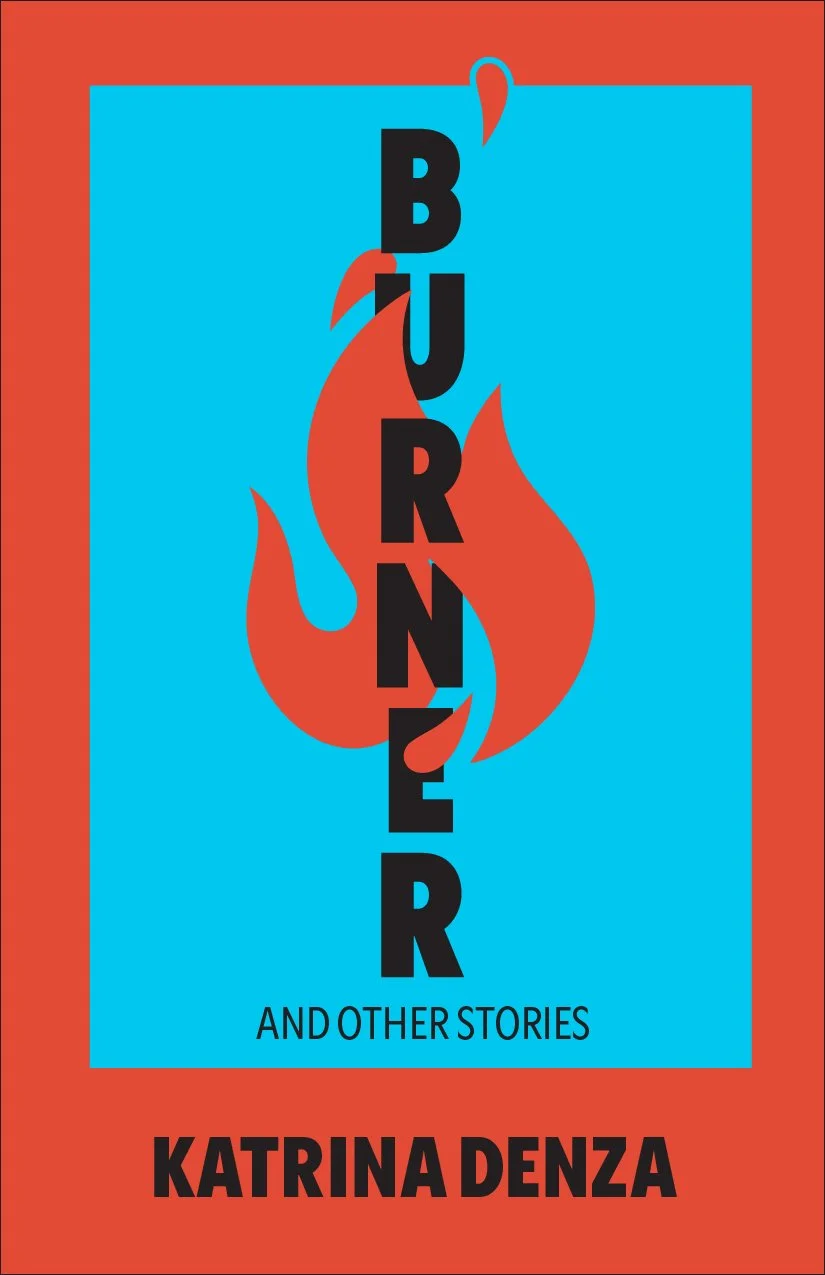
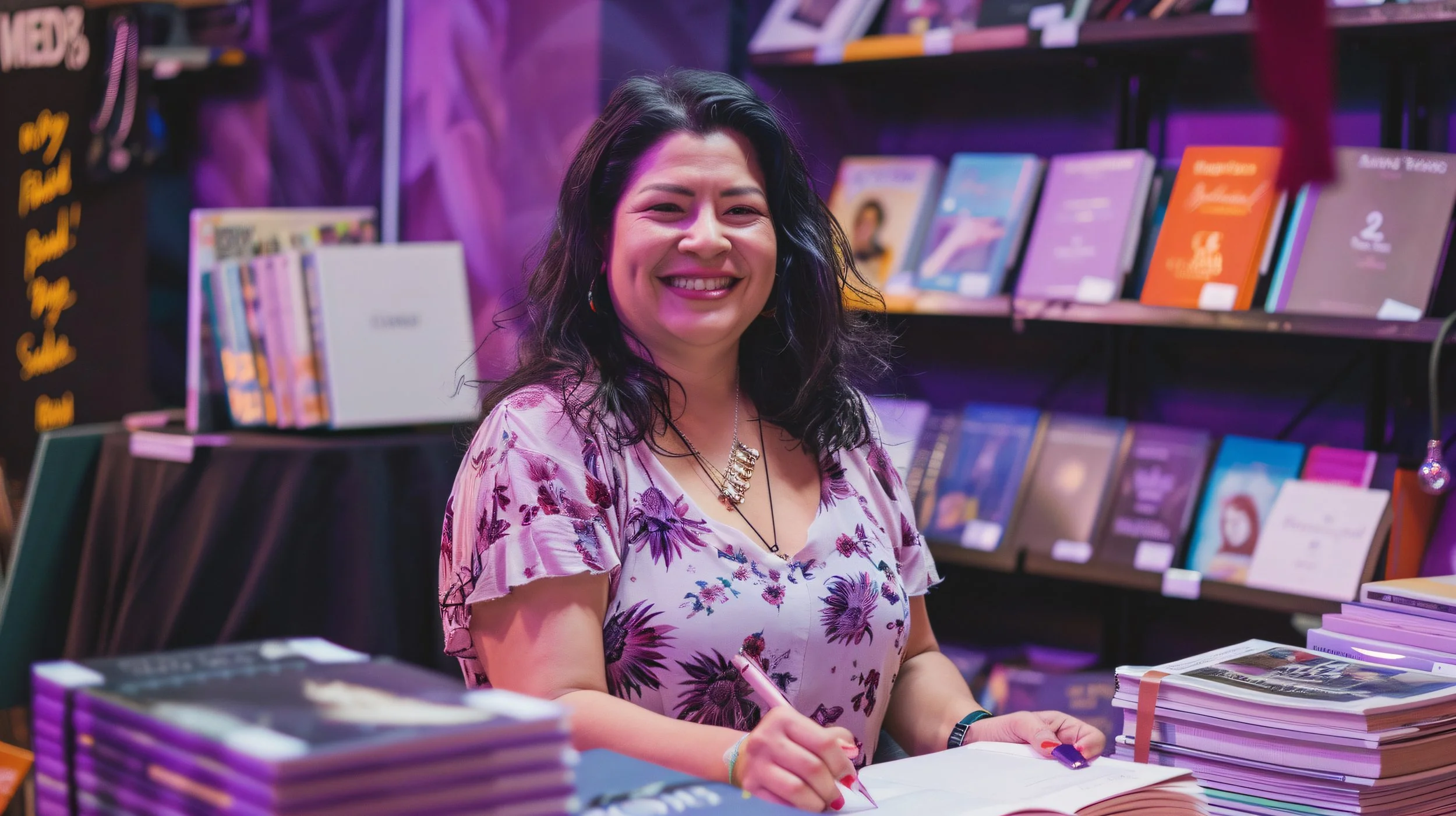
Katrina Denza writes women in conflict: attempting to woo a man via a burner phone, discovering the best friendships are those grounded in reality, subscribing to a hologram service to speak to a deceased husband, reclaiming power only to realize power is an illusion, discovering there is no safe haven, confronting the frustrations of being an artist, and reckoning with mistakes made as a mother. Wrestling with connections and disconnections, highs and lows, and the vagaries of modernity, Burner and Other Stories shows us how we live today.

Excerpt

IN THESE DARK WOODS

The woman has walked this path circling the reservoir many times. She stays in a simple but sturdy cabin near the base of the mountain when she’s up from the city. When she pulled into the parking lot off the highway, there was only one other vehicle: a white truck. To get to the head of the path, she had to hike uphill for a mile and a half. The dirt road winding around the lake will be another mile. She likes to walk up here to clear her mind, to make space in her head for inspiration, for creativity to grace her or give her the finger whichever it’s inclined to do.

In summer, families might share the path or swim in the clear cold spring-fed water. People who, like her, prefer to go out of their way for whatever small patches of pure and untouched parts of nature still exist. Today, clouds hang low and gauze-like. Thunder growls beyond her line of vision. There is no one swimming. No families or couples spread out on blankets. There is just her and the mountain and the lake and the head of the path before her.

The woman is famous; first, for being an artist, and second for being a feminist. She began with conceptual art: short films, small performance studies, still-lifes that relied on the absurd. Her recent Soul of a Woman series has made her something of a celebrity. Each piece is a wall-sized collage using mixed media and found objects. The woman interviews other women, sometimes for days, sometimes weeks, gathering what she calls the tangible material of the intangible. 

It is the end of August. A time in which the city has grown hot and irritable and this area in Vermont already holds the promise of apple cider and pumpkins. It’ll be the last time she’ll walk this path before spring. Her cabin isn’t built for winter. Now, near the top of this small mountain, the air is cool and smells of fish. There is little bird song. No high-pitched calls from tree swallows. No chatter from goldfinches. Only the crows still heckle from the tops of trees. The sweet scent of pine is thick in the damp, cool air. The woman takes note of the flowers decorating the sides of the path as she passes, one sneakered foot in front of the other: white clover, Queen Anne’s lace, black-eyed Susans, daisies, and pale purple asters. Flowers that dotted her childhood summer days. And deeper in the woods, earlier in the summer, there were striped trilliums and pink lady slippers. In the meadows, bluets and buttercups, Indian paintbrushes and golden rod. 

Above the woman’s head, the pine branches rustle and shimmer in the breeze, a soothing susurrus.

In a recent article, a critic who writes for Art Today stated that the woman’s vision is important. “Viewed individually and as a whole, this body of work forces the viewer to see a woman beyond social norms. Each woman is as varied and complicated as a universe. Each piece tells the story of a life lived awake and with feeling. No longer will women stand for being reduced or invisible the work seems to say.”

Last month, on this very path, the woman plucked red raspberries, small explosions of sweet and tart on her tongue. Now, the berries appear shriveled and ravaged by birds or bears or people. The bushes hold only those still green and sour and likely to never ripen. 

She’s not quite halfway around the lake when she hears the patter of rain falling on the trees above her, like dog paws on a wooden floor. To her left, light shimmers on the metal-gray of the lake. Rotted and naked logs lie like fallen soldiers along its bank. 

Hair rises on her arms. A feeling of being watched. The woods have always been safe for her. Even as young as eight, she explored the forest near her house. This day, though, she can’t shake her uneasiness. She peers through the trees on either side, past clutches of birch and firs. Through brush and shrubbery too thick. The feeling reminds her of the story her lover told her about being in Canada on an assignment and how it felt to be stalked by a polar bear. To know that even when you can’t see them, there’s at least one eyeing you for dinner. “They’re cannibals,” her lover had said. “They’ll eat their own kids.” He told her he had nightmares about being mauled by one for years after that assignment. “The only animals known to intentionally hunt humans,” he said, his voice low and heavy with awe.

A drop of rain taps her cheek and takes her out of her fear. No one would be out in weather like this. Plus, she’s already been raped. Her freshman year of college. Now that she’s older, much older, two acts of sexual violence in one lifetime are unlikely. Since turning forty, she’s told herself this.  

Her lover died last November on assignment. He was writing a piece on how Yemen still promoted tourism amidst instability. He sent her pictures of dragon’s blood trees and sap that flowed red—red like his own blood lost when an airstrike hit his hotel. She misses him. Misses texting him randomly or sending him pictures of weird things. Misses his strong body, easy smile, and skilled tongue. No man made her orgasm like he did. Sometimes she thinks he can still see her from wherever he is or isn’t. Sometimes she believes he might now be privy to her thoughts. She hopes so. She hopes he feels duly appreciated and even a little shocked. He was a bit of a prude for all his worldliness. They had a weekend in Paris—he flew her there to meet him—and their first night he asked her why she was so vulgar. They were in bed. With the curtains open, they could see into the Catholic school across the alleyway. School was out for Christmas break.

“You don’t like the word fuck when we’re fucking.” She’d rolled her eyes but his eyes were on the ceiling.

“You talk like a man.”

“I talk like a woman having a good time.”

“You talk like a porn star.”

“Maybe I like porn.”

“You can’t be a feminist and like porn.”

“Fuck you. Then when you’re finished, fuck me.”

They ended up laughing about it, but after that weekend, she became self-conscious about what came out of her mouth during sex. She wishes now she hadn’t conceded so easily.

A horse fly careens through the air around the woman’s face. She bats at it with her hand and makes contact. Steps on its stunned body as she passes. 

She’s more than halfway around the reservoir. Here is the old stone wall built by settling farmers two hundred years earlier. Here is the crumbling foundation of an old standing well further on. The woman checks the sky when she hears thunder but there’s been no rain since the drop on her face, though the air has thickened. Crickets sound off in distant meadows. 

The woman wants to interview a writer, a friend of her lover, whom she met at his memorial service. The writer has traveled all over the world. Most recently, Jakarta. The writer flew there to escort her elderly Indonesian friend on a Hajj trip to Saudi Arabia. Not allowed to leave her hotel room in Medina because she wasn’t a Muslim, the writer hung out in the hotel, which she said was like a small city anyway. 

As she walks, the woman’s mind shifts to what she might include in a collage of her own life: Eiffel Tower, details from a Kandinsky, a brown bear in a window, black-eyed Susans, a picture of Vincent Price, a rust bloom on a pipeline, a positive pregnancy test.

A bird flies up from a cluster of bushes and startles the woman. She jumps and lets out a quiet, “Oh.”

A figure emerges around the corner further down the path.

The woman is newly alert, maybe even alarmed, though she knew in the back of her mind she wasn’t alone on this mountain path near the lake. She remembers the truck. Never forgot it, really.

As the figure approaches, the woman sees it is a man. He is tall and large, but not muscular. The man, bald, wears maroon running pants which bag at the knee and a dark blue tee, wet under the arms and against his stomach. She’s close enough to smell him: body odor, a hint of beer, a hint of rot, and under these animal smells, the perfume of dryer sheets.

She tries to catch his eye before she passes but he doesn’t look at her. He looks ahead, as if she doesn’t exist, as if she’s not walking on the same path around the lake in the woods as he. Hair rises on her arms.

She’s almost back to the point where she started, the place where the path ends and the gravel road begins. He’s going the opposite way and for this she feels relief.

She walks a few steps before she looks behind her. 

The woman sees the man has also stopped. He’s looking up at something in the trees. Her palms grow slick with sweat. The man lowers his gaze to settle on her, then starts moving toward her. 

Her lover told her that to have even the slimmest chance of surviving an encounter with a polar bear you must avoid acting like prey. “They’ll smell your fear,” he said. “You can’t outrun them. You can’t out fight them. Playing dead only makes things easy for them. Might as well stand there and imagine white light or pray or use whatever other magic tricks you’ve come to rely on.”

An end of summer day. A clear, cold lake at the top of a small mountain. A gray sky that threatens.

Here is the woman. Here is her light.

Excerpted from BURNER AND OTHER STORIES (November 11, 20215), copyright Katrina Denza. Shared with permission from Cornerstone Press. First published in New World Writing Quarterly.

Buy on Amazon | Bookshop.org

About the Author

Katrina Denza is the author of BURNER AND OTHER STORIES (November 11, 2025; Cornerstone Press). Hers stories have appeared in Nelle, Slippery Elm, and Jabberwock Review, among other places. Her work has earned a scholarship from the Bread Loaf Writers’ Conference and a fellowship from the Virginia Center for the Creative Arts. From 2015 to 2021 she served as chair of the Writers-in-Residence Program for the Weymouth Center for the Arts & Humanities in North Carolina. You can visit her online at katrinadenza.com.
Spotlight: Aphrodite by Phoenicia Rogerson

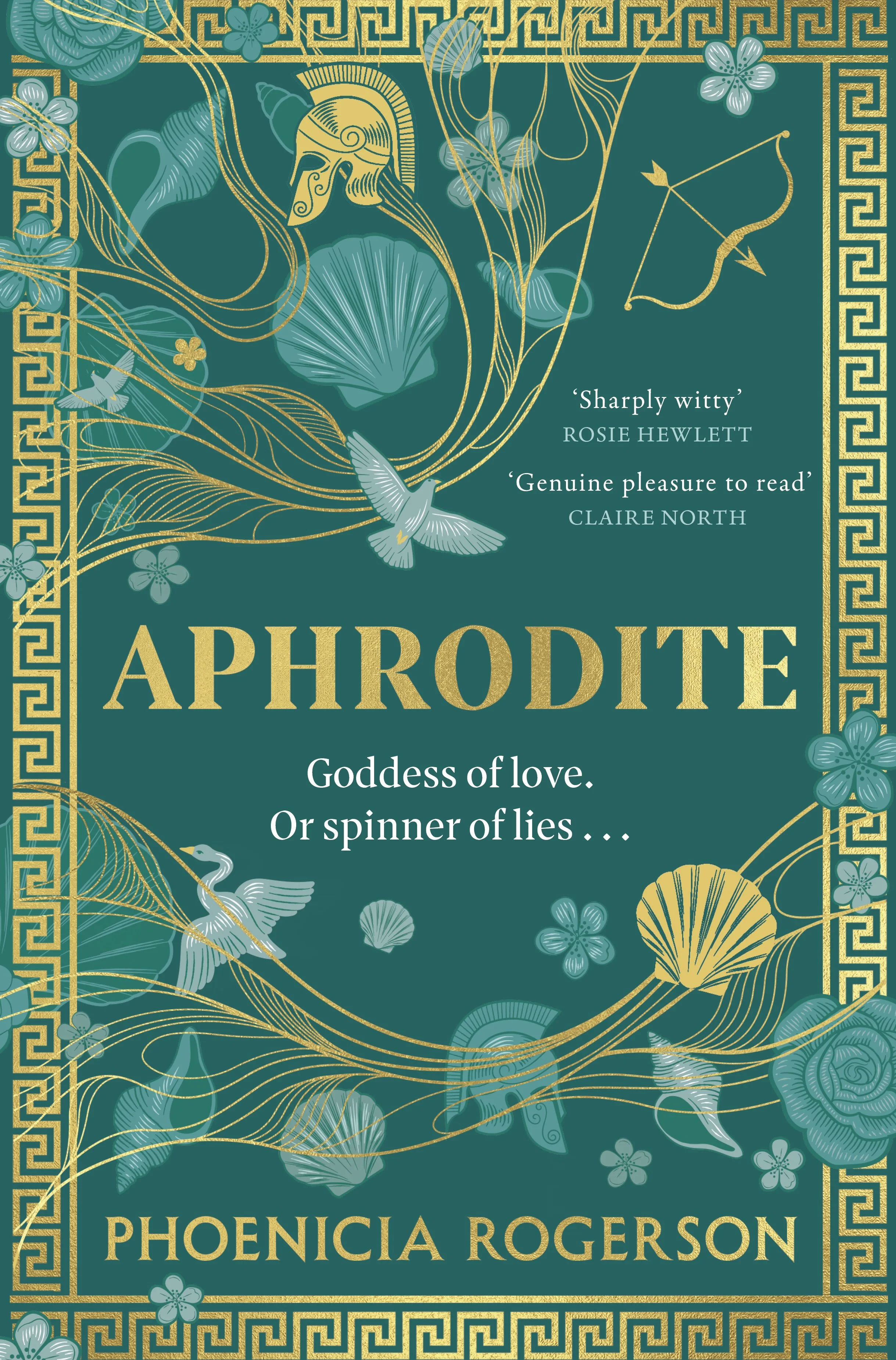
From the award-winning author of Herc, an enrapturing feminist tale that brilliantly reimagines the story of Aphrodite and how she transformed herself, from a lowly outsider to the darling goddess of love, for readers of Madeline Miller and Jennifer Saint.

Aphrodite saw the gods on Mount Olympus and decided she wanted a piece of what they had. Only problem is, she’s not a goddess, just a lowly being supposed to remain in a distant cave, keeping the threads of Fate woven neatly. But Aphrodite’s never let anyone tell her what to do…

Weaving herself a web of lies and careful deceptions, she convinces everyone she’s the goddess of love whose rightful place is among the Olympians, who lord it over everyone else at the top of the world, but under the stifling rule of Zeus. For the first time she has the best of everything, and friends, peers, even loved ones. Only being a goddess isn’t quite like she thought. Those who oppose Zeus tend to disappear, or worse. And one day, Aphrodite decides she’s had enough…

Excerpt

Aphrodite I

I’m a liar, to begin with.

Well, if I’m being exceedingly honest with you – and I am trying – I was nothing at all, to begin with. Then I was my father’s testicles. Then the weaver of Fate itself, which is when the lying started. After that, it all got a bit complicated.

I was the daughter of Ouranos. The daughter of Zeus. The daughter of no one at all. A winner, a loser, though never much in between. The world standard of beauty and a crone, both. Olympus’ very own it-girl. Maybe the worst wife in all of history. A lover, a friend, a co-conspirator. A snitch. Selfless – once or twice. A bitch – more than twice. A monster, a villain, a victim – if you must. A good mother, a bad mother, a really bad mother. Lonely and famous and beloved and alone. Precious and worthless. A rival, a cheat. Afraid, often, and terrifying, also often. Oh, and I started a war. That’s very important.

The goddess Aphrodite. I was that too. I don’t think I am anymore. Look, it’s all very knotted. Maybe I should start from the beginning.

First, there was Chaos, which meant something different then to what it does now. The time of Chaos was empty. It was a blank canvas for the optimists and an endless sinkhole for the pessimists. It was a time of absolutely nothing. I suppose I was nothing then, but we all were, so I won’t hold that against her.

Chaos was empty, until she met Nyx. I like to think that the two of them were in love, but I’ve never met my grandmothers, so I can’t say for certain. The two of them created the earth and the seas and the sky, and they had three children to gift them to.

Their daughters received the sea and the earth, and they were happy with them.

Their son wasn’t, as is the way of youngest children. He wanted to be the king of a world consisting of only five people, so they let him.

My father, given the world like a toy so he’d play nicely with his sisters. I suspect he was spoiled rotten, but then I quite like being spoiled, myself. And he did ask, before he took. He spoke with such conviction about the glittering future he would bring, the life he would spread across this world, that they believed him.

Ouranos became the first king of this world. He took his sister to be his wife and he made good on his promises. Together – let’s not give him all the credit; he didn’t carry their children – they filled the world with life. They brought forth the Titans, beings more powerful than even they were, who could control the elements around them more easily than breathing. And they brought forth the Cyclopes, and the Hecatonchires – the hundred-handed ones – who Gaia loved and who did not ask for power, only a life, which meant Ouranos did not respect them. He thought them irrelevant to the world, because they didn’t demand to own it. They lived between the oceans and created beautiful wonders with all the energy they saved from fighting.

I don’t know how many children they had together. It doesn’t matter. All that really matters is it was one child too many.

It’s always the youngest son who has the most to prove.

Their youngest was a Titan, Cronus. He wanted to be king too, only Ouranos wasn’t like his mothers. He didn’t want to give up what was his.

Cronus asked for power; his father said no. Cronus did not ask a second time.

So the world came to know a new word: war.

It didn’t last long, that first war. It couldn’t. All the Titans could be counted on fingers and toes.

Cronus armed himself. He went to the Cyclopes and asked for their support. He promised them positions in his new order, new lives beneath the sun instead of deep below the sea. He told them he would respect them as their father never did. And he let their conversation be heard just enough to build fear in his father.

It’s a bold strategy, to tell your enemy that you’re coming, but it works well with the men in my family. They’re so afraid of it, it eats away at them, into their very bones, and they forget that they’re anything other than the position they hold.

Ouranos ordered the Cyclopes sent to Tartarus, a prison in the underworld he’d had to create personally, because one had never been needed before.

(It’s a problem when you’re an immortal fighting other immortals. You have to be careful about who you piss off because there’s no getting rid of them. They’ll be there, hating you. Forever.)

How Cronus himself escaped being tied up in proto-damnation is beyond me, but he did. I suspect his mother helped. He promised her – how they promise! – he would free her sons, bring them to the power they deserved. When Cronus was king, everyone would live equally in a utopia, just below him.

He had his people behind him. He had his shining vision for the future. He had the weapons and the belief. It was only a matter of time.

He followed his father across the land, over the oceans, waited for the perfect storm to be whipping around them, for winds too loud for words – I know that for certain. I made my entrance soon enough.

I think it’s unlikely they’d have had much to chat about, anyway. When you get to weapons at dawn, what do you say?

I want power!

No, me!

No, me!

They were both armed, but Cronus’ reach was longer. That’s been true of every new generation I’ve seen, that they’re just a little bigger than their parents, trying to prove they’re better in the most pointless of ways.

Cronus carried a sickle. I don’t know what my father’s weapon was. He lost.

There was no point in aiming to kill. There never has been, for us. Instead, Cronus thought of the worst shame he could possibly imagine, and he castrated his father.

Chopped his balls off.

De-testicled him.

I’ve heard every possible variation of the phrase, some with great solemnity and some with a snigger, and I’ve never been able to explain why I’m not laughing.

I can tell you now, though.

Those balls were me.

I grew from them. I was born from them. They were me and I am them and that will always be the truth. That is my beginning.

I made my debut at the end of the first great war, in a storm unlike any other, as the world turned itself upside down trying to find its way in the new order. All of this is true, yet my birth is reduced to a punchline.

I hid it for so long, not wanting my entire existence to be reduced to one man’s shame, but I’m over that now. I’m much more famous than him, after all.

I’ve always wondered how Cronus managed to castrate him so neatly. It was only my father’s testicles that made me – call my knowing that feminine intuition, if you want – but Cronus used a sickle.

How? Were they hanging so low? Was Ouranos’ stance so wide because he needed the world to see his mighty balls? What possible physical arrangement leads to one man being able to castrate another with a weapon made for cutting wheat?

Cronus would have had to practise, but he can’t have. Surely he had better things to do in the war, and I’ve met some of his generals. I can’t imagine them offering themselves up for the chop.

That one is a mystery for the ages, I’m afraid, but it doesn’t matter, because now I’m here. That’s it. All of the relevant history before I arrived. Done.

Cronus lifted his arms in mighty victory and bellowed so that all around him could cheer and crown him the new king of everything. Like his father, he went home and married his sister, ready to fill the world with people who looked just like him.

Ouranos, newly ball-less, gave an anguished cry.

‘You think yourself so smart, so powerful, but one day you will be just like me, dethroned by your own children.’

Cronus looked at his father’s crotch. ‘I will never be just like you, will I?’

He ordered Ouranos tied and bound in Tartarus, that prison of his own making, never to be seen again.1

So distracted were they by their respective shouting that the testicles fell into the ocean, instantly swallowed by the swells of the waves, pulled down into utter blackness, presumed lost.

Wrong.

1 For a certain value of never. We are immortals, after all. —A

Excerpted from Aphrodite by Phoenicia Rogerson. © 2025 by Phoenicia Rogerson, used with permission from Hanover Square Press, an imprint of HarperCollins.

Buy on Amazon Kindle | Audible | Hardcover

About the Author

Phoenicia Rogerson is the award-winning author of Herc, which won the 2024 Somerset Maugham Award for young writers and was chosen as one of Waterstones' Best Books of the Year in 2023. Though she is altogether mortal with a rather less checkered past than Hercules, she’s had a lifelong infatuation with Greek mythology and is greatly enjoying being able to claim her book purchases are for work. She lives in London.

Connect:

Website: https://www.phoeniciarogerson.com/  

Instagram: https://www.instagram.com/thatphoenicia/ 

Twitter/X: https://twitter.com/thatphoenicia 

Goodreads: https://www.goodreads.com/author/show/22913755.Phoenicia_Rogerson?from_search=true&from_srp=true  

Spotlight: Carried Away by T.J. Derry

In T.J. Derry’s soul-searching adventure novel, “Carried Away” (November 11, 2025), a surf trip goes awry. Feeling numb and worn down by routine, Cole leaves New York for a chain of tropical Indonesian islands, chasing silence, clarity, and something real. Amidst the salt and heat, he reconnects with old friends and finds an unexpected spark with someone who sees through his detachment. But paradise has teeth. After a catastrophic tsunami, the laid-back surf trip quickly turns into a violent fight for survival. Cut off from the world, the group is tested physically, emotionally, and spiritually, and Cole is forced into a rare kind of stillness, the kind that redefines what matters.

Buy on Amazon Kindle | Hardcover | Paperback | Bookshop.org

About the Author

A director, cinematographer and photographer, T.J. Derry has worn many hats over the years. After working lighting, camera, and production, he eventually found his place behind the monitor. With a passion for storytelling, he’s also delved into the art of screenwriting, crafting captivating narratives for various projects in film and advertising. His work has been featured in American Cinematographer and Adweek, among other industry publications. Taking his knack for storytelling in a new direction, he is now a debut novelist; “Carried Away” will be released in November 2025. 

Author website: readcarriedaway.com

Instagram: https://www.instagram.com/readcarriedaway

Spotlight: Push Back by Tonya Lester

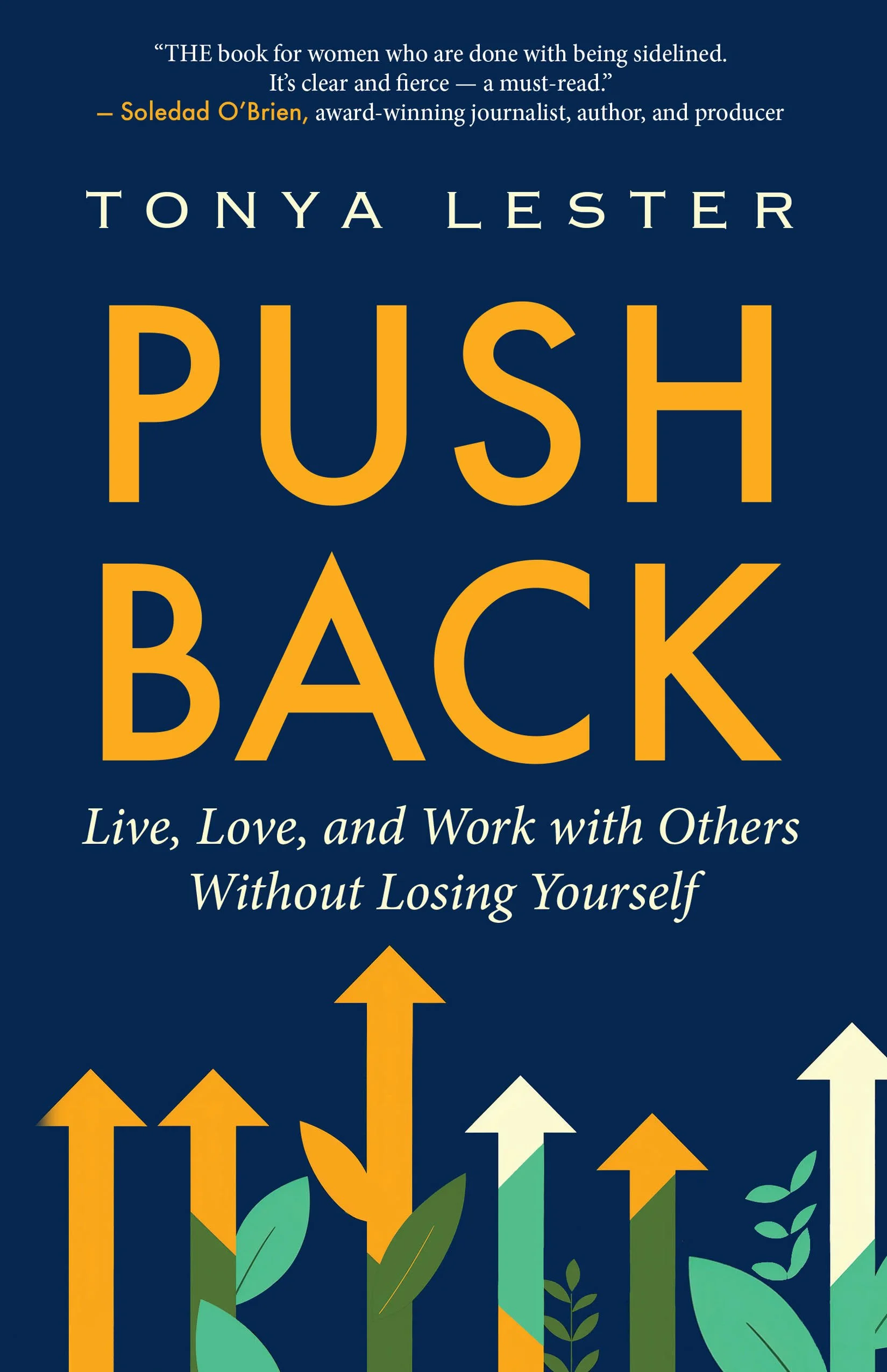
It’s one of the hardest balancing acts in life — being kind without becoming invisible. In Push Back: Live, Love, and Work with Others Without Losing Yourself, therapist and writer Tonya Lester offers a compassionate, deeply practical guide for people who want to communicate clearly without sacrificing connection.

Through her years as a psychotherapist, Lester has seen how avoidance and people-pleasing take root early and quietly shape the way we relate to others. In this book, she unpacks the emotional and social conditioning that leads many women to silence themselves, and she shows how to change those patterns through awareness, intention, and practice. Blending clinical insight with warmth and humor, Push Back helps readers learn to identify their needs, express them confidently, and handle resistance with calm and clarity. It’s not about winning arguments — it’s about showing up fully in every part of life, even when it feels uncomfortable.

Excerpt

It’s OK to be Difficult

Years ago, I read a magazine story about an experienced climber who nearly died falling down a mountain. She’d forgotten the crucial step of double-checking her anchor knots before she started the climb. It turned out this climber had carefully checked her husband’s rope while neglecting her own. I imagine this realization flashing through her mind as she tumbled, terrified, down the slope.

As a couples therapist in New York City, I was struck by this article, not as a cautionary tale of mountaineering safety, but instead as a reminder of the gender dynamics I see normalized in relationships. Often, women don’t even realize the imperceptible descent they take as they disappear into relationships, suppressing their own needs and desires while caring for those of others.

Had this climber expected her husband to check her ropes as she had checked his? Had she asked him to? Or had she trusted herself to tie her own knots correctly but thought that he needed extra looking after? At what point in their relationship did she start checking his climbing ropes? What were their interpersonal dynamics in other areas of their lives? Was he like a child, unable to take care of himself? Or was he considered the talent and she the manager, in charge of ensuring he had everything he needed to succeed? Whatever else was going on in their marriage, she must not have believed she could take proper care of herself and also stay in the relationship, because soon after the fall, she filed for divorce.

Women often come to my office to discuss how they might get their husbands to start helping with childcare. Or to ask how they might better tolerate a bullying boss or backstabbing colleagues. Sometimes they want to know how to make their thirty-year-old child get a job and move out of the house. Or how to deal with in-laws who come over unannounced again and again, despite requests to call first. The list of behaviors these women tolerate goes on and on and could all fall under the umbrella of other people behaving badly.

While these women want to make changes, they’re worried about coming across as mean, cold, or rude. They’d like to start speaking up, setting boundaries, and pushing back, but they don’t want to make anyone angry. They don’t want anyone to think they’re being difficult.

“Why not?” I ask. “What’s so bad about being difficult?”

In Push Back, I want to help you learn that seeking harmony for its own sake is a trap. That there’s no winning in making everyone else happy at your own expense. And that in nearly every situation, it is within your power to make positive changes. Truly intractable situations are rare. But to change your circumstances, you must be willing to push back.

Still, change is hard. There’s going to be resistance from the people around us who like things better when we’re tending to their needs while neglecting our own. In attempting to break free from these patterns, we must learn to challenge our thinking and conditioning, behave differently in our relationships and in our lives, and be prepared to deal with the backlash that will inevitably come when we push back against the status quo. The cold truth is that the relationships that are most painful for you are likely working just fine for someone else. As the saying goes, if you want to make an omelet, you have to break some eggs.

Strong, uncompromising women are both admired and reviled. We’re taught to applaud women who lean in, speak truth to power, and take no prisoners. “She’s a total badass” is a high compliment. Slogans like “Breathe Fire” and “Only Weak Men Fear Powerful Women” adorn T-shirts, coffee mugs, and backpacks. Infants wriggle around in pink onesies that read, “The Future Is Female.” But all too often, these ideals — speaking up and pushing back when the situation is unfair — fail to make the leap from merchandise to our daily lives.

In both our personal and our professional relationships, women are encouraged by our culture to be easy — to minimize our worth and contributions to avoid seeming arrogant, to subordinate our own needs and desires to preserve goodwill, and to make life as comfortable as possible for the people in our lives. Instead of learning to speak up, we’re taught to manage others’ behavior. Instead of embracing healthy conflict, we’re encouraged to avoid conflict at all costs. Instead of leaving unsatisfying relationships, we’re told to tough it out, give it more time, and try harder.

But continually subordinating one’s own needs comes at a high cost. The necessity to take care of oneself doesn’t go dormant just because it’s ignored. A 2022 paper from the National Bureau of Economic Research points out that while women’s rights and autonomy have improved over the past half century, their self-reported well-being and happiness have declined. Depending on your political views, this might seem like an indication that conservatives have it right: Women’s work and men’s work are supposed to be separate, and men’s place is in the economic, political, and intellectual spheres while women’s place is in the home, family, and community spheres.

But the progress made isn’t the cause of women’s declining happiness. Instead, it’s the lack of societal support for working parents, inflexible expectations on the parts of employers, spouses who aren’t carrying their weight at home, and, most insidiously, the myth that women can solve all these problems with enough elbow grease. As journalist Anne Helen Peterson has described it, “This situation [divorce] is complicated by the fact that bourgeois [middle to upper class, mainly white] women have been taught that everything, whether the pay gap or enduring domestic labor discrepancies, can be fixed through hard work: hard communication work, hard organizational work, hard therapy work. If they just put in the hours...everything would work out.”

As a result, we twist ourselves into pretzels to make life work for everyone around us. Then we wonder why we’re burned-out and unhappy.

Does this sound like you? Do you work hard and still feel you aren’t working hard enough? Does it sometimes feel as if you’re responsible for everyone and everything — your partner’s happiness, home’s comfort, kids’ success, maybe even the needs of your friends and coworkers, the success of a group project, or the security of your parents?

I have over two decades of experience working with women who feel stuck, dissatisfied, and frustrated in their relationships, in their careers, and with their friends and families. In case after case, I’ve found myself saying things like “What would happen if you told him you didn’t want to?” or “What if you didn’t respond until the next day?” or “What if you said this situation isn’t working for you anymore and now you need to make a change?” or even “Just because someone shows up at your door doesn’t mean you have to let them in your house.” Usually, I’m met with wide eyes, sometimes accompanied by headshaking or nervous laughter and an unequivocal “I could never say that.”

I know it’s not easy, especially at the beginning. For a long time, this wasn’t how I myself operated. I struggled to speak up when something was bothering me. I tried to manage the emotions of others instead of being forthright and honest and trusting other people to manage themselves. I didn’t want anyone to be upset with me. I worried excessively about making mistakes and settled for easy stagnation instead of challenging growth. Yet no matter how much I tried to maintain control, I felt increasingly detached, like my life had gotten off course. Even though I might say to clients that the discomfort of authenticity in our relationships is better than the discomfort of hiding oneself, tolerating unkind behavior, or staying when you really want to go, I often settled for the latter.

The possibility of creating conflict with the people I loved and then tolerating their unhappiness or disapproval seemed excruciating to me, so I didn’t speak up. I didn’t tell the whole truth. And I didn’t advocate for myself. I didn’t want to appear needy, weak, or demanding. I didn’t want to push back.

Then one morning, I woke up and thought, I am the mountain climber. I am tumbling down the mountain. I’m not taking care of myself. I felt I couldn’t be in my marriage and still be true to myself. I thought our patterns were too entrenched, my conflict avoidance and people-pleasing ways too intense, for me to be in any partnership — not just with my husband — without abandoning myself.

So I changed. I took responsibility for my part in our dynamic, started asserting myself and leaning into conflict, and insisted on the shifts I needed to see happen in order to feel loved and connected. The lessons I teach in this book were hard-won. I know how challenging it can be to make changes, but I also know how rewarding and life altering it is to have done so.

Excerpted from the book Push Back: Live, Love, and Work with Others Without Losing Yourself, by Tonya Lester. Copyright ©2025 by Tonya Lester. Printed with permission from New World Library — www.newworldlibrary.com.

Buy on Amazon Kindle | Paperback | Audible | Bookshop.org

About the Author

Tonya Lester is a Brooklyn-based psychotherapist, writer, and speaker who specializes in helping people build stronger relationships through self-awareness and communication. Her Psychology Today blog, “Staying Sane Inside Insanity,” reaches over a million readers and explores emotional balance, boundaries, and personal growth. Her work has appeared in Newsweek, The Guardian, Fatherly, and Well + Good, and she regularly consults with other clinicians on authenticity and assertiveness in therapy. You can find her at her website, or follow her on Instagram and TikTok.

Spotlight: A Quarterback for Christmas by Linda West

Publisher: Independent

Publication Date: October 1, 2025

Genre: Holiday Romance

He's Buffalo's hometown hero. She's the one who got away. When fate and a little Christmas magic bring them back together, love might just score the biggest comeback of all.

When Buffalo’s hometown quarterback Nash Jordan gets traded back just before Christmas, his career—and his heart—are both on thin ice. A lingering injury threatens his future, until help arrives in the most unexpected form: Eden Landers, the woman he never stopped loving.

Eden’s a talented chef with a hint of magic in her kitchen, and healing others is what she does best. But moving into Nash’s guest house to help him recover stirs up more than old memories. Between snowstorms, laughter, and late-night meals, love begins to simmer again.

Can they trust each other enough for a second chance? Or will fear and fame keep them apart once more?

Heartwarming, wholesome, and full of Christmas cheer, A Quarterback for Christmas is a cozy holiday romance about love, forgiveness, and finding your way home.

Excerpt

The rain had just started when Nash Jordan stepped off the practice field, helmet in hand and sweat soaking through his gray workout shirt. His leg ached every time he shifted his weight, a dull reminder of the ACL tear that still hadn’t fully healed. He told himself it was nothing—it had to be nothing—but the tightness in his jaw said otherwise.

“Jordan,” one of the junior trainers called. “Coach wants to see you.”

Nash nodded and headed down the long hallway toward the coach’s office. The walls were lined with framed photos of better days—division titles, playoff wins, smiling faces. For a split second, he imagined one of those photos showing him, wearing the Rams jersey with a championship ring on his finger.

The coach was waiting behind his desk, arms folded and expression unreadable. “How’s the leg?”

“I’ve been better,” Nash admitted with a half shrug. “Probably just a minor flare-up. I’ll be back to full speed real soon.”

The coach took a breath. “You know we believe in you, Nash. You’re one of the best quarterbacks we’ve had come through here.”

Nash gave a small smile. “Thank you, Coach. I appreciate that.”

“That’s why this is hard.” The coach paused. “We just traded you to Buffalo.”

Nash blinked. “Buffalo?”

“They need a backup for Allen. It’s a solid deal—next year’s first and second round picks. You’ll get a fresh start.”

Nash stared at the floor as the words sank in. Buffalo. Snow, cold, his old high school stadium. And him—once a top draft pick—now a backup. “Right,” he said quietly. “Buffalo.”

The coach stood and offered his hand. “You’re going to have a great career, son. I know it.”

– Excerpted from A Quarterback for Christmas by Linda West, Linda West, 2025. Reprinted with permission.

Buy on Amazon Kindle | Paperback | Audible

About the Author 

Linda West is a best-selling Amazon author in fiction and non-fiction. She lives in the snowy wonderland of upstate New York with her husband and magical cat. 

Her latest book is the holiday romance, A Quarterback for Christmas. You can visit her website at http://www.morningmayan.com

Spotlight: Not You Again by Erin La Rosa

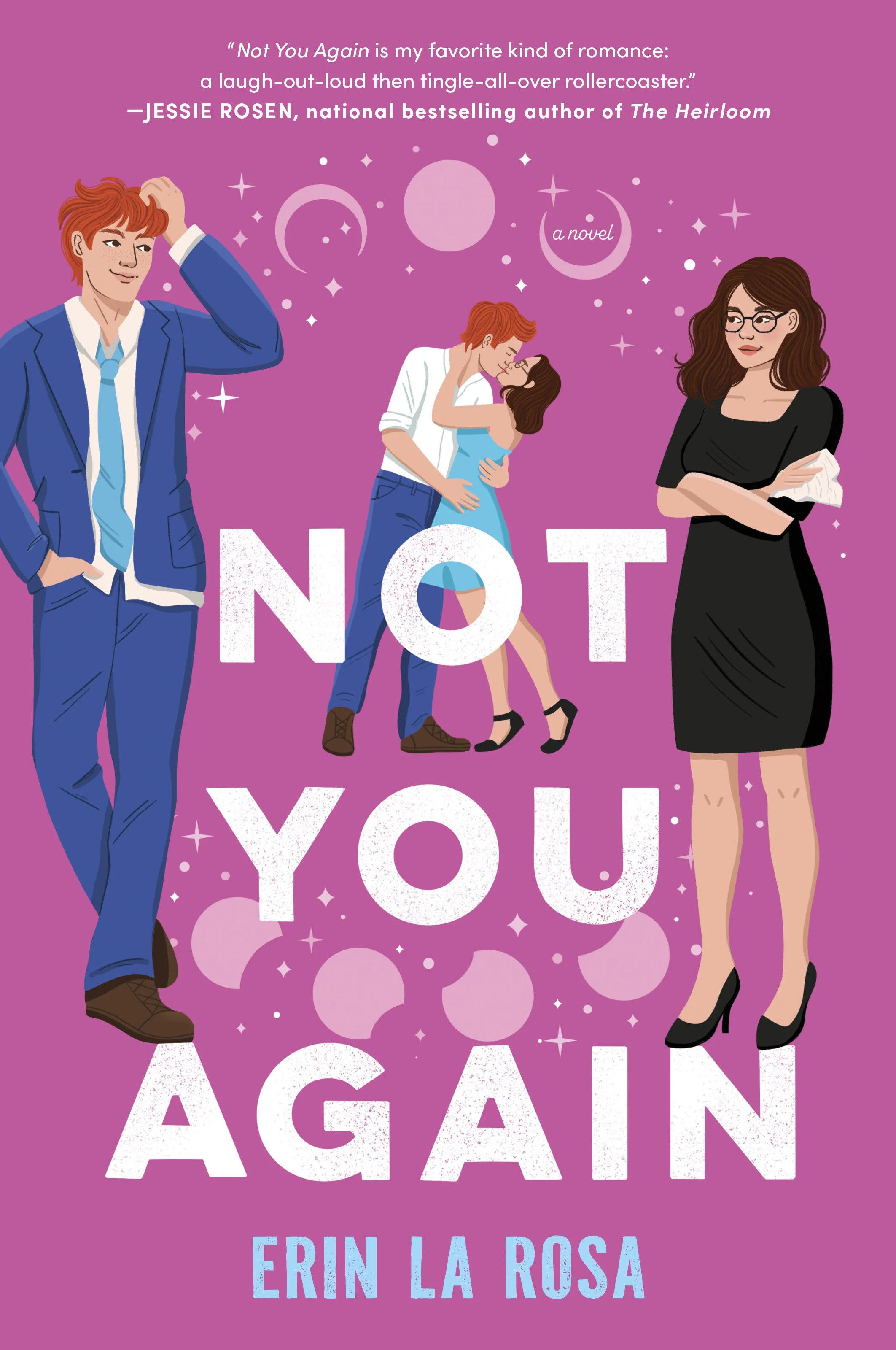
Two 30-something singles stuck in a time loop are forced to relive the worst days of their lives, so they team up to find a way to break the cycle. For fans of Palm Springs and Oona Out of Order, NOT YOU AGAIN offers a fresh new take on the Groundhog Day story.

In Julian, California, every day is April 22. Most people have accepted the loop—after all, reliving the same day every day, there’s nothing to lose. Day drinking until you pass out? Yes. Partner swapping? Why not.

But Carly has woken up at her dad’s funeral exactly 238 times, and she wants out. She doesn’t want to waste her life away reliving the worst day ever in the small town she always hated visiting. Carly wants to go back to writing film scripts in LA; she’s determined to find a way to break the cycle.

She discovers an unexpected kindred spirit in Adam, the mortician she met at her dad’s funeral. April 22 was also one of the worst days of his life: his fiancée admitted to cheating on him with his best friend. Every day Adam wakes up on April 22 to his ex-fiancée's admission, starting each day with a breakup. April 22 was supposed to be his last day working for his parents at the funeral home, and the start of his new life as an astronomer. Adam is a man of science, and like Carly, he believes there must be a way out of the time loop.

Together, Carly and Adam team up to find out what’s causing the time loop. And in trying to find a way out, they also find their way to each other.

Excerpt

Chapter 1

Carly

Day 1

Carly Hart was what one former friend had called “an emotional basket case.” She cried openly, in public, with very little concern for who saw. And it wasn’t just big moments that caused her to tear up—a breakup, losing out on a job, having to fly out from LAX—but the little things, too. Like when she tripped on a sidewalk crack and accidentally squished a caterpillar, or the time she went to take a shower after a workout and the water came out cold instead of hot. Carly felt deeply without much effort. Crying was cathartic, natural and part of her way of life.

But it had been a week since her dad died and still, not a single tear. She’d imagined his funeral would be the thing that finally broke her. Yet, here she was, sitting in front of his casket, and . . . nothing. Flower arrangements lined the walls, white folding chairs were arranged in neat rows and a blown-up photo of her dad from thirty years ago with a film camera on one shoulder and a four-year-old Carly on the other was placed in front of the coffin. The evidence of her dad’s departure was all around, but still, none of this felt real.

Cry, she told herself, just like you’d write into a movie. Yes, if this were a scene she were drafting, the heroine would emit deep, guttural sobs, the camera would pan out and the screen would fade to black.

But this wasn’t one of her screenplays. There would be no swell of orchestral music, and no comforting hugs from a secondary character, apparently. Because no one else was there—the room was empty, except for her. Was she actually going to be the lone attendee at her dad’s service? Was this how Bruce Hart would be remembered?

A floorboard creaked and Carly stood, hopeful that a friend of her father’s had arrived, but it was just the funeral director.

“Sorry to interrupt,” he said.

Adam. His name was Adam. Now she remembered. He was probably in his thirties, tall and lanky in a fitted blue shirt with a blazer and loose tie. His floppy red hair fell just abovethe sharp lines of his jaw. “It’s fine,” she said, but her voice was much softer thanshe’d ever heard it. She cleared her throat and tried again.

“Fine.”

“Can I get you anything?” he asked.

“No, thank you,” she managed to respond.

“We’ll move outside in about twenty minutes, if that’s okay with you.” He clasped his hands, and she registered how his brown eyes had f lecks of honey in them.

Carly blinked. Outside, as in the burial. She gave a quick glance at the coffin, then studied her shoes. “Sure,” she said.

Though there was no way she’d be able to watch her dad get lowered into the ground. She just couldn’t.

Her eyes began to mist. Was this the moment she’d finally cry?

But then Carly’s knees buckled just enough for her to sway. In a f lash, Adam was next to her with his arm wrapped around her waist. “I’ve got you,” his tone was as firm as his grasp at her side.

He maneuvered her into a chair, and she was suddenly overwhelmed by the nearness of him. Who even was this guy?

Why was he here, at her side, instead of anyone else in her life?

She didn’t want to be in this room, let alone be taken care of by someone who was about to bury her dad. She had a hard time getting the words, “I’m fine,” out, but she’d done it.

Instead of taking the hint and leaving, Adam opened a bottle of water that had been strategically tucked under a seat and handed it to her. “Here.”

Her hands were shaky, though, and the water dropped and began to spill all over the f loor. He deftly picked up the bottle and found a cloth to place over the spill.

Carly should’ve apologized, offered to get towels, or anything other than what she did next. “Please just leave,” her lips trembled over the words.

He stopped cleaning, looked up, and seemed to register her words. “Of course.” He stood, and his expression turned firm. “Just don’t step in the water. I don’t want you to fall—”

“I don’t need you to save me.” Her eyes narrowed at him. Carly understood that she was lashing out at Adam because of her grief, and the fact that she forgot to eat that morning probably didn’t help either. But she also didn’t care. This was her dad’s funeral. No one else had shown up. And she didn’t want to be comforted by this man she barely knew. She didn’t want his hand at her waist, or the water, or him. She wanted to get the hell away from this room.

His mouth opened to say something, but then a door down the hall opened, followed by footsteps.

“Excuse me.” Adam walked away from her all too quickly and approached the hallway. Carly’s heart anxiously beat again—finally, maybe this was someone to see her dad?

But no.

“Shireen?” Adam’s voice was surprised.

“Can we talk?” The woman attached to the voice appeared—also tall, but curvy, with the most gorgeous dark curls Carly had ever seen. Her expression, though, was concerned.

“I’m working.” He tilted his head toward the room where Carly sat. His work was the business of burying her dad.

“It’s important,” Shireen said quietly.

Adam gave Carly a genuinely apologetic look, then left.

She swallowed down a lump that had lodged in her throat.

She knew she’d been unfair to Adam and later she’d regret her words, but she was also relieved to be alone again. Carly approached the coffin and placed her palm on the closed lid. In there, Bruce wore the navy-blue suit and tie she’d picked out. Pinned on his jacket lapel was the Star Wars enamel pin she’d gotten him for his sixtieth birthday. He’d forever be sixty-four.

Carly studied her fingers instead of imagining him inside the box. She wasn’t ready to say goodbye, she realized. She wanted to explain that this was all just too much for her—too intense, and awful. Maybe she could come back tomorrow and visit the grave, when she was ready? But that was when she heard them fighting.

“What do you want me to say, Adam? I fucked up! I slept with him. I’m sorry,” Shireen shouted.
“Keep your voice down!” Adam’s own raw with emotion.

Carly frowned. What was she overhearing?

“I don’t know what else to say!” the woman exclaimed. “I just need to know if you’ll forgive me.”

There was a long stretch of silence. Carly realized that this was a private moment between two people, and she had no business listening in. She should definitely cover her ears or something.

Problem was, Carly was nosy.

“What did you expect me to do? You haven’t paid attention to me in years! We’re basically coworkers.”

“Coworkers don’t have sex, Shireen.”

“And neither do we!”

Carly slapped a hand across her mouth to keep in whatever noise was about to tumble out. Instead of sobs, she choked back incredulous giggles. How was it that on the worst day of her life, she was overhearing some of the best dialogue? Her eyes went wide as she focused on the coffin. “What do you think, Dad? Movie-worthy?”

But she was met with silence, because of course she was. For a moment, she’d been able to pretend like her dad was still there. Like they were having one of their old brainstorming sessions, where she’d rattle off a half-baked idea that he’d punch up. Who was she going to spitball with now?

She uncovered her mouth. “I miss you.”

The words came out easily because they were pure truth. She missed him. And in that moment, she knew where she finally needed to go.

The Last Showing movie theater was located off Main Street in the small, sleepy town of Julian, California. When she’d taken the key from her dress pocket and opened the doors, Carly wasn’t sure what to expect. Her dad had sent photos of the renovations he’d done, but to see the theater in real life was . . . surreal.

The place had been closed for a week, but the red-and-gold-flecked carpet was spotless. The warm white walls held framed posters of upcoming and past film releases. Neon stars dangled from wires on the ceiling. The food counter had been wiped clean, and the glass cases that held rows and rows of candy were stacked and ready to sell. If she’d wanted, Carly could throw open the doors, turn on the overhead marquee and wait to see if anyone came in. That was probably what Bruce did every day. Used to do.

Instead, she went behind the snack counter, tore open a package of Milk Duds and dumped the chewy morsels into an empty popcorn bucket. Then she ripped open a pack of gummy worms and let them fall in. She added Skittles, Swedish Fish, Twizzlers, M&Ms, Reese’s Pieces and mini Butterfinger Bites until the bucket was nearly full. Her dad called this a candy salad, their favorite treat.

Bruce also liked to add hot, buttery popcorn on top so everything melted together. He wasn’t there to tell her that, though.

He. Wasn’t. There.

Carly looked up from her tub of sugar. A “questionable” pot of joy any other day, but the thing felt as heavy as a brick in her hands. Her dad’s whole world had been movies. He’d gotten his first job as a PA on the set of a low-budget indie horror film when he was eighteen. But after forty-some-odd years of working his way up to cinematographer, he’d wanted a change of pace. He could’ve taken a cushy role as an adjunct professor at USC’s film school—a job he’d been offered. Instead, he’d done the least sensible thing imaginable: taken his savings, uprooted his Los Angeles life and bought a decrepit movie theater in a small town three hours away.

“I want to build something special—something of my own,” he’d excitedly told Carly over a greasy pancake brunch at the Tallyrand diner in Burbank, just a few blocks from his house and her apartment. He’d already begun renovations on the theater. “You’ll see, Carly girl!”

But she didn’t see, and neither did anyone in Julian. Because as Carly recently discovered, Bruce was in massive piles of debt. He’d taken out more loans than movie tickets sold. An exaggeration, but still . . . his gamble hadn’t paid off.

A few weeks ago, her dad had asked that she come visit so they could make his famous candy salad and watch the total solar eclipse together. He’d lived full-time in Julian for a year, and she hadn’t taken the three-hour drive down to see him. But Carly had no intention of coming to watch the eclipse—even if it was “rare and cinematic,” as her dad said. Because if she traveled to Julian, then she’d know for certain that he was never returning to Los Angeles. So she’d declined the invite, hoping he’d finally understand that his leaving had been the wrong decision.

Of course, neither of them knew that seeing her would be his dying wish. Carly thought putting together her dad’s favorite movie snack would ease her pain. She thought that by coming to the theater she’d get some kind of closure. But as she looked around the empty lobby, she couldn’t help but feel complete and utter rage.

If he hadn’t moved to this cookie-cutter small town to pursue his half-baked dream, Bruce would still be alive. If he and her mother hadn’t had their first date in a movie theater, maybe none of this would’ve happened in the first place. Why were both of her parents gone from this world when so many other people got to keep theirs for longer? 

The bucket shook in Carly’s unsteady hands. Being here without him was too excruciating. For the first time since arriving in Julian, she finally understood her dad was really gone. Her throat burned. She couldn’t breathe. The hot, bubbling sorrow that had built inside her blow by blow finally tumbled out as a scream. She clenched her jaw, hurled the bucket of candy as hard as she could and it exploded against a framed poster.

Carly let out a loud sob. The flood of tears was so intense that the tightness in her throat couldn’t compete with the force of her own pain. Her body swayed from the grief, and she collapsed to the floor. Her dad, that clever, sweet bear of a man, was gone.

After what felt like hours but was probably more like minutes, Carly had no more tears left. So when the front door squeaked open and she spied Hank—the janitor her dad had told her about—she couldn’t so much as fake a hello. Hank looked at her, then at the trail of spilled candy.

“I’ll clean this up.” Her hands instinctively went to the floor.

“Let me,” Hank said as he approached. Why hadn’t Hank come to her dad’s funeral? Was Julian just filled with soulless, rude people?

But then Adam popped into her head. He hadn’t been rude. He’d tried to help. So, naturally, she’d gone and chased him off.

“You go outside,” Hank added. “Get some fresh air. See the eclipse. Your dad would’ve wanted that.”

The eclipse. Yes, Carly had forgotten about the total eclipse that was happening because, well, her dad. She wordlessly agreed to let Hank do his job, and then numbly moved toward the exit.

Outside the theater doors, the sun was low in the sky and filled Main Street with warm light. A preschooler rode a scooter down the sidewalk as her mother chased along behind.

The child’s delighted squeals blended with Carly’s own sniffling. A chunk of her life had ceased to exist, but somehow everyone else carried on like that didn’t matter. As she glanced down the street, there were a handful of people in eclipse glasses, and kids lying on their backs with their faces toward the sky, delighting in the novelty. The whole scene would be quaint if she weren’t in mourning.

The truth that Carly didn’t belong in Julian hit her like a punch. She belonged in Burbank, where she’d grown up and had a studio apartment waiting for her. The sooner she could wrap up her dad’s affairs, the sooner she could get back home and leave behind the reminders that he was gone.

Home. The thought made Carly slip her phone out of the pocket of her black midi dress. There was a text from Daniel, her closest friend. She didn’t have a ton of those.

DANIEL: Call me, okay?

She would call him, eventually.

Then she clicked into her email. Being a screenwriter was a mostly solitary endeavor. So when she saw the new email with the simple subject line of “script,” she felt compelled to open it.

FROM: therealmarilyn@wahoo.com

TO: CarlyHartWrites@tmail.com

SUBJECT LINE: Script

Carly, I read your script. I think it has potential. Let’s set time to discuss. Xx

She read it again. Then again. Carly had recently sent a script to Marilyn Montgomery—one of the most successful screenwriters in the business—after her dad had called in a favor. But she never expected a reply; favors were called in all the time in Hollywood, and often nothing came of them.

But Marilyn had read her script. She said there was potential.

She . . . wanted to discuss it?

Normally, knowing that an Academy Award-winning screenwriter thought her script could be something would elicit the kind of manic excitement that might frighten the nearby children. But in this moment, where Carly could barely stand from grief, all she could do was smile. A genuine smile, because she knew her dad would be so proud. Her life was about to change. She couldn’t call Marilyn, not when she might start crying if another human so much as spoke to her, so she typed a quick response back. Thank you for reading! I will send availabilities shortly! Thank you, again! She hit Send before she added another superfluous thank-you

Or exclamation point, and immediately got a failure-to-send notification. 

Carly frowned, and out of sheer desperation, placed a call to Daniel. Only, the voice that greeted her was an automated recording. The number you’re trying to call is not reachable.

Before she could overthink it, voices rose around her and the people nearby pointed toward the sky.

Maybe the service was glitching because everyone was outside on their phones and livestreaming the eclipse. She’d try emailing again as soon as it was over. What the hell; she might as well see the eclipse. Her dad had been eager to watch, and if she couldn’t be with him physically, maybe this was a different way to honor his memory. Carly took a deep breath, shaded her eyes with her hand and looked up.

This, however, was absolutely a mistake. Her retinas instantly burned. She blinked back the sting and tried to open them again, but her lids felt stuck together. All she saw was black. Had she just blinded herself on top of everything?

There was a flicker of an image—white folding chairs and her dad’s coffin—followed by his voice—Come find me, Carly girl—so clear and loud her breath caught.

Then, as quickly as it had all come on, her eyes opened.

“Dad?” Carly said.

Main Street came back into focus—the kids lying on top of towels, strangers pointing toward the sky. Of course he wasn’t there. She must’ve heard his voice in her fog of grief. Come find me, Carly girl echoed like a drum in her head, though. Logically, she knew that her heart wasn’t actually breaking, but how else to explain the sharp and sudden pain in her chest? She placed a hand to her forehead, let out a shuddering breath and wished the day would just end already.

Excerpted from Not You Again by Erin La Rosa, Copyright © 2025 by Erin La Rosa. Published by Canary Street Press.

Buy on Amazon Kindle | Hardcover | Paperback | Audible | Bookshop.org

About the Author

ERIN LA ROSA is the author of For Butter or Worse, Plot Twist, and The Backtrack, and on her way to writing romance, she’s also published two humorous nonfiction books, Womanskills and The Big Redhead Book. She lives in Los Angeles with her husband and four daughters (two humans, two felines). Find her on Twitter and Instagram @erinlarosalit and on TikTok @erinlarosawrites.

Connect:

Instagram & Twitter: @erinlarosalit

TikTok: @erinlarosawrites

Substack: https://thedeskoferinlarosa.substack.com/ 

Author website: https://www.erinlarosacreative.com/