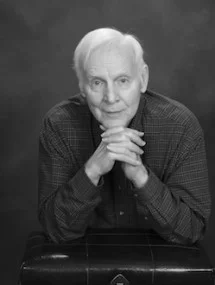
Q & A with author Tom Kakonis

It’s been more than a decade since you’ve published your last novel. What was it like to get back in the game with TREASURE COAST?

I have to say it’s been exhilarating, maybe because it was so unexpected.  A year ago at about this time I went to my mailbox and discovered a package containing an autographed copy of THE HEIST by Janet Evanovich and her co-author, Lee Goldberg.  I’d never met Ms. Evanovich but Lee I remembered from a writers conference years ago when he was just getting his start in crime fiction.  We’d not stayed in touch, so I was naturally rather puzzled by the gift.  Tucked inside the book I found a letter from Lee reintroducing himself and explaining a new venture he and his partner were embarked upon.  That venture was Brash Books, a publishing company specializing in the revival of out-of-print crime novels, and since I had six such books, long since out of print, he invited me to participate.  With nothing to lose, I readily agreed.  Once the project was underway I mentioned to Lee that I had a manuscript languishing in a drawer, and he invited me to send it along.  Happily for me, he liked it, and thusly was TREASURE COAST launched.  It’s been available now in e-book and trade paperback formats since early September, and so far it’s been quite a ride.

It has been said that you’re a “master of the low-life novel.” What draws you to writing your darker characters?

Over the course of my life I’ve been thrust into environments almost exclusively male: the army (of my day), swinging a sledge on a railroad section crew, and, perhaps most useful of all for fiction writing, teaching inmates at Stateville Prison in Joliet, Illinois.  In all these settings I was exposed to the uninventable vernacular of clusters of men absent the civilizing influence of females, so I had a share of the dialogue for such characters handed to me like a gift.  But with the villains (as, I hope, with all the other types of characters) what I wanted to do was avoid the stereotypes of villainy by investing them with qualities I can only call human.  In TREASURE COAST, for example, Junior Biggs, the most despicable of villains, still plans to use part of the money he hopes to come by with their big score to buy a proper headstone for his mother’s grave.  The introduction of such seeming incongruities can add what I like to believe is a certain comedic element to a narrative, as when the character Hector Pasadena, an equally unregenerate villain in TREASURE COAST, submits almost meekly to the instructions of the kidnap victim herself and joins without complaint in the group’s house cleaning and cooking chores.  Juxtaposing such comic scenes with those of brutal violence helps me create an atmosphere of ambiguity I’m striving for in both narrative and characterization.

Of all the characters you’ve created, which is your favorite?

If I exclude the villains, many of whom I’ve certainly enjoyed creating, I’d have to say my favorite is the protagonist of the three “Waverly novels,” Timothy Waverly.  He appeals to me because of the qualities that comprise his character: intelligence, focus, loyalty, shrewdness—a cynic with a streak of romanticism, a stoic fatalist with an abundance of courage.  For me it’s easy to like, if not to identify with, such a character, maybe because he’s the man I wish I were.

Describe your writing space and how it inspires you.

If by “space” is meant the room where all the work gets done, there’s not a whole lot to describe and even less to say about it in the way of inspiration.  It’s small, cramped, untidy, cluttered with all the paraphernalia of a writing enterprise.  There’s a brace of windows along one wall that offer me glimpses into the human comedy of the outside world; inside, it looks like a mess, but it’s my mess and I wouldn’t have it any other way.  Seven novels got penned on the battered desk that dominates the room, and I’ve got a sentimental attachment to the place.

How much of you or your experience is in your book? (Are any characters in your book based on people you know? Are any of the situations in your novel based on real events?)

The opening scene in TREASURE COAST, the central character Jim Merriman engaged in a deathwatch over a dying sister, was taken almost intact from a similar personal experience.  Many years ago my older sister was diagnosed with a particularly virulent strain of cancer.  Miraculously, she survived almost 20 years till finally the malady caught up with her.  I spent the last few days of her life in a bumbling effort to comfort her, and during that difficult time I must have absorbed some of the peculiarly repellent ambience of a hospital, for a great deal of it emerges in that first chapter.  The difference between the fictional and actual events is that in real life there was no hapless nephew in a world of trouble or a tempting seductress down the hall.  Those two and all the other characters in TREASURE COAST are purely products of my overheated imagination.  Same with the events in the novel, the kidnapping plot and all the sub-plots, though I might add that all of the Palm Beach Gardens venues cited and described are faithful to the book’s time setting.

At this point in your writing career, what has been your most memorable moment as an author? 

My most memorable moment, as I suspect is the case with many writers, was the day I learned my first novel, MICHIGAN ROLL, had been accepted for publication.  I was 57 years old and had been trying for decades to break into print with a work of fiction.  When it finally happened I’m not sure if I felt joy or vindication of all my efforts or simply an immense relief.  All I know for certain is it was one of the highlights of my life.

If TREASURE COAST were to be turned into a movie, who would you have in the starring roles?

Daniel Day-Lewis is, in my opinion, the finest and most versatile actor of his generation.  I’m not sure the Jim Merriman character would be challenging enough for him, but it would be an honor to have him portray it.  Other male actors whose work I admire include Edward Norton and Viggo Mortensen, either of whom would do justice to the role.  For the Billie Swett character I can think of no one better suited for that part than Sandra Bullock.

What was the best writing advice you’ve ever received?

My mentor at the U. of Iowa Writers Workshop was the novelist Vance Bourjaily.  I once timidly submitted a short story to him, and to my intense gratification he seemed to like it very much.  He encouraged me to submit it to some of the literary magazines of that era, which I did but with no success.  When I expressed my frustration and dismay at not instantly breaking into print, his response was neither new nor particularly original: persistence, he maintained, was what finally carried the day.  I believe my experience bears out the simple truth of this advice.

Who among modern writers in the genre of crime fiction and suspense do you most admire and why?

I’ve always liked the work of Ross Thomas and George Higgins, both sadly deceased.  But it was Dutch Leonard, also abruptly departed, whose fast-paced novels, both crime and western, and memorable characters first captured my interest in the crime fiction genre.  His plotting, in particular, defines that over-used term “page turner.” And while she is hardly limited to that genre herself, I have to mention here the work of Flannery O’Connor, who blended comedy and violence in an unforgettable mix, as in her peerless short story, “A Good Man Is Hard To Find.” 


What is next for you?

Next year Brash Books is bringing out the last two of my out of print novels, FLAWLESS and BLIND SPOT. What will follow for me depends on the reception of all six books and, of course, TREASURE COAST.  If there’s an audience out there for these kinds of stories and characters, I’d be tempted to pick up my pen one more time and see what flows.

About the book

Treasure Coast is one of the first releases from the new publishing company, Brash Books. Bestselling authors Lee Goldberg and Joel Goldman created Brash to publish “the best crime novels in existence.”
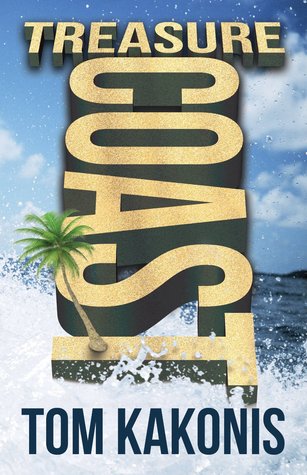
 

A compulsive gambler goes to his sister's funeral on Florida's Treasure Coast and gets saddled with her loser-son, who is deep in debt to a vicious loan shark who sends a pair of sociopathic thugs to collect on the loan. But things go horribly awry...and soon the gambler finds himself in the center of an outrageous kidnapping plot involving a conman selling mail-order tombstones, a psychic who channels the dead and the erotically super-charged wife of a wealthy businessman. As if that wasn't bad enough, a killer hurricane is looming...

 It's "Get Shorty" meets "No Country for Old Men" on a sunny Florida coast teeming with conmen and killers, the vapid and the vain, and where violent death is just a heartbeat away


Excerpt from

TREASURE COAST

by

Tom Kakonis


LIKE MOST MEN CLOSING IN ON THE BENCHMARK

forty, Jim Merriman made far more promises—to others

mainly, a dwindling few yet to himself—than he knew, heart of

hearts, he ever intended to keep. It was a habit by now so deeply

entrenched, so much a part of him, that he wore it like a second

skin: Generate an earnest pledge today; effortlessly shuck

it off tomorrow. Mostly it was harmless, this habitual shortfall

between oath and execution, deed and good intention. A commonplace

human failing, to his thinking, small and forgivable.


A way of getting by in this sorry world.

But the vow exacted from him by a dying sister—that now

was giving him serious pause. Better make that acute discomfort.

(If he were going to be honest with himself, for a switch,

figuring—trying to figure—how to squirrel out of this one. Very

unsettling.)


From across the continent, he’d been summoned to her bed

of pain, where eventually, floating up out of a narcotized fog, she

found the strength to peel back crusted eyelids, fix him with a

fluttery gaze, and in a voice fainter than a whisper, feebler than a

gasp, murmur, “Jim? That you?”


“None other,” he affirmed, putting some of that fraudulent

deathwatch heartiness into it.

“You came.”

“Said I would.”

“Been here long?”

 “Not long,” he lied. In fact he’d been sitting there for the better

part of the afternoon, studying her sleep, marveling at the

relentless progress of this formidable malady, its curious manifestations.

Her face, in sleep, was sunken, sallow with a greenish

tint, the color of mold-infested cheese. The sockets of the eyes,

hollow and dark, looked to be rimmed with a dusting of soot.

A limp hand, its flesh withered and veined as a dry leaf, seemed

to sprout from a forearm grotesquely swollen to Popeye proportions

and out of which coiled an IV vine that leaked some colorless,

powerless anodyne into her blood. Now that hand moved in

an effort at a sweeping gesture. “No, here, I mean. Florida.”

“I got in this morning. Leon picked me up at the airport.”


“Leon?”

“Yes.”

“Where is he?”

“Your place. I told him to go back and crash. He looked

pretty wasted.”

“It’s been hard for him,” she said.

“He’ll be OK.”

“You think so?”

“Sure.”

“I wonder.”

“How about you?” he asked. “They treating you right here?”

“They do what they can.”


“Well, you need anything, you just let me know,” he said,

more confidently than he felt—as if he had a direct hotline to the

nerve center of the AMA and could make the quacks jump at his

barked command. Hotline to nowhere was what he had.

She nodded dismally, said nothing.


To put something into the oppressive silence, he launched

a wandering monologue, picking his topics cautiously, from the

security of the distant past mostly, skirting that phantom third

presence in the room, Lord Death, with his constrictive time horizons.

“Remember that time…” he’d begin a tale, lifted from their

shared heartland childhood, and through the malleable prism of

inventive memory, he’d mutate some perfectly ordinary incident

into an adventure antic. Outrageously the tales grew in the telling,

spinning the sunny Leave It to Beaver mythology of a tight,

joyous, loving family life. Pure fabrication of course. All of it. The

sorry truth was that, apart from the accident of birth, they’d never

had much in common, never been particularly close. Nevertheless

he wore on, mouth running tirelessly, until at last the grab bag

of hilarious anecdotes was depleted, the memory-lane tour

exhausted, and again a desolate silence settled over the room.

Thee somber interval lengthened. After a while she filled it.


“Jim?”

“Yeah?”

Eyes tearing over, she said, not as a question, “There’s not

much time left, is there.”

“Oh, I don’t know about that. Nurse out there says you’re

holding your own.”

“Will you do something for me?” she asked, ignoring the blatant

falsehood.

“Whatever I can.”

“It’s Leon. He’s all alone now. So helpless. Like a child. Will

you watch out for him?”

“Sure, I’ll give the kid a hand” is what he told her. Another in

that legion of empty pledges. Slippery, purposely vague. The kind

of thing you search for to say. Should have been enough.

Except she couldn’t leave it alone. “Promise?”

“Hey, you can count on me,” he said lightly, conscious of the

sickly smile tacked on his face.

“Need to hear you say it, Jim.”

“Uh, what’s that?” he asked, stalling, averting his eyes from

that pleading, miseried gaze, unblinking now, insistent.

“You promise.”


So, cornered, he heard his voice utter that one too, the “p”

word, figuring, Why not? What’s the damage? Whatever it took

to help her exit gracefully, or as graceful as anyone riddled by

outlaw cells, wildly multiplying even as they spoke, could ever

exit. It was only words. Nothing lost, no one really hurt.


His first mistake. First of many.

Ten minutes later he stood outside the entrance to the Palm

Beach Gardens Medical Center, idly puffing a cigarette. A nurse,

briskly efficient, professionally cheery, her smile as starched as

her uniform, had appeared only a moment after the vow-taking

ceremony (nice timing, those mercy angels) and shooed him out

of the room, chirping something about “Time for meds” and

whatever other ghoulish things they did to keep the croakee

wheezing and earn their pay. OK by him. Welcome break from

the white world of the hospital and its clash of pungent perfumes,

its soiled bedsheets, lemony cleansing solutions, acrid antiseptics,

hothouse flowers, rank festering flesh.


The slanting rays of the sun, still fierce on an immense slate

of bleached sky, steamed the hospital lawn, glued the parking-lot

tar. The dank air resonated with the atonal hum of insect energy.

Symphony of famished worms, he thought ruefully, gathering for

the feast waiting just on the other side of this door.


A sudden mournful ache, hollow and unfocused, overtook

him. But whom did he really mourn? An expiring sister in there,

seldom seen, scarcely known, barely recognizable anymore, soon to

be floating out of herself? No, it was himself he sorrowed for, himself,

a couple of weeks short of a milestone birthday, half a lifetime

squandered, pissed away, and dying just as surely as she, only daily,

increment by increment, puff by puff . Conducting his own requiem

in advance, dirge supplied courtesy of an invisible swarm of bugs.

What they’re doing, these crusading nicotine zealots, by banishing

us from their haloed presence, he further reflected, dourly

now, is creating a breed of solitary, morbid philosophers. Seekers of

occult mystery in wisps of smoke.


His cigarette had grown a tail of ash. He ground it under a

heel, defiantly lit another. And just as he put a flame to it, a most

handsome woman clad in a satiny blouse and designer jeans came

through the door, paused, the shed a pack of Capris from a Gucci

bag slung over her shoulder, and shook one loose. The flame in

his hand still flickered, and so in that wordless bond that links

a renegade fraternity, he offered it to her. She favored him with

a small smile and ever so lightly touched his hand in a steadying

gesture. Fetching gesture, fetching smile. Up close this way,

he could see she wasn’t young but not yet old either, a ripened

thirtyish somewhere; by his best estimate, forty tops. Around a

plume of smoke, she said, “Another second-class citizen?”


“Afraid so.”

“They’re turning us into a bunch of sneaks.”

“Or worse yet, wimps. Where’s Bogie when we need him?”

“Who?” she asked.

“Humphrey Bogart. Remember him? Tough as nails, and he

always had a weed stuck in his face.”

“How about Bette Davis? Nobody crossed her.”

“There you are.”


One thing you had to give your habit—it was an instant icebreaker.

Something to be said for that, particularly when your

commiserator comes equipped with a dizzying cascade of platinum

curls; good bone geometry; skin lacquered to a high sheen;

a generous crimson-glossed mouth; eyes a cool blue but with a

glint of worldly mischief in them; and pliant, slightly plumpish

curves under a fashion-statement outfit. Like this one did. All

of which he assimilated in a sly sidelong glance, as he no longer

pondered his own mortality but rather the enduring quality of

lust, how it occasionally nods but never really sleeps.

“You visiting somebody?” she asked him, turning the talk

elsewhere, extending it. Promising signal.


“A sister,” Jim said.

“Is it serious?”

“It’s cancer.”

“Bad?”

 “Terminal variety.”

“That’s a shame.”


He shrugged. “Yeah, well, cancer always wins.”

She took a long, meditative pull on her Capri. the third finger

of the cigarette-bearing hand, he noticed, was bedecked with

a gaudy rock the size of a boulder. Generally—though not absolutely,

in his experience—a bad signal. In a stagy, breathy voice,

she said, “I’m real sorry.”


“No need to be,” he said with mock solemnity. “Doctors

determined it wasn’t your fault.”


For a sliver of an instant, she looked perplexed. Then, as she

got it, her smile widened, displaying an abundance of teeth, dazzling

as neon and much too perfect to be anything but orthodontist

enhanced. Jim gave her back his player smile, oblique,

distant, hint of evasiveness in it. Dueling grins.


Hers departed first, displaced by an earnest expression. “Is

she centered?”

“Centered?”

“Centered,” she repeated, as though the echo explained itself.

“Afraid I don’t follow,” he said, baffled by the corkscrew twist

in the conversation and wondering if maybe this time the joke

wasn’t on him.


“Like, in tune with her spiritual center.”

Evidently no joke. “Well,” he said, “we’ve never been what

you’d call God-fearing people. She taught math, some community

college down here. Numbers are—were—her religion.”

“Got nothing to do with religion,” she declared, a little impatiently.

“No? What then?”


“Energy. Strictly energy. See, I read this book by this Indian

guy—from India, I mean, not your American kind—where he

shows how we’re all a part of this one big spirit. Only he calls

it energy. Cosmic energy. And it’s, like, steady. Never changes,

never dies. What we call ‘dying’ is just trading energies.”


 “That’s a comfort.”

“And what you got to do,” she plowed on, voice elevating

urgently, “when your body’s ready to pass, is zero in on it, your

place in this energy field. That’s what centering is. Sort of like

finding your way home.”


“Interesting theory,” Jim allowed, thinking they all have to

come with some wart, physical or otherwise. Even the best of

them, like this dumpling of sex here, with the loopy-energy hair

up her sweet apple ass. Too bad. Terrible waste.

“Changed my life, I can tell you.”

“Bet it did at that.”


“What I do now,” she said, “is try and help people get in

touch with it. Their energy center. That’s why I’m here. My best

girlfriend’s mother—she’s about to pass too.”


Sounded to him like some spiritual fart cutting, with her

being the therapeutic Gas-X. But what he said was, “Sounds sort

of like volunteer work.”


“Guess you could call it that. See, growing up, I wanted to be

a nurse. Never did make it, so this is the next best thing.”


“You? A nurse?”

“I always wanted to help people.”

Yeah, right. “I see,” he said cautiously, radar suddenly alert

for a scam coming on.

“So you think she’s centered yet?”

“Who’s that?”

“Who we’re talking about here…your sis.”

“You got me.”

“If you want, I could speak to her.”


Finally the pitch. Everybody peddling something. Pretty

prosperous clip too, by the looks of that stone weighting her

finger. Unless, of course, it was fake. “Appreciate the offer,” Jim

said, “but I don’t think she’d be very receptive.” Figured that’d

be the end of it. Any good fleecer knows when it’s time to

book.


Figured wrong. “OK,” she said breezily and, in yet another

of those bootleg turns, added, “You’re not from around here, are

you?”

“How could you tell?”

“Wild guess.”

“You guessed right.”

“Whereabouts then?”

“Nevada.”

“Vegas?”

“Reno.”

“Reno, Vegas—they’re like Florida,” she said. “Nobody’s

from there.”

“Right again.”

“So? Originally where?”

“South Dakota.”

“No kidding!” she exclaimed. “Me too. I’m from Bismark.”

“That’s in North Dakota.”

“Same thing.”

“I expect maybe it is. There’s not all that many of us, either

province.”


“Hey, don’t I know? That’s why we got to stick together. What

I always say is, ‘When you’re from Dakota, you got to be good.’ ”

Jim regarded her narrowly. A corner of her wide mouth was

lifted once again in a suggestion of a smile, artful, provocative,

faintly amused. The naughty mischief he’d seen earlier, thought

he’d seen, all but given up on during the energy drone, shimmered

behind her eyes. “By that,” he said, choosing his words

carefully (for if four decades had taught him any lesson at all, it

was that a man never knew when he was going to get lucky), “do

you mean ‘nice good’? Or oh, say, ‘skillful good,’ ‘accomplished’?”

Before she could reply, a sleek silver Porsche swung into the

lot and lurched to an idling stop twenty or so yards from where

they stood. A head—male, jowly, squinty eyed, round, and hairless

as a billiard ball—poked out of the driver’s-side window like

a wary turtle emerging from its shell. She gave it a high-handed

wave, a big theatrical welcoming grin, calling, “Hi, honey. Be

right with you.” To Jim she stage-whispered, “Thee big doolie

arrives.”


“Doolie?”

“The worse half.”

“Oh.”


She lowered the waving hand, abruptly thrust it at him.

“Been real nice talking to you.”

Jim took the offered hand. Grip was surprisingly firm; the

shake snappy, businesslike. “Same here,” he said.

“My name’s Billie. Billie Swett.”

“Swett?”

“You got it. Like in the perspiration, only with an ‘e’ and two

‘t’s. Cute, huh?”

“Well, everybody’s got to be named something.”

“And you are?”

“Jim Merriman.”

“Merriman,” she repeated, the tantalizing shimmer not quite

gone out of her eyes. “You don’t look so merry to me.”

“Inside I’m laughing.”

“Listen, you change your mind—about your sister, I mean—

I’ll be at the hospital here. Next couple days anyway. Ask around.

They know me in there.”

“I’ll be watching.”

The Porsche’s horn bleated. The turtle head squawked,

“C’mon, honey. We’re runnin’ late.”

“I’m coming, hon,” she called back sweetly, but under her

breath, softly, though not so soft as to be inaudible, she muttered,

“Asshole.”


Across lawn and lot, she sauntered, loose easy stride, studied

sway in the shapely hips. Into the Porsche she climbed, pecked

the turtle on the cheek, checked her reflection in the rearview,

patted and primped the cotton candy ringlets. And with that the

two honeys were gone, sped away, leaving Jim to speculate now

on the quirky nature of luck, which, he suspected, like gold, was where you found it.

Excerpted from the book TREASURE COAST by Tom Kakonis.  Copyright © 2014 by Tom Kakonis. Reprinted with permission of Brash Books.  All rights reserved



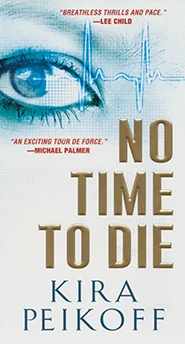
Q&A with author Kira Peikoff

 NO TIME TO DIE focuses on a 20 year-old woman who stopped aging at 14 years-old – where did you get this idea?

A few years back, I saw a documentary on Discovery Health about a young woman who had inexplicably stopped aging. She was almost 20 years old but had stayed frozen as a toddler her whole life, baffling doctors and scientists alike. The case caught my attention because I've always been interested in medical mysteries, and like many people, I'm also fixated on the promise of eternal youth. Yet staying young forever, as welcome as it might be, could also be a curse. I decided to explore it further in a novel, but I didn't want my protagonist stuck as a toddler without much mental or emotional capacity.  So I decided to trap her in the worst possible page for maximum drama and frustration. What could be worse than 14?

How did you research aging for NO TIME TO DIE?

I read some textbooks about both the physiology, genetics, and social aspects of ending aging. I developed a professional correspondence with a leading researcher who answered all my questions pertaining to my book's specific scenario in great detail. We went back and forth many times on the hypothetical scenario I created with his help, so it's as credible as possible while still being fiction. 

What led you to write in the thriller genre?

I feel into it by accident. When I started writing fiction, I gravitated toward stories with high stakes, increasing tension, cliffhanger chapters, and a fast pace. I didn't actually intend to write in any genre, but after I wrote my first book, I realized I'd written a thriller.

How was the book title chosen?

My wonderful late mentor, Michael Palmer, suggested the title to me when I told him I was stuck on a title. (Titles are impossible.) Everyone at the publishing house immediately liked it, so we went with it. It's extra meaningful because Michael died shortly after I turned in the final manuscript. It was one of the last novels he read.

One of the main reasons scientists are busy researching defying aging is because: they have a back story. Many have a loved one they wish could have lived longer  – it’s a very human side to all the scientific lab work involved – was your writing process different when explaining the scientific lab work vs. the human and emotional side of your characters?
Yes, writing about the lab work was more of an intellectual challenge, because I had to figure out how to incorporate real-life details with fictional ones. It was like a puzzle. Writing about the human side came more naturally. I tried to tap into how I might feel in their place, and why I might do what they were doing, so I could access that yearning and vulnerability.

Do you have any advice for emerging writers trying to turn out their first book?

Be patient and keep writing a little bit every day. Set a goal of your minimum word count and don't leave the desk until you hit it. I aim for 800-1000 words a day. Outlining is very helpful so you know where you're headed and can write with purpose. If you get stuck, join a writing workshop and/or hire a writing coach or freelance editor. I have done all of the above. 

What do you want readers to take away from NO TIME TO DIE?

First and foremost, that they will be transported on a thrilling and satisfying journey with characters they've become invested in. Then: that they'll possibly think about their own positions on the controversial subjects the book raises, and finally that they will be shocked by the big twist ending.

About the Author

Kira is a writer based in New York City. She graduated with high honors from New York University in 2007 with a degree in journalism, after four years of various reporting internships: covering street crime for The Daily News, writing about Capitol Hill for The Orange County Register in Washington, D.C., reporting on business and technology for Newsday, and researching feature stories for New York magazine. After completing her first book, Living Proof, Peikoff worked for several years in the editorial departments at two New York publishing houses, which gave her an invaluable inside look at the publishing process and the rapidly changing industry. Peikoff is working on her third thriller, freelancing for a variety of major media outlets, and attending Columbia University's Master of Science program in Bioethics.

About her book

Someone is out for blood—Zoe Kincaid’s blood. She’s a 20-year-old trapped in the body of a 14-year-old girl and her DNA could hold the secret of immortality. Could it be the Columbia University researchers who see her as the key to fame and tenure? The shadowy figure, known only as Galileo, who is kidnapping the world’s best researchers? The Justice Department head who seems a little too intent on getting her alone? Or the maniac who just fed a leading scientist to his chimpanzees?

Zoe knows that unlocking the secrets of genome could save her beloved grandfather, a retired physician and former Olympian who grows frailer by the day. Can she trust the rogue physician whose secret lair hides discoveries that might just save her grandfather? Heart-pounding twists just keep coming in Kira Peikoff’s stunning biomedical thriller.

Science has barely begun to unlock the secrets written in our DNA. Researchers are relentlessly hunting for the answers to chronic diseases, cancer, rare disorders and the biggest mystery of them all—aging—but at what cost? Bioethicist Peikoff asks the most troubling scientific question of our time in this taut thriller: when does medicine cross the line?

Q & A with author Gina Holmes

Please welcome, novelist, Gina Holmes.  Gina is the founder of popular literary site, novelrocket.com. She is a two-time Christy and ECPA Book of the Year finalist and winner of the INSPY, Inspirational Reader’s Choice, and Carol Award. Her books regularly appear on Christian bestseller lists.

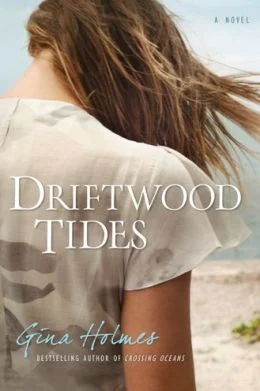
Gina, tell us a little bit about your newest release, Driftwood Tides.

Driftwood Tides tells the story of an aging, alcoholic driftwood artist turned beach bum, Holton Creary, and young Libby Slater. Libby grew up with an absent father and a loving but cold, socialite mother. Leading up to her wedding, Libby and her groom-to-be go through genetic testing and she learns her blood type doesn’t match either of her parents. She confronts her mother and is reluctantly told that she’s adopted. She goes searching for her mother, Adele, only to find her husband, Holton Creary lying face down on the carpet of his Nags Head beach shack.

She lies about her real identity until she is finally found out. Holton does not welcome the news. He never knew the wife he had given saint status too had given up a daughter for adoption. Together the two search to find the truth about Adele, Libby’s father and themselves. 

What do you hope readers will take away from this book?

At its heart, Driftwood Tides is really about discovering who we are, whose we are, where we belong and the need to accept and bestow forgiveness.

Why did you set the novel in Nags Head?

Oh, how I love that place! I’m not sure there’s a more peaceful setting in all the world. And the further out I get from civilization, the happier I am. I love the sand dunes, the untouched nature, the quaint towns. Just everything! (Well, except sand in my bathing suit maybe J)

You seem to have a recurring theme in your novels about absent fathers, if it’s not too personal, why do you think that is?

It is too personal, but I don’t mind answering (wink!) When I was 6 years old, I was packed up by my stepfather and driven to my father’s house. Overnight I had a new Mom, new sisters and brother, house and life. It was as traumatic an experience as I can imagine. There were few explanations that made sense to me and I missed my other family desperately. I think ever since I’ve been trying to settle some pretty deep-seated questions. Writing books is wonderful for that.

The novel you’ve written that seems to be a fan-favorite is Crossing Oceans, do you ever see yourself writing a sequel?

I love that book too. Makes me cry just thinking about certain scenes. I would love to write a sequel, prequel or off shoot stories. I love those characters dearly. I’m under contract for three different novels, so I’m not sure when I’ll have the time, but I’d love to explore Craig’s story and of course, Bella’s. I miss Mama Peg very much!

You’ve said that your favorite novel you’ve written is Wings of Glass. Why is that your favorite?

Well, for storyline, I think Crossing Oceans is the strongest. I think my writing in Wings of Glass was my best, plus when I was very young I watched my mother in one abusive relationship after another, and then two of my sisters. I had been there too, despite thinking I was better than that. I know the mindset that keeps a woman (or man) in a relationship like that and I wanted to give insight to those who don’t understand. I’ve received enough letters to know I did what I set out to do.

You’re originally from NJ but write all your novels from the South, why do you set your novels down South if you’re from up North?

Ha, you found me out! Yes, I was born and raised in NJ. As much as I love my friends and family, I am definitely more suited for the slower pace of the South. I’ve lived in Southern VA for half of my life and I plan to spend the rest of my life here if I can help it. I try to write books from settings that make me happy. So I write where I want to be. (Although, I’ve got to say, NJ food is amazing and you’ve got to love a boisterous NJ laugh!)

What do you like most about being a writer? Least?

Most, I like being able to have a platform to share lessons I’ve learned in my life that I know others would benefit from. And more than that, I just love to tell a good story.

Least, would be the unpredictability of the business. Sometimes it seems so random and the lack of control makes me uncomfortable sometimes. (Which is probably right where God wants me!)

Do you have any advice for aspiring novelists?

My advice is pretty much always the same. 1. Write. So many people want to have written but don’t actually do the work. 2. Get to a writers conference because there’s so much  you don’t know, that you don’t even know you don’t know. If you don’t you’ll be spinning your wheels for years, wasting valuable time. 3. Run, don’t walk, to the nearest bookstore and buy yourself a copy of Self-Editing for Fiction Writers. Then apply it. (Best money I ever spent!) 4. Join a good critique group and get a nice thick skin, ‘cause you’re sure going to need it!

If you could go back to the pre-published writer you were, knowing what you do now, what advice would you give her?

Well, I wouldn’t have told myself how many novels I’d write that would never see the light of day, because I would have given up. I wouldn’t have told myself how little money there is actually to be made or how lonely writing can sometimes be. I wouldn’t have told myself that I’d still have a day job with 4 novels out in stores, including 3 bestselling novels… okay, but that wasn’t your question… I would tell myself to relax. Some of this, most of this is, is out of your hands, and that’s okay. It’s not going to be at all what you think it is, but it’s going to be so much more. You won’t get rich, but you will touch lives. At the end of the day, that’s going to be exactly what will fulfill you.

Where can readers find your books and more about you?

Thanks for asking. My books are in B&N, BooksaMillion, Amazon, Lifeway, Parable, Family Christian and hopefully a good number of independent bookstores. You can find me at Ginaholmes.com. Thanks so much for hosting me!

About Gina's book

He made himself an island until something unexpected washed ashore.

When Holton lost his wife, Adele, in a horrific accident, he shut himself off from the world, living a life of seclusion, making driftwood sculptures and drowning his pain in gin. Until twenty-three-year-old Libby knocks on his door, asking for a job and claiming to be a friend of his late wife. When he discovers Libby is actually Adele’s illegitimate daughter, given up for adoption without his knowledge, his life is turned upside down as he struggles to accept that the wife he’d considered a saint was not the woman he thought he knew.
Together Holton and Libby form an unlikely bond as the two struggle to learn the identity of Libby’s father and the truth about Adele, themselves, and each other

Paperback: 400 pages
Publisher: Tyndale House Publishers, Inc. (August 15, 2014)

Q & A with author Lori Foster

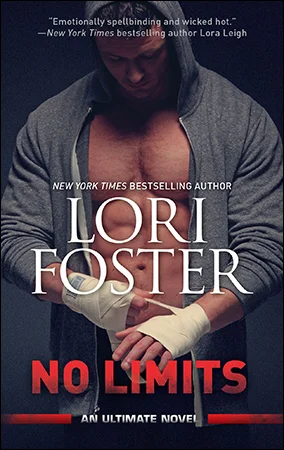
Can you tell us a little bit about your latest release, NO LIMITS?

This is Cannon’s story, a character that readers met in my last series, Love Undercover. From the second Cannon showed up on the page, I knew he’d get his own story. He’s that kind of guy, the guy who steps up and takes notice and gets a lot of notice in return.

In NO LIMITS, Cannon reunites with Yvette, another character from the previous series. They parted under strained circumstances, with Cannon just heading into professional MMA and Yvette young and traumatized from a horrific threat. Cannon saved her then, but he was noble because of her age and what she’d been through. Now she’s older, more independent, and he’s ready to make up for lost time.

Can you also fill us in on the prequel to the series, HARD KNOCKS?

HARD KNOCKS gives readers a peek into the MMA world and the fighters who will have novels in the Ultimate series. You get to see the inside of Cannon’s gym, the set-up and what the guys do for the neighborhood, as well as the close relationships they share. It’s a short romance featuring Gage and Harper, two fun, strong people with a few romantic quirks to work out. It’s short and sexy and gives readers a taste for how the novels will be more about fighters in a romance than about fighters fighting in the cage.

How has your UFC obsession influenced the writing of NO LIMITS?

Well, I’ve gotten into the idea of picking silly fight names for the heroes. And from the fight names, I’ve come up with some “inspired” reasons for them. It also makes it easier to justify the guy being totally ripped – although not all fighters are. I’ve learned in actual fights the physical appearance can be deceiving. It’s more about heart and talent, training and speed, than how a guy looks. But naturally any hero I write about will be blessed with a six-pack and boulder shoulders.

What was it like getting inside the mind of a mixed martial arts fighter?

I’ve interviewed a few fighters over the years, chatted with others while getting promotional photos and during before and after “meet and greets” while at live events. Every single fighter I’ve met has been extremely nice, unassuming, dedicated to fans, and (though it sounds silly) very sweet. It took only a few questions to see how much they give to the sport they love, the discipline it takes to stay in training, and the confidence they gain from having extreme ability. Since I’ve never asked a fighter about his love life, that part of the story is pure imagination on my part. But then I only write good guys, and talented lovers. 

What is your process for choosing names like Cannon Colter?

I’m a terrible cheat when it comes to names. More often than not I see a name on Facebook or Twitter that I like. I never, ever use a first and last name together, but I do pick and choose and mix and match. When I see a unique name, or a name that resonates with me, I grab it up. When I’m writing, I’m far less focused on names than I am on personality. Names for me are an afterthought, so stealing from my social media sites makes it easy.

What are Cannon and Yvette’s best physical traits?

Although Cannon is a fighter with a shredded bod, it’s more his smile and his eyes that get to Yvette. He has a very sincere smile, because he’s a very sincere guy. And when he looks at a person, it’s felt through and through.

For Yvette, she has long beautiful hair, but it’s more about the deceptive confidence she tries to exude that draws Cannon – that, and the way she looks at him like he’s a superhero. What guy could resist that?

What is the best scene (in your opinion) between Yvette and Cannon?

There’s a fun scene where Yvette is at the rec center (the gym) and the fighters start arguing. Cannon is irked, his buddies are irked, and Yvette thinks they might come to blows. She tries to put herself in the middle and sort of gets sandwiched between some pretty hot flesh. I smiled while writing it, so I hope readers smile when they read it.

The poor guys didn’t know what to think. They’re big, physical guys who don’t mind working out a few differences on the mat, but they’re also friends, and they’re fighters with a load of control often utilized in a fight. But with Yvette, they all want to be gentle – while struggling to figure her out.

What music did you listen to while writing NO LIMITS?

I have a long playlist of about 150 songs. Much of it is from KORN and Kid Rock and Marilyn Manson, but I’ve also really gotten into Disturbed, The Pretty Reckless, Papa Roach, Skillet and Puddle of Mud. Oh, and Cage the Elephant. I like loud, strong music that I can sing along with while I’m writing. 

How is this series different from your previous works?

The Ultimate series is a different setting, different characters, different plots – and yet you still visit some of the characters from Love Undercover series since it remains in the same fictional city and state. In the last series the focus was on Rowdy’s bar and the police station. There are visits to the bar still, but much of the action takes place at Cannon’s rec center and in different houses owned by the characters. 

The stories remain super-sexy, the guys remain alphas, the women remain smart and independent, and elements of suspense go throughout both series. But I hope each character has their own personality and for me, that’s where the differences should be most evident.

What character did you find yourself most drawn to, and why?

I love Armie Jacobson – and I’m pretty sure readers will too. He’s outrageous, too sexy, has effortless talent in the cage, and a wounded background that has influenced his life greatly. I love all the guys – Gage, Cannon, Denver, Stack... but Armie stands out.

Do you prefer writing about small town romance settings (like in NO LIMITS) or city settings?

I’m not sure I’ve ever written a large city setting. Smaller towns, always fictional, work best for me because I like the lack of anonymity in a small town. Everyone knows everyone, or has at least heard of everyone, and it can lead to some touching, and embarrassing, situations. I like the warmth of knowing your neighbors and caring about them. And I like the ease in creating the town.

Who would play Cannon and Yvette in a book-to-film adaptation?

Josh Duhamel, while a little too old, would make a fabulous Cannon! He’s big and gorgeous and built. I think he’d be perfect if NO LIMITS was ever made into a movie. For the heroine, Mila Kunis is beautiful and I can easily picture her as Yvette. They’d make a hot couple!

What are your five favorite verbs to use during a love scene?

Favorite verbs to use in a love scene... Only five, huh? Wow, that’s difficult. How about catch/caught, press, contract, nuzzle/nibble, lick/suck. I’m not sure I could write a full love scene without them. 

Can you tell us about the process behind the cover artwork?

Ooooh, I LOVE getting new covers, it’s so exciting. The way it works is that I give my editor an idea of what the characters look like. Usually this means emailing her my own character sheets – notes I keep on the characters to detail (and help me remember) height, eye and hair color, body type, etc... I usually include any and all info like the car he/she drives, job description, age and any other pertinent information that I might need to recall from book to book.

My editor also asks for a synopsis, but since they usually start working on covers long before I know what the story is about, it’s a guessing game on my end. I know there’ll be a hunk, a heroine, some suspense, hot sex, lots of emotion, and a happy ending. The how and why is often not clear to me at that point.

Then the publisher has a meeting with the art department and they brainstorm cover ideas and come up with a concept that I get to see. 

The concept is just an idea. It’ll show a model, but not THE model. It’ll show a pose, but not THE pose. I see where the placement of my name and the title will appear, along with any quotes.

Once that’s approved, the art department does a photo shoot and from those images they choose the one they like best. I weigh in with pleas of chest hair. Chest hair is always my #1 requirement if they show the model with his shirt off. To be clear, this is for new novels, not novellas or re-issues. For those they generally use stock art. It’s all very fun and I can honestly say I’ve loved the artwork so far.

If you were stranded on a desert island with one of your many characters, who would you choose and why?

Since I’m an enormous wimp and not at all heroic, I’d love to have Trace with me, from Trace of Fever. He’s bossy and take-charge and lethal. He knows what he’s doing, how to protect and how to survive. Plus I think he was pretty sexy. 

If it needs to be a character from my current Ultimate series, I’d say Denver – for many of the same reasons. He’s far more autocratic than Cannon or Armie or Stack. He’s big, brawny, and when necessary he can be lethal. I’d feel safer with a real bad ass if I had to be stranded. 

What was the most difficult part of the process when writing NO LIMITS?

My heart broke for Yvette. She’s one of more damaged heroines I’ve ever written (although there have been a few) and she struggled so hard for her independence. More than anything she wants Cannon, but because he’s so brave and strong she doesn’t feel quite worthy, and the stigma of being seen as a victim really hit her hard. I image something like that would be very, very difficult to overcome.

Have you written an outline for the NO LIMITS series or do you make it up as you go?

I totally make it up as I go along. Or I should say my characters make it up. I never try to figure things out in advance because as sure as I do, the characters will have a different idea and they’ll rebel, making it difficult to write until I give them their way. Fighting it is futile. But since they’re seldom wrong, it works for us. (And yes, I’m nuts. I don’t fight that either.) 

Usually the characters will give me enough clues along the way to keep the writing flow steady. For instance, while I was writing NO LIMITS, Denver stepped up and talked about Cherry and made it clear his book needed to be next. Now while I’m writing HARD KNOCKS (Denver’s story) Stack is giving me nudges, saying, “Me next, me next. And I’m going after Vanity... whether she or I know it yet or not.” So that’s how I know Stack’s story will be after Denver’s.

Armie has said he wants to wait, stew on things a while, come to grips with his future... so I’m letting him get used to the idea of what is to come.

What was your go-to snack while writing NO LIMITS?

Goldfish cheese crackers and pretzels. Occasionally I drink Mountain Dew when I need more caffeine but I usually snack with Lipton Citrus Green Tea as my drink. 
I also love baby carrots. And far too often I cave to the call of the Pringles can. 

What’s your favorite part of the book?

There’s a fight scene in the book. Not a sporting match, but an angry, defensive, you-dared-touch-what-is-mine kind of aggression filled with rage and loss of control and an awakening of strong emotion. Call me barbaric but I love writing scenes like that. I love getting down to the basics of how love can affect a person, whether it’s in sex or fighting off danger or just showing vulnerability awareness. It’s the real stuff people are made of.

What are you working on next?

I’m writing Denver’s story right now, titled HOLDING STRONG. It’s due out in spring 2015 and I’m loving Denver and Cherry together – and them as a couple with the rest of the fighters around. It’s a very fun dynamic. 

After that I’ll do another benefit novella for June 2015. It’ll be part of the Buckhorn family and all proceeds from sales of the book will go to a charity. I’m not yet sure which of the Buckhorn clan will be featured, but I’m sure it’ll all come to me in plenty of time.

And then I’ll jump into Stack’s story. He should be ready by then – which means I’ll also be ready. Luckily the characters keep me writing. In fact, if there were more hours in the day, I’m not sure they’d ever let me stop!

About the Book

Amazon

A surprise inheritance reunites a mixed martial arts fighter with the woman he’s never forgotten in the first in a smoldering new series!

Cannon Colter is quintessential hero material: chiseled jawline, shredded body—the works. He’s also the guy who rescued Yvette Sweeny from kidnappers, only to put an end to her romantic dreams. These days, she’s older, smarter, determined to face whatever life throws her way. Even the prospect of sharing a house and business with Cannon.

Cannon knew Yvette wanted him three years ago. But she was young—and some things are worth waiting for. Thrown together by her grandfather’s legacy, he realizes how deep Yvette’s scars really go, and how much danger lurks in their quiet town. As pent-up desire explodes between them, protecting her becomes the only fight that matters. And he’ll break all the rules to do it…

My Ten Favorite Novels by Kevin Finn

My personal taste in books is always evolving, but some things always remain consistent. I love a great drama, thriller or adventure story.  Many times it’s the way the writer treats the reader that lures me in. Whatever the hook, here is my current list of favorites and a few short reasons why.

1)    CYRANO de BERGERAC (Rostand)— Though properly considered a play, this work always felt as if it were written directly for me. A man against the world piece that is noble in thought and deed, swashbuckling, introspective and inspirational, woven beautifully through the pathos of loneliness, love unrequited, and the foolishness of vanity.  The ‘no, thank-you’ soliloquy and the Fight with Death help make this the finest character piece ever written.

2)    CATCH-22 (Heller) Bitingly funny, wry and sharp-witted all in one.  Not even M*A*S*H presents the horrors of war is such a brutally honest but enjoyable tone. 

3)    ACTS OF VIOLENCE (Jahn)-Ryan David Jahn’s debut novel is a haunting look inside the (fictitious) lives of witnesses to New York’s most infamous real-life murder, and why those witnesses did nothing to save a tragic victim.  Fact blends with fiction to put us in the courtyard with Kat, the helpless victim, and make us live the heart-wrenching terror of her final moments right along with her. Like her neighbors who did nothing, there is nothing we can do to help her. 

4)    CLEAR AND PRESENT DANGER (Clancy)-One of the most riveting, tightly wound action thrillers of our time, Clancy blends personal depth with political corruption and meandering.  No one is safe, and no one is what they seem.  

5)    TO KILL A MOCKINGBIRD (Lee)- The greatest American novel, with some of the most memorable characters in literary history. A powder keg of emotions and themes that are still relevant today, this is the first novel I read that showed how important it is treat a reader with respect, regardless of their age.  

6)    DON QUIXOTE (Cervantes)-A challenging read in both verbiage and emotion, Don Quixote forces one to look upon themselves for who they are and what they want to be. Not for everyone, but highly preferable to Steinbeck.

7)    THE THREE MUSKETEERS (Dumas)- More thrills and sword fights than you can toss a tunic over, this is the ultimate adventure. The naiveté of youth sparks derring-do in the name of love, adventure, Queen and country. With clear lines between the good guys and the bad guys, or the bad women, we do it all for one and one for all.  En garde!  

8)    THE FAULT IN OUR STARS (Green)-John Green doesn’t soft-shoe around cancer, and makes no excuses for forcing lovable characters to deal with the realities of life near death.  It’s a refreshingly honest, stark portrayal of a subject no one wants to deal with, with enough whimsy to make one fool themselves into believing in happy endings, at least for a few pages.  Another work that shows nothing but respect for its readers regardless of age, it’s a Young Adult novel that most adults would gleam invaluable lessons from.

9)    THE CROWN (Bilyeau)-Nancy Bilyeau’s debut is top-shelf historical fiction, centered around a nun investigating a murder in her Priory while searching for a priceless relic in the time of Cromwell.  As a sharply drawn, neatly twisted heroine who goes from the Tower of London to the royal halls of the Tudors in her quest, Sister Joanna Stafford is the smart, devout and strong woman so often lacking in modern literature.  

10)    TOP TEN (Pearson)-This one wins on concept alone; A serial killer named Michaelangelo, ranked number 10 on the FBI’s most-wanted list, climbs his way to the top by killing off the nine fugitives ahead of him in artfully deranged style. Sparsely written and quickly paced, this one plays like a movie in your head. There’s also a delicious twist and some sickly conceived butchery. The first chapter leaves you breathless and the rest of the novel has you huffing to keep up. One of the most overlooked contemporary thrillers.  


After beginning his career as a television news and sports writer-producer, KEVIN FINN moved on to screenwriting and has authored more than a dozen screenplays. He is a freelance script analyst and has worked for the prestigious American Film Institute Writer’s Workshop Program. He now produces promotional trailers, independent film projects including the 2012 documentary SETTING THE STAGE: BEHIND THE SCENES WITH THE PIRATES OF PENZANCE, and local content for Princeton Community Television.

His next novel, Banners Over Brooklyn, will be released in 2015.

Kevin Finn Website - http://www.kvfinnwriter.com/

Kevin Finn Facebook - https://www.facebook.com/kevin.finn.58?fref=ts

Kevin Finn Twitter - https://twitter.com/Finnkv


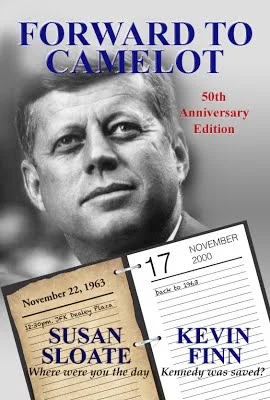
About the Book

WHERE WERE YOU THE DAY KENNEDY WAS SAVED?

On the 50th anniversary of the JFK assassination comes a new edition of the extraordinary time-travel thriller first published in 2003, now extensively revised and re-edited, and with a new Afterword from the authors.

On November 22, 1963, just hours after President Kennedy’s assassination, Lyndon Johnson was sworn in as President aboard Air Force One using JFK’s own Bible. Immediately afterward, the Bible disappeared. It has never been recovered. Today, its value would be beyond price.

In the year 2000, actress Cady Cuyler is recruited to return to 1963 for this Bible—while also discovering why her father disappeared in the same city, on the same tragic day. Finding frightening links between them will lead Cady to a far more perilous mission: to somehow prevent the President’s murder, with one unlikely ally: an ex-Marine named Lee Harvey Oswald.

Forward to Camelot: 50th Anniversary Edition brings together an unlikely trio: a gallant president, the young patriot who risks his own life to save him, and the woman who knows their future, who is desperate to save them both. 

History CAN be altered …

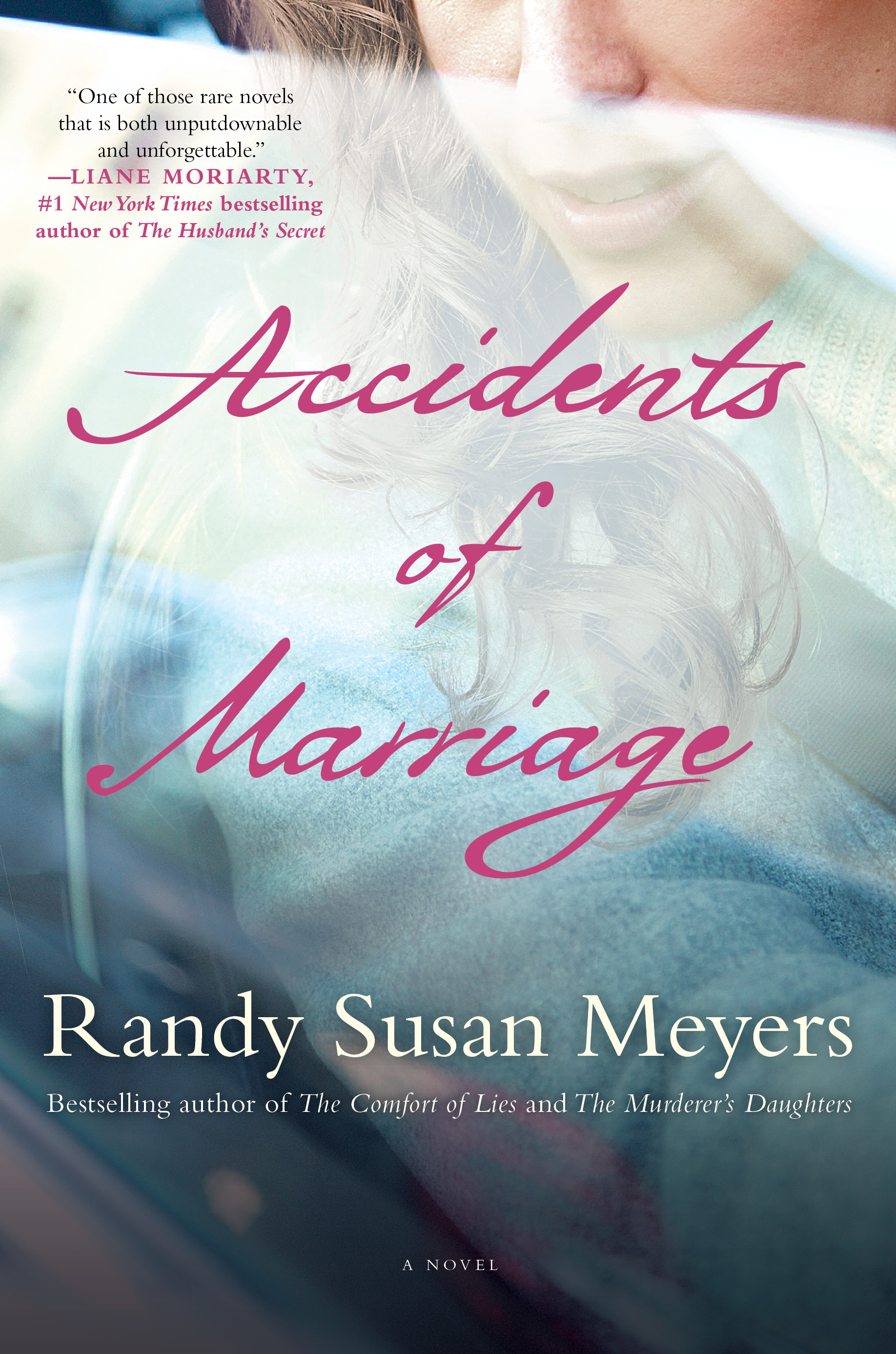
Q & A with author Randy Susan Meyers

Can you tell us a bit about the book and the relationship between the characters?

Accidents of Marriage asks what is the toll of emotional abuse on a family. It’s an account of life inside a marriage that seems fine to the outside world, an account of emotional abuse, traumatic injury, and how a seeming accident is really the culmination of years of ignored trouble. It’s the story of an unexpected gift of clarity making the difference between living in hell and salvation.

For Madeline Illica, the love of her husband Ben is her greatest blessing and biggest curse. Brilliant, handsome and charming, Ben could turn into a raging bull when crossed—and despite her training as a social worker Maddy was never sure what would cross him. She kept a fragile peace by vacillating between tiptoeing around him and asserting herself for the sake of their three children, until a rainy drive to work when Ben’s temper gets the best of him, and the consequences leave Maddy in the hospital, fighting for her life.

Accidents of Marriage, alternating among the perspectives of Maddy, Ben, and their fourteen-year-old daughter, Emma, takes us up close into the relationships between all family members. The children, lost in the shuffle, grasp for sources of comfort, including the (to them) mysterious traditions of their Jewish and Catholic grandparents. Emma and her grandparents provide the only stability for the younger children when their mother is in the hospital. Ben alternates between guilt and glimmers of his need to change, and Maddy is simply trying to live.  Accidents of Marriage reveals the challenges of family, faith, and forgiveness.

How many different titles did you experiment with before deciding on Accidents of Marriage?

My first working title was A Thousand Suppers (which comes from a line in the book, but ultimately made no sense out of context.) The title I used when I presented it to my editor was simply Maddy & Ben. After many long sessions with poetry books, anagrams of words, and other methods that I use, I came up with Accidents of Marriage.

How has working with batterers and victims of domestic violence influenced your writings?

Working with batterers taught me far more than I can put in a paragraph, but here is my version of the most important take-away: Never underestimate the hatred some men have of women. Never think that people (other than the truly damaged)  ‘snap’. If they chose to find it, people can access at least a sliver of decision-making. We have agency. We do not choose to hit and scream at our bosses. We choose to hit and scream at people in our homes. The hierarchy of power always comes into play.

Women (and men) do not choose abusive people as their loves—they pick the charming folks they meet in the beginning of a relationship. There might be signs to look out for, but abusers keep those traits in check until the relationship has solidified, when breaking up is more difficult.

There is not a black and white line between being abusive and not being abusive. There is a continuum of behavior, and most of us fall on the wrong side of the best behavior at some point—whether is be yelling, silent treatment, or some other hurtful conduct. Learning that this can be controlled is a job for everyone.

Batterers can change; we can all change our behaviors, but most often we choose not to do the difficult work that change requires. This is something I hope I bring to my writing.

Can you discuss the role of Maddy and Ben’s daughter in the book?

Emma is an average teenager who is thrown into very un-average circumstances. She becomes the stand-in mother, a role she takes on without credit or even being noticed. She is also the keeper of secrets, an impossible position for her to take on. In every stage of her family’s trauma, she is the silent absorber, who ultimately will break or find strength.

How did you portray someone with a traumatic brain injury so well?

I did an enormous amount of study. Luckily I find medical research fascinating. My shelves are crammed with memoirs of those with TBI and caretakers of those with TBI, workbooks for those with TBI, and medical texts—as well as spending time on line reading medical information for those in the field and information for those affected by brain injury. I had someone in the field read the novel and am also lucky enough to have a doctor in my writer’s group.

Did you have any say in choosing the cover for the book?

Yes! The final cover was the fourth one presented. It was tough finding the right ‘mood’ for the cover, but I was very pleased with the final version. Of course, most authors (including me) would love to actually design the cover, but my guess is our final products would not be the graphic success we imagine.

What made you choose a car crash as the tragic turning point between Ben and Maddy?

Abusive and bullying behavior very often plays out in driving. Road rage is a real problem on our motorways and seemed the logical vehicle for demonstrating how Ben’s bad choices result in devastating consequences.

Parts of this story make the reader begin to empathize with Ben. Why did you choose to do this?

I don’t believe books that present characters as all good or all bad can adequately capture life’s totality or experiences. It’s important for me to tap into how we are all the stars of our own show and how we often convince ourselves why it is ‘okay’ to act in awful ways.  Ben is not all bad, despite doing awful and bad things. The question I explore about Ben (among others) is can he change? Is he, are we, capable of change, and if so, how does will and can that change manifest?

Is Maddy modeled after anyone that you know?

Maddy is modeled after about a thousand people I know—including myself and my friends and family. Most of us have some Maddy in us, at least at some point. We close our eyes to the worst, or we use drugs or alcohol or food or something else to tamp down our feelings. We live in a maelstrom of problems and pretend it’s all okay. We deny and lie to ourselves. Until we can’t anymore.

What do you hope readers will take away from reading Accidents of Marriage?

Abusive behavior is wrong, whether it is physical, emotional, verbal or any other type of hurtful behavior. It overwhelms a family. Raising children with verbal and emotional violence is harmful and the ramifications last forever.

Most important, we can control our behavior.

But, most of all, I hope readers take a page-turning story from my book. I don’t write to lecture; I write to tell the stories that mesmerize me, and thus, I hope, fascinate others.

Read an exclusive excerpt from the book here.

Read an exclusive excerpt from the book here.