My Reasons For Writing Gentlemen of Pitchfork by Kamil Gruca

I believe there is just one good reason for writing historical fiction - a great urge to tell a story (this part is common for all fiction) which is settled in a specific time. Although this seems trivial, not all the authors follow this simple principle. As a result, they usually overestimate their enthusiasm for an epoch they've picked, or their enthusiasm to tell a story (common for all bad writing). I would like to think I did not err in any of the aforementioned ways.

Gentlemen of Pitchfork are a result of my year lasting study of middle ages and my even longer experience with sword fighting. I’m a Pole, yet I decided to tell a story that takes place in XVth century France. The battle of Agincourt, which is the central historical event in my book, was fought just a few years after a much larger Battle of Grunwald (sometimes known in English literature as Battle of Tannenberg) which happened in Poland. Why wouldn't I write about Grunwald? Being a coward would be the simplest reason. The burden of writing about own nation’s history seemed too heavy for a fiction. I was afraid I would focus too much on the politics. After all I wanted to write an adventure story and not to play the role of a late chronicler.

That said I did put a lot of effort to make Gentlemen of Pitchfork historically accurate. The accent is not on the politics but rather on the material history and daily life. I believe that many readers, even interested in middle ages, will find something in there that they didn't know before reading the book. This may include some details about clothing, equipment, culture or fighting.

Despite the fact that most of the time spent on creating my first book was dedicated to reading history books, I’ve been careful enough not to drawn in the details of middle age life which would have undermined the most important aspect for the fiction - the story.

I would like to finish with a bold statement. I must confess that before writing the Gentlemen of Pitchfork I haven’t seen a convincing sword fight in a movie nor have I read one in a book.


Kamil Gruca is a Polish writer born in 1982 in Warsaw. He is a graduate of the Faculty of Philosophy at the Warsaw University.

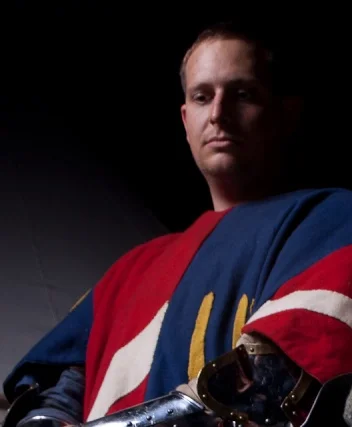
Kamil is also an active knight who confirmed his battle prowess by winning the Polish National Knights League in 2006 under the alias of Sir Robert Neville. He has studied medieval swordsmanship for over 15 years hence his novels are full of dynamic and realistic swordplay.

Being an avid re-enactor and a passionate history geek Kamil moved to France for two years to study documents unavailable in other countries that would add to the feel and realism of the book on multiple levels.

His first novel “Panowie z Pitchfork” was published in 2009 by a major publishing house Rebis. Receiving a warm welcome from Polish critics, readers and fellow writers, the first part of the adventures of the young and keen Sir Robert was soon followed by a sequel “Baron i Łotr”, published by another publishing house Znak, bringing closure to the major plot.

Currently Kamil lives in Warsaw with his family and is working on another series of historical novels focused around one of Poland’s most famous knights – Zawisza Czarny – and his not so famous yet equally interesting brothers.

For more information about the book please visit http://gentlemenofpitchfork.blogspot.com or http://facebook.com/gentlemenofpitchfork. You can contact Kamil at Gruca.Kamil@gmail.com.

If you want to learn more about how Kamil trains medieval swordsmanship please visit HAM-Historyczna-Akademia-Miecza on Facebook (Site in Polish), as well as http://draby.pl (Site in Polish).

About the Book
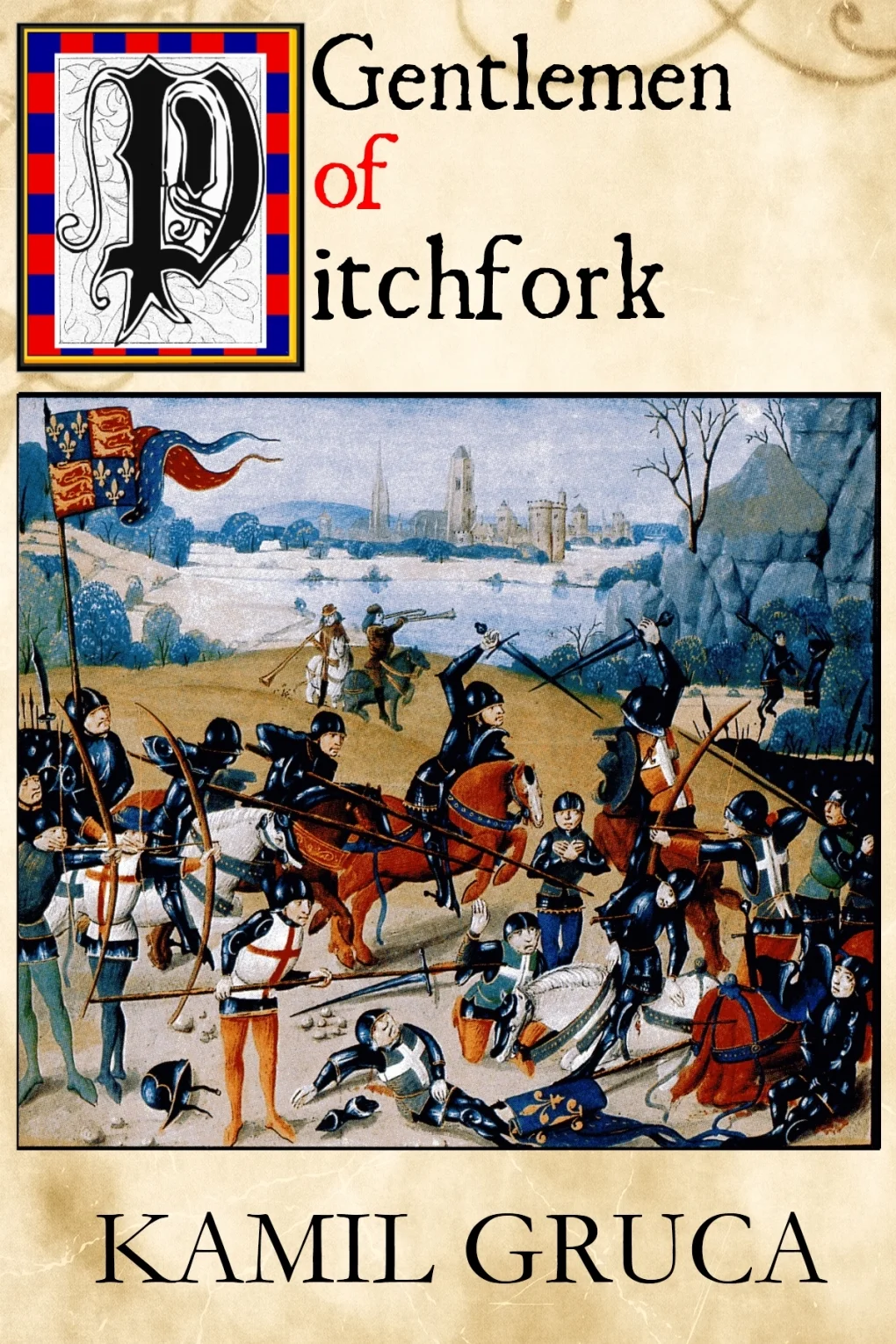
The year is 1415. France is weakened by the recently ended Civil War between the factions of Burgundians and Armagnacs. The young and belligerent King Henry V Lancaster decides to pay the French a neighbourly visit. With him – the flower of the English knighthood.

Among them – Sir Arthur, the Baron of Pitchfork, an ideal of all chivalric virtues – his uncle, Sir Ralph, a veteran soldier with a taste for women and bitter humour – and his cousin, Sir Robert, a young and romantic would-be scholar who will have his first taste of war, sieges, duels, betrayal and intrigue but also love and practical philosophy.

Together they ride as secret envoys of their King to meet Burgundian emissaries. But the Armagnacs’ spies keep their eyes open for any sign of treason on the part of their political opponents and three powerful French armies are gathering to cross King Henry’s way.


Publication Date: July 13, 2014
eBook; 258p
Translator: Pawel Brzosko

Excerpt:

In the growing darkness king Henry’s camp boiled with preparations for the attack. Retinues of John Holland and the Baron of Pitchfork took position along the stockade. The eastern part of the camp was obscured by smoke from the heavy bombards and handguns. Before the attack the gunners doubled the efforts to make way for the cramped men-at-arms and archers. The latter were frantically checking up arrow fletchings and putting strings on their yew and ash bowstaves. The soldiers were glancing upon the walls, nervously grasping their halberds, spetums, glaives* and partisans*. The King rode onto the back of the awaiting troops. His suite spread behind him. Mounted on the grand steed, he looked majestic. On the tabard he had arms quarterly: 1 and 4 azure three fleurs de lys or, 2 and 3 gules in pale three lions passant guardant or – the coat of arms of the reigning house.  Henry was sitting straight in his high-bowed saddle. He did not put the helmet on and his noble, proud face was clearly visible in the camp’s lights. A long scar ran across his right cheek – a strong accent in his aristocratic features. It was a souvenir from the battle of Shrewsbury. On the king’s right hand rode Edward, the Duke of York  - Henry’s uncle. On the king’s left hand rode Humfred, the Duke of Gloucester, the youngest son of Henry IV and the elderly, yet highly experienced king’s counsellor – Sir Thomas Erpingham. All of the king’s closest companions wore full plate armour and helmets.
            “Sons of England!” Henry’s words broke through the artillery’s turmoil. “The walls have been crumbled! Harfleur welcomes us! Please accept its hospitality tonight and abandon the comforts of your tents! I invite you to my home, Normandy, as you are now standing on its porch!” The king spoke louder and louder and the warriors’ eager cries echoed him. “You are at home here, you just need to drive away the intruders who invaded your household. Attack in the name of Saint George!”
            A collective cry rose in the air. Sir John Holland shut the visor of his basinet* and twirled his high-raised sword. The English knights, spearmen and archers poured out from behind the stockade. The latter were the most numerous and they were the first to start the bloody craft. The bombards went silent and the night’s sky sizzled only with arrows and bolts.
            Sir Robert ran, leaning slightly, with his visor closed. In front of him he could only see his father’s back covered with a plate. The baron of Pitchfork ran close to him, grasping with both hands his favourite weapon – a poleaxe* over 6 feet long.
            “Gregory, stay close!” Robert yelled to his panting squire. “And I will keep close to my cousin”, he thought.
            The first wave of the attackers reached the rubble. It once was a deep moat, naturally carved out by the river Leur. Holland and his knights started climbing down, accompanied by the clanking of armour. The spearmen clambered after them. The archers were stopping every once in a while trying to spot the defenders on the walls.
            When the first wave descended to the moat, they were showered with bolts and stones.
            “Halt!” cried Sir Ralph.
            The second wave caught up with Holland’s men, who had not yet managed to climb down the rubble.
            “Scatter and take cover until there’s place for us!” Sir Ralph shouted to the cramped knights.
            “Take cover and await the command!”, the Baron of Pitchfork echoed him in a deep voice.
            Robert pushed the squire toward the nearby pile of charred wooden stakes – the remnants of the fortifications. He crouched himself close by. Still not all of Holland’s men managed to get down to the moat. Robert saw his father and his cousin hiding behind a heap of stones. In the background he spotted crossbowmen looming on the walls. Although they were at a considerable distance, he would swore he heard an order in French. An instant later two of Arthur’s men fell to the ground. One, tossed with convulsions, was holding his stomach. The other lied unnaturally still. A trickle of blood flowed from under his kettle hat*.
            “Crossbowmen, behind you!” cried Sir Robert and pointed at the walls.
       Sir Ralph glanced towards the barbican and cursed. With growing anxiety Robert watched the first wave run through the moat. Why are they moving so slowly? He glanced back at the knights surrounding Arthur and Ralph. Just in time to see a bolt hitting the head of Sir Thomas Crawley crouching on the edge of the group. His father’s friend cocked his head and fell dead, face down. Robert felt suddenly that none of this is real. Fear made him stop thinking and start acting upon instincts. He only saw a couple archers come to aid the knights. They covered the French crossbowmen with arrows at an incredible pace. Finally he rose to his feet and rushed through the filled up moat. He did not hear the cries or commands. He just ran and didn’t even notice joining Sir John Holland’s men fighting in the crowd. The few images that he later remembered of the assault was the second wave of men-at-arms breaking through the torn ramparts to meet the wall of French halberds. His last memory was of a muffled clatter, when the mighty strike of a pole-arm knocked him, unconscious, to the ground.
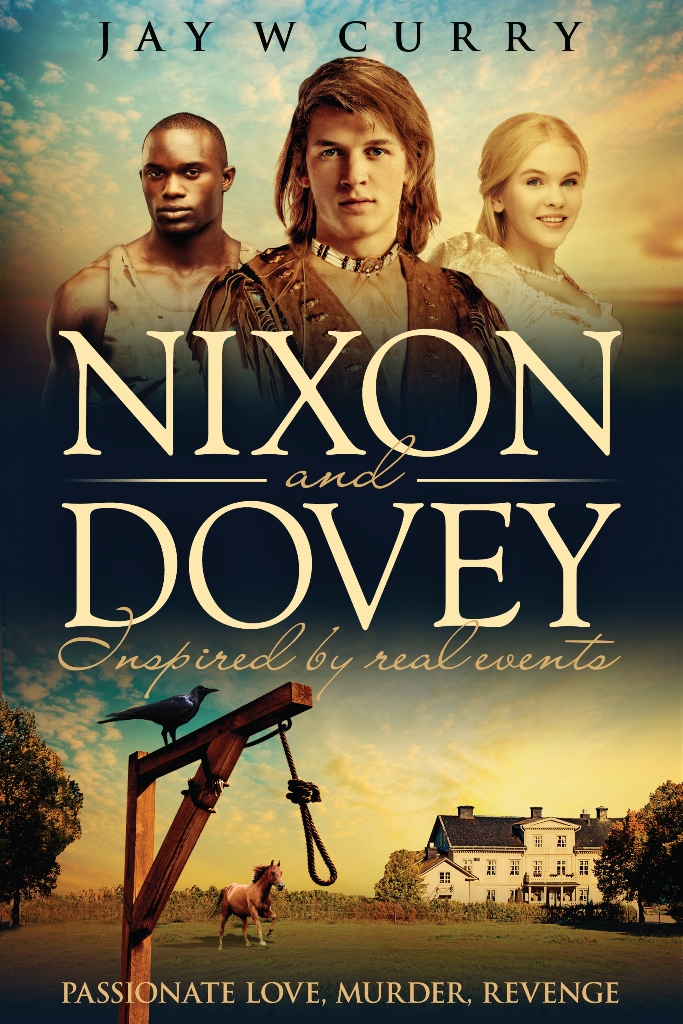
Why I Wrote Nixon and Dovey by Jay W. Curry

How would you react? You’re meandering around a state archives checking out holdings and looking for a long lost ancestor. You find an old memoir about the early history of the area where your ancestors lived. Curious, you find an article about the very ancestor you’d been so far unable to find.

Astonished, you read that your long lost ancestor was the most notorious, well-publicized murderer in early American history. “No!” you mumble. “This can’t be him.” 

That’s exactly what happened to me.  

At first I thought, “This is a different Nixon Curry.” I checked the 1800, 1810, and 1820 census?  There were none! Of course not, because my Nixon Curry was either too young or was in jail. It’s not like Nixon Curry was a common name. I had to know more.  I spent years searching libraries, archives, genealogical records across the country. This was long before the Internet. Then, a second clue.  While visiting my daughter, I drove over to the state archives of Kansas in Topeka and found a copy of Blum’s Centennial Almanac.  Among the witty quotes, seasonal weather forecasts, and practical household hints, were five unbelievable tales from America’s first hundred years.  The life story of Nixon Curry was one of the stories.

According to the story, the Currys were poor immigrants who settled in North Carolina. Nixon’s father was a Presbyterian minister “of irreproachable character.” At the age of six, Nixon met the love of his life, Lucy Gordon, whose parents were “among the wealthiest aristocracy of Carolina.” As the story goes, “… at seventeen, when Lucy’s relatives were endeavoring to force her into the arms of another, she fled with the lover of her childhood.” Pursued, Nixon Curry “shot his rival, a proud Gordon, dead … then escaped with his bride.” Blum claimed that Nixon became a robber out of necessity, but he never killed anyone except in self-defense.  When the Governor placed a $5,000 reward on Nixon’s head, he and Lucy disappeared.

Later, in territorial Arkansas “there came an emigrant calling himself John Hill who soon succeeded in acquiring universal popularity.” Hill was “sober, industrious, generous and hospitable” and was “repeatedly elected to the territorial legislature where he distinguished himself.” You guessed it!  In Arkansas territory Nixon becomes a well-liked, highly respected, popular citizen.

The first third of the article covering Nixon Curry’s antics in North Carolina seemed questionable: falling in love at age six, killing a member of the area’s wealthiest family.  It seemed a stretch.  But the second third was beyond believable. This young, talented youngster becomes a highly respected politician who is repeatedly elected to the territorial legislator and is wildly popular.  I questioned the accuracy of the article. Then I read the last third and quickly rejected the whole story as pure journalistic sensationalism.  

According to Blum, when a group of migrating North Carolinians recognized John Hill as Nixon Curry, Hill was taken into custody but his supporters convinced the sheriff to release him. The next night a posse catches him racing home and a member of the posse is killed by one of Nixon’s supporters. Hill escapes into the Ozark Mountains with his family and children. When Hill’s political party wins control of the newly formed State, the law does not pursue him any further. After living in western Arkansas for many years, his daughter’s engagement is announced. Nixon and his future son-in-law ride into town and enter the local bar to celebrate the engagement.  Drunk, John Hill gets into an argument with one of the patrons that soon turns into a fight. John Hill’s future son-in-law tries to pull John off his attacker and the three men tumble and John is stabbed with his own knife. He dies on the spot.

By now, one would expect the story to be over but Blum has more.  Hill’s daughter goes insane and her fiancé escapes to Texas. Four years later, Hill’s son takes his father’s rifle and heads to Texas.  Finally, the story ends in Scotland where Hill’s son gives a deathbed confession about who John Hill really was and how he revenged his father’s death.  

Having uncovered Blum’s Almanac, I spent the next five years taking trips to North Carolina, Arkansas, and Texas looking for newspaper articles, checking court records, etc. determined to find the truth. I developed a passion to write the true story.  

The truth? Nixon Curry’s actions and accomplishments were far more amazing than Blum’s story.  But Blum brought the story to national attention.  About twenty years after Nixon’s death, a reporter traveled to North Carolina to interview the aging members of Nixon’s family and their neighbors. Some truths were uncovered but more myth and legend developed. About every twenty years a reporter would uncover the growing legend and a new series of stories would be syndicated. Eventually the depression set in and the story faded into obscurity. 

Nixon Curry’s activities, trials, and escapes far exceeded Blum version.  Nixon probably did kill Ben Wilson, a promising heir to the Charlotte aristocracy, but the Wilson’s couldn’t prove it. Nixon was condemned to hang three times, his case went to the Supreme Court, and he did escape from every jail they locked him in. 
In Arkansas, John Hill’s exploits and political prominence far exceeded Blum’s claims. John Hill was, indeed, stabbed with his own knife in a barroom fight.  But the Scotland and revenge story still needs to be researched.  Blum’s Centennial Almanac sensationalized the story and made Nixon Curry an early American legend. But the true story of Nixon Curry’s life, his love for, not Lucy, but Dovey Caldwell, and his remarkable achievements have been lost. The true story far exceeds Blum’s wildest imagination and that story needs to be told. 

That’s why I wrote Nixon and Dovey!

Nixon and Dovey covers Nixon Curry’s life as a criminal in North Carolina and is the first of a three-part series to include a biography of the life of Nixon Curry.


Jay W Curry is a former Big-4 consulting partner, business coach, and award-winning author. When he is not coaching, fly-fishing or writing he facilitates a Vistage CEO roundtable in Houston. Jay has co-authored three internationally successful books and has won honors for both his short fiction and non-fiction work. When the heat of Texas summer arrives, Jay and his wife, Nancy, head to their Colorado home (http:/CurryBarn.com) or visit their three children and seven grandchildren. Nixon and Dovey is the first of a three-book passion to bring the 200-year-old story of Jay’s relative, Nixon Curry, back to light.

For more information, please visit Jay W. Curry’s website. You can also find him on FacebookTwitter, and LinkedIn.

About the Book

Before he met Dovey, it was just a heated feud. Now, in the backdrop of southern antebellum slavery, it’s a deadly game of passion, murder, and revenge.

Facts: In 1818 Nixon Curry became entangled in one of the most sensationalized murder/love stories in early American history. As a result, Nixon Curry became arguably the most notorious and widely publicized criminal in America’s first half century. His fame derived not from the brutality or number of his crimes but from the determination of the Charlotte aristocracy to hang him. His remarkable talents, undying love for Dovey Caldwell, and the outright audacity of his exploits made him an early American legend.

Story: Set in the antebellum south of North Carolina, Nixon Curry, a talented son of poor Scot-Irish immigrants, accepts a job at a racing stable. Soon, his riding skills rival those of his mentor, Ben Wilson. The fierce rivalry becomes confrontational when Ben frames Nixon’s childhood, slave friend, Cyrus, for the Caldwell plantation fire. When both Nixon and Ben win invitations to the 1816 Race of Champions, the stage is set for an explosive face-off. During pre-race festivities, the dashing, young Nixon meets the beautiful Dovey Caldwell, daughter of the state’s wealthiest and most influential senator. Finding Nixon unworthy of Dovey’s affection, Senator Caldwell betroths his daughter to Nixon’s nemesis, Ben. The announcement sets in motion a clash of cultures, talents, and passions leading to murder, mayhem, and revenge.

How far will Nixon go to have his love? What price is he willing to pay and what will be the consequences?

Publication Date: November 14, 2014
Smashwords
eBook: 369p

Featured Guest Post by Anna Belfrage: Characters & Time Travelling

Take a modern woman and throw her three hundred years back in time. Add a tall and handsome man with enough emotional baggage to load a bus or two. Stir. Throw in an explosive historical setting, complete with religious persecution and political instability. Stir some more. (You may want to add some salt – up to you) Spice things up with infected family relationships, temporary slavery, enforced emigration and the risks of colonising the American wilderness, and you end up with The Graham Saga, the story of Alex and Matthew, two people who should never have met – not when she was born three centuries after him.

I guess either you like the idea of time travelling or you don’t. Personally, I am fascinated by the concept, which is why Alex was sent tumbling through time to begin with. She is not always appropriately grateful – and this despite me compensating her with a man who loves her to death, has the most magnificent hazel eyes and a physique that would make most women salivate. Matthew, however, rarely goes through a day without sending of a grateful prayer to God, thanking him for this stubborn, enervating, brave and utterly wonderful wife. Obviously, Matthew has more sense than Alex does. 

I derive great pleasure from following Alex and Matthew through life, depicting a relationship that grows from strength to strength. Do they always agree? No way! There are definitely plenty of times when Alex is tempted to whack her old-fashioned man over the head with a skillet. And sometimes Matthew’s hands itch with the need to take her over his knees and spank her. Is there passion? Oh yes! Those two can definitely set a bed on fire. But there is also tenderness and loyalty, a certainty that they belong together, cannot quite function without each other, despite their individual strengths. Which is why, of course, where one goes there goes the other, no matter the risks involved.

In Whither Thou Goest, Matthew and Alex set off on a rescue mission to the Caribbean. Sounds nice, doesn’t it? That’s because you’re thinking of surf and sun, calypso on the beach and nice leisurely meals in the shade. The 17th century reality is somewhat different. What swimming Alex does, she does involuntarily – and in the middle of the night – as Matthew would never dream of allowing his woman to parade herself half naked on a beach in full daylight. Besides, they’re not on Barbados for a holiday. They’re there to save Charlie.

Charlie is Matthew’s nephew, a young man neither Matthew nor Alex have ever seen. After all, Matthew has a complex relationship with his brother (“Complex?” Alex snorts. “Luke Graham is the bastard who sold him as a slave, remember?”) and as far as Matthew goes, he would prefer never to see or hear from Luke again. But blood is thicker than water, and Matthew has far too many uncomfortable memories of his own time as an indentured servant to be able to leave Charlie to his fate. 

As to how Charlie has ended up on Barbados as a slave, well, it all comes down to politics. Charlie has many qualities, but shows distinct lack of judgement when he joins the Duke of Monmouth in his doomed rebellion against James II. The duke was executed. In fact, very, very many of the rebels were executed. Some, however, were sold as slaves in the West Indies. Like Charlie, who goes from being the pampered only son of a (very) rich man, to being the lowest of the low on a sugar plantation. 

Matthew’s and Alex’s expedition turns out very adventurous. Undercover spies, former pirates, abusive slave owners, murderous chess players – you name it, they meet it. Fortunately, Matthew knows how to handle a sword.  Alex can kick like a mule if she has to. And no matter what they face, they face it together, a formidable team that never, ever give up. 

As to how things turn out, I guess you will have to read the book!
**********************************************************
Anna Belfrage combines an exciting day-job as the CEO of a multinational listed group with her writing endeavours. When she isn’t writing a novel, she is probably working on a post or catching up on her reading. Other than work and writing, Anna finds time to bake (awesome carrot-cake) and drink copious amounts of tea, preferably with a chocolaty nibble on the side. And yes, now and then she is known to visit a gym as a consequence…

About the Author

I was raised abroad, on a pungent mix of Latin American culture, English history and Swedish traditions. As a result I’m multilingual and most of my reading is historical – both non-fiction and fiction.

I was always going to be a writer – or a historian, preferably both. Instead I ended up with a degree in Business and Finance, with very little time to spare for my most favourite pursuit. Still, one does as one must, and in between juggling a challenging career I raised my four children on a potent combination of invented stories, historical debates and masses of good food and homemade cakes. They seem to thrive … Nowadays I spend most of my spare time at my writing desk. The children are half grown, the house is at times eerily silent and I slip away into my imaginary world, with my imaginary characters. Every now and then the one and only man in my life pops his head in to ensure I’m still there. I like that – just as I like how he makes me laugh so often I’ll probably live to well over a hundred.

I was always going to be a writer. Now I am – I have achieved my dream.

For more information, please visit Anna Belfrage’s website and blog. You can also find her on FacebookTwitter, and Goodreads.

About the Book

Whither Thou Goest is the seventh book in Anna Belfrage’s series featuring time traveller Alexandra Lind and her seventeenth century husband, Matthew Graham.

In their rural home in the Colony of Maryland, Matthew and Alex Graham are still recovering from the awful events of the previous years when Luke Graham, Matthew’s estranged brother, asks them for a favour.

Alex has no problems whatsoever ignoring Luke’s sad plea for help. In her opinion Matthew’s brother is an evil excuse of a man who deserves whatever nasty stuff fate throws at him. Except, as Matthew points out, Luke is begging them to save his son – his misled Charlie, one of the Monmouth rebels – and can Charlie Graham be held responsible for his father’s ill deeds?

So off they go on yet another adventure, this time to the West Indies to find a young man neither of them knows but who faces imminent death on a sugar plantation, condemned to slavery for treason. The journey is hazardous and along the way Alex comes face to face with a most disturbing ghost from her previous life, a man she would much have preferred never to have met.

Time is running out for Charlie Graham, Matthew is haunted by reawakened memories of his days as an indentured servant, and then there’s the eerie Mr Brown, Charlie’s new owner, who will do anything to keep his secrets safe, anything at all.

Will Matthew deliver his nephew from imminent death? And will they ever make it back home?

Pages: 390 pages
Publisher: SilverWood Books (November 1, 2014)

Graham Saga Titles

Book One: A Rip in the Veil
Book Two: Like Chaff in the Wind
Book Three: The Prodigal Son
Book Four: A Newfound Land
Book Five: Serpents in the Garden
Book Six: Revenge & Retribution
Book Seven: Whither Thou Goest
Book Eight: To Catch a Falling Star (March 2015)

The Makings of a Hero by Kari Edgren


For the past few weeks, I’ve been thinking a lot about Lord Henry Fitzalan, my main hero in “The Goddess Born series”. In the process of dissecting his character, I thought it might be helpful to compile a short list of my most memorable romantic heroes in order to identify what makes them so special to me. The list was a whole lot shocking and a little embarrassing:

            Erik from Susan Kay’s Phantom

            Tyrion Lannister from JRR Martin’s Game of Thrones

            Mr. Rochester from Charlotte Bronte’s Jane Eyre

            Rhett Butler from Margaret Mitchell’s Gone With the Wind

In full disclosure, I appreciate a gorgeous man as much as the next woman. However, these are the characters that endured in my thoughts long after the book went back on the shelf. Somewhat concerned about this list, I sent several friends two questions: Who do you think are the best/sexiest heroes ever created? Who are the characters you could fall in love with? Here are some of the men that made the list:

Mr. Darcy, Odysseus, Edward Cullen, Atticus, Noah Calhoun, Legolas, Ren and Kishan, James Bond, Beast, Samwise Gamgee, Neville Longbottom, and Luke Brandon.

My first thought was, “Well, there’s no accounting for taste.” Especially my own—three of my heroes are considered ugly by most standards. Tyrion Lannister is a dwarf who loses part of his nose in battle. Erik (aka The Phantom of the Opera) doesn’t even have a nose and lives in the basement. While debating the need for immediate therapy, I decided to get out the scalpel for some serious character dissections. I wanted to know what makes these men special to me when other so-called “heroes” are about as memorable as a warm glass of milk. Or, in other words, what makes some men jump off the page and under my skin, while others stay precisely where they are. During this process, I stumbled on six desirable traits shared by many of these characters, regardless of physical beauty. I call these traits The Makings of a Hero.

For my purposes, I have focused primarily on the Phantom, Tyrion Lannister, Mr. Rochester, and the Beast (a favorite of my teenage daughter).

1. Emotional baggage

My hero may not be handsome, but he’s handsomely damaged. The right amount of trauma is, for some reason or another, sublimely attractive. This baggage can be in the form of childhood distress and physical disfigurement (the Phantom and Tyrion), a deep secret (Mr. Rochester), or a single event that irrevocably changed the course of his life (the Beast). It can even be an actual piece of luggage, so long as it’s filled with serious pain and torment.

2. They’re ruthless, yet kind

To achieve their ends, the men on my list are willing to commit all manner of sin. They kidnap, manipulate, steal, lie, cheat and kill. In other characters, the same actions are considered unforgivable. So why do these men get away with it? From what I can figure, it’s all in the intent. They do it for preservation of self and others, for love, and for redemption. Even more, underneath their ruthlessness is a heart of pure gold.

3. They’re so smart it’s annoying

There’s not a dull tool to be found in this shed. Each of my heroes has intelligence and wit aplenty, and for me there’s something uber sexy about a man who utilizes both to either hold up his end of a conversation or win a battle without flexing a muscle. Tyrion’s verbal grace makes it easy to forget that he has to waddle from one place to the next. Mr. Rochester’s extensive travels and quest for knowledge is downright sexy when coupled with his dark moods and brooding silences. The Phantom is so freaking intelligent, he jumps straight to godlike status.

4. They’re built

And by “built,” I mean like a bear, not a birdhouse. Not just because muscle is sexy, but because it represents physical strength, and for me, a hero has to be able to protect himself and those he loves. However, if he lacks physical strength, he can easily compensate (or complement) with:

5. Power

Power comes in many forms. It may be in the form of talent and genius, as with the Phantom. Or it may manifest as family influence, as with Tyrion, whose diminutive size is more than compensated by the number of gold cloaks, wildlings, and sell-swords at the ready. For some, like the Beast, their power is a direct subset of their physical strength, resulting in a dearth of bear-men to compete for the title of “Belle’s Most Powerful Suitor.”

6. Are hopelessly devoted to that one special girl

By far, the perfect hero’s most attractive quality is his devotion to his lady. Why? Because we’re ladies. And we like men who like us back. These men may be villains, outcasts, and emotionally damaged, but more than anything, they desperately want to love, and be loved in return. 

So that’s my list, the six qualities that compel me to champion the underdog, whether he’s four feet tall, horribly deformed, or a literal dog. It is also these qualities that make me wonder if I have relied too much on my own hero’s physical beauty as a character shortcut. For a worthwhile experiment, try peeling the ‘skin’ from your favorite hero. Has his character been hobbled, or is there enough left for him to stand on?


Kari Edgren did not dream of becoming a writer. Instead, she dreamed of everything else and was often made to stay inside during kindergarten recess to practice her letters. Despite doting parents and a decent school system, Ms. Edgren managed to make it through elementary school having completed only one book cover to cover – The Box Car Children, which she read approximately forty-seven times. Things improved during high school, but not until she read Gabrielle Garcia Marquez’s One Hundred Years of Solitude in college, did she truly understand the power of a book.

Ms. Edgren aspires to be a Vulcan, a world-acclaimed opera singer, and two inches taller. She resides in the Pacific NW where she spends a great deal of time torturing her husband and children with strange food and random historical facts. Ms. Edgren hasn’t stopped dreaming, but has finally mastered her letters enough to put the stories on paper.

About the Book

Selah Kilbrid may descend from the goddess Brigid, but her heart beats—and breaks—the same as any human. Yet enduring the scorn of London's most noble lords and ladies is a small price to pay for a chance at true happiness. Selah would endure much more for love, and her betrothed, Lord Henry Fitzalan, is prepared to challenge anyone foolish enough to stand in their way—even another goddess born.

But when a captivating young gentleman draws Selah into a world shadowed by secrets, she is forced to confront her darkest fears. What if some differences are too great to overcome and a future with Henry is doomed from the start?

With these doubts threatening her impending marriage and the very last of Brigid's fire draining from her soul, a violent attack on an innocent child pushes Selah to the very edge of her power. She must find a way to cross into the Otherworld and regain her strength—or forfeit the streets of London to death and disease.

10 Unanswered Questions About the JFK Assassination by R.G. Belsky

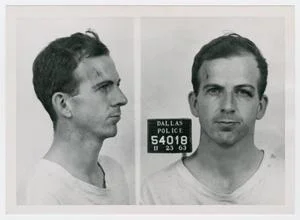
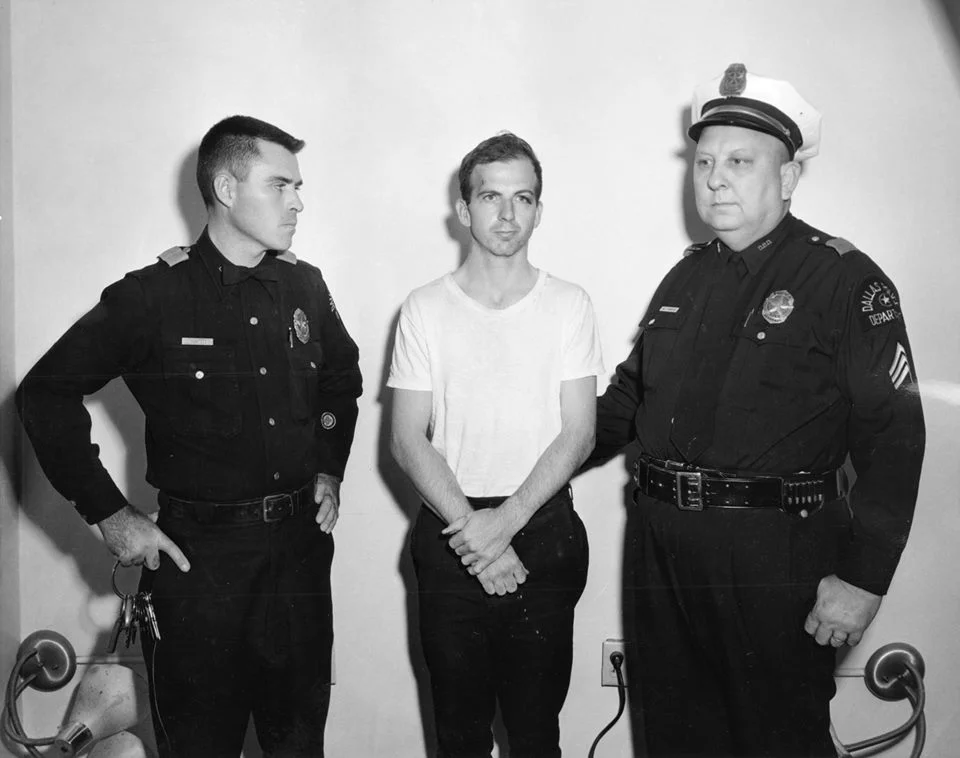
When the Warren Commission issued its final report on the assassination of President John F. Kennedy, it was supposed to answer all of the questions Americans had about what happened on that tragic day in Dallas. Today we are more skeptical than ever that we know the whole truth. And even if you accept the Warren Commission’s basic premise that Oswald killed JFK on his own (a majority of American still believe it was some sort of conspiracy). There are many unanswered questions about what happened on November 22, 1963.

Here are some of them:

WHY DID OSWALD HAVE ONLY FOUR BULLETS?

Everyone knows there were three spent cartridges found next to the rifle on the sixth floor of the Texas Book Depository. Another bullet was in the chamber of the rifle. But no other ammunition was ever found. Not at the scene, not on Oswald, not in his belongings, not at his home or anywhere else. There was only one or two stores in the Dallas area that sold ammunition for that particular rifle, and no evidence Oswald had ever bought any. So why would Oswald go off to shoot the President with only four bullets for his weapon?

WHY DID SLAIN POLICE OFFICER J.D. TIPPIT STOP OSWALD?

The Warren Commission theorized that it was because Oswald fit the description of a suspect seen fleeing the JFK assassination scene. Okay, that sort of makes sense when you first hear it. Except – upon examination of the facts – it makes no sense at all. The police description broadcast that day was for an: “Unknown white male, approximately 30, 165 pounds, slender build…no further information or description at this time.” That general description clearly matched much of the male population of Dallas. (and didn’t exactly match Oswald). So why did Tippit – seeing a man simply walking down a street in the middle of the day miles from the assassination site – decide to stop him as a possible suspect prior to their deadly encounter?

WHERE DID THE POLICE DESCRIPTION OF A JFK SUSPECT COME FROM?

No one really knows how the police description – vague as it was – ever originated. Many believe it was based on a witness, Howard Brennan, who claimed to have seen a man in the sixth floor window at the time of the assassination. But other accounts say the description came from an unidentified source who said he saw an unidentified man running from the Book Depository after the shots were fired. No official basis for the police broadcast of that early description was ever confirmed.

WAS OSWALD EVEN ON THE 6TH FLOOR AT THE TIME OF THE SHOOTING?

There are no confirmed sightings of Oswald on the 6th floor when JFK was shot. There are, however, a number of people who reported seeing Oswald in other parts of the building, including eating n the lunchroom, shortly before the assassination. Some of these Oswald sightings were as late as 12:25 p.m. , just five minutes before the shots rang out. Making it even more mysterious was that the presidential motorcade was running at least five minutes behind schedule. All of this raises real questions about why Oswald wouldn’t have been in the 6th floor sniper’s perch with the rifle waiting for the motorcade to pass by.

WHAT WAS OSWALD’S MOTIVE?

Why would Lee Harvey Oswald want to kill President Kennedy? If he was indeed a Marxist sympathizer as he proclaimed, Kennedy was an unlikely target. JFK was a liberal president who had been working – against the advice of many hardliners in the government – to end the cold war with the Soviet Union.  People who knew Oswald said he had expressed admiration for the young President. The most likely scenario for a motive has always been that Oswald was just an angry little man who wanted to become famous – and thought killing the President was the way to do it. But, if that were true, why did he flee, why did he deny it when he was arrested? If it was all about his ego, wouldn’t he have proclaimed it loudly to the world? To this day, no one has ever come up with a plausible motive why Oswald might have wanted President Kennedy dead.

WHY DID OSWALD GO HOME TO GET A GUN?

After the assassination, Oswald took a taxi and bus back to the rooming house where he was staying. When he got there, he took a handgun from his room and then left for what would be his encounter with Police Officer J.D. Tippit and subsequent arrest in a movie theater. But, if he had really planned to shoot the President that day, why wouldn’t he have taken the handgun with him when he left for work? Instead, it seems as if something unexpected had happened that made Oswald think he needed to go back to where he was living for the gun.

DID A POLICE CAR STOP IN FRONT OF OSWALD’S HOUSE?

Oswald’s landlady made a troublesome claim – which some people give credit to and others are more skeptical of – that a Dallas police car stopped in front of Oswald’s rooming house, honked several times and then pulled away just after 1 p.m. This was about an hour before Oswald’s name would even emerge in the JFK assassination. The Dallas police department said there were no reports of police cars in the area at that time.

HOW DID JACK RUBY GET INTO THE POLICE STATION TO KILL OSWALD?

Sure, Ruby was a friend of cops and had been in the stationhouse earlier in the weekend while Oswald was in custody. But on the morning of November 24, Ruby was running errands with his dogs in the car at the time Oswald was originally scheduled to be transferred. And then somehow he wound up in the basement at exactly the right time to pull the trigger. Many have theories about Ruby’s movements and motives on that day, but no real answers.

DID OSWALD KNOW RUBY?

Some people who worked at Jack Ruby’s strip club made claims – none substantiated – that they saw Oswald there as a patron. There was also speculation that both men had known the same underworld figures. And some have even speculated that there seemed to be a look of recognition on Oswald’s face in the basement of the Dallas police station seconds before Ruby lunged out of the crowd and shot him. But no actual relationship has ever been established between the two men until Ruby silenced Oswald forever with a single gunshot to the stomach.

WHY DIDN’T EARL WARREN TAKE RUBY BACK TO WASHINGTON TO TESTIFY?

When Chief Justice Earl Warren and other members of the Warren Commission went To Dallas to interview Jack Ruby in prison, Ruby pleaded with Warren to take him back to Washington to testify, saying his life was in danger in Dallas and “I want to tell the truth, and I can’t tell it here.” Warren refused and Ruby died a few years later, taking his secrets to the grave with him. And leaving us with so many unanswered questions….


R.G. BELSKY, a journalist and author based in New York City, is the former managing editor of news for NBCNews.com. Prior to joining NBC in 2008, he was the managing editor for the New York Daily News, the news editor for Star Magazine, and the metropolitan editor of the New York Post. He is the author of the Gil Malloy mystery series, which began with The Kennedy Connection.

About the Book

Half a century after the assassination of President John F. Kennedy, someone is killing people on the streets of New York City and leaving behind a bizarre calling card of that tragic day in Dallas.
In this bold and entertaining thriller from a true media insider, discredited newspaper reporter Gil Malloy breaks the story of the link between seemingly unconnected murders—a Kennedy half dollar coin found at each of the crime scenes. At the same time, a man emerges who claims to be the secret son of Lee Harvey Oswald and says he has new evidence that Oswald was innocent of the JFK killing.

Malloy, who has fallen from grace at the New York Daily News and sees this as an opportunity to redeem himself as an ace reporter, is certain there is a connection between the Oswald revelations and the NYC murders, but first he has to get someone to believe him. Convinced that the answers go all the way back to the JFK assassination more than fifty years ago, Malloy soon uncovers long-buried secrets that put his own life in danger from powerful forces who fear he’s getting too close to the truth.

Two tales of suspense fuse into an edge-of-your-seat thriller as Malloy races to stop the killer—before it’s too late.

Series: The Gil Malloy Series
Paperback: 368 pages
Publisher: Atria Books (August 12, 2014)

Instant Tears by R.V. Doon

Choosing a book to read is a personal experience. There are numerous reasons which guide our choices and one of them is mood. For the majority of us, the primary goal is to enter book world and escape. Some of us stage our reading areas: warm blanket, soft pillow, comfy slippers, and hot chocolate. 

Entering book world is like going on a vacation with a map. Sometimes we gripe out loud when a character doesn’t react as we want. We even scream at them out of concern (unless we’re in public). The point is readers interact with their book, but how many of us expect to break down in “instant tears”?

I’m tough. Critical care nurses learn to train their emotions for obvious reasons. While working with acutely ill patients I might be a wreck on the inside, but on the outside there is no sign of my inner turmoil. So when a book strips away years of training and makes me sob, I’m more than impressed; I’m grateful. 

Let me be clear. I’m not talking about misty vision, sniffles, or the escape of a lone tear or two. I’m talking ‘sobbing’ as in noisy choking sounds. Not sure what I’m talking about? 

One minute I’m calm and then this happens. The story hasn’t grabbed me by the throat; it’s got one hand on my heart and the other inside my brain. Knots tighten in my stomach and then they squeeze my gut like a python would. I’m clutched in a vise of chemical hormones, racing through my bloodstream. And when the tension is gripping, my breathing changes because I’m overwhelmed by an emotional tide. And then low and behold a river of tears exits. This is a golden stellar moment for a reader and proof positive they’re immersed in book world. Best of all, the author has won me over as a lifetime fan. 

And as disgusting as instant tears makes me look, red-nosed, swollen eyes, and a bit embarrassed, I’m happy. When the tears end and I reread the scene, I find myself savoring each word. Suffice to say, instant tears are rare, so treasure them.   

As an author, I know not every book can generate instant tears. Authors can’t schedule them to show up on demand. It’s a reader’s personal experience to a story and its characters, or so I thought until I wrote a certain scene in The War Nurse. I was overwhelmed, broken by a wave of similar emotions, but I’ll never know if that scene gifts a reader with instant tears. I can only hope.

Some books surprise us, don’t they? 

My husband got the book, Matterhorn by Karl Marlantes as a gift. I’d picked it up several times because of its page count, but I didn’t want to upset him by reading it first. I wasn’t its target audience, because Matterhorn is about a platoon of Marines in Vietnam. I read it in what can only be described as a ‘gorge fest.’ I mean I felt sick from lack of sleep, but man was it worth the slog.

Matterhorn nearly drowned me in instant tears. I honestly didn’t see them coming. Nor did I expect any when I picked up the book. My emotional tempest came out of the blue, like a rainbow after a killer thunderstorm. I curled up on the sofa and cried like a baby.  

Have you experienced instant tears? Please share your moments in the comment section about the scenes that were so powerful they took your breath away, and left you with a sense of gratitude.

About the Author

R.V. Doon is a bookie! Seriously, she’s an avid reader who also loves to write. She writes across genres, but confesses she’s partial to historical fiction and medical thrillers. She’s addicted to black coffee, milk chocolate, and raspberries. When she’s not reading or writing, she’s learning to sail. Doon reports after a career of implementing doctor’s orders, she’s having trouble being a deck hand and following the captain’s orders. Doon lives in Mobile, Alabama, a haunted and historical city, with her husband and two dogs.

For more information please visit R.V. Doon’s website. You can also find her on FacebookTwitterGoogle+Goodreads, and Amazon.

Subscribe to R.V. Doon’s Newsletter for news & updates.

About the Book

This historical thriller begins on the eve of WWII in the Philippines. Katarina Stahl an American Red Cross nurse, is the happiest she’s ever been in her life. She’s making love and playing music with Jack Gallagher in an idyllic paradise. Their medical mission is over, the boat tickets to home are purchased, and all that remains is to fly a sick child to the hospital at Clark Air Field.
She never expected to witness bombs falling out of planes. In those terrifying first minutes, she frees a German doctor accused of spying and saves his life. She turns to nursing the injured, unaware she’s unleashed an obsession more dangerous to her and those she loves, than the war she’s trapped in.
Doctor von Wettin, the man she freed, finds Katarina pregnant and starving in a POW camp after the surrender. He begs her to nurse his bed-ridden wife. She knows other Americans will despise her, but wants her baby to live after surviving Bataan. Their uneasy alliance is destroyed when she discovers he exploited Red Cross diplomatic channels and contacts at the German embassy to wire money to her parents. His benevolent mask slips when he informs her that her brothers and parents are interned on Ellis Island.

When the Stahl family is swept up in the FBI’s dragnet, Josep Stahl believes it’s all a misunderstanding. He’s interrogated like a criminal at the city jail, a military camp, Ellis Island, and then the civilian internment camps in Texas. His anger and pride blind him. One by one in this painful family drama, his wife and sons join him behind barbed wire in. There they face ostracism, segregation, and, most frightening, repatriation.

Katarina begins an even more terrifying journey into depraved darkness as Manila descends into occupation and chaos. The doctor threatens everyone she loves: infant son, POW husband, and Filipino friends. She’ll do anything to protect them; she lies, steals, and smuggles. As the war turns against the Japanese, they withhold the doctor’s wife’s life-saving medications until he finds a hidden radio inside the civilian internment camp. If Katarina refuses to help him, her son pays the price.

Survival has corrupted Katarina; but she’s not about to become his camp rat. After years of hell, she’s earned her nickname, war nurse. Doctor von Wettin is about to find out what that means.

Publication Date: January 14, 2014
BRY Publishing
Formats: eBook, Paperback
Pages: 382
Genre: Historical Fiction

Read an excerpt from Chapter One