The Spymaster Trilogy and the Crevices of History by C.W. Gortner

With THE TUDOR VENDETTA, the third book in the Elizabeth I Spymaster series (Elizabeth’s Spymaster in the UK), I have concluded the arc of an idea that was first conceived over fourteen years ago. I’ve had many people ask me: Why this series? Why set a trilogy in the Tudor era with a fictional character, rather than an actual personage, as your protagonist? My other historical novels are rooted in historical fact, narrated by women who actually lived, so this series seemed an unusual departure for me. Now, with the third book in the Spymaster series published, I think it’s an excellent a time to explain.

My fascination with the Tudors stems from childhood. When I was growing up in Spain, the BBC aired “The Six Wives of Henry VIII” and “Elizabeth R”. I sat glued to the television set like so many others, mesmerized by this most sumptuous and dangerous of historical periods. Later on in my early twenties, my first attempt at an historical novel was an epic about Anne Boleyn; I admired her as arguably the most compelling of Henry’s wives and an early feminist, who eschewed the established pattern for women to seize the greatest prize. While researching and writing that book, which took over six years, I came to realize that not only did Elizabeth resemble her mother in her dark eyes and slim build, her beautiful hands, and undeniable charisma, she too was an early feminist, refusing to marry so she could wield power alone, in an era when an unwed woman who was not a nun or widow, much less a queen, was rare. Though Anne was beheaded when her daughter was only three years old, a trauma which scarred Elizabeth for life, the ill-fated queen passed more than her genetics to her daughter: she somehow imbued in Elizabeth a determination to overcome every odd. Ironically, Anne’s inability to bear the son that might have saved her would fuel Elizabeth’s later infamous marriage game. It is beyond doubt that Elizabeth learned early in life that surrendering herself to a husband could not only be dangerous, but potentially fatal.

I’d hoped to see my Anne Boleyn book published and follow it with a sequel about Elizabeth. It was my first manuscript to attract literary representation; strangely enough, it was also the one that earned me a fan in my editor, Charles Spicer of St Martin’s Press. He was unable to acquire my Anne Boleyn book due to diminished interest in historical fiction at the time, but years later, he would enthusiastically buy the Spymaster trilogy—which in of itself goes to show how first impressions in publishing can yield rewards. My struggle to become published would take another thirteen years and several manuscripts, all of which save my Anne Boleyn novel are now in print. 

By the time I returned to my lifelong interest in the Tudors, the market climate was propitious; historical fiction was experiencing a boon. However, Elizabeth herself had had reams of fiction and nonfiction devoted to her, and I wondered what I could possibly add to the deluge that would feel fresh. I’d also become enthralled by her earlier life, especially the tumultuous years following her father Henry VIII’s death, when, buffeted by changes of regime at court and her siblings’ disparate reigns, she charted a course of survival that would serve as a blueprint for her own unprecedented time on the throne. I realized that it was here, in the very crevices of history, via seemingly isolated events that nevertheless exerted significant impact, lay stories waiting to be told. The crisis following Edward VI’s death thus became the basis for the first book in the series, The Tudor Secret. This paved the way for Mary Tudor’s accession and the terrors of her rule portrayed in The Tudor Conspiracy. And now, in The Tudor Vendetta, I set out to explore the first months of Elizabeth’s reign, when her grip on her crown was still tenuous, and she had her own potentially fatal secret to protect.
Though the Spymaster Trilogy, I’ve found a way to indulge my fascination with this most enigmatic sovereign without re-telling an already familiar story. But I also needed a witness; someone close to her but not bound to her household, free to move between her privileged existence and the seething underworld behind the tapestries. The idea to create Brendan Prescott, a foundling squire to Robert Dudley, who has a secret past he’s initially unaware of, seemed perfect—in Brendan, I found the ideal foil, a devoted, if somewhat unwilling, spy who runs afoul of Elizabeth’s intimate, Lord Robert, and finds himself thrust into the maelstrom of plots and counterplots that will bring her to the throne. Brendan is her one true friend, who grows to understand both her strength and weakness. He too is flawed, fighting to find a place for himself in a world where he feels he doesn’t belong. Through him, I had the opportunity to present a more nuanced depiction of Elizabeth’s contradictory nature, which often drove her advisors to distraction, yet was as much a part of her appeal as her generosity or wit. I also found myself exploring byways that a conventional approach would not have allowed: the squalid back-alleys and brothels of London, a winter crossing on foot of the frozen Thames, daring escapes from palace leads and sword-fights on London Bridge, as well as a multitude of supporting characters, intermixed with vibrant, real-life personalities, each of whom showed one face to the world while concealing another. In particular, I relished depicting Elizabeth’s controversial relationship with Lord Robert from the perspective of an outsider, who recognizes Dudley’s predatory ambition yet remains powerless to thwart it. Too often, Elizabeth and Robert are portrayed as star-crossed lovers; the truth is more ambiguous, fraught with peril. This very complexity is what makes their relationship so interesting to me.

I am very proud of the Spymaster books. These are adventure stories, first and foremost, with mysteries at their heart, depicting actual events with a twist—set on the stage of some of the most dramatic yet neglected episodes in Elizabeth’s struggle to reach her throne, as seen through the eyes of one young man who yearns to do the right thing, and sometimes fails.

I hope one day to return to Brendan and Elizabeth’s world. For now, I sincerely hope you enjoy their journey as much as I’ve enjoyed writing it. To find out more about the Spymaster Trilogy and my other books, please visit me at: www.cwgortner.com

About the Author

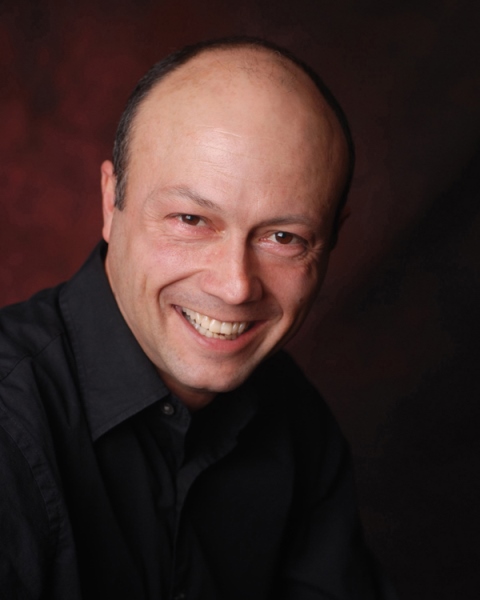
C.W. GORTNER holds an MFA in Writing with an emphasis in Renaissance Studies from the New College of California, as well as an AA from the Fashion Institute of Design and Merchandising in San Francisco.

After an eleven year-long career in fashion, during which he worked as a vintage retail buyer, freelance publicist, and fashion show coordinator, C.W. devoted the next twelve years to the public health sector. In 2012, he became a full-time writer following the international success of his novels.

In his extensive travels to research his books, he has danced a galliard at Hampton Court, learned about organic gardening at Chenoceaux, and spent a chilly night in a ruined Spanish castle. His books have garnered widespread acclaim and been translated into twenty-one languages to date, with over 400,000 copies sold. A sought-after public speaker. C.W. has given keynote addresses at writer conferences in the US and abroad. He is also a dedicated advocate for animal rights, in particular companion animal rescue to reduce shelter overcrowding.

C.W. recently completed his fourth novel for Ballantine Books, about Lucrezia Borgia; the third novel in his Tudor Spymaster series for St Martin’s Press; and a new novel about the dramatic, glamorous life of Coco Chanel, scheduled for lead title publication by William Morrow, Harper Collins, in the spring of 2015.

Half-Spanish by birth and raised in southern Spain, C.W. now lives in Northern California with his partner and two very spoiled rescue cats.

For more information please visit C.W. Gortner’s website and blog. You can also connect with him on Facebook, Twitter, Goodreads, Pinterest, and YouTube.

About the Book
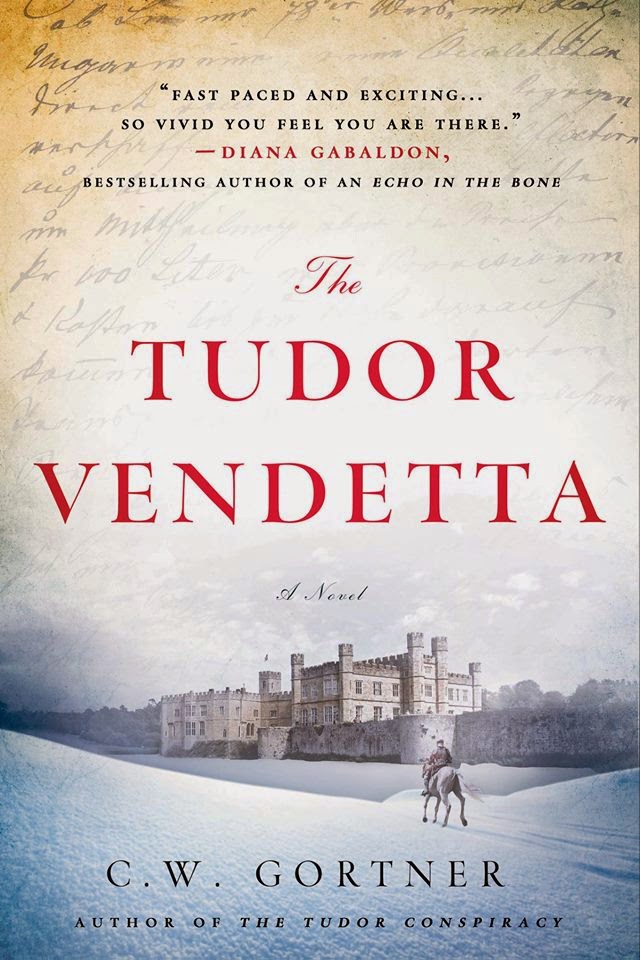
Winter, 1558: Elizabeth I has ascended the throne but the first days of her reign are already fraught with turmoil, the kingdom weakened by strife and her ability to rule uncertain.

Summoned from exile abroad at the new queen’s behest, Brendan Prescott arrives in London to face his shattered past. He soon finds himself pitted in deadly rivalry with his life-long foe, Robert Dudley, but when a poison attempt overshadows the queen’s coronation, Elizabeth privately dispatches Brendan on a far more dangerous assignation: to find her favored lady-in-waiting, Lady Parry, who has vanished in Yorkshire.

Upon his arrival at the crumbling sea-side manor that may hold the key to Lady Parry’s disappearance, he encounters a strange, impoverished family beset by grief, as well as mounting evidence that they hide a secret from him. The mystery surrounding Lady Parry deepens as Brendan begins to realize there is far more going on at the manor than meets the eye, but the closer he gets to the heart of the mystery, the more he becomes the quarry of an elusive stranger with a vendetta— one that could expose both his own buried identity and a long-hidden revelation that will bring about Elizabeth’s doom.

From the intrigue-laden passages of Whitehall to a foreboding Catholic manor and the prisons of the Tower, Brendan must risk everything to unravel a vendetta that strikes at the very core of his world, including his loyalty to his queen.

The Tudor Vendetta is the third book in Gortner’s Elizabeth I Spymaster Trilogy.

Series: The Elizabeth I Spymaster Chronicles (Book 3)
Paperback: 304 pages
Publisher: St. Martin's Griffin (October 21, 2014)
Fiction Conventions of Reality by Alison Neuman

The genre of fiction can offer the writer a choice of locations and settings. When writing Ice Rose - A Young Adult Spy Novel, I had to research to ensure the reader was not transported out of the world of story. There were two areas in which I had limited knowledge and that required practicalities and realities: cruise ships and trained dogs. While I live in Alberta, Canada, a distance from the ocean, research on the design and architecture of a ship was easily accessed. I needed to understand and know routes and distance relating to time. My cruise could not depart from Vancouver and arrive in California in an unreasonable amount of time. Tours offered by cruise companies provided information. Reality provided the details as to speed, distance, and travel itineraries. 

I am close to finishing the second draft of my new YA novel, “Hindsight”. It is science fiction with a romantic twist. Olivia falls for David who has a secret that cannot be exposed to the world. A secret, when revealed, that threatens not only her life but also her family. Will Olivia be able to accept his secret and evade the danger trying to extinguish everything David cares about? This book’s setting is Edmonton, Alberta and each place the characters explore is linked to authentic places. Locations provided opportunities to explore Edmonton's river valley, residential neighbourhoods, and transit system. In one scene, the characters are fatally injured and the editor pondered if such injuries are plausible. An EMT had suggested adding details to improve the possibility of severe injury. Such a morbid research topic but again, to be believable, the convention of reality requires research.

About the Author

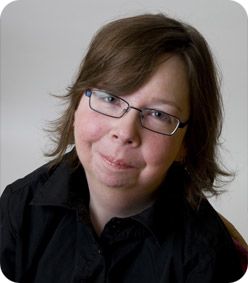
No one ever expected Alison Neuman to live past the age of three, let alone become a successful author and performer.  

Now, an inspirational figure, Neuman has never let the painful disease she suffers with, dermatomyositis, dictate what she can and cannot achieve in her life.

An award-winning singer, Neuman has even done dance performances with the iDance and Cripsie Groups in her native Edmonton, Alberta, Canadian hometown.  Along the way, she has become a college graduate, earning a degree in creative writing from MacEwen College, despite being told she'd never amount to anything.

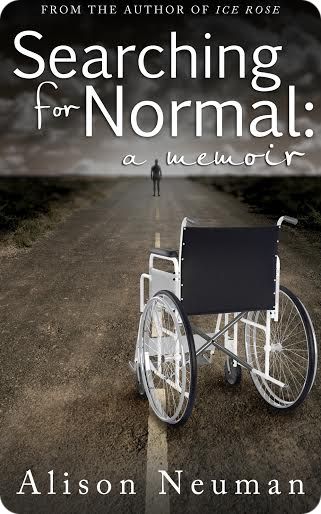
Searching for Normal is her memoir and anthem to anyone who is suffering through sickness or obstacles that seem too impossible to overcome.

"You can and will achieve life's greatest dreams," Neuman says, "if you take it one step at a time; even if that step is while you navigate via a wheelchair."

You can reach Alison via: Website | Facebook | Twitter

About the Book

They thought she was going to die. At three-and-a-half years old, bed-ridden shivering in a cold sweat, Alison Neuman's tiny fingers wrap around her mother's for strength.  But even at this age, Alison is determined to beat the odds.  

When years of hospitalization robs her of most of her childhood, she finds joy.

When children and adults avoid her like the plague, she finds friendship.

When she cracks her skull in a playground accident, when her math teacher holds her back a grade, and when she is mistreated by the medical professionals that were entrusted to help her, she finds strength.

And even when it becomes clear that the painful disease she has, dermatomyositis, will leave her wheel-chair bound for the rest of her life, Alison does not let it defeat her.

She will conquer it, she will achieve her greatest dreams and along her journey to finding normal,  she will find joy, humor, passion and music.

In this inspirational true story, Alison Neuman tells of her daily mission to triumph over pain,  to prove wrong the naysayers that say she "cannot", and become a reminder to us all that can't is only a mindset and happiness is a choice.

Q & A with author Sally Wiener Grotta

You have a very distinguished writing portfolio, what inspired you to become a writer?

I don’t remember a time when I didn't love stories – both listening and creating.  I wouldn't go to bed unless my mother told me a story first. Often, I would fall asleep in the middle, and continue the tale in my dreams.

When I was about 12 years old, my older sister gave me a notebook and told me that I should keep all my poems and stories in one place. I filled up that notebook rather quickly, and she bought me another.  Over the years, the poetry got better, the stories more intricate and fully developed, and the notebooks piled up though I’m not sure where they all are at this point.

I began writing professionally a couple of decades ago, first in dual bylines with my husband Daniel Grotta (who was very well established as an author, critic and journalist long before we met). Then little by little, on my own. With each article, review, feature, column and eventually book, I honed my skills, thanks to some great editors. But that was all non-fiction. My stories remained within me, chomping to get out, waiting for me to be ready to write them.

Once I started writing fiction, I couldn't stop. What inspires me? Questions I have about the human condition. People I have known. Histories I have read, places I have visited, dreams I remember, a future I hope for or dread. In other words, everything is grist for my stories. I absorb all I see, hear and feel, digest it fully, and let it feed me.

On the days I don’t write, I feel that a part of me has shriveled up and become lost. When I write, I am fully alive and never alone.

Your novels have characters that really dive into the human character and psyche so effortlessly. Your latest, The Winter Boy, is no exception. What or who inspired them?

Thank you for that very nice compliment, Michelle. The characters in my novels and short stories are very real to me. They come to me not as ideas but as flesh-and-blood individuals with very human foibles and dreams. They have glaring faults which may prove to be tragic or opportunities for growth – or both. But they also have hearts that feel deeply; they can choose to be kind, generous or angry and hate-filled – or, again, both.

I feel that characters that are pasted into a story to fill a purpose or represent an idea can end up reading like stick figures. But when you live with your characters and listen to them carefully, the story they live and help you create can be honest, heartfelt and entirely human, with all the natural inherent contradictions that people are.

The Winter Boy, is a very different type of story than as we read in Jo Joe.  Do you plan on exploring other genres?

I never think of genre when I’m writing. I simply write the story that needs to be written, without thought of how it might be slotted. I’ve never really learned how to color between the lines. But I’m told that I’m in good company; I’m honored that The Winter Boy has been compared to other genre-blurring writers such as Margaret Atwood.  Some reviewers have called it literary speculative fiction. It definitely has elements of fantasy and science fiction, in particular the imaginary world. Some have said it’s also a bit of a thriller, or a coming of age tale. I’m not sure where it belongs. All I knew was that I needed to write the story.

I have several other books in the works, which fall into other genres. Dream A Little World is a speculative novel from the point of view of a young woman coming of age in a dystopian world, so I guess it might be considered young adult or new adult. Woof, a Love Story is another book set in the same village of Black Bear, Pennsylvania as Jo Joe was. Sex Witch will explore the same imagined world as The Winter Boy. I’m even currently doing the research for The Minyan, about a woman’s Torah study group in Black Bear, but I won’t be ready to start writing that for several years.

And, yes, I am working on all of those (and other stories) somewhat concurrently. I expect Dream A Little World to be the first one finished, but it will be up to my agent and potential publishers what will be published first.

Besides being a talented writer, what seems to be your other love is photography. Do you feel that has strengthened your craft as a writer?

Definitely. I write with a photographer’s eye and photograph with a writer’s soul, seeking the small sensory details that define and highlight a moment, bringing it into fine focus. That’s why my American Hands photo project (www.AmHands.com) is considered narrative portraiture, and readers often comment that reading my fiction is a visual experience.

You might be interested in a short piece I wrote a while back: “What Photography Has Taught Me About Writing… and Vice Versa.”  (http://www.grotta.net/blog.htm?post=907183).

I haven’t come across many writing teams that are married. Working with your husband, do you find that because of that, it enhances the cohesive elements of the characters working so well together?

I will spend a lifetime exploring all that I have learned through my relationship with Daniel on both a personal and professional level. He is my muse and my toughest critic, encouraging me to dig deeper, write stronger, mine a richer vein of ideas.

While other couples might argue over whose turn it is to take out the trash or wash the dishes, our arguments – or at least very heated discussions – are over split infinitives, the Harvard comma and the use of an adverb instead of adjective.  But in the final analysis, ours is the ultimate creative relationship. We synthesize or brainstorm ideas and story twists almost daily. At the end of every writing day, we read aloud to each other. I find that hearing the words I’ve written gives me a completely different perspective. While Daniel may interrupt me with suggestions or tweaks, I often stop myself, to quickly jot down a note or even rush back to my computer to completely rewrite a paragraph or entire section. Then, when a manuscript is ready, Daniel and I edit each other’s work before any of the “official” editors see it.

So, yes, my relationship with Daniel is integral to what, how and who I write. But it might be nearly impossible for me to draw individual lines of causality in a few words.

There are many authors who have seemed to shy away from social media. As someone who seems very active through the different channels, what are your thoughts on how it affects authors?

While I try to keep things professional in my social networking, I find that the benefits are highly personal. I look forward to the daily connections with such a diverse group of thinkers, doers, laughers. In addition, it’s one of the many ways that I enjoy interacting with readers.

Writing is a comparatively solitary experience. It’s very healthy to keep one eye on the world and on real people. Social networking allows me to stay in touch without leaving my studio. So, I can give a half hour to being on Facebook, and still put in a full day of writing.

On the other hand, it’s easy to get lost in social networking, because of the immediate gratification that is otherwise denied authors (and other artists) who must wait months or years to receive validation about their work. So, it is important to be disciplined about how long you’ll allow yourself to wander through the photos and cartoons and pithy posts.

By the way, I welcome your readers to connect with me on social media:

Facebook: www.Facebook.com/SallyWienerGrotta

Twitter: @SallyWGrotta

Google+: google.com/+SallyWienerGrotta

 If you could be the original author of any book, what would it be and why?

I don’t really have an answer for that. While I love so many books, I really don’t wish I had written them. I have enough of my own stories that I need to tackle within one lifetime. I fear not getting all of them written. So my truly honest answer to your question would be my next novel and the next one after that.

For someone who has had accredited success, what advice can you give to those who have moments where they want to give up?

The only secret to writing is to write. Worrying about whether you can do it (or whether your book will ever be read) is something to relegate to late at night, when you’re too tired to do anything else. All other times, ignore those dark thoughts. Or recognize them, accept them, then push through regardless.

Today, on Facebook, I reposted the following from SparksofHope.org: “On particular [sic] rough days when I’m sure I can’t possibly endure, I like to remind myself that my track record for getting through bad days so far is 100% - and that’s pretty good!” (Author unknown.)

When I’m not writing, I can be wracked with doubts. But when I write, when I put my hand on the keyboard and let things rip, I become alive and sure.

If you want to write. Don’t think about writing. Don’t dream about writing. Write.

About the Book

The Valley of the Alleshi is the center of all civilization, the core and foundation of centuries of peace. A cloistered society of widows, the Alleshi, has forged a peace by mentoring young men who will one day become the leaders of the land. Each boy is paired with a single Allesha for a season of intimacy and learning, using time-honored methods that include dialog, reason and sexual intimacy. However, unknown to all but a hidden few, the peace is fracturing from pressures within and beyond, hacking at the very essence of their civilization.

Amidst this gathering political maelstrom, Rishana, a young new idealistic Allesha, takes her First Boy, Ryl, for a winter season of training. But Ryl is a “problem boy” who fights Rishana every step of the way. At the same time, Rishana uncovers a web of conspiracies that could not only destroy Ryl, but threatens to tear their entire society apart. And a winter that should have been a gentle, quiet season becomes one of conflict, anger and danger.


Print Length: 497 pages
Publisher: Pixel Hall Press (November 6, 2014)


Q & A with author Cym Lowell

What inspired your transition to become an author?

I have an active imagination and love to take an event then imagine how it could play out. My sweetheart read some early stories, which I put on a shelf, and suggested that I see what can be done with them.

Jaspar’s War was definitely a fascinating book to read. Give us some insight into what inspired the plot. How did you come up with the title?

I glad you enjoyed Jaspar’s story. The plot came from my feeling at the time that the bail-outs were going to the bad guys (those who created the problem to start with). Nulandi and Chief Bearstrike were characters in an earlier story, being finalized for publication now (actually a prequel to JW). The story simply grew from there. As noted, I have an active imagination.

When you read other books in this genre, usually the strong characters we rave about are men. Defying the stereotype, Jaspar was such a strong female protagonist. What or who inspired her character?  

My mother was a strong woman who inspired my success in life. She was a Ph.D. professor at a major university in the 1950s and 1960s. The men did not have Ph.D.’s and they were the full professors promoted. I was always outraged when I heard her explanations. I think her voice came naturally to me. In addition, I love to explore the emotions of my characters. It is far more real to me to do this in a woman’s voice than a man’s.

I was very impressed with the level of details in the book involving the location, government and business. How much research did you do for the book?

It is all written from my experience. I travelled the world throughout my life. The characters come from people I have known (or composites). The backgrounds also come from subjects that catch my imagination. The sequel to JW could relate to what I believe is likely to occur in Europe in due course – Germany could be driven to join with Russia (as three previous “Reichs” had in mind but failed). The bad guys may be about ready for a Fourth Reich.   

You leave us hanging at the end of the book wondering if there is a HEA. If this book is part of a series, can you tell us what we can look forward to?

I do envision a series. Perhaps, the background is as noted above, with the bad guys seeking to drive Germany and Russia together. Bearstrike sees what is going on, profits from it once again and suspects a skunk in the woodpile.  He engages Nulandi and Jaspar. Perhaps Jaspar’s husband Trevor is . . .?  And . . . we’re off to the races.

What is the hardest thing you have learned from writing your book?

To speak with my own voice. As I read best-selling authors, each has her or his own style. I want to explore emotions of people in crisis. To be successful, I know that I must do so in my own voice, drawn from my experience in life. I am 68 and have spent a lifetime in all sorts of undertakings, so have a store of experiences to draw from.
     
Are you currently working on anything you can share?

As noted above, there is a prequel being finalized for publication and a sequel that is well along.

Besides being an author, you founded the initiative, Operation: Next Chapter, which supports our men and women soldiers. Can you share with us what inspired you to put this together and how we can get involved?

I was honored to serve in Vietnam. I wanted to find some way to pay back for what was given to me. All proceeds go to provide voice-activated computers for veterans who cannot use their hands. When these presentations are made, it is almost impossible not to cry watching the gratitude of these heroic men and women and their joy at being able to communicate with the world.

Now that you have published your novel, do you have any advice for those who want to become a writer? 

As Dr. Martin Luther King said, “Follow your dream!”

About the Book

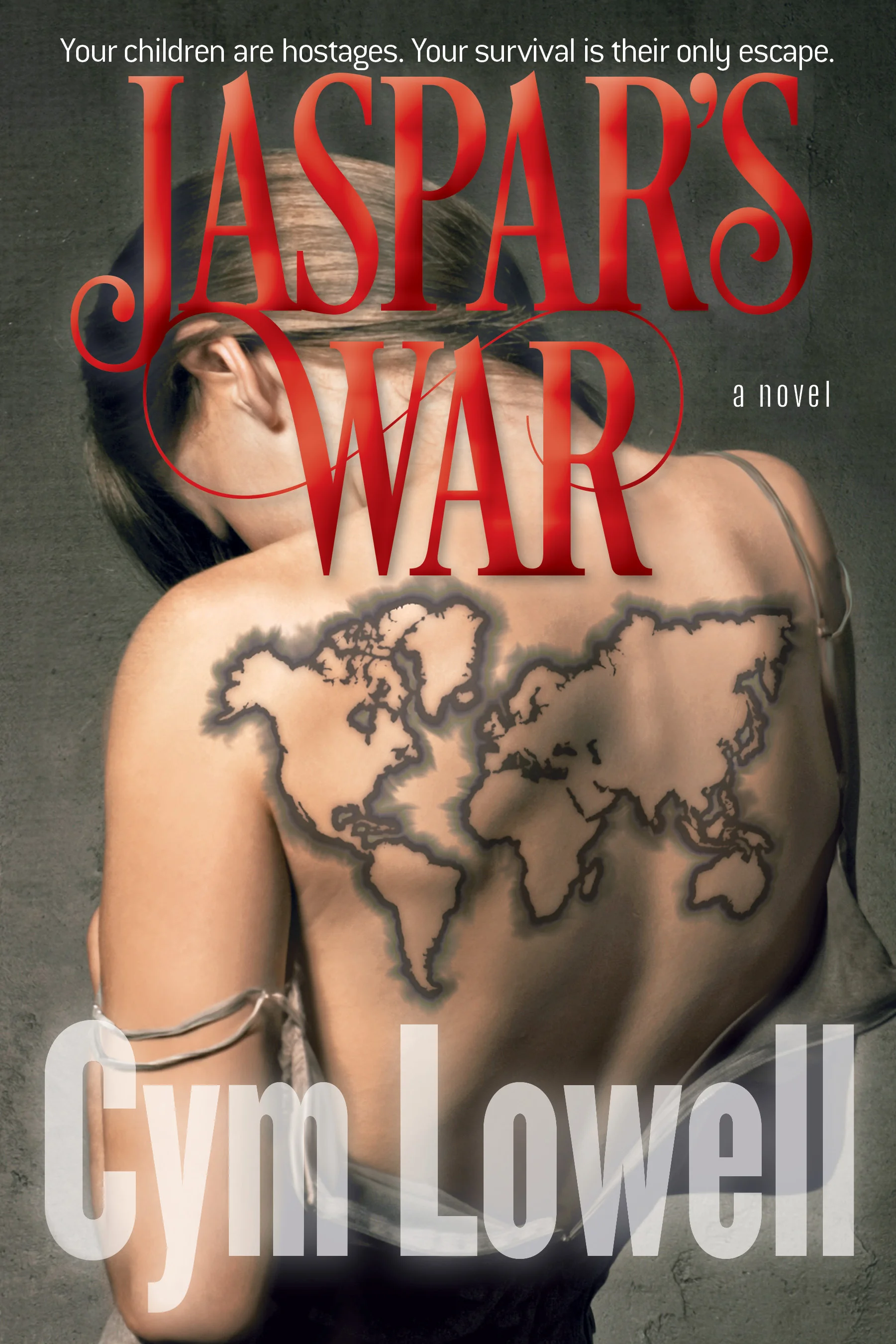
Greenwich, Connecticut socialite Jaspar Moran has it all-a magnificent estate, two beautiful children and a loving husband, Trevor, serving as the Secretary of the Treasury. Protected, admired and living in the lap of luxury, Jaspar is reeling from the news that his government jet has crashed just as her children vanish without a trace. 

An ominous message warns her to keep silent about her husband's role in the President's economic plan. Or else. 

Determined to save her children, she'll go to hell and back, form alliances with assassins, traitors and Mafioso, and commit unspeakable acts-if that's what it takes. With alarms sounding around the world, hunted from all sides, and unsure of who to trust, she finds herself depending on a mysterious figure without an identity. 

Jaspar journeys from the Australian outback to the palazzos of Rome, the Monte Carlo Grand Prix, and to the magnificence of the Vatican, in her quest. Can she rescue her children before the plot to crash the global economy is unleashed?

Pages: 352 pages
Publisher: Rosemary Beach Press (March 5, 2014)

Q & A with author Subhash Kommuru

Can we begin by having you take us at the beginning?  Where did you come up with the idea to write your book?

Thank for your giving me the opportunity to share my opinion on your distinctive blog and exceptional readers and besides all the other great authors visiting here. I migrated to US from India and brought with me memories of land rich in culture and beliefs. For as long as me and my wife were by ourselves, we never took a moment to think about our cultural heritage and our values. But once we had Arya, our son, our perspective changed. He was growing up fast and seeing American culture all around him. That’s when we realized that there is a treasure called “India” which he is not exposed to and will never get to know unless we do something about this. Sure we can take him to local gatherings, temples, celebrate one of two festivals but that simply is not enough. Kids learn a lot from many different channels, One of those most effective channel is books. For Arya any time is story time, no matter how sad or how mad he is a book can always come to rescue. 

Tell us a little about your next book or writing project. 

My stories are always related to Indian culture in some shape or form with an end objective or take away for kids. One thing I am not quite getting it right is the timing of my story. My most recent book “Mother’s Love Can Conquer Any Fear!” should have released closer to mother’s day. The core message celebrates a mother’s love that knows no boundaries. This story is set in a happy chicken farm with Shastriji, an old sage chicken, being at the center stage. All the other chickens looked up to him for advice and help. He was helpless when it came to Kaalia, the vile crow, and the problems he brought with him. Shastriji tried everything his wisdom and knowledge taught him but couldn’t rid happy farm from evil. That’s when a mother’s love achieves a feat to defeat tyranny. Despite a vile crow and failing effort of chickens the story is very funny to its core. 

Is there a theme or message in your work that you would like readers to connect to? 

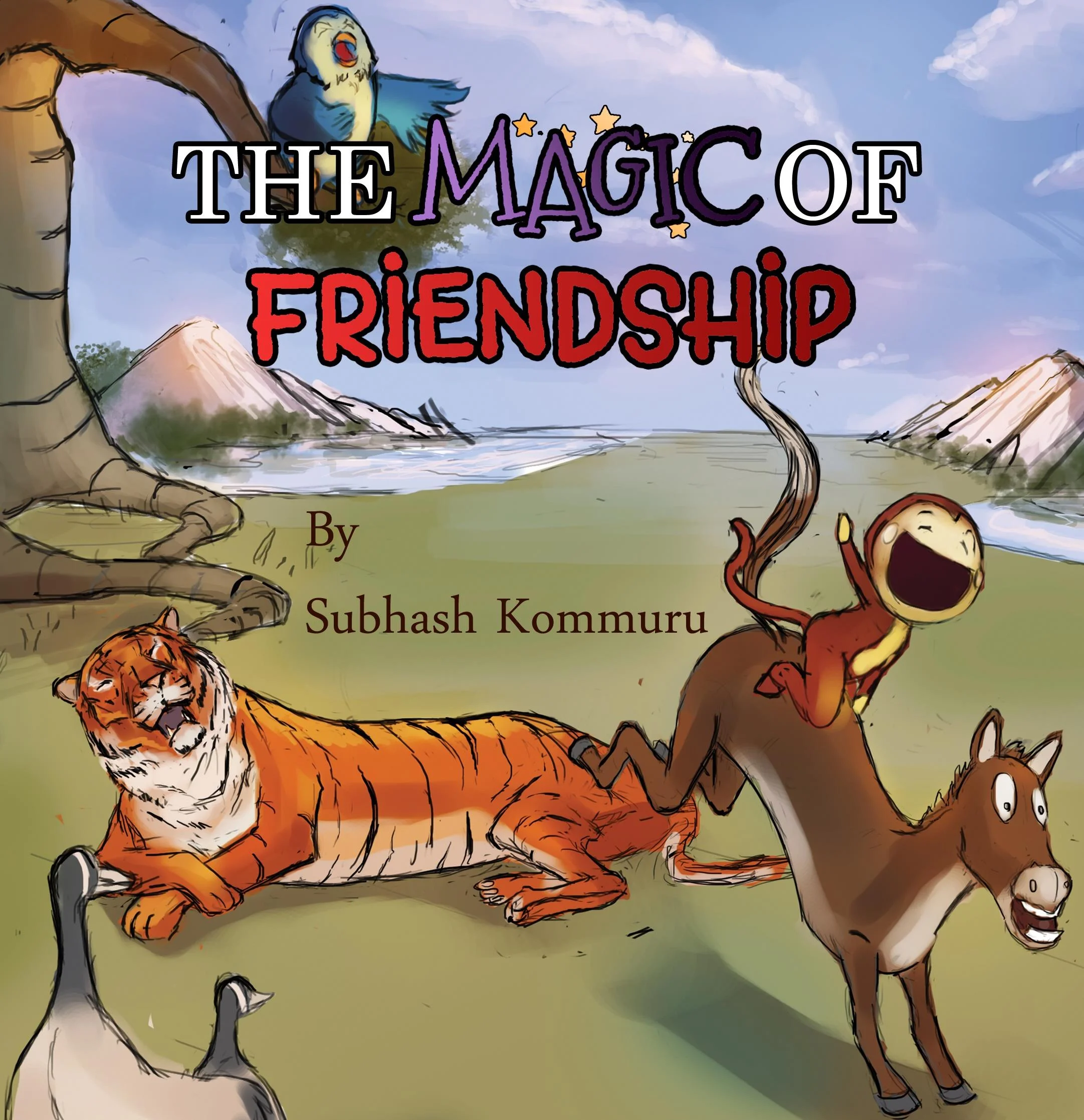
Diversity is the core of all my books. Coming from a diverse land myself, I value diversity a lot. I feel like diversity is more than culture; its characteristics, its behavior and how humans interact. It’s an interesting concept. Take ‘The Magic of Friendship’ for example, two very diverse character Babbar, the fierce and mean tiger and Hasmukh, the funny and entertaining donkey. What can such diverse character bring in a story? If you read the book you will understand they will not only bring entertainment but it will change their and also your lives forever.

Bio

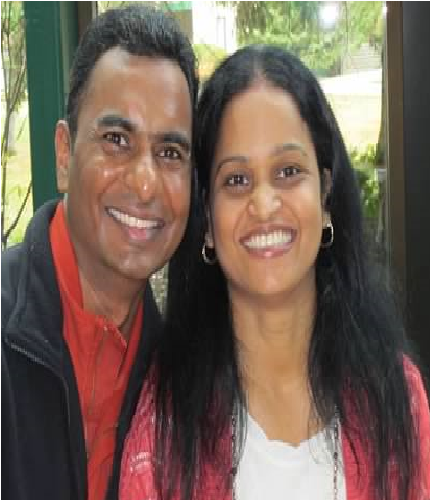
Subhash and Sujata hail from India. They migrated to the United States along with their memories of childhood and youth. Now that they are parents, just like every immigrant they crave to introduce their child to the culture and values of their upbringing. Yet it is challenging to teach something while you are in the midst of adjusting to a different culture yourself.

Subhash and Sujata both work in different disciplines and have different styles and backgrounds, but it is the upbringing of their son that brings them on the same page. That exact place where they meet is captured and reflected in their stories, where Subhash can express in words, and Sujata can illustrate them beautifully. Where he puts it in black and white, she adds color to it. You get the idea!

These stories are their attempt to share a glimpse of their childhood days with their son. He is their inspiration to write short stories that have meaning to them and provide teaching in some shape or form. 

About the Book

BABBAR is a fierce and mean tiger who cannot tolerate anyone, but he is lonely and sad. HASMUKH is a funny donkey but gets scared of everyone. When the Magic of friendship touches them see how it transforms not only their characters but also transforms the whole environment around them. 
The Magic of friendship is a hilarious, action packed entertaining story. There are scary moments, celebration and comical moments. While the core focus of the story is about friendship it has elements of father son bonding and family values as well. 
Book gives plenty of opportunity for parents to entertain kids with their own version of animal noises. And bright and interactive illustrations is sure to leave a mark on eyes.

This is a story about change -- a transformation that comes with the magic of friendship. Personality may not change, but nature can surely change. This story will show the value of friendship and how that can change a person, particularly, one who is lonely and never really had the gift of laughter. 

Paperback: 42 pages
Publisher: Kommuru Books (August 25, 2014)

The Writing of Finding Zoe by Brandi Rarus

There are times in our life, if we are lucky, when a project we take on ignites us so deeply and completely that we realize we are embarking upon our highest destiny. The project has such meaning, that it makes us realize that we are involved in something far greater than ourselves.   The project has our name on it, because it is our story.  Our inner voice is telling us that it needs to be told.

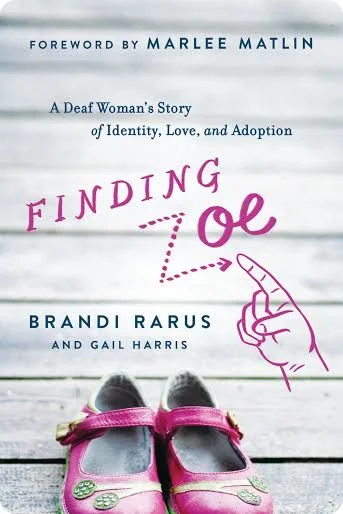
Such was the case with my memoir, Finding Zoe. It is the story of my daughter Zoe’s incredible adoption, and my amazing journey finding her.  My husband and I are deaf, as is Zoe. When each of my three sons was born, each was my pride and joy.  Yet their births just widened the hole that could only be filled by my having a daughter, something I had yearned for my entire life—for reasons I had yet to discover. 

I am not a writer, so I sought out to find someone who would work with me to write the book. I found Gail Harris.  She was skeptical at first.  “How do you know you have a story for a book?” she asked me.  I just knew.

And so the journey of writing began. 

When Zoe came home to us at eight months old, we were her fifth home!  She was born to a seventeen-year-old girl who had placed her for adoption, only to have her first adoptive family do the same because of her deafness.   From there, she was placed in foster care with hopes that she would find a home.

That made me angry. 

Who were these people who had chosen to relinquish her?  How dare they?  Being in so many different homes, it appeared that Zoe had come to me with the world stacked against her. I made it my personal mission to learn everything about her short life before me, so that when she asked me about it later on, I could tell her.  

The outcome of that mission was not what I expected.  Nothing was.  As I met with each of the families that had cared for her and listened to their stories, I came to see how each of them had made their choice out of their desire to follow their own truths, and by doing so, had also done what was right for Zoe.  Slowly, my anger turned to gratitude.  The world, I realized, had not been stacked against her, but rooting for her all along.  I was in awe of all of these people, of Zoe, and of the miracle that brought her and me together.  

I lost my hearing at age six, which was not an easy thing.  I spent the next decade trying to figure out who I was, and where I belonged.  Eventually, I found my identity as a Deaf woman, and how gratifying it was to finally come home to the Deaf community. I married a wonderful man who came from four generations of Deafness.  Our firstborn son was the first hearing child born into his family in 124 years. 

Through the writing of Finding Zoe, I discovered that the journey of losing my hearing and finally claiming myself as a Deaf woman had prepared me in every way, shape, and form to be the best mother for Zoe.   It allows me to teach her, by example, everything she needs to know about being a successful deaf person in our world.

And, finally, Finding Zoe is a reminder for all of us that love takes on many guises. It’s about the fruitlessness of assigning blame, and that what may seem horrible up close is beautiful from a distance.

About the Author

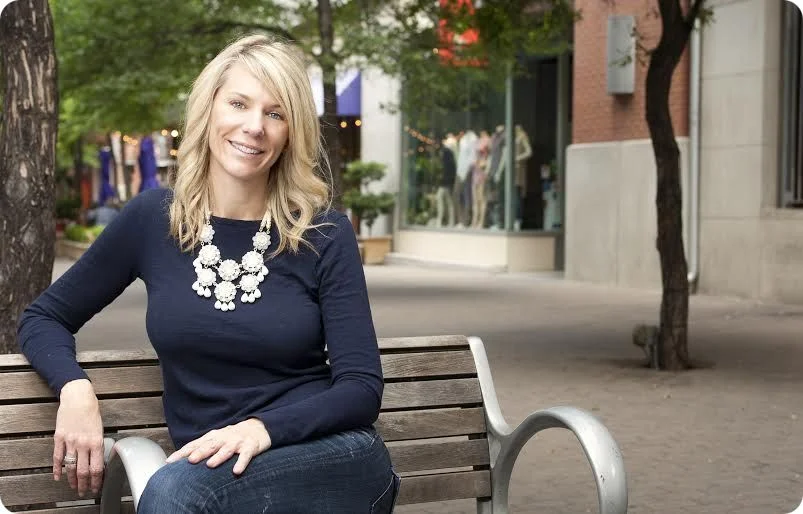
Deaf since age six after contracting spinal meningitis, Brandi Rarus could speak and read lips, but felt caught between the deaf and hearing world—fitting into neither. When she realized you don’t need to hear to live a fulfilled life, she became empowered and was chosen as Miss Deaf America. From signing the National Anthem at a Chicago Cubs game to speaking at corporate conferences, Brandi traveled the country speaking out for deaf children and building awareness of what it means to be Deaf.

She married Tim Rarus, an advocate for Deaf people whose work inspired the landmark Americans with Disabilities Act. Together, they have paved the way to bring new technologies that promote equal access in communication. Brandi and Tim live in Austin, Texas, with their four children: three hearing boys and the youngest, Zoe, a Deaf girl they adopted. Today, Brandi and her family are tirelessly dedicated to ensuring all children find their rightful place in our world. 

Her latest book is the biography/autobiography/personal memoir, Finding Zoe: A Deaf Woman’s Story of Identity, Love, and Adoption.

For More Information
•    Visit Brandi Rarus’ website.
•    Connect with Brandi on Facebook and Twitter.
•    Contact Brandi.

About the Book

In Finding Zoe, Brandi Rarus shares the story of her very personal path of self-discovery and the struggle of being caught between two worlds—the hearing and the Deaf. We travel with her through her mainstreamed younger years and later on to college at The National Technical Institute for the Deaf where she embraces Deaf culture and realizes that being Deaf is not a handicap, but a passport to a whole new and exciting world.

Brandi brings us behind the scenes as she takes on the world advocating for her Deaf Community as Miss Deaf America; meeting and falling in love with Tim, a Gallaudet University student leader who later helped write the landmark Americans with Disability Act on Capitol Hill. The two married and had three hearing boys—the first non-deaf children born in Tim’s family in 125 years, but with all their blessings something was still missing. 

With a powerful foreword provided by Marlee Matlin, an Academy Award-winning actress and member of the National Association of the Deaf, Finding Zoe is an inspiring recollection of how two individuals who, already bonded by their diversity, come together as an unbreakable mother-daughter pair to navigate a silent world and shed light the adoption/foster care system.