Obsession by Christina E. Pilz

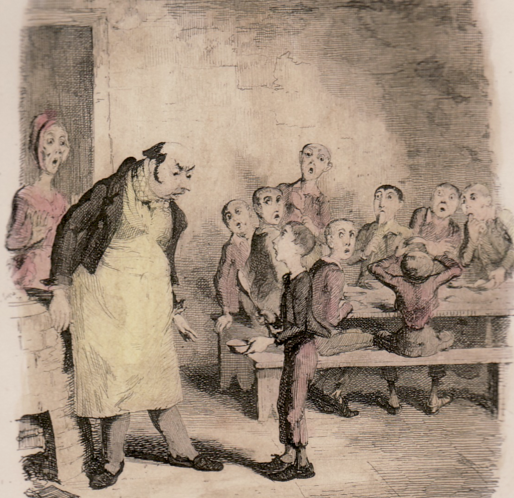
(Image: OliverAsksForMore. Source Link

(Image: OliverAsksForMore. Source Link

My obsession, since the age of seven or so, has been with workhouses and I’m not sure why. I mean, you wouldn’t ever want to end up there, as workhouses are always, nearly always, nasty, dark, and grim. And damp. And they don’t feed you very much. You get one thin blanket, and maybe a pillow if you’re lucky. Any yard where you might get some fresh air is covered with cinders or gravel or simply dirt.

Well, all of this has to do with the novel by Charles Dickens called Oliver Twist, which has to do with orphans and pickpockets and the gritty, grimy world of workhouses and the muddy streets of Victorian London.

My obsession stems from my early exposure to that story when I saw a movie version of it once, long ago. Since then I’ve seen pretty much every version that has ever been made, which I’m not embarrassed to admit, since I’ve already admitted I’m obsessed.

Here is the lad, Oliver Twist himself, asking for more. Spoiler: He will not get it.

Soon my obsession about Oliver Twist turned into my desire to write more about him and his little life, and, indeed, perhaps sad to say, I wanted to get him back inside of a workhouse to see what made him tick. Putting him back there would show me how he survived it the first time, and whether he learned anything along the way. And maybe I just wanted to torture him a little bit, because I had a feeling that he would come out on top, in spite of me.
(Image: Map of Axminster. Source Link

(Image: Map of Axminster. Source Link

So I started writing my Oliver & Jack series with an eye towards that workhouse experience. Even as I wrote the first two books in that series, I was picking out workhouses and determining the best (that is to say worst) series of events ever to befall a parish boy. The result was

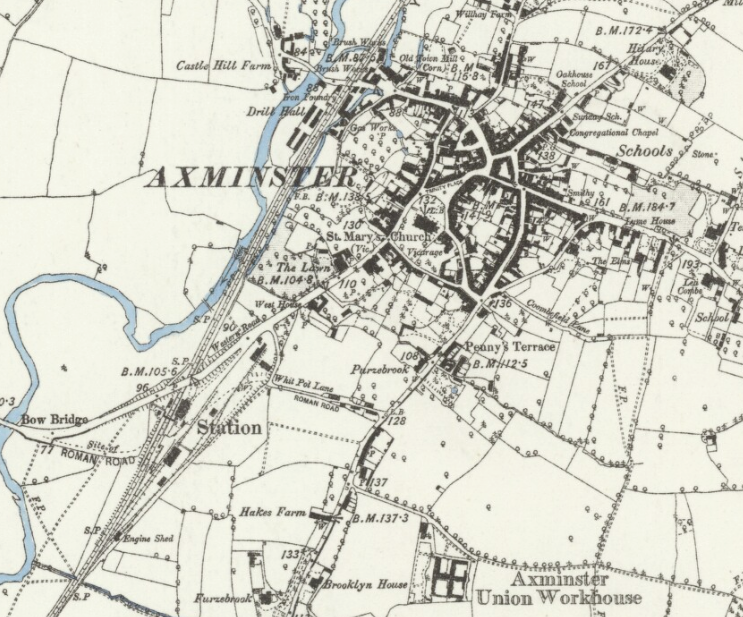
First up, location. At the end of book two in the Oliver & Jack series, Oliver and Jack were in Lyme Regis, which is a nice place to be. So I had them arrested and thrown into the nearest workhouse, which just so happened to be located in Axminster. Isn’t that a great name? It’s got such a sharp-edged ring to it, don’t you think?

This map is from 1887, but the town won’t have changed all that much from 1846, which is when the story takes place.

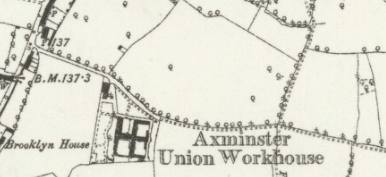
Toward the bottom of the map you’ll see, very plainly marked, a structure called Axminster Union Workhouse. I studied that workhouse, trying to determine what it might look like at ground level. So I went online because, as you see, I’m obsessed.
(Image: AxminsterUnionWorkhouse. Source Link 

(Image: AxminsterUnionWorkhouse. Source Link 

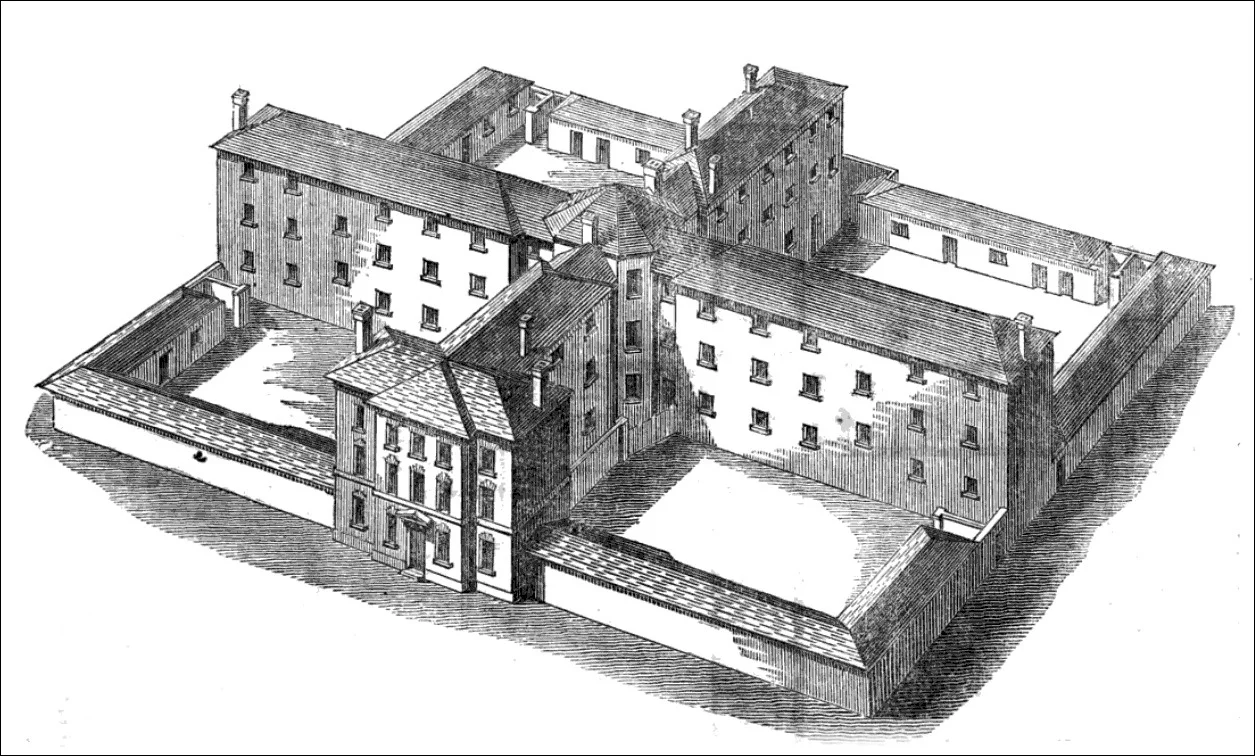
Well, as luck would have it, the square workhouse with four internal sections is one of the main types of workhouses that they built, and is generally referred to as the square plan. It was designed by a gentleman called Sam Kempthorn and was meant to hold around 300 paupers.

So I probably could have left it at that, since nobody reading my book would actually ever have been inside of a workhouse. But no, I staggered on, bowed under with the weight of my obsession.

Here is a drawing of the exterior of the Sam Kempthorn Square Plan Workhouse. Doesn’t it look grim?

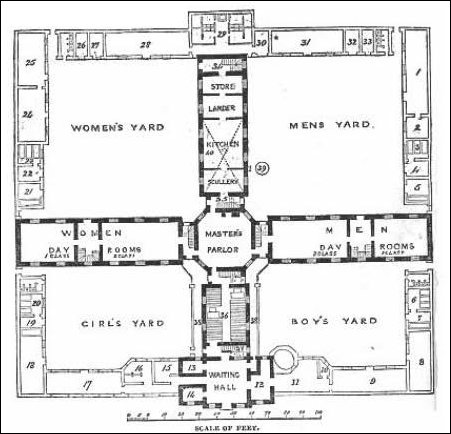
But wait, there’s more! I found some floor plans, so not only could I imagine the color and texture of the exterior, I could also trace little lines in my head as to how my characters walked from room to room. Here’s an image of the ground floor (aka the first floor in the US). 

And, even better, I got an image of the first floor (aka the second floor in the US) where they slept.

Do you see the rabbit hole I’ve now gone down? I’m deep in the weeds of details that won’t make any difference to the reader or their enjoyment of the story. But to me, it’s this type of obsession that tells me I’m writing about the right kind of thing, and telling the story that moves me. Which hopefully means that it will move the reader as well.
(Image: AxminsterGroundFloor. Source Link
(Image: AxminsterGroundFloor. Source Link

(Image: SquarePlanExterior. Source Link

(Image: SquarePlanExterior. Source Link

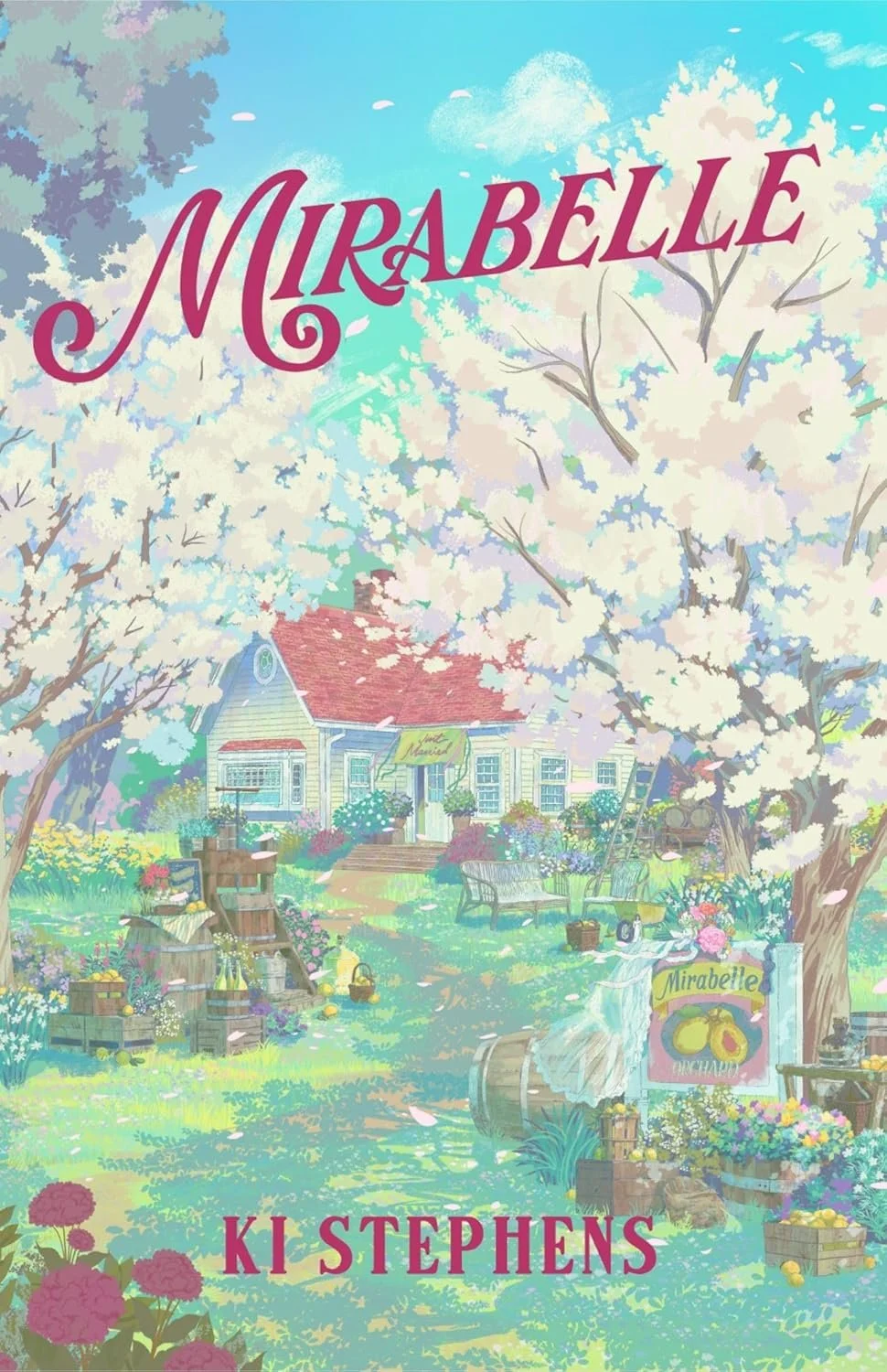
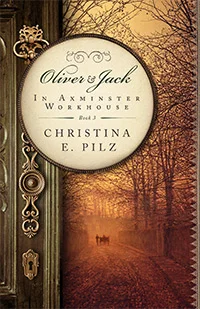
Here’s the cover of my most recent obsession:

Do you have an obsession? Something that won’t let you sleep at night and makes you think about it all the time?
About the Author
Christina was born in Waco, Texas in 1962. After living on a variety of air force bases, in 1972 her Dad retired and the family moved to Boulder, Colorado. There amidst the clear, dry air of the high plains, as the moss started to grow beneath her feet, her love for historical fiction began with a classroom reading of Little House on the Prairie by Laura Ingalls Wilder.

She attended a variety of community colleges (Tacoma Community College) and state universities (UNC-Greeley, CU-Boulder, CU-Denver), and finally found her career in technical writing, which, between layoffs, she has been doing for 18 years. During that time, her love for historical fiction and old-fashioned objects, ideas, and eras has never waned.

In addition to writing, her interests include road trips around the U.S. and frequent flights to England, where she eats fish and chips, drinks hard cider, and listens to the voices in the pub around her. She also loves coffee shops, mountain sunsets, prairie storms, and the smell of lavender. She is a staunch supporter of the Oxford comma.

Connect with Christina: WEBSITE | BLOG | FACEBOOK | TWITTER | GOODREADS | PINTEREST

The 3 Biggest Mistakes That I’ve Made (so far) as a Health & Wellness Practitioner by Gabrielle Pelicci, Ph. D

I had my first client in 2001 while I was still in massage school. It was in the living-room of the dusty apartment of my neighbor on the big purple massage table that I carted along with me. I remember being terrified that my massage routine wouldn’t be long enough to fill the entire 60 minutes (it was—but barely). Despite my initial jitters (and thanks to my very grateful new client), I discovered that I loved doing massage. I kept at it and, quickly realizing that I wanted to learn a lot more about health and wellness so I signed up for as many workshops and trainings as I could in nutrition, energy medicine, yoga, meditation and more.

Flash forward several certifications and 15 years later, and I still love health and wellness. While I realize that in the grand scheme of things, 15 years isn’t really all that long, I sometimes cringe when I think back on some of the things I did as I was building my business. And while a lot of these “embarrassments” are just plain silly (flinging panties from the freshly laundered massage sheets onto a clients floor or showing up soaking wet to teach yoga after an unexpected downpour) there are some bigger lessons there, too.

Here are 3 mistakes that I’ve made during my career and, eventually, learned a lot from. Maybe you’ll learn something from them as well (even if it’s just “Thank God. Someone else did/thought/said that thing, too!”)

Ignoring the Money

Since I first started my practice, I’ve been much more interested in serving people than making a million dollars. I really wanted to help people heal, teach them how to take care of their mind and body, guide them on a healing journey to overcome pain and limitations.   For a long time, I thought that it was “good enough” if my clients were happy – even if I was giving my services away for free. I assumed that money would come “sometime” in the future – and luckily I’ve always had enough money to live comfortably – but I didn’t have any profit plan or revenue model. I didn’t even know what those phrases meant until a few years ago.

It was actually my own frustrations with feeling undervalued and burnt-out after a decade of making the same income that inspired me to take money a lot more seriously. I started reading all the business books and listening to all the podcasts that I could get my hands on – especially the ones about start-ups and entrepreneurs – and paying more attention to the flow of money in and out of my life. When I asked myself, “What’s my relationship to money?” I discovered a lot of limiting beliefs about what I was “worth” and what I “deserved” to be paid. I especially struggled with taking full accountability for my finances and not blaming my difficulties on anyone else.

I believe that too many health and wellness professionals get discouraged because they love what they do, but they aren’t making a good living doing it. I believe that all health and wellness professionals can create purposeful and profitable holistic businesses with the right tools and support. I believe that the health of your bank account is just as important as the health of your body, mind and spirit. And I believe that money and healing are not mutually exclusive but rather interconnected and interdependent – just look at Maslow’s hierarchy of needs to see that our basic security has to be in place before we can do the higher work of transformation.

Being a Hobbyist instead of a Professional

Between 2009 and 2014, I made over 500 YouTube vlogs.   They were interesting and entertaining. I talked about every aspect of health and wellness that I was studying and practicing. I accumulated more than half-a-million views on my channel. BUT it was never anything more than a hobby.

The videos weren’t integrated into my business. They didn’t generate any extra income for me. They didn’t lead to speaking engagements, press coverage or anything that would have given my business more exposure.   They didn’t even open up doors for teaching, presenting or publishing. At the end of the day, it was fun for me and the few hundred people who were regularly watching, but it wasn’t the best use of my time, energy and creativity. Still, it was hard to give it up because it was so enjoyable. I had so much passion for the topics and I really wanted to share what I was learning. Eventually (and thankfully), I stopped. I decided that I needed to channel that passion, energy and creativity into products that could actually make a difference – not only for the viewers – but also for me.

Instead of vlogging everyday, I used those extra hours for writing articles that could be published, building online classes that could be taken and creating videos with specific information that supported my products and services. I still feel the same excitement and joy when I hit “publish” but now I have the added benefit of knowing that I am also shifting from hobbyist to professional.

I believe that too many health and wellness professionals waste time doing things that are fun but don’t make sense for their career. I believe that all health and wellness professionals can channel their passion and creativity into products and services that support the health of their business and bank account. And I believe that taking ourselves more seriously (while still having fun) is how we will make others take us more seriously, too.

Too much Learning and not enough Doing

Aside from my trainings in Massage Therapy, Kundalini Yoga, Jivamukti Yoga, Healing Touch and Mindfulness Meditation, I also have a Ph.D. in Transformative Studies. Want to know a super-easy way to avoid the difficulty of running a business? Stay in school.   Keep enrolling in as many programs as you can so that you are always learning instead of doing. Keep finding things about yourself that you need to improve and then seek out books, teachers, therapists, videos, and so on to help you work on those issues.

For a looooong time, I had the feeling that I wasn’t “ready” to [fill in the blank]. I wasn’t ready to be a teacher. I wasn’t ready to write a book. I wasn’t ready to make more money. I wasn’t ready to be on TV. I kept waiting for the “ready” feeling but it never came. So I got sick of waiting and I just started doing all of those things anyway – even though I didn’t feel “ready.”   I taught the classes, wrote the book, pitched the proposals, got the TV gig. And even while I was doing it, I suffered a twinge of the imposter complex. I wondered, “Who am I to be up here professing my knowledge?”

This kind of thinking is sooooo last year. This is not the time to be playing small, making excuses, avoiding our work, succumbing to procrastination or self-doubt. This is the time to get shit done. There are too many people who are suffering and struggling for us to be staring at ourselves in the mirror wondering when we are going to look and feel like the expert that we are.   I don’t care if you know 2 more things than me about nutrition, than you can teach me something. And we have to OWN that and we have to stop with the self-absorbed worry about what others will think or what mistakes we might make. You will make mistakes – that’s what this whole article is about – my mistakes. But who cares! If you’re not making mistakes, then you’re not doing anything.

I believe that too many health and wellness professionals are hiding behind a book, a computer or some other excuse for why they are not “ready” to do the work. I believe that all health and wellness professionals need to be more brave, more determined, and more assertive about bringing their gifts to the world.   I believe the world needs our gifts now more than ever – we need people who can raise consciousness, mend brokenness, guide people from the darkness to light, be role models for a happy, healthy life.  And I believe that running your own holistic business can be one of the most liberating, amazing, rewarding, lucrative experiences out there—and it doesn’t have to be complicated or intimidating or costly.

You don’t have to do it perfectly. You just have to do it.

About the Author

Dr. Gabby is a leading expert on Holistic Medicine and TV Host at Miami-based Health & Wellness Channel.  Dr. Gabby has traveled to 40 countries, worked with thousands of clients – including celebrities and high profile people – and has more than a decade of teaching experience under her belt at top universities in Mind-Body Medicine and Holistic Health. Dr. Gabby’s expertise is regularly featured in National and Local Media such as MSNBC, The New York Post, and the Huffington Post. Dr. Gabby is the Founder of Women in Wellness Career Training, a one-of-a-kind course and community designed to empower and inform you about how to build a purposeful and profitable holistic business.

Connect with Gabby: Website | Facebook Twitter

About the Book

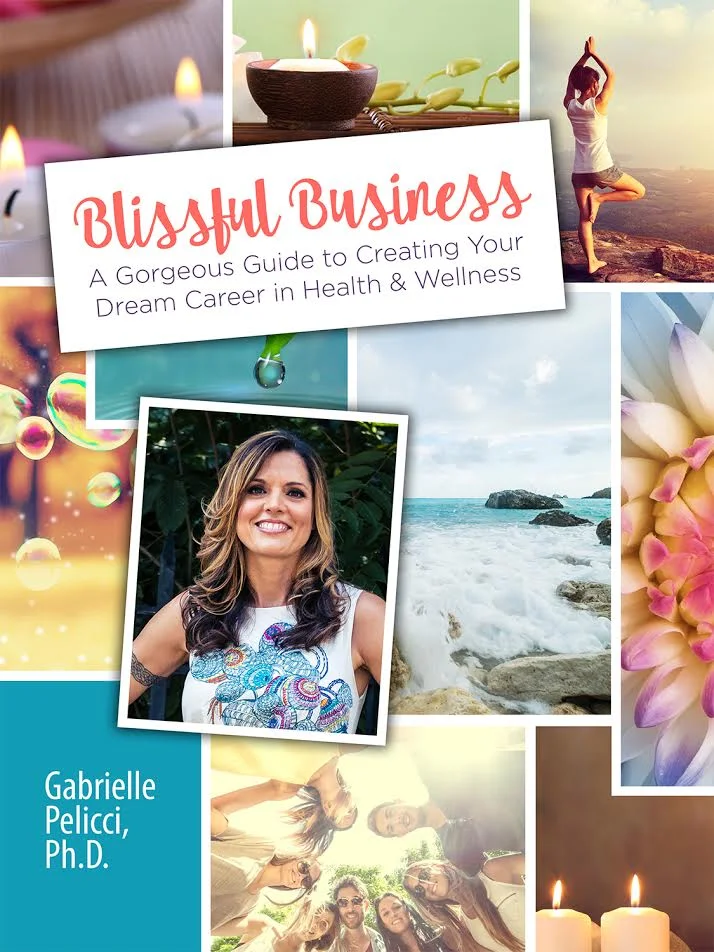
Buy on Amazon and Barnes and Noble

Buy on Amazon and Barnes and Noble

You started your health and wellness practice because you love what you do, have a passion for helping others, and you wanted to make a positive impact in the world.  But as good as all that sounds, passion is not enough to make you truly successful.

The opportunities for Health and Wellness Professionals are better today than ever before but many programs and teacher trainings do not prepare you to start, market, and grow a successful business.  

Does this sound like you? 

•    You want to attract more clients or customers
•    You feel stuck and don’t know how to move to the next level of your business
•    You work very hard, but don’t earn what you want
•    You see others being successful and wonder how they do it 

Blissful Business: A Gorgeous Guide to Creating Your Dream Career in Health and Wellness is a step-by-step manual to help you achieve your career goals. 

This book will help you: 
Get clear about your vision and mission
Create purposeful and profitable one-on-one sessions
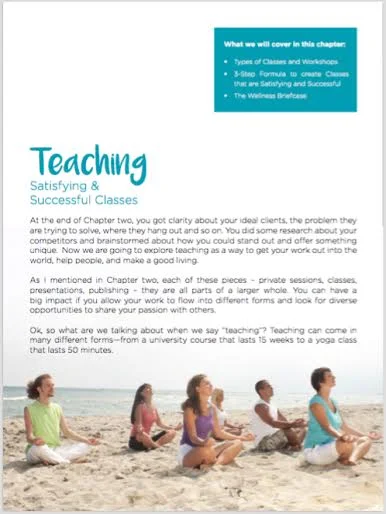
Use teaching, presenting and publishing to attract loyal customers
Master Personal Branding, PR, and Social Media 

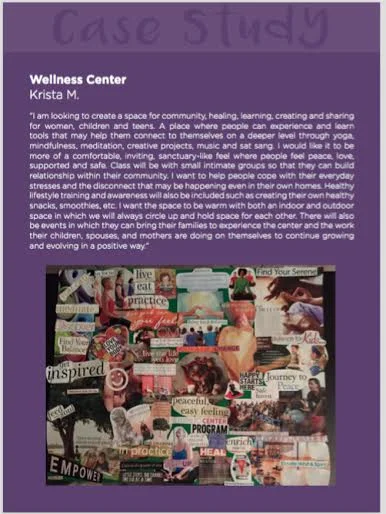
If you're ready to fulfill your destiny by building a purposeful and profitable holistic business, then you’ve found the right book.   You’ll read several real-life examples of Health & Wellness students who completed the exercises in this book and discovered how to define success on their own terms. 

This book is perfect for you if you are a massage therapist, health coach, yoga instructor, personal trainer, energy healer or heart-centered entrepreneur. 

You have already invested so much time and money to get an education. Now get the expert support that you need to build a successful career in the Health & Wellness industry. 

Q&A with Maia Chance, Beauty, Beast, and Belladonna

Describe Beauty, Beast, and Belladonna in 140 characters or less. 

Beauty, Beast, and Belladonna is a fun, adventurous, and romantic historical mystery set in a secret-riddled French chateau in 1867.

What is your idea of perfect happiness? 

Happiness for me is spending time outside somewhere beautiful, with my husband, kids, and dog.

What’s your favorite part of Ophelia’s quirky personality? 

I like the way Ophelia compensates in creative and gutsy ways for her lack of a good formal education.  She’s smart and resourceful and she uses her unusual skill set—farm girl, circus performer, actress—to help solve the mystery.

Which living person do you most admire? 

My husband, actually.  He is an unusually gifted person who overcame significant disadvantages and obstacles to get where he is today.  And he gives the best pep-talks!

What inspired you to marry fairytales and mystery? 

I was searching for something that hadn’t been done yet, and I was reading a lot of fairy tale criticism for school at the time.  It sounded like a deliciously fun project, so I plunged in.

Is there a type of scene that's harder for you to write than others? Love? Action? Racy?  

Dialogue definitely comes more easily for me.  I find action scenes more challenging—I’m paranoid that they’ll get bogged down.  (So if I can, I add dialogue to my action scenes!)

What do you consider the most overrated virtue? 
Sticking to strict schedules.  I don’t like to keep people waiting, but there is something to be said for giving yourself creative or restful wiggle-room during the day.

Which of the characters in this novel do you feel the most drawn to?

 I became more attached to Professor Penrose in this book.  He’s more vulnerable and at a loss than in the previous two books—and more deeply in love.

Which words or phrases do you most overuse?  

Oh, my.  Probably dozens.  I seem to like “buzz” a lot for some reason.  I’m deleting it all the time.

Can you describe for us your process for naming characters? 

For historical American characters I use census records.  I collect names from cemeteries whenever I visit one, and I often borrow names from literature.  Since my books have lots of characters, I try to give them all distinctive names that hint at their personalities, to help the reader keep everyone sorted in their mind. 

Who are your favorite writers? 

Agatha Christie, P.G. Wodehouse, Edith Wharton and Theodor Adorno.

Who is your most loved hero of fiction? 

Indiana Jones.

Which talent would you most like to have? 

It would be ecstasy to be a really, really great opera singer.

You're hosting a dinner party, which five authors (dead or alive) would you invite? 

P. G. Wodehouse would probably be the life of any party.  Also, Agatha Christie, Edgar Allan Poe, Shakespeare, and F. Scott Fitzgerald.  There would be lots of drinking at this party.  Maybe some arguments.  No strip poker though.

Do you have a favorite time period in literature? 

Not really.  Because of my English degrees I have read very widely, and I have favorites from every era.  And every era has its stultifying boring authors, too.

What is the best reaction over a book that you’ve ever gotten from a fan? 

Fans who say my book gave them pure pleasure—that’s happened a few times—make me so happy.  It’s my aim to give people something to read that’s a pleasurable and absorbing diversion from Real Life.  Real Life is hard.

Where would you most like to live? 

A place with lots of trees where I could do all my daily activities and errands on foot.  I’m working on it.

Which historical figure do you most identify with? 

No one specific, but I often think of the female writers over the centuries who kept at their stories even when they had screaming kids and the dinner to cook and a really messy house piling up around them.  They did it, and so can I.

What are you working on next?

 I just completed a humorous contemporary mystery that does not yet have a publisher, and I’m working on a historical fantasy adventure with a co-author.  After that, the next thing will be book #3 of the Discreet Retrieval Agency series.

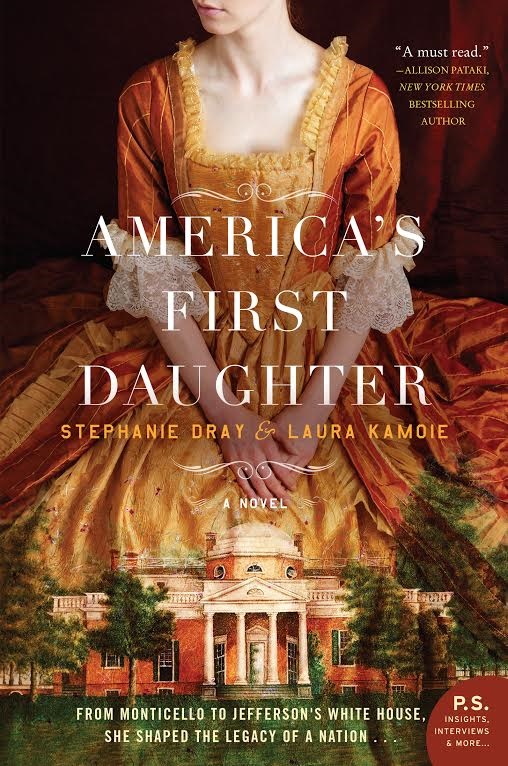
Using Jefferson’s Letters in America’s First Daughter by Stephanie Dray and Laura Kamoie

We are absolutely thrilled to be celebrating the release of our new book, America’s First Daughter, which portrays the relationship between Martha “Patsy” Jefferson Randolph and her famous father, Thomas Jefferson, and explores the sacrifices Patsy made and the lies she told to protect him, his legacy, and the new nation he founded. In writing this book, primary sources—and particularly Jefferson’s body of 18,000 letters—formed the foundation of the book, and we thought we’d tell you more about that today.

The letters of a person, especially of one whose business has been chiefly transacted by letters, form the only full and genuine journal of his life.

These words come from one of Jefferson’s own letters very much informed our approach to writing America’s First Daughter. One important way we made use of Jefferson’s letter was in the dialog of the book. As much as possible, we wanted Jefferson’s words to be his own. Fortunately, his opinions on many things survive, so we had plenty of material to pull from. The challenge, of course, was reading through all those letters to find what we needed. Where letters didn’t exist, we were able to discern a lot about the cadence and patterns of his speech by having immersed ourselves so deeply in his writing, so we were able to create what we hope was authentic dialog by our third president.

Another way we made use of Jefferson’s letters was in providing the framework for the book. One challenge of writing a book that spans sixty years and draws from a massive body of source material is figuring out how to fit everything in, or deciding what to cut or condense and where to skip time. History itself provided a guide for handling this question, because Patsy and her children edited Jefferson’s papers after his death. Since we know that not all of Jefferson’s letters survived (despite there being 18,000 that did!), we know some were destroyed.

We answered the questions of How? and By whom? by positing that Patsy herself destroyed his letters with a very particular purpose in mind—protecting Jefferson and defining his legacy. In the prologue, the reader finds Patsy sitting down to the task of going through his letters. Throughout the book, new letters that she’s reading provide the background for new scenes and chapters, thereby allowing us to skip time as defined by actual letters from Jefferson himself. Doing this not only gave us our framework for the book, but also an argument for Patsy’s historical significance in shaping her father’s legacy.

Letters also became important in an unexpected way—after we’d finished writing and revising the book, Monticello announced the discovery of a new set of letters to and from Patsy from her years in Paris. We were thrilled! Our editor readily agreed to let us go back into the manuscript to incorporate material from the new letters, allowing us to more deeply explore Patsy’s female friendships and many suitors—including a very intriguing duke!

We also hope that including excerpts from letters of the period will give readers an even more immersive experience into the incredible revolutionary era in which Patsy and her father lived. As authors, we wanted to be faithful to the characters, their words, and their world, and in reading widely and deeply in the existing sources we hope we have achieved that.

Thanks for reading,

Stephanie and Laura

About America’s First Daughter

In a compelling, richly researched novel that draws from thousands of letters and original sources, bestselling authors Stephanie Dray and Laura Kamoie tell the fascinating, untold story of Thomas Jefferson’s eldest daughter, Martha “Patsy” Jefferson Randolph—a woman who kept the secrets of our most enigmatic founding father and shaped an American legacy.

From her earliest days, Patsy Jefferson knows that though her father loves his family dearly, his devotion to his country runs deeper still. As Thomas Jefferson’s oldest daughter, she becomes his helpmate, protector, and constant companion in the wake of her mother’s death, traveling with him when he becomes American minister to France.

It is in Paris, at the glittering court and among the first tumultuous days of revolution, that fifteen-year-old Patsy learns about her father’s troubling liaison with Sally Hemings, a slave girl her own age. Meanwhile, Patsy has fallen in love—with her father’s protégé William Short, a staunch abolitionist and ambitious diplomat. Torn between love, principles, and the bonds of family, Patsy questions whether she can choose a life as William’s wife and still be a devoted daughter.

Her choice will follow her in the years to come, to Virginia farmland, Monticello, and even the White House. And as scandal, tragedy, and poverty threaten her family, Patsy must decide how much she will sacrifice to protect her father's reputation, in the process defining not just his political legacy, but that of the nation he founded.

Advanced Praise for America’s First Daughter

“America’s First Daughter brings a turbulent era to vivid life. All the conflicts and complexities of the Early Republic are mirrored in Patsy’s story. It’s breathlessly exciting and heartbreaking by turns-a personal and political page-turner.” (Donna Thorland, author of The Turncoat)

“Painstakingly researched, beautifully hewn, compulsively readable -- this enlightening literary journey takes us from Monticello to revolutionary Paris to the Jefferson White House, revealing remarkable historical details, dark family secrets, and bringing to life the colorful cast of characters who conceived of our new nation. A must read.” (Allison Pataki, New York Times bestselling author of The Accidental Empress)

About the Authors:

Stephanie Dray is an award-winning, bestselling and two-time RITA award nominated author of historical women’s fiction. Her critically acclaimed series about Cleopatra’s daughter has been translated into eight different languages and won NJRW's Golden Leaf. As Stephanie Draven, she is a national bestselling author of genre fiction and American-set historical women's fiction. She is a frequent panelist and presenter at national writing conventions and lives near the nation's capital. Before she became a novelist, she was a lawyer, a game designer, and a teacher. Now she uses the stories of women in history to inspire the young women of today.

Stephanie’s Book Club | Stephanie’s Website | Facebook | Twitter | Newsletter

Laura Kamoie has always been fascinated by the people, stories, and physical presence of the past, which led her to a lifetime of historical and archaeological study and training. She holds a doctoral degree in early American history from The College of William and Mary, published two non-fiction books on early America, and most recently held the position of Associate Professor of History at the U.S. Naval Academy before transitioning to a full-time career writing genre fiction as the New York Times bestselling author, Laura Kaye. Her debut historical novel, America's First Daughter, co-authored with Stephanie Dray, allowed her the exciting opportunity to combine her love of history with her passion for storytelling. Laura lives among the colonial charm of Annapolis, Maryland with her husband and two daughters.

Laura’s Website | Facebook | Twitter | Newsletter Sign-Up

Writing Tribe to Writing Ship by Wendy Terrien

I started this writing journey six years ago, clueless and alone.

The alone part I expected—I didn’t know any professional writers. But the clueless part was a surprise. I thought I was a pretty good writer. I thought I could do this with a little studying, a little tweaking. I thought I knew how to write a good story.

I did not.

I turned to Google for guidance and I dodged my share of charlatans and swindlers who promised to hold my hand and publish my book for a fee. I found resources to explore. And I did a lot of research. 

Through all of this, I discovered the Pikes Peak Writers Conference (PPWC) about to happen in my own back yard, and I signed up. A few weeks later I found myself at a hotel in Colorado Springs surrounded by people—writers—asking me what I wrote, if I was pitching, and had I been querying. To each I answered, “Nothing yet.” “What is pitching?” And, “No—how does one query?” Suffice it to say I was that deer in those oncoming headlights. But I learned tons. And my brain loved it. And I felt a whole new kind of excitement about what I was doing.

All of it was fantastic. But the best part was the beginning build of my writing tribe. 

At PPWC I met writers who are still friends today. And they’ve led me to new experiences and new people. To new workshops, and training, and books on craft. To new ideas, and new writing projects. I’m thankful for every bit of it, and I share my knowledge and discoveries with them, too. We grow together.

But most of all, the writing tribe I’ve built around me has become that thing, the significant variable that’s carried me from newbie writer to published author. And they’re not just a tribe—they are my solid ship on what can be a turbulent ocean. They are an aircraft carrier.

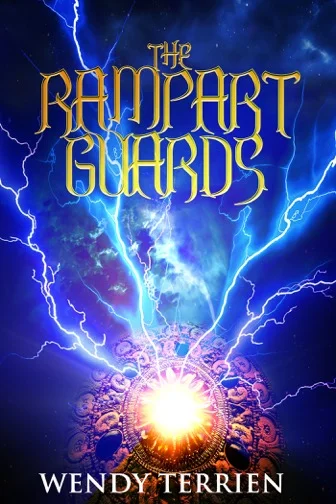
A strong writing tribe carries great power. They offer valuable feedback, they understand your trials, and they celebrate your successes. I’ve learned a lot, and continue to learn, from my tribe. I know I can lean on them when I need it, and I’m motivated by their success. They inspire me. They lift me up. And honestly, they are the reason I’m about to release my debut novel, THE RAMPART GUARDS. I believed I could do it because I saw them do it. And they believe in me.

A lot of people ask what advice I’d offer new writers. Hopefully I’ve made my advice clear in this post. Find those supportive people and surround yourself with them, share this journey with them. Doing so makes a huge difference in your overall experience. But note the key aspect of this advice—supportive people. Supportive, positive writers who have the same goals and dreams you do—to write a great story and share it with the world.

Does that mean finding writers who are brimming with self-confidence and expect to rule the world? Thankfully, no. I mean how many writers have you met that are free of self-doubt and never question their own ability to produce quality work? I think the imposter syndrome sneaks up on the best of us. We’re human. Doubt happens.

What it does mean is finding those people who, bottom line, sincerely celebrate your successes, whatever those may be. Small, big, grand—they are truly happy for you in every instance. Having that around you is an amazing energy. It’s the true essence of honor and love. It feels damn good, and it’s a feeling we all deserve. 

Embrace the writers with heart. Leave the phonies back at the dock—no one needs those types of people in their tribe. And remember, a rising tide lifts all aircraft carriers. Your success radiates out and touches others in a positive way, as does their success to you. Celebrate all of it.

About the Author

Wendy Terrien has been writing stories since she was in grade school. Her debut novel The Rampart Guards (February 29, 2016) is the first in her intriguing urban fantasy series.

Inspired by an episode of Bones that suspected a killer to be a fabled chupacabra, Wendy was fascinated and dove into research about cryptozoology - the study of animals that may or may not exist, or cryptids.  Pouring over stories, videos and photographs of creatures others had seen all over the world, Wendy developed her own story to share with middle grade, young adult and grown-up readers.

Raised in Salt Lake City, Wendy graduated from the University of Utah and soon transplanted to Colorado where she completed her MBA at the University of Denver.  Having applied her marketing expertise to the financial and network security industries, it wasn’t until a career coach stepped in that she fully immersed herself in her passion for writing. Wendy began attending writers conferences, workshops and retreats.

She regularly participates in two critique groups and is the Secretary of Rocky Mountain Fiction Writers and a member of Pikes Peak Writers and the Society of Children’s Book Writers and Illustrators. In 2014, she was a finalist in the San Francisco Writer’s Contest and in March, will release a novella in the anthology Tick Tock: Seven Tales of Time.

Wendy lives in Colorado with her husband Kevin and their three dogs: Maggie, Shea and Boon. All three of her dogs are rescues and Wendy is extremely passionate about promoting shelter adoptions. If you’re ever in Colorado, you may even be able to spot her by her “Adopt a Shelter Pet” license plates.

Genre-Hoppers Wanted! by A.B. Michaels

Those of us who enjoy reading romance know there are a gazillion ways to tell a good love story. But we have wildly different opinions as to what type of story satisfies us best. Is it a family-driven contemporary? A suspense novel filled with bad guys on the loose? Maybe immersing yourself in a   bygone era does the trick, or a love story sprinkled with a touch of magic.

Reading the same type of romance (what the industry calls “sub-genres”) all the time can be very enjoyable, but it can also get … well, boring. A few years back I read a lot of books by one author in one sub-genre and while it was comforting to revisit the same territory, after a while I was thinking, “Hmmm, these stories are sounding an awful lot alike.”

That’s why, when I started actually writing romance, I made a point to follow the story rather than stick to a specific sub-genre track.  Instead of writing all my books as contemporary romantic suspense, for instance, I let my imagination lead me.  Whichever character or event clamored the loudest in my head was the one whose story I crafted next.  As a result, my series “Sinner’s Grove” revolves around the family and colleagues of an artists’ retreat on the coast of northern California, and the nearby town of Little Eden. The story begins in the late 19th century, before the retreat is even founded, and it follows two parallel story lines, one historical and one contemporary.  

Frankly, taking that approach has been a pain in the butt for two reasons: one is that, as I mentioned above, a lot of readers don’t like “genre hopping.”  They really enjoy contemporary stories, but could care less about delving into history, or vice versa. So I have had more than a few reviews that begin with, “I don’t normally read books like this, but…”

It’s also been difficult because when you’re writing about different generations of the same family (not to mention their friends and enemies), you have to make darn sure that all the puzzle pieces fit together properly.  For example, the heroine of my third contemporary (which will come out next year) is the granddaughter of the heroine of The Depth of Beauty, which just came out.  I need to make sure their stories complement one another with everything from when they were born to how they look and ways in which they are connected through family traits, inheritance, etc. it gets pretty confusing at times!

The best way to deal with those issues—single-track readers and complicated story lines—is to make sure I write the most entertaining, page-turning story possible, that compels the reader to follow the next installment, wherever it leads, even if it’s out of the reader’s comfort zone, because they know it’ll be an equally satisfying read.  At the same time (and this seems counter-intuitive), I have to make sure each story stands on its own.  I don’t like feeling as if I’ve arrived late to a party where I don’t know a soul.  As a reader, I find that frustrating, and a definite turn-off when it comes to reading more by that author.

I hope that even if one particular romance sub-genre remains your favorite, you’ll take a chance on “Sinner’s Grove.”  It’s worth a genre hop or two to find out what happens to these characters and their offspring – you’ll enjoy the journey, I promise!


About the Author

Born and raised in northern California, A.B. Michaels holds master's degrees in history and broadcasting, and worked for many years in the public relations and marketing fields. An avid quilter and bocce player, she currently lives in Boise, Idaho with her husband and two furry "sons" who don't seem to realize they're just dogs

Connect: Website | Facebook | Twitter | GoodReads

About the Book

Available on Amazon and Barnes and Noble

Available on Amazon and Barnes and Noble

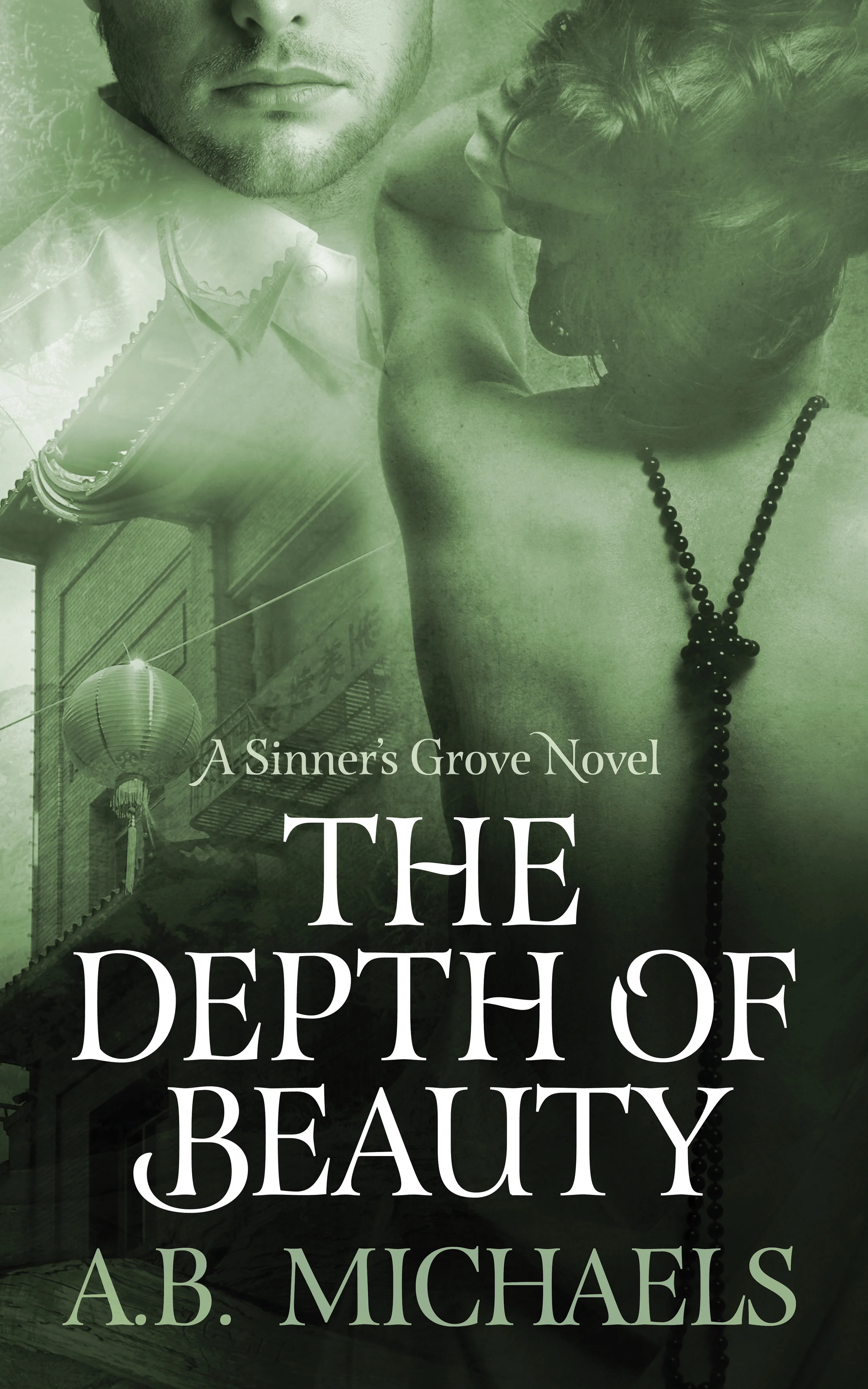
A stand-alone historical novel, The Depth of Beauty follows on the heels of A.B. Michaels’ award-winning fiction debut, The Art of Love.

Born to wealth and prestige, handsome and successful in his own right, Will Firestone is the crème de la crème of 1903 San Francisco society.  But when a business venture draws him into the city’s reviled Chinatown, his notions of what matters in life are tested in the extreme.  With the help of an exotic young mother and a mysterious orphan, Will embarks on a journey of self-discovery, where love, danger and tragedy will change his life forever.

The Depth of Beauty is part of a dual-genre series, “Sinner’s Grove,” which chronicles the family and friends of a world-famous artists’ retreat on the northern California coast.  The stories follow both historical and contemporary tracks, and can be read separately or together for greater depth.  Other titles in the series include the contemporary suspense novels Sinner’s Grove and The Lair.

Book Excerpt

He emerged from the trees to see Mandy standing at the water’s edge. She was facing the ocean, so he could only see the back of her. She had taken off her shirtwaist and her skirt, leaving only her chemise and a petticoat. Her feet were bare and her rich, dark red hair flowed down her back.

She was bewitching.

She was trying without success to skip rocks into the calm water. Will’s own heart skipped. He knew he should respect Mandy’s privacy and leave, but his attraction to her kept him rooted to the spot. He watched her arms, those same pale, graceful limbs the baby doc had touched during the presentation. His fists coiled in response.

He couldn’t stand it. “I can show you a better way,” he called out, walking toward her.

Startled, she turned, and when she saw him, she too froze. She glanced at her clothing sitting on a piece of driftwood, and Will reflexively took off his own jacket. “Here,” he said, beginning to cover her as if she were a child. He paused, looking at the swell of her breasts beneath the filmy material of her undergarment. They were rising and falling with her rapid breaths.

She was anything but a child.

He looked up and lost himself in her almond eyes.

Mandy was the first to break the spell. “What did you mean, a better way?” she asked softly.

He stepped back. “Skipping rocks. Hard to do in the ocean, but it can be done.” He looked down at the sand where they stood. “First, find the flattest rock you can. Not too big, about the size of your palm.” He picked one up and stood close to her again, reaching for her hand, turning it over, and placing the rock in it. “You hold it like this,” he murmured, taking her fingers and wrapping them properly around the stone. He absorbed the feel of his hand touching hers and wanted to hold it properly, as a suitor would, even though he knew he couldn’t. He looked around for another rock to demonstrate the throw. “You stand like so, pull your arm back and flick your wrist, so that it spins. See?” He demonstrated and they watched his rock skip four times before disappearing into the water.

Mandy smiled with delight and looked up at him. “I want to do that!” she cried.

“Then give it a whirl,” he said.

It took several tries before she was able to skip a rock even twice, but she reacted as if she had just climbed Mount Everest. “I did it!” she crowed.

Will couldn’t help but grin at her enthusiasm. “I’ll attest to it,” he agreed.

They stayed in companionable silence for a bit longer until, once again, Mandy brought them back to reality. “I don’t think you came down here to teach me how to skip rocks,” she said. “Why did you come?”

He had practiced his little speech on the way down the hill. Why was he so loathe to begin it now? He took a deep breath. It had to be done. “I heard that Ethel Steubens quit and that you’ve, um, stepped into her place, as it were.”

Mandy’s voice lost its levity. “Who told you?”

“Peter Raines.”

She nodded. “I should have known. He’s beyond worried about what Lia might think.”

“So, he’s correct? You’ve been displaying yourself in the … altogether?”

She looked at him with the knowing expression of a woman twice her age. “Do you mean, have I been modeling naked?” She squared her shoulders. “The answer is yes.”

Something primal escaped him—something he had worked hard to control. “Well, you are damn well not going to do it anymore.”