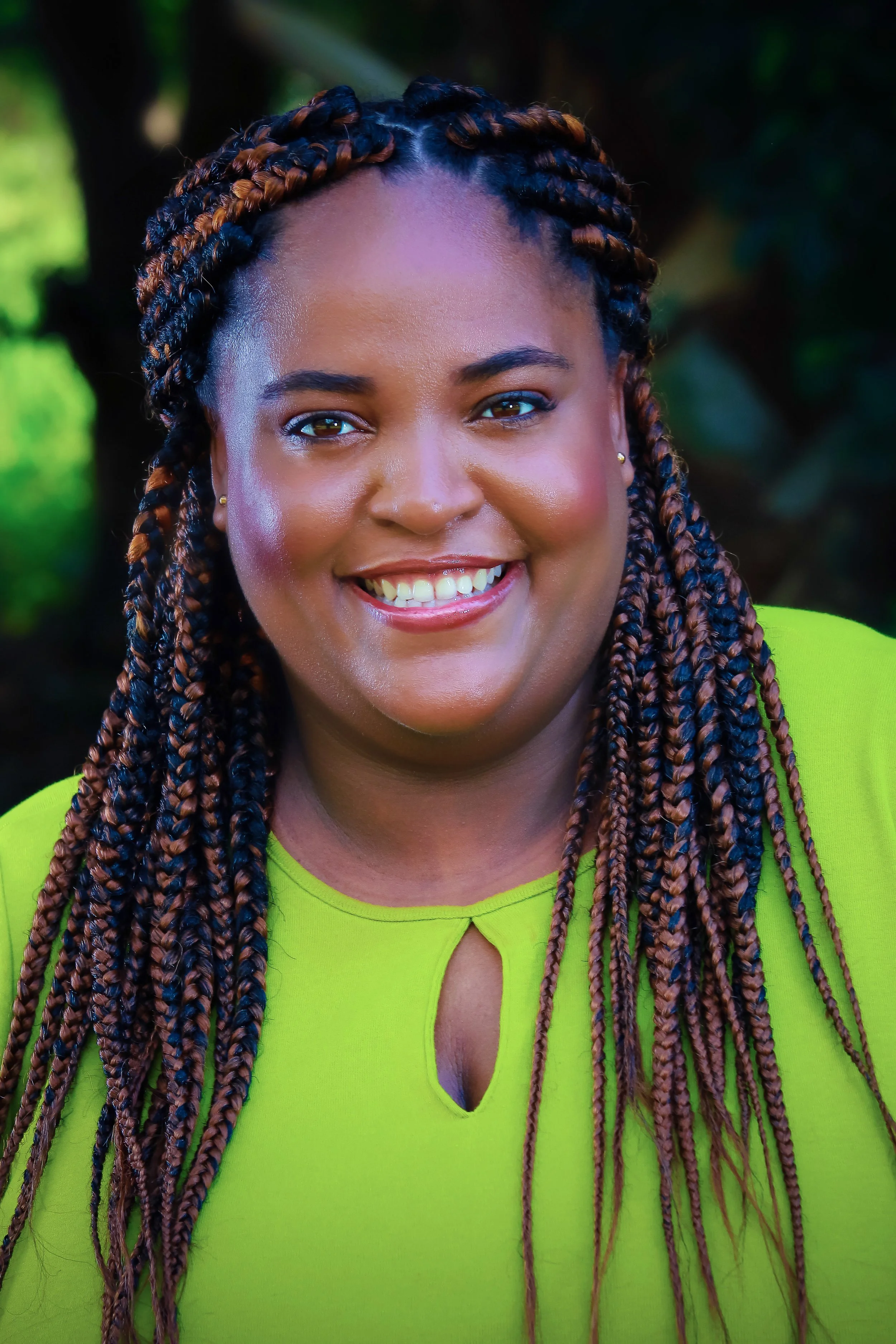
Q&A with Sue Hinkin, The Snake Handler’s Wife

What was the first spark for The Snake Handlers Wife? A character, a setting, or a question you couldn’t let go of?

The question as always is one of human behavior, and in this book, behavior in cults. What would motivate someone to give up their independence, sense of self, and completely turn their wellbeing over to a sycophant to be followed without question? In these turbulent political and cultural times, that question has raised its head again.

The title alone carries weight and tension. At what point did you know this would be the book’s name, what did it represent to you now?

I struggled with the name for months. The Snake Handler’s Wife felt good early on, but there are many other books with the so-and-sos daughter or wife. I didn’t want to be derivative. But in the end, it felt like the most accurate depiction of the story. The deep and varied symbolism of snakes through cultures and eras was also hard to resist.

How did you balance telling an intimate personal story while exploring broader themes of faith, belief and control?

Broad themes always seem to boil down to personal stories. Human experience and the resulting emotions are well examined in fiction--that’s one of the things that makes it so impactful.

The ranch setting is isolated, beautiful, and dangerous. How did the landscape influence the tone of the novel?

I lived in the Santa Monica Mountains for some time and was captivated by its wildness, beauty, danger, and the feeling of oneness with nature I felt everyday even though it was only a short distance from one of the largest metropolitan areas in the country. At dusk, I’d look down my canyon toward the ocean as residents turned on their porch lights--I felt like I was seeing the Chumash kindling their campfires.

Your protagonist lives in a world shaped by both devotion and fear. How did you approach writing her internal conflict with empathy rather than judgment?

The Golden Rule, aka empathy, is the basis of everything positive in both real life and fiction. It is, however, a really tough one to follow. The reader will ultimately make their own judgements based on their ability to step into the shoes of the characters.

How did you approach writing a cult leader who feels believable rather than exaggerated? Did you research snake handling religions or cult dynamics while writing this story?

I did a lot of research on these topics. Cult leaders seem to have a very predicable personality so I held true to those qualities in Mark Wenter. I always build in a humanizing backstory for my protagonists as well. Yes, I researched snake handling congregations and learned a whole lot about rattlesnakes.

Animals play a powerful role in the story. What did they symbolize for you, innocence, warning or something else entirely?

Non-human animals often seem like the best of us sentient beings. Motivations are clear, predicable, and without malice. It’s very grounding to live among critters.

What scene was the most emotionally difficult to write and why?

The scene when Jaime almost bleeds to death due to a ruptured ectopic pregnancy and is saved by Heath and Lucy, was the most challenging to write. We live in a time when women’s healthcare is at risk. This ectopic crisis was also the event that eventually caused Jaime to realize if she had been with the cult that weekend, she would have died. She wanted to live.

Did writing The Snake Handler’s Wife change the way you think about resilience or choice?

We all try to make the best choices we can in life. When we make inevitable mistakes, or growth opportunities as I call them, take the lesson to heart and go forth armed with better understanding. Bea, Lucy, and Jaime, all show this resilience.

If readers take away one lesson from Lucy’s journey, what do you hope it is?

If someone claims to know God’s Truth in all things, as did Pastor Wenter in this book, put on your critical thinking hat and step away.
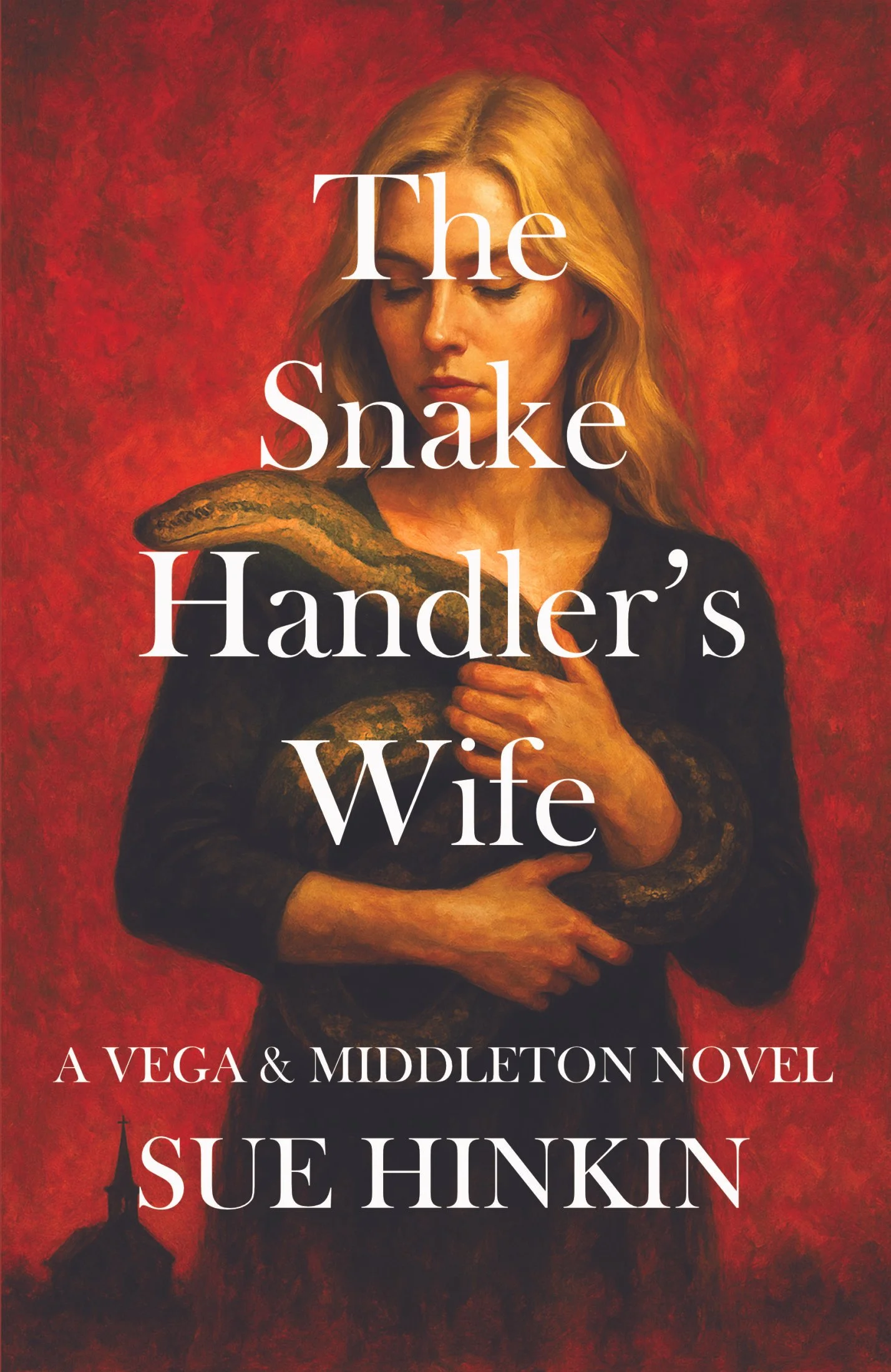
About The Snake Handler’s Wife:

When Lucy’s life partner, war reporter Michael Burleson, suddenly leaves the U.S. to take a job re-establishing the cable news network office in Iraq, Lucy is alone with their four-year-old son Henry on her isolated Malibu Ranch. Michael’s sweet but unstable, recovering addict daughter, shows up looking to meet her baby half-brother and establish a relationship with Lucy. Despite Michael’s warnings, Lucy wants to re-kindle family ties and hires the girl to help care for Henry when Lucy is working. Weird things begin to happen at the ranch—her beloved horse is bitten by a rattle snake not native to the region, the animal enclosures are vandalized, and a loaded gun is found next to Henry’s swing set. Lucy doesn’t know that the daughter has fallen under the spell of a sexy, snake-handling cult leader who wants to get rid of Lucy, take her ranch and her son.

Grab your copy on Amazon Kindle | Audible | Paperback | Bookshop.org
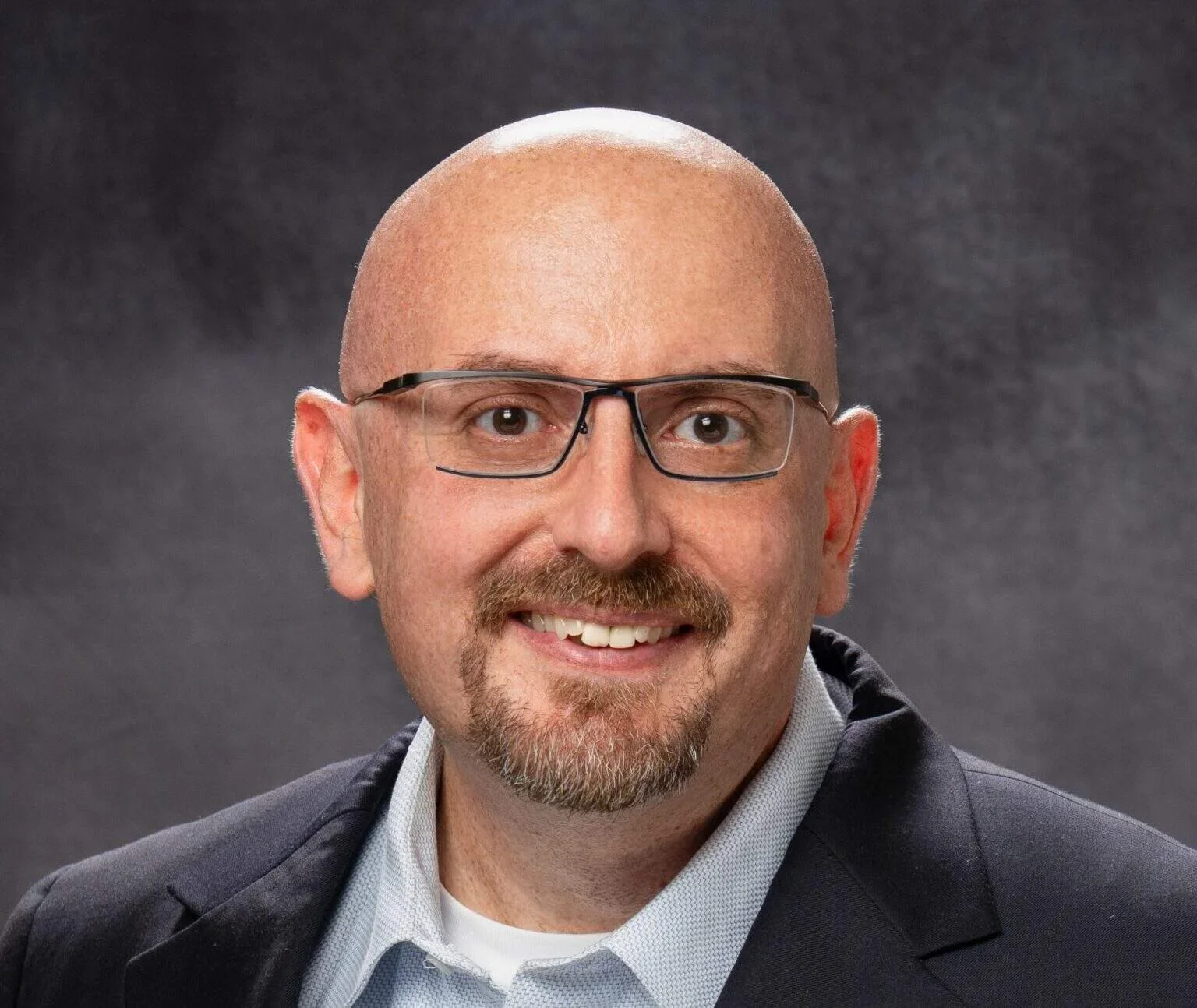
From Press Box to Page: Rewriting the Olympics Through Fiction

As a sports journalist with over two decades embedded in the Olympic world, I've chased stories from press boxes to finish lines, witnessing the Games' glittering facade and its cracks under pressure. 

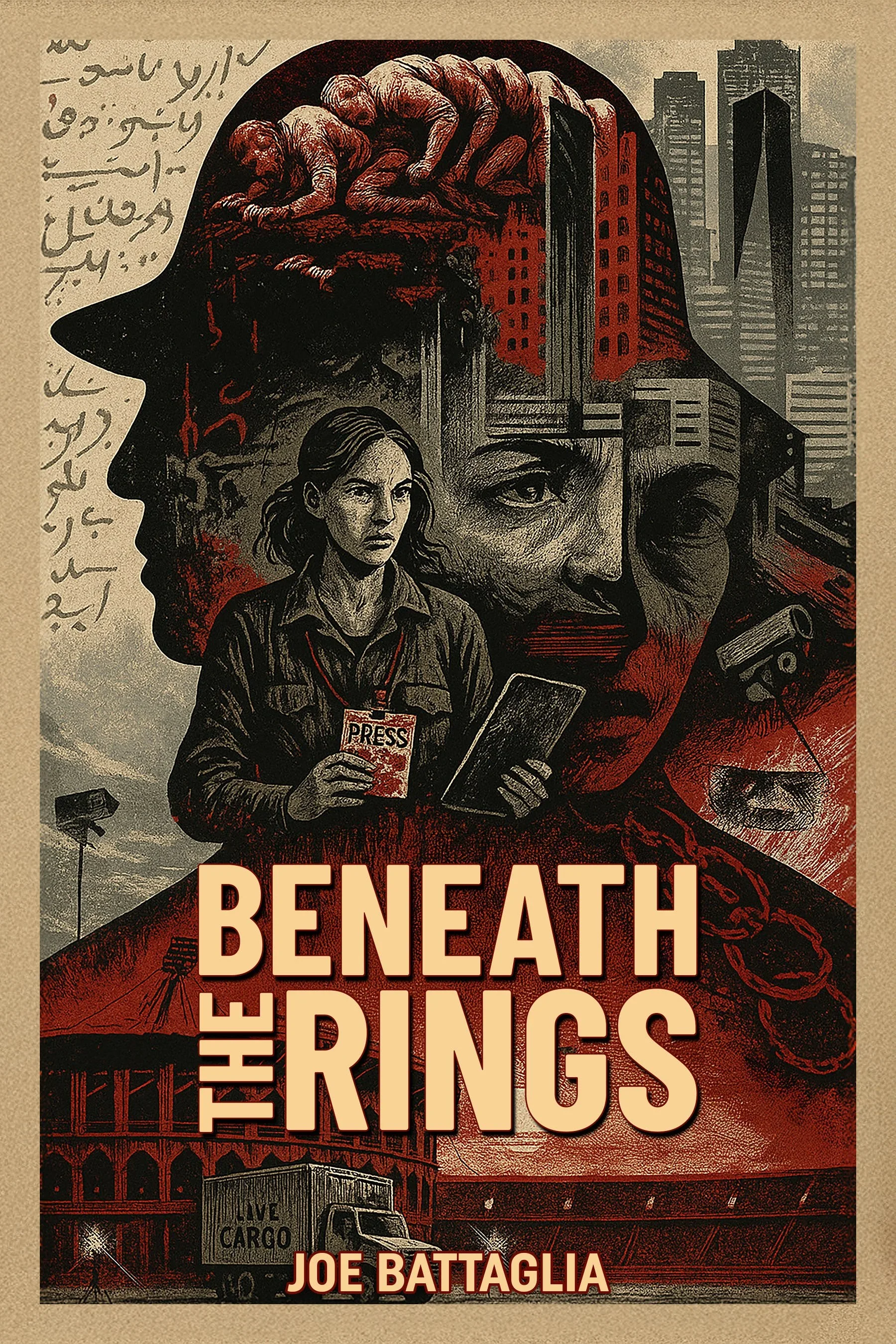
My debut novel, Beneath the Rings, thrusts readers into the fictional 2040 Doha Olympics—the first in the Middle East—where reporter Nova Mendelsohn uncovers a terrorist plot amid the chaos. Drawing from my time at NBC Olympics and Universal Sports, the book blends real behind-the-scenes grit with thriller tension, like the vivid Opening Ceremony that immerses you in the stadium's electric hum, or the athlete kidnappings echoing the 1972 Munich massacre. While modern Games boast ironclad security, this tale asks for a dash of suspended disbelief to let the drama unfold.

My Olympic immersion started in 2007, I crafted content and social strategies for Track & Field and Alpine Skiing on NBCOlympics.com. During the 2008 Beijing Games, the Bird's Nest Stadium erupted as Usain Bolt shattered the 100m and 200m world records, his lightning stride captivating the world. I was there, pushing real-time updates and athlete profiles that went viral, contributing to our Sports Emmy win for innovative coverage. Behind the scenes, I produced features on lesser-known stories, mirroring Nova's focus on overlooked narratives in the book.

In 2010, as the Alpine Skiing producer for the Vancouver's Winter Olympics, I was there in the throws as Lindsey Vonn clinched downhill gold despite a bruised shin, and watched from the International Broadcast Center as Shaun White defended his halfpipe title with a flawless Double McTwist 1260. Our team broke every moment down live, in the process building a community, much like the dedicated following Nova cultivates on her OlymPulse site. We earned praise for real-time problem-solving, optimizing coverage as events unfolded in the Whistler mountains.

The 2012 London Olympics were a whirlwind: managing track and field content live from the Olympic Stadium. Before the Games, I hosted prediction shows with analyst Ato Boldon, forecasting races like Mo Farah's 10,000m and 5,000m double gold amid the home crowd's roar. Sports Illustrated named me one of 50 Must-Follow Twitter accounts, where I'd share scoops like Allyson Felix's 200m triumph after years of near-misses. 

As a representative of the host broadcaster, what I didn’t get to do -- but wish I did -- was more investigative or commentary pieces that expose host-city tensions. That is why it was important for me in the book for Nova to be an independent journalist, so she could pen articles like "Doha 2040: A Shiny New Sports Mecca—At What Cost?" 

By Sochi 2014, the atmosphere was charged with controversy. As Russia hosted amid anti-LGBTQ laws and Circassian protests over historical grievances, I once again was unable to delved into athlete activism. The Games saw Yuna Kim's silver in figure skating amid judging debates, but later revelations of state-sponsored doping—whistleblower Grigory Rodchenkov exposing tampered samples, leading to 13 stripped medals and flag bans. The ethical weight of those Games lingered, inspiring Nova's coverage of Sochi's scandals in Beneath the Rings

In the novel, I tried to channel these into vivid parallels: the Opening Ceremony pulses with a 100,000-strong crowd, boos for Israel mirroring real geopolitical frictions I've seen, like tensions in Beijing over Tibet. The Obsidian Hand's athlete kidnappings, with a $500 billion ransom and Semtex threats, harken to Munich 1972's Black September attack that killed 11 Israelis. Historically tied, it explores terror's shadow over sport. 

Yet, today's Olympics are fortresses: multi-layered surveillance, biometric scans, and international forces make such breaches improbable. My story requires suspending disbelief to crack that armor, heightening the stakes in Doha's futuristic venues like Lusail Stadium.

Ultimately, this book is my love letter to the Games' unfiltered soul. Dive in for the thrill.

About Beneath the Rings

The Doha 2040 Summer Olympics are supposed to be about gold medals and global unity. Instead, they kick off a descent into terror when 12 Israeli and Lebanese athletes vanish, leaving behind only the chilling threat of The Obsidian Hand and an impossible $500 billion ransom. Veteran journalist Nova Mendelsohn finds herself entangled with a cryptic Ancient Arabic note and a mysterious local merchant, forced to race the clock. Her pursuit of the truth will take her from the glittering Olympic Village into the city’s darkest corners and onto the blood-soaked sands of the desert, where a centuries-old vengeance threatens to ignite a catastrophic final act. What secrets lie beneath the surface of the Games, and what will it cost Nova to uncover them?

Buy on Amazon Kindle | Hardcover | Paperback | Bookshop.org

About Joe Battaglia

Joe Battaglia is a seasoned and award-winning journalist who spent years in The Olympics arena. With over two decades in sports media, Battaglia has led content creation across news, politics, and athletics, including a role on the NBCOlympics.com team that earned a Sports Emmys for Outstanding New Approaches To Sports Event Coverage for the 2008 Beijing and 2012 London Summer Olympics. He currently lives in Texas with his family. Joe is the author of the award-winning children’s book, The ABCs of Track & Field: A Fast Start For Future Runners Jumpers & Throwers, and Beneath the Rings is his debut adult novel. 

Beyond the Trope: Finding Truth in Fractured Memories by Allison Martin

Trigger warning: Discussion of PTSD and trauma (non-graphic).

Author Note: Healing is deeply personal. What I share here is my own journey. I believe that fantasy and romance novels can comfort and illuminate, but they should not replace the care and guidance of professionals.

I’ve always used stories as a way to make sense of the world, but somewhere along my writing journey, I’ve discovered that tropes can be way more than just a plot device. They can be a way to name and process difficult and painful experiences in a safe way.

And for my latest Historical Romantasy, I chose trope enemy number one: Amnesia.

Backing up a bit, I grew up on the fantasy classics: epic quests, magical curses, chosen ones, princesses locked in towers. Men, busy being heroes, and learning lessons at the expense of women, usually. 

But it wasn’t until I discovered romance that I truly saw myself in the pages. The idea that women could be messy, angry, stubborn, flawed, complicated, full of desire, and still be the heroes of their own stories, without having to be sacrificed or saved, felt revolutionary.

It was that belief that pushed me to dip my toe into the fantasy waters as an author, and pen the first version of what would become Of Dust and Flame. 

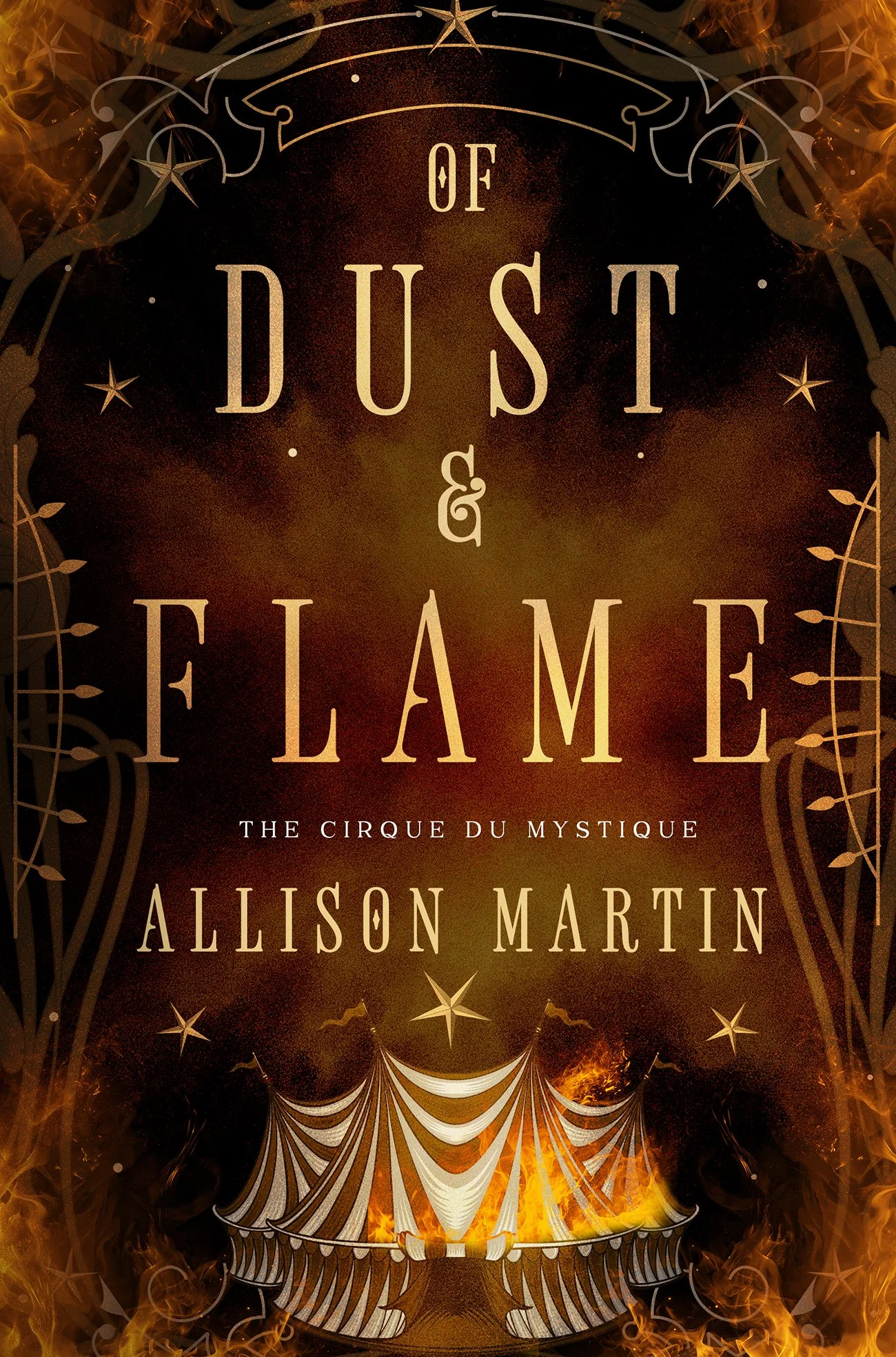
Twelve years ago, I wrote a novella about a fire-weilding girl who wakes up on a 1930s magical circus train with no memory of who she was before. It poured out of me, raw, unfiltered, and unrefined. 

At the time, I couldn’t have explained why I chose to write amnesia into Ella’s story. It just felt necessary.

I proudly published that novella as a baby author, only to discover something the hard way: readers hate the amnesia trope. 

Back then, I barely knew what a trope was. But amnesia had a reputation for being cheap, lazy, and overly dramatic, which after reflection is legit criticism. It didn’t take long for me to figure out that my little novella didn’t have the depth needed to sustain the story and I pulled it, moving on with my life.

Sorta.

Why I couldn’t quite let it go

Ten years and several books later, I’d developed a strange affection for hated, cliched tropes that I’m sure started with Ella. Instead of avoiding them, I wanted to dig into why people railed against them, and if they had any true depth or redeeming qualities beneath their ability to create cheap conflict.

Building a career on writing things people hate was a choice. But one I’ve never regretted.

The first tug back to Ella’s world came during therapy. After finally naming what I’d lived through as PTSD from multiple past sexual assaults, I dove into the science behind why my memories felt scattered and out of order. 

PTSD isn’t just flashbacks; it fragments experiences into jagged memories, burying parts of your history in an effort to protect you. But the issue is these fragments don’t stay buried. They resurface, often in the most bizarre ways, and because the brain doesn’t have the full memory, the experience that your brain is trying to protect you from, repeats itself in your present experience.

Revisiting Ella’s story, it became painfully clear: what I thought was just a plot twist was actually my subconscious trying to make sense of something it couldn’t name at the time. Her fractured memories weren’t a gimmick. They were a reflection of the parts of myself I hadn’t been able to face.

Those who know me, know that my favourite place to live is in the space where science and magic meet. Processing PTSD with a magical deck of tarot cards and the most hated trope on the planet, seemed like the exact spot I needed to be to do this story justice.

Writing the book I couldn’t have written back then

Reopening the manuscript felt like reading a jumbled, disjointed letter from my younger self, but I knew it was time. I knew I was ready.

Years of therapy, research, and my uncanny ability to find patterns in anything, had given me tools my past self didn’t have to breathe life and depth into Ella’s story. 

By then, the injury was mostly healed; I haven’t had a real trigger in nearly five years. I could finally look at what I’d been avoiding and untangle the threads, using historical romantasy to do it.

I rewrote Of Dust and Flame from the ground up, and this time, I felt the magic of this world in my bones.

A trope too close to home

Ella’s amnesia wasn’t just there to create mystery. It became the heart of the story. Her trauma claws its way into her present, shaping her choices and repeating old patterns until she’s forced to process her pain, or be crushed beneath it. 

The dual timelines — the past pushing through and the present she can’t escape — became my way of showing how trauma continuously loops until something breaks it, or it breaks something.

It felt vulnerable to write. Ella’s rage, mistrust, and fear of closeness were all too familiar. 

Fiction gave me distance, but it also demanded honesty about what it’s like to live with memories that don’t stay politely in the past.

For Ella, the past isn't just the past. 

It leaks into her present, reshaping who she trusts, who she pushes away, and why. 

That felt painfully true, because trauma confuses friend and foe, hero and villain — and sometimes, in fictional circuses with cursed tarot and forbidden love, it can even turn a girl into a monster.

About Dust and Flame:

Ella Olsen was born to dazzle under the big top, but her fire-wielding magic has always kept her in the shadows.

When the 1929 financial crash leaves her family’s circus on the brink of collapse, Ella makes a desperate deal to save it—one she can no longer remember. Then, a devastating fire takes everything: her home, her father’s legacy, and her past.

She awakens in Cirque du Mystique, a place of impossible performances where every act is powered by magic. But her arrival isn’t by chance. Maddock, a dangerously charming aerialist, has come to collect on the deal she forgot. Now, Ella must compete in The Spectacle, a deadly showcase where only the strongest survive.

As her memories return, so do the secrets she once buried. The closer she gets to the truth, the more she realizes that history is about to repeat itself—and this time, it might burn her alive.

Buy on Amazon

Allison Martin writes science fiction and fantasy where science, psychology, and earth-based spirituality collide. Her stories are steeped in feminine power, quiet rebellion, and defiant magic. Living in a remote Northern Canadian wilderness community, she believes writing is both craft and alchemy. When she’s not transcribing the stories of stubborn imaginary women and the brave souls who choose to love them, she’s supporting other misfit creatives who want to carve their own path as a brand strategist. 

She loathes social media (or any mass gathering of strangers, really), and prefers the sanctuary and solitude of her own backyard. If you ask her about her weekend plans, she will most likely tell you she’s busy enjoying her mortgage. 

You can sometimes find her online at www.amartinbooks.com or www.quillandkettle.com 

Check out the Quill & Kettle Podcast on Kickstarter for more content on writing, psychology, and alchemizing shadows into compelling stories. Season one will include powerhouse voices in publishing such as Regina Wamba, Kandi Steiner, Willow Winters, and many more.

Meet the Women Who Knock Alpha Heroes Off Their Feet: Alpha Heroines by Delaney Diamond

The alpha hero has had a good run in romance over the years, and for the most part, readers adore men who are confident, powerful, and in control. 

But today, I want to talk to you about the alpha heroine. She’s the kind of woman who possesses the same intensity and strength and can knock even the most alpha hero off his feet.

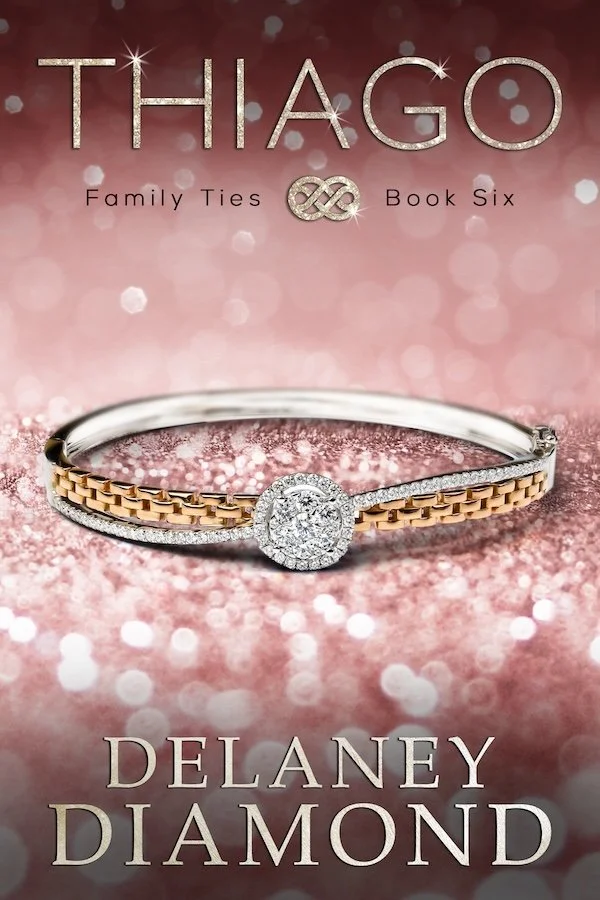
In my novel, Thiago (Family Ties, book 6), India Monroe embodies that kind of heroine. She’s intelligent, resilient, and refuses to be a pushover—not even for Thiago Santana, her wealthy, commanding boss with whom she is having an affair.

Alpha heroines are as tough as the hero

Alpha heroines don’t bow to power. They challenge the hero in a way few people in his life would dare. For example, Thiago is used to striking fear in the hearts of his staff. When they see him coming, they scramble out of the way, and when he asks them to complete a task, the only answer he expects is “yes.”

India is not so easily intimidated. As an alpha heroine, she doesn’t back down from his dominance, making each clash a conflict of equals. That makes their chemistry explosive. She’s not afraid to push back, and secretly, he loves it because he’s finally met his match.

India’s jaw tightened. “We’re marketers, not magicians. I brought you a strategic rollout after you asked for a proposal less than two weeks after the scandal hit the news. You want quick results, then expect half the quality. Unless you want me and my team to pull all-nighters every night.”

His eyes flicked over her, the way she stood with one hand on her hip, her full lips pressed together in anger, challenging him with her voice and a deadly stare. She was acting as if she was the one in charge, looking at him as if she were ten feet tall.

So damn sexy. He fought the smile threatening to pull the corners of his mouth upward.

“Careful,” he said, his tone low and dangerous, hiding his amusement.

He watched as she moved closer. “You don’t scare me, Thiago.”

Alpha heroines know their worth

Just like the alpha hero, the alpha heroine knows she’s a catch, and India is no different. She’s smart, educated, and does a great job as the vice president of marketing for Santana International’s U.S. operations. After a health scare, she realizes that she’s selling herself short in her no-strings relationship with her boss and starts dating other men. She wants more. She deserves more.

Thiago, however, is not happy when he finds out that she’s seeing other people.

“Is the good doctor the only other man you’re seeing?” Thiago asked in an overly pleasant voice.

India averted her eyes.

Thiago let loose a stream of Spanish curses. “How many others are there?” he demanded.

“You make dating sound awful, and it’s not. Kiara set me up with a friend of her husband’s, and we went out last night. Why do you care?”

“How could you ask such a question!” Thiago bellowed.

Can you tell he was livid? I’m surprised he didn’t pop an artery. Because India has started exploring her options, Thiago has to scramble to hold onto the only woman who has ever made him reconsider the single life.

Alpha heroines redefine the power dynamics of love

Traditionally in a romance, the alpha hero calls the shots. He pursues or protects. But alpha heroines meet these powerful men with a wall of calm defiance and bend the norms.

In the case of India and Thiago, when Thiago finds out that India is seeing someone, he declares that she belongs to him and demands that she stop seeing the other man. She’s an alpha female, so of course, they butt heads.

“I am not the property of any man—”

“Spare me the feminist bullsh*t. I’m not sharing you, and that’s final.”

Her lips pressed together. “All right, Thiago, you want me to stop seeing him. Fine. But I’m confused because you and I don’t have that kind of relationship. We sleep together, but we barely know each other…”

“What do you want to know? Ask me anything,” Thiago said.

“Really?”

“Yes. Really.”

“Okay.” She carefully placed her phone and the coffee on a side table. “Why are you so mean?”

That wasn’t exactly the kind of question Thiago had in mind, but India used this conversation to call him out on his hypocrisy and point out his flaws. We would expect nothing less from an alpha heroine.

Alpha heroines force the hero to evolve

These women have the power to change the hero by standing firm and forcing him to conduct a self-evaluation. As the CEO of Santana International and coming from a wealthy family, Thiago thrives as a man in control of his environment and the people in it.

But during the course of the story, you’ll see him evolve. He becomes more compassionate, a prime example being when he learns of India’s lupus and implements a company wellness program that benefits all the employees—because of his love for her.

Alpha heroines expect respect, honesty, and equality in their relationships and don’t just tame the hero—they transform him.

Conclusion

Writing Thiago allowed me to explore what happens when two strong personalities come together, their fiery traits creating conflict in the boardroom as well as the bedroom. If you enjoy reading about fierce women who challenge powerful men and knock them off their feet, India and Thiago’s journey might be your next favorite read.

About Thiago:

A no-strings workplace affair spirals into a tug-of-war of emotions. 

Thiago Santana didn’t claw his way to the top of Santana International to get sidetracked by love. As CEO, he’s driven and focused, taking his only break on Friday nights when he indulges in the one temptation he can’t resist: his VP of marketing. But when she starts canceling their meetings, it throws his carefully constructed life into chaos.

India Monroe has always played by her own rules. Sharp, independent, and very ambitious, she has never needed anything beyond her no-strings arrangement with Thiago. But a health scare jolts her into wanting more—more time, more emotion, more commitment.

Now their relationship has changed. Every touch carries tension. Every glance holds a question. If neither surrenders, they might lose the one thing they never meant to risk at all: each other.

Excerpt

After the door closed behind them, tense silence reigned between Thiago and India.

One hand on her hip, she fixed her dark eyes on him.

“Do you have something to say to me?” Thiago asked, taking a seat on the edge of the table and folding his arms.

“You undermined me in front of my team.”

“You brought me an unacceptable strategy.”

Her jaw tightened. “We’re marketers, not magicians. I brought you a strategic rollout after you asked for a proposal less than two weeks after the scandal hit the news. You want quick results, then expect half the quality. Unless you want me and my team to pull all-nighters every night.”

His eyes flicked over her, the way she stood with one hand on her hip, her full lips pressed together in anger, challenging him with her voice and a deadly stare. She was acting as if she was the one in charge, looking at him as if she were ten feet tall.

So damn sexy. He fought the smile threatening to pull the corners of his mouth upward.

“Careful,” he said, his tone low and dangerous, hiding his amusement.

He watched as she moved closer. “You don’t scare me, Thiago.”

“Hmm. That’s a problem, don’t you think?”

She held his gaze, her chest rising and falling with shallow breaths. Electricity crashed between them—anger laced with sexual awareness. He ached to reach for her but resisted the urge. They didn’t cross the line at work. Too risky.

“Was there a reason you asked me to stay behind?”

“I wanted to make sure you can meet my… demands.”

She flicked her tongue to the top left corner of her mouth, toying with him. “Don’t I always?”

Thiago clenched his hand into a fist on the table. Damn, this woman. Insatiable desire for her consumed him with no end in sight.

India turned on her heel. “If I’m going to meet your deadline, I have to go.”

She was halfway to the door when his voice stopped her.

“India.”

She stopped but didn’t look back.

Thiago pushed off the table and took a few steps in her direction. “Are we still on for tonight?”

She turned her head slowly, eyes narrowing into an expression hot enough to curdle milk. “Maybe,” she said coolly.

Thiago exhaled through his nose, the corners of his mouth twitching upward. Then she walked out without waiting for a response. She was infuriating, but she was the best part of his week.

Knowing her, she’d remain pissed right up until he saw her later.

Which meant the sex tonight would be incredible.

Buy on Amazon Kindle | Paperback | Bookshop.org

About Delaney Diamond

Delaney Diamond is the USA Today Bestselling Author of more than 60 contemporary romance and romantic suspense novels, and dozens of romance short stories. She reads romance novels, mysteries, thrillers, and a fair amount of nonfiction. When she’s not busy reading or writing, she’s in the kitchen trying out new recipes, dining at one of her favorite restaurants, or traveling to an interesting locale. To get sneak peeks, notices of sale prices, and find out about new releases, join her mailing list. And enjoy free stories on her website at delaneydiamond.com.

Giveaway

Which alpha heroine trait do you most like to see in a romance novel? Tell me in the comments for a chance to win an eBook copy of the first two books in the Family Ties series, Audra – The Prequel and Ethan.

One winner will be randomly selected and announced in the comments.

Eligibility: Open to international entrants.

Deadline to enter: November 15, 2025.

When Love Lasts Without Marriage: A Baby Boomer’s Memoir

A Version Of The Truth is a memoir that offers an intimate look at a unique relationship. It began in the 1980s, lasted for nearly 40 years, and suddenly, at the end, there was a twist. Back at the beginning, many Baby Boomers like my partner Jack and I explored the new relationship rules that grew when we were young adults during “the summer of love.” Many of us eschewed traditional marriage, with its “in sickness or in health” agreement, and now, as we approach our 70s and 80s, one of us has fallen ill. When there are no marriage vows or even “domestic partnership,” how does the relationship navigate this new territory? That was my challenge. 

For most of our long relationship, although we spent only two nights a week together and never married or shared a home, I relied on Jack for advice, emotional support, and hands-on DIY projects of every sort. We saw one another through houses, cars, careers, crises and celebrations. He even helped me overcome my lifelong fear of dogs and I became a greyhound rescuer and owner. But in the last decade of our time together, things shifted.

My job as a psychotherapist had made no physical demands, but Jack had been a construction worker. Those requirements took a permanent toll on his health and by the time we had been together for 35 years he had faced multiple surgeries, a heart attack, a mild stroke, and prostate cancer that needed to be carefully monitored. I helped him as best I could, but since we had no formal agreement, like many couples in our generation, I had no role in managing his health. A lifelong Renaissance man who prided himself on his independence, he was determined to face these challenges on his own. He did allow me to use my computer to monitor his doctor’s appointments and medication, but that didn’t help when his memory began to fail and, as I learned after one harrowing experience, he had stopped paying his bills and his phone service had been discontinued. He finally agreed to a regimen that meant he’d bring his mail and checkbook to my house once a week, I would open the bills and write the checks, he would sign them and I’d mail them from the mailbox at my curb. It was a band-aid effort and I knew things couldn’t go on this way.

I also knew I wasn’t alone. There are thousands of us Baby Boomers who dodged the formalities as young adults and who now were without a safety net as we faced our partners’ health concerns. So, when it’s not blood ties or written decrees, what title do we invoke when, say, we’re on hold with our partner’s cardiologist or oncologist while his office decides if they can talk to us? How do I label the role I’ve been playing since Reagan was president?

There’s a twist at the end of this memoir that shocked me, rocked my friends and family, and still reverberates. I don’t want to spoil the surprise, so let’s agree that the folks who come up with those titles and labels will probably never invent a name for this emerging life situation, its demands, and its aftermath.

About the Author

Marsh Rose is an author, freelance writer and psychotherapist. Her preferred genre is memoir and creative nonfiction, and her short stories and essays have appeared in a variety of publications including Cosmopolitan Magazine, the San Francisco Chronicle, Salon and Carve Magazine among others. Her essay, “False Memory,” won first prize for creative nonfiction from New Millennium Writings in 2018 and she was a winner in Tulip Tree’s “Wild Women” contest, June/July 2025, for her essay “Dinosaur Rock.” She has also authored two novels, Lies and Love in Alaska and Escape Routes. Marsh began her writing life at the age of 14 as a cub reporter in Massachusetts, changed careers when she became a licensed psychotherapist in 1992, and now divides her time among writing, her on-line psychotherapy practice, and her passion for rescuing racing greyhounds. She lives in the wine country in northern California with her greyhound, Adin. 

Here is the link to her website: https://www.marshroseauthor.com/

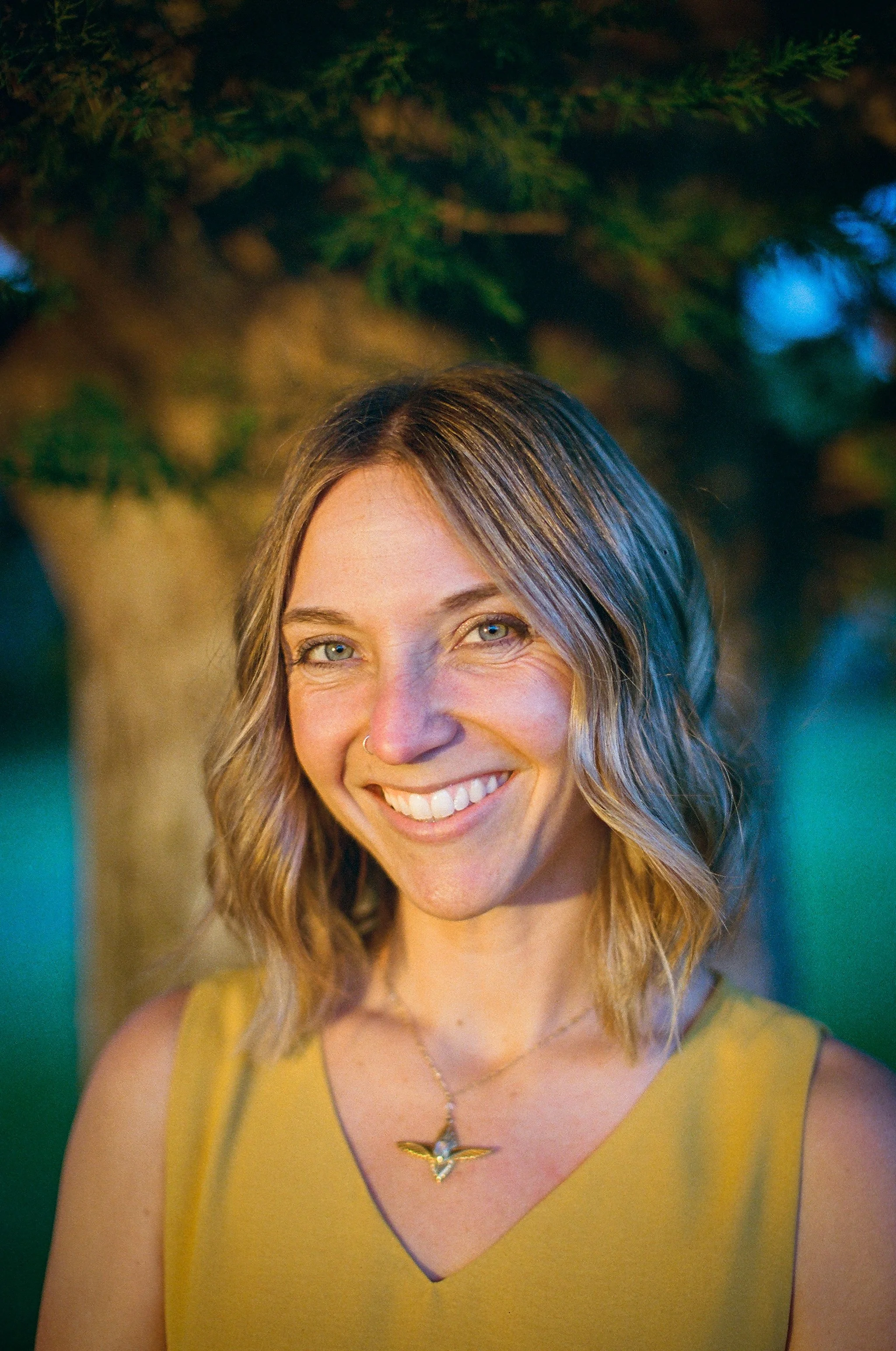
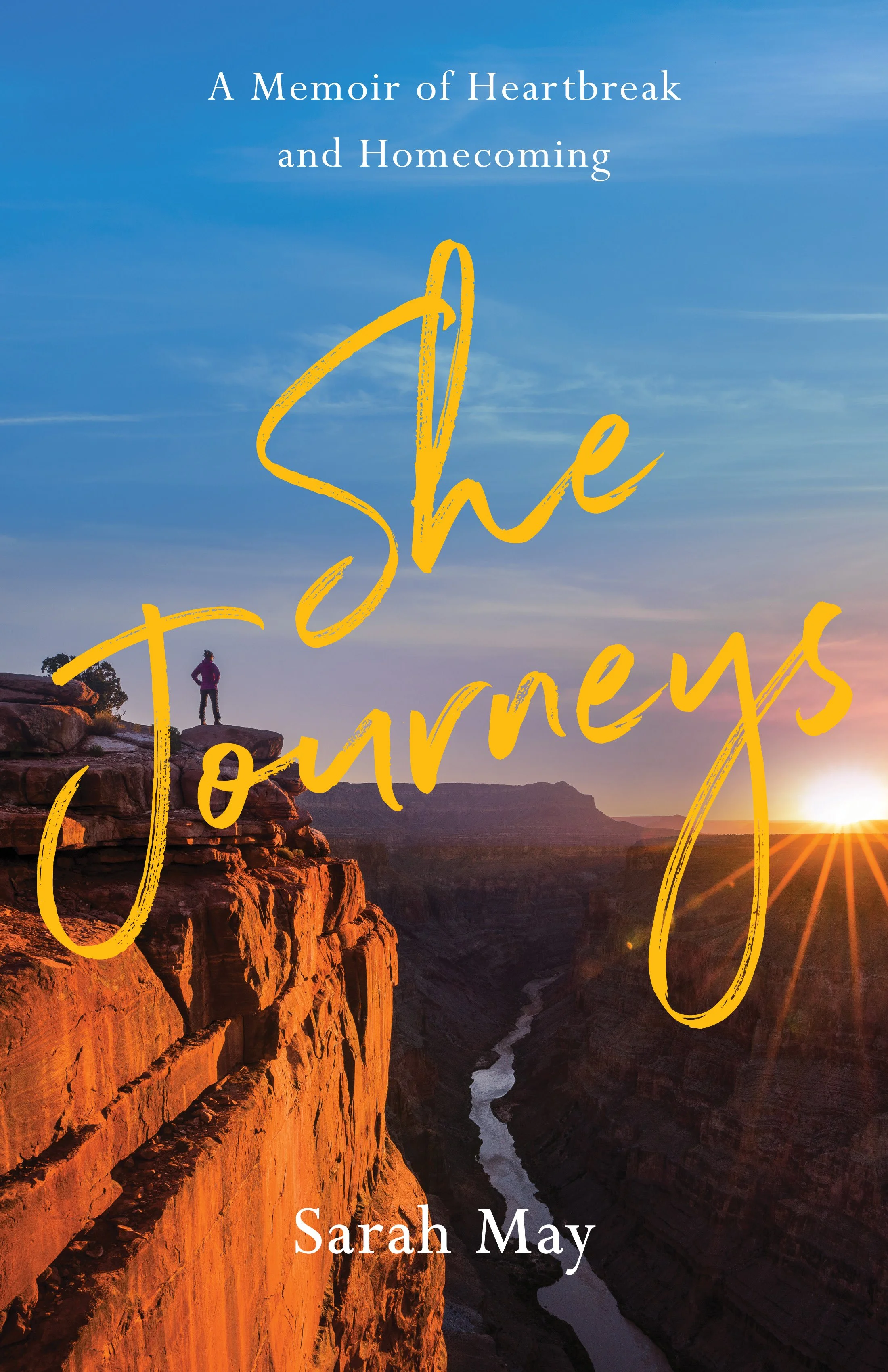
Q&A with Sarah May, She Journeys

She Journeys is such a deeply personal memoir. What was the turning point when you knew you were ready to put your story into words?

The honest answer is that it wasn’t so much a personal turning point as it was the changing of life circumstances that aligned to give me the time and space to finally write She Journeys. I knew I wanted to write a book about my divorce and subsequent healing from the beginning, but it would take seven years to even begin that process. Life was busy, I was working three jobs and had very little free time. It wasn’t until I left those jobs, sold my belongings, moved into a van I built with my partner, and set out on the road that everything changed. I discovered that for me, creativity required openness, space, inspiration. Van life gave me that. I’ve now lived in the van full time for the last five years, four of which were spent writing and editing this book from America’s public lands. I felt a deep level of safety living in a home I built and loved, being held and inspired by nature, being in a loving, respectful partnership, and having amazing support in the form of healers and teachers; all which allowed me to go to hard places and tell the story I knew I had to tell.   

Writing about infidelity, divorce, and trauma can reopen wounds. How did you balance honesty with protecting your emotional well-being while writing? What was the most challenging chapter to write? How did you decide to keep private vs public?

Writing memoir is not only to remember, but in some cases, to relive. Revisiting the past was painful and there were many triggering, difficult moments. But I had the safety, support, and tools to navigate the emotions, pain, and shame. Cracking open old journals and cringing at my own codependence, dysfunction, and denial, watching or listening to interviews from the time of the helicopter crash, it all brought up so much, but this time I had the space, perspective, and ability to navigate it. When it got to be too much, I took breaks and sought support. The hardest chapter to write (and read out loud for the audiobook) was Chapter 12 titled Terror. It was my intention to be as honest, raw, and vulnerable as possible so I shared almost everything except details that would infringe on my ex-husband’s identity or privacy. 

Your book explores the shattering of expectations. Looking back, what expectations were the hardest to release—and which became the most liberating?

When I was married at twenty-one, I truly believed I’d found my soul mate, my forever person, my life partner. I expected him to honor his wedding vows and I expected to be in a relationship of loyalty, trust, and love. But in just two short years, I would come to see that words mean little and that behavior is the best testament to someone’s character. So ultimately marriage, this thing I expected to be wonderful turned out to be the most painful and debilitating experience of my life. A living nightmare. That was hard to grieve and a hard dream to let die. I held on for a long time. Learning that love does not mean pain and betrayal isn’t a reflection of self-worth was liberating, but it came at a big cost. 

You describe healing through therapy, spirituality, travel, and even living in a van. Which of these experiences most surprised you in how transformative it became?

All of them! In their own ways each of these aspects of my life were deeply transformative and healing, but in different capacities; many of which I didn’t anticipate at the outset, but discovered along the way. Stepping into a yoga studio and fumbling my way through class taught me that I was stronger than I knew. Travelling across the country showed me how capable I was and how reminded me of how beautiful life can be, how good it can feel. Therapy taught me how to name my emotions, to process in a healthy way, and to address the trauma, pain and stories of the past. Van life gifted me the time and space to finally write my book, to slow down, and to enjoy life. Plant medicine has helped me heal somatically and psychically in ways that continue to blow me away. I believe that there are so many paths to healing. There’s no “one size fits all” or one right way. Whatever resonates or helps may be different for each of us, but the healing path is the most important one we can take.  

“From wounds to wisdom” is such a powerful phrase. What does wisdom look like for you today compared to when you began your journey?

I love that expression, because I truly believe that if we can take our wounds and make some kind of meaning, or take some kind of learning then we are choosing to be more powerful than our pain. Taking personal responsibility for my life, my happiness, and my healing was a pivotal moment for me – asking “what role did I play in my own suffering?” changed everything. Instead of blame and victimhood, I began to tell a different story – a more empowered one. I have a lot of compassion for the girl who was stuck in the story of her wounds after so much heartbreak, but I have even more respect for the woman who chose to find freedom, peace, and forgiveness. Hers is story I’m most proud to tell. 

How did traveling across the country change your relationship with yourself?

I was twenty-three when I packed up my car and set out on the road during my divorce. I was still numb from shock and trauma and depression, but that trip became the foundation for my new life. Having experiences (even if they were scary and vulnerable) like camping alone, backpacking, and travelling solo were so empowering and showed me how capable and strong I was after feeling so devastated. The road gave me space to reflect and process, nature gave me inspiration and wonder, my body carried me to some amazing places. Whether it was a campfire under the stars or swinging in my hammock strung between pines, I slowly came back online and fell back in love with life. Most importantly, I awoke to the possibility of a future that could be so much brighter and lighter than the past I left behind. 

Your story is both deeply personal and universally relatable. What do you hope readers—especially women navigating heartbreak—take away from your journey?

I wrote a book that would have given me hope in the midst of my heartbreak. Pain can be isolating, and trauma can be so disempowering. I hope that my story can help other women feel less alone and to maybe even be inspired about the life that could be waiting. My own heartbreak was the gateway to deeper homecoming. 

If a reader walked away remembering only one lesson from She Journeys, what would you want it to be?

It never matters how we begin again. Only that we do. When our lives fall apart or we lose what we think is our “everything” and we aren’t sure how to go on; the only thing that matters is that we do. We pick ourselves up off the floor, we get out of bed, we leave the relationship, we take the next breath, put one foot in front of the other. It doesn’t matter how messy or imperfect we are or how many mistakes we make, the only thing that matters is that we have the courage to embark on the journey ahead. There is always hope. Always. 

Finally, as you look ahead beyond this memoir, what parts of your own story are still unfolding—and how do you see your path forward?

I’m still on the road and loving van life with my now-husband who is also an author (Andrew Singer who wrote Now Is the Time: A Van Life Road Trip). We are on an independent bookstore tour promoting our books, meeting amazing people, and sharing our stories. It’s been an amazing year finally putting She Journeys out into the world, but I’m looking ahead to what might come next. I’m excited to share healing offerings like workshops based on themes in the book, a Divorce Ritual, and private sessions to support others on their own journeys of healing and transformation. I’m dreaming up the next book and the next adventure! 

About her latest book, She Journeys:

Few things can shatter our hearts like expectations. Sarah expected to live happily ever after. She expected her husband to honor his vows. She expected his military helicopter to land safely. But when the unimaginable occurred and her world unraveled completely, the undoing of her expectations left her on her knees, fighting for her life. To save herself, Sarah packed her car, and set out to hike across the country. But pain, codependence, and trauma challenged her as she moved forward. Her journey took her from a sailboat to a yoga studio, from a therapist’s couch to a shaman’s ceremony; eventually selling everything and moving into a van, Sarah rebuilt, from the inside out. “She Journeys” is a testament to the transformative power of healing. From darkness to light, from a marriage ended to a life reclaimed, we are reminded that it never matters how we begin. Only that we do. From wounds to wisdom, She is every woman who must find her way from heartbreak to homecoming.

Buy on Amazon | Bookshop.org
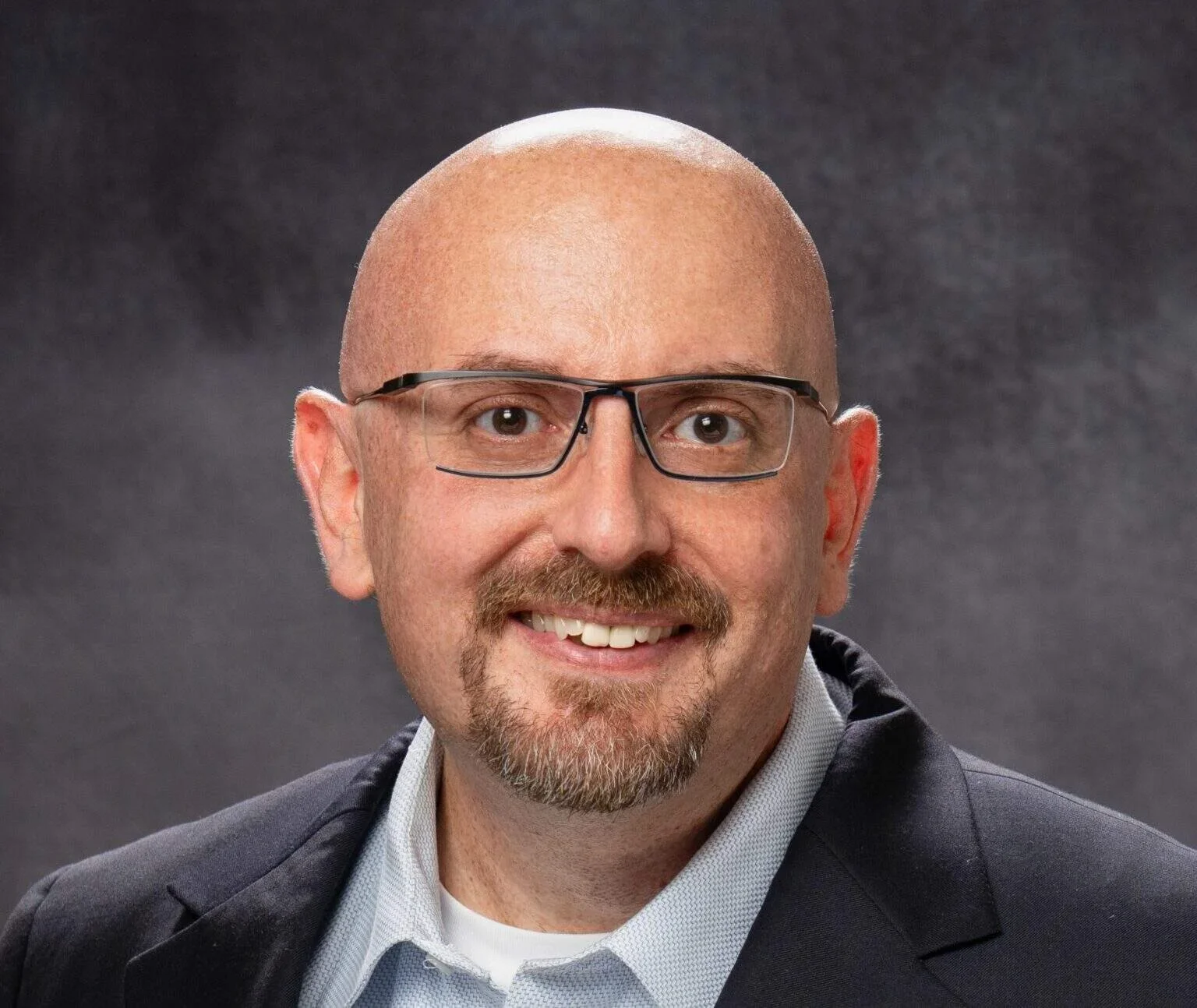
Get to know Sarah:

Sarah May is a yoga instructor, Reiki healer, and intuitive. She provides her clients with powerful practices and healing insights from the studio to private sessions, retreats, and women’s circles. Sarah received her Master of Science in Conflict Analysis and Resolution and previously managed a non-profit. “She Journeys” is her debut memoir. In 2020, she and her husband—fellow author Andrew Singer—converted a cargo van and hit the road. They spend their time exploring and writing across America’s public lands. When not on wheels, Houston and San Diego are her homebase. Learn more at: www.shejourneys.us