Spotlight: First Date by Gemma Amor
/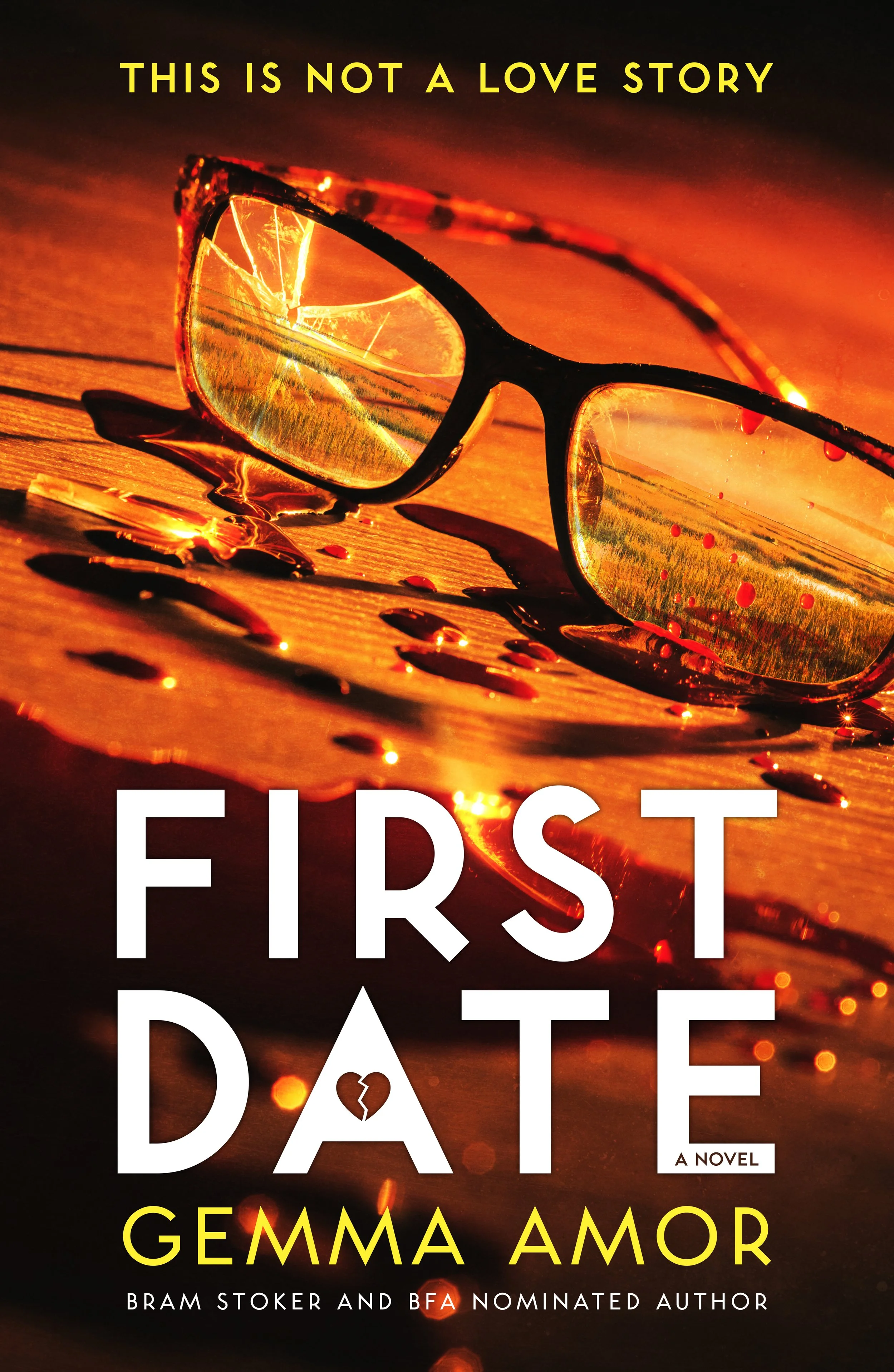
Naive and particular, Amandine has lived in isolation since losing her parents in a tragic crash. Now a neurodiverse woman adrift in rural Norfolk, she struggles with solitude and fragile mental health. Desperate for connection, she turns to online dating–only to face heartbreak time and again.
Then she meets Connor: wounded, lonely and codependent. When he invites her to dinner, Amandine dares to believe this first date might be different.
It is–but not in the way she imagines.
Watching from the shadows is the Lone Diner, a predator who hunts happy couples–determined to make their joy his next course!
What begins as a promising first date, quickly descends into terror. Stranded in the remote Norfolk Wetlands during the worst winter in modern memory, Amandine and Connor accept a lift from the wrong man and are plunged into a nightmare of violence and captivity.
Bound, bleeding, and running out of time, Amandine and Connor must trust each other to escape. But even if they survive the Lone Diner, will their trauma bond prove just as fatal as the man who held them captive?
Excerpt
NO SUCH THING AS NORMAL
Amandine knew there was no such thing as “normal”, not really, but she was beginning to suspect there was something profoundly wrong with her. Some cognitive issue that was rapidly getting worse. Memory loss was only a small part of it. Life in her thirties had become a great deal more difficult than it ought to be, to the point where her days had deteriorated into a chaotic sequence of disorganised events, half-finished tasks, missed opportunities, clumsy accidents, easily avoided misunderstandings and constant distractions. She didn’t seem to be able to complete any single task in one go, interpersonal relationships and friendships had become nigh-on impossible to maintain, and she found herself moving around her house as if wading through fog, day in, day out. She would often wander from one room to another and forget what her purpose for doing so was. She also caught herself zoning out with alarming frequency, especially in pressurised situations or occasions when she was due somewhere.
As if her body was willing, but her brain was not.
Like now, for example.
Instead of getting ready for her date, she was still furiously daydreaming, staring into space, grinding her celery like a cow chewing the cud, crunch-crunch-crunch. Her terrible memory was busy trying to sort through the terabytes of received internet wisdom offered by the hundreds, if not thousands, of listicles and articles and thirty-second videos she’d scanned in preparation for this date. She was aware that deep diving to the extent that she did was a very real demonstration of not being able to see the woods for the trees, but she couldn’t seem to help herself. The content she craved offered something she didn’t otherwise have access to: immediacy, and the illusion of support. If her brain had an itch, she could scratch it, right away, by simply unlocking her phone screen.
This was important to Amandine, a woman who spent vast quantities of time alone. Through circumstance at first, later through choice.
Advice was hard to come by, especially when both your parents were dead. She examined her index finger, used as a crude pen to write the Miracle Word on her body. Crimson-tipped now, the nail ridged with her own blood-ink.
Well, that won’t do, she thought. Can’t shake hands like this.
She stood up to go to her ensuite bathroom, intent on cleaning her finger, and promptly got lost in another thought-loop.
Periods.
People either wanted to talk about them in detail, or not at all.
This dichotomy fascinated her.
There was a wealth of misinformation online about a woman’s bleeding, most of it masquerading as advice. Amandine had read and seen all sorts of wild and wonderful things: bleeding was the sign of the devil; bleeding was only supposed to happen twice a year, not once a month; bleeding was supposed to be an egg-cup of fluid a day, no more, no less; inserting a tampon inside yourself was tantamount to having sex and taking your own virginity; sanitary products were behind global warming; you couldn’t get pregnant during your period; bleeding should last exactly seven days every month without fail; period pain was a myth; cramps were “tricks of the mind”; you shouldn’t bathe during your time of the month; you couldn’t go camping in the woods because bears would smell your blood from miles away and come looking; you shouldn’t touch flowers while bleeding because they would wither and die; washing your face in your first menstrual blood would give you a good complexion…
She’d also read that menstruation was a “gift” linked to the lunar cycle, that her body had formed a sacrosanct bodily pact with the moon that enriched her life with special meaning, significance and a unique energy, and that she had a pre-ordained path to walk, if she chose, a bloody path towards a “ferocious type of feminine power”.
She’d laughed at that phrase, what was so fucking special and ferocious about bleeds so heavy she could barely walk, cramps so severe she spent days of her life bent in half, mood swings so violent she could barely function, ruined underwear, stained jeans and bedding…
She didn’t believe in menstruation as a gift, or in ancient lunar cycles, nor did she subscribe to the idea that her natural bodily functions were shameful, in any way. Inconvenient, sure. Messy and painful, definitely. But never shameful.
But she did believe in the power of words, which is why she daubed herself. It felt, now she’d done it, like making a pact with some higher power, a strange contract of sorts. Amandine found that after the Miracle Word was written, her nerves subsided, a little.
An alarm sounded on her phone, wrenching her out of herself. One of many she had to set throughout the day, for this precise reason.
She cancelled the alarm with an untainted thumb and finally went to wash her hands.
Then, she sat naked at her vanity table, patting eyeshadow onto her lids with a soft brush as she waited for the sticky word to dry on her belly.
I wonder what he is like, she thought, working powder into the creases of her lids. I wonder if he will like me.
She glanced at her wrist.
If Celery will like me.
She giggled.
It didn’t much matter if he liked her, not really.
What mattered was whether she liked him.
Amandine had cautiously low expectations. Sure, they’d been texting back and forth for a while, but that was no way to assess a person’s true nature. She considered texts low value exchanges, didn’t place much importance on them. It was the easiest thing in the world to shoot someone a message. In the moments between his texts, she hardly thought about Connor at all. It was hard to get excited about a little round speech bubble. She preferred to keep her energy for real-life interactions, because they demanded so much more from her. Meeting new people was hard, and faintly traumatic every time she did it. She tended to judge books firmly by their cover and preface, always had. Face value was important to her.
The problem with this approach was that other people were often not as they first presented themselves.
Especially when it came to sex, dating and love.
But the internet validated her. She could find dozens of first-hand accounts from other women just like her with a few swipes of her thumb. It seemed to have all the rulebooks governing “normal” people’s conduct, motivations and behaviour. She’d done a lot of reading in the wake of her string of failed dating attempts and learned a lot of lessons.
As a result, Connor, although he didn’t know it, was going to have to work much harder to get her approval than he might have if they had met several years earlier. Vet this one thoroughly, she told herself. Protect your peace.
That was what the girls on TikTok said, at any rate.
Red flags, they called it in the various relationship-advice communities she subscribed to. Buzzwords that generated endless social wisdom she could scroll through when bored, depressed, lonely or overstimulated. Ten Red Flags You Shouldn’t Ignore. She never liked the expression, it implied red flags to a bull, like it was animalistic of her to react to shitty behaviour with anger, coldness or firm boundaries, even when provoked. A depressing concept, flags.
Buy on Amazon Kindle | Audible | Paperback | Bookshop.org
About the Author
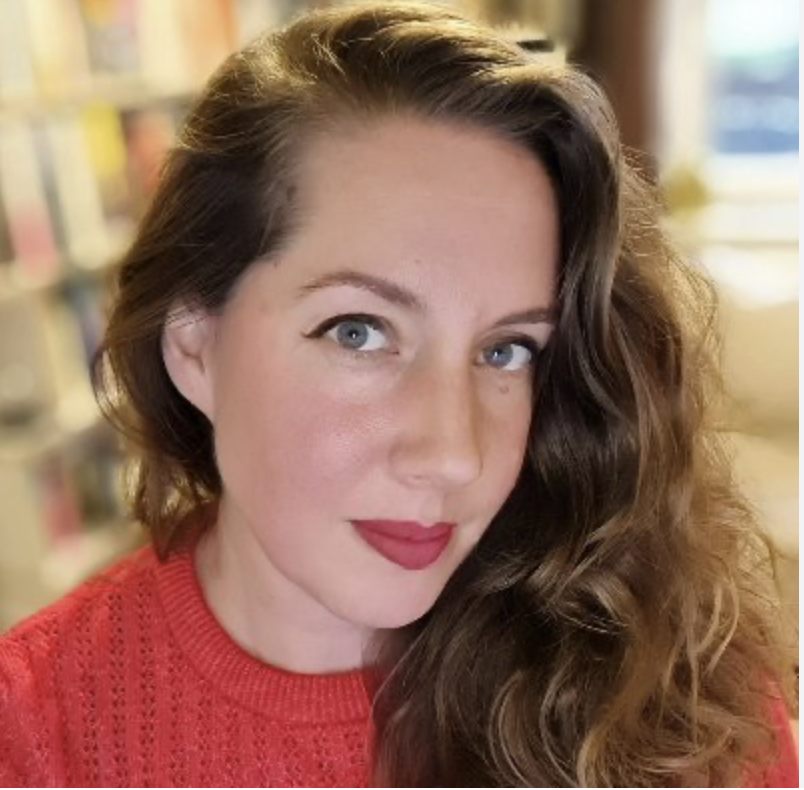
Gemma Amor is a Bram Stoker and British Fantasy Award- nominated author, illustrator and voice actor. Her happy place is horror, speculative and dark fiction, or anything that blurs the boundaries of genre with a focus on human stories. Many of her works have been adapted into audio dramas by the popular NoSleep Podcast. She is also the co-creator, writer and voice actor for horror-comedy podcast Calling Darkness. In addition to her writing, Gemma is an audio book narrator and painter. She lives and works in Bristol.