Spotlight: The Blood of the Land by Lewis K. Schrager
/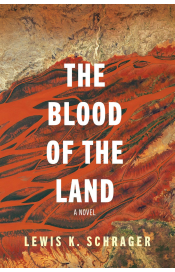
Physician Tiana Rabeson returns home to Madagascar from the US after her lover’s death on 9/11. She joins an American research team in a remote, rural village assessing the ability of antibiotics to cure bubonic plague, a common disease in the Malagasy highlands. But the expat in charge of the study doesn't want her there: Tiana’s father is a prominent, local religious and political figure tied to the country's recently exiled president. When plague strikes, the deaths of the village's first child victim and her family impact Tiana in ways she didn't expect and raise concerns about drug resistance. As the number of plague cases grows, Tiana and her team work to obtain an antibiotic which will work against this bacteria, while political unrest explodes.
Excerpt
Part I
Chapter 1
When the rains come to Analaroa, the rivers run red with the blood of the land. The hills lay naked as the back of the zebuwith the ancient forests now gone, stripped by the foreigners who felled the rosewood and baobab and took them from the Madagascar island to their lands far off across the sea; torched like so much unwanted refuse by her own people, thinking they would farm the land, unaware that the steep hillsides would hold no crops, nor anything else, with the trees gone. The rains cut the lavaka into the naked hills as deep and ugly as an axe brought down hard upon the back of a zebu by one who does not know how to kill properly but instead cuts and slashes until the animal falls in great pain, and there is nothing you can do with the hide or meat for all the destruction he has caused.
Marina Kahinu stood on the front porch of the clinic building, the concrete floor cool under her bare feet. She stared past the river and off into the hills and the mountains beyond. The sight of their bareness, of the deep lavaka scarring their sides, brought a heaviness to her heart. Plumes of blue smoke rose cold and alone from the floor of a distant valley, kiln fires burning the few trees remaining from the great forests, turning the precious wood to charcoal, to be carted off for sale in far-off Antananarivo. Is there no end to their folly? she wondered, closing her eyes against the sadness spreading inside her.
She took in a deep breath of the cool, morning air. She smelled no smoke, but there was something else; a distant, sweet scent of rain. She turned her gaze east, away from the bare hills and for the first time since her arrival five weeks before, saw clouds low on the horizon. Soon the rains will come, she thought. And with the rains will come plague.
Marina left the porch and stepped into the windowless storage closet alongside the clinic’s examining room that the study managers had converted into a bedroom for her, the burnt clay brick walls bare but for a single nail driven into the wall above her bed. She climbed onto her bed, the metal slats beneath her thin foam mattress groaning even though she was no heavier than half a man, and grasped the metal ring holding two keys hanging from the nail. She knelt on the floor before two large, wooden trunks, each marked Marina Kahinu, M.D., Analaroa. She unlocked them and opened their tops. Inside, all was as the American coordinators of Project Health Madagascar had prepared: needles and syringes, alcohol swabs for cleaning the skin, rubber-stopped glass tubes for collecting blood. Two boxes of protective masks. Forms to document participant consent for the clinical study she had been hired to help conduct; twenty-five copies, each translated into Malagasy and French, seeking permission to administer to her patients the medicine that might offer them their best chance of surviving if—when—plague visited their village.
Small boxes, each containing multiple vials of the study medicine, were stacked in a corner of the trunk on her right. The antibiotic was familiar to her from her medical training in the States yet never had been tested in a formal way against plague. The Americans had said that there was good reason to think the medicine would work better than streptomycin, the old antibiotic that the Malagasies used to treat plague. Soon we will find out whether they are right, Marina thought. The rain is coming, and with the rain the people will move their grain inside, and the rats will follow, and the fleas from the rats will find the villagers sleeping nearby. If there is plague in the rats, then the fleas will carry the bacteria to the people and there will be plague in the village. The thought triggered an unease rising inside her, something too small to call fear, yet unsettling, nonetheless.
Marina closed and locked the trunks. She stood, unclipped her hair, ran her fingers through it, let it spill forward over her shoulders. She brushed out the knots that had gathered, thinking of Eric Anderson standing behind her, his strong surgeon’s hands on her shoulders, watching her in the mirrored door to her medicine cabinet as she glided the brush through her hair. It was her hair that he first noticed, he had said, the pure blackness of it, straight and soft; softer, he had said, than the hair of a kitten. It was her hair, and her passion for public health, that drew her to him. The girls in the Minnesota town where he came from would die to have hair like this, he had said. He would pet her hair, smoothing it gently with one hand, then the other. She would stand before the mirror with Eric close behind, her head reaching no higher than the collarbones crossing the top of his broad chest, observing his high-cheeked, finely chiseled face, the gentleness in his blue eyes. Now she brushed her hair staring at the rough red wall; no mirror, no faces to look at—not Eric’s, not her own. My Eric, just one more victim of humanity’s folly, now less real than those distant columns of smoke vanishing into the sky above the naked and torn hills, she thought. Let there be plague. Let them come to me and I will cure them. Let it be so that there is no doctor in the entire American study who treats more plague patients. Above all, let me be busy, too busy to think of anything, or anyone.
And then Marina considered the consequences of this prayer for the people of this village. She closed her eyes against the hurt of it, against the far larger ache growing in her heart. She wiped her eyes with the back of her hand, placed the brush down upon the rough wood of the handmade table by her bed, gathered her hair and clipped it. And now I wait, just as I have done each day in the weeks since I have arrived, she thought. But with the scent of rain heavy in the air, she sensed that, finally, her days of waiting were near an end.
Chapter 2
Lalao lived with her husband and his family in a small hut on the grazing fields, near the rice paddies alongside the river. She was seventeen. Her husband, Nicholas Tomasy, and Nicholas’s father, Ando, grew rice and raised chickens and, sometimes, a few pigs. They were too poor even to own a zebu. When they had the need for one, Ando would turn to Haja Rakotomala.
Haja Rakotomala was the only man with anything close to wealth in the village. He owned both the largest herd of zebuand the hotely that served as a rest stop for the infrequent traveler through these remote hills. On occasion, Ando would seek permission to harness one of Haja’s zebu to his cart, permission that Haja never failed to give. Haja also provided zebu meat to Ando and his family when needed to fend off hunger. For these favors, Nicholas helped keep watch over the herd, an easy and convenient thing to do, as the grassy field alongside the Tomasy hut was a favorite place for zebu to graze. Haja appreciated that Ando’s son was willing to help in this way, given the disappointing irresponsibility of Haja’s son, Roger—now a fully grown man—when watching over things of great value to his family.
In the winter months, when the rain does not come and the grass turns brown and thin in the hard, red ground, Nicholas would walk with the family’s rusty wheelbarrow to the hotely in the village, which also was the Rakotomala home. He would take back with him bags of the feed that Haja said must be used to nourish his zebu, feed that Haja said allowed his animals to grow larger than any other zebu in the highlands. Each day during the winter, when the animals would come to the river to drink from its meager flow, Nicholas filled the trough near the Tomasy hut with the feed that Haja provided. It was something he and his father were more than happy to do to repay Haja for his generosity.
Lalao and Nicholas slept upon a straw-stuffed mattress, placed on the dirt floor of the hut they shared with Nicholas’s parents. The mattress lay between the circle of ash-smeared stones upon which they built their cooking fire, and the piles of rice and grain harvested at the end of the previous growing season. It was on this bed that Lalao’s child was conceived. If asked, Lalao would tell you that on this bed her child would be born, nursed, and weaned. Someday, Lalao knew, this marriage bed would be the bed upon which she would die.
The sickness came on her at night, a week after the heavy summer rains had begun. It started in her stomach, a feeling stronger than the morning sickness which, along with the disappearance of her monthly bleeding, signaled to her that she was with child—something she had not yet shared with her new husband or his parents. A rushed trip through the rain to the single-seat outhouse in the nearby field had relieved her cramps. The shaking started during the short walk back to the hut; a sudden sense of intense cold radiating through her like a chill wind. She fell into bed, her threadbare sleeping gown damp from the rain, shivering hard enough to make her fear that she would shake loose the child growing within her. She slid beneath the thin sheet with which she and Nicholas covered themselves and clutched her hands to her chest, trying without success to warm herself. Only when she pressed up against her husband did he awaken.
“You’re wet,” he said, and shifted away from her.
“I feel sick,” Lalao said. “I’m cold, very cold.” Lalao pressed herself against him once again, her arms around his shoulders.
Nicholas rolled to face her, his breath heavy with the sour smell of the rotgut alcohol he drank each night with his father. He placed his palm on her forehead. “Cold? You’re burning hot!”
“I’m afraid,” Lalao said. “I’ve never felt like this. I’m afraid.”
“You’ll be fine,” Nicholas said. “Try to sleep now. You’ll feel better in the morning.” Nicholas kissed her forehead, her skin hot and damp on his lips. He rolled over and fell back asleep.
After a while, Lalao’s shaking stopped, her chill replaced by an increasing sense of heat. Lalao peeled back the sheet and stripped off her damp gown. It was something she had never done before, lying outside of the bed sheet, naked in this house that she shared with Nicholas’s parents. Through the heat of the fever now came a searing pain in the left side of her groin. Soon she stopped moving, lying still in the dampness of her sweat, her left leg flexed at the hip against the pain. A horrible image appeared in her fever-clouded mind: the arms of the devil, red as the Malagasy clay, reaching out from deep beneath the earth, one burning hand clenching her groin, the other reaching inside her, tearing her unborn child from the dark safety of her womb.

About the Author
Lewis K. Schrager’s debut novel, The Radical Radiance of the Fishing Fly, was a finalist for the AmericanBookFest.com Best Book Awards and the Next Generation Indie Book Awards. His short fiction has published more than a dozen literary journals and twice earned honors in the F. Scott Fitzgerald Literary Contest. Schrager earned his MA in Writing from Johns Hopkins University. A Vanderbilt University School of Medicine alum, he has dedicated much of his life to advancing public health, as both an HIV/AIDS researcher and a developer of tuberculosis vaccines.