Spotlight: A Quilting of Scars by Lucy E.M. Black
/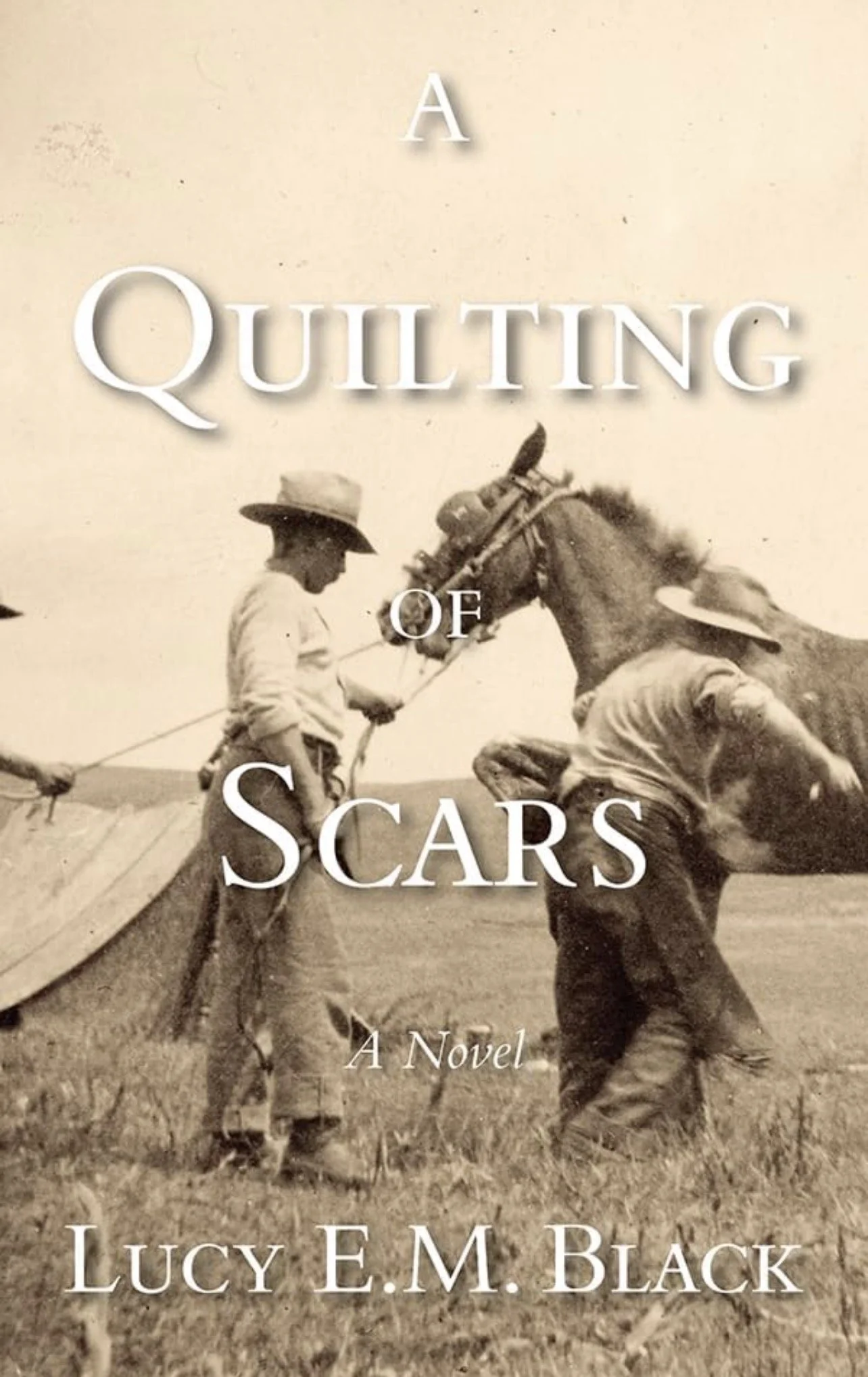
Filled with the pleasure of recognizable yet distinctively original characters and a deftly drawn sense of time and place, A Quilting of Scars brings to life a story of forbidden love, abuse and murder. Pulsing with repressed sexuality and guilt, Larkin Beattie reveals the many secrets he has kept hidden throughout his lonely life. The character-driven narrative is a meditation on aging and remorse, offering a rich account of the strictures and rhythms of farming in the not-so-distant past, highlighting the confines of a community where strict moral codes are imposed upon its members and fear of exposure terrifies queer youth. As Larkin reflects upon key events, his recollections include his anger at the hypocrisy of the church, and the deep grief and loneliness that have marked his path. There is a timelessness to this story which transcends the period and resonates with heart-breaking relevance.Filled with the pleasure of recognizable yet distinctively original characters and a deftly drawn sense of time and place, A Quilting of Scars brings to life a story of forbidden love, abuse and murder. Pulsing with repressed sexuality and guilt, Larkin Beattie reveals the many secrets he has kept hidden throughout his lonely life. The character-driven narrative is a meditation on aging and remorse, offering a rich account of the strictures and rhythms of farming in the not-so-distant past, highlighting the confines of a community where strict moral codes are imposed upon its members and fear of exposure terrifies queer youth. As Larkin reflects upon key events, his recollections include his anger at the hypocrisy of the church, and the deep grief and loneliness that have marked his path. There is a timelessness to this story which transcends the period and resonates with heart-breaking relevance.
Excerpt
Now or Never Publishing
The novel takes place during one long night when Larkin remembers events from the past. Among the disturbing memories is the branding of cattle which he hates doing. The morning after the branding, he takes his horse Dickens for a ride. During the ride, he puzzles through people’s reactions to a house and barn fire that killed two men. Larkin and his friend Paul both know what happened but keep the information a secret. Larkin considers himself a keeper of secrets.
Larkin didn’t have a destination or a route in mind, particularly. He just felt the need of some space around him. He loved the farm, but sometimes its routines felt confining, and after the savagery of the day before he was eager for some open views. He let Dickens choose their direction; the horse indicated north, towards the mountain. It wasn’t much of a mountain, really, but that’s what it was called.
As they rode, light began to break in a line and seep gradually into the sky until the orange ball of sun finally made its appearance and the black faded into its light. The mountain peak was masked by a thick ring of fog and cloud, while to the east, near the Pretty River, Larkin saw mist rising from the water like thin wispy curls of cigar smoke. The elements, he reflected, were out of balance. Larkin read in this a sign that frost would soon come.
He nudged Dickens and followed the banks of the river for a couple of miles before turning round. It was late in the season, but Larkin knew the salmon were still there and made for good eating at this time of year. He’d have to come back with his rod before winter set in hard. Thinking about the fish, making plans to come back, maybe even with his Pa, renewed Larkin’s feeling that all was once more right with the world. He was free. No one but he and Paul knew what had transpired at Skinner’s that night, and maybe now no one else would ever need to know. Was it too much to hope that Cian Quinn would leave well enough alone?
But certain questions continued to niggle at him. Why had Mrs. Skinner ignored Paul after the fire? Did she blame him? And if she blamed him, it stood to reason that the girls did too. One word to Cian, and Paul could be hanged. And if Paul wasn’t safe, then Larkin warn’t either.
His shoulders tensed at the thought. Dickens, sensing the change, stopped cantering and waited. Now Larkin sat still atop him, disoriented. Why had Dickens stopped? What time was it? How long had he been away? Panicked now, a rush of adrenaline surged through him—and he kicked Dickens gently but harder than usual and rode swiftly back to the farm.
Larkin dismounted outside the barn. He unbuckled and hauled down the saddle, dashed inside for a brush, then came back out and gave Dickens a fast currying. This was a treatment the horse enjoyed, and Larkin would often linger at it, but not this morning. The sun was quite high by now; he must have been overlong at his ride.
“Good ride, son?”
“Sorry to be so long.”
“We’re in no hurry this morning. There’s always work to be done and it always waits.”
“I’ll be quick.”
His Pa came close and stood beside him, placing his large calloused hand on Larkin’s shoulder. “There’s no fire, son. We can take time to enjoy ourselves every now and then.”
At the word “fire,” Larkin tensed again. His Pa could surely sense it. Wound up tighter than a clock is what his Pa would have thought. Larkin felt this. He felt both his folks watchin’ and waitin’.
“Go inside and get some breakfast. Your Ma fried sausages and eggs this morning. She’s keeping some hot.”
And just like that, Larkin was dropped back into the comforting routines of domestic order. But why had his Pa mentioned fire? And what would his folks really think, wondered Larkin, if they knew what I done?
The fear of discovery and the worry of disappointing them welled up once more, seizing his insides and lodging like a lump in his throat. The privy still hid the evidence. The shears remained there, wrapped in paper, under the floor. Larkin worried someone might find the bundle but he couldn’t think what else to do with it. Some days he expected his father to approach him, holding it out and asking what it was doing there. Would he lie then, or own up to things? Maybe that would be a relief. Maybe his Pa would turn him in. He dint know.
The burden of secrets followed Larkin like a dark shadow, always there, a black, menacing shape. Every now and then the darkness would startle him; he’d have to brace his legs firmly and hold his ground lest he disappear into the blackness. It was nothing that others could see or hear or feel, but it was attached to him; it would rise up and appear at will. Sometimes he’d feel a prickling at the back of his neck and he’d stand still, waiting for the tingling to run up and down his arms. Then his chest would tighten and he’d have trouble breathing. The panic would choke him as he flapped his arms, pacing back and forth till he wore himself out. Then eventually, at last, it would subside.
His Ma referred to these events as “his spells.” She was sure Doc Mather would have a powder or a cure. But Larkin steadfastly refused to even see him.
The fleeting horror of the attacks marked Larkin. He was afraid of them. He tried to fight them off when they began but didn’t always succeed.
His Pa had once found him in the barn in the middle of one. He’d stood back and watched Larkin flapping his arms and pacing furiously. Then his Pa just walked over, pulled him in against his chest, and held him tightly. He held him without saying a word for maybe twenty minutes. Larkin felt surprisingly calmed by that closeness, by his Pa’s touch.
Larkin always liked to remember the feel of his Pa then, the stubble on his face scratching against his own, the smell of pipe smoke lingering on his jacket and shirt. The gloved hands gripping his forearms tightly while pulling him into an embrace and then the feel of them strong and comforting on his back, making patterns of small circles. It was the embrace of a man who could fix almost anything.
Buy on Amazon | Bookshop.org

About the Author
Author of The Marzipan Fruit Basket, Eleanor Courtown, Stella's Carpet, The Brickworks, and Class Lessons: Stories of Vulnerable Youth, Lucy E.M. Black's short stories have been published in Britain, Ireland, USA and Canada in a variety of literary journals and magazines. She lives in Port Perry, Ontario, the traditional territory of the Mississaugas of Scugog Island, First Nations.