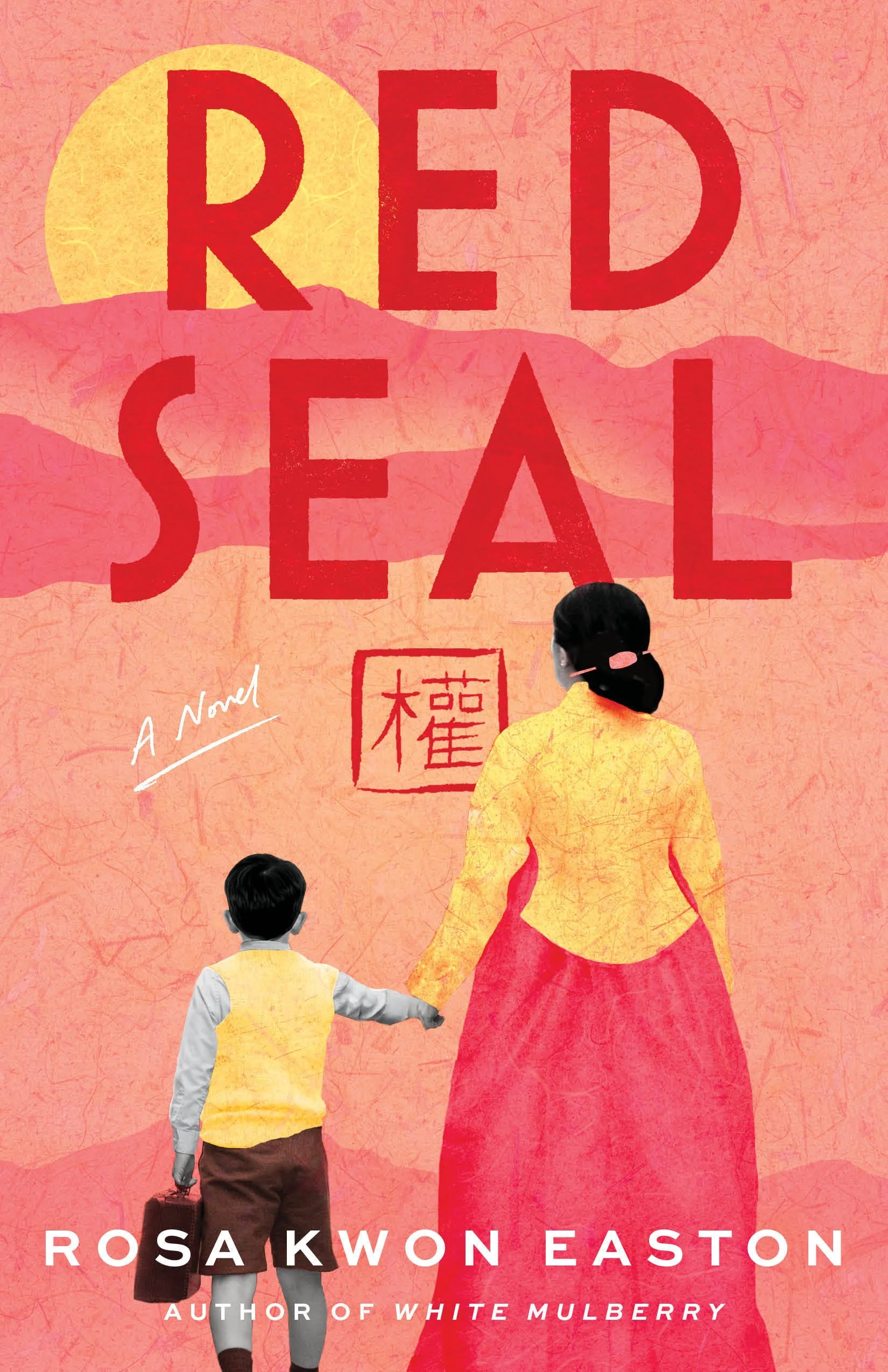
Spotlight: Red Seal by Rosa Kwon Easton
/
Inspired by the life of Easton’s grandmother, White Mulberry is a rich, deeply moving portrait of a young Korean woman in 1930s Japan who is torn between two worlds and must reclaim her true identity to provide a future for her family.
1928, Japan-occupied Korea. Eleven-year-old Miyoung has dreams too big for her tiny farming village near Pyongyang: to become a teacher, to avoid an arranged marriage, to write her own future. When she is offered the chance to live with her older sister in Japan and continue her education, she is elated, even though it means leaving her sick mother—and her very name—behind.
In Kyoto, anti-Korean sentiment is rising every day, and Miyoung quickly realizes she must pass as Japanese if she expects to survive. Her Japanese name, Miyoko, helps her find a new calling as a nurse, but as the years go by, she fears that her true self is slipping away. She seeks solace in a Korean church group and, within it, finds something she never expected: a romance with an activist that reignites her sense of purpose and gives her a cherished son.
As war looms on a new front and Miyoung feels the constraints of her adopted home tighten, she is faced with a choice that will change her life and the lives of those she loves forever.
Excerpt
MIYOUNG
Busan
April 1943
Clouds darkened the bright spring sky, casting a grayish shadow over the Busan harbor. A sea of white hanbok, Western suits, and beige military uniforms jostled Miyoung as she gripped her son’s hand tighter. She scanned for a red hat in the crowd, pulling Ko-chan close. The stranger hired by Ko-chan’s grandmother to take him back to Kyoto hadn’t surfaced on their ferry ride over to Korea from Japan, but he could still be anywhere. Miyoung charged through the wall of coal smoke toward the station to board the train bound for Pyongyang. Soon they would be in the safety of their seats and on their way to her brother.
“Okaa-san! Mi-te! Tanku!” Ko-chan shouted in Japanese, pointing to the slow-moving tanks nearby. “Mother! Look!”
Uncertainty swirled over her homeland like thick fog. The port they had just departed creaked with sailors and porters packing overfilled ships and horns blaring as if ready for battle. Ash from steam engines and the scent of seawater choked her throat as she and Ko-chan passed wounded men, jeeps, and buildings flashing the Japanese flag. Japanese police and soldiers clutching large machine guns across their chests stomped through the streets in their heavy boots. The Busan of fifteen years ago dotted with colorful hillside homes and women calling out for live squid was gone.
Miyoung shook with fear. She couldn’t be caught here too, could she? She had taken her son from the only home he knew in Japan so they could be together. Now she wasn’t sure she had made the right decision. She tried to push her worries out of her mind. Her brother Taeyoung’s kind, welcoming face and his promise to shelter them when they arrived in Pyongyang propelled her forward.
Once they entered the train, Ko-chan plopped onto the wooden bench of the crowded second class car. He pressed his face against the dirty window at the flatcars carrying Japanese artillery, and horses peering out of their open stalls. Miyoung allowed herself to smile at Ko-chan’s excitement, despite the tightness in her neck at seeing war all around and not knowing what awaited them next. He was still just a little boy, after all, and tenderness swelled that she could finally be the mother she’d always wanted to be for him. She had lived apart from Ko-chan too long while she worked as a nurse in Osaka and he lived with his grandparents in Kyoto. She would provide for her son, and he would grow up with a loving mother beside him always.
Miyoung lifted her kimono sleeve to wipe the sweat on her forehead with the back of her hand. Their ship had crossed the Korea Strait without being mistaken for a Japanese naval ship and torpedoed by a US submarine, like another ferry on the same route the previous night. They had passed police checkpoints from Kyoto to Shimonoseki so she wouldn’t have to serve as a nurse in the Pacific War and be separated from her son. She let out a small sigh, grateful that they had made it this far.
Miyoung brushed a piece of dirt off Ko-chan’s black kindergarten uniform—the same one he had been wearing since they started their journey. She reached her other hand across her chest into her obi. She pulled out a small square wooden dojang, a name seal with his surname Kwon engraved in intricate Chinese calligraphy. The seal was a symbol of her husband Hojoon’s identity—to sign his newspaper articles, his exams, his letters to her—and was all she had of him since he passed away.
Hojoon had pressed his dojang into her palm the night he died. “Promise me you’ll go back to Korea with Ko-chan so he can reclaim his heritage and identity,” he had pleaded before the tuberculosis finally consumed him. And she had fulfilled his wish . . . their wish. He had been her first and only great love, and now she was a single mother alone at twenty-six.
Ko-chan did not know yet that he would not be returning to Japan. She had convinced him to come with her by telling him he would be going on an adventure to visit his uncle in Korea. He had been excited and hopefully still was. She would raise him to be proud of his identity, something Miyoung couldn’t do while passing as Japanese in Japan. She would raise him on her own terms and close the divide that had grown between them over the years.
Buy on Amazon | Audible | Bookshop.org
About the Author
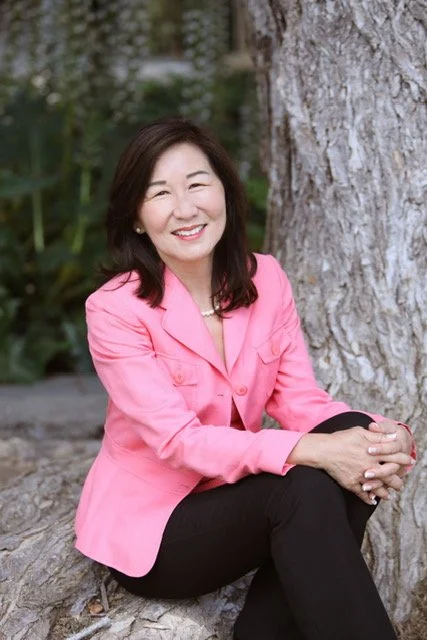
Rosa Kwon Easton is a Korean American lawyer, a library trustee, and the author of White Mulberry, a #1 bestseller in historical fiction. Named a “Best Book” by, among others, Parade magazine, BookBub, and Book Riot, White Mulberry has been translated into multiple languages. Easton is an Anaphora Writing Residency Fellow, and her work has appeared in CRAFT Literary, Electric Literature, Writer’s Digest, and elsewhere. A graduate of Smith College, Columbia University, and Boston College Law School, she resides with her husband and Maltipoo in sunny Southern California.