Spotlight: Elsey Come Home by Susan Conley

From the widely praised author of Paris Was the Place—a shattering new novel that bravely delves into the darkest corners of addiction, marriage, and motherhood

When Elsey’s husband, Lukas, hands her a brochure for a weeklong mountain retreat, she knows he is really giving her an ultimatum: Go, or we’re done. Once a successful painter, Elsey set down roots in China after falling passionately for Lukas, the tall, Danish MC at a warehouse rave in downtown Beijing. Now, with two young daughters and unable to find a balance between her identities as painter, mother, and, especially, wife, Elsey fills her days worrying, drinking, and descending into desperate unhappiness. So, brochure in hand, she agrees to go and confront the ghosts of her past. There, she meets a group of men and women who will forever alter the way she understands herself: from Tasmin, another (much richer) expat, to Hunter, a young man whose courage endangers them all, and, most important, Mei–wife of one of China’s most famous artists and a renowned painter herself–with whom Elsey quickly forges a fierce friendship and whose candidness about her pain helps Elsey understand her own. But Elsey must risk tearing herself and Lukas further apart when she decides she must return to her childhood home–the center of her deepest pain–before she can find her way back to him. Written in a voice at once wry, sensual, blunt, and hypnotic, Elsey Come Home is a modern odyssey and a quietly dynamic portrait of contemporary womanhood.

Excerpt

Chapter One

About a year ago my husband handed me a brochure for a retreat in a nearby mountain village. We were standing in our Beijing kitchen while the girls played make-believe dog at our feet. The brochure was more like a handmade pamphlet—four pieces of white computer paper folded in the middle and stapled three times along the crease. There was a grainy photo of a cement terrace on the cover, and a more alarming photo of people sitting in a room with their eyes closed, and text under the photos that explained some­thing called “a day of silence” and yoga and the chance for participants to reinvent themselves. My husband, Lukas, told me these things would make a good week’s vacation for me, and he smiled while I looked at the photos, but it was a distant smile.

He went back to his bowl of rice, and I pressed myself against the edge of our stove until my lower back hurt, and I felt so lonely I almost cannot say. I knew if I went to this village, the week would pass slowly and I’d be changed, and that this was the point of him sending me there, but also that Lukas and I might not ever find each other again.

I’d recently had a small surgery with my thyroid, and the Chinese doctor said I would get better, and he was right and so I did. But I’d been in and out of hospitals that previous winter, and when I was home I lay on the couch while Lukas and the girls continued on with their lives. Myla was eight. Elisabeth was seven. They sweetly cleared their plates and cups from the table and put them in the dishwasher upside down. Lukas often read the bedtime stories, and I saw he was trying hard to help me, but that I wasn’t needed as much as I thought, and that I must learn how to be a different kind of mother. A different kind of wife. It still feels like that now while I write this. That I cannot go back to the way I was before.

I will also say that when Lukas handed me the brochure in our kitchen I didn’t know how to be in a marriage. A real marriage. I’m not sure he did, either. He was from Denmark and had lived in Beijing for fifteen years, making music, and he stormed about the government’s crackdown on journal­ists and rising nationalism, but I’m not sure he’d ever learned how to really listen.

The day before I left for the retreat we took the girls downtown to a Japanese restaurant called Hatsune, which is lined with dark wood and tatami and serves large ceramic bowls of ramen and a sweet, sticky white rice Myla and Elis­abeth love. After the rice got served I told the girls I was going away for the week to a tiny village called Shashan, and they stared at me with their grave eyes and clouds of hair. Then the fresh lemon sodas arrived, and neither of them seemed to register my announcement again, even though it was a rare announcement because I hardly ever left them. They played tic-tac-toe with a small pad of paper and pens I’d brought in my bag, and got up to look at the oversized catfish in the aquarium.

During the meal Elisabeth politely asked for a mayonnaise sandwich even though Hatsune was her favorite restaurant in Beijing, and she has always hated mayonnaise and refused to eat anything with mayonnaise on it. When we got home, Lukas made her the mayonnaise sandwich, and I stayed with her in the kitchen while she ate it so Lukas could put Myla to bed. There are two steel stools with black matte leather seats at the end of the stone counter, and Elisabeth and I sat on these while she ate the whole sandwich, which became, I think, a kind of statement. Her long hair was tucked behind her ears, which saved it from getting in the mayonnaise, and she didn’t say anything else about my leaving for the mountains.

Chapter Two

When Elisabeth was done with the sandwich, I walked her to her room and she lay on her bottom bunk, and I hadn’t closed the curtains yet, so we could still see the skyline and the enormous Chinese TV building so famous people come from around the world to look at it. From our apartment it resembles a pair of gray pants. So big I cannot even begin to explain it, and Elisabeth is often in awe of this building. Me too. How could people even get inside that building?

We live downtown in a high-rise near the most gigantic train station. When we moved here just before Myla was born, I circled the train station on my map with indelible marker so when I got lost I could take out my map and try to find my way home.

Elisabeth rolled over on her stomach in the bed. “Imag­ine,” she said, “if you spoke wolf language. I mean really spoke it. Would you live with the wolves and leave your mother and father and never come back?”

She often asked me questions that involved leaving our family, and I didn’t want her to leave our family, and I told her this. Then I said, “Living with wolves would be exciting, and if you didn’t like it you could come back.”

She looked at me like this was an acceptable answer, and I felt I’d passed a test, which is how I often felt with Elisa­beth. Like she was administering a series of small philosophy exams, which were essential I pass in order to be allowed to continue being her mother.

I stood and pulled the blue curtains closed. This was more curtain than I’d encountered in a room, because the picture window was that big. A sliver of light from the noodle house below cut through the gap between the curtains and fell on the rug, and Elisabeth often said it looked like the scar on Harry Potter’s forehead.

The rug was hard like turf because it was laid down over concrete, and I’d never seen so much concrete before in my life until I lived in China. Elisabeth asked me what God I believed in, and I’m not sure if this interrogation was already happening before I had the thyroid surgery, but it threw me, because I often asked myself the same question privately. I told her I believed in the God of Family. “You know. The God who keeps families together forever and ever, so they are never apart.” Lying was the thing she disliked most of all, but I used to believe it was a way to spare her.

“But what do you really believe in, Mom?”

I smiled for how well she knew me. She’d already changed into the blue sweat suit, because she required being fully dressed for school before she got out of bed in the morning, and I no longer argued with her about this. But it was quite hot in her room and her face was flushed.

“Because I believe when you die,” she said, “you go to heaven for thirty years and then you come back as a cheetah because you want to be that fast.”

“Okay. Well, what I believe in is my love for you. That’s what I believe.”

I was trying to calm her mind so she’d be able to sleep. I could still mostly get away with naming my emotions for her explicitly. Maybe they were emotions I couldn’t fully name with my husband. I feared once she got just a little older, it would be over and she wouldn’t let me speak these things any longer, which has turned out to be mostly true. But there was this sweet time when I got to say them, and it has meant a lot.

Sometimes the streetlights outside her room flickered, and they began doing it then—blinking on and off, and the light landed on the strip of rug underneath the gap in the curtain and made the shapes. “Let’s go to sleep now,” I said.

I wanted her to sleep so I could pack. I also wanted a drink. I’d begun wanting one every night that winter after I put the girls to bed. I can’t fully account for it, but I will say that it didn’t feel like anything really happened during those days until I had a drink. I wasn’t painting, and I wasn’t with the girls doing what some people call parenting, because I was so often on the couch after the surgery. The girls tested me, and I tired more easily. They were still young and wanted things from me, as they should. Food and kisses. I gave them all of this.

I’d certainly drunk before my surgery, but never with intention. And now I thought I might be sicker than the doctors had said, and I was too in a hurry to return to my private conversation with the world about this. It sounds odd. My fear. I was slowly getting better but I couldn’t stop the worries, and I thought it was a secret how afraid I’d gotten.

You hear it and don’t understand when women say they lost themselves, because it seems overdone, and there are four hundred million people in China living on a dollar a day, so cry me a river.

There’s a small, fetid canal outside our apartment where a handful of old men from the hutong fish for carp and catfish. Elisabeth became fixed on these men out our window and often made us walk to the canal to watch them. She was a willful child like this and could take up a lot of the day, but I had no excuse for not painting in the two years leading up to my illness. What I will say is that I couldn’t understand how to be obsessed with my children and obsessed with my paint­ing at the same time. I thought both called for obsession. I had a narrow view of the world and I was younger then, but really I was naïve.

Excerpted from Elsey Come Home by Susan Conley. Copyright © 2019 by Susan Conley. All rights reserved. No part of this excerpt may be reproduced or reprinted without permission in writing from the publisher.

Buy on Amazon | Barnes and Noble

About the Author

SUSAN CONLEY is the author of the novel Paris Was the Place and The Foremost Good Fortune, a book that won the Maine Literary Award for memoir. Born and raised in Maine, her writing has appeared in The New York Times MagazineThe Paris Review, and Ploughshares. She has been awarded fellowships from the MacDowell Colony, the Bread Loaf Writers’ Conference, the Maine Arts Commission, and the Massachusetts Arts Council. She spent three years in Beijing with her husband and two sons before moving back to Portland, Maine, where she currently lives. She teaches in the Stonecoast Writing Program at the University of Southern Maine.
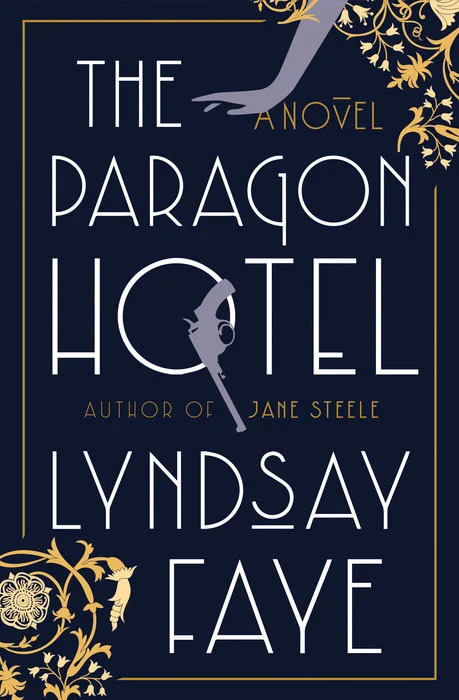

Spotlight: The Paragon Hotel by Lyndsay Faye

The new and exciting historical thriller by Lyndsay Faye, author of Edgar-nominated Jane Steele and Gods of Gotham, which follows Alice “Nobody” from Prohibition-era Harlem to Portland’s the Paragon Hotel.

The year is 1921, and “Nobody” Alice James is on a cross-country train, carrying a bullet wound and fleeing for her life following an illicit drug and liquor deal gone horribly wrong. Desperate to get as far away as possible from New York City and those who want her dead, she has her sights set on Oregon: a distant frontier that seems the end of the line.
She befriends Max, a black Pullman porter who reminds her achingly of Harlem, who leads Alice to the Paragon Hotel upon arrival in Portland. Her unlikely sanctuary turns out to be the only all-black hotel in the city, and its lodgers seem unduly terrified of a white woman on the premises. But as she meets the churlish Dr. Pendleton, the stately Mavereen, and the unforgettable club chanteuse Blossom Fontaine, she begins to understand the reason for their dread. The Ku Klux Klan has arrived in Portland in fearful numbers–burning crosses, inciting violence, electing officials, and brutalizing blacks. And only Alice, along with her new “family” of Paragon residents, are willing to search for a missing mulatto child who has mysteriously vanished into the Oregon woods.

Why was “Nobody” Alice James forced to escape Harlem? Why do the Paragon’s denizens live in fear–and what other sins are they hiding? Where did the orphaned child who went missing from the hotel, Davy Lee, come from in the first place? And, perhaps most important, why does Blossom Fontaine seem to be at the very center of this tangled web?

Excerpt

NOW

New York probably is infested with as savage a horde of cut-throats, rats, treacherous gunmen and racketeers as ever swarmed upon a rich and supine principality. -Stanley Walker, The Night Club Era, 1933

U

Sitting against the pillows of a Pullman sleeper, bones clacking like the pistons of the metal beast speeding me westward, I wonder if I'm going to die.

The walls of my vibrating coffin are polished mahogany, windows spotless, reflecting onyx midnight presently. I've been watching them for several days. When I wasn't switching trains, which was its own jostling hell and doesn't bear repeating.

Does Salt Lake City ever bear repeating, really?

I don't even suppose I took the fastest route cross-country. So long as I was always moving. I remember fleeing New York, still adrift with the shock. Battling sucking currents of lost love and lost city dragging me under. Changing at Chicago I remember-the hustle, the weight of all that metal, the sheer rank sweat of making the connection. I recall prim forests, sloping hills. Downy wheat tufts, crops we tore through like an iron bomb, and desolate empty skies. Big burgs, shabby shacks, towns undeserving of the word, all blurring into America.

But at night it's been the black window, the white alcove curtain, smells of cigarettes and pot roast and cold cream, and the fever slick coating my brow confirming that I'm going to die.

I'm in shock, possibly. Despair, certainly.

Now it hits me in a crack of panic that I'd prefer death drop by when I'm ninety and not twenty-five, supposing it's all the same to the Harding administration.

Panting, I tug at my hair. The sudden flare momentarily douses the fire in other locales. I wonder when my bunkmate will return to torment me. I wouldn't have taken a sleeping car if I hadn't been forced-acquaintances are dangerous. They pore over your mug out of sheer boredom, make remarks like God, isn't our porter just dreadful, these sheets are barely tucked in. They don't give a knotted cherry stem what you think of the porter, they can't really see him anyhow. No, they hanker to watch you react to them. Then they can journal it, whether you're haughty or humble or hateful. Whether you're all right.

Whether you're not all right, which is ever so much more interesting.

Dangerous, what with death and dismemberment potentially in hot pursuit. I couldn't go full-scale deluxe, though. A private car would have been checked first by someone searching this train, any cadet axman would chart the same course. Private cars, sleeping cars, then public seating. Maybe I ought to lend a hand to the brakeman, trade a few dirty jokes in exchange for a hiding place.

If only I could dangle from the undercarriage like a bat.

The bullet wound deposited in Harlem started reaping interest in Chicago, and now we're well past Walla Walla and it's aiming to make me a swell payout. Last time I staggered to the facilities, it looked like a volcano had erupted, crusted reds and blacks. Now it's eating me alive. I can't sit up in a public car. Has to be a sleeper, has to be this one; I leaped on this connecting train in Denver like an outlaw onto the town's last nag.

My heart isn't beating, it's clenching its fist at me.

Clamp-clinch. Clutch-grip.

Beastly. Tears keep welling up and my throat keeps closing, and no, I say.

You're called Nobody for a reason. Just be yourself. Be Nobody.

Be Nobody, and breathe.

Having died before, I ought to be more sanguine over the prospect. I first died six days ago at the Murder Stable, when Officer Harry Chipchase hustled me out of that gruesome dungeon, snapping, "Run, kid!"

"But I-"

"Damn it, Nobody, hitch a ride to the moon. You're dead to this town now, you hear?" Harry was always dour, but I'd never seen his face turned the color of molding cheese previous. "I swear to you, I'll find a body somewheres. Trust me, kid. You died today. Now, run."

Portland, Oregon, is as far as I can think of from New York, New York. Still. It might not be far enough. If I can get to Portland, he can track me there. In 1921, you can get practically anywhere with a little jack jingling in your pocket.

I identify a faint, floating nausea not confined to just my belly. My skin is actually queasy. Tiny ripples pass along it as if my body is a river. That's new. I don't much care for new things just now.

Rat-a-tat-tat.

Terror gushes, but I choke out a "Come in?"

The paneled door slides, and I exhale. It isn't my forced companion-she must still be gossiping in the dining car. She retires around one a.m., is up with the dawn. It's only Max, our Pullman porter. Real warmth seeps into my skin again.

Max. He's not the blackest of the lot, he's a sweet rum color, but plenty black enough to play this godforsaken gig. His eyes are wide set, an amber tone below philosophical brows, and he has large hands I figure ought to be playing music someplace daylight never visits. Maybe thirty years old. He sells phonograph records on the side to the travelers, and I bought one. "Crazy Blues" by Mamie Smith and her Jazz Hounds. Max was tickled to pieces-hell, he'd have put on a parade if I'd admitted I'd seen Mamie play live. But the purchase was enough. Small things like that make people cotton to you.

"Miss James?"

I'm tempted to say, Call me Alice, but they don't do that sort of thing on Pullman trains. In fact, I'm meant to call him George, after George Pullman, because George Pullman is the type so steeped in Christian humility that he orders all the Negroes on his trains renamed George. Bet he could charm the skin off a tomato in person.

"Hullo, Max. Here for the trapeze act?"

Then I wink at him. It feels a bit less like dying on a train car.

Anyway, Max is safe. He has a purebred Brooklyn accent, and we picked him up in Chicago at the transfer, which is how I figure he's so musical. Hell of a sideline record stock he displayed for a fellow who fluffs pillows. I like the version of Nobody I can be with Max. She claims to be an easygoing flapper on the run from a dreadfully cruel gentleman caller, Yonkers born, midlevel typist, interested in jazz but doesn't know much yet. Likes the Greenwich speakeasies that look like tearooms. Terribly droll those, likes to chew the fat about the latest plays over Darjeeling spiked with bootleg rum. Likes cats. That sort.

"'Scuse me for saying so, but you're looking real poorly, Miss James." Max glances behind himself.

"Well, I'm in Oregon, you see."

He exposes the glint of a flask in his pocket.

"Oh God," I gasp. The pain flares up again, rich and real. "Name your price."

"Take it easy," he says quietly. "Settle down and have a snort on the house."

Angels sing faint arias. I don't dawdle over finding out what it is before I guzzle the stuff. Good corn liquor, not the best but not cheap hooch either, small-batch operation. Pure Midwestern moonshine. The drink cuts a rug through my veins.

"Beg pardon, but this louse hurt you real bad, didn't he, Miss James?" Max's genuine frown sticks me right in the chest.

Well, yes, Nicolo Benenati shot a small-caliber bullet that grazed my torso like a neat little sewing stitch, out the other side, so it was more of a lark than it could have been, and I got the wound to stop bleeding a few hours afterward, happy day.

Hissing, I force my eyes shut until I'm less set on weeping all over Max, because it simply will not do. I like him. I like him awfully. I like his smooth brown lips and his wise-guy jabs and the way his eyelashes fan. I like his quiet magnetism. I like how he reminds me of someone.

Your nickname is Nobody, remember. Nobody at all.

"The trapeze act isn't very cheery tonight," I admit.

"Aw, look, there's a doctor over in car three, and we can-"

"No doctor."

"Why's that, miss?"

"Because this is very silly nonsense, just an attack of nerves, probably, touch of stomachache, and I'm being a wretched little idiot. How long until Portland?"

"We'll be there before dawn."

"You're a dear."

"When we pull in," I think Max says, his vowels thick and strong as big city blocks, "you're coming with me, all right? I know a girl what don't fancy a regular-type doctor when I see one. You'll be just fine, Miss James. I'm gonna make sure."

Nobody the sweet flapper would answer him, I think, but by now I live in a different world than he does, a seasick haze of nothing at all.

When I wake up, my bunkmate has returned. Looking dreadfully hopeful of conversation, and here IÕm fresh out of the stuff. And probably about to lose consciousness again.

"Oh, Miss James, you are pale. Should I fetch you some ginger ale?"

Hearing Mrs. Muriel Snider speak, I reflect, is better than being shot. But not by a terribly wide margin.

"You're so kind, but I couldn't possibly put you to the trouble." I offer her a shy smile.

Really, I've been doing a crackerjack job at not looking agonized.

Mrs. Muriel Snider has a face that makes me figure God took His inspiration from a potato. She's sedately dressed in a brown traveling suit when she isn't sedately dressed in a nightgown, and I'd wager that she's sedately dressed in a bathing costume when taking a bath. The Nobody I am with her is fluttery and inexperienced, hinted she met with an embarrassing riding accident, devoutly Protestant, anxious whether she's authoritative enough when giving her piano lessons, thinks grape juice should be served at all religious services including the Jewish ones, embarrassed to be unmarried. Knitter. That sort.

Thankfully, after stanching the bleeding left by the slug, I wore my most invisible duds. So she can't fault this Nobody for being in the wrong clothes. It's a below-the-knee skirt and a belted jacket in quiet shepherd check. And my honey-blond hair is bobbed, but long enough I can pin it so no one notices.

"Anyhow, we're almost there, I hope?"

She checks her watch. "Oh, yes, dear. Are you sure you don't want me to bring you some hot milk, perhaps? I wouldn't trust this George of ours to get the temperature right."

Smiling again, I picture round after round from a tommy gun shattering her skull, smash-crack, blood soaring like a startled flock of redbirds.

It isn't like me. I'm not violent. But I'm in an awfully bad mood.

"This late, it'll only upset my digestion, I fear."

"Heavens, yes, I never noticed how long I was gone, for the kindest Presbyterian minister and his new wife were in the dining car-she's already expecting just before their first anniversary, and I was fit to bursting with happiness for them! And with the amount of advice I have to offer, having raised six of my own alongside Fred? The poor young dear simply peppered me with questions."

She removes her jewelry, puts it carefully in her handbag, and sniffs as she locks the satchel, placing it behind her pillow. The lengths I go to ignore her are positively transcontinental.

"You're such a comfort, you know, Miss James. Forgive me for being this direct, but so many young women have abandoned the ideals of motherhood and child-rearing. Anyhow, I wanted to tell you that I trust in you, truly, to find a proper mate. It's nothing to be ashamed of, dear, being a tad plain, a bit forgettable. That requires moral courage, you know, and someday the right man will take notice. Just you trust in God and in His timing."

The genuine smile that pools over my face pleases her. I'm recalling sitting at the Tobacco Club with Mr. Salvatici, wearing a House of Worth gown. It plunged in great V's down my chest and my back, neckline bordered in a thick stripe of golden beadwork that made my carefully curled hair gleam like Broadway at midnight. The loose bodice fell in pale sea-breeze greens and blues, dripping sequined bubbles into an underskirt of aqua tulle, and when I threw back my head and laughed from heavily rouged lips, only six or seven hundred people that night looked at me at all.

If I'd wanted to get storked, I could have done it when I was seventeen. I wear a rubber womb veil, thank you-all the fast girls do, and the careless ones have been more than once to the lady doctor who solves their problems. She takes a vacation every Christmas to shore up her energies for the post-New Year's stampede. No kidding. A lot has changed since the War. Since Prohibition.

Since six days ago.

If I must die, let it be in a city. Nobody dead nowhere is too much punishment. So let it be in Portland, I decide, wondering how far I can make it until dissolving into ocean foam like some mermaids of note who weren't loved in return either.

When we arrive, itÕs still dark.

Clash-ring. Grate-scrape. Whistle blast.

Now my head is pounding, and I dread what happens next with all that's left of my heart.

Here's mud in your eye.

Sitting up, I use my arms mainly, and I don't shriek over the sensation. Markedly unpleasant though it is.

"Well, you simply must contact me when you're feeling better, Miss James," Mrs. Snider fusses. "I think we could be great friends despite the difference in our ages. My husband, Fred, is a member of the Arlington Club, and you seem of such good stock, I imagine he must know your parents already. Which is their congregation?"

"Oh . . . my parents are poor farmers some sixty miles outside the city. I send them whatever I can from my own income as a music teacher. In fact, I'm still very new to Portland. I miss them, and the farm, just . . . just terribly."

When she raises her eyebrows, it's as if a cardboard box lifted its lid. "You dear, sweet soul. Please look me up-the right connections mean everything. And there are a great many young bachelor gentlemen of our acquaintance with sober and pleasing ways! Here is my card-"

As I'm taking it, resenting the extra weight of carrying so much as her printed name, a polite knock sounds.

By now my pulse is too feeble to blaze up into genuine panic and gives a flicker of dismay instead. But it's Max again. He's wearing a chocolate-brown hat that suits his lighter complexion and a beige trench that matches the pale leather of his luggage. His eyes dart, identify the olive coat I'd hung and forgotten, and he snatches it up, draping it respectfully over my shoulders.

Excerpted from The Paragon Hotel by Lyndsay Faye. Copyright © 2019 by Lyndsay Faye. All rights reserved. No part of this excerpt may be reproduced or reprinted without permission in writing from the publisher.

Buy on Amazon | Barnes and Noble

About the Author

Lyndsay Faye is the author of a number of critically acclaimed books, including the Edgar Award–nominated novels Jane Steele and The Gods of Gotham. Faye, a true New Yorker in the sense that she was born elsewhere, lives in New York City with her husband, Gabriel.

Spotlight: Beyond Risk by Connie Mann

"Heart-pounding excitement...left me sitting on the edge of my seat."—#1 New York Times bestselling author DEBBIE MACOMBER for Angel Falls

The river runs wild

Former Fish & Wildlife Officer Charlotte "Charlee" Tanner still carries the guilt of a tragic drowning accident that occurred on her watch. She hoped moving back home to the wilds of central Florida would provide a safe haven-until she learns the death was no accident, and she's the intended target.

But no wilder than their passion

Tough and decisive, Lieutenant Hunter Boudreau loves his new job as a law enforcement officer with the Florida Fish & Wildlife Conservation Commission. Charlee is his best friend, so when she comes under fire, he's not letting her out of his sight until the killer is caught. But Charlee won't sit by and let anyone else die for her.

As danger closes in and Charlee and Hunter's attraction threatens to consume them, Charlee has to decide if she can trust Hunter. And to save Charlee, Hunter will have to trust her, too.

Excerpt

Charlee set her paddle across her kayak and ignored the fine trembling in her hands. Even though no wind churned the placid Ocklawaha River and the cypress trees shading the banks stood still in the warm sunlight, she couldn’t settle. She pulled out her smartphone and checked the radar yet again. A scan of the cloudless sky above the tree canopy confirmed there were no storms in the area. She sighed and glanced at the time. Only one eternal hour before she could get off the river.

She heard a bark of laughter and looked around. As usual by this point in the trip, the teens had started getting restless. Troy and Wyatt stood in their kayaks, while Luke filmed them falling in slow motion.

“Enough, y’all,” Charlee called, and all eyes turned in her direction.

“Quit trying to be somebody, Wyatt. Geez, you’re nothing but a total dweeb,” Brittany sneered.

Charlee looked in Paul’s direction, surprised again that he didn’t put a stop to his daughter’s name-calling. Charlee and her brothers had always ragged on each other, but it was never this mean-spirited.

When Paul turned his back on the group and glided away, Wyatt hung his head. Charlee paddled in the boy’s direction, pushing aside how much he reminded her of JJ. She couldn’t, wouldn’t, think about last year. Right now was what mattered. “Just ignore her, Wyatt,” she said quietly. “You’re not the dweeb, she is.”

That got a sideways smile from the teen, and Charlee smiled back. “For a guy who’s never been in a kayak before, it looks like you’re enjoying yourself.”

Smiling shyly, Wyatt nodded. “It’s pretty awesome out here. I can’t believe this is, like, your job.”

His words reminded her of Hunter’s earlier encouragement to enjoy herself and made her grimace. She wanted to be glad she was out here, but she couldn’t, not anymore.

“Brittany! Brittany! Where are you?” Luke called.

Charlee’s head snapped around at the panic in the boy’s voice. Three quick strokes had her alongside Luke, who held on to an empty kayak. Wyatt pulled up right behind her.

“What happened?” Charlee asked as she slipped off her life jacket, voice calm. She pushed everything aside and focused on the boy, trying to ease his panic.

“Brittany said she dropped her phone and dove down to get it. But she didn’t come up, so Troy went in after her.”

Paul rammed his kayak into the others as he paddled over, eyes wild as he stripped off his life jacket. “Where’s Brittany?”

“We don’t know.” Luke’s eyes were miserable. “Troy dove in after her.”

Charlee eyed the life jackets both teens had left behind, and she turned to Paul. “Is Brittany a good swimmer?”

“I don’t know! Maybe. She used to be.”

Charlee turned to Wyatt, who shrugged, eyes wide and panicked. She turned to Luke. “What about Troy?” He nodded, and she heard a splash as Paul dove in after Brittany.

Seconds later, Troy popped to the surface. “I can’t find her!”

She glanced at all three boys, expression stern. “Stay here. I’ll get her.” She waited until they all nodded, and then dove into the river, straining to see through the tea-colored water. It was clear but brown from tannic acid.

She spun in a circle, waving her arms and legs as she turned, trying to connect with Brittany. She counted the seconds in her head as she expanded the search area, reaching wider, deeper. Come on, come on. Where are you?

A suffocating sense of déjà vu wanted to paralyze her, take her back to that day at the shoals, but she shoved it aside. If she let herself go there—for even one second—she wouldn’t be able to function. Just find Brittany.

She dove deeper. Yes. There. She reached a flailing arm and tried to pull Brittany up with her, but the girl wouldn’t budge. Was she stuck? Charlee felt her way down the girl’s torso and legs, finally realizing her foot was wedged under a log. She tugged and tugged, her lungs screaming for air, but she couldn’t pull Brittany free.

A flash of movement caught her peripheral vision, and suddenly, something grabbed her ankle in a viselike grip, clamped tight, and tried to drag her downriver. Her brain shouted alligator, but she didn’t feel teeth, just an unbreakable hold she couldn’t escape even though she kicked with all her strength. No. No. No. Let go.

Frantic, Charlee kept kicking with both legs, desperate to free herself. If she didn’t get more air, quickly, she and Brittany would both drown.

She finally broke free, sent up a quick prayer of thanks, and latched on to Brittany’s arm. She fought the current as she felt her way down Brittany’s body to find the submerged tree that trapped her. Charlee braced her feet against the trunk and pushed with everything

she had. She managed to move it just far enough to slip Brittany’s foot free.

Lungs screaming for air, Charlee grabbed the girl to guide her to the surface, but Brittany just floated in the water. Another wave of panic clawed at Charlee’s throat. Not again. Not again. Not again.

She grabbed Brittany around the waist and used her legs to propel them to the surface. Once they popped up, Charlee spun Brittany face up so she could get air while she towed the girl to shore.

Her feet touched the bottom near the banks, and she staggered through the mud until she found solid footing near a fallen cypress tree, then stood, pulling Brittany up with her. She had to get the girl up on shore, start CPR.

As she straightened, the water around her suddenly exploded, and she heard several loud bangs in rapid succession. Water splashed her face, momentarily disorienting her. But then the noise registered.

Someone was shooting at them!

Buy on Amazon | Barnes and Noble

Spotlight: The Black Ascot by Charles Todd

Scotland Yard’s Ian Rutledge seeks a killer who has eluded Scotland Yard for years in this next installment of the acclaimed New York Times bestselling series.

An astonishing tip from a grateful ex-convict seems implausible—but Inspector Ian Rutledge is intrigued and brings it to his superior at Scotland Yard. Alan Barrington, who has evaded capture for ten years, is the suspect in an appalling murder during Black Ascot, the famous 1910 royal horserace honoring the late King Edward VII. His disappearance began a manhunt that consumed Britain for a decade. Now it appears that Barrington has returned to England, giving the Yard a last chance to retrieve its reputation and see justice done. Rutledge is put in charge of a quiet search under cover of a routine review of a cold case.

Meticulously retracing the original inquiry, Rutledge begins to know Alan Barrington well, delving into relationships and secrets that hadn’t surfaced in 1910. But is he too close to finding his man? His sanity is suddenly brought into question by a shocking turn of events. His sister Frances, Melinda Crawford, and Dr. Fleming stand by him, but there is no greater shame than shell shock. Questioning himself, he realizes that he cannot look back. The only way to save his career—much less his sanity—is to find Alan Barrington and bring him to justice. But is this elusive murderer still in England?

Buy on Amazon | Barnes and Noble

About the Author

Charles Todd is the New York Times bestselling author of the Inspector Ian Rutledge mysteries, the Bess Crawford mysteries, and two stand-alone novels. Among the honors accorded to the Ian Rutledge mysteries are the Barry Award and nominations for the Independent Mystery Booksellers Association’s Dilys Award, the Edgar and Anthony Awards in the U.S., and the John Creasey Award in the UK. A mother-and-son writing team, they live on the East Coast.

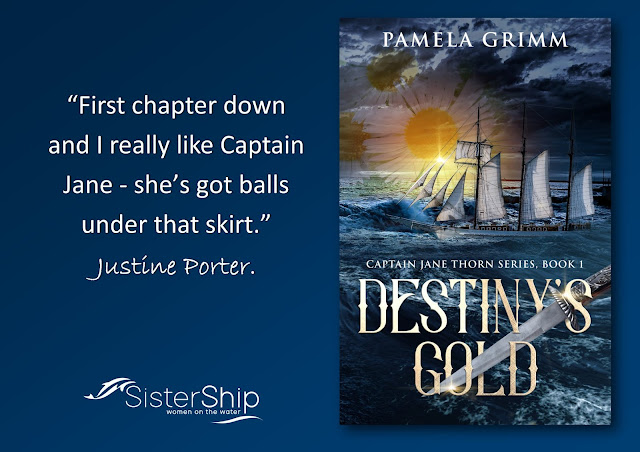
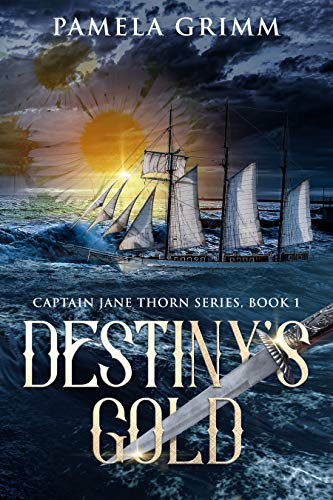
Spotlight: Destiny's Gold by Pamela Grimm


Destiny's Gold (Captain Jane Thorn Book 1)
by
Historical, Nautical Fiction
ASIN: B07K27Q7F9
244 Pages
SisterShip Press Pty Ltd
November 23, 2018
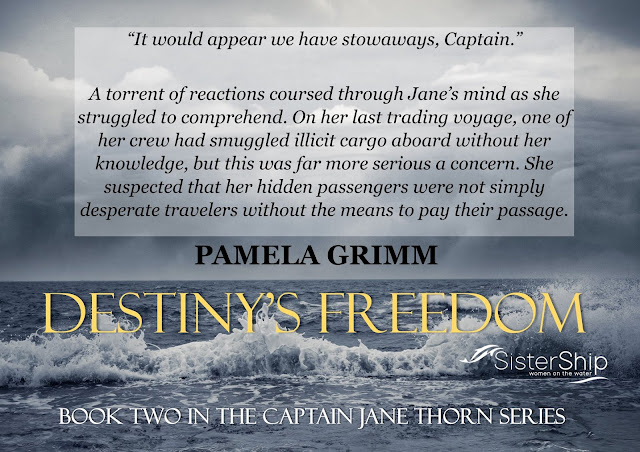
It is 1820 and a young, female sea captain sets sail aboard the schooner Destiny bound for the sugar plantations of Cuba and then on to the Baltic for iron. Political intrigue and mystery dog the voyage, and those who underestimate the captain's skill and business acumen do so at their peril.

This is historical, nautical fiction with a fresh new take. Destiny’s Gold author Pamela Grimm has created an indomitable female character and a storyline that keeps you guessing. Pamela combines her love of maritime history with experience as a commercial and recreational captain to bring to life the golden age of merchant sailing ships in the person of Captain Jane Thorn and her loyal crew.

Find it exclusively in Amazon
FROM THE AUTHOR:
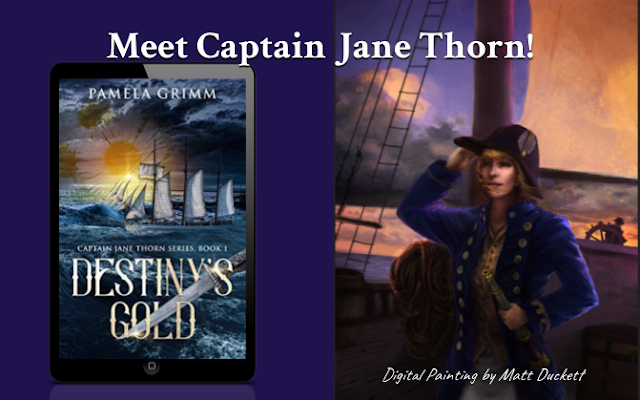
When I sit down to write a story, the characters are as real to me as if they are people I know. Perhaps more than any others, Captain Jane has always lived in my head as a fully-formed person in three dimensions. I know her so well, I always think I know exactly what she will say or do. It’s always fun when she surprises me, though! When I wanted to do the first version of the book cover, I went looking for an artist who could take what was in my head and bring Jane to life on a digital canvas.
Amazon Review Snippets:

"Picked it up on a whim and was glad I did. Great historical."
"This book was a very enjoyable read that followed my small knowledge of history." 
"This is a lovely adventure that I found difficult to put down."
"It's awesome - read it!"
"Looking forward to the next installment!"
"Captain Jane and her crew grabbed my heart and pulled me into her world."
"I enjoy historical fiction, and this story is a lovely one."
"A spellbinding historical story."
"Great Story—Couldn’t Put It Down!"
ABOUT THE AUTHOR:
Pamela Grimm writes historical maritime fiction based on her lifelong love of sailing and the sea. She holds a USCG captain's license and is active as a commercial and recreational sailor.
​Find and follow her: 
An Interview with Pamela Grimm and Rukia Publishing

Brought to you by

Spotlight: Crazy Cupid Love by Amanda Heger

When a single arrow inspires romance, can you really trust happily ever after? In this magical rom-com, the descendants of Greek mythology must learn to live and love in a mundane world where Aphrodite's blessing can sure feel like a real pain in the quiver.

Eliza Herman (a.k.a. The World's Worst Cupid) has spent her entire life carefully avoiding her calling as a Descendant of Eros. After all, happily-ever-afters are nothing but a myth. But when a family crisis requires her to fill in at the local Cupid-for-hire shop, Eliza finds herself enchanting couples under the watchful eye of her assigned mentor, Jake Sanders...the one man she could never get out of her head.

Before long, Eliza is rethinking her stance on romance―until things start going terribly wrong with her enchantments. Now Eliza and Jake must fight to unravel a conspiracy that could destroy thousands of relationships, including their own...and spell the end of Love itself.

No pressure, right?

Excerpt

Tap, tap, tap.

Eliza jumped, cracking her head on the steering wheel. Son of a… She grasped for the seat belt while her brain tried to place the man peering down at her from the passenger-side window.

“Hello?” he said.

No.

Not just a man. An underwear- model- worthy man with the perfect amount of five- o’clock shadow and cheekbones that could cut diamonds. A navy tie hung loosely around his neck, and the top button of his shirt lay open, practically daring her to look away from the tan skin at the base of his throat.

It was the worst thing Eliza had ever seen.

TURN BACK NOW. ABANDON SHIP. THIS WAY LIES MADNESS. Her mind screeched its usual warnings like a tornado siren, but she couldn’t look away.

Over the years, in her attempt to live a “normal” life, she’d constructed an intricate maze of rules and guidelines that she followed at all times. Number one on that list? Stay away from hot guys.

On a good day, her clumsiness hit a six on the Richter scale. Add the fumbling, sweaty awkwardness of attraction to the mix, and Eliza became a walking catastrophe.

“Eliza?”

“Do I know…” She narrowed her eyes. There was a familiar seriousness in his gaze. Something nostalgic about the way he dug his hands into his pockets. Something… “Jake?”

Eliza shoved open the car door and tried to push all the dirty thoughts she’d just had from her mind as she stepped out into the driveway. “Jake Sanders? I thought you were in Peru or something.”

“Brazil.”

“Brazil then. What are you doing here?” She tried to smooth her hair. When that failed, she tried not to notice how mind- bendingly attractive her childhood best friend had become. They’d known each other since elementary school, when— as the only three school- age Cupids in town— Jake, Eliza, and Elijah had been enrolled in PSC (Public School Cupiding) classes together. Every Wednesday night, they’d sit in a classroom for two hours, drinking juice boxes and learning about the history of Cupids. On the weekends, Jake would come to her house, where they would conduct elaborate reenactments of the War of the Titans from the tree house in Eliza’s backyard. But in middle and high school, the two of them had drifted apart the way people do. Especially when one of those people is class president and captain of the track team (Jake) and the other is a walking disaster (Eliza).

After high school, Jake enlisted in the Cupid Corps. For the last ten years, he’d been taking cases on assignment in impoverished and war- torn areas. Aside from a brief visit over Christmas nine years ago, Eliza hadn’t seen him since.

“I moved back to town about a week ago,” he said. “Doing some odd jobs while I get reacclimated.”

“At Dionysus again?” she asked. When they’d been teenagers, he’d worked there as a bar back. The raucous restaurant and bar sat dead center in the Agora— a building at the edge of town where Descendants had gathered for decades, undetected by “regular” humans. Eliza, the ultimate clumsy introvert with an unheard- of level of enchantment, hated the place. People stared and pointed when she walked by. It made her feel like a lab rat.

“No.” He looked down at his feet, then back up at her. “Doing some deliveries right now. This one is for your parents. Are they here?” He held out a large manila envelope.

“No.” She started to say more, but the words snagged in her throat. “They’re out.”

“Can you sign for this then?” She took his tablet and scrawled her name at the bottom of the screen. “Here you go.”

Jake handed her the thick envelope and flashed her a grin. It was same grin— the one that rose a smidge higher on the left— that had always seemed kind of dorky when they were kids. As adults? Totally different story. “Happy Day- That- Shall- Not- Be- Named, by the way,” he said.

Despite everything, Eliza let out a laugh. “Finally, someone around here understands me.”

“I aim to please.” His dark eyes locked on hers for a half second. “I can’t believe your parents finally gave up on the whole Herman birthday extravaganza thing.”

“Oh, they didn’t. We already had cake. Blood and tears were shed, yadda, yadda.”

“You did all the blood shedding before dark? The Hermans have really gotten soft over the years.” There it was again. That grin. “Here. I have something for you.”

Jake took a step closer. Miniature fireworks went off in her chest, leaving trails of nervous energy in her stomach. He’d become so handsome. Broad shoulders, narrow waist, a jawline that could make Adonis weep. And he’d been there for all her childhood traumas and celebrations. The hot days they’d chased down the ice- cream truck in bare feet. The games of checkers on her parents’ back porch. The awkward here- come- the- braces- and- puberty years.

“You brought me a gift?” Eliza asked.

“You think I was going to step inside this house on your birthday without a gift in hand? No way. Your parents would have eaten me alive.”

“That’s fair.” For the first time on this godsforsaken day, Eliza felt herself relax. They could have been ten years old and playing Battletoads again, the way everything fell into place. Like life had never taken them in separate directions.

“Here.” He produced a small, rectangular package from his back pocket.

The paper was a plain navy blue— not a Valentine remnant in sight— and the featherlight present crinkled when she turned it over. She smiled up at him. “You didn’t have to do this.”

He reached for the gift with a boyish look in his eyes. “If you don’t want it— ”

Eliza whipped it out of his reach. “I didn’t say that.”

“Don’t get too excited. It’s nothing big.”

“I’ll be the judge of that.” Eliza pried open the wrapping. An all- too- familiar cartoon kangaroo stared up at her from the tiny package of treats. A rush of nostalgia washed over her. “Dunkaroos? Dunkaroos, the best snack ever made? Dunkaroos, the sole reason I made it through childhood in one piece?”

“I think you’re forgetting something.” Jake gave her a pointed look.

“Okay. Dunkaroos, the reason I made it through childhood, in addition to your friendship.”

His face broke into a wide smile. “I’ll accept that.”

“Where did you find these? I didn’t think they made them anymore.”

“Canada. I was in Vancouver last week.”

“So you smuggled them into the country in the dark of night, risking everything, just for my birthday?”

He let out a soft chuckle. “Something like that.”

Buy on Amazon | Barnes and Noble

About the Author

Amanda Heger is a writer, attorney, and bookworm. She lives in the Baltimore with her unruly rescue dogs and a husband who encourages her delusions of grandeur. She strongly believes Amy Poehler is her soul mate, and one of her life goals is to adopt a pig and name it Ron Swineson.