Spotlight: I Dream of Spiders by Elle Keating

Today we have the release blitz for Elle Keating’s I DREAM OF SPIDERS! Check it out and be sure to order your copy today!

About I Dream of Spiders:

The move to the remote town of Quarry Hill, Pennsylvania was supposed to help Griffin McGuire start over and forget the two people who betrayed him. As a paramedic at the local hospital, he would still have to interact with people, but the rest of the time he could hole himself away in the secluded cabin he was renting. It was perfect. For the first time in over a year, he felt like he could finally breathe.

That was until he met her.

A woman who doesn’t know her own name or why she was covered in blood and standing in the middle of the road when he found her. Griffin knows he should contact the police, but something is preventing him from going to the authorities. It doesn’t take long for him to realize that he was correct in trusting his instincts. Every time she falls asleep, she dreams and another memory is unlocked. Memories that are horrific and make him want to protect and hide her from the world.

Exclusive Excerpt:

I can’t keep doing this to him. He has a life and most likely a girlfriend. Tomorrow I will leave. I will ask to borrow some money and get far away from him. He has done enough. I will make it on my own. I get out of bed and creep down the hall to tell him my plan. I expect to find him in the kitchen, maybe needing a late-night snack, not the bathroom. Because why wouldn’t he have just used the master bath? The sound of heavy breathing snaps up my attention and I look toward the hall bathroom. The light isn’t on but I hear a barely audible groan on the other side of the cracked door. I push it open and watch the man I have fantasized about for the past few days working his cock with one hand while he steadies himself by holding onto the sink. I can’t stop staring. He is so big, so aroused…and so am I. I want him. I want to be the one making him groan and pant. Without warning, he turns and our eyes lock.

“Leave, Clare.” I can’t move. “Go back to bed,” he commands, his tone desperate. His hand stills and he releases his cock. “Please,” he utters, his voice gruff, as if he is in pain.

My feet unlock from the imaginary vise they have been in and I step toward him. We don’t break eye contact, even when I grip his cock and stroke him from root to tip. I’m not sure if I have ever done this before or if I am even doing it correctly, but the way his breathing hitches and his eyes flutter tell me that I am doing something right. I pump him harder, swirling the wet tip with the pad of my thumb. His hips sway and his pants become more erratic. I am seconds away from dropping to my knees when he suddenly grabs my wrist.

“We can’t,” he says, his eyes boring into mine.

“Why? Is it because of Corinne?” I ask. He blinks several times and shakes his head. “Your girlfriend?”

“I don’t have a girlfriend.”

“But I thought…”

“Corinne’s my sister.”

He doesn’t have a girlfriend. Which means...

He pries my fingers from his cock and tucks himself back into his pants. He moves past me and steps out of the bathroom. Like a fool, I follow him. “Oh. I get it now. You just don’t want me,” I say.

He stops and faces me. “Is that what you think? That I don’t want you?”

“You stopped me…you said we can’t…”

“We can’t because you belong to someone else. You remembered him today, caught a glimpse of the man you admitted loving, and I’ll be damned if he is who you are thinking of as I sink into you. I won’t share you. I’m not built that way.”

I feel like complete shit. Griffin is doing the noble thing, protecting my virtue and his heart. I am such a bitch.

Dylan is important to me. I care for him. Love him. But in what way? If it is a romantic type of love, then why didn’t I feel guilty when I touched Griffin? Or when I think about him taking me, claiming me? Griffin turns and walks to the living room. I pathetically escape to the bedroom. I am no longer afraid of the nightmares that could plague me if I even manage to fall asleep tonight. No, what I fear are the dreams I may have of the man who has just protected me from myself.

Buy on Amazon

About the Author:

Elle Keating is the author of romance novels with sexy heroes and fierce females. Her first book, Thrill of the Chase (Dangerous Love, #1), was published by Forever Romance’s digital imprint, Forever Yours, in 2015. Cut to the Chase (Dangerous Love, #2) soon followed. Most recently, Elle self-published Wanting More (Dangerous Love, #3), Back to the Start (Dangerous Love, #4) Feels Like Falling (Dangerous Love, #5) and the standalone novel, Keeping His Commandments.


When Elle isn’t torturing her heroes and heroines (don’t worry, there’s always a happily ever after), she is a public school administrator and enjoys spending time with her husband and 3 children in New Jersey. For more on Elle and her books, visit ellekeating.com

Connect with Elle: Website | Goodreads | Facebook | Instagram

Spotlight: Catch Your Breath by Shannyn Schroeder

Today we have the release blitz for CATCH YOUR BREATH by Shannyn Schroeder! I am so excited to share this sexy new romance with you—check out the release festivities and be sure to grab your copy today!

About Catch Your Breath:

 As kids they steered clear of one another. That was then—this is now. 

As a dedicated reporter, Moira O'Leary has access to Chicago's swankiest affairs. With her confidence and style, she blends right in with the elite crowd. But when her childhood crush starts popping up at posh events, she struggles to keep her cool. After all, he's always ignited something in her.  

Undercover cop Jimmy O'Malley has always tried to avoid his best friend's little sister. Something about Moira spelled trouble. But watching her navigate Chicago's most elaborate galas with ease, Jimmy knows he needs her help to crack a case. Just as their chemistry ignites, Moira gets dangerously close to his investigation. Now, it's up to Jimmy to keep her safe. Can childhood crushes lead to breathless desire? 

Exclusive Excerpt:

He finally caught sight of Moira again and followed. If she was working, she had an odd way of doing her job. She stopped to pet every dog that walked in her path. By the time he caught up with her, she was crouched on the ground nose to nose with a beast of an animal. The dog looked big enough that it could easily maul her, but she cooed and giggled when the thing licked her face.

Jimmy tucked his hands in his pockets and watched for a minute. Moira interacted with the dog like she’d found a long lost best friend. She laughed and played and looked completely out of place with all of the other women. She sighed and stood, taking a moment to brush dog hair off her dress.

When the dog walker moved on, he sidled up next to Moira and tried to hold on to his anger. If he let the gooey look on her face affect him, he’d be useless. “We need to talk.”

She looked up at him, using one hand to shield her eyes from the setting sun. “I thought we already did. Do you want to set up that interview now?” Her eyes held an evil glimmer, as if she knew what he’d said to Stan about the interview.

He grabbed her elbow and guided her away from the crowd, around the back of the tent that held the auction items. Fighting to keep his voice low, he said, “Why the hell would you tell everyone I have a wife?”

She eased her arm from his grasp and narrowed her eyes. He’d expected the sweet fuck-you smile she liked to throw out when she caused trouble. “You have no idea who you’re hanging out with, but I do. Those four are all married. They bring their wives to every function and event. Or I should say their wives bring them. They stand around and ogle every female in sight.”

“Yeah, I got that.”

“The thing is, if you want in, the wives are going to have to approve. The wives like Mayor Park since he’s such a good wholesome guy, so they’ll be inclined to accept you, but in their world, having a wife makes you safer.”

“Safer?”

“Less likely to bring a bunch of single women around, making it easier for their husbands to cheat.”

“They’re surrounded by women at these events.”

“I didn’t say it made sense. Their friendship extends beyond attending fund-raisers. The wives are here to keep an eye on them, but they don’t follow them everywhere. At least I don’t think they do.” She shifted so his shadow blocked the sun and looked up at his face. “I’m not trying to screw things up for you. Trust me. I understand these people.”

He believed her, but it didn’t make the truth any easier. “Where the hell am I supposed to get a wife?”

She huffed out a breath. “Am I supposed to do everything for you?”

Her irritation wouldn’t last. She had a hot temper, but once it blew, she went back to being sunny Moira. And she wasn’t even pissed right now, so when she turned to walk away, he followed.

He walked beside her, as if they were there together, which he knew he shouldn’t, but since she’d talked about interviewing him, he figured he could get away with it. She waved to various people and stopped to chat with others.

With Moira, though, it wasn’t bullshit small talk. She asked real questions. She knew details about people’s lives, and they respected her for it. They opened up around her, which would be a huge asset for her job. An asset he’d have to avoid.

When they were walking a stretch alone, he asked, “Why doesn’t it bother you?”

“What?”

“The way Stan Decker talks about you.” Remembering the comments made him angry again. “I know you heard him, but you acted like it was nothing.”

She shrugged. “Because it was nothing.”

He stopped and touched her arm to halt her. “That’s not true. No one should talk to you like that.”

“He wasn’t talking to me. It’s not his fault I have excellent hearing.”

Jimmy thought back. In truth, Stan had been respectful, at least in his words while talking to Moira. “He stares at your chest.”

She laughed so hard her shoulders shook. “Really?” She spread her hands in front of her chest. “He’s far from the only man to do that. It happens so often, it doesn’t faze me anymore.”

Jimmy made a point of looking into her bright blue eyes. No sign of anger or hurt. It would make him nuts if he saw men staring at his woman’s chest instead of her face.

But Moira’s not mine.

“Doesn’t make it right.”

Buy on Amazon | Barnes and Noble

About Shannyn Schroeder:

 Shannyn Schroeder is the author of the O’Leary series and the For Your Love series, contemporary romances centered around large Irish-American families in Chicago and the Hot & Nerdy series about nerdy friends finding love. Look for her new series – The Dating Challenge in 2019. When she’s not wrangling her three kids or writing, she watches a ton of TV and loves to bake cookies.

Connect with Shannyn: Website | Goodreads | Twitter | Facebook | Book + Main Bites

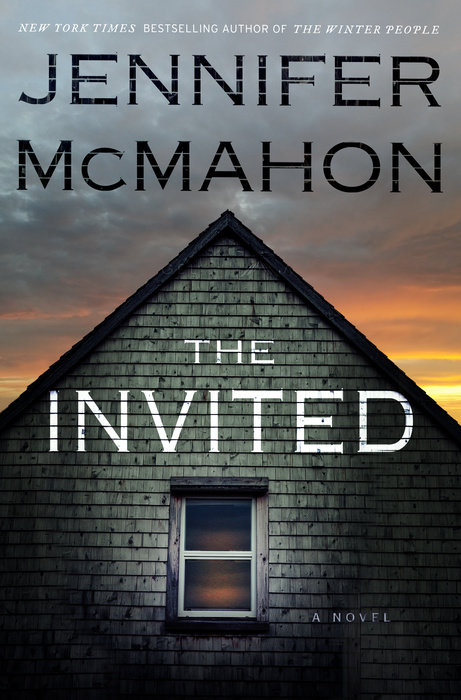
Spotlight: The Invited by Jennifer McMahon

A chilling ghost story with a twist: the New York Times bestselling author of The Winter People returns to the woods of Vermont to tell the story of a husband and wife who don’t simply move into a haunted house–they build one . . .

In a quest for a simpler life, Helen and Nate have abandoned the comforts of suburbia to take up residence on forty-four acres of rural land where they will begin the ultimate, aspirational do-it-yourself project: building the house of their dreams. When they discover that this beautiful property has a dark and violent past, Helen, a former history teacher, becomes consumed by the local legend of Hattie Breckenridge, a woman who lived and died there a century ago. With her passion for artifacts, Helen finds special materials to incorporate into the house–a beam from an old schoolroom, bricks from a mill, a mantel from a farmhouse–objects that draw her deeper into the story of Hattie and her descendants, three generations of Breckenridge women, each of whom died suspiciously. As the building project progresses, the house will become a place of menace and unfinished business: a new home, now haunted, that beckons its owners and their neighbors toward unimaginable danger.

Buy on Amazon | Barnes and Noble

About the Author

Jennifer McMahon is the author of nine novels, including the New York Times bestsellers The Winter People and Promise Not to Tell. She graduated from Goddard College and studied poetry in the MFA writing program at Vermont College.

Spotlight: The Department of Sensitive Crimes: A Detective Varg Novel by Alexander McCall Smith

In the Swedish criminal justice system, certain cases are considered especially strange and difficult, in Malmö, the dedicated detectives who investigate these crimes are members of an elite squad known as the Sensitive Crimes Division.

These are their stories.

The first case: the small matter of a man stabbed in the back of the knee. Who would perpetrate such a crime and why? Next: a young woman’s imaginary boyfriend goes missing. But how on earth do you search for someone who doesn’t exist? And in the final investigation: eerie secrets that are revealed under a full moon may not seem so supernatural in the light of day. No case is too unusual, too complicated, or too, well insignificant for this squad to solve.

The team: Ulf “the Wolf” Varg, the top dog, thoughtful and diligent; Anna Bengsdotter, who’s in love with Varg’s car (and possibly Varg too); Carl Holgersson, who likes nothing more than filling out paperwork; and Erik Nykvist, who is deeply committed to fly fishing.

With the help of a rather verbose local police officer, this crack team gets to the bottom of cases other detectives can’t or won’t bother to handle. Equal parts hilarious and heartening, The Department of Sensitive Crimes is a tour de farce from a true master.

Excerpt

Chapter One

Free Association,

Charged at Normal Rates

“Søren,” said Dr. Svensson, gravely, but with a smile behind his horn-rimmed glasses; and then waited for the response. There would be an answer to this one- word sentence, but he would have to wait to see what it was.

Ulf Varg, born in Malmö, Sweden, the son of Ture and Liv Varg, only too briefly married, now single again; thirty-eight, and there­fore fast approaching what he thought of as a watershed—“After forty, Ulf,” said his friend Lars, “where does one go?”—that same Ulf Varg raised his eyes to the ceiling when his therapist said, “Søren.” And then Ulf himself, almost without thinking, replied: “Søren?”

The therapist, kind Dr. Svensson, as so many of his patients described him, shook his head. He knew that a therapist should not shake his head, and he had tried to stop himself from doing it too often, but it happened automatically, in the same way as we make so many gestures without really thinking about them—twitches, sniffs, movements of the eyebrow, the folding and unfold­ing of legs. Although many of these acts are meaningless, mere concomitants of being alive, shaking one’s head implies disapprobation. And kind Dr. Svensson did not disapprove. He understood, which is quite different from disapproving.

But now he disapproved, and he shook his head before he reminded himself not to disapprove, and not to shake his head. “Are you asking me or telling me?” he said. “Because you shouldn’t be asking, you know. The whole point of free association, Mr. Varg, is to bring to the surface—to outward expression—the things that are below the surface.”

To bring to the surface the things that are below the surface . . . Ulf liked that. That, he thought, is what I do every time I go into the office. I get out of bed in the morning to bring to the surface the things that are below the surface. If I had a mission statement, then I suppose that is more or less what it would be. It would be far better than the one foisted on his department by Headquarters: We serve the public. How bland, how anodyne that was—like all the communications they received from Headquarters. Those grey men and women with their talk of targets and sensitivity and more or less everything except the one thing that mattered: finding those who broke the law.

“Mr. Varg?”

Ulf let his gaze fall from the ceiling. Now he was staring at the carpet, and at Dr. Svensson’s brown suede shoes. They were brogues, with that curious holed pattern that somebody had once explained to him was all to do with letting the shoes breathe, and was not just a matter of English aesthetics. They were expensive, he imagined. When he first saw them, he had decided that they were English shoes, because they had that look about them, and that was precisely the sort of thing that a good detective noticed. Italian shoes were thinner, and more elegant, presumably because the Italians had thinner, more elegant feet than the English. The Dutch, of course, had even bigger feet than the English; Dutchmen, Ulf reflected, were tall, big- boned people. They were large—which was odd, in a way, because Holland was such a small country . . . and so prone to flooding, as that story he had been read as a child made so clear—the little Dutch boy with his finger in the dyke . . .

“Mr. Varg?” There was a slight note of impatience in Dr. Svens­son’s tone. It was all very well for patients to go off into some rev­erie of their own, but the whole point of these sessions was to disclose, not conceal, and they should articulate what they were thinking, rather than just think it.

“I’m sorry, Dr. Svensson. I was thinking.”

“Ah!” said the therapist. “That’s precisely what you’re meant to do, you know. Thinking precedes verbalisation, and verbalisation precedes resolution. And much as I approve of that, what we’re trying to do here is to find out what you think without thinking. In other words, we want to find out what’s going on in your mind. Because that’s what—”

Ulf nodded. “Yes, I know. I understand. I just said Søren because I wasn’t quite sure what you meant. I wanted to be sure.”

“I meant Søren. The name. Søren.”

Ulf thought. Søren triggered nothing. Had Dr. Svensson said Harald, or Per, he would have been able to respond bully or teeth because that was what he thought of. They had been boys in his class, so had Dr. Svensson said Harald, he might have replied bully, because that was what Harald was. And if he had said Per, he would have replied teeth, because Per had a gap in his front teeth that his parents were too poor to have attended to by an orthodontist.

Then it came to him, quite suddenly, and he replied, “Kierkegaard.”

This seemed to please Dr. Svensson. “Kierkegaard?” the therapist repeated.

“Yes, Søren Kierkegaard.”

Dr. Svensson smiled. It was almost time to bring the session to a close, and he liked to end on a thoughtful note. “Would you mind my asking, why Kierkegaard? Have you read him?”

Ulf replied that he had.

“I’m impressed,” said Dr. Svensson. “One doesn’t imagine that a . . .” He stopped.

Ulf looked at him expectantly.

Dr. Svensson tried to cover his embarrassment, but failed. “I didn’t mean, well, I didn’t mean it to sound like that.”

“Your unconscious?” said Ulf mildly. “Your unconscious mind speaking.”

The therapist smiled. “What I was going to say—but stopped myself just in time—was that I didn’t expect a policeman to have read Kierkegaard. I know that there’s no earthly reason why a policeman should not read Kierkegaard, but it is unusual, would you not agree?”

“I’m actually a detective.”

Dr. Svensson was again embarrassed. “Of course you are.”

“Although detectives are policemen in essence.”

Dr. Svensson nodded. “As are judges and public health offi­cials and politicians too, I suppose. Anybody who tells us how to behave is a policeman in a sense.”

“But not therapists?”

Dr. Svensson laughed. “A therapist shouldn’t tell you how to behave. A therapist should help you to see why you do what you do, and should help you to stop doing it—if that’s what you want. So, no, a therapist is certainly not a policeman.” He paused. “But why Kierkegaard? What appeals to you about Kierkegaard?”

“I didn’t say he appealed. I said I had read him. That’s not the same thing as saying he appealed.”

Dr. Svensson glanced at his watch again. “I think perhaps we should leave it at that,” he said. “We’ve covered a fair amount of ground today.”

Ulf rose to his feet.

“Now what?” asked Dr. Svensson.

“Now what, what?”

“I was wondering what you were going to do next. You see, my patients come into this room, they talk—or, rather, we talk—and then they go out into the world and continue with their lives. And I remain here and think—not always, but sometimes—I think: What are they going outside to do? Do they go back to their houses and sit in a chair? Do they go into some office somewhere and move pieces of paper from one side of the desk to another? Or stare at a screen again until it’s time to go home to a house where the children are all staring at screens? Is that what they do? Is that why they bother?”

Ulf hesitated. “Those are very profound questions. Very. But since you ask, I can tell you that I’m going back to my office. I shall sit at my desk and write a report on a case that we have just closed.”

“You close cases,” muttered Dr. Svensson. “Mine remain open. They are unresolved, for the most part.”

“Yes, we close cases. We’re under great pressure to close cases.”

Dr. Svensson sighed. “How fortunate.” He moved to the window. I look out of the window, he thought. The patients go off to do significant things, such as closing cases, and I look out of my window. Then he said, “I don’t suppose you could tell me what this case involved.”

“I can’t give you names, or other details,” replied Ulf. “But I can tell you it involved the infliction of a very unusual injury.”

Dr. Svensson turned round to face his patient.

“To the back of somebody’s knee,” said Ulf.

“How strange. To the back of the knee?”

“Yes,” said Ulf. “But I can’t really say much more than that.”

Ulf frowned. “That I should not explain further? Is that odd?”

“No, that somebody should injure another person in the back of the knee. Of course, the choice of a target is hardly random. We injure what we love, what we desire, every bit as much as that which we hate. But it is odd, isn’t it? The back of a knee . . . ”

Ulf began to walk towards the door. “You’d be very sur­prised, Dr. Svensson, at how odd people can be. Yes, even in your profession—where you hear all sorts of dark secrets from your patients, day in, day out. Even then. You’d be surprised.”

“Would I?”

“Yes,” said Ulf. “If you stood in my shoes for a few days, your jaw would hit the table in astonishment. Regularly.”

Dr. Svensson smiled. “Well, well.” His smile faded. The jaw. Freud, he remembered, died of a disease that affected his jaw. Alone in London, with enemies circling, that illuminating intel­ligence, liberating in its perspicacity, flickered and died, leaving us to face the darkness and the creatures that inhabited it.

Excerpted from The Department of Sensitive Crimes by Alexander McCall Smith. Copyright © 2019 by Alexander McCall Smith. All rights reserved. No part of this excerpt may be reproduced or reprinted without permission in writing from the publisher.

Buy on Amazon | Barnes and Noble

About the Author

ALEXANDER McCALL SMITH is the author of the No. 1 Ladies’ Detective Agency novels and a number of other series and stand-alone books. His works have been translated into more than forty languages and have been best sellers throughout the world. He lives in Scotland.

Spotlight: Triple Jeopardy (Daniel Pitt Series #2) by Anne Perry

Young lawyer Daniel Pitt must defend a British diplomat accused of a theft that may cover up a deadly crime in this riveting novel from the New York Times bestselling author of Twenty-one Days.

Daniel Pitt, along with his parents, Charlotte and Thomas, is delighted that his sister, Jemima, and her family have returned to London from the States for a visit. But the Pitts soon learn of a harrowing incident: In Washington, D.C., one of Jemima’s good friends has been assaulted and her treasured necklace stolen. The perpetrator appears to be a man named Philip Sidney, a British diplomat stationed in America’s capital who, in a cowardly move, has fled to London, claiming diplomatic immunity. But that claim doesn’t cover his other crimes. . . .

When Sidney winds up in court on a separate charge of embezzlement, it falls to Daniel to defend him. Daniel plans to provide only a competent enough defense to avoid a mistrial, allowing the prosecution to put his client away. But when word travels across the pond that an employee of the British embassy in Washington has been found dead, Daniel grows suspicious about Sidney’s alleged crimes and puts on his detective hat to search for evidence in what has blown up into an international affair.

As the embezzlement scandal heats up, Daniel takes his questions to intrepid scientist Miriam fford Croft, who brilliantly uses the most up-to-date technologies to follow an entirely new path of investigation. Daniel and Miriam travel to the Channel Islands to chase a fresh lead, and what began with a stolen necklace turns out to have implications in three far greater crimes—a triple jeopardy, including possible murder.

Excerpt

chapter

One

Daniel rang the doorbell, then stepped back. He realized with amazement that he was suddenly nervous. Why? This was his parents’ home, the house he had grown up in. At twenty-five, he still returned quite often for dinner, for news, for comfort and pleasure in conversation. What was different this time?

What was different was that his elder sister, Jemima, was back from America with her husband and small daughters, Cassie and Sophie. Daniel had not seen Jemima for four years, and he had not met her husband, Patrick Flannery, nor his new nieces at all. Both his and Jemima’s lives had changed radically in that time. He had earned his degree at Cambridge, then passed his bar exams, and was now actually practicing the law he had dreamed about so long. Jemima was married and had lived in New York, and now Washington, D.C. “Idealistic and naïve” she had once called him. Of course, he had changed a little, but she might have changed a lot. Theirs was a relationship he had always taken for granted. It was comfortable; they could disagree over important things, and trivial and silly things, because they knew that underneath, everything that ever mattered between them was unbreakable. She was three years older than him. She had been there all his life.

Did he resent the fact that she had married an American, and so had gone to live across the ocean? Not really, if it made her happy. She was bound to marry someone, and loyalties shifted, grew in time to include others. She had bossed him around when she was nine and he was six. He wouldn’t tolerate that now, although she would probably try since it was an old habit.

But he had missed her. He could remember vividly the day they had been measured against the door, and for the first time he was taller. Their roles had reversed. For twelve years she had protected him, or it felt like it. Now, his father had explained, he must protect her. But that was not always necessary. His mother did not need anyone to protect her. If she was angry, she was the equal of anyone, and not afraid at all! Sometimes Jemima was like that, too.

Nowadays one could cross the Atlantic very quickly, in a mere five days. But five days there, five days back, and the visit: it was a long time to be away. Too long for him to have visited her during exams time. And too expensive on a student’s budget.

He was reaching out to pull the bell a second time when the door opened, but instead of a servant, his mother stood in the entrance. She was a handsome woman, quite tall, with an auburn light in her hair that he had inherited. She was over fifty now, and there were touches of gray, but her vitality had not faded in the slightest. He would find that change painful to accept, but it was far in the future, if ever.

“Daniel!” She threw her arms around him and held him tightly for a moment, then stepped back. “Come in! Jemima is dying to see you, and of course you must meet Patrick. And Cassie and Sophie! You’ll love them, I promise!”

He had no overcoat to hang up. It was August and London was too warm for a jacket, even at this time of the early evening. He followed his mother into the withdrawing room, where the door at the far end was still open to the evening air and the last light was shimmering on the leaves of the poplar trees. It was all so incredibly familiar. His father was there, standing with Jemima and the man who must be her husband.

Jemima came forward. She was familiar, too, and yet she had changed in slight ways. Her hair was still the same, darker than his, and curly like their father’s. She was quite ordinarily dressed, slender in pale green, yet she looked lovely, with an inner happiness that gave her a special grace. He wondered if she would find him changed and in what way: still tall, of course, and slim, his auburn-tinged brown hair still unruly and his face neither handsome nor plain.

Automatically, he held his arms out, and she walked straight into them and hugged him hard. Then, as quickly, she stepped away and turned. “This is my husband, Patrick. Patrick, meet my brother, Daniel.”

Patrick Flannery was tall, roughly the same height as Daniel, but there the likeness ended. His hair was black and his eyes very blue. His features were less regular than Daniel’s and had not their sensitivity, but the humor and individuality in them made him attractive. “I’ve heard so much about you from Jemima. I’m happy to meet you at last.” His voice had the softness of his Irish forebears clearly overlying his American accent.

“Welcome to London,” Daniel said quickly, taking Patrick’s hand and grasping it.

“Thank you,” Patrick replied. “I thought New York was big, but this is . . . enormous.” He said it with a smile to rob it of any offense.

“Lot of villages all run into each other,” Daniel replied. “We’ll have to show you around. Take a trip down the river, perhaps. Or up it?” He glanced at Jemima to see if she approved of the idea.

“I’ve got it planned,” she said with a smile. “But there’s two more people for you to meet before we have dinner. Sophie’s sound asleep and Cassie’s half asleep, but she was determined to stay up to say hello to her uncle Daniel. Come with me . . .” She held out her hand. Her face was shining with pleasure and pride, and nervousness.

“Excuse me,” Daniel said to his parents, particularly his father, to whom he had not even spoken, and followed Jemima obediently.

Upstairs, Jemima showed Daniel baby Sophie in her cot in Jemima and Patrick’s room. The child was fast asleep, her soft downy hair dark against the pillow. Wordlessly they gazed at the baby, then smiled at each other and tiptoed across the corridor.

In the nursery, the first room Daniel could ever remember as a tiny child, Jemima pointed to the bed. A very little girl had fallen asleep sitting up and toppled sideways onto the pillows. She had dark hair, almost black, and soft flawless skin. He would have guessed her to be three, even if he had not known.

Jemima kneeled down beside her and woke her gently, before Daniel could tell her not to disturb the child.

Slowly she sat up, then looked past her mother to stare at Daniel. She had not her father’s blue eyes. Hers were soft gray like Jemima’s, and like Thomas Pitt’s.

“Hello, Cassie,” Daniel said, stepping forward. “I’m Daniel. It was very kind of you to stay up so I could meet you.” He was not sure whether to hold out his hand.

She blinked a couple of times. “ ’S all right,” she replied. “We came all the way to see you. In a big ship.”

“How exciting,” he said. “I’ve never been in a big ship.”

She smiled slowly and a little self-consciously, half turning away and moving an inch closer to her mother.

“Please will you tell me about it, one day?” Daniel asked.

She nodded. “My daddy is a policeman . . .”

“That’s funny, so is mine,” he replied.

She looked at Jemima again. “Is that your daddy, too?”

“Yes. We’re all family. Your family,” Jemima answered.

Cassie sighed and gave a wide smile.

“I think it’s time you went to bed, young lady.” Without waiting for argument, Jemima tucked her up and looked over Cassie’s head at Daniel. “Tell Mama I shall be down in about ten minutes. Don’t wait dinner for me. And . . . thank you . . .”

“She’s gorgeous. They both are,” he replied.

Jemima held her child a little closer. She was clearly asleep again. “Thank you,” she whispered, pride and relief shining in her eyes. Had she really imagined Daniel would be anything but completely enchanted, and just a tiny bit envious?

Daniel went out onto the landing and down the stairs. Jemima had changed, but not radically. As a little girl, she had never wanted dolls, but she had held toy animals with just that same tenderness. It was strange which memories were indelible.

He relayed to the family Jemima’s message about not waiting for her, but of course they did. The time afforded Daniel the chance to speak to his father. Now, in 1910, Pitt was in his early sixties, very gray at the temples, but it suited him. He was still head of Special Branch, that part of the services that dealt with antiterrorist activities within the country. It had been formed originally to take care of the Irish Fenian bombers. Much of his work was secret, as it had always been, from the time he had left the regular police. He had been knighted for services to the Crown in the last year of Victoria’s reign, but even his own family did not know exactly what those services had been. In spite of his openness in so many things, he kept his professional secrets close. He answered questions with silence and a smile, and Daniel tried to do the same.

“How is it going with Marcus?” Pitt asked conversationally. He was referring to Marcus fford Croft, the head of the legal chambers where Daniel worked, as a new and very junior lawyer.

Daniel liked Marcus. He appreciated his quirky personality—“eccentric” was almost too mild a word—but he worked with him very little, and most of the cases he was involved with were pretty pedestrian. But he could not admit that to his father, who he knew had gained him the position. It was one that could become exciting, prestigious, and highly rewarding if he proved to be both dedicated and skilled enough.

Daniel smiled. “Nothing as exciting as the Graves case,” he said ruefully, alluding to the case in which he’d played a surprising role earlier in the summer. It was a double-edged remark, said with humor but also a clear memory of the very real fear the Graves case had caused. Many people stood to lose something; even Sir Thomas himself would have faced ruin if Russell Graves had been allowed to publish his false and incendiary accusations. “But I don’t need that again,” Daniel sighed.

“Most cases are fairly ordinary,” Pitt answered. “But they are of intense importance to the people concerned. They’ll get bigger and more complicated as you refine your skill. You don’t want a case beyond your ability.”

Daniel hesitated a moment. Was his father remembering the darkness of the Graves case? He had shown it very little at the time, but he must have felt his world collapsing around him. Daniel had let the relief of the case’s outcome carry him like a flood tide away from the pain. Perhaps his father had not? He should remember that. Cases that went wrong hurt a lot of people, and all of them were worthy of consideration.

Jemima returned from upstairs, and they all went into the dining room to eat. Conversation became very general, pleasant but not remarkable. Jemima told them about their apartment in Washington, the neighborhood, and the climate. Patrick said little about his job, but with obvious affection described his family, brothers, sisters, warmhearted mother, eccentric father, and numerous aunts and uncles.

Daniel listened intently, not only because the narrative was colorful and charming, but because the people of whom Patrick spoke with such love were Jemima’s new family, so different from the one she had left in England. Pitt had no family at all. He was an only child, and both his parents were dead before he married. It was a story they did not discuss. Charlotte had one living sister, and Emily was a big part of all their lives, as were their cousins. Did Jemima miss them?

They touched only on happy memories at dinner, but all the way through, Daniel had the impression that Patrick had something weighing on his mind.

He learned what it was when the two of them took an evening walk after dinner, alone in the garden, in the pleasant, rose-scented darkness. Daniel was thinking how to broach the subject, when Patrick immediately took it out of his hands.

“There was another reason I came to England,” Patrick said after only a moment or two. It was as if he knew time would be short, and he had something to say that was very important to him.

“Oh? Something to do with me?” Daniel asked, trying to keep his voice friendly and noncommittal. He did not mention that he had noticed Patrick’s preoccupation.

“I want you to have something to do with it,” Patrick said, his voice already thickening with emotion. “I need to tell you the story from the beginning or it doesn’t make sense.”

“If Jemima comes out—”

“She won’t. She knows I’m going to tell you.”

“She didn’t mention anything . . .”

“She wouldn’t,” Patrick said quietly. “But she cares about it, I think as much as I do.”

Daniel leaned against the trunk of one of the silver birch trees and waited.

Patrick cleared his throat. “One of the oldest and most socially important families in Washington is the Thorwoods. Not politically, but they are very highly thought of, and philanthropists to many good causes, especially to the police.” He hesitated, perhaps to see if Daniel understood their importance.

“I see.” Daniel nodded. “Go on. The Thorwoods . . .”

“They have only one child, a daughter named Rebecca,” Patrick continued. It was growing darker and Daniel could hardly see his face, but he could not miss the urgency in his voice. “She’s around twenty. She’s got money, position. She’s very attractive in a quiet way.”

Daniel wanted to interrupt and tell Patrick to get to the point, but with an effort he controlled himself. Patrick had said this would be a long story.

Patrick went on, his voice becoming more strained. “Just over a month ago, she woke in the middle of the night, in her own bedroom, to find a strange man there. He assaulted her, ripped a valuable diamond pendant off her neck, tore her nightclothes.”

Now Daniel was listening in horror.

Patrick’s voice was tight. “She screamed several times and tried to fight him. He struck her pretty hard. As he was fleeing, her father met him in the corridor and tried to catch him, but he escaped down the stairs. Mr. Thorwood went into Rebecca’s bedroom and found her hysterical, bruised, with minor cuts where the chain of the pendant had torn her skin. She was terribly distressed. I . . . I don’t know what else he may have done to her . . .”

Daniel could imagine it. It must have been terrible, unforgettable. “But how could I help?” he asked in some confusion.

“Tobias Thorwood recognized the man, because it was someone he knew,” Patrick replied. He was standing rigid now; this much was obvious even in the darkness.

“So, you arrested him? Or the police did?”

“No. We couldn’t, because he was a British diplomat. Philip Sidney. He fled to the British Embassy, and we couldn’t get in there. It’s legally British territory.”

Excerpted from Triple Jeopardy by Anne Perry. Copyright © 2019 by Anne Perry. All rights reserved. No part of this excerpt may be reproduced or reprinted without permission in writing from the publisher.

Buy on Amazon | Barnes and Noble

About the Author

Anne Perry is the bestselling author of fifteen previous holiday novels, as well as the bestselling William Monk series, the bestselling Charlotte and Thomas Pitt series, the new Daniel Pitt series, five World War I novels, and a work of historical fiction, The Sheen on the Silk. Anne Perry lives in Los Angeles.


Spotlight: The Unfading Lands Series by Katharine E Hamilton


The Unfading Lands Series
by Katharine E. Hamilton
Genre: Epic Fantasy 

Betrayal. Power. Love. Loyalty.


The sinister Land of Unfading Beauty has breached the Realm and chaos has ensued. The four kingdoms must unite to overcome the mysterious darkness that threatens the safety of them all, but treacherous secrets frustrate strategies, and trust is hard to find.
The search for truth leads to betrayal. Friendships are tested. And the mysterious darkness tempts even the purest of hearts.

Will the Land of Unfading Beauty fall?
Can the Realm of Kind Granton overcome this insurmountable enemy?

As the Realm faces their biggest battle of all, one questions remains:
WHERE DOES YOUR ALLEGIANCE LIE?


**Read for FREE on KU!!**


Katharine E. Hamilton graduated from Texas A&M University with a Bachelor of Arts in History and uses her knack for research in all her stories. She is a Southern Belle with a pinch of sass, and when she is not writing she can be found chasing around her toddler son, driving around the ranch, or baking delicacies for local parties and events. Katharine currently resides on a ranch in South Texas where the skies and rivers, in all their beauty, rejuvenate the soul.
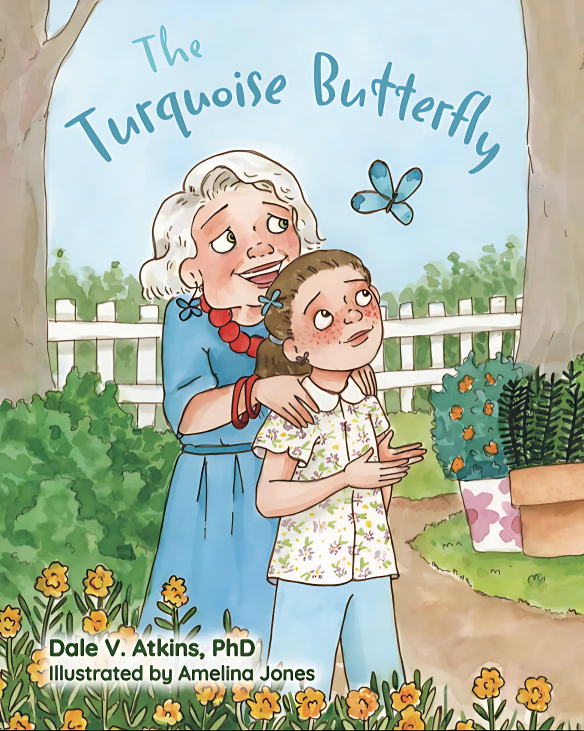



Follow the tour HERE for exclusive content and a giveaway!