Spotlight - In Your Eyes by Jayne Townsley

InYourEyesRevealBanner.png
Seasons2InYourEyes.jpg

Publication date: January 5th 2021

Genres: Adult, Contemporary, Romance

Crystal Davis got her wish for the Crew’s long-awaited post-graduation trip. Sun and fun before focusing on her new career as a pediatric RN at St. Francis’ Children’s Hospital in Tulsa, Oklahoma, was just what she needed. Bonus? She met Troy Bennett, and she realized she wanted less frivolity in her life and a little more serious.

Troy Bennett is a man fighting the demons who tell him he is worthless every day of his life. Demons his mother conjured. He quiets them with alcohol and casual relationships, never allowing any woman to get close enough to him so he will never have to disappoint one. Then on the spur of the moment trip to Panama City Beach with his Ranger buddies, he sees the future he’s always been afraid to pursue exit a Jeep Wrangler at a local donut shop.

Just as Troy and Crystal are finding their footing, she gets the call she never thought she would earn: Crystal Davis is going to Hollywood to be a contestant on America’s Next Chart Topper. What started as a way to honor her murdered friend has now become her dream. Chasing her dream means leaving Troy behind for a bit, and she wonders if her absence will cause what they’ve built so far to come crashing down.

Chasing her dream also means she’s put herself in a place where she’s vulnerable to the side of Hollywood that no one wants to acknowledge. A place where people only care about her and Troy’s story for the audience while behind the scenes, evil, selfish people work to tear them apart.

Buy on Amazon

About the Author

Jayne.jpg

Jayne Townsley lives with her multi-generational family in Northeast Oklahoma’s aptly named Green Country. A transplanted Okie from the Chicago suburbs, she has grown to love this state and its people with a passion, happily calling it home for the past 15 years.

Jayne shares her home with a rescued Shollie named Maui and two cats called Gamora and Nebula.

Jayne enjoys old-fashioned road trips and is in the process of planning one to tour Oklahoma’s Route 66. She is also something of a Disney World addict.

Run to You is her debut novel.

You can find her on the web at the following places:

facebook.com/jaynetownsleyauthor
goodreads.com/jtauthor2020
instagram.com/jaynetownsleyauthor
pinterest.com/jaynetownsleyauthor
twitter.com/jaynetownsleyauthor
jtauthor.blogspot.com

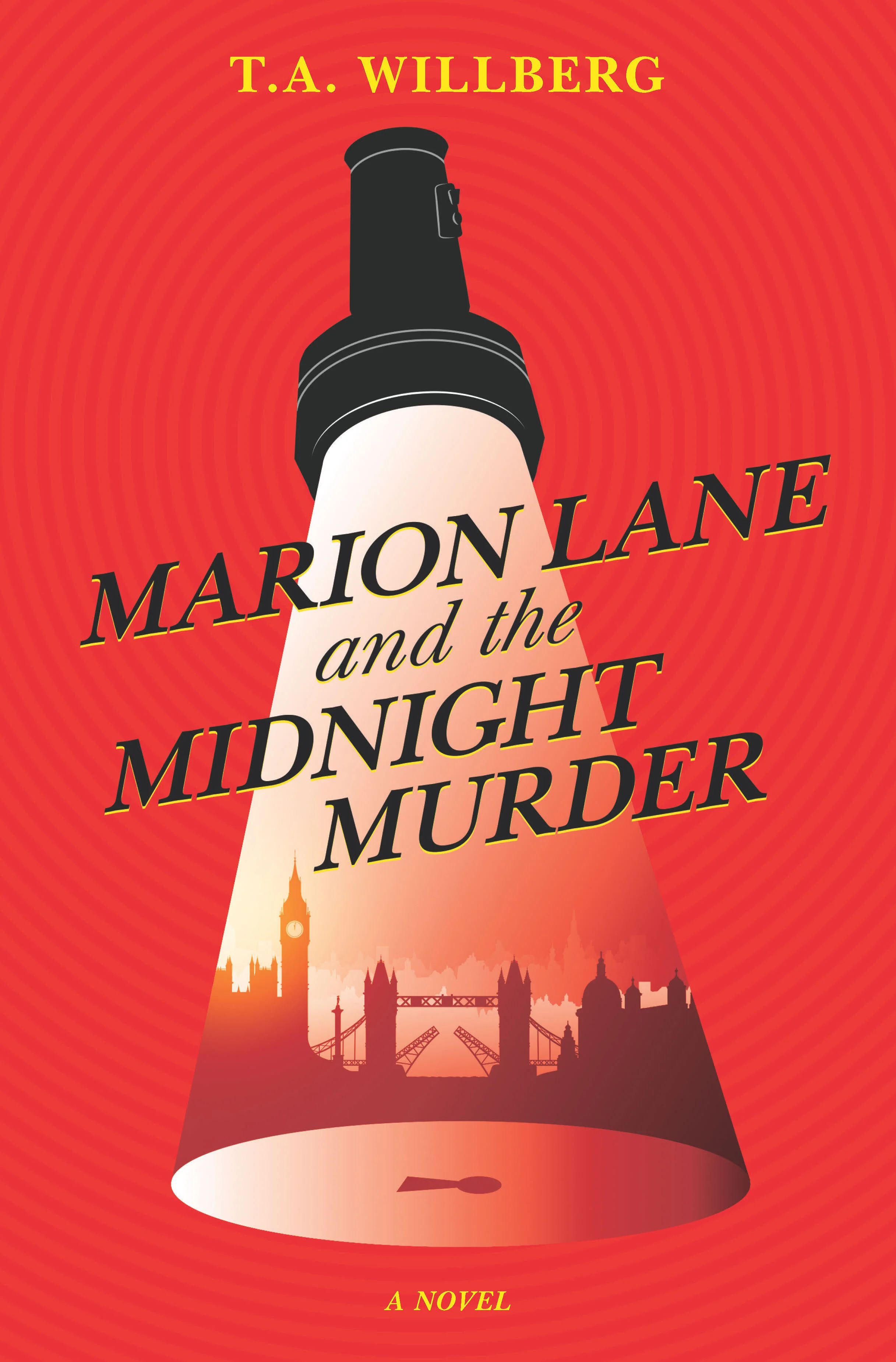
Spotlight: Marion Lane and the Midnight Murder by T. A. Willberg

Marion Lane cover - FINAL.jpg

The letter was short. A name, a time, a place.

Marion Lane and the Midnight Murder plunges readers into the heart of London, to the secret tunnels that exist far beneath the city streets. There, a mysterious group of detectives recruited for Miss Brickett’s Investigations & Inquiries use their cunning and gadgets to solve crimes that have stumped Scotland Yard.

Late one night in April 1958, a filing assistant at Miss Brickett’s receives a letter of warning, detailing a name, a time, and a place. She goes to investigate but finds the room empty. At the stroke of midnight, she is murdered by a killer she can’t see―her death the only sign she wasn’t alone. It becomes chillingly clear that the person responsible must also work for Miss Brickett’s, making everyone a suspect.

Marion Lane, a first-year Inquirer-in-training, finds herself drawn ever deeper into the investigation. When her friend and colleague is framed for the crime, to clear his name she must sort through the hidden alliances at Miss Brickett’s and secrets dating back to WWII. Masterful, clever and deliciously suspenseful, Marion Lane and the Midnight Murder is a fresh take on the Agatha Christie-style locked-room murder mystery, with an exciting new heroine detective.

Excerpt

THE SECRET STEALER

Somewhere in London
Friday, April 11, 1958
11:40 p.m.

Envelope encased, the carrier cylinder traveled through miles of pneumatic pipes from its place of origin to the dark, deep dungeon of the Filing Department—falling neatly from the end of the pipe and into the corresponding receiver box, as if by some magical, invisible postman.

A bell chimed as the envelope landed in receiver box fifty-five.

Michelle White’s eyes shot open as she lurched back from the edge of sleep. She blinked at the flashing yellow light on the noticeboard above her. It was her job to ensure all letters were sorted out the minute they arrived: those that met agency requirements were to be organized by date and slipped into the Inquirers’ in-box for later investigation. Those that did not went straight into the rubbish bin, and those of which she was unsure what to do with, into a looming pile on the desk. But crime and crookedness had been on the decline the last few weeks in London and so, assuming the letter would be a lead on something petty, Michelle White staggered across the Filing Department in no particular hurry.

She lifted the lid on receiver box fifty-five, the endpoint of a six-mile pneumatic tube that fed off from a letter case hidden in Passing Alley in Farringdon.

Envelopes and letters pulled from the receiver boxes were usually addressed to the agency in general: Dear people under the ground, or similar.

But tonight was different.

To Miss M. White, Inquirer.

It was odd, yet she couldn’t help smile at the thought of it. Michelle had once dreamed of becoming an Inquirer; she had come so close to the reality, too. But she was just not good enough. Not clever enough, not brave or talented enough. Not quite anything enough.

Ten years ago, at the age of twenty-two, she’d been recruited from a textile factory where she’d toiled long hours as a quality control assistant. But like everyone who came to work in the sunless labyrinth, Michelle had swiftly and without much consideration renounced the liberties of her previous, lackluster life in exchange for the opportunity to begin a new and thrilling vocation as an Inquirer, where she’d hoped to finally make use of her very particular set of skills.

But things had not quite turned out that way, which is why—instead of scouring London’s streets for criminals and delinquents—Michelle had ended up here, spending her evenings as the night-duty filing assistant in the establishment’s dullest department. In fact, had it not been for her other, far more satisfying role—that of Border Guard, protector of the secret—then perhaps she would have quit years ago.

But now Michelle wondered, as she stared at the envelope in her hand, how whoever had sent it knew where she worked or why they had considered her the worthy counsel of their troubles. She ran her thumb over the words—Miss M. White, Inquirer—as if they might be absorbed through her skin and become true.

For a moment, she was reluctant to open the envelope, concerned it might be a joke. One of the young apprentices playing a trick. She clenched her jaw at the thought, breathed, then entered the letter’s details into the register file: time and date received, receiver box number and her initials. But when she opened the envelope and read the final detail—the nature of the inquiry—her breath began to quicken.

The letter was short. A name, a time, a place and one simple revelation. And yet it unleashed a torrent of angst.

Several weeks ago, something had gone missing from her handbag—something invaluable, irreplaceable, something that might dredge up a secret long since buried across the Border. At first she’d been so certain of who had taken it, and for countless nights thereafter she’d turned in her sleep, anxious the nasty thief would soon come looking for the paired device she kept locked in her private office, and with that the secret would be uncovered.

But if the letter she’d just received was to be trusted, Michelle’s anxieties had been misplaced—the secret had already been discovered. She wasn’t sure how, or even why, but if she followed the letter’s directions, she might soon find out.

Though sirens of warning blared in her head, Michelle had already made up her mind. Of course she could take the letter to someone more qualified than herself, but it had been addressed to her—whoever had sent it had entrusted her with this, a most precious and urgent secret. And besides, as the letter had said, if only for tonight, Miss White was an Inquirer.

As instructed, she lit a match and held the letter under the flame. Once the paper had turned to ash, she packed up her things, grabbed her handbag, locked the office and rushed up the staircase toward the library. She stopped at the lock room gate, far on the other side of the grand hall of glorious bookshelves. The gate was ajar, just as she’d expected.

She stepped inside, pausing immediately as a wave of something cool and cutting passed in front of her, a curious thing. She rubbed her eyes and looked around the dully lit room, at the hundreds of steel drawers, safes in which were kept the agency’s most hallowed files and documents. The lock room, with its thick walls and high ceiling, was always chilled, but tonight it felt particularly so.

Crack.

Something split from the wall behind her. She turned to the sound but saw only a shadow move across the room and something that looked like a large black box being removed from inside the wall. She hesitated, then moved a little closer. But it came again—a wave of cool air, dancing in front of her. She dabbed her eyes with the cuff of her sleeve; they were now surely playing tricks on her, for everything had turned to a strange blur of nothing. Michelle started to panic, her thoughts as unfocused as her eyesight. Her head began to spin. Her limbs to tingle. This might have been the moment she ran for her life, out of the lock room and away from the evil she now knew had been waiting for her there. But terror had immobilized her. There was nothing she could do to get her legs to move, not even when she heard the rush of footsteps, some behind her, some in front. Not even when she felt the brush of air against her neck.

“What’s happening,” she asked in a staggered groan. “I know you’re there…I know it was you…” She trailed off, the words in her head no longer making sense.

She dropped her handbag. Something hard rolled out and across the floor. She was too disorientated to realize what it was.

In a drawn-out moment that seemed to last forever, Michelle’s senses grew dull and viscous. She could no longer trust her eyesight, her ears. She might have seen an amorphous shape crouching in front of her. She might have seen it lift something from the floor. Certainly, however, she felt the sharp burn of a cold, ragged blade as it sunk quickly and easily through the delicate skin across her throat.

Warmth, darkness and nothing more.

Excerpted from Marion Lane and the Midnight Murder @ 2020 by Tessa Gukelberger, used with permission by Park Row Books/HarperCollins.

Buy on Amazon | Audible

About the Author

TA Willberg credit Wentzil Olivier.jpg

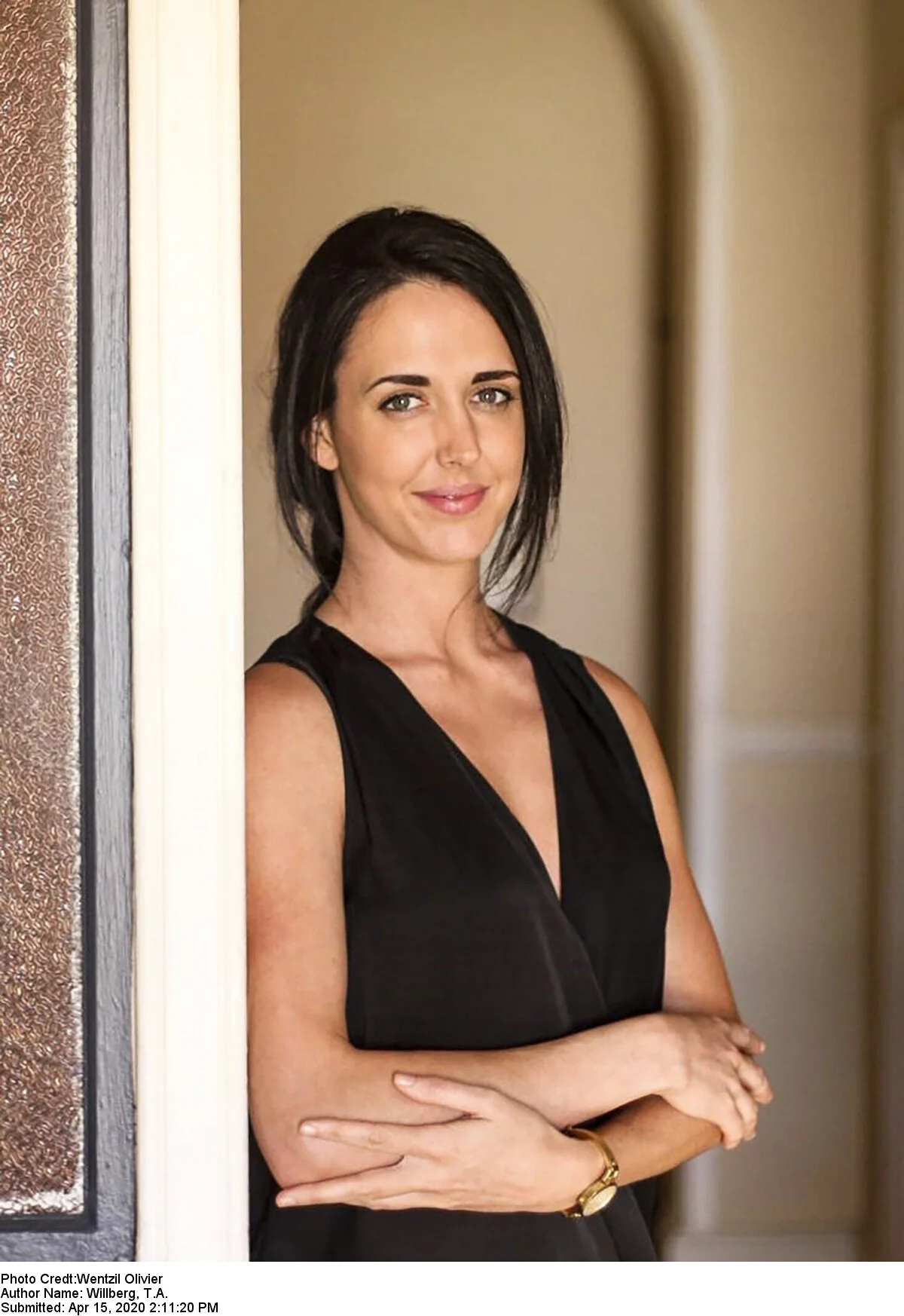
T.A. Willberg was born in Johannesburg, South Africa, and holds a chiropractic masters degree from Durban University of Technology. MARION LANE AND THE MIDNIGHT MURDER is her debut novel and launch of her detective series. She currently lives in Malta with her partner.

Connect:

Author Website

Twitter: @Tess_Amy_

Facebook: @tawillberg

Instagram: @ta_willberg


Spotlight: The Chanel Sisters: A Novel by Judithe Little

9781525895951_TSX_PRD.jpg

For fans of The Paris Wife, The Only Woman in the Room, and The Woman Before Wallis, a riveting historical novel narrated by Coco Chanel's younger sister about their struggle to rise up from poverty and orphanhood and establish what will become the world's most iconic fashion brand in Paris.

A novel of survival, love, loss, triumph—and the sisters who changed fashion forever

Antoinette and Gabrielle “Coco” Chanel know they’re destined for something better. Abandoned by their family at a young age, they’ve grown up under the guidance of nuns preparing them for simple lives as the wives of tradesmen or shopkeepers. At night, their secret stash of romantic novels and magazine cutouts beneath the floorboards are all they have to keep their dreams of the future alive.

The walls of the convent can’t shield them forever, and when they’re finally of age, the Chanel sisters set out together with a fierce determination to prove themselves worthy to a society that has never accepted them. Their journey propels them out of poverty and to the stylish cafés of Moulins, the dazzling performance halls of Vichy—and to a small hat shop on the rue Cambon in Paris, where a boutique business takes hold and expands to the glamorous French resort towns.

But the sisters’ lives are again thrown into turmoil when World War I breaks out, forcing them to make irrevocable choices, and they’ll have to gather the courage to fashion their own places in the world, even if apart from each other.

Excerpt

IN LATER YEARS, I WOULD THINK BACK TO THAT COLD MARCH day in 1897 at the convent orphanage in Aubazine.

We orphelines sat in a circle practicing our stitches, the hush of the workroom interrupted only by my occasional mindless chatter to the girls nearby. When I felt Sister Xavier’s gaze, I quieted, looking down at my work as if in deep concentration. I expected her to scold me as she usually did: Custody of the tongue, Mademoiselle Chanel. Instead, she drew closer to my place near the stove, moving, as all the nuns did, as if she were floating. The smell of incense and the ages fluttered out from the folds of her black wool skirt. Her starched headdress planed unnaturally toward heaven as if she might be lifted up at any moment. I prayed that she would be, a ray of light breaking through the pitched roof and raising her to the clouds in a shining beam of holy salvation.

But such miracles only happened in paintings of angels and saints. She stopped at my shoulder, dark and looming like a storm cloud over the sloping forests of the Massif Central outside the window. She cleared her throat and, as if she were the Holy Roman Emperor himself, made her grim pronouncement.

“You, Antoinette Chanel, talk too much. Your sewing is slovenly. You are always daydreaming. If you don’t take heed, I fear you will turn out to be just like your mother.”

My stomach twisted like a knot. I had to bite the inside of my mouth to keep from arguing back. I looked over at my sister Gabrielle sitting on the other side of the room with the older girls and rolled my eyes.

“Don’t listen to the nuns, Ninette,” Gabrielle said once we’d been dismissed to the courtyard for recreation.

We sat on a bench, surrounded by bare-limbed trees that appeared as frozen as we felt. Why did they lose their leaves in the season they needed them most? Beside us, our oldest sister, Julia-Berthe, tossed bread crumbs from her pockets to a flock of crows that squawked and fought for position.

I pulled my hands into my sleeves, trying to warm them. “I’m not going to be like our mother. I’m not going to be anything the nuns say I’m going to be. I’m not even going to be what they say I can’t be.”

We laughed at this, a bitter laugh. As the temporary keepers of our souls, the nuns thought constantly about the day we would be ready to go out and live in the world. What would become of us? What was to be our place?

We’d been at the convent for two years and by now were used to the nuns’ declarations in the middle of choir practice or as we worked on our handwriting or recited the kings of France.

You, Ondine, with your penmanship, will never be the wife of a tradesman.

You, Pierrette, with your clumsy hands, will never find work with a farm woman. 

You, Hélène, with your weak stomach, will never be the wife of a butcher.

You, Gabrielle, must hope to make an adequate living as a seamstress. 

You, Julia-Berthe, must pray for a calling. Girls with figures like yours should keep to a nunnery.

I was told that if I was lucky, I could convince a plowman to marry me.

I pushed my hands back out of my sleeves and blew on them. “I’m not going to marry a plowman,” I said.

“I’m not going to be a seamstress,” Gabrielle said. “I hate sewing.”

“Then what will you be?” Julia-Berthe gazed at us with wide, questioning eyes. She was considered slow, “touched,” people said. To her everything was simple, black and white like the tunics and veils of the nuns’ habits. If the nuns said it, we would be it.

“Something better,” I said.

“What’s something better?” Julia-Berthe said.

“It’s…” Gabrielle started but didn’t finish.

She didn’t know what Something Better was any more than I did, but I knew she felt it just the same, a tingling in her bones. Restlessness was in our blood.

The nuns said we should be content with our station in life, that it was God-pleasing. But we could never be content where we were, with what we had. We came from a long line of peddlers, of dreamers traveling down winding roads, sure that Something Better was just ahead.

Excerpted from The Chanel Sisters by Judithe Little, Copyright © 2020 by Judithe Little. Published by Graydon House Books. 

Buy on Amazon | Audible

About the Author

79661_2020-01-27_1752.jpg photo credit - Tracy Ling.jpg

JUDITHE LITTLE is the award-winning author of Wickwythe Hall. She earned a BA in foreign affairs from the University of Virginia and a law degree from the University of Virginia School of Law. She grew up in Virginia and now lives with her husband, three teenagers, and three dogs in Houston, Texas. Find her on Instagram, @judithelittle, and on Facebook, facebook.com/judithelittle.

Connect:

Author website: http://www.judithelittle.com/

Instagram: @judithelittle

FB: @judithe.little

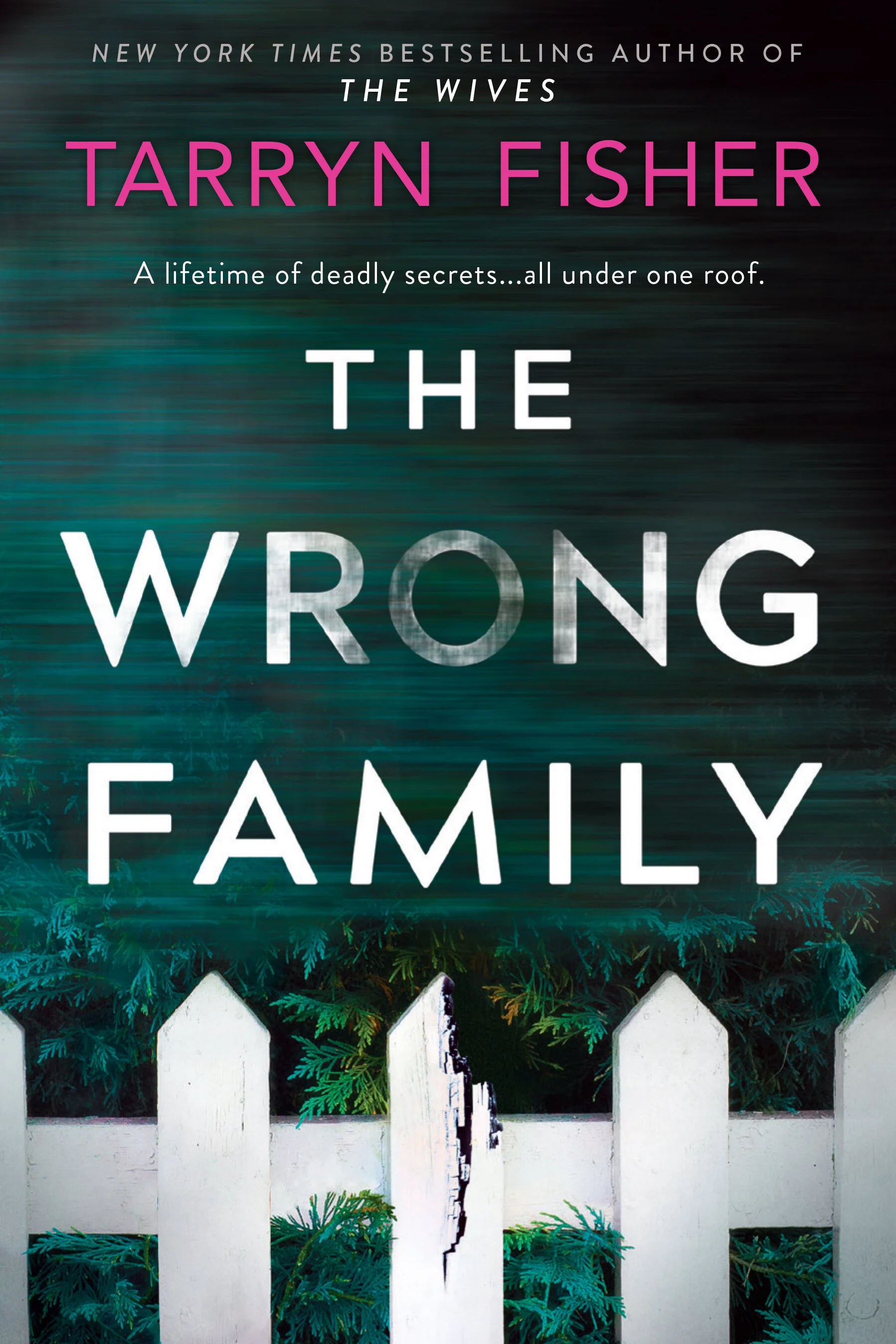
Spotlight: The Wrong Family by Tarryn Fisher

TheWrongFamily_front_July9 (1).jpg

From the author of the instant New York Times bestseller The Wives comes another twisted psychological thriller guaranteed to turn your world upside down.

Have you ever been wrong about someone?

Juno was wrong about Winnie Crouch.

Before moving in with the Crouch family, Juno thought Winnie and her husband, Nigel, had the perfect marriage, the perfect son—the perfect life. Only now that she’s living in their beautiful house, she sees the cracks in the crumbling facade are too deep to ignore.

Still, she isn’t one to judge. After her grim diagnosis, the retired therapist simply wants a place to live out the rest of her days in peace. But that peace is shattered the day Juno overhears a chilling conversation between Winnie and Nigel…

She shouldn’t get involved.

She really shouldn’t.

But this could be her chance to make a few things right.

Because if you thought Juno didn’t have a secret of her own, then you were wrong about her, too.

From the wickedly dark mind of bestselling author Tarryn Fisher, The Wrong Family is a taut new thriller that’s riddled with twists in all the right places.

Buy on Amazon | Audible

About the Author

Tarryn Fisher is a New York Times and USA TODAY bestselling author of nine novels. Born in Johannesburg, South Africa, she immigrated to America with her parents at the age of thirteen. She spent the next eighteen years in South Florida, where she earned her degree in Psychology. A sun hater, she currently makes her home in Seattle, Washington, with her children, husband and psychotic husky. Tarryn writers about villains and loves connecting with her readers on Instagram (@TarrynFisher, 61.9k followers). Visit her at TarrynFisher.com for more information, or check out her fashion blog at GuiseOfTheVillain.com. Tarryn is a Slytherin.

Connect:

Website:

www.tarrynfisher.com 

Facebook:

https://www.facebook.com/authortarrynfisher

Instagram:

https://instagram.com/tarrynfisher/

Twitter:

https://twitter.com/DarkMarkTarryn

Spotlight: Wrong Alibi: An Alaskan Mystery by Christina Dodd

9781335549594_LHC_prd (1).jpg

Perfect for fans of Lisa Jewell, New York Times bestselling author Christina Dodd delivers an all-new thriller, featuring a bold and brash female protagonist.

WRONG JOB

Eighteen-year-old Evelyn Jones lands a job in small-town Alaska, working for a man in his isolated mountain home. But her bright hopes for the future are shattered when Donald White disappears, leaving her to face charges of theft, embezzlement—and a brutal double murder. Her protestations of innocence count for nothing. Convicted, she faces life in prison…until fate sends her on the run.

WRONG NAME

Evie's escape leaves her scarred and in hiding, isolated from her family, working under an alias at a wilderness camp. Bent on justice, intent on recovering her life, she searches for the killer who slaughters without remorse.

WRONG ALIBI

At last, the day comes. Donald White has returned. Evie emerges from hiding; the fugitive becomes the hunter. But in her mind, she hears the whisper of other forces at work. Now Evelyn must untangle the threads of evidence before she’s once again found with blood on her hands: the blood of her own fam

Excerpt

Chapter 1

ALASKA

Midnight Sun Fishing Camp

Katchabiggie Lodge

Eight years ago

JANUARY.

Five and a half hours a day when the sun rose above the horizon.

Storm clouds so thick, daylight never penetrated, and night reigned eternal.

Thirty below zero Fahrenheit.

The hurricane-force wind wrapped frigid temperatures around the lodge, driving through the log cabin construction and the steel roof, ignoring the insulation, creeping inch by inch into the Great Room where twenty-year-old Petie huddled on a love seat, dressed in a former guest’s flannel pajamas and bundled in a Pendleton Northern Lights wool blanket. A wind like this pushed snow through the roof vents, and she knew as soon as the storm stopped, she’d be up in the attic shoveling it out.

Or not. Maybe first the ceiling would fall in on top of her.

Who would know? Who would care?

The storm of the century, online news called it, before the internet disappeared in a blast that blew out the cable like a candle.

For a second long, dark winter, she was the only living being tending the Midnight Sun cabins and the lodge, making sure the dark, relentless Alaska winter didn’t do too much damage and in the spring the camp could open to enthusiastic fishermen, corporate team builders and rugged individualists.

Alone for eight months of the year. No Christmas. No New Year’s. No Valentine’s Day. No any day, nothing interesting, just dark dark dark isolation and fear that she would die out here.

With the internet gone, she waited for the next inevitable event.

The lights went out.

On each of the four walls, a small, battery-charged nightlight came on to battle feebly against the darkness. Outside, the storm roared. Inside, cold swallowed the heat with greedy appetite.

Petie sat and stared into a dark so black it hurt her eyes. And remembered…

There, against the far back wall of the basement, in the darkest corner, white plastic covered…something. Slowly, Petie approached, driven by a terrible fear. She stopped about three feet away, leaned forward and reached out, far out, to grasp the corner of the plastic, pull it back, and see—

With a gasp, Petie leaped to her feet.

No. Just no. She couldn’t—wouldn’t—replay those memories again.

She tossed the blanket onto the floor and groped for the flashlights on the table beside her: the big metal one with a hefty weight and the smaller plastic headlamp she could strap to her forehead. She clicked on the big one and shone it around the lodge, reassuring herself no one and nothing was here. No ghosts, no zombies, no cruel people making ruthless judgments about the gullible young woman she had been.

Armed with both lights, she moved purposefully out of the Great Room, through the massive kitchen and toward the utility room.

The door between the kitchen and the utility room was insulated, the first barrier between the lodge and the bitter, rattling winds. She opened that door, took a breath of the even chillier air, stepped into the utility room and shut herself in. There she donned socks, boots, ski pants, an insulated shirt, a cold-weather blanket cut with arm holes, a knit hat and an ancient, full-length, seal-skin, Aleut-made coat with a hood. She checked the outside temperature.

Colder now—forty below and with the wind howling, the wind chill would be sixty below, seventy below…who knew? Who cared? Exposed skin froze in extreme cold and add the wind chill… She wrapped a scarf around her face and the back of her neck. Then unwrapped it to secure the headlamp low on her forehead. Then wrapped herself up again, trying to cover as much skin as she could before she faced the punishing weather.

She pointed her big flashlight at the generator checklist posted on the wall and read:

Hawley’s reasons why the generator will fail to start. The generator is new and well-tested, so the problem is:

LOOSE BATTERY CABLE

Solution: Tighten.

CORRODED BATTERY CONNECTION

Solution: Use metal terminal battery brush to clean connections and reattach.

DEAD BATTERY

Solution: Change battery in the autumn to avoid ever having to change it in the middle of a major fucking winter storm.

If she wasn’t standing there alone in the dark in the bitter cold, she would have grinned. The owner of the fishing camp, Hawley Foggo, taught his employees Hawley’s Rules. He had them for every occurrence of the fishing camp, and that last sounded exactly like him.

The generator used a car battery, and as instructed, in the autumn she had changed it. This was her second year dealing with the battery, and she felt secure about her work.

So probably this failure was a loose connection or corrosion. Either way, she could fix it and save the lodge from turning into a solid ice cube that wouldn’t thaw until spring.

That was, after all, her job.

She shivered.

So much better than her last job, the one that led to her conviction for a gruesome double murder.

“Okay, Petie, let’s grab that metal battery cleaner thingy and get the job done.” Which sounded pretty easy, when she talked to herself about it, but when she pulled on the insulated ski gloves, they limited her dexterity.

Out of the corner of her eye, a light blinked out.

She looked back into the lodge’s Great Room. The nightlights were failing, and soon she really would be alone in the absolute darkness, facing the memories of that long-ago day in the basement.

Good incentive to hurry.

She grabbed the wire battery connection cleaner thingy and moved to the outer door.

There she paused and pictured the outdoor layout.

A loosely built lean-to protected the generator from the worst of the weather while allowing the exhaust to escape. That meant she wasn’t stepping out into the full force of the storm; she would be as protected as the generator itself. Which was apparently not well enough since the damned thing wasn’t working.

She gathered her fortitude and eased the outer door open.

The wind caught it, yanked it wide and dragged her outside and down the steps. She hung on to the door handle, flailed around on the frozen ground, and when she regained her footing, she used all her strength to shove the door closed again.

Then she was alone, outside, in a killer storm, in the massive, bleak wilderness that was Alaska.

Excerpted from Wrong Alibi by Christina Dodd Copyright © Christina Dodd. Published by HQN Books.

Buy on Amazon | Audible

About the Author

16543_2017-08-23_1341.jpg

New York Times bestselling author Christina Dodd writes “edge-of-the-seat suspense” (Iris Johansen) with “brilliantly etched characters, polished writing, and unexpected flashes of sharp humor that are pure Dodd” (ALA Booklist). Her fifty-eight books have been called "scary, sexy, and smartly written" by Booklist and, much to her mother's delight, Dodd was once a clue in the Los Angeles Times crossword puzzle. Enter Christina’s worlds and join her mailing list at www.christinadodd.com.

Connect:

Author Website: https://www.christinadodd.com/ 

TWITTER: @ChristinaDodd

Facebook: https://www.facebook.com/ChristinaDoddFans 

Insta: @ChristinaDoddBooks

Goodreads: https://www.goodreads.com/author/show/12695.Christina_Dodd

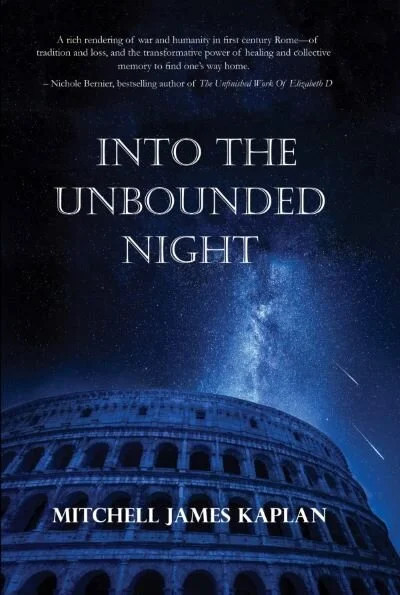
Spotlight: Into the Unbounded Night by Mitchell James Kaplan

Into the Unbound Night_web.jpg

Regal House Publishing
Paperback & eBook; 231 Pages

Genre: Literary Historical

When her village in Albion is sacked by the Roman general Vespasian, young Aislin is left without home and family. Determined to exact revenge, she travels to Rome, a sprawling city of wealth, decadence, and power. A “barbarian” in a “civilized” world, Aislin struggles to comprehend Roman ways. From a precarious hand-to-mouth existence on the streets, she becomes the mistress of a wealthy senator, but their child Faolan is born with a disability that renders him unworthy of life in the eyes of his father and other Romans.

Imprisoned for her efforts to topple the Roman regime, Aislin learns of an alternate philosophy from her cellmate, the Judean known today as the Apostle St. Paul. As the capital burns in the Great Fire of 64 AD, he bequeaths to her a mission that will take her to Jerusalem. There, Yohanan, son of Zakkai, has been striving to preserve the tradition of Hillel against the Zealots who advocate for a war of independence. Responding to the Judeans’ revolt, the Romans—again under the leadership of Vespasian—besiege Jerusalem, destroying the Second Temple and with it, the brand of Judean monotheism it represents. Yohanan takes on the mission of preserving what can be preserved, and of re-inventing what must be reinvented.

Throughout Into the Unbounded Night, Aislin’s, Faolan’s, Vespasian’s, and Yohanan’s lives intertwine in unexpected ways that shed light on colonization and its discontents, the relative values of dominant and tyrannized cultures, and the holiness of life itself—even the weakest of lives.

REGAL HOUSE PUBLISHING | AMAZON | BOOK DEPOSITORY | INDIEBOUND

About the Author
Mitchell James Kaplan.jpg

Mitchell James Kaplan graduated with honors from Yale University, where he won the Paine Memorial Prize for Best Long-Form Senior Essay submitted to the English Department. His first mentor was the author William Styron.

After college, Kaplan lived in Paris, France, where he worked as a translator, then in Southern California, where he worked as a screenwriter and in film production.

He lives in the Blue Ridge Mountains of Virginia with his family and two cats.

WEBSITE | FACEBOOK | TWITTER | GOODREADS