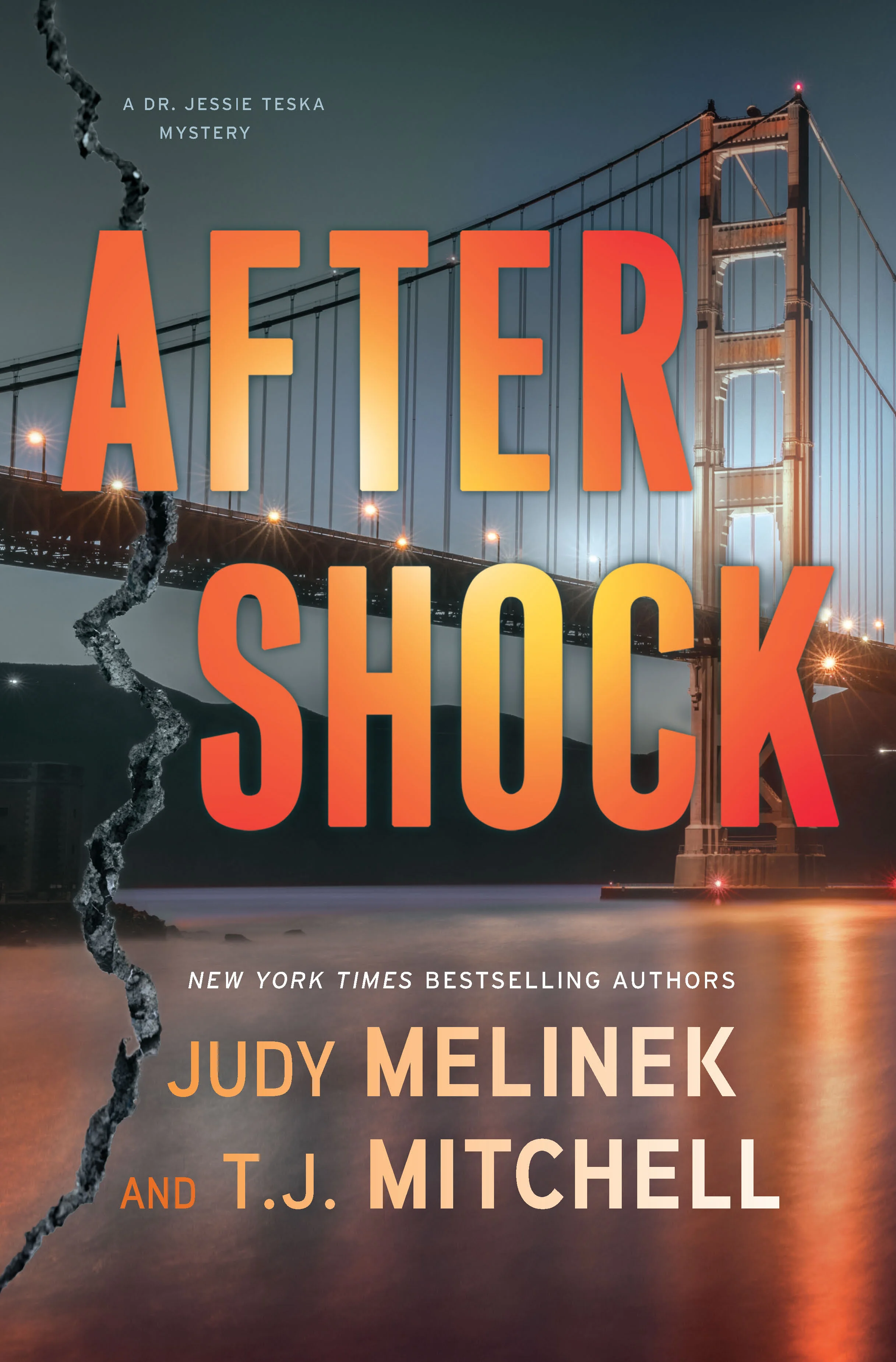
When an earthquake strikes San Francisco, forensics expert Jessie Teska faces her biggest threat yet in this explosive new mystery from the New York Times bestselling authors of Working Stiff and First Cut.
At first glance, the death appears to be an accident. The body is located on a construction site under what looks like a collapse beam. But when Dr. Jessie Teska arrives on the scene, she notices the tell-tale signs of a staged death. The victim has been murdered. A rising star in the San Francisco forensics world, Jessie is ready to unravel the case, help bring the murderer to justice, and prevent him from potentially striking again.
But when a major earthquake strikes San Francisco right at Halloween, Jessie and the rest of the city are left reeling. And even if she emerges from the rubble, there's no guaranteeing she'll make it out alive.
With their trademark blend of propulsive prose, deft plotting and mordant humor, this electrifying new installment in the Jessie Teska Mystery series offers the highest stakes yet.
Excerpt
CHAPTER 1
A steel band cover of “Don’t Fear the Reaper” makes for a lousy way to lurch awake. Couple of months back, some clown of a coworker got ahold of my cell phone while I was busy in the autopsy suite, and reprogrammed the ringtone for incoming calls from the Medical Examiner Operations and Investigation Dispatch Communications Center. I keep forgetting to fix it.
I reached across my bedmate to the only table in the tiny room and managed to squelch it before the plinking got past five or six bars, but that was more than enough to wake him.
“Time is it?” Anup slurred.
“Four thirty.”
“God, Jessie,” he said, and pulled a pillow over his head. I planted a nice warm kiss on the back of his neck.
Donna Griello from the night shift was on the phone. “Good morning, Dr. Teska,” she said.
“Okay, Donna,” I whispered. “What do we got and where are we going?”
I didn’t need the GPS navigation from my one extravagance in this world, the BMW 235i that I had brought along when I moved from Los Angeles to San Francisco, because muscle memory took me there. The death scene was right on my old commute—a straight shot from the Outer Richmond District, along the edge of Golden Gate Park, then the wiggle down to SoMa, the broad, flat neighborhood south of Market Street. The blue lights were flashing on the corner of Sixth Street and Folsom, just a couple of blocks shy of the Hall of Justice. I used to perform autopsies in the bowels of the Hall, before the boss, Chief Medical Examiner Dr. James Howe, moved the whole operation to his purpose-built dream morgue, way out in Hunters Point. Along the way, Howe made me his deputy chief. The promotion came with a raise, an office, and a ficus, but I hadn’t sought it and it wasn’t welcome—I was only a year and change on the job and didn’t have the experience to be deputy chief in a big city. Howe needed someone to do it, though. So the gold badge and all its headaches went to me.
The death scene address Donna had given me over the phone was a construction site. From the outside, I couldn’t tell how big. They’d built a temporary sidewalk covered in plywood, and posted an artist’s rendition of a gleaming glass tower, crusted in niches and crenellations and funky angles, dubbed SoMa Centre.
I double-parked behind a police car and walked the plankway between a blind fence and a line of pickup trucks with union bumper stickers. The men in them eyed me with either suspicion or practiced blankness while they waited for their job site to reopen. A beat cop kept vigil at the head of the line. He took my name and badge number, logged me in, and lifted the yellow tape. He pointed to a wooden crate. It was full of construction hard hats.
“Mandatory,” he said.
“You aren’t wearing one,” I griped.
“I’m not going in there, either.”
“Good for you. Give me a light over here.”
I sorted through the helmets under the cop’s flashlight beam. Sizes large, extra large, medium. I am a woman, five feet five inches, a hundred thirty-four pounds, and not especially husky of skull. I certainly wasn’t husky enough to fill out a helmet spec’d for your average male ironworker, which seemed to be all that was on offer.
I tried out a medium. Even when I cinched the plastic headband all the way, the hard hat swallowed my sorry little blond noggin.
“Yeah, laugh it up, Officer,” I said, while he did.
“Sorry, Doc. You look like a kid playing soldier!”
“Laugh it up,” I said again, because I wasn’t equipped, at that hour, to be clever.
Not all the workers were stuck outside in their pickups. A few men in hard hats stood around, waiting for work to get going. They shied away from me, in my medical examiner windbreaker, polyester slacks, and sensible shoes, like I was the angel of death collecting on a debt.
I found Donna. She’s hard to miss: more than six feet tall, eyes and beak like a hawk. Her hard hat fit just fine. She was leaning against the medical examiner removals van with Cameron Blake, her partner 2578—our bureaucratic shorthand for death scene investigators—on the night shift. Cam is round-faced and ruddy, half a foot shorter than Donna but just as brawny. He greeted me.
“Any coffee?” I said.
“The site superintendent says it’s brewing. First shift is just getting here. That’s how come they found the body. You want to talk to him?”
“The body?”
“The superintendent.”
“Let’s find out what the dead guy has to say first.”
Donna chuckled in a dark way. “Just you wait and see, Doc.”
The pair of 2578s led me across the construction site by flashlight. Work lights were coming on, but they left big dark gaps.
“Who found the body?”
Donna consulted her clipboard. “Dispatch says a worker named Samuel Urias, opening up after the night shift.”
The construction site by flashlight was a spooky place, even by my standards. Dirty yellow machines loomed in the beams, and plastic sheeting fluttered from the shadows. Our feet crunched on gravel, then whispered over packed dirt. The only thing that was well lit was a mobile office trailer, on a rise to our left, surrounded by silhouettes in hard hats.
Donna led us toward a detached flatbed trailer, parked with its landing-gear feet pressing into the dirt. It was loaded with long metal pipes, six or eight inches in diameter, in bundles of twenty or so. The bundles were bound together with tight black bands at either end and had been stacked four high on the flatbed. One of the bands securing the top bundle had snapped. It waved drunkenly in the air—and half a dozen pipes lay tumbled in the dirt.
Underneath them was a body.
It was a man. He was on his back. His head and shoulders were crushed under the pipes. He wore a business suit and black wingtip shoes, the left one coming off at the heel. His arms were flung out. I determined his race to be white from his hands, which offered the only visible skin. They were clean and uncalloused, fingernails manicured, wedding band on the left ring finger, a college ring on the right.
I shined my flashlight at the pipes. They had done a job on him. We walked around the body, looking for a pool of blood. There wasn’t one.
When I pointed this out, Donna elbowed Cameron and smirked. He scowled back.
“What?” I said.
“I noticed that too,” Donna said. “Cam thinks it’s no big deal.”
“Can we just get this guy out of here?” Cameron said. “The superintendent is antsy. He’s worried about press, and I don’t blame him.”
I crouched to take a closer look at that left shoe. The leather above the heel was badly scuffed. Same for the right one. The dead man’s pricey wool dress pants were torn at the hems. My flashlight picked up a faint trail in the dirt running away from his feet. I warned the 2578s to watch their step until the police crime scene unit had photographed the area.
“What—?” said Cam. “CSI isn’t here. This is an accident scene.”
“Get them. This is a suspicious death.”
“Oh, come on…”
“It’s fishy.” I pointed my flashlight around. “Where’s all the blood from that crush injury? There’s drag marks and damage to the clothing to match. Soft hands, expensive suit. Where’s his hard hat?”
“Maybe it’s under the pipes.”
“Maybe. But does this guy look like he belongs on a construction site, after hours? No way I’m assuming this was an accident.”
“Told you it was staged,” Donna said to Cam.
“Whatever,” he muttered back. He pulled out his phone, said good morning to the police dispatcher, and asked for the crime scene unit.
The sky was lightening behind the downtown towers a few blocks away, and more construction workers were starting to trickle in. “We need a perimeter,” I said. “And I want to talk to the man who found the body. Do we have a presumptive ID?”
“We found this just like you see it, and didn’t run his pockets yet,” Donna said.
“Let’s wait till crime scene documents everything before we touch him.”
Aftershock_9781335147295_RHC_txt_313546.indd 15 10/29/20 10:40 AM
Donna smiled. “Because this is fishy, right?”
I couldn’t help smiling back. “You won the bet. Leave Cam alone.” I started toward the lit-up office trailer.
“Where you going?” Donna said.
“Coffee.”
A figure in the small crowd huddling at the trailer saw me coming and met me halfway. He was a late-middle-aged white man with a gray mustache, dressed like a soccer dad in blue jeans and a collared shirt. No tie, no jacket, heavy work boots. He had a fancy hard hat. It said site super.
“Where’s the hearse?” the construction superintendent demanded.
I introduced myself and told him we were waiting for the police crime scene unit to arrive and document the scene.
“How long will that take?”
Fuck if I know, I thought. “It could be a while,” I said.
“What’s a while? We have work to do here.”
Bałwan. I grew up outside of Boston, but Polish is my first language. Sort of. My mother is from Poland and my father is a son of a bitch. Mamusia taught me and my brother Tomasz the mother tongue—which Dad doesn’t speak—and the three of us stuck with it inside the four walls of our three-decker flat on Pinkham Street in East Lynn. Mamusia said it was to preserve our heritage. It was also useful for hiding things from the old man.
Polish has a lot of terms for a son of a bitch. Bałwan was Mamusia’s word for her husband Arthur Teska on a good day. If he had been drinking, he was a sukinsyn. So far, the site superintendent was turning out to be a bałwan, but the day was young.
“First the police will do their job, then my colleagues and I will do our job, and then you can get back to yours.”
“But the police are already here, and they aren’t doing anything!”
“We’re waiting for the homicide division.”
The superintendent went pale and stammery. “Homicide—? But this isn’t… This is…”
“This is a death scene. It might be a crime scene. That’s for the police to determine before I can continue my investigation as the medical examiner, and certainly before we can remove or even touch that body.”
The superintendent said nothing. He dug into his pocket for a phone and walked away, dialing. Not an unusual reaction. People freak out when they hear homicide is coming.
I dug a hand under the wobbly hard hat to scratch my scalp. It was Anup’s damn shampoo. I had been dating Anup Banerjee for seven, almost eight months. I live in a rental, a tiny back-garden cottage in the Richmond District, half a mile from the continent’s Pacific edge. Cottage does the place too much justice—it’s a converted San Francisco cable car called Mahoney Brothers #45. It was abandoned in the sand dunes at the end of the line after it had outlived its usefulness, until someone jacked the thing up, built a foundation under it, and added box wings for a bedroom and a kitchen and a water closet. Mahoney Brothers #45 covers 372 square feet of the most expensive real estate in the country. Back when I had lived in it alone with my beagle, Bea, it was my very own cozy paradise.
Anup and I were not quite living together, but he had started spending most nights in Mahoney Brothers #45, and the place is no cozy paradise for two grown adults and a demanding dog. It’s more like sharing a Winnebago. I am not a domestic goddess. Anup is a lawyer by training and a fastidious, detail-oriented person by inclination. I ran out of shampoo; he got more. But it had turned out to be some awful stuff that only a man would buy, and it made my scalp itch.
I scratched at it. Then I headed up to the over-lit trailer to scare up some coffee.
I couldn’t juggle three cups, so I roped one of the beat cops into helping. He told me that press and camera trucks were already arriving at the gate.
“And our LT wants us to wrap things up here. The captain’s already riding his ass. That means someone with pull called the captain.”
I didn’t have the heart to tell him it was a complicated and hazardous crime scene, and we’d likely be holding vigil over that body for hours to come. Cam and Donna and I sipped our coffees and waited for the crime scene unit. They didn’t take long. They rearranged our perimeter. They took pictures. We stayed out of the way.
I was about to mosey up to the trailer for a refill when Cam nudged me and pointed his chin toward the entry gate. A Black man in a blue suit was swapping a fedora for a hard hat. Even at a distance in the dismal predawn light, I could pick out that mustache of his. It scowled.
“Zasrane to życie,” I muttered. My shit luck. It would appear that the homicide detective assigned to this case was going to be Keith Jones.
Inspector Jones and I had a history, and not a happy one. The year before, we’d done a case together, a drug overdose that he and his partner wanted to call an accident. I disagreed and tried to certify it as a homicide—but I was overruled by Dr. Howe, my boss. Jones had never forgiven me for putting them through a pile of work over a stupid OD just because I had decided it had to be a murder.
“Dr. Jessie Teska,” he said. “On a construction site. So I’m gonna guess I’m out here wasting my time with another accident.”
The crime scene photographer’s camera flashed, illuminating the dead man and the pile of pipes across his head and shoulders. Jones nodded thoughtfully. “Will you look at that,” he said.
I bit my tongue. “Hello, Keith.”
“Why are we here?”
“It’s a suspicious death.”
“What’s suspicious about a load of pipe falling off a truck?”
I ran through my initial findings for him: the decedent’s inappropriate attire, damage to the heels of his shoes and pant hems, drag marks in the dirt, the lack of evident bleeding.
“So what? Maybe he got drunk and tripped and tore his pants. Maybe the blood’s under those pipes.”
“Maybe the scene’s been tampered with. Maybe it’s a homicide dressed like an accident.”
“Who is he, anyhow?”
“We’ll try to get a presumptive ID when crime scene clears us to handle the body.”
“So you don’t know. Witnesses?”
“No. One of the workers found him when they opened up the site this morning.”
“You spoke to this worker?”
“I figured you’d want to.”
“That’s what you figured, huh, Doctor. Did you figure maybe he could give you a presumptive ID on this dead person? Get us started, at least?”
Again I bit my tongue. I didn’t like being dressed down by Jones, especially in front of the 2578s and the precinct cops, but nothing good would come from calling him out. By luck of the draw, it was a case we had to investigate together.
Jones sighed and massaged his boxy eyebrows. “Okay, then, Deputy Chief Teska. You’ve got the whole circus rolling in, and it’s going to be here for hours. Let’s see what’s what.” He headed off toward the lit-up office trailer.
I rejoined Cameron and Donna, who were studiously pretending to ignore us by watching the crime scene unit photograph the death scene.
“How are we going to get those pipes off the body?” I wondered.
“Can’t be that hard,” Cam said. “I’ll go talk to the superintendent.”
The pallid sky brightened a little, and I could hear the growl of rush hour rising on all sides of the future home of SoMa Centre. I checked my phone. It was 7:05. Anup would be getting up soon. He’d take Bea out. He had no problem with the dog. I’m her alpha for sure, but Anup is a runner and Bea enjoys chasing him around Golden Gate Park. I thought about calling him, but decided it was better to let him enjoy his last few minutes of sleep. Anup had a nice desk job at the First District Court of Appeal. Never did he have to roll out of bed at 4:30 to sit around a construction site and watch cops take pictures of a mangled corpse.
Lucky him.
Cam returned. Behind him, the site superintendent had picked two men out of the crowd by the trailer and marched them over to a giant front loader.
“We have an issue,” Cam said. Apparently, those two were the only workers on hand qualified to operate the equipment that would safely lift the metal pipes off our dead guy—and they refused to do it. They wanted nothing at all to do with dead bodies, especially if the police were involved. The superintendent was threatening to fire them both if one of them didn’t shift those damn pipes.
A ripple went through the crowd of hardhats watching the confrontation, and they turned in unison toward a wiry, sharp-angled man approaching from the entrance gate. The way he stalked across the construction site told everyone he was not playing games. He went straight up to the superintendent, and the two of them got to shouting, nose to nose, like they’d had practice at it.
Homicide Inspector Jones intervened. He brandished his pad and pen, introduced himself, and asked the men to give him their names, addresses, and phone numbers.
“How come?” said the wiry man. “We didn’t do nothing.”
“I’m not saying you did, okay?” Jones assured him in a soft-glove way. “It’s just that this is a crime scene here, and we need to document everyone who has been on it.”
“You can’t detain nobody that’s not under arrest!” the man shouted, and repeated the message in Spanish to the crowd of hardhats.
“Hold on, now,” said Jones, still softly. “We can’t allow any of you people to leave this crime scene until we document who you are and how to reach you. All of you.” He gestured to one of the precinct cops, who said something into his shoulder mic. Uniforms materialized from all around, and surrounded the crowd of hardhats.
The wiry man said, “Is anyone here under arrest?”
“Nobody’s under arrest. There’s been a death at your workplace, and there will be an investigation. We just need to see your IDs, and then anyone who wants to leave can go.”
“These men were not even here last night.”
“Until we get everyone’s information, no one is leaving.”
I felt Cam, next to me, tense up. He’s a crime scene veteran. His instincts are worth paying attention to.
The wiry man tried to stare down Keith Jones. Jones didn’t blink. Nobody in the crowd moved a muscle.
Then the wiry man nodded and pulled out his wallet, and we all unclenched. “I would like your business card, please, Detective,” he said. “My name is Samuel Urias, and I am the union steward on this job.”
I cast an eye to Donna and she nodded. Samuel Urias was the man who had called 911 to report the dead body.
Urias said something to the two men behind him, and without a word they produced their IDs, too. Jones handed out his card. “Mr. Urias,” he said, “we can’t determine what happened here to cause this death until we get those pipes lifted. Will one of these machine operators be willing to help?”
“No,” Urias said, without bothering to ask the workers. “They’re not doing it. But I am certified on this equipment. I will move the pipes.”
Urias started off toward the giant front loader, and over his shoulder he said, “Clear the area.”
Jones let a narrow smile slip past his mustache. Then he said to the nearest uniform cop, “You heard the man. Safety first.”
Samuel Urias took his sweet time moving those pipes off our corpse. He did a thorough walkaround inspection of the front loader. Then he powered it up, fiddled with the coupling on its talon-like grabber arm, and did another walkaround. Donna yawned. Cam worried out loud about press helicopters being bound to appear, now that there was daylight. One of the beat cops reported to Jones that a clot of trucks trying to get onto the site had gummed up the intersections across Sixth Street for blocks in all directions. That gridlock was spreading to the Central Freeway off-ramp, which was, in turn, backing up the Bay Bridge.
“You know who lives in these condos?” Cam murmured. “Tech bros. The Google bus can’t get down Eighth Street, that’s a class-A clusterfuck.”
“DEFCON 1,” Donna agreed.
I scoffed at the pair of them. “Come on. It’s traffic. There’s traffic every day. Big deal.”
“Just you wait and see,” Donna said for the second time that morning. Her boardwalk soothsayer routine was starting to grate on me.
The site superintendent complained that the duty contractor should be here managing this emergency, but that he wasn’t answering his phone.
“Maybe that’s him under the pipes,” Donna said to Cam.
“Not in that suit. Or those shoes.”
It was getting near 8:30 by the time Urias finally swung the arm of the heavy machine up in the air, opened the grabber, and lowered it slowly onto our death scene. The grabber’s tines closed around the pipes and they clattered. The truck roared. It heaved the pipes, pivoted them well away from the body, and dropped them in the dust beyond the flatbed trailer.
Jones lifted the police tape to approach the body, then jumped clear out of his shoes at a deafening blast from the front loader’s air horn. Up in its cab Urias was wagging his finger wildly. He swung the grabber arm away to the far side of the machine, lowered it to the ground, and killed the engine.
“Okay,” Urias hollered. “Clear!”
It’s not easy to rile a big-city police detective, but at that moment Homicide Inspector Keith Jones looked like he had developed a burning desire to clean Samuel Urias’s clock for him.
We followed Jones under the tape to get a clear look at the body. The head, neck, and upper rib cage had been obliterated. I’d never seen a worse case of disfigurement, except maybe in one or two bodies that had been left to decompose in the open, where animals had gotten to them. A case from the year before, involving a coyote in the woods near the Lincoln Park Golf Course, came vividly to mind. This pulpy slew leaking into a business suit was even less recognizable as a human body. Brain matter was smeared into the dirt, and hairy chunks of skull had been scattered like pottery shards. The crushed area was pink in places, red in places, but mostly just kind of tan colored.
Donna was seeing what I was seeing, and shaking her head. “That ain’t right.”
“Well,” I replied, “it’s interesting.”
“What about it?” said Inspector Jones.
“I’m concerned that we’re not seeing a giant puddle of blood here. I would expect much more bleeding from such a violent
crush injury. Practically all the man’s pressurized blood should have gushed out of those ruptured neck vessels.”
“So where is it?”
“I can’t tell you that until I perform the full autopsy. But just on first impression, this looks like postmortem injury to me.”
I didn’t have to explain to the homicide detective what that meant. “You think this is a homicide staged to look like an accident.”
“I think the visible evidence indicates that this man was already dead when those pipes came down on him. Let’s see what else we can determine right now.”
“Uh-huh,” said Jones with zero percent conviction.
The beat cops tried to keep the construction workers from crowding the tape cordon, but it was no use. We had an audience. The crew from CSI moved back in to take more pictures, then gave us the go-ahead to handle the body.
“’Bout time,” Cam grumbled.
“Chill, big guy,” one of the crime scene cops snapped back. Cam didn’t like that.
Identification is our first job and top priority. We went straight for the dead man’s pockets and found a wallet. It had a California driver’s license under the name Leopold Haring, address in San Francisco on Castenada Avenue.
“Forest Hill,” Cam said. “Money.”
Jones peered at the picture on the driver’s license, then at the pulp piled on the end of the man’s shoulders, and grunted. I manipulated an arm. The body was in full rigor mortis. That meant, I told Jones, he’d been dead at least six hours. Three a.m., maybe two a.m. at the earliest for a ballpark time of death.
“But,” I reminded him, “that’s the outside window. It could be a lot earlier.”
“Can’t you narrow that down?”
“Let’s do a body temperature,” I said to Cam.
We put the wallet back in Leopold Haring’s pocket where
we’d found it, and Cameron yanked down the trousers. It required some effort thanks to the rigor mortis. He inserted a thermometer into the cadaver’s rectum and told Donna it came to 80 Fahrenheit. She wrote that down, consulted an outdoor thermometer she kept in her death scene kit, and told me the ambient temperature was 54. I looked at the time and did the math.
“He probably died between six and ten last night.”
“That’s the best you can tell?”
“Yes. And I might be wrong.”
“You guys always say that.”
“We mean it. Time of death estimation is unreliable. It depends on too many variables…”
“Okay,” the detective said. I recalled from working with him before that he said okay a lot, but usually didn’t mean it.
“Detective!” someone yelled from behind the cordon line. It was the superintendent, cell phone still on his ear. “Do we know who it is?”
Jones wasn’t about to shout the dead man’s name into the crowd, so he gestured the superintendent over. I watched Jones read the name off his notebook. The superintendent’s jaw fell open. He bobbled the cell phone, dropped it in the dirt, and scrambled to pick it up. He stared at the shattered corpse in disbelief. Then he dusted off the phone and walked away, dialing frantically.
“Hey!” the detective called out, irked. “You know this guy?”
“Google it,” the superintendent said, and disappeared into the crowd of hardhats.
“Goddamn people,” said Jones, and stalked after him.
Donna already had her smartphone in hand and was typing. Cam and I huddled with her.
Leopold Andreas Haring, 52, born in Austria, immigrated in 1989 as a graduate student in architecture at the University of Pennsylvania.
“Oh, man,” said Cameron.
Leopold Haring was one of the most famous and acclaimed architects in the world, known for a boldness of vision coupled with a towering intellect, said the one article. “‘Haring’s work unites a classical rigor of form with a disciplined attention to, and intention of, function as the sine qua non of a building,’” Donna read. “‘His use of materials has proven famously visionary, yet has always been coupled with a miraculous lack of pretension…’”
“Enough,” said Cam.
“Wait, you gotta hear this one. ‘He is our great cityscape cubist, the Picasso of the building arts.’”
“Donna,” said Cam, “our shift ended half an hour ago. Can we get the pouch and gurney, please, before we end up on the news? I don’t like being on the news.”
“Fine, fine.” She produced a white sheet, which she draped carefully over the acclaimed architect’s mortal remains, and the two of them trekked back to the van.
I scanned the crowd of hardhats for Jones, but didn’t see him. My cell phone rang. It was the boss, Chief Medical Examiner Dr. James Howe.
“Jessie…?” He sounded faint and far away.
“Dr. Howe,” I hollered, and stuck a finger in my left ear. The morning shift had been standing around with nothing to do for more than three hours, and had apparently decided to fire up every heavy vehicle on the lot in preparation for the moment we allowed them to start work. I started walking and talking, searching for a quiet spot.
“What the hell is going on up there?” Dr. Howe said. “I’ve got everyone from the highway patrol to the mayor on my ass about your death scene. They’re saying you’ve locked it all down…?”
“Yeah, it’s not looking like an accident over here…”
“What do you mean? It’s a construction site with a fatal crush injury, right?”
“Not exactly. The injuries all look postmortem. It turned into a suspicious death pretty quick, so I had to call in CSI…”
I finally found a sheltered spot, a section of unfussy concrete foundation behind a chain-link gate. It was below grade and dark, but good and quiet.
“We just got access to the body a minute ago,” I told Dr. Howe. “We also just got a presumptive ID, but that’s another complication.”
“Why?”
“Now it’s suspicious and high profile. The driver’s license in his pocket belongs to a Leopold Haring. Apparently he’s a famous—”
“Oh sweet Jesus.”
“You’ve heard of him.”
“Get that body into the truck and out of there before the press shows up, Dr. Teska! What happened to him?”
I described the circumstances as we had found them, and what we had gone through to extricate the body. Dr. Howe didn’t like the story—especially once he reckoned how many scene spectators there were among the hardhats, and how many of them might have been sneaking cell phone pictures. I issued the soothing assurances I’d perfected in my short career under short-tempered boss men. I was good at it, and it worked. Dr. Howe let me go.
I climbed back up to the cordon line. Donna and Cam had staged their gurney and were laying out a body pouch next to Mr. Haring.
“Hang on,” I said. “Let’s get some pictures of the damage to the trouser hems and the shoes, while we still have them in situ with the drag marks in the dirt.”
“If those are drag marks,” Cam groused.
“That’s why I want to document them, Cam. If.”
Donna lifted the sheet off the body and set it aside, and Cam summoned the CSI photographer to take some close-ups of the ripped fabric and scuffed leather, the socks balled down, and pale pink abrasions on both Achilles’ heels.
Aftershock_9781335147295_RHC_txt_313546.indd 27 10/29/20 10:40 AM
“Those look postmortem, too,” I started to say—but was cut off by an anguished cry from behind us.
“Oh my God! Oh my God! What…”
It was a lanky man, well dressed, with silver hair. His face had gone as white as the morgue sheet.
“Is that…is that Leo?”
“That’s what we need you to tell us, Mr. Symond.” That was Jones. He was standing on one side of the pale man. The site superintendent stood on the other.
“Do you recognize him?” Jones said. “I mean, anything among his effects, maybe?”
“His head…what happened to his head? Oh God… Leo…”
Jones put a hand on the man’s shoulder. “Take all the time you need.”
The superintendent cleared his throat and turned away. “I’ll be in my office, Jeff,” he said, and strode briskly toward the trailer.
“Oh God…” the pale man—a Mr. Jeff Symond, evidently—said again. “That’s his suit. It looks like his shoes. Is he wearing a U-Penn ring?”
Jones turned his flat gaze to me. I lifted the dead man’s hand and examined the college ring.
“Yes.”
“What year, Mr. Symond?” asked Jones gently.
“Nineteen ninety-one.”
They both looked to me. I nodded.
Jeff Symond’s mouth hung open. His breathing was shallow, eyes glassy. He swiveled suddenly, stumbled, and vomited into the dirt under the police cordon tape.
Cameron muttered, “That’s another DNA profile to rule out,” and Donna stifled a snicker. I glared daggers and ordered them to get going with collecting the remains.
Symond wiped his mouth with a handkerchief, his back still turned. I went to him, asked if he was dizzy. He shook his head. I waved over a patrol cop.
“Take Mr. Symond up to the trailer and get him a chair and a glass of water, okay?”
They started off, carefully. Symond did not look back.
“Can I talk to you, Keith,” I said to Jones, and walked away from the cordon. He followed.
“What the hell is wrong with you?” I spat, too loud, and turned the heads on a couple of nearby beat cops. I tamped down my temper and dropped into a church whisper. “You don’t bring a civilian to a crime scene! What were you thinking—?”
“What’s wrong with me? You’re forgetting this is my scene.” He kept his body language lax for the benefit of the uniforms and hardhats craning to eavesdrop, but the anger in his voice matched mine. “This guy shows up at the gate, says he’s the decedent’s business partner. Apparently the superintendent called him, asked him to get down here. He demands—demands—to see the scene of the accident. He wants to see how it happened.”
“Accident—?”
“Yeah, accident. To me this looks like an industrial accident. You say different, based, as far as I can tell, on intuition about the blood spatter. Okay. Maybe you’re right—we’ll all find out sooner or later. But you’ve been way wrong, calling accidents homicides before, and I’m not taking any chances with your work, Doctor.”
“That is not fair.”
“Maybe not. Like I said, we’ll all find out sooner or later. This Mr. Jeffrey Symond is the partner of the man who holds the presumptive ID for our corpse over there. I figured he could tell us something about the pipes and how they fell, maybe. Or at least he could confirm the ID—”
“On a guy with no fucking face? Give me a break, Keith. You and I both know we’re going to get fingerprints off that body as soon as we get it back to the morgue, and those prints will match the DMV database for our presumptive. The ID will be
solid. You didn’t have to drag that poor man over here. It’s unprofessional and sadistic.”
“Sadistic—?” Keith Jones was losing his struggle to keep his body language from matching his words, and the hardhats were starting to notice. “Sadistic is leaving that dead man out there for, what…? Four hours now? Why don’t you do your job and get the body out of here.”
“Your crime scene, Inspector, but my body. You know that. The body and everything on it is my jurisdiction.”
“So why don’t you go look after it.”
“So why don’t you go—”
I stopped myself, which was just as well. We turned our backs on one another and walked away.
Donna and Cam had slid the body onto the white sheet, scooping up the mess that remained of the man’s head and shoulders, along with some bloody dirt and rubble. They tied the ends of the sheet into knots like a shroud, then lifted it up and placed it in the body pouch, which in turn went onto the gurney.
I told them to take it back to the morgue without me. “It’s too late to start the autopsy today. Print and weigh him and hold him over for tomorrow in the cooler.”
The 2578s calculated overtime while they pushed the gurney across the dirt lot to their truck. I covered a yawn and rubbed my face. If Mr. Jeffrey Symond was still recuperating in the office trailer, I figured I might as well go talk to him and see what he could tell me about the late Leopold Haring.
I opened the flimsy door to find Mr. Symond propped on a folding chair in a corner, drinking water from a paper cup. He looked badly shaken, but not on the verge of puking again. I got him a refill of water. He thanked me, absently.
I introduced myself. Jeffrey Symond did the same. I asked him how he knew the decedent.
“I’m his business partner,” he said. “Twenty years. More than that. This project is one of ours—his design, his blueprints. I do operations and permits, pitching new clients, the business end. Leo is the creative one.”
He sighed in the desperate way some men do to keep from crying.
“Mr. Symond,” I said, “I’m very sorry you went through that. No one should have to see a friend in that state.”
His eyes had a plea in them. I knew what was coming next. It was the vanguard of the denial phase.
“Are you sure that’s him?”
“The driver’s license he was carrying says it is, and the college ring you asked about substantiates that. We’ll know for sure when we compare his fingerprints to the database at the Department of Motor Vehicles.”
“Oh,” he said, despondent again. “Right.”
“He wears a wedding ring. Is he married?”
“Yes. Natalie. Natalie Haring.” I wrote it down, and asked him for Mrs. Haring’s phone number and address. He knew both from memory. “We all work together,” he said. “We have a company. Natalie and Leo and myself.”
“Does Mrs. Haring know yet?”
“I haven’t spoken to her…”
“I’m going to ask you not to, then. Our office will provide notification once the fingerprints come back and it’s official, which should be in the next couple of hours. Okay?”
“Okay.”
I gave Jeffrey Symond a moment to fiddle with his paper cup, then I continued.
“Did Leo use drugs or alcohol?”
“He drank. Not a lot.”
“No history of substance abuse that you know of?”
Aftershock_9781335147295_RHC_txt_313546.indd 31 10/29/20 10:40 AM
AFTERSHOCK
32
“No drugs, and I can’t remember the last time I saw him drunk, or even tipsy.”
“Was he on any medications? And do you know if he has any medical history?”
“I don’t know. You’d have to ask Natalie.”
“Okay. When did you last see Mr. Haring?”
“Yesterday around six.”
“In the evening, you mean?”
“Yes.”
“Where?”
“At our office. Natalie and I were both there, expecting him to be working with us. When he finally showed up, he was agitated—he’d been in a fight with his son.”
“What’s his name and age, the son?”
“Oskar. He’s twenty-three.”
“Natalie is his mother?” I asked.
“Yes.”
“But Oskar wasn’t there, at the office.”
“No.”
“Did Mr. Haring say what the fight was about?”
“No,” Symond said. “But he did say he was planning on coming down here, to the SoMa Centre site.”
“What for?”
“I don’t know exactly. He had a lot of complaints about the way they were doing this job.”
“What was going on?”
“Leo kept telling me the contractors were cutting corners. Materials, even methods. He was worried about it. You heard of the Leaning Tower of Pine Street?”
I nodded. The Leaning Tower was infamous. One of the city’s tallest new skyscrapers, right downtown, had been built with the wrong sort of foundation or something, and had started listing to one side. Pipes ruptured, electrical wires snapped, and windows were cracking—one had even popped out and crashed
to the street below. No one knew what was going to happen to that building. Hundreds of people—very rich people—had already invested in luxury condos there. They were bleeding untold millions of dollars in lost real estate value. Demolishing the building was out of the question and repairing it was impossible. Years in the planning and construction, and it had yielded nothing but finger-pointing and lawsuits for everyone involved.
“The Leaning Tower is every architect’s worst nightmare,” Symond said. “Something like that happens, it ruins your life. So Leo was worried about the foundation work on this place, on SoMa Centre.”
“Is that why he came down here last night?”
“He didn’t say as much, so I don’t know.”
Jeffrey Symond looked around the superintendent’s trailer, as if noticing for the first time where he was. There was a poster of the artist’s rendering. He rose and went over, contemplated it.
“They’re trying to keep too fast a pace on this thing,” he said. “I’m not surprised there was a fatal accident. I’m just surprised it was Leo.”
He moved to look out the trailer’s little window. Jones must’ve allowed the site opened up for work, because there was a lot more action—voices shouting commands, workers hustling around, machinery belching smoke and hauling off. The death scene cordon was still in place, but someone had shifted the fallen pipes farther off. A man in a hard hat stood over them with a hose, rinsing them down. He was washing bloody bits of Leopold Haring into the dirt.
Excerpted from Aftershock by Judy Melinek & T.J. Mitchell, copyright © 2021 by Dr. Judy Melinek and Thomas J. Mitchell. Published by Hanover Square Press.
Buy on Amazon | Audible
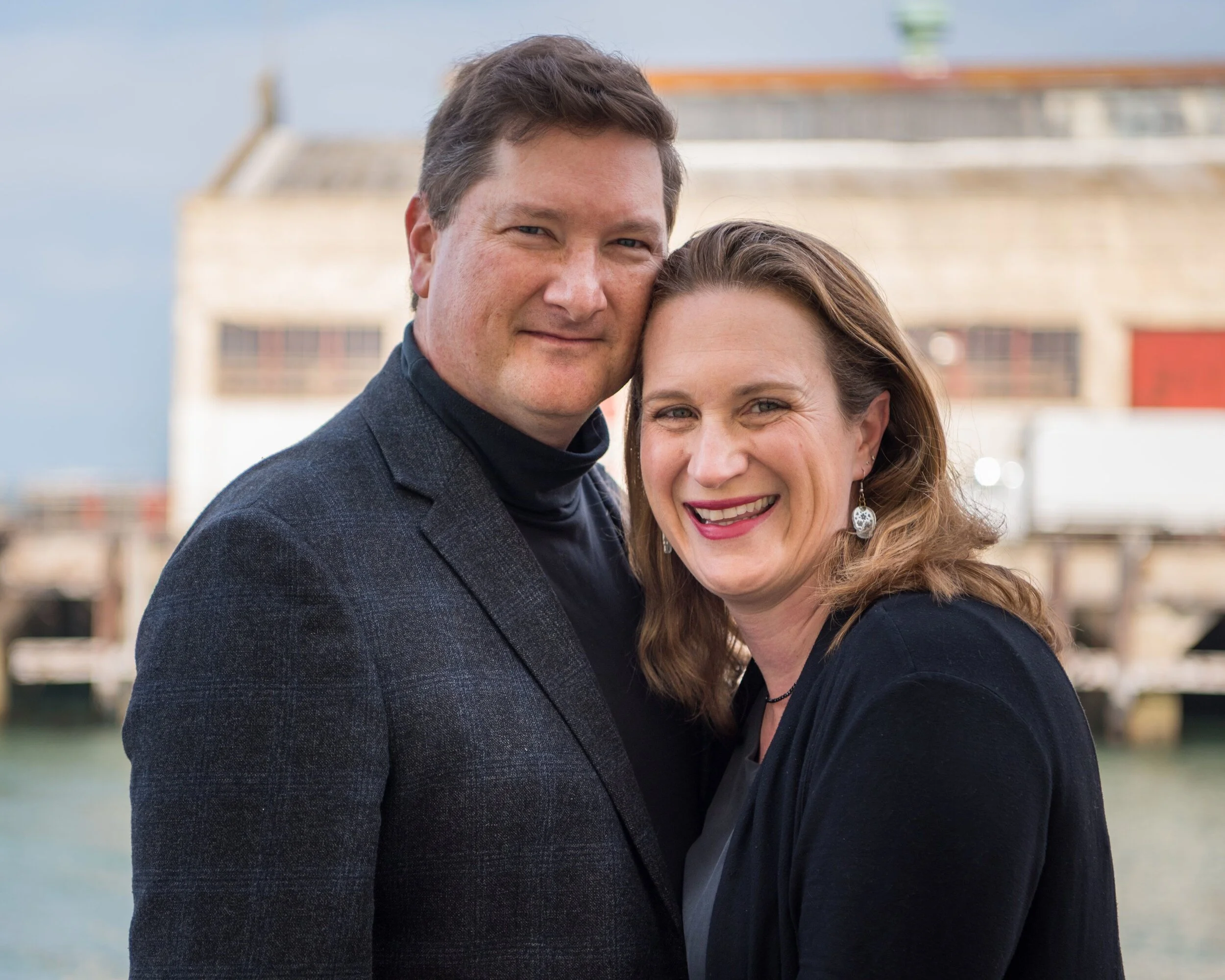
About the Author