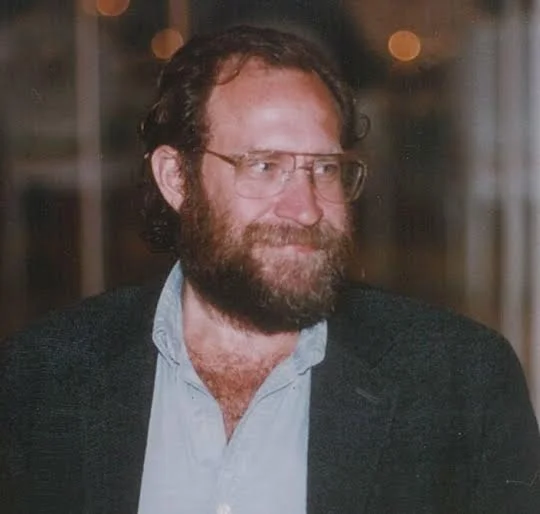
What About Emotions? by David Berndt, PhD

Since I was asked to do a guest blog for What About The Book?, and I am touring to introduce my book Overcoming Anxiety I thought I would call this post What About Emotions? In our society, emotions are very much misunderstood, medicalized, and even vilified. I felt that a more thoughtful discussion of emotions might be useful to your readers.

While what I am about to say is a gender stereotype, it is unfortunately largely still true, at least in the USA. Men are not supposed to have feelings, unless we are talking about anger, and even then that is usually seen as a byproduct of alcohol. Women however are expected by men and women alike to have feelings, but their feelings likely account for much of the pay gap between women and men. Both genders seem to agree all too often  that feelings are a problem that needs to be medicated, suppressed or at least an object of shame or ridicule. Indeed, in the USA estimates are that 25% of all women are on some kind of psychiatric medication aimed at curtailing either depression or anxiety. Men, of course, do not need to be kept in line nearly so much.

While some of those women do have real psychiatric problems, and hormones may account for a small part of that phenomenon, it seems that women are supposed to check their feelings at the door, and if they don’t, then maybe benzodiazepines or Prozac can help them to appear more indifferent. Feelings get a bad reputation.  

Why would we be created or evolve to have so many feelings, if they were just excess baggage? There must be some reason why we have them. I am here to tell you that feelings, when understood and managed well, not only have a purpose, but a vital one, and that learning to make effective use of your feelings should be an important goal for both men and women, and for client whose excessive feelings land with them with a psychiatric diagnosis, then becoming emotionally intelligent is an even more important priority.

There are several purposes of feelings but one of the most important ones is to signal to you that something needs your attention. In the case of anger, the signal is often that someone is hurting you (with their words or actions) and you want them to stop. In the case of some leg pain, the feeling is telling you “do not bend your leg so far, you might damage something.”  For the feeling of fear, it is clear enough, you feel you are probably are sensing a threat or danger, whether it be from a tiger or your boss.  Anxiety is similar, but I like to consider it more like fear-squared. In fear you know what you have to do (run from the tiger!), but in anxiety there is an added element of uncertainly:

“Is it really a tiger or is it a Rottweiler, but if it’s a Rottweiler what’s it doing in the hallway? And maybe it is dangerous… and my how those teeth are so big, it is not just a tiger it’s a saber-tooth tiger? No that can’t possibly be a dog, oh boy it really is a tiger, bigger than anyone I have ever seen!”

Not knowing usually makes anxiety that much scarier than fear. 

One of the things sadness can signal is loss or pending loss, either of someone you cared about or some ideal. Guilt should signal that you have some learning to do so you won’t mess up the next time. Thirst is a signal to drink, and embarrassment says you should be more circumspect and maybe more dignified. 

I could go on, but you get the idea.  Feelings can be useful signals. So why do we all treat them like leprosy? Feelings get a bad reputation because we don’t typically know how to manage them. When the feelings are ignored but the source of the signal has not been addressed, they often get too big. When they are stoically ignored, or suppressed with medications, then they can become problematic because they are too small. In pain, too big is something like dealing with leg pain by going to bed for a couple weeks, making everyone including yourself miserable, even though it is only a sprain. Too small would be ignoring the pain because you are stoic (or taking so many pain meds), so that you don’t listen to the warning and then really damage your leg. 

Let’s say a husband and wife are out for dinner, and while waiting in line a drunk stumbles up and wants to paw the lady. Both the woman and the man should be angry. Too small a reaction would be if the man would say, “let’s just ignore him, he is just a drunk” and too large would be when the husband gets arrested and the drunk stays behind. When deployed correctly anger gets the job done often by saying “no” and/or putting up a boundary. 

How about with anxiety?  Let’s use a metaphor of a stop light. Green is go “have fun,” red is “stop” (like anger), and yellow is caution, like anxiety. When you see a yellow light you are supposed to heed the signal and that means either stepping on the brakes or the gas. If you didn’t see the yellow light (the bulb was out, or maybe the sun blinded you) then you might end up in the middle of the intersection with a semi trying to beat you through from a crossing street. Too small.  Too large, to continue the metaphor, would be if the light was incredibly powerful and flashing and emitting a strobe effect. You would probably be so startled and confused that you might forget to react to the signal and, not stepping on either the brakes or the gas, you and the semi could do a little tangle tango. 

If you followed me so far, you probably can see where I am going. In many cases we need to have a Goldilocks size of feelings (not too big, not too small, just the right size, and not too hot, not too cold).  We need some of the fuel of the feeling so we can address the problem, but not so much that we get flooded and lose sight of what is bothering us. We typically are anxious about getting anxious, or mad that they made us mad, and never really address what starts the feeling in the first place. 

At this point in this discussion my clients often ask, “Yeah that’s all well and good but how in the heck do you do that? I don’t know how to make the feeling get smaller (or larger)?” Actually, you do, you just never honed it as a skill. Psychologists teach any of a number of grounding techniques that will help with just that. There are a few in my book Overcoming Anxiety, and getting good at them can help you adjust the size (up or down) of your feelings so that you can manage them.  But long before you ever met a psychologist, you probably developed a makeshift solution or two, you just never thought to use them, or develop them as a skill. For example, if you were an anxious child, you probably began to wring your hands or tap your feet, whenever you were out of your league. Little did you know that you were not just having a nervous habit, but you actually had stumbled upon a way (however inexpert your efforts may have been) to activate the part of your nervous system that helps you relax.

There is not time to go into where and why warming your hands of feet helps, but that is the kind of habit that you can develop into a much more effective grounding technique, one that you already knew but did not understand or make good use of, in your stress reactions. The good thing about using grounding techniques to manage your feelings, is that they do not cost anything, do not require a prescription and are always handy, once you get good at them.

Thanks for the opportunity to explore one small aspect of feelings, and how to harness them. In Overcoming Anxiety I am focused obviously on anxious feelings and the tools needed to manage that feeling. But this kind of technology is especially applicable to anger and many other feelings that can either feel too big or too small. 

About David Berndt, PhD

David J. Berndt, Ph.D. was an Associate Clinical Professor of Psychiatry at the University of Chicago where he published or presented over 80 papers and articles before establishing a private practice. Dr. Berndt currently lives in Charleston, S.C. where he also teaches in an adjunct capacity at the College of Charleston. He is best known for his psychological tests The Multiscore Depression Inventory, and the Multiscore Depression Inventory for Children, both from Western Psychological Services.

You can connect with David via website | Facebook | Twitter

About Overcoming Anxiety
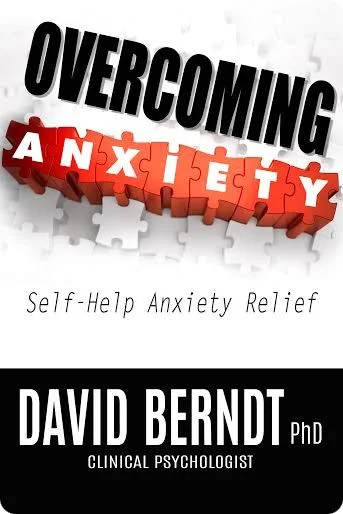
The good news is that anxiety can be overcome without relying on medication. Psychologist David Berndt, Ph.D., in Overcoming Anxiety outlines several self-help methods for management of anxiety and worry. In clear simple language and a conversational style, Dr. Berndt shares with the reader powerful step by step proven techniques for anxiety management.  

You will learn:

•    A Self-hypnosis grounding technique in the Ericksonian tradition.
•    Box Breathing, Seven Eleven and similar breathing techniques for anxiety relief.
•    How to stop or interrupt toxic thoughts that keep you locked in anxiety.
•    How to harness and utilize your worries, so they work for you.
•    Relief from anxiety through desensitization and exposure therapy. 

The book was designed to be used alone as self-help or in conjunction with professional treatment Dr. Berndt draws upon his experience as a clinician and academic researcher to give accessible help to the reader who wants to understand and manage their anxiety.

Buy the Book

amazon

Book Excerpt

In its simplest form this 54321 skill can be quite helpful, but by changing the technique and making it yours, you will more confidently rely on it for managing severe anxiety and for relief during other peak moments of stress. Combined with other tools in the later chapters, you will get more apt at developing an emotionally intelligent skillset, from which you can pick and choose your best option for handling an emotional problem.  
How and When the 54321 Technique Works

Before we start, I want to explain a bit about how the method works.  This technique is a good way to learn to harness most emotions, like anxiety, anger, panic or fear, when they become unmanageable.  Once mastered, the skill has the potential to work well and simply when these emotions are creating havoc in your life.  

This method will not completely rid you of your anxiety or fear, and it does not – and should not- entirely stop all worrying and fretting. It cannot solve all of your emotional problems.  What it can do is shrink your troubling and often overwhelming feelings, so they can become smaller, more manageable, and less compelling.
A Romp Through the Deep South by Olivia deBelle Byrd

I am a dyed-in-the-wool, unrepentant lover of short stories. In high school, I fell in love 
with Kiss Me Again, Stranger, Daphne duMaurier’s outstanding collection of short stories. The last one in this collection, “No Motive,” is branded into my literary consciousness. Therefore, it is no surprise that the stories in my first book were so short they did not even qualify as short stories but rather anecdotes. My second book was less than 50,000 words; ergo, it did not qualify as a novel, rather a novella. I am a study of polar dichotomies. Inane details fuel my conversation until the listener is overcome with boredom. But when I put pen to paper, I get to the point. I have no idea why this is? But the result is two short, though very different, books—readable in an afternoon!

My first endeavor in the world of writing was Miss Hildreth Wore Brown—Anecdotes of a Southern Belle, which contains 41 humorous, satirical anecdotes of a romp through Southern life. I like to call it real-life fiction as all the people, places, and events are real, but, like all good Southern stories, healthy doses of exaggeration and embellishment have been added. The stories are punctuated with everyday mishaps that Southerners seem to have a knack for turning into entertainment. Because they are actual occurrences, the reader is drawn into the warmth and familiarity of the characters and their stories. The characters who dance across the pages range from Great-Aunt Lottie Mae, who is as “old-fashioned and opinionated as the day is long” to Mrs. Brewton, with her turban and dark sunglasses, who calls everyone “dahling,” whether they are darling or not. My readers tell me it is “a laugh-out-loud afternoon read of Southern comfort.” One of my more clever reviewers joined two of the anecdotes and entitled his review, “If you accidentally cross into Alabama, have clean underwear!”

But Southern humor can also be sweet and tender. You may want to pull out a Kleenex for my newest book, Save My Place, a sweet, old-fashioned love story set in the South during the 1960s and 70s against the backdrop of the Vietnam War. The story is a tender one of Elisabeth Belle Sterling and Kincaid Patterson, who confront a painful past, heart-searing separation, and the greatest of tragedies. But the biggest obstacle is the loss of faith that threatens to undermine all that they have. Through their faith and devotion, it is the story of two people who search deep within their souls to save each other. It is set in the 1960s and 70s because that was my “coming-of-age” era, and I have wonderful memories of those days. It is chock full of pop culture that will bring back memories of a South gone by. The Vietnam War was a very pivotal and divisive time for my generation, so it is the backdrop of this book. A favorite reader said, “I laughed, I cried, but in the end I felt a redemptive joy.” I like to say Save My Place is for the love story in all of us.

Lives have many forks in the road, but becoming an author was a U-turn in mine. The world of marketing a book has taken me down many new paths. My readers have made the lost sleep, uncertainty, and long hours worth it all. I have made new friends and renewed old friendship and  have found family I never knew existed. Every time a reader tells me they laughed at my words, my soul smiles. I have been in love with the written word as long as I can remember and to use it to bring pleasure to others is the greatest pleasure of all.

So my humorous and tender foray through Southern life has led me into a joyous romp through the land of authors and readers. As an old reader and a new writer, it warms the cockles of my Southern heart to know there are so many book lovers in this world. Through books, we become what we dream, we are educated and inspired, we travel into the souls of characters and find ourselves. To be a new author in the presence of so many creative minds has been a gift. To be in the presence of so many lovers and readers of books has been an inspiration. I believe deeply in the written word. Very simply, it gives meaning and beauty to life. 

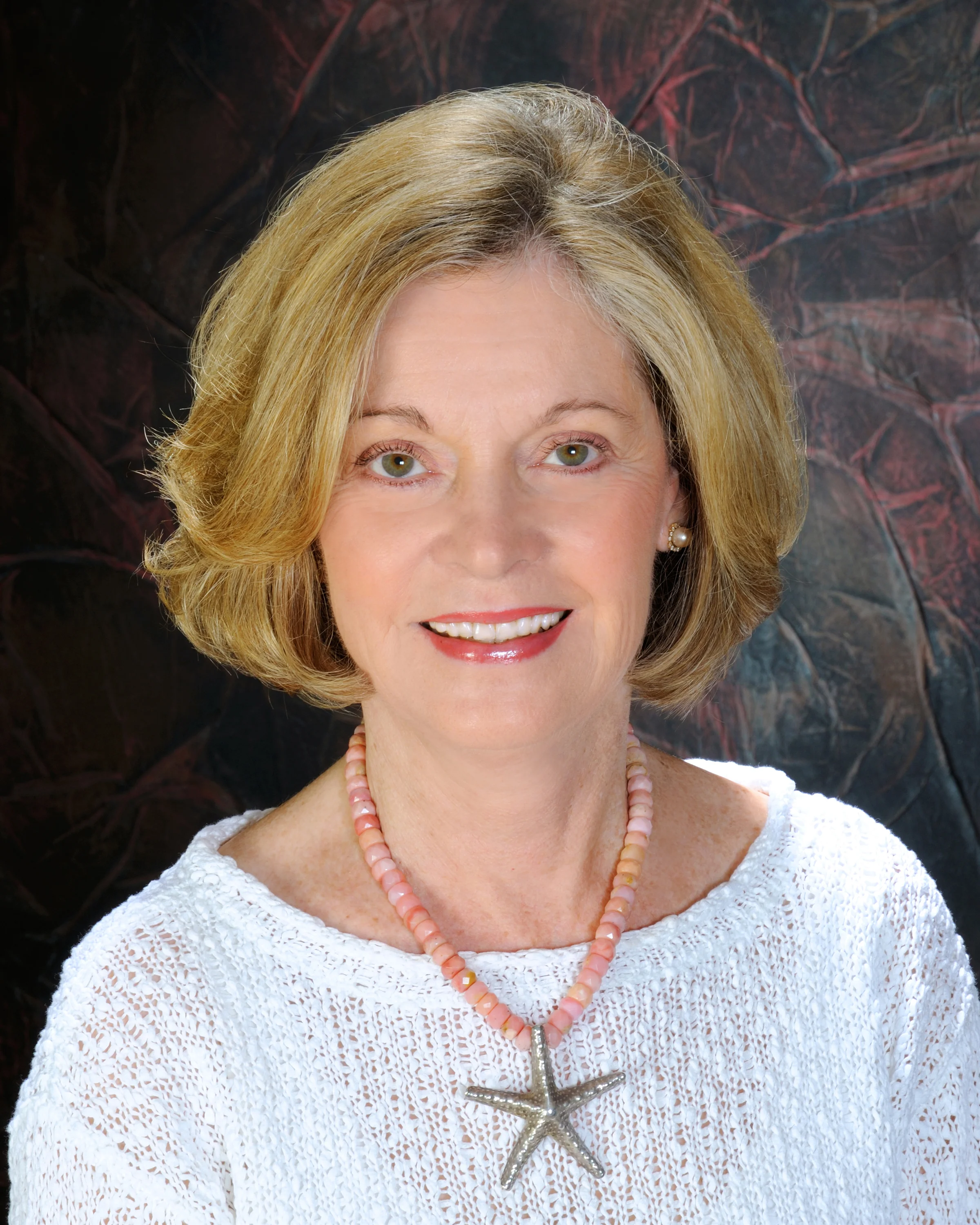
Olivia deBelle Byrd is the third generation of her family to call Panama City, Florida, home where she resides with her husband, Tommy. Olivia is a humorist who delights audiences with hilarious stories of her beloved South by turning ordinary happenings into entertainment. Her first book of humorous essays, Miss Hildreth Wore Brown: Anecdotes of a Southern Belle, was the winner of the Florida Publishers Association Book Awards. Her newest book, Save My Place, is a beautifully written love story of two people who search deep within their souls to save each other. Learn more about Olivia at www.oliviadebellebyrd.com . You can connect with her via Twitter or Facebook

Author Kate Allure on How To Go About "Meeting Men"

I think every author’s muse is as different as their varied stories. But to answer what inspired me to write Lawyer Up, I need to step back and explain what my Meeting Men series is all about. In brief, the books are themed, contemporary, erotic short-story collections. I wanted to explore what could happen when your average Joe-sephine encounters a handsome professional man by chance as she goes about her everyday life. The heroes are all doctors, lawyers, professors, and more, and the women are either successful, problem-solvers or experiencing personal growth. Regardless, these women all find the courage to take charge of their lives and their sexuality. While I too love fantasy novels of millionaires and waifs, what I felt was missing in the genre are stories that are at least in theory something that the average woman could actually, on a very lucky day, experience herself. Hey, it could happen!

One thing about this themed series that is particularly fun for me is that I get to use the hero’s various work locations or skills to craft creative erotic scenes. With Playing Doctor there is some “playing” in exam rooms. Or, have you ever wondered what it would be like to have wild sex on a desk. Even better on a judge’s bench? Maybe not, but my wicked mind has had so much fun going there and exploring what might happen late at night in an empty courtroom. Going forward I’m already wondering how a plumber in Hands On might use his tools in creative ways or what naughty things could happen in the back of the stacks of a university library in Extra Credit.

As for what inspired me specifically for Lawyer Up, there were lots of little things. This is especially true because there are three stories in each book so no one thing inspires them. For “Attorney-Client Privileges,” I was drawn to the idea of a down-on-her-luck wannabe actress getting swept up in a police raid and the lawyer with a chip on his shoulder who learns to let go of his preconceived ideas so he can appreciate the woman right before him.

I guess that’s not really answering the question—so the closest I can say is that for this series I’m very much plot driven. I’m always daydreaming of different ways that a woman might encounter a handsome man and what might come out of that chance meeting. For “Of Unsound Mind and Body” I wanted it to be an instant-attraction one-night stand kind of thing, but as you might guess, when people need lawyers it isn’t usually for one meeting. I found a way to make it work, but in the spirit of No Spoilers, that’s all I’ll say. Lastly, we have “Of Writs and Writhing.” The entire story came out of the title, suggested by a friend. I loved it so much I started researching what “writs” are and it just grew from that. I also like to vary the locations and ages of my short stories, and this one is set in New Orleans, a voodoo-magical place where anything can happen when a Playboy Judge goes up against an uptight Type A lawyer who wants to win her case no matter what it takes. I’m having such great fun researching different locations and imagining unique scenarios, and since they’re all quick fun reads, you don’t have to wait too long to get to the good stuff! LOL

About Kate Allure

Kate Allure is the creator of the Meeting Men series. She has been a storyteller her entire life, writing plays, short stories, and dance librettos throughout her childhood and later for semi-professional theater and dance companies. Her non-fiction writing included working for American Ballet Theatre and New York City Ballet and authoring a weekly arts column for local papers. Beyond writing, Kate’s passions include traveling and exploring all things sensual with her loving husband. Follow Kate at on Facebook and at www.KateAllure.com.

Connect with Kate via Website | Facebook | Twitter | Goodreads

About Lawyer Up

All rise…

Three sizzling-hot, deliciously taboo erotic romances to stoke your mood.

Wrongly accused in Attorney-Client Privileges, sexy but innocent Beth has nowhere to turn but straight into the arms of hotshot L.A. lawyer, Jon. Can this attorney manage to get her off in time?

Liza reaches a meeting of the minds—and more—when she unleashes her inhibitions and gives herself over to the primal allure of Main Street lawyer Hawk in Of Unsound Mind and Body.

In Of Writs and Writhing, fearless defense attorney Pat gets more than she bargained for when she goes toe-to-toe with New Orleans’ infamous Playboy Judge. When things get heated both in and out of the courtroom, more than temperatures rise.

amazon
barnes and noble

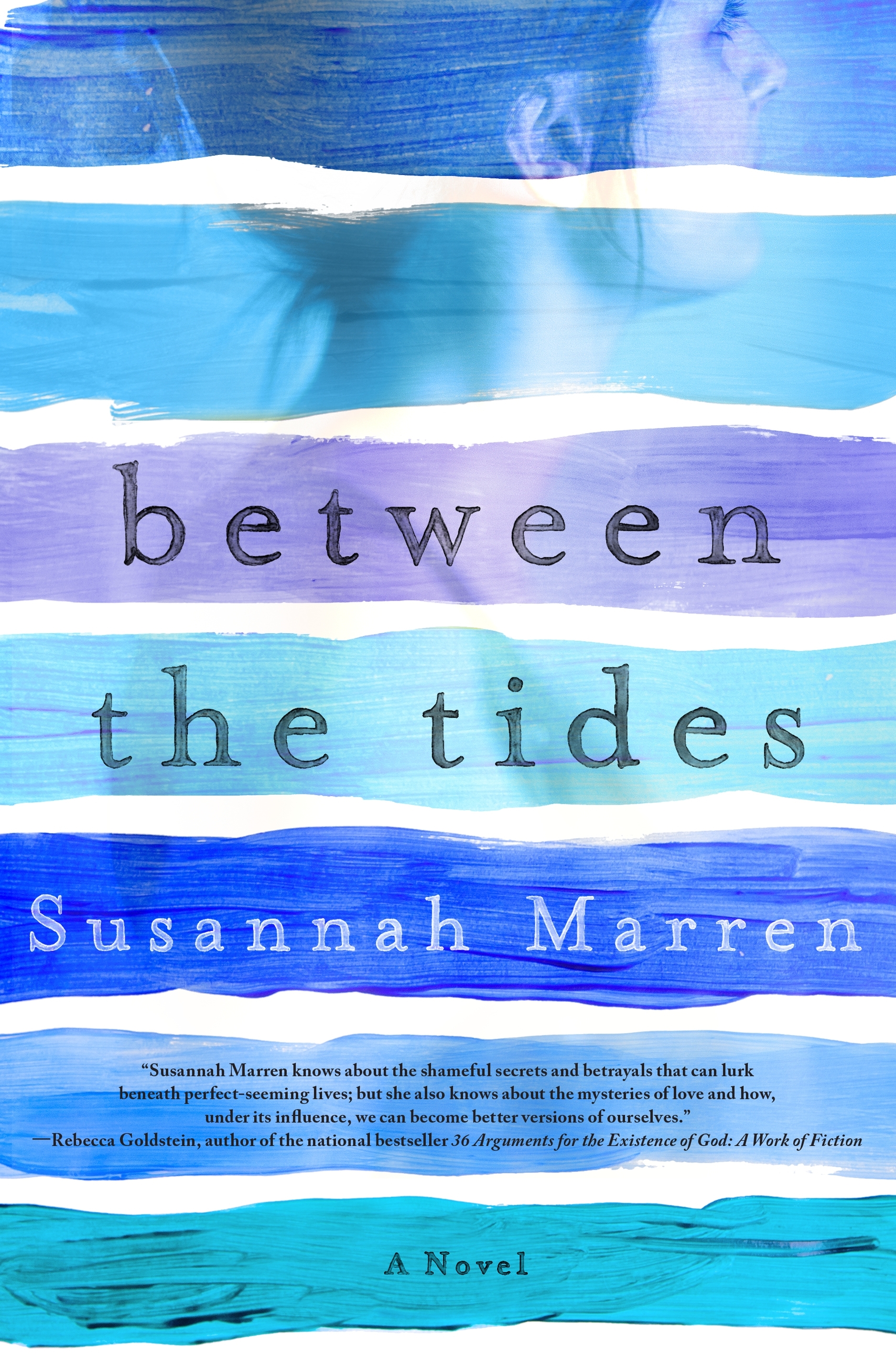
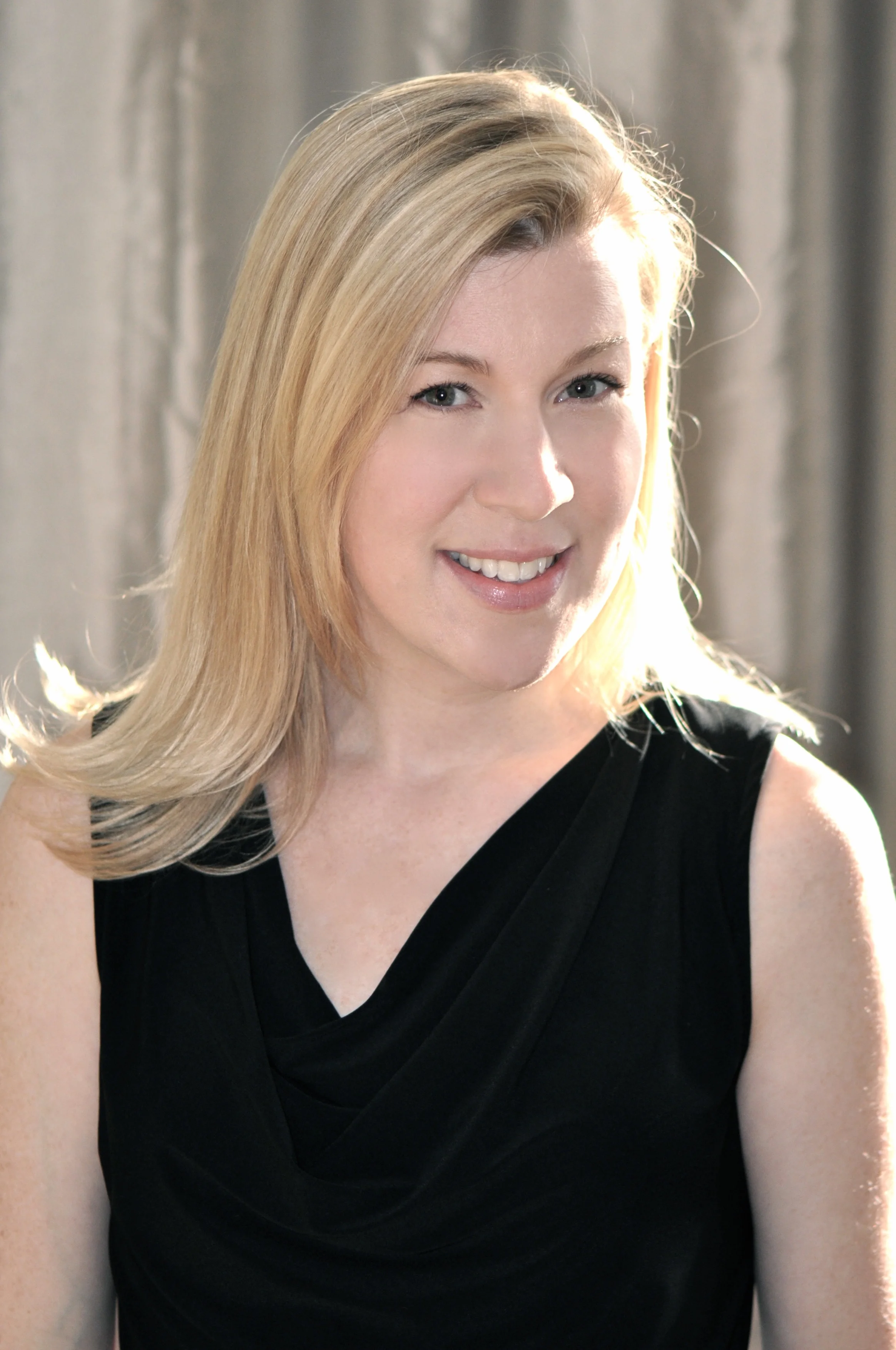
A Conversation with Susannah Marren

What inspired you to write Between the Tides

I have long been interested in the female experience in our society – as a mother, a daughter, a wife. I’ve also been intrigued by the dangerous elements in certain female friendships and how they play out. I believe that environment informs our relationships. The idea of city life versus a suburban existence and the pitfalls and rewards inherent in both became a theme of the book. The fact that a wife/mother (Lainie) did not fit in either place was very compelling for me. The question lingers: what is the price of motherhood?

The yin and yang of Lainie and Jess’ friendship and long history of competition was convincing.  Do you have any ‘toxic’ friends? 
    
For Between the Tides I liked the idea of an ongoing competition -- one that invoked events of those early years at the shore for Lainie and Jess. I carried that competition into adulthood—motherhood, life in Elliot, career (or lack thereof) and marriage. How many of us get to revisit such a friendship and still be in the game? While writing this I thought a great deal about the summer friends of my youth and how the ‘it’ girls—who were toxic -- were not always the ones everyone followed later in life.

In the novel there are triangles everywhere. We have the Lainie, Charles, Matilde triangle; the Lainie, Jess, Charles triangle; and the  Matilde, Claire, Lainie triangle. What are you saying about the nature of threesomes? 

I felt very strongly in writing this book that power shifts even when there is trust within the relationship. For example, Lainie and Charles are never truly secure as a couple despite that they have real feelings for one another.  As a result, Matilde becomes a wedge between them.

In the Lainie, Jess, Charles triangle, we have a marriage that is not whole and thus Jess seeps into the equation. It becomes a messy and tricky triangle because Lainie and Jess share a history of rivalry for the ‘glittering prizes’ from when they were young. The prizes were popularity, beauty and winning the right guy. Jess, as a young woman, wanted whatever Lainie had – she wanted Lainie’s boyfriend Clark, not because she actually liked him but because he was Lainie’s.  When Jess falls for Charles, it’s actually about Charles, not about winning.  This is a departure.

The Matilde, Claire, Lainie triangle is about birth order and Matilde, as the older daughter, is very connected to her mother. This connection keeps Matilde from her own life and her own experiences. Claire, at the age of five, already longs to be a part of Lainie and Matilde’s world. Lainie is vaguely aware of this while Jess is completely conscious of how it occurs. And so we wonder at the end, is Jess actually a better mother figure for a ‘normal’ family?  Is love alone ever enough or do we need other ingredients, such as the ability to survive the challenges of modern life?

The voices of Lainie and Jess are distinctive and both narrators are ‘types’. Why did you tell the story this way? 

I thought that some readers will identify with Jess and others with Lainie and perhaps ask the question, am I a Lainie or a Jess?  I was in both characters’ heads and I felt the friction between them combined with the intensity of their attachment. Someone asked me why Lainie didn’t appreciate her situation while Jess had to cover up a terrible secret—William’s abuse. Lainie wasn’t a fit for the life she had and longed for the shore and freedom. In contrast, Jess embraced the Elliot lifestyle and went to great lengths to sustain her image and position in that world.

Did you find it easy to switch from Lainie sections to Jess sections? 

I found it fluid in terms of Lainie’s point of view and Jess’s point of view. I  thought about both characters for months on end. I have always known how the book would end  -- since the earliest drafts and for that reason, I was able to shift gears as the story unfolded. Jess is tough minded and a survivor – that’s very obvious from the outset. Lainie, in an otherworldly way, is a survivor too.

When Charles announces that he can’t commit to Jess why does she believe she can keep the affair going? 

Jess never loved a man as she loved Charles and it threw her for a loop and changed the nature of love for her. She respected Charles and was drawn to him, For once it wasn’t about getting ahead or being the victor, it was about being in love. These feelings sobered her and gave her a kind of humanity she never had before. Not that she stopped being manipulative or looking out for herself, but that her emotions drove the Charles relationship for her. She almost cannot accept Charles’ situation – his commitment to his wife and family. Jess soldiers on—seeking what she can get from Charles. 

Did you purposely leave the ending of Between the Tides open to interpretation?  What are you asking the reader to consider? 

Yes, I did leave the ending open to the reader’s interpretation. Part of what I’m asking the reader to consider is that not everyone fits into a societally prescribed role. Lainie loves her children but is it possible that Jess is the one who can make Lainie’s family happier– and on some level does Lainie realize this? What constitutes family – what is fictive family? I’m asking if we are able to forgive and understand those who don’t embrace motherhood or wifehood.

Do you consider this a romance novel or women’s fiction?

I consider this novel to be a bit of both. Surely there is a romantic element and it is part of the tale. Yet it’s also a story about mothers and daughters, and female friendships -- and how singular is the search for happiness. 

What sorts of fiction and nonfiction do you read? Who are your favorite writers? 

I am a fan of both novels and nonfiction. As far as fiction goes, I love the classics, Buddenbrooks by Thomas Mann, Jane Austen’s work, the Bronte sisters.  For more current novels, Sophie’s Choice by William Styron, The House at Riverton by Kate Morton, The Goldfinch by Donna Tart, All the Light We Cannot See by Anthony Doerr, BelleFleur and other fiction by Joyce Carol Oates.  When it comes to nonfiction, I love to read about Anne Boleyn, Mary Todd Lincoln, and books about gender roles throughout various cultures.

What is your next project? 

I’m currently writing a new novel. I’m quite excited about it and very involved with the story. Most days it fills my head – and I already know the plot.

About the Book

Lainie Smith Morris is perfectly content with her life in New York City: she has four children, a handsome surgeon husband, and good friends. This life she has built is shattered, however, when her husband Charles announces he has accepted a job in Elliot, New Jersey, and that the family must relocate. Lainie is forced to give up the things she knows and loves.

Though Charles easily adapts to the intricacies of suburban life, even thriving in it, Lainie finds herself increasingly troubled and bored by her new limited responsibilities, and she remains desperate for the inspiration, comfort, and safety of the city she called home. She is hopelessly lost--until, serendipitously, she reconnects with an old friend/rival turned current Elliot resident, Jess. Pleased to demonstrate her social superiority to Lainie, Jess helps her find a footing, even encouraging Lainie to develop as an artist; but what looks like friendship is quickly supplanted by a betrayal with earth-shattering impact, and a move to the suburbs becomes a metaphor for a woman who must search to find a new home ground in the shifting winds of marriage, family, career, and friendship.

Between the Tides is an engrossing, commanding debut from tremendous new talent Susannah Marren.

Buy the Book

amazon
barnes and noble

Excerpt

Chapter One

The selkies are sea creatures, half woman, half seal. They wiggle out of their seal skins on the rocks to lie in the weak winter  sun. One fisherman watched  with his binoculars from his fishing boat and waited.”

“He loved the prettiest one!” Claire interrupts. “That’s right, darling girl,” I say.

Jack sticks out his tongue. “Who cares about some stupid sealy lady?” he shouts.

I stop the story. “Jack, please sit down.”

Jack returns to the couch beside Tom, his big brother, who is on his iPad. Jack yawns and props his eyes open wide with his fingers. “Boring, Mom!”

“More! More!” Claire screams. She jumps off the chair and starts dancing around the den, waving her hands like flippers in her crazy water dance on land. “More!” she screeches.

Matilde, my solemn child, interrupts, “Mom, are you a selkie?”

I laugh and look out the den window that faces west. It is too dark to see anything. “No, darling girl, I’m not a selkie.”

“But you love the water and you swim every day. When we go to Cape May you lie on the jetties just like the selkies. You never answer us when you’re on the beach . . . it’s  like you’re not  even there. . . . Remember last February when—”

“Matilde, I am not a selkie.”

“Mommy,” Claire cries, “the sealy skin! The fisherman! Finish the story.”

Perhaps Charles is right and I ought to quit this tale. It isn’t Cin- derella or Snow White; there is no prince with whom to live happily ever after.

“Mom?” Matilde is waiting.

“Okay . . . well . . . the beach is empty in December when the fish- erman sees his chance. He sneaks up near the rocks and comes close to the prettiest selkie.”

“He takes her skin, Mommy! The man takes her seal skin!” Claire begins to sob as she always does at this part in the story.

“That’s true, Claire darling. The man takes her seal skin while she is in the icy sea. When she comes back to the shoreline, frantic to find her sealy coat, he is holding  it in his hands. He tells her she has no choice but to go with him, without her coat she will drown. But he promises to love her forever, that they will marry and have a family. That’s the deal.” The “forever” part gets to me.
“And she marries him!” yelps Claire. She begins to dance again. “She marries him and they have babies!” Claire is the cheerful one; she bounces from one side of the room to the other. She passes Tom and Jack, who watch her as if she were an alien creature. I wonder if Jack and Claire will ever share a thought, an interest. Fraternal twins are not a matched pair.

“Until one day . . .” I look up. “Jack, are you listening?”

Jack covers his ears. “I don’t care about seals and babies. It’s gross!”

“A dull story for the boys,” says Charles. He is in the doorway, ap- pearing out of nowhere, as usual. He is so stealthy, Charles, more burglar than surgeon.

The children  race to him and grab at his arms and hands, his legs, anything that is their father. Except Matilde, who stays close to me. “Lainie, how about another story? Something more realistic?

You could read to them from Tom Sawyer.”

Matilde leans in toward my ear. “I know why you like the story. I know you’re a selkie. I saw your sealy skin.” Everyone is waiting.

“What sealy skin? What are you talking about, Matilde?”

“In the hall closet, hanging in a zippered bag. A black, thick coat,” she answers. “Hairy.”

“Oh, that. That’s from my grandmother. You’re right, it is made of seal, a long-dead seal. I wouldn’t wear it. I don’t have the guts to ditch it. I guess I’m sentimental.”

No one else speaks. Claire is frozen in mid-dance. Matilde says, “ The sealy needs her coat to go back to the sea. She has a land family now but she misses the sea.”

“That’s right. That’s how it works,”  I whisper. “The days become flat for her, days without any sun.”

“Until she finds the coat!” says Claire, twirling around in circles. Charles enters the room now, fully present, taking up the oxygen.

His loafers make a clicking sound on the wood floor. “Forget the sealy coat,” he says.

He is tall and strong, buff. He lifts weights, runs through Morn- ingside Park in rain or shine. Sometimes he wakes me predawn and invites me to run with him. “C’mon, Lainie,” he’ll say, “shake up your schedule and run this morning. Forget the pool every day.”

“Okay, Charles, soon.” Although I don’t mean it.

I walk the reservoir, around the track slowly, only to be by a body of water. I want water, any kind, like a vampire wants blood. Matilde is the one in the family who understands. She is only twelve but she realizes that if I didn’t paint pictures of water, I wouldn’t exist. If we didn’t live by the Hudson River or go to the ocean every summer, to my hometown, I’d wither and die.

Charles sits down in “his” green leather chair next to the fireplace and faces my largest and best-known work of art, Trespassing: Drift- wood. The six-by-eight-foot painting has overwhelmed the living room these years, making me proud, sad, regretful, and attached to Charles. His eyes are on the piece as he speaks. “I have big news. Might as well talk now, while we’re together.”

I tilt my head and Matilde sits next to me on the couch. “Claire,” I say, “come here.” Claire pushes between us and I put my lips to her damp and clammy forehead.

“Tom?” says Charles. “Can you settle down with Jack?” Jack slides out of Tom’s reach and runs to Charles’s lap, clapping and yowling. Charles gives me one of his “Can’t you control these children?” looks while he tousles Jack’s hair and hugs him. Who can blame Charles for choosing order; he is a famous surgeon, skilled, popular, a pe- rennial Best of the Best in New York magazine. When he dons his scrubs, patients and nurses swoon. He is booked years in advance. Dr. Morris, Dr. Morris, Dr. Charles Morris. At home with his children, he softens—the only place and only time that he is soft.
“I’ve got a surprise for you,” says Charles. “A big surprise.”

Author Hannah McKinnon's Beach Bag Staples for the Lakeside Author-Mom

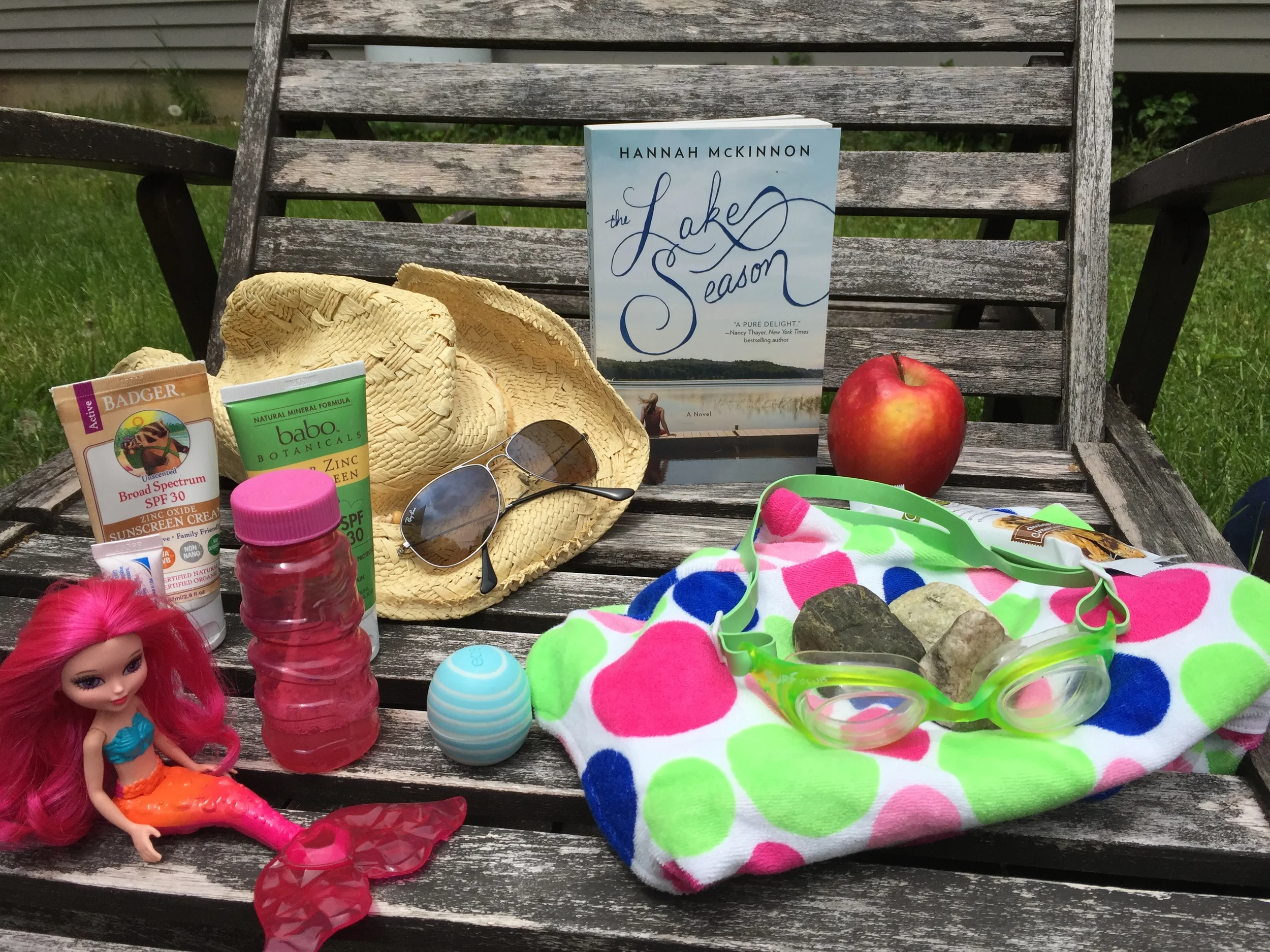
I double dog dare you to take a peek inside my beach bag. No, really. As a young family heading to the beach, we pack to stay. Whether it be gear or snack supplies, we tote enough provisions to sustain an Everest climbing crew of eight. Plus two Sherpas.

Sunscreen: My girls and I are fair-skinned blondies, so we don’t mess around. Add to that, allergy-prone.  We love zinc-based sunscreens with SPF 30 or higher. Don’t forget to reapply every two hours- by the time everyone’s finally caught and covered, you’ll have about thirty minutes before the next go-around.

Lip Balm: Eos lip balms are super cute, natural, and smell like berries. What’s better than a berry kiss at the beach?

Sunglasses & Hats: having seen the bottom-end of a toddler crushing down on them, my Ray-Bans have seen better days. But I love the classic look and polarized protection for our blue eyes. For sun coverage, the kids favor Black Dog baseball caps. For me, it’s usually my straw cowboy hat.

Sand toys: if we’re on the Cape, we grab our crab nets. If we’re home by the lake, we sport our goggles. Luckily, pink-haired mermaids go everywhere! Leave room for rocks. Or more accurately, small boulders. The littlest people in your clan typically mine the largest rocks. And yes, you will be hauling them home in that bag of yours.

Snacks: sandwiches are always packed, but usually end up full of just that- sand. We also throw in fresh fruit, chips, granola bars, and a big bag of sliced watermelon. And if the watermelon is a pool of pink mush by day’s end? Margaritas! (By the time you unpack at home, you’ll need one!)

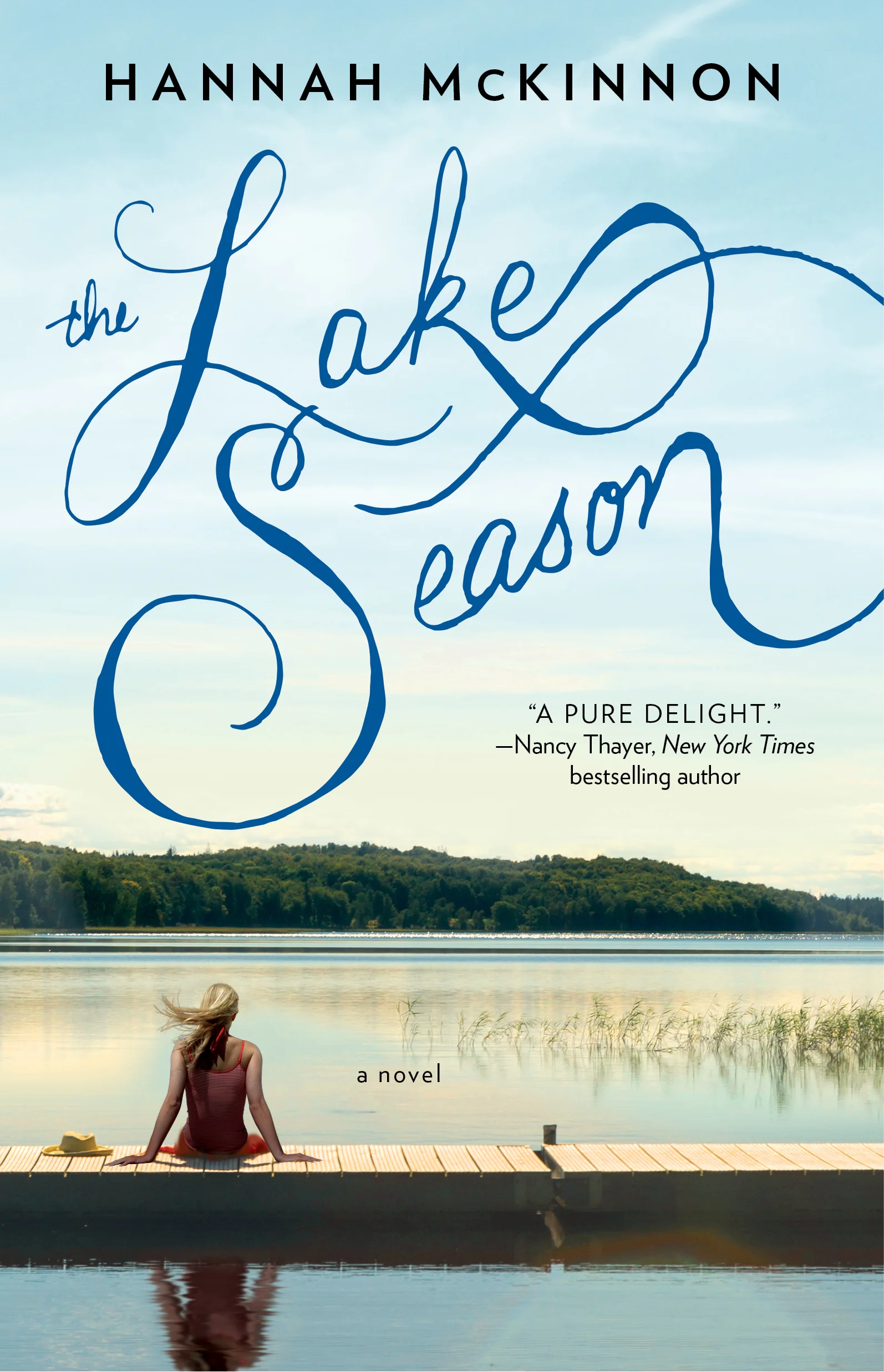
A great beach book: A beach towel is naked without a good book. Grab a copy of THE LAKE SEASON! I don’t get much down time watching my girls in the water, but when the ice cream truck pulls in, toss them some change and grab your book. Dig into a chapter while the kids dig into their ice cream. A really good chapter may call for seconds!

Hannah McKinnon graduated from Connecticut College and the University of South Australia. She lives in Fairfield County, Connecticut, with her family, a flock of chickens, and two rescue dogs.

About The Lake Season

Set in the weeks leading up to an idyllic New England wedding, this “enticing and refreshing” (Nancy Thayer, New York Times bestselling author) novel sparkles with wry wit, sweet romance, and long-kept family secrets.

Iris Standish has always been the responsible older sister: the one with the steady marriage, loving family, and sensible job. But this summer, as her carefully-constructed life spins out of her control, a cryptic postcard from her beautiful, free-spirited sister Leah arrives at the perfect time: Please Come. Iris seizes her chance to escape to her childhood lakeside home, where Leah is planning her wedding to a man their New Hampshire clan has never met.

Still, despite the rush of dress fittings, floral arrangements, and rehearsal dinners, Iris is learning to put herself first. And amid a backdrop of late-night swims and a soul-restoring barn renovation comes Cooper Woods, an old friend who beckons with the promise of a new start.

But Leah has secrets of her own, and while her sister faces a past that has finally caught up to her, Iris prepares to say good-bye to a future that is suddenly far from certain. As Hampstead Lake shimmers in the background, Iris must decide when to wade in cautiously and when to dive—and, ultimately, how to ferry herself to safe harbors in this enticing novel of sisters, second chances, and the ties that bind.

amazon
barnes and noble

Losing Sleep Because of Economic Uncertainty? Put the Fun and Abundance Back In Your Business by Anne C. Graham

How often do you say “we don’t have the budget for that!” in your business… or worse still, hear it from too many clients who can’t afford to do business with you?
 
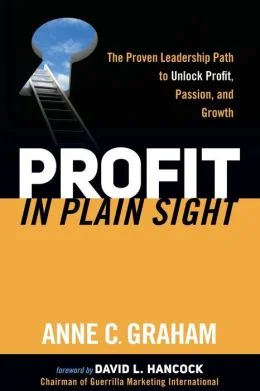
Profit in Plain Sight, The Proven Leadership Path to Profit, Passion and Growth has the solution to that problem – dozens of straightforward, practical solutions in fact, structured around 5 of the biggest challenges faced by every business:

1.      Keeping Customers Loyal for Longer
2.      Driving Top Line Growth in Revenues
3.      Ensuring Healthy Bottom Line Growth so that your profits reflect all the hard work you put in
4.      Creating a Reputation for Quality that differentiates you from your competition
5.      Igniting Innovation and Creativity.
 
Anne C. Graham, an acknowledged Profit and Growth expert quoted in major media, was inspired to write the book because as an international speaker, she keeps hearing far too many business leaders bemoaning the fact that even when they have great revenues, they still never had enough left over at the end of the year to invest in their greater dreams and vision for their company. 
 
That’s keeping our economy stalled and creating a false sense of scarcity.  Instead of being able to fulfill their business bucket list by hiring good people, buying new technology or equipment, investing in market expansion or completing that acquisition they’ve had their eye on,  they’re unable or unwilling to take on more debt, unable to truly thrive, unable to create stable employment or give back to their community.  Anne is on a mission to transform the economy, one company at a time by putting the fun and abundance back in business.
 
You might think this would be a boring book full of accounting tactics, but nothing could be further from the truth.  From the “tough love” questions at the beginning of every chapter that will make you pause and say “oops, we’re not doing that… and we should be”, to dispelling some of the myths we’ve all been taught in outdated business school theory (much of which dates from the middle of the last Century), to entertaining stories of success that you can model (and some failures that might even make you cringe when you recognize that they could be describing your business), this is a great read! 
 
What makes it even more powerful is that each chapter has 3 hard-hitting solutions that you can implement almost immediately, an Action Plan to help you put good intentions into action, and tons of free resources and learning videos that you can download to share with your team to generate results. 
 
On July 14, Anne is including over $475 of great bonuses to help businesses get unstuck and get back to enjoying the peace of mind that comes with knowing that cash flow and expenses are not only handled, but that there’s abundance to invest for growth.  Pick up a copy on Amazon to claim the bonuses, and buy a copy for a couple of those clients who are giving you that “no budget” excuse.  For less than $25, Profit in Plain Sight will be one of the best investments you can make all year.  Start at www.ProfitInPlainSight.com to get instructions on how to claim your bonuses, and a special link to Amazon that triggers it all.

About Anne Graham

Anne C. Graham is on a mission to help 5 million business leaders and their teams double their profit per employee – or more in less than one year, in less time than they’re spending on email.  Drawing on over 25 years of deep profit and growth expertise from her “in the trenches” and executive experiences with Fortune 500 companies and smaller firms, she closes the all-too-frequent gap between the good intentions vs. year-end results.  The solution is the roadmap she wishes she’d had – a Profit Plan that transforms “we don’t have the budget for that!” into a “YES!” to funding every greater dream and goal for their business as they create prosperity for their company, their employees, their customers, and their communities.

As a best-selling author, international speaker, and accelerator, Anne inspires thousands of business leaders each year to Profit… On Purpose by moving past conventional thinking to discover Profit In Plain Sight.  Audiences and clients love Anne’s fun and interactive approach based on value to the customer, NOT accounting, and her ability to create profound AHA! Moments so that participants leave with a new perspective of their possibilities plus practical actions they can implement for immediate impact.  Anne is the Managing Director of the Legendary Value Institute, a popular faculty member in an award-winning MBA program, and a passionate boater on west coast of British Columbia.

You can visit Anne’s website at www.ProfitInPlainSight.com

Connect with Anne via Website | Facebook | Book Facebook | Twitter | LinkedIn | Goodreads

About the Book

Imagine if leaders were able to break free of their profit constraints, stop being victims of exchange rates and oil prices, and be in control of earning all the profit they need to fund the growth they want.

Savvy entrepreneurs would never start a new business without a Business Plan.  Experienced executives would never try to lead their business without a Strategic Plan.  But almost every manager confesses that they don’t have a Profit Plan beyond their P&L, and that means that profit becomes the leftovers between disappointing revenues and higher-than-expected costs.

Profit in Plain Sight offers the Profit Plan that’s missing, with a step-by-step roadmap that enables these busy leaders to grasp the big picture, and to implement solutions in less time per week than they are spending on email per day.

Unlike many  business books, Profit in Plain Sight gives readers access to the “hows”, not just the “shoulds”, with downloadable training resources and action plans  at the end of every chapter, plus regular opportunities for the reader to reflect on how their thinking is changing and growing.

This book finally helps leaders who are passionate about their business have all the profit they need to fund the growth they want, with tough questions to start changing the conversations in everyday management meetings, with practical, actionable techniques that are quite different from conventional cost-cutting approaches or the all-too-dangerous “increase revenues at all costs” techniques.  Instead, Profit In Plain Sight offers take-it-to-the-bank results.

amazon
barnes and noble