My Top Ten Tools for Writing Fantasy by Christina Bauer

As part of the launch tour for my new book, Lady Reaper, the folks at What is That Book About asked me to share a blog post on any topic. I’m choosing a top ten list because FUN! So, without further ado, here goes:

One. A Funky Name Generator

After writing fantasy, I no desire to name anything ever again. But this site helps.
https://www.behindthename.com/random/ 

Two. A Word Associator

What are fifty terms that relate to the concept of the moon? You never know when you need this kind of information until you do. Here’s the site:

https://wordassociations.net/en/words-associated-with/Moon 

Three. A Translator

Translate any document, any length, in seconds. It’s scary.

https://translate.google.com/?sl=auto&tl=en&op=docs

Four. An Artist Collective

I like Fiverr for cover art

https://www.fiverr.com/?source=top_nav

Five. A List of Unusual Words

Again, you don’t need it until you do. Great for naming odd places or people. 

https://phrontistery.info/z.html

Six. Another (Less Wacky) Name Generator

Because boring characters need names, too. 

https://nameberry.com/

Seven. Another (Less thorough) Translator

I like to align cultures to a language base. It helps when naming places and objects.

https://translate.google.com/

Eight. A Grammar Checker

Grammarly, baby!

https://app.grammarly.com

Nine. Visual Inspiration

Nothing tops Pinterest.

www.pinterest.com

Ten. My site

Because shameless self-promotion is HOT!

www.christinabauerauthor.com

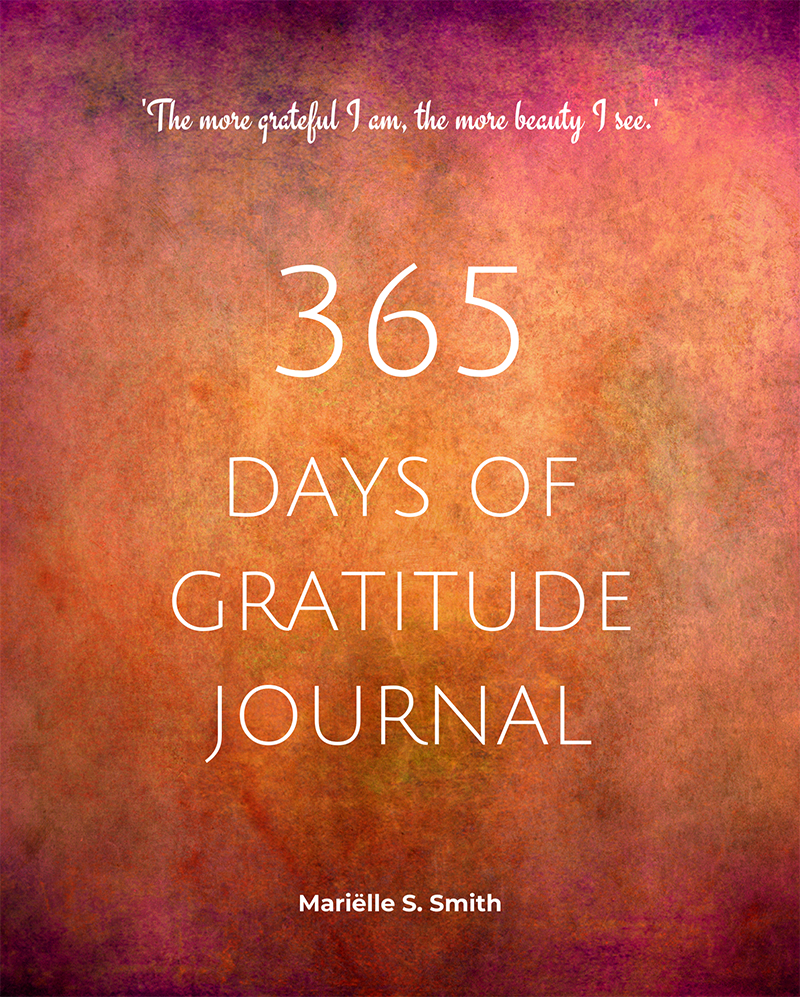
Behind the Benefits of Journals by Mariëlle S. Smith, 365 Days of Gratitude Journal

Do you find journals help people in their daily life?

I believe journaling can be utterly transformative, depending on the shape our journaling practices take. 

It’s one thing to just write down our daily thoughts, worries, or gratitudes—and that’s already a helpful thing in itself. Picking up those daily thoughts, worries, or gratitudes once in a while to reflect on what we’ve written down earlier, that’s when journaling has the potential to change lives.

Taking the time to ponder what those entries are telling us is how we figure out not just patterns of behaviour but also why certain patterns keep showing up. It allows us to get to the bottom of what’s going on in our lives, which is where we need to arrive at if we want real change to occur.

And a lot of us don’t. Not really. That’s why so many of us feel reluctant to give it a real try, to fully commit to the practice. It’s why I was anti journaling for years before I finally gave it an honest go. 

Let me tell you the story of how I got to that point. If you own a copy of my 52 Weeks of Writing Author Journal and Planner, you’ve heard this one before. 

When I wrote the introduction to that journal, which was the first journal I ever published, I was sitting at my desk in my sea-view apartment on the coast of Cyprus, a small island in the middle of the Mediterranean Sea. In the meantime, I’ve moved to a bigger apartment, and I’m writing these words sitting on my new veranda, looking at the hills that surround that same coastal village. 

Every day, I get to do what I love—I write, and, as an editor and writing coach, I help other writers do the same. I have the most supportive partner and a community that believes in me a hundred per cent. To top it off, I’ve published twenty books in six languages since I started journaling.

You guessed it right: my life wasn’t always like this. In fact, five years ago, it looked nothing like it.

About a decade ago, when I first began to realise something wasn’t quite right about the way I was living my life, I took up yoga, hoping it would return me to myself enough to figure out what was wrong and how to change it. 

With every new teacher I encountered, the same questions came up: How was my meditation practice? My breathing? Did I do any journaling? 

No. No, I did not. No meditation, no journaling, and, let’s face it, I wasn’t breathing properly either.

I’ve embraced many yogic principles since I started doing yoga, but anything to do with sitting still, being mindful, and allowing thoughts to surface? That I avoided at all costs.

There’s always a reason why we avoid things, and my reason was that I was afraid to uncover the truth about why I wasn’t happy. With myself, my day job, my relationship at the time, my writing, how my freelance business was doing. 

I kept telling myself I was content, and that being content was good enough. It took me years to figure out I wasn’t even that: I was uncomfortably numb. I was at a The National concert with a friend in 2017 when I suddenly felt so alive, listening to one of my favourite bands while being surrounded by such an energetic crowd, it hit me how dead inside I felt on other days.

That concert became my turning point. I bought a brand-new journal and started writing. I had journaled before in my life, years ago, and it had always felt like such a useless exercise. What’s the point of putting pen to paper if it doesn’t change anything?

They say writing it down—like saying it aloud—makes it real, but we underestimate how easy it is to forget what we’ve spelled out. Especially when there’s something at stake, like us being afraid to leave our uncomfortable comfort zones or face some cringeworthy truths about ourselves.

Having become aware that just writing my worries down wasn’t going to help me—it hadn’t before—I decided to free write every morning, reflect on what came up, and then write about that

And so I did. Within the next twelve months, I quit my day job, ended my relationship, and moved countries to focus on my writing, editing, and coaching business and practice. 

Now, I’m not saying I wouldn’t have gotten to this point without my journaling, but I know one thing to be true: if I hadn’t bought that notebook the day after seeing The National and started journaling like I meant it, I wouldn’t have gotten where I am now this fast. 

So yes, I absolutely think journals can help people in their daily lives, because there’s nowhere for the truth to hide once we stop running from ourselves and start reflecting on what’s going on. That’s why all my journals, whether they’re for writing or gratitude, come with a reflection section. It’s the key to true transformation, I know that now.

If you are interested in getting a copy of her book, you can get your copy of 365 Days of Gratitude Journal on Amazon.

Author Information:

Mariëlle S. Smith is a writer, writing coach, and editor. She lives in Cyprus, where she organises private writer's retreats, is inspired 24/7, and feeds more stray cats than she can count.

Connect:

Website: https://mswordsmith.nl 

Facebook: https://www.facebook.com/mswordsmith 

Blog: https://mswordsmith.nl/blog 

Goodreads: https://www.goodreads.com/author/show/18455235.Mari_lle_S_Smith 

Instagram: https://www.instagram.com/mariellessmith 

Other(s): https://www.youtube.com/channel/UCtnYOpjmj83mvMM2L348F1w

Q&A with Sheila Roberts, The Road to Christmas

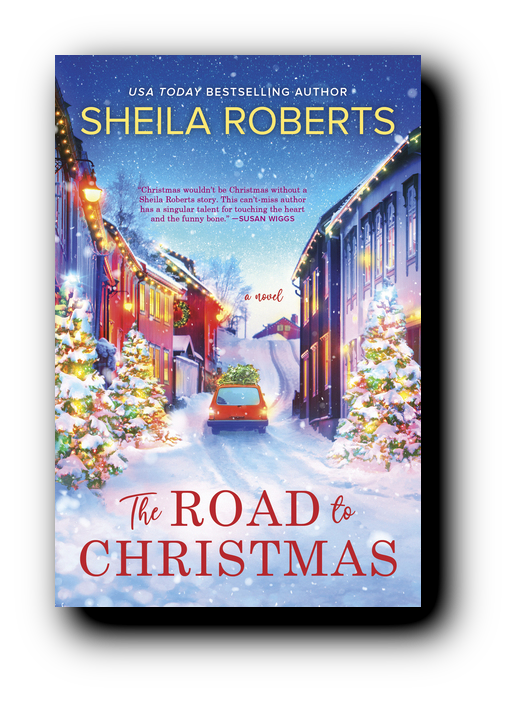
I love the cover of your latest book, The Road to Christmas. What was the inspiration behind that and the story?

Interesting you should ask. The cover you see is very different than it was going to be originally. In fact, I was madly in love with that cover. It was simpler and, I thought, sophisticated. And it kept going the simple elegance of the book cover of my previous year's book, A LITTLE CHRISTMAS SPIRIT. In the end, however, it was decided that what we had didn't look Christmassy enough so the art department went back to the drawing board and came up with this one. I've seen lots of positive comments about this cover, so it looks like the right choice was made. As to the inspiration behind the story, I wish I could say it was a romantic, picturesque road trip but it wasn't. I simply got the idea that it would be fun to write about a road trip. Road trips are always an adventure. You never know what's going to happen along the way... which makes that a perfect premise for a novel!

There is something special about multigenerational stories, can you introduce us to the characters in the book? What made you write them?

We have Max and Michell, on the verge of divorce and needed to find their way back to what they had. We have the grandparents, Warren and Hazel, who are determined to make the trip on their own. And I must say, their motel neighbors their first night out were inspired by the crazy neighbors we had a few years back when we stayed in Strassburg. Partying until the wee hours and importing a giant hookah - I can laugh about it now. I wasn't laughing at 2 in the morning!

Then we have sisters Audrey and Shyla - one needs a romance restart, the other is determined to give it to her. You can't go on a road trip and not meet a handsome hunk, right?

Do you have a character or experience in this book that was your favorite to write?

I wouldn't say she was my favorite - If I had a favorite, someone I'd enjoy hanging out with in real life it would be Shyla, the fun sister with the crazy sense of humor - but I felt very invested in Michelle because I think she's typical of many of us who have a hard time letting go and forgiving. I hope her journey will encourage readers who may be struggling with relationships.

Can you share a holiday tradition that you are looking forward to?

My family's annual Christmas Eve gathering. I've braved many a scary snowy road to be with them. Christmas carols, games, someone always reads the Christmas story from the family Bible. And then there's the food. Oh, the variety of Christmas cookies. I can hardly wait!

What can we look forward to next from you?

Next Christmas there will be another Christmas story coming. And this spring look for the next installment of my Moonlight Harbor series, MERMAID BEACH. I'm hoping readers will love The Mermaids as much as I do! Meanwhile, though, happy holidays to all!

You can get your copy of The Road to Christmas on Amazon | Audible | Bookshop.org

About Sheila Roberts

USA Today and Publishers Weekly best-selling author Sheila Roberts has written over fifty books under various names, ranging from romance to self-improvement. Over three million books have been sold to date. Her humor and heart have won her a legion of fans and her novels have been turned into movies for both the Lifetime and Hallmark channels. When she’s not out dancing with her husband or hanging out with her girlfriends, she can be found writing about those things near and dear to women’s hearts: family, friends and chocolate.

Her latest book is the women’s fiction/romance The Road to Christmas (Harlequin/Mira, September ’22)

Visit her website at http://www.sheilasplace.com. Connect with her at Twitter, Facebook and Instagram.

Q&A with Susan Mallery, Home Sweet Home

What inspired Home Sweet Christmas?

Inspiration is interesting—it can come from anywhere, or from seemingly nowhere. In the case of Home Sweet Christmas, the season itself inspired the story. The town of Wishing Tree, Washington, is all about Christmas, so every book set in Wishing Tree has a Christmas theme. (The first book in the series, The Christmas Wedding Guest, came out last year. Each book can be read as a standalone.)

So that was my starting point, knowing that this book would have a holiday theme. To me, it’s important for a Christmas book to be intrinsically Christmas-themed, not just a story that could happen at any time of year. I brainstormed lots of possibilities.

I landed on ideas for the two heroines (Home Sweet Christmas is two romances in one). In one storyline, Camryn’s mother passed away last year, so Camryn gave up everything—her career, her condo, her fiancé, and her big-city life in Chicago—to move home to care for her sisters and run the family business, a gift-wrapping specialty store called Wrap Around the Clock. She plans to get back to her “real life” as soon as her sisters graduate high school, so the last thing she wants to do is to fall in love. Still, a little temporary romance with Jake, her teenage crush, sounds like a welcome distraction.

In the second storyline, River is new in town and very shy. To coax her out of her shell, her new friends nominate her for Snow Queen, a crown that River is reluctant to accept—until she meets the very handsome Snow King, Dylan. But River has been burned before by a man with too many secrets, and Dylan is hiding something big.

You’re so wonderful at writing emotional scenes. Do you have any tips for writers who want to portray difficult issues like betrayal or loss of a loved one in their books?

The emotion springs from character. Every person will react differently to betrayal or loss, so it’s important that you fully develop your characters so that they essentially take over. Emotions are nuanced and infinitely complex, and our reactions are colored by everything we have experienced and observed throughout our lives. Put yourself inside your character’s mind and heart fully before you start writing the scene.

If I’m not feeling something as I write the scene, readers won’t feel it as they read. Writing these scenes is not an intellectual exercise—it’s visceral, emotional. If the feeling isn’t there for me, I stop writing and take a few minutes to get myself there. I have to be fully immersed in a character’s point-of-view in order to write these pivotal scenes.

Your novels are always gripping, realistic and romantic. How do you come up with your plots? 

In the world of fiction-writing, there’s a spectrum of plotters versus those who write “from the seat of their pants,” or pantsers. I am on the extreme plotter end of this spectrum, meaning that I write a very detailed plot for a book before I begin writing it. Far from limiting me, this roadmap frees me to immerse myself in the emotions of the characters because I’ve already untangled any snags in the story.

I start to develop a story idea in my head, jotting down notes but mostly just giving my mind the freedom to roam. At this stage, it’s mostly about thinking about the characters and their backstory.

Then I write one scene for each point-of-view character. In the case of Home Sweet Christmas, this meant that I wrote one scene each for Camryn, Jake, River and Dylan. I write until that character clicks in my head and feels like a real person with thoughts and feelings of her or his own. Then I stop writing and plot that character’s storyline onto index cards. I do that for each character, and then I sit down with the index cards and weave the storylines together. Then I number the cards and start writing.

My plotting is essentially the world’s shortest first draft. There are bits of dialogue, but mostly it’s a scene-by-scene synopsis of what’s going to happen in the book.

In case you’re curious, here are the first few paragraphs from Home Sweet Christmas:

“Your teeth are lovely, Camryn. Did you wear braces as a child?”

Camryn Neff reminded herself that not only was the woman sitting across from her a very wealthy potential client, but also that her mother had raised her to be polite to her elders. Still, it took serious effort to keep from falling out of her chair at the weirdness of the question.

“No. This is how they grew.”

Hmm, that didn’t sound right, although to be honest, she didn’t have a lot of experience when a conversation turned dental.

Is it difficult to come up with a specific Holiday themed novel every year?

It’s definitely a challenge! Not only because the story needs to be holiday-centric but feel different from all the other Christmas books I’ve written, but because of the very tight timeline. Home Sweet Christmas starts a couple weeks before Thanksgiving, so that gave me a little breathing room, but for all intents and purposes, when you write a Christmas book the characters have to fall in love in about four weeks. And it needs to happen in such a way as to feel completely genuine, so readers feel confident that the love will last forever.

Do you decorate your writing room when you are writing a holiday book?

No, but I do pull out my Grinch ornament, which helps me get in the spirit.

What’s your favorite holiday tradition?

I love to adopt a family through a local program. Mr. Mallery and I take great joy in finding special gifts that are unique to every family member—some from their wish list, and some surprises that we hope they’ll enjoy.

Rumor has it that you’ve created a cookie cookbook that you’re giving away for free. True?

True! The Wishing Tree Cookie Cookbook is available for free in the Members area at SusanMallery.com to anyone who wants it. It includes 160 recipes submitted by readers, with lots of pictures. It’s a PDF file, but I will also be giving away a printed copy of the cookbook every Tuesday from October 4 through December 20 on my Facebook page. I’ll also give away three as door prizes at my virtual event with Debbie Macomber on November 9. Details and registration at https://bit.ly/debbieandsusan 

What’s next for you?
The Sister Effect will be coming in March. It’s both one of the most emotional stories I’ve ever written and one of the funniest. Finley and Sloane were really tight when they were growing up. Their mom kept leaving them with their grandpa while she went on the road with theatre troupes, so they had to watch out for each other. But as they grew up, they made different choices that drove a wedge between them. The Sister Effect is a beautiful, uplifting story of forgiveness and reconciliation and the importance of family.

Buy on Amazon | Audible | Bookshop.org

Q&A with Patricia Davids, A Match Made at Christmas

Can you describe your hero and heroine in 3 words each?

Karl - devastated by loss.  Sophie – convinced she’s dying.

Are any of the holiday scenes in this book inspired by your own holiday traditions?

Funny you should ask. My brother puts on a living nativity for his church with sometimes hilarious results. I’ve added a few of them to my story.

What are the key elements of a holiday romance?

I think the holiday must have some special significance to the character. For teacher Sophie, she is forced to come up with a school Christmas program on short notice at a new school. The event is the highlight of the Amish community and much anticipated. Is she up to the task? As things go wrong, can Karl help save the day?

Is it difficult to come up with a specific Holiday themed novel every year?

Oh my goodness yes. Amish Christmas themed stories are hugely popular, but the Amish don’t celebrate the way we do. No trees or lights, only small gift exchanges. Portraying the Christmas spirit really comes from inside the characters.

Do you decorate your writing room when you are writing a holiday book?

No, the Christmas story I’m working on is usually due 6 to 8 months before the holiday. My office is where I work but I do bling out the rest of home for the holidays.

What is the best gift you've ever given? Recipient's reaction?

I hid clues around my home and let my daughter and my grandchildren search for them in a scavenger hunt. When all the clues were gathered, they assembled them into a picture of a fishing lodge in Montana. Then I sent them on an all-expense paid road trip the following summer. They were thrilled and talked about making the trip for weeks.

What is the best gift you've ever received? 

The year I moved back to the farm to take care of my elderly dad after my mom passed away, I got to spend many hours with my youngest brother who managed the farm for our dad. Being eight years older, I had moved away before he left grade school. It was wonderful getting to know him. That Christmas he gave me a gold and silver heart-shaped necklace to thank me for taking care of our father. I was overwhelmed. He’s not a hugger but he got hugged that night.

What’s next for you?

Amazingly, another Amish Christmas story. Christmas on His Doorstep releases on November 29th from Harlequin’s Love Inspired line.

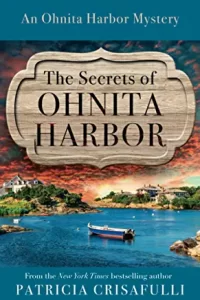
My Protagonist and Her Mama by Patricia Crisafulli, author of The Secrets of Ohnita Harbor

When I sat down to write my debut mystery novel, The Secrets of Ohnita Harbor, my protagonist—Gabriela Domenici—sprang to life on the page: 40-year-old single mom, recently moved back to her hometown, and longing to return to her dream job at the New York Public Library. Instead, she’s helping to run an understaffed, financially troubled library—and stuck with managing a Friends of the Library rummage sale! What a perfect recipe for resentment—and a setup for discovering the extraordinary that is about to unfold all around her, from murder to small-town mayhem.

In that mix, another character emerged: Gabriela’s mother, Agnese Domenici. Their intergenerational tensions and ties enriched the character development—and the story. Here’s how:

Agnese faces a cancer recurrence as the book opens. She and Gabriela are scared, but never really talk about their feelings. Gabriela clings to knowledge, while Agnese takes out her rosary beads, as in this exchange on the way home from the doctor’s office. “Gabriela gripped the steering wheel as she guided the car down the parking garage ramp. ‘No miracles here, Mama—only medicine. Tell me you know that.’ ‘No.’ Agnese clutched her purse and stared through the windshield. ‘There’s both.’”

Agnese, who was born and raised in Italy, retains her old-world personality and sensibility. When a medieval artifact turns up in the library rummage sale, everyone is surprised—except Agnese. “‘I told you!’ Agnese rapped her knuckle against Gabriela’s forearm. … ‘Right again, Mama.’ Gabriela took another sip of wine…”

The intergenerational, mother-daughter conflict shows both women as more alike than they are different—stubborn, strong-willed. It’s very relatable! But there is something far stronger between them: a fierce love that’s grounded in each woman’s innate protectiveness and loyalty.

In this scene, when Gabriela finally tells her mother everything that’s been going on (no spoilers here—it’s a lot, trust me!) her mother’s reaction is not what she expected: “Agnese sat back in her chair, tapping her fingertips against the tabletop. Gabriela braced for a lecture about not being careful and putting herself in danger. ‘You keep fighting, Gabriela,’ her mother said. ‘And you don’t worry…’”  

Where does Gabriela get her spunk and her spine? Well, the apple (or, in this case, the olive—given that Agnese was born in Tuscany) clearly doesn’t fall far from the tree!

The Secrets of Ohnita Harbor—like each of the books in the Ohnita Harbor Mystery Series—is told from the perspective of Gabriela (a close, third-person point of view). Yet every time she interacts with her mother, more facets of both women’s personalities shine forth. Or, as I hear from readers: everybody likes Gabriela and cheers for her …but they love Agnese!  

Buy on Amazon | Audible | Bookshop.org