Spotlight: Proven in Blood: A Novel of War, Betrayal and Belonging by Top Shot Chris Cheng
/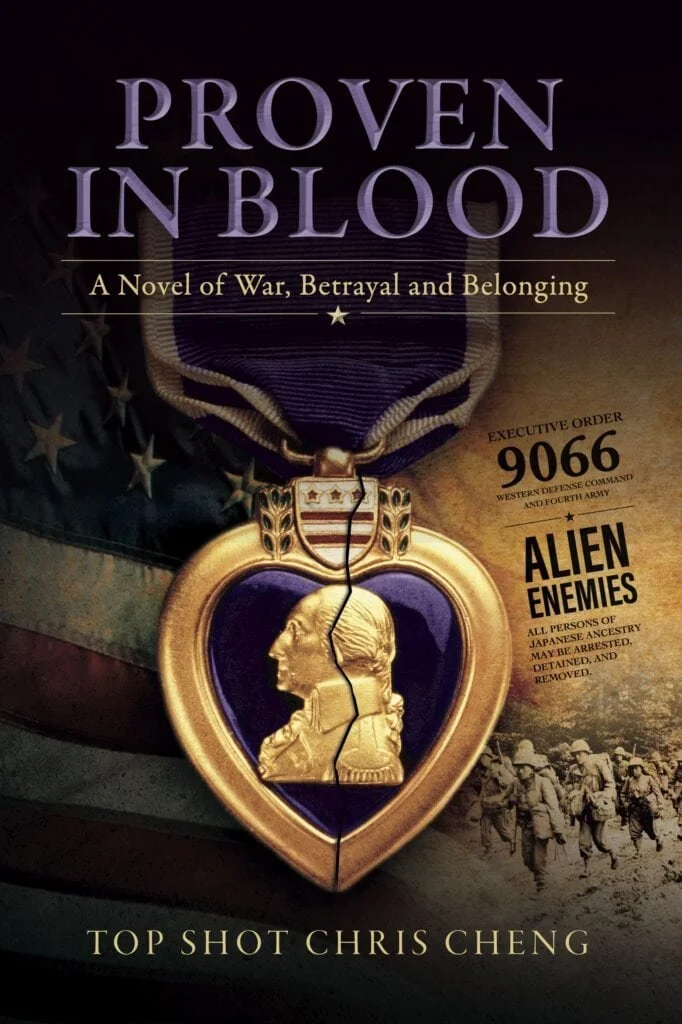
Proven in Blood: A Novel of War, Betrayal and Belonging by Top Shot Chris Cheng is a sweeping historical novel about love, honor, sacrifice, and the meaning of belonging in America. The book was brought to print by readers through a Kickstarter campaign that raised $21,000.
After Pearl Harbor, Daniel Tanaka, a Japanese-American student at UC Berkeley, is forced into American incarceration with his family under Executive Order 9066. Despite losing his freedom, he volunteers to serve in the segregated 442nd Regimental Combat Team, where he must prove his loyalty on the battlefields of Italy and France while his family remains imprisoned behind barbed wire at home in America.
Over the past six years, Cheng immersed himself in the history of the 100th Infantry Battalion / 442nd Regimental Combat Team through primary sources, military records, memoirs, and historical research. He traveled to Italy and France to walk the ground where these soldiers fought, bled, and died so as to describe those places as authentically as possible.
Inspired by the true story of the most decorated unit for its size and length of service in U.S. military history, Proven in Blood blends meticulous historical research with unforgettable characters to tell one of America’s greatest—and least known—World War II stories.
Excerpt
An excerpt from Proven in Blood: A Novel of War, Betrayal, and Belonging by Top Shot Chris Cheng (Forge & Lantern Press, 2026). Reprinted with permission.
UC Berkeley
December 7, 1941
Freshman Daniel Tanaka trotted out to the pitcher’s mound, slapping the ball in and out of his gloved hand with a snappy flick of his wrist. The late morning mist still clinging to the grass brought a shine to his cleats. Today was the last practice for the University of California, Berkeley’s baseball team before the school closed for Christmas break. He’d heard rumors that Coach Hudson was considering him as the starting pitcher when the season opened next semester. Daniel was determined to show his best today, to clinch that starting spot.
He warmed up at the pitcher’s net as the other players straggled onto the field, some with their blue and gold California Golden Bears jerseys half hanging out of their pants. His breath huffed out as white puffs of vapor; he might be in California, but this far north, it could still get pretty chilly in these winter months.
“Bring it in, guys,” Coach Hudson called, waving his still-muscular arms at them. He’d been a player himself, a professional first baseman who’d won more than one MVP award. Among college coaches, Ernie Hudson was considered one of the best, especially with his eye for talent.
“Tanaka, you’re on the mound,” Hudson began as he worked his way through all the players, giving them their starting positions for today’s practice.
“That’s what I’m talking about, my man Dan,” a tall young man encouraged him as he ran past and the players took the field.
“Hell yeah, Tommy Boy. Let’s show ’em what we got,” Daniel called to his closest friend on the team. At six feet, two inches, Tom Gardner was the tallest player, and that, combined with his talent, made him a great outfielder.
At five feet, eight inches—pretty tall for a man of full Japanese ethnicity, even one born in America—Daniel knew he’d never succeed in the outfield. Hell, at his height, the odds were against him as a pitcher. But he knew what he could do with his arm; he mixed up his pitches till he got the batter dizzy, then hurled an amazing fastball straight through the strike zone. Half the batters never even saw it coming.
“First batter,” Coach Hudson yelled, and Walt Johnson stepped up to the plate. Walt was a typical leadoff man; just getting on base was his job. Daniel had no intention of allowing him to. He nodded at the catcher’s signal, took his wind up, pulled back, and—
The crackling screech of the PA system coming on made him wince. Daniel’s concentration flickered.
“Come on, Tanaka,” Johnson barked at him. “What, are ya scared to pitch to me?”
Daniel laughed with a shake of his head. Once more, he honed his aim, took his windup—
“The Japanese attacked Pearl Harbor!” assistant coach Lowell screamed through the speakers; his voice echoed through the stadium.
Attacked? Did I hear attacked? The bizarre thought rushed through Daniel’s mind as he hurled the pitch.
Johnson connected right on the bat’s sweet spot.
“Shit,” Daniel hissed as he watched the ball sail over his head and into the outfield. He could tell—after playing this game most of his life—that it wasn’t a homer. He could only hope one of his guys in the outfield would save his ass.
“Who’s got it?” he yelled, taking his eyes off the ball to check his outfielders.
There weren’t any.
“What the—”
Spinning back around, Daniel saw they were all running in; every player from every position on the field was hoofing it fast toward their coaches at home base. He heard the ball thud on the outfield grass. He started running, following the stream of other players.
By the time he reached the coaches, all twenty-seven players were huddled around them.
Coach Hudson dropped to a knee in the middle of the circle of them. The brightness of his blue eyes looked dimmed to Daniel, darkened by sadness or perhaps even fear. Hudson spun those eyes to look at each of them, coming to rest on Daniel.
“Something terrible has happened.” Hudson cleared his throat to cover the crackling emotion in his baritone voice. “The Japanese have bombed the naval base at Pearl Harbor early this morning. So far, they’re reporting hundreds dead.”
Daniel heard the words, but in his mind, it was a jumble of dark thoughts and nightmares.
“My God,” he hissed. His hands shook as he scraped them through his thick black hair. He didn’t know which emotion to feel first…grief for all those lost, shame for what the Japanese had done, and fear—fear for his country and his family. The last one set his feet moving fast.
“Where you going?” Tom cried after him.
“I’ve got to call my family!” Daniel shouted back without turning, without slowing.
“Be careful!” Coach Hudson yelled. If Daniel had stopped to actually absorb those words, he would have felt more confusion. But only for a while.
******
As soon as Daniel ran off the George C. Edwards Athletic Field and onto Bancroft Way, he felt as if he lived in a world he didn’t recognize. Everywhere, students were running, some with suitcases in their hands, bits of clothing hanging out like tails. They ran in all directions. Some, when they saw him, noticed his monolid eyes, quickly turned, and ran away from him. Daniel wondered if they even knew where they were running to. He knew exactly where he was going.
It only took a minute or two before his dormitory, the International House with its Spanish-style dome atop it, came into view. Daniel rushed through the middle of the three arches that adorned the entrance, ran up three flights of stairs, down two hallways, and flung open the door to his room.
Charlie Yamamoto, his roommate, sat cross-legged on his bed as close to the radio as he could get. Looking up at Daniel panting in the doorway, he turned down the volume.
“We’re fucked,” he said simply.
“No kidding,” Daniel said, his breath returning to normal but not his heartbeat. That still pounded against his chest in double time. “But who’s fucked…the U.S. or Japanese Americans?”
Charlie looked blankly at his roommate, then turned the volume back up.
“Both,” he replied, completely serious.
For hours, the two young men listened to every word broadcast, constantly switching stations to hope for the latest news. Daniel ran back and forth to the one public phone on their floor, but there was always someone using it.
Other students came and went—mostly other Japanese Americans, and like Daniel and Charlie, most were American citizens. Those of other ethnicities came as well—students from more than seventy nations lived in the International House. Even Tom Gardner and a few of his friends came over from their dorm, a bunch of Caucasian guys from the same small town Tom came from. So many of them stopped by that they spilled out into the corridor.
The very mission of the International House was to foster intercultural respect and understanding. Yet all the students could talk about—those from so many countries that huddled together in Charlie and Daniel’s room that day and into the night—was war and all its madness.
One kid came in with a stack of newspapers and threw them on the floor as if they were trash. The headlines screeched at them from where they lay:
JAPS OPEN WAR ON U.S.
WITH BOMBING OF HAWAII!
The evening edition of the Los Angeles Times blared.
U.S. AT WAR!!
One screamed.
JAPS KILL 350
Another declared.
“Do you think they’ll shut the university down?”
“Do you think they’ll kick us out of school?” That one came softly, fearfully from another Japanese American student, a lovely but shy young girl, Sandy Ishida. Daniel thought she looked on the verge of tears. He went to sit beside her on the floor, letting his shoulder gently touch hers, offering support in more than one form.
“What if they start a draft?”
“Of course they’ll start a draft. We’re at war.”
So many voices, questions, and opinions pinged around the room like shots fired and ricocheted against the walls.
“Hey, what if they bomb San Francisco?” Tom called out, walking to the window. From there, as from many of the dorm’s rooms and lounges, the whole of San Francisco Bay could be seen, with its pillar of strength, the Golden Gate Bridge, rising out of the water. “Hell, the Presidio is only about ten or fifteen miles across the bay. They bomb that base, we’re all goners.”
More than one of the students ran to the windows, looking up to the sky as if Japanese fighter planes were about to fly over and drop more bombs.
“ENOUGH!” Charlie jumped off his bed and into the middle of the room. “We’re making ourselves loony with all these questions. It’s this simple: If there’s a draft, then we’re going to war. And, if we go to war…”—his gaze touched upon every young man’s face in the room—“…then we’re gonna fight like hell for our country and our families.”
“But what about our families?” someone in the crowd shouted. “The FBI is already arresting people they deem ‘subversives.’ What if they arrest us all?”
“They won’t, they can’t even—”
“But what if—”
“No more buts!” Charlie yelled. “The only butts I’m interested in are these kinds.” With that, he made a pretense of reaching out to pinch the small, firm butt of the girl sitting next to him. She swatted his hand away with a wan smile.
The talk of war and the bombing stopped, but nobody le#. Daniel felt glad they didn’t. Like him, they probably preferred company to solitude just then. It was only as the night transformed into the early hours of the morning, as eyelids became heavier and voices softer, that the students slowly slipped off to their own rooms, always with a friend by their side.
With them all gone, Daniel and Charlie took to their beds. Daniel didn’t know about his roommate, but he doubted he’d get any sleep that night.
At some point, though, he must have dozed off. Scratching and rubbing sounds on the room’s door woke him and Charlie, too.
“What the hell’s that?” Charlie asked, sitting up to perch on one elbow as he knuckled his eyes.
Daniel shrugged and got up. Walking softly toward the door, he put his ear to it. He didn’t hear the sounds anymore. Opening the door, he cautiously stepped out. Looking up and down the corridor, he didn’t see anyone.
“I don’t—”
A sudden thudding of footsteps came from the end of the hallway. Daniel ran but not fast enough. All he saw were the tops of some heads—guys or girls, he couldn’t tell—running down the back staircase. Too tired to continue the chase, he headed back to his room, stopping before the closed door.
“Well, hell,” he groaned as he read the words painted in yellow across the wood:
Go home, you fucking Japs! You’re not wanted here!
Buy on Amazon | Bookshop.org
About the Author
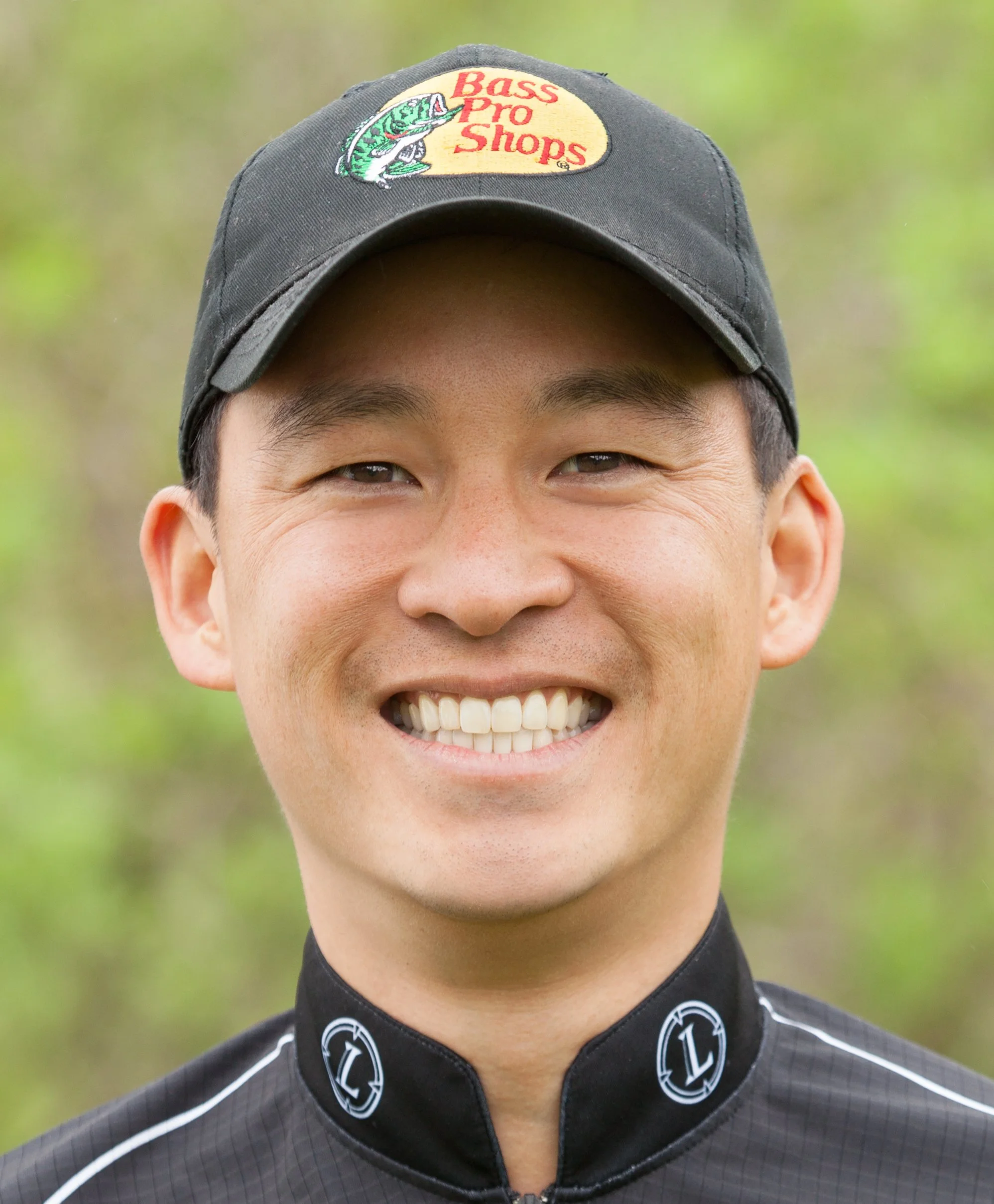
Top Shot Chris Cheng is an American sports shooter, Second Amendment, AAPI & LGBT outreach advocate, and History Channel’s Top Shot Season 4 Champion. He is also the author of the memoir and guide for beginning shooters book, Shoot to Win.
Cheng is a self-taught amateur shooter who beat 17 professionals and won $100,000 along with the title of “Top Shot.” After his Top Shot win he quit his job at Google to pursue a fulltime professional marksmanship contract with Bass Pro Shops.
Cheng worked at Google from 2007 to 2012 in enterprise technical support, product policy, and program management. He returned to Silicon Valley in 2015 as a business executive in customer support & corporate security for Square.
He is an NRA-certified pistol, rifle, and shotgun instructor who volunteers his time advocating for LGBT, AAPI, and 2nd Amendment civil rights. Cheng serves on the board of directors for the Asian Pacific American Gun Owners Association (APAGOA), and the Pink Pistols.
He holds a Bachelor’s degree in political science from UCLA and a Master’s degree in international policy from the Middlebury Institute of International Studies.
Cheng has appeared in various media outlets such as CNN, Fox News Channel, Fox Business, WSJ, The Washington Post and Katie Pavlich Tonight. He was also featured on the cover of RECOIL, Issue No. 56, sparking a national conversation about diversity, representation, and inclusion in the firearms community, particularly for LGBTQ+ and Asian American and Pacific Islander (AAPI) gun owners.