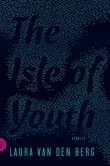
Review: The Isle of Youth by Laura van den Berg

Summary
These characters are sad women, lonely in varying degrees of life: in “I Looked For You, I Called Your Name”, a mis-aligned couple on their honey moon become more and more estranged with one another after their plane makes an emergency landing, and the protagonist meets an enigmatic woman who takes secret swims in the ocean every night. “OPA-LOCKA” details the lives of two private-eye detective sisters, while “Lessons” is focused on a gang of cousins who decide that a life in crime is better than their bleak, rural lives at home. “Acrobat” begins the day when the protagonist’s husband leaves her in Paris, after deciding that their marriage is through. The woman becomes entranced by a group of acrobats and tails them throughout the city, until they finally take notice and invite her to a party that is strange and wonderful. “Antarctica” is centered around a pair of close siblings, the brother’s elegant wife, and her secretive past. In “The Great Escape”, truly the most magical story out of the seven, a girl, trained as her low-grade magician mother’s assistant, struggles with an eclipsed future, a web of lies about the father she thought she knew, and magic—in all of its extraordinary complexities and meanings. Finally, in the title story, “The Isle of Youth”, our protagonist believes she is switching lives with her troubled sister in order to allow her a secret tryst with her former lover. However, the outcome is far less cut-and-paste. 

Review
Sometimes you come across a short story collection that legitimately crackles with energy. This is the way Laura Van Den Berg writes. Each story is a tiny, sparking thing that occupies its own unique universe, complete with a sedated, yet evocative lyricism. Though compact within themselves, they are each intrinsically connected by the weight of effusive sadness that is at once withheld, but alluded to by expert characterization. 

I thoroughly enjoyed this collection of stories for an array of reasons, but I’ve shortened the extensive list to a few main points. Van Den Berg has a rare energy about her prose that is oftentimes lacking in modern literature today, I believe. Her stories are grounded in our reality, but there’s a faint shimmer of the speculative about them in varying degrees. They differ in their magic, and that’s the beauty of Van Den Berg’s narrative ability. She switches stories completely: once she’s done with one, it’s a closed chapter, and off to the next plot that is as unfamiliar and strange and wonderful as the latter. Her stores are jam-packed with the right amount of quality information that allows us to trust the author. From self-styled gangs, to Antarctica, to acrobatic family dynasties, there’s a wealth of knowledge in each, and it’s just as much a learning experience as a reading one. 

Each of these stories deserves to be read separately, for they are all-encompassing realities for the unquiet souls of the women who reside within them. They are quiet, but stark in the daily realities we oftentimes fail to miss. They are powerful and hungry, just like their misguided protagonists.

Reviewed by M.B. Sellers

Book Information
Publisher: Farrar, Straus and Giroux
Publication date: 11/5/2013
Pages: 256
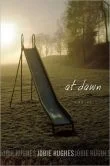
Review: At Dawn by Jobie Hughes

Summary
Caught in a riptide of haphazard underemployment, at turns violent and unpredictable, suffering under a bad economy with no family or friends to speak of, Stratton Brown longs for the chance to escape his small-town past and build a new life. He sets out for Chicago, where he meets a new and fresh hell: a nine-to-fiver in a nondescript, meaningless company, and an obsessive love affair with woman who may be a bit too attached to her abusive ex-boyfriend. Is this all America has to offer its twentysomethings? He’ll soon have to figure out that beneath the gruff labor of building a new life lies the presence of something much more true: a way past his violent childhood and a new path to the American dream.At Dawn is a literary debut of a fresh and powerful male voice in fiction.

Review
You know a good book when you start reading and can just listen to the voice speaking to you from the page. Whether you like it or not, it absorbs every part of your being not wanting to put it down until the last page. Beautifully written, At Dawn, captures a life at it's authentic core exposing a vulnerability that many feel but cannot express. Hughes brings to life an unlikable character, whose broken soul permeates through the pages for an emotional and engaging must read that will linger in your mind after you finish reading.

We always praise women writers for creating characters that are in depth with such richness and complexity to their evolution. I had to take a double take to the back cover as I was reading because as a man to capture a voice that never faulted through this story was just breathtaking. You don't come across many books written by men that really dive into the core and exposes a insecure, vulnerable character that connects the reader to pull at every emotion that is beneath the surface.

The heart of the book, Stratton Brown, is a character that as a reader you will remember for a long time. His story tells of a broken man trying to escape his past to start a new life. Relocating to Chicago, we are navigated through a complex and emotional series of event that take him to the bottom of emotional despair and face a past that he has tried so hard to escape from. His past, being like a noose suffocating his ability to move forward, has crippled his life giving the reader a story that you really can sink right into. He is someone who had a violent childhood, failed relationships, dead end jobs and with ever step forward, life pushes him back two. On the surface, his personality appears to be a jerk, riding on his one man pity party defeated by his self inflicted wounds from life. As you get more into the book, like the old saying, "You never know a man's life until you have walked a mile in their shoes," rings true. As much as you don't like him, as his story unfolds, your heart is softened once secrets of his past are revealed. You can't help but feel sorry for someone who has had a life like that and through that defeat you want to root for him to find a way. 

This is just one of the books that you just have to read for yourself to experience. Filled with emotion, beautiful writing, and a story that as a reader you can appreciate, I would definitely recommend you adding this to your reading list.

Reviewed by Michelle Bowles

Book Information
Publisher: Soft Skull Press, Inc.
Publication date: 10/16/2012
Pages: 352

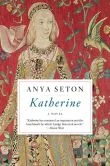
Review: Katherine by Anya Seton

Summary
Set in Chaucer’s England, where knights still adhere to courtly love for their ladies fair, and squires serve their beloved masters with unparalleled faithfulness, Katherine depicts the story of Katherine Swynford, the long-time mistress and eventual third wife of John of Gaunt. The narrative is at once comprehensive as well as entertaining, and offers the reader an insightful glimpse into 14th century society. Katherine, and her sister Philippa, are the daughters of Paon de Roet, who was knighted right before his untimely death, which left his children orphaned. Katherine is raised in a convent until her sister, a lady-in-waiting for Queen Philippa, summons her to court in order for her to find a husband. Her beauty and quiet dignity draw instant attention to Katherine. Unfortunately, it bewitches the uncouth knight, Hugh Swynford, and he asks for her hand in marriage after accosting her. For a woman of common birth and no dowry to speak of, this is an excellent match, and spurred on by her ever-practical-minded sister, Katherine is in due time forced to accept the proposal. She’s then spirited away to live at Kettlethorpe, her husband’s shabby and isolated manor. 

She has two children by Hugh before his untimely and intrigue-riddled death, and before long, becomes John of Gaunt’s love interest. After the duke’s beloved Blanche dies of the plague, he attempts to consumate his desire for Katherine. However, Katherine, who also dearly loved Blanche and tended to her on her deathbed, is wracked by fear and guilt, and flees back to her dismal existence at Kettlethorpe. However, when Hugh suddenly dies, Katherine has no choice but to confront her own all-encompassing love for John, and becomes his mistress.

She is set up as governess for the duke’s children, and in the comfort of his many homes, raises his two daughters while carrying on her passionate love affair with him. She bears him four children in all, which are called the “Beaufort Bastards”. However, their union is threatened by a plethora of circumstances: John of Gaunt is newly married to Constance of Castile, an infertile and stony-faced queen, the tragic Peasant’s Revolt, and the harmful publicity that their affair warrants. 

Review
I’m always impressed by a good historical novel. It’s unlike any other form of narrative, because it demands for a blend of fact and fiction which is oftentimes quite hard to achieve. Seton takes the real history of Katherine Swynford and her contemporaries, and wrestles from it a highly entertaining love story that is steeped in relevant historical detail. Not only was this an enjoyable read, but I also learned a great deal about 14th century British society. The novel has a solid grasp on research, and it’s apparent in the characterization and florid details of the novel. Seton not only scrutinized her main subjects: Katherine, John of Gaunt, and their extended family, but she also brings to life the minor characters—that of Katherine’s faithful servant, Hawise, the village peoples, and the various squires. Her focus on Chaucer is also appreciated—the reader is given a personal view of the enigmatic writer, and his day-to-day relations with his peers and loved ones. Honestly, the research, and its seamless incorporation into the narrative, is possibly the most impressive part of the novel. I never doubted the accuracy of the facts that I read because they were so plentiful and expertly explained. The devil is in the details—and Seton spares no small detail when it comes to fleshing out this riveting love story between a common woman and the highest-ranked duke in the land.

It’s obvious that Katherine is written as a sympathetic character, and for the most part, I found it easy to like her. There are times when she becomes caught up in her love affair, and fails to notice other pressing matters around her. Though an excellent mother, she is oftentimes blind to what her children really need. Also, due to the deeply patriarchal society of the time, it was frustrating to read about the treatment of women, considering I’m very much the modern feminist. However, the characters that are innately good at heart, despite their societal beliefs and habits, shine through the prejudice, rendering them easily forgivable. The characterization of John of Gaunt feels steady and accurate. This great man is not without great flaws, but his obvious love for Katherine makes up for his misdeeds, eventually. The dialogue, too, varies at times, which I suppose is to be expected from a modern portrayal of such a faraway time. However, the impressive control of Middle English that Seton possesses really adds to the flavor of the novel.

With any historical novel, and especially one geared towards romance, there’s a level of required fiction to the details. As I said before, Seton makes these believable, and I don’t think there’s anything wrong with a bit of imaginative inquiry. Obviously, due to the time period, there is limited knowledge of these people—even less information on their actual personalities and thoughts. However, I think Seton does a respectable job of breathing life into these characters, and creating, for the reader, a fascinating and well-researched novel that reads like an adult’s fairytale. 

Reviewed by  M. B. Sellers

Book Information
Publisher: Houghton Mifflin Harcourt
Publication date: 10/1/2013
Pages: 608

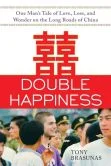
Review: Double Happiness by Tony Brasunas

8047509.jpg

Summary
A journey across China and through the soul of a young American, Double Happiness combines exquisite travel writing with a groundbreaking story of coming of age in the era of globalization. 

Tony Brasunas had never left the United States nor taught a class on anything when he arrived in hot, coastal Guangzhou, China, armed only with a beginner's grasp of the language. He was thrown in front of thirty-seven awestruck ninth graders. Trial and error in the classroom, trickery and generosity in the street markets, and conversations over mouth-watering rabbit with new friends fueled a hunger to understand China and drew him deeper and deeper into his new community. 

When the school year ended, a harder and sweeter journey began. With just a backpack and a handful of wild expectations, he set off alone across the vastness of China, along the Silk Road in the north, and to the edge of ancient Tibet in the west. His rugged path brought friendship, danger, romance, and wild encounters with fate that transformed his basic understanding of right and wrong, beauty and love, suffering and happiness. Double Happiness is a book for armchair travelers, English teachers, China buffs, adventure backpackers, young people in their twenties and thirties seeking a place in this swiftly changing world, and readers of all ages curious about a young man's internal awakening in a foreign land.

Review
It's hard to believe but there are many people who have never been outside this country. Their only perception of the outside world is through books or images they see on the television. If you have traveled the world like me, than you know there is no greater beauty than experiencing these places first hand. For those who may never get the chance, when you read a book like Double Happiness, for many places that fill your dreams, you get the opportunity to live vicariously through the author.

Never having been out of the country and getting the opportunity to teach in China, author Tony Brasunas penned his experience in a narrative that's broad imagery and vivid passages brought China to life. He really made you feel as if you were there with him. From traveling the local markets, to his students, to experiencing some of the most exotic and dreamed about wonders of the country, you really fall in love with it through him. I was really impressed by the detail of not just the physical aspects of the places he traveled but the in depth comprehension of the culture, the people and the history considering this was his first experience abroad. 

His experience filled with adventure, exploration, introspective enlightening was a story for those who love to travel could appreciate. Going into this experience as a teacher and leaving as the one who was taught leaves the reader with an appreciation if you have a chance to see any part of the world than it's worth exploring.

Reviewed by Michelle Bowles

Book Information
Publisher: Torchpost Publishing
Publication date: 12/6/2013
Pages: 352

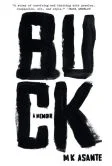
Review: Buck by MK Asante

Summary
A rebellious boy’s journey through the wilds of urban America and the shrapnel of a self-destructing family—this is the riveting story of a generation told through one dazzlingly poetic new voice.
 
MK Asante was born in Zimbabwe to American parents: a mother who led the new nation’s dance company and a father who would soon become a revered pioneer in black studies. But things fell apart, and a decade later MK was in America, a teenager lost in a fog of drugs, sex, and violence on the streets of North Philadelphia. Now he was alone—his mother in a mental hospital, his father gone, his older brother locked up in a prison on the other side of the country—and forced to find his own way to survive physically, mentally, and spiritually, by any means necessary.
 
Buck is a powerful memoir of how a precocious kid educated himself through the most unconventional teachers—outlaws and eccentrics, rappers and mystic strangers, ghetto philosophers and strippers, and, eventually, an alternative school that transformed his life with a single blank sheet of paper. It’s a one-of-a-kind story about finding your purpose in life, and an inspiring tribute to the power of education, art, and love to heal and redeem us.

Review
Unlike any memoir I've read to date, this unconventional narrative rich with urban vernacular and blended lyrical prose was a testament to the human strength of a person whose life dysfunction went from becoming a statistic to the redemption of renewed soul. Such an engaging read with a strong voice who permeated the pages, told a story that represented the struggle of many whom often go unheard. 

Buck was a different sort of memoir. Unlike your "traditional", this seemed to have a novel feeling giving it a more informal, comfortable ease that connected to the reader. Like so many living in America's inner cities, this captured a reality of the kind of life one faces young and "alone" battling the environmental perils that have claimed the lives of too many that could've been destined for so much better. 

The story centered around "Malo" introduced the reader to a teenager whose challenges of life led him down a path that made him fall victim to his environment. The circumstances that led to a broken home life spiraled a road that left him broken and alone. It opened his vulnerability of allowing the school of street life full of drugs, sex and violence to influence his life until tragedy struck close to home which changed his life forever.

As much as I liked the book, I will tell you that it does have some graphic language for those who may feel uncomfortable with that. Don't let that deter you because this a book that represents many young people who have been down the same path who are good at their core but made decisions out of desperation. It's a necessary story because not everyone who comes from an inner city, whose life has become influenced by their environment are bad and hopeless. Everyone has a story. As with this story, when your life hits bottom, there is no other way to go but up. 

Reviewed by Michelle Bowles

Book Information
Publisher: Random House Publishing Group
Publication date: 8/20/2013
Pages: 272

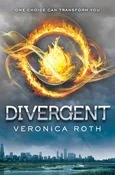
Review: Divergent by Veronica Roth

Summary
In Beatrice Prior's dystopian Chicago, society is divided into five factions, each dedicated to the cultivation of a particular virtue—Candor (the honest), Abnegation (the selfless), Dauntless (the brave), Amity (the peaceful), and Erudite (the intelligent). On an appointed day of every year, all sixteen-year-olds must select the faction to which they will devote the rest of their lives. For Beatrice, the decision is between staying with her family and being who she really is—she can't have both. So she makes a choice that surprises everyone, including herself.

During the highly competitive initiation that follows, Beatrice renames herself Tris and struggles to determine who her friends really are—and where, exactly, a romance with a sometimes fascinating, sometimes infuriating boy fits into the life she's chosen. But Tris also has a secret, one she's kept hidden from everyone because she's been warned it can mean death. And as she discovers a growing conflict that threatens to unravel her seemingly perfect society, she also learns that her secret might help her save those she loves . . . or it might destroy her.

Debut author Veronica Roth bursts onto the literary scene with the first book in the Divergent series—dystopian thrillers filled with electrifying decisions, heartbreaking betrayals, stunning consequences, and unexpected romance.

Review
In some minds the fantasized idea that our world is crumbling and could be constructed in a more equal fashion seems the easy way out. Our society is struggling with an environment and occupants of our world seeming to be working against each other in order to survive. The first book of the Divergent series,Divergent, gives one impression of what human society could be like when everyone has the same social status and are forced to make all of the same painstaking decisions.
 
Beatrice Prior’s sixteenth birthday has arrived and she does not know whether to feel nervous, anxious or purely excited. In Beatrice’s dystopian world, there is an honorary tradition of choosing one of the five factions based on their given virtue to spend the rest of your life once you reach the age of sixteen. The five factions are: the selfless Abnegation, the honest Candor, the brave Dauntless, the peaceful Amity and the intelligent Erudite. For such a uniform society, Beatrice’s has to decide if the best place for herself is at home with her parents or in a different faction that is home to a whole new way of life for any potential outsider. Once Beatrice makes her decision, she realizes that her choice will not only change her life forever, but also shock herself more than anyone else.
 
Once faced with the aggressive transition period after her birthday, Beatrice decides that she wants to redevelop herself in the process by renaming herself Tris, while competing alongside her the other initiates. As if there isn’t enough stress and chaos happening around her, Tris meets a mysteriously remarkable boy, but she cannot decide if he is someone she wants to trust since she is carrying a very dark secret, one that could get her killed at any moment.
 
As Tris struggles with new friends, physical obstacles and more questions than ever about the past, the reader is continually faced with the internal conflict of wondering if a morally balanced society such as this could ever exist. Veronica Roth’s leading novel of the Divergent series gives us a sense that sometimes it is understandable to think in a different direction than everyone else as long as the reasons are an equal balance of selfish and selfless goals.
 
This novel allows the reader to attempt to understand the unique ways of life in Tris’s world, while testing the boundaries of such a futuristic experiment at a utopian society. Such a ‘perfect’ lifestyle brings new hope and wonder to any person forced to deal with problems and unfairness in everyday life. The true quandary is not what form of society is meant to truly work best, but rather which form will allow characters like Tris to find true happiness in its purest form and the readers who live vicariously through her.

Reviewed by Nicole Williams

Book Information
Publisher: HarperCollins
Publication date: 5/3/2011
Pages: 576