Review: Pretty Monsters by Kelly Link

Summary
A dead girlfriend, a magical handbag, a hat with teeth, a famed alien encounter, and ghosts on leashes: these are the types of stories that Kelly Link writes about in Pretty Monsters. In the collection’s ten stories, the reader is introduced to a colorful host of characters, all narrated by children. But these aren’t ordinary children—they’re precocious, and oftentimes far more jaded by the magical possibilities of Link’s worlds. There’s casual conversations with a monster who likes to visit his former victims at their homes; a surfer-turned-alien-ambassador who preaches love and kindness in a post-apocalyptic world racked with flu epidemic; a group of friends so obsessed by a television show, The Library, that they possibly wish it into existence. Oh, and let’s not forget that one of our protagonists inherits a phone booth. Each story varies constantly in both texture and scene; you’d have to bedead not to enjoy it a little… 

Review
Kelly Link writes good fiction. Hers are the types of stories you only wished you had access to when you were ten years old, at a sleep-over, and racking your mind for the perfect ghost story. But that’s where her writing gets interesting: her stories are indefinable because they are so incredibly varied, so preposterously well-written that even her simplest story in the collection, which in my opinion, was “The Wrong Grave” refuses to labeled as a ghost story, entirely. They have heart and gumption and loud, bellowing voices. They are well researched, well imagined, and well executed. 

Link doesn’t miss a beat in terms of dialogue and character description. For example, my favorite story in this collection was “The Constable of Abal” because I think it really illuminates her imaginative genius. She picks up on the little things, the out-of-the way sorts of fantasies that most of us would blunder through without a moment’s glance. In the story, the protagonist captures ghosts and fixes them to ribbons like pets, or balloons, which I find so perfectly lovely and strange: “A rich woman could change ghosts just as easily as changing her dress and to greater fashionable effect,” (280). It’s these types of instances that make Link so brilliant—she takes genre and spins it onto its head, infuses it with a great deal of literary fiction, and creates something beautiful and bizarre to read. She takes care with details, and oftentimes ends up surprising the reader in the direction of her stories, and I think that’s intentional and part of the fun. Her writing is playful, and all of her stories take place from a child’s point of view, which I believe to be necessary to the magic of her prose.

Don’t let the “genre” aspect of her stories scare you away. I promise you, these are the weirdest, funniest, most deeply unsettling in a flashlight-under-the-covers-sort-of-way stories that you’ll ever read. Despite a few of them being about the dead, they are full of vitality, a type of creativity that reminds you why the fairy tale exists in the first place.

Reviewed by M.B. Sellers

Book Information
Publisher: Penguin Group (USA)
Publication date: 6/10/2010
Pages: 416
Review: The Atlantian Chronicles: Atlantis Rising by Gary English

Book Summary 
What if there were still living survivors from the sunken island of Atlantis, and what if they find themselves suddenly thrust back to the surface and into a world they know little about? Survival is the force which guides their actions, and humankind only a means to an end. What will happen? Who decides who lives and who dies? Between these pages lie the answers to these questions and more. The Atlantian Chronicles is a story of survival, mystery, betrayal and of two mismatched lovers whose accidental encounter becomes a means for humankind’s survival. The initial encounter puts the whole planet on edge, altering our concept of the world and the universe itself. What happens next may surprise you, yet one question still remains to be answered. Would you make the same desperate choices these Atlantians made in order to survive?

Review 
To use a phrase from the Golden Girls’  Sophia, “Picture it . . .” an oil rig in the middle of the Atlantic Ocean. Not very interesting but then again I’m no Sophia. Our story begins with two executives, Tom and Bob coming in to inspect the oil rig. Upon settling in, a giant wave crashes into the oil rig, leaving behind much damage. But a few broken antennas are not the only thing the wave caused. Among closer inspection, the execs and the crew of the rig discover an island that wasn't there before. And from this island, they meet some strange visitors. 

These strangers emerge from a swimming blue sphere that the men from the rig have never seen before; the leader introducing himself as Raval and asking the men to come aboard, so he can bring them back to the newly surfaced island. Yet despite Raval’s promise that they won’t be harmed, the crew draws their weapons, refusing to go. 

Seeing no way around violence, the new comers fire back, with no real weapon yet somehow take out another antenna on the oil rig. Now having been persuaded, the workers of the oil rig and the two execs board the weird watercraft and dive below the sea. 

A few minutes later, the Americans arrive on an island full of life, appearing to be a collaboration of all of history’s greatest civilizations built in one place. Gathering the city’s meeting hall, the men are introduced to the council of elders and are informed that they are not prisoners but guests. They are free to roam the city as they please however; it is the council’s desire and need really to learn of how the world has changed. 

During the exchange between Bob and Atar, the oldest of the elders, the men conclude that the island may indeed be the long lost city of Atlantis. Also, the men discover that the Atlantians are responsible for creating mermaids, centaurs, griffins and other such creatures of myth. And the men from above are more than in awe with the long lost people. 

The Atlantians wish to meet with a representative from the crew’s country as well as the other world leaders, to discuss trade and an exchange of culture and knowledge. However, the council will not allow the crew to leave the city until all their inquiries has been answered and they are assured there will be no retaliation from the “surface dwellers,” as they are referred to be the Atlantians. While the crew is treated as guests, it begs to question, are the Atlantians a peaceful people or equal opportunist like much of the rest of the world? Or do they deem themselves a superior race and see all “surface dwellers” as inferior and that their trades and exchanges of culture and knowledge a way to make the world more like them? 

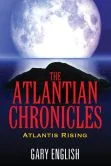
It is true that you cannot judge a book by its cover however, as for this novel The Atlantian Chronicles: Atlantis Rising; there is no need to judge. There is much wonder and adventure with this read. The Atlantian Chronicles is a science fiction that ponders the question, what happened to Atlantis and what would happen if it ever resurfaced? This novel also opens up one’s imagination of a world unlike our own and full of possibilities. Most importantly, this novel teaches us to be open minded to what other cultures have to offer us and not to judge a book by its cover.  

Reviewed by Camia Rhodes

Book Information
Publisher: Outskirts Press, Inc.
Publication date: 11/7/2013
Pages: 220

Review: The Devil's Playground by Laura Oliva

Book Summary
Professional burlesque dancer Francesca "Frankie" Strong has learned the hard way: on San Francisco's cutthroat party circuit, crime has a way of going unnoticed. When her best friend is brutally attacked, she's determined not to let the case fall through the cracks, even if that means crawling through every alley and back room in San Francisco to find the truth.Undercover cop Johnny Marsden is in desperate need of a win. His career on the rocks, he's infiltrated the infamous nightclub Cafe Outré, rumored front for San Francisco's Chinatown mafia. Johnny has never seen anything like the glitter-and-sin-encrusted world he's now a part of. He's certainly never met anyone like Frankie Strong.

Realizing they'll get farther together than on their own, Frankie and Johnny forge an uneasy partnership. Neither expects the heat that flares between them. Neither is ready for what it could mean. Together, they run down a trail that leads directly to Chinatown, and a faceless terror its residents refuse to name.

Frankie's only interest is in protecting her friend, and she's willing to make a deal with the devil to do it. But Johnny suspects the attack was part of something larger, something darker... and he's right.

Review
Whenever an author shakes things up a bit from the usual, you never know what to expect when they introduce something new. I must say when it come to reading Laura Oliva's books, they are definitely in my guilty pleasure pile. Her latest, The Devil's Playground, the first book of her new series called The Devil's Plaything, is definitely different from her preceding standalones. I know one thing for sure is the same, she knows how to draw you in with characters that make you want to dive in their world to know more about them.

In the beginning, I wasn't sure where the book was going to lead me. As the book progressed, I really enjoyed the direction of the plot of the story. There were elements of suspense, romance, and danger that keeps your mind guessing until the end. You get just enough of their back stories to propel the plot and you are left with just enough that makes you curious to know what happens to anticipate the next book. The characters were engaging and the chemistry between them made you want more of them as the story unfolds. One of the things I love about her writing when it comes to the steamy scenes is that she has a way with words that makes the pages swoon. Not to over the top or raunchy but just enough for you have a oh my moment and blush a little. 

Overall, I think it was a good start to  her series. Definitely a book for you gals that want something to sink back in the chair with. With the conclusion of this book, we don't necessarily get the predictable HEA ending that could've happened but then again it's only the first book with a very promising series to look forward to what is on the horizon for Frankie and Marsden. So if you love romance with suspense, I'd check this one out!

Reviewed by Michelle Bowles

Book Information
Publisher: CreateSpace Independent Publishing Platform
Publication date: 1/22/2014
Pages: 196

Review: The Yonahlossee Riding Camp for Girls by Anton DiSclafani

Summary
Set in 1930, at the cusp of the Great Depression, the narrative centers around Thea Atwell, a well-to-do young woman whose passionate personality sets off a series of events that end up irreparably damaging her family. It’s a coming of age novel, but also an astute study of womanhood, and what it meant to be the so-called “rich girl” in a patriarchal South, where young women were not masters of their own lives; instead, their fathers were their keepers. But these same fathers are now faced with losing their fortunes, and much less concerned about losing their daughters. After a tragic accident, Thea is sent to an equestrienne boarding school where she is met with a vastly different society than the sheltered one she has led up to this point. Money, beauty, and family names are the currency, there, and after struggling with both her guilt and homesickness, begins to recognize the power she can wield as a talented and attractive woman.

Review
Thea struck me as a modern teen. She was, in many ways, “born” in the wrong decade. She harbors lusty ambitions, and strives to be her own master, which she succeeds in doing through horseback riding. But this isn’t enough—as her sexuality grows, her problems become numerous. Her own undiagnosed narcissism is the reader's telltale sign of her unreliability as narrator. She is written as a sympathetic character, but not so much that her first person narrative blinds the reader into utter faithfulness. We are able to distinguish her faults from her strengths. She is, after all, a naïve and spoiled child from an area of the world that is secluded (rural Florida). Her mother also has a hand in her seclusion—locking her children and husband away from a world that demands self-awareness from its participants. Her story is quite similar to that of the home-schooled child who has always been praised, who has always secretly nursed a sense of superiority that is based on the solidity of removal. The idea of Utopia is prevalent throughout—a self-made paradise is nice until the inevitability of life and loss of luck comes along to destroy it. There is no real paradise, and one cannot hide from the world forever, no matter how much money there is, no matter how ideal a family seems to be. It is not natural.

I was actually surprised by the amount of sexual scenes in this novel. I say sexual, because, there are a good many that merely illustrate the process of a young person’s introduction into the physical world. I wouldn’t call this book a YA novel, either. Though its central character is a young teen, the content of the novel is extremely mature. There is incest, an affair, and Thea’s own strong, wise voice that oftentimes reveals a far older soul. But this shrewd outlook she possesses is also countered with her innate innocence of the rest of the world, of what decisions can do to a good many people. This is in part due to her upbringing, of dismissing the rest of society, of being tragically self-obsessed.

I’m still up in the air about the ending of the novel. It seemed drawn out, but at the same time, far too summarized. There were parts that I believe should have not been explained. A classic case of over-explaining in such a way that the reader feels ripped off. The prose is concise with deep detail. There is also an ambitious amount of research in the novel that I can’t help but admire. But Thea, in a way, justifies her mistakes by throwing them off of her and onto a “series of events”. This brings up the unanswered question: are we responsible for ourselves, our actions, or are they just events that domino into possible tragedy?

If you like coming of age novels that touch on the psychology of its characters, whose own morals are situated somewhere in that murky-gray area between right and wrong, where morality is a decision and contingent upon a specific person’s views, you’ll like this novel. These characters are all flawed, but this didn’t stop me from sympathizing as well as disproving of some of their actions. Thea is not a heroine. She’s a strong-willed young woman who has minimal self-control when it comes to her sexuality. She is selfish, and has the tendency to ignore things that bother her. She is also an extremely insightful character when she wants to be, with a solid personality and adaptability that is helped by an unshakable sense of self, tinged with a girlish cruel streak. She is a survivor, a “wrong girl” as she puts it. But we’re all wrong, and we’re all tempted towards the darker things in life at times.

Reviewed by M.B. Sellers

Book Information
Publisher: Penguin Group (USA)
Publication date: 6/4/2013
Pages: 400

Review: Best Kind of Broken by Chelsea Fine

Book Summary

SOMETIMES MOVING ON MEANS MOVING IN

Pixie Marshall wishes every day she could turn back time and fix the past. But she can't. And the damage is done. She's hoping that a summer of free room and board working with her aunt at the Willow Inn will help her forget. Except there's a problem: the resident handyman is none other than Levi Andrews. The handsome quarterback was once her friend-and maybe more-until everything changed in a life-shattering instant. She was hoping to avoid him, possibly forever. Now he's right down the hall and stirring up feelings Pixie thought she'd long buried . . . 

Levi can't believe he's living with the one person who holds all his painful memories. More than anything he wants to make things right, but a simple "sorry" won't suffice-not when the tragedy that scarred them was his fault. Levi knows Pixie's better off without him, but every part of him screams to touch her, protect her, wrap her in his arms, and kiss away the pain. Yet even though she's so close, Pixie's heart seems more unreachable than ever. Seeing those stunning green eyes again has made one thing perfectly clear-he can't live without her.

Review
Have you ever had that person in your life that you know was meant to be there? You can't express it in words but you know in your heart that they own a part of it that no one has ever been able to claim? No matter what happens, they are always there and know what to do. Then tragedy hits, and you feel lost because that connection is broken. Not knowing what to do, you retreat inward trying not to face the source of your pain. The Best Kind of Broken, takes the reader through the lives of two people who became lost through tragedy but fate had another plan. Through an awkward encounter one summer, they find themselves forced to deal with each other and the pain that had silenced their once unbreakable bond.

Sara, or as you get to know her in the book as Pixie, hasn't exactly had the best life. Being raised by a mother that probably is the sibling to mommy dearest, wasn't easy. Resenting what happened in her life, she made Sara pay for that everyday through her insults and unloving environment. All that changed, when she met Charity. Charity was the best friend that changed everything for her. She brought life and love into one that had none. She also brought into her life, "Leaves", better known as her brother Levi, who between the three of them had a bond that would be unbreakable. More than that, there was a special bond that laid their friendship that carried them through their childhood until one day tragedy struck. Their lives were never the same...

A year later, whether coincidence or fate brought their paths together. They hadn't spoken since everything happened, and find themselves in an awkward situation not knowing how to deal with it. While taking a job at her aunt's inn, she learns that not only is Levi working there but their shared living quarters has caused them to do everything to avoid facing their past and each other. Knowing that they care about each other, neither wants to admit it as their growing tensions lead them down a path that force them to face the ghosts of their past and their undeniable connection that seems like an unspoken destiny. As their summer progresses, finding it more difficult to avoid each other, especially in such intimate quarters, a series of events happen that they find themselves discovering much more than they ever knew and felt about about each other.

So, from the first page, I was hooked. There was something about this book that immediately connects you to the characters. You are invited in their lives and you want to stay to see what happens. What I really love about these characters is how well they were written. You really get into them and find yourself emotionally attached to the story to the point where putting down the book isn't an option. The chemistry between the characters made it so enjoyable to read. This was the sort of book where you could just sit back and read. She has you wondering by keeping your interest like a slow simmer to whereas every part of the story fit with an ending that you actually feel complete. There are moments that grab your heart, make you laugh out loud and others that you make you smile. I would definitely recommend adding this to your list!

Reviewed by Michelle Bowles

Book Information
Publisher: Grand Central Publishing
Publication date: 3/4/2014
Pages: 336

Review: Big World by Mary Miller

Book Summary
In Big World, Mary Miller writes about the infinitesimal prisons that we put ourselves in daily. Each story is centered on a young woman, usually in an unsatisfying relationship with both her lover and herself, and an array of beer cans. Her stories are about the small and oftentimes ignored moments that we let slip by us. Young, mindfully foolish women, smoking cigarettes and popping Coors and expressing the great myths of the universe in the bedrooms of their boyfriends: Mary Miller writes the small, devilish truth. 


Review
“I wore short skirts and high heels and pantyhose. Pantyhose are expensive. They snagged and ripped but I couldn't bring myself to throw them out. They used to come in eggs but now it was envelopes,” (“Pearl”). 

Big World is about no-good, deadbeat love affairs, the small intricacies of the beer can in a well-manicured hand, and the daily trauma of the young woman: in short, it speaks with a modern voice to the modern girl who has ever felt trapped in a life too small for living. Throughout, there’s an array of ex-husbands and boyfriends, drunken, weed-fueled nights, and surprising wisdom caught up in the palpably strange and stale night air that Miller, somehow, creates for us. She uses direct language to tell her tales—there’s no funny business, and yet, each adjective is lovingly placed, obvious and purposeful and strategic. Miller doesn’t lead us on with fanciful turns of phrase; she hits the nail on the head—which is exactly the sort of phrase she’d scorn in one of her stories. Her writing is sharp, acerbic, even, but there’s a bruised heart behind it all. It’s a wisecracking heart, sure, but all the same, it has good stuff to say, and so we listen: “We feed him shots of vodka and amaretto, to catch up, and move him around the apartment like something exquisite we have no place for,” (“Even the Interstate is Pretty”). It’s these tiny snippets of lyricism that really get to you. Miller is the master of female realism—the hard, dirty under-side of things that most people have trouble talking about, let alone recounting. But then she’ll surprise you with a turn of phrase that is so incredibly divine, so lovely, so far ahead of her sad women, like a burning star that you can only hope they find in their own sky.

Reviewed by M.B. Sellers

Book Information
Publisher: Hobart
Publication date: 2/1/2009
Pages: 230