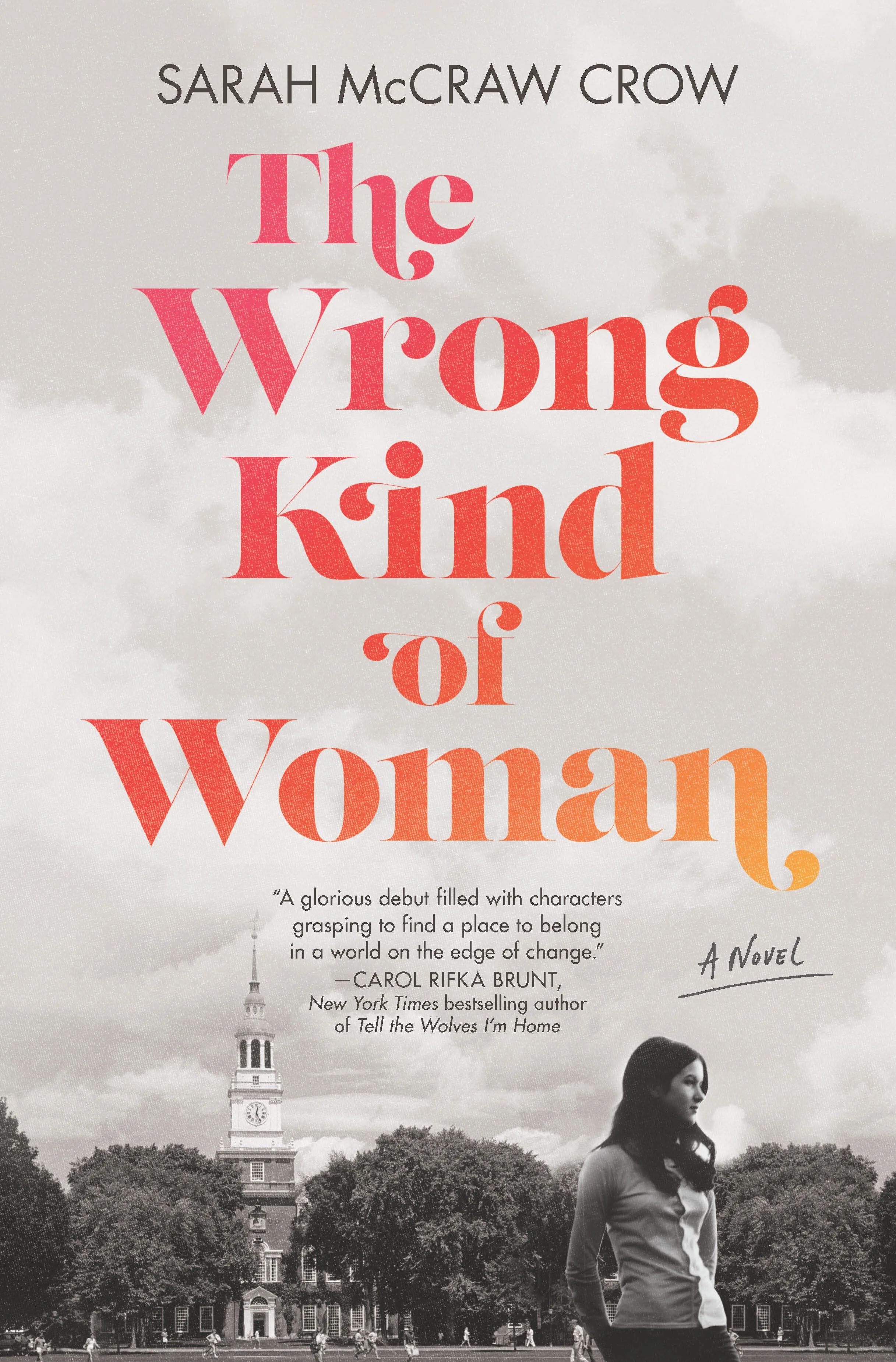
Spotlight: The Wrong Kind of Woman: A Novel by Sarah McCraw Crow

Final Cover_WRONG KIND OF WOMAN.jpg

A powerful exploration of what a woman can be when what she should be is no longer an option

In late 1970, Oliver Desmarais drops dead in his front yard while hanging Christmas lights. In the year that follows, his widow, Virginia, struggles to find her place on the campus of the elite New Hampshire men’s college where Oliver was a professor. While Virginia had always shared her husband’s prejudices against the four outspoken, never-married women on the faculty—dubbed the Gang of Four by their male counterparts—she now finds herself depending on them, even joining their work to bring the women’s movement to Clarendon College.

Soon, though, reports of violent protests across the country reach this sleepy New England town, stirring tensions between the fraternal establishment of Clarendon and those calling for change. As authorities attempt to tamp down “radical elements,” Virginia must decide whether she’s willing to put herself and her family at risk for a cause that had never felt like her own.

Told through alternating perspectives, The Wrong Kind of Woman is an engrossing story about finding the strength to forge new paths, beautifully woven against the rapid changes of the early ‘70s.

Excerpt

Chapter One

November 1970 Westfield, New Hampshire

OLIVER DIED THE SUNDAY after Thanksgiving, the air heavy with snow that hadn’t fallen yet. His last words to Virginia were “Tacks, Ginny? Do we have any tacks?”

That morning at breakfast, their daughter, Rebecca, had complained about her eggs—runny and gross, she said. Also, the whole neighborhood already had their Christmas lights up, and why didn’t they ever have outside lights? Virginia tuned her out; at thirteen, Rebecca had reached the age of comparison, noticing where her classmates’ families went on vacation, what kinds of cars they drove. But Oliver agreed about the lights, and after eating his own breakfast and Rebecca’s rejected eggs, he drove off to the hardware store to buy heavy-duty Christmas lights.

Back at home, Oliver called Virginia out onto the front porch, where he and Rebecca had looped strings of colored lights around the handrails on either side of the steps. Virginia waved at their neighbor Gerda across the street— on her own front porch, Gerda knelt next to a pile of balsam branches, arranging them into two planters—as Rebecca and Oliver described their lighting scheme. Rebecca’s cheeks had gone ruddy in the New Hampshire cold, as Oliver’s had; Rebecca had his red-gold hair too.

“Up one side and down the other,” Rebecca said. “Like they do at Molly’s house—”

“Tacks, Ginny? Do we have any tacks?” Oliver interrupted. In no time, he’d lost patience with this project, judging by the familiar set of his jaw, the frown lines corrugating his forehead.

A few minutes later, box of nails and hammer in hand, Virginia saw Oliver’s booted feet splayed out on the walk, those old work boots he’d bought on their honeymoon in Germany a lifetime ago. “Do you have to lie down like that to—” she began, while Rebecca squeezed out from between the porch and the overgrown rhododendron.

“Dad?” Rebecca’s voice pitched upward. “Daddy!”

Virginia slowly took in that Oliver was lying half on the lawn, half on the brick walk, one hand clutching the end of a light string. Had he fallen? It made no sense, him just lying there on the ground like that, and she hurtled down the porch steps. Oliver’s eyes had rolled back so only the whites showed. But he’d just asked for tacks, and she hadn’t had time to ask if nails would work instead. She crouched, put her mouth to his and tried to breathe for him. Something was happening, yes, maybe now he would turn out to be just resting, and in a minute he’d sit up and laugh with disbelief.

Next to her, Rebecca shook Oliver’s shoulder, pounded on it. “Dad! You fainted! Wake up—”

“Go call the operator,” Virginia said. “Tell them we need an ambulance, tell them it’s an emergency, a heart attack, Becca! Run!” Rebecca ran.

Virginia put her ear to Oliver’s chest, listening. A flurry of movement: Gerda was suddenly at her side, kneeling, and Eileen from next door, then Rebecca, gasping or maybe sobbing. Virginia felt herself being pulled out of the way as the ambulance backed into the driveway and the two para- medics bent close. They too breathed for Oliver, pressed on his chest while counting, then lifted him gently onto the backboard and up into the ambulance.

She didn’t notice that she was holding Rebecca’s hand on her one side and Eileen’s hand on the other, and that Gerda had slung a protective arm around Rebecca. She barely noticed when Eileen bundled her and Rebecca into the car without a coat or purse. She didn’t notice the snow that had started to fall, first snow of the season. Later, that absence of snow came back to her, when the image of Oliver lying on the bare ground, uncushioned even by snow, wouldn’t leave her.

Aneurysm. A ruptured aneurysm, a balloon that had burst, sending a wave of blood into Oliver’s brain. A subarachnoid hemorrhage. She said all those new words about a thousand times, along with more familiar words: bleed and blood and brain. Rips and tears. One in a million. Sitting at the kitchen table, Rebecca next to her and the coiled phone cord stretched taut around both of them, Virginia called one disbelieving person after another, repeated all those words to her mother, her sister Marnie, Oliver’s brother, Oliver’s department chair, the people in her address book, the people in his.

At President Weissman’s house five days later, Virginia kept hold of Rebecca. Rebecca had stayed close, sleeping in the middle of Virginia and Oliver’s bed as if she were little and sleepwalking again, her shruggy new adolescent self forgotten. They’d turned into a sudden team of two, each one circling, like moons, around the other.

Oliver’s department chair had talked Virginia into a reception at President Weissman’s house, a campus funeral. In the house’s central hall, Virginia’s mother clutched at her arm, murmuring about the lovely Christmas decorations, those balsam garlands and that enormous twinkling tree, and how they never got the fragrant balsam trees in Norfolk, did they, only the Fraser firs—

“Let’s go look at the Christmas tree, Grandmomma.” Rebecca took her grandmother’s hand as they moved away. What a grown-up thing to do, Virginia thought, glad for the release from Momma and her chatter.

“Wine?” Virginia’s sister Marnie said, folding her hand around a glass. Virginia nodded and took a sip. Marnie stayed next to her as one person and another came close to say something complimentary about Oliver, what a wonderful teacher he’d been and a great young historian, an influential member of the Clarendon community. And his clarinet, what would they do without Oliver’s tremendous clarinet playing? The church service had been lovely, hadn’t it? He sure would have loved that jazz trio.

She heard herself answering normally, as if this one small thing had gone wrong, except now she found herself in a tunnel, everyone else echoing and far away. Out of a clutch of Clarendon boys, identical in their khakis and blue blazers, their too-long hair curling behind their ears, one stepped forward. Sam, a student in her tiny fall seminar, the Italian Baroque.

“I—I just wanted to say…” Sam faltered. “But he was a great teacher, and even more in the band—” The student- faculty jazz band, he meant.

“Thank you, Sam,” she said. “I appreciate that.” She watched him retreat to his group. Someone had arranged for Sam and a couple of other Clarendon boys to play during the reception, and she hadn’t noticed until now.

“How ’bout we sit, hon.” Marnie steered her to a couch. “I’m going to check on Becca and Momma and June—” the oldest of Virginia’s two sisters “—and then I’ll be right back.”

“Right.” Virginia half listened to the conversation around her, people in little clumps with their sherries and whiskeys. Mainframe, new era, she heard. Then well, but Nixon, and a few problems with the vets on campus. She picked up President Weissman’s voice, reminiscing about the vets on campus after the war thirty years ago. “Changed the place for the better, I think,” President Weissman said. “A seriousness of purpose.” And she could hear Louise Walsh arguing with someone about the teach-in that should have happened last spring.

Maybe Oliver would appreciate being treated like a dignitary. Maybe he’d be pleased at the turnout, all the faculty and students who’d shown up at the Congregational Church at lunchtime on a Friday. Probably he wished he could put Louise in her place about the teach-in. Virginia needed to find Rebecca, and she needed to make sure Momma hadn’t collapsed out of holiday party–funeral confusion. But now Louise Walsh loomed over her in a shape- less black suit, and she stood up again to shake Louise’s hand. “I just want to say how sorry I am,” Louise said. “I truly admired his teaching and—everything else. We’re all going to miss him.”

“Thank you, Louise.” Virginia considered returning the compliment, to say that Oliver had admired Louise too. Louise had tenure, the only woman in the history department, the only woman at Clarendon, to be tenured. Lou- ise had been a thorn in Oliver’s side, the person Oliver had complained about the most. Louise was one of the four women on faculty at Clarendon; the Gang of Four, Oliver and the others had called them.

Outside the long windows, a handful of college boys tossed a football on a fraternity lawn across the street, one skidding in the snow as he caught the ball. Someone had spray-painted wobbly blue peace signs on the frat’s white clapboard wall, probably after Kent State. But the Clarendon boys were rarely political; they were athletic: in their baggy wool trousers, they ran, skied, hiked, went gliding off the college’s ski jump, human rockets on long skis. They built a tremendous bonfire on the Clarendon green in the fall, enormous snow sculptures in the winter. They stumbled home drunk, singing. Their limbs seemed loosely attached to their bodies. Oliver had once been one of those boys.

“Come on, pay attention,” Marnie said, and she propelled Virginia toward President Weissman, who took Virginia’s hands.

“I cannot begin to express all my sympathy and sad- ness.” President Weissman’s eyes were magnified behind his glasses. “Our firmament has lost a star.” He kissed her on the cheek, pulling a handkerchief from his jacket pocket, so she could wipe her eyes and nose again.

At the reception, Aunt June kept asking Rebecca if she was doing okay, and did she need anything, and Aunt Marnie kept telling Aunt June to quit bothering Rebecca. Mom looked nothing like her sisters: Aunt Marnie was bulky with short pale hair, Aunt June was petite, her hair almost black, and Mom was in between. Rebecca used to love her aunts’ Tidewater accents, and the way Mom’s old accent would return around her sisters, her vowels stretching out and her voice going up and down the way Aunt June’s and Aunt Marnie’s voices did. Rebecca and Dad liked to tease Mom about her accent, and Mom would say I don’t know what you’re talking about, I don’t sound anything like June. Or Marnie. But especially not June.

Nothing Rebecca thought made any sense. She couldn’t think about something that she and Dad liked, or didn’t like, or laughed about, because there was no more Dad. Aunt Marnie had helped her finish the Christmas lights, sort of, not the design she and Dad had shared, but just wrapped around the porch bannisters. It looked a little crazy, actually. Mom hadn’t noticed.

“Here’s some cider, honey,” Aunt June said. “How about some cheese and crackers? You need to eat.”

“I’m okay,” Rebecca said. “Thanks,” she remembered to add.

“Have you ever tried surfing?” Aunt June asked. “The boys—” Rebecca’s cousins “—love to surf. They’ll teach you.” “Okay.” Rebecca wanted to say that it was December and there was snow on the ground, so there was no rea- son to talk about surfing. Instead she said that she’d bodysurfed with her cousins at Virginia Beach plenty of times, but she’d never gotten on a surfboard. As far as she could tell, only boys ever went surfing, and the waves at Virginia Beach were never like the waves on Hawaii Five-0. Mostly the boys just sat on their surfboards gazing out at the hazy- white horizon, and at the coal ships and aircraft carriers chugging toward Norfolk.

“You’ll get your chance this summer—I’ll bet you’ll be a natural,” Aunt June said.

Things would keep happening. Winter would happen. There would be more snow, and skiing at the Ski Bowl. The town pond would open for skating and hockey. The snow would melt and it would be spring and summer again. They’d go to Norfolk for a couple of weeks after school let out and Mom would complain about everything down there, and get into a fight with Aunt June, and they’d all go to the beach, and Dad would get the most sunburned, his ears and the tops of his feet burned pink and peely…

“Let’s just step outside into the fresh air for a minute, sweetheart,” Aunt June said, and Rebecca stood up and followed her aunt to the room with all the coats, one hand over her mouth to hold in the latest sob, even after she and Mom had agreed they were all cried out and others would be crying today, but the two of them were all done with crying. She knew that the fresh air wouldn’t help anything.

Excerpted from The Wrong Kind of Woman by Sarah McCraw Crow © 2020 by Sarah McCraw Crow, used with permission by MIRA Books/HarperCollins.

Buy on Amazon | Audible

About the Author

Sarah McCraw Crow Photo.jpg

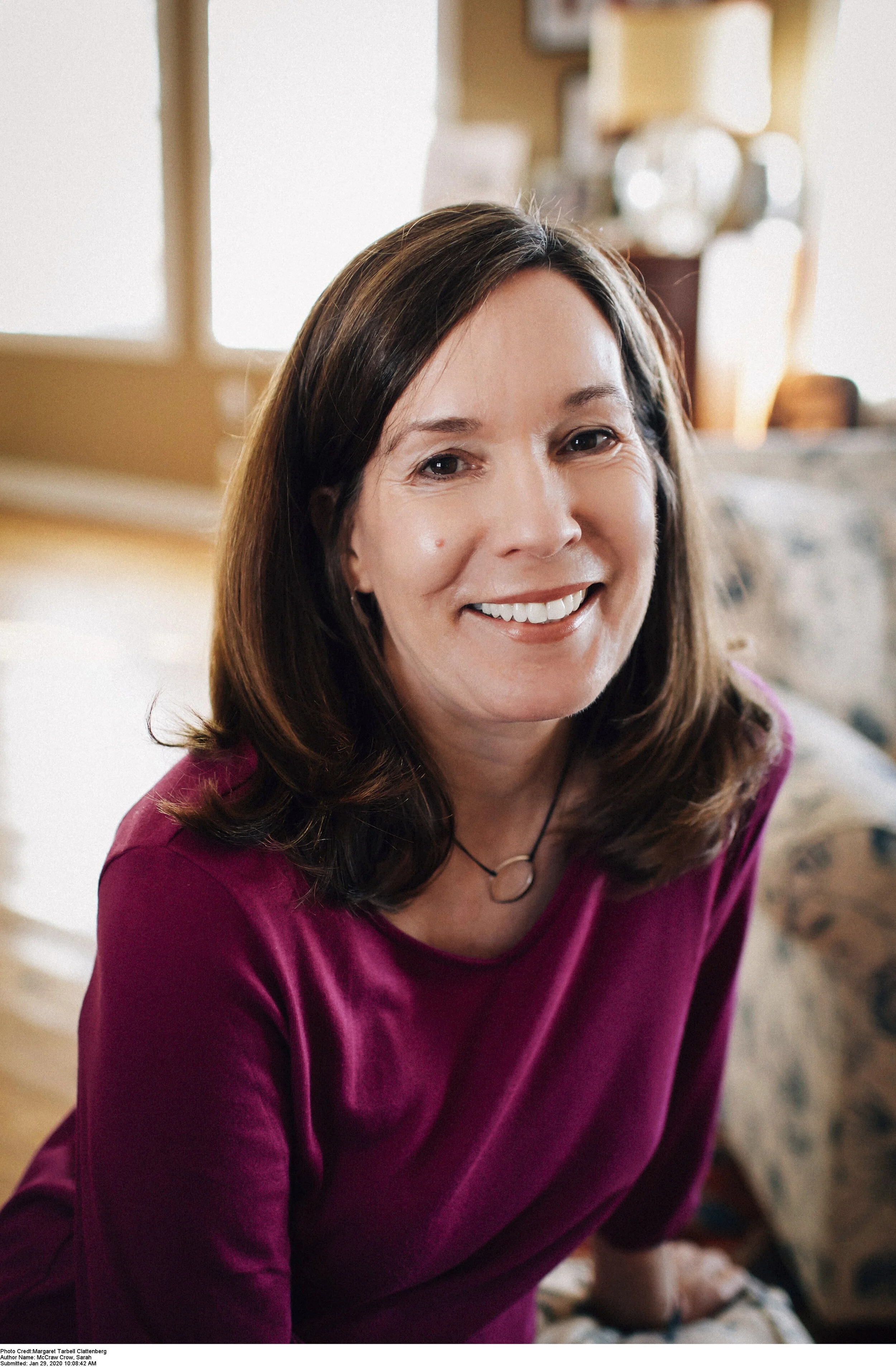
Sarah McCraw Crow grew up in Virginia but has lived most of her adult life in New Hampshire. Her short fiction has run in Calyx, Crab Orchard Review, Good Housekeeping, So to Speak, Waccamaw, and Stanford Alumni Magazine. She is a graduate of Dartmouth College and Stanford University, and is finishing an MFA degree at Vermont College of Fine Arts. When she's not reading or writing, she's probably gardening or snowshoeing (depending on the weather).

Connect:

Author website: https://sarahmccrawcrow.com/ 

Twitter: https://twitter.com/sarahmcrow?lang=en 

Instagram: https://www.instagram.com/sarahmccrawcrow/ 

Goodreads: https://www.goodreads.com/author/show/15502401.Sarah_McCraw_Crow
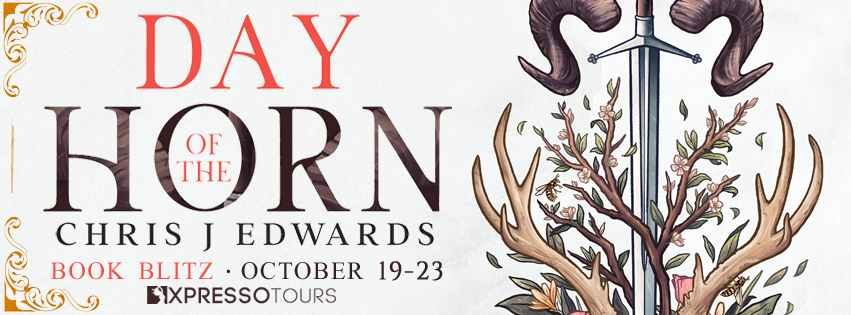

Spotlight: Day of the Horn by Chris J Edwards

DayOftheHornBlitzBanner.png
cedwardsauthor_ebook.jpg

Publication date: October 15th 2020
Genres: Fantasy

A kidnapped princess.

A reluctant mercenary.

A shamed prince.

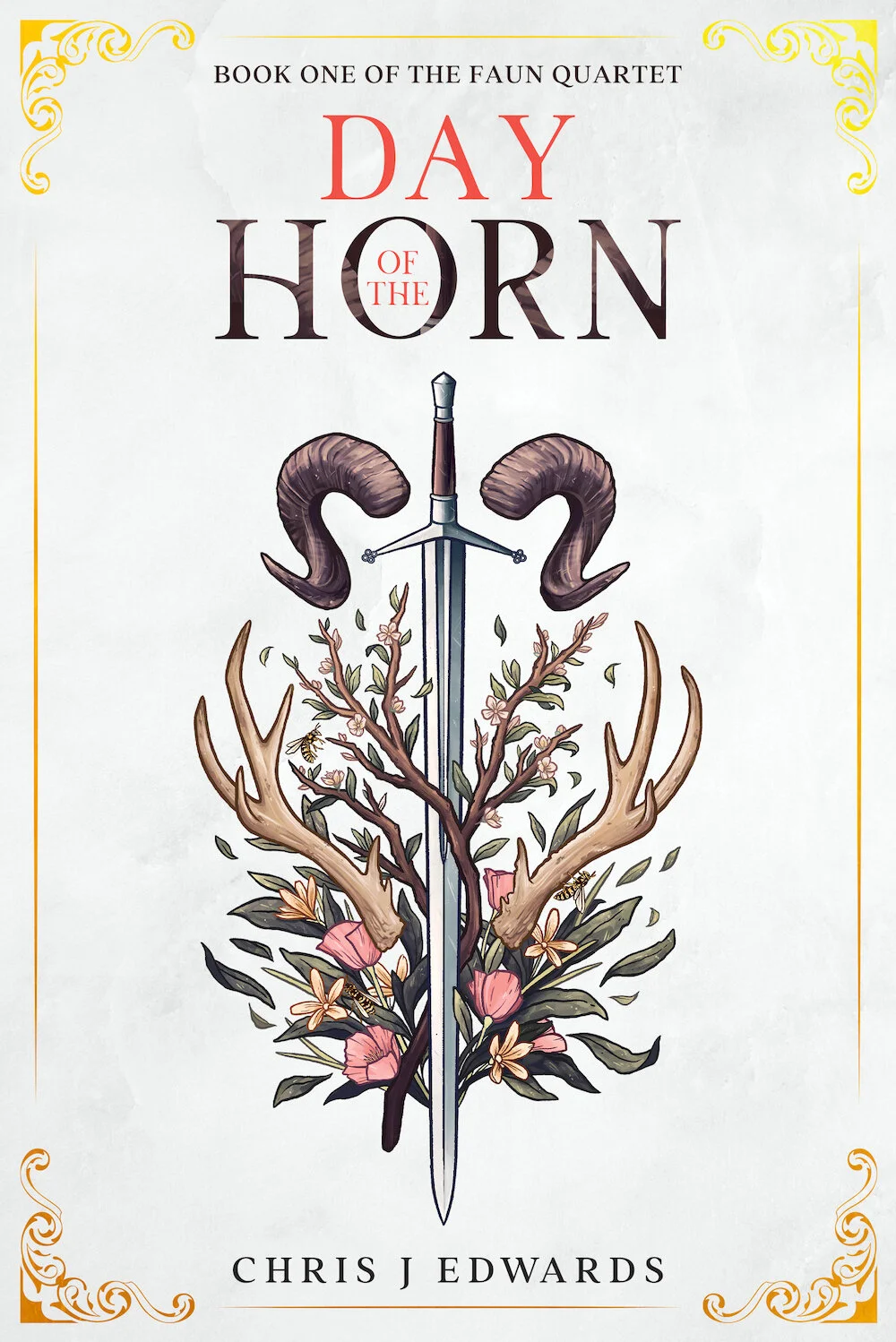
Far in the west, isolated from the weary world beyond, lies the sylfolk kingdom of Céin Urthia – a woodland realm of ancient forests and sunlit meadows. But this kingdom cannot remain secluded forever; for Princess Dawn, heiress to the throne, has been mysteriously abducted. Not even her kidnapper, a mercenary battle-mage, knows who ordered it – or why. A fevered pursuit begins as the High King commands every servant of the crown to rescue her, even the disgraced and imprisoned Herace the Shamed. But even as he and his companions follow in wild pursuit, Princess Dawn herself must decide – does she even want to be saved?

Meanwhile, powers beyond the sight of the court plot under cover of darkness – for not all wish to see the princess safely home…

As civil war darkens the horizon, will Princess Dawn save her beloved home, or will unseen enemies win the day?

Excerpt

Gentle sunlight glowed upon the faun’s face. Willow branches cast their slender shadows onto the grassy banks of the spring, shading us from the gilded morning light.
She looked peaceful there as I knelt over her; she was asleep, head nestled in the dewy grass. I had heard so much about this Princess Dawn – and now I was finally seeing her. 

I had heard she lived in a secluded kingdom, somewhere bright and beautiful. A realm of vibrant flowers and alluring aromas, quiet green places latticed by cool, meandering streams. A perfect place, as perfect in its natural beauty as it was in its isolation. 

And I heard that, on a perfectly calm morning in this perfectly nestled kingdom, the child that would be called Dawn was born in the idyllic splendor of the realm’s very heart. That she was raised in seclusion, away from the evil and want and sadness of the world beyond that verdant countryside. 

I heard that her parents, the rightful king and queen, ensured she live a honeyed life. That Dawn would never have to experience the meanness, the savagery, the brutality of the world beyond. That hers was a youth of sweet smells and pleasant breezes and laughter under the greenest bowers of the kingdom of Céin Urthia.

One could certainly envy Dawn, her happy youth, her blessed inheritance, the Sacred ground of which she was one day to be sovereign. 

I, however, did not envy her. 

I did not envy Princess Dawn. Not as I knelt over her, not as she lay enchanted beside her private spring, beneath the sightless gaze of the royal keep. 

I looked up to the surrounding garden and waved my riders over; as silent as prowling cats the uyrguks slunk out from the brush. I gestured to the sleeping princess. Wordlessly they bound her, picked her up. 

I cast a gaze up to the keep. No curtains in the windows stirred; no guards looked down from the battlements. There was nothing to fear; Naraya was safe. Naraya was the capital. And the princess could look after herself.

I smiled. My, had they been wrong. 

The uyrguks carried the princess through the garden and slung her over the back of my horse. Then, after a moment lingering in the garden as all was still and the sun was rising, I followed after them. 

Steam plumed from the horses’ nostrils in the cool spring air. I was cold too; my clothes were damp from the morning dew. It had been a long, long night of lying in wait. 

I mounted up and my riders did the same. I surveyed the garden, the private spring, the imposing shoulders of the royal keep. Still no one stirred; clearly my careful preparation was paying off. No guards, no handmaidens, no attendants… the perfect kidnapping. 

I looked back at Princess Dawn, slung like a slain deer behind me, antlers and all. The perfect kidnapping.

I smiled to myself, relieved that my task was coming to fruition, my debts that much closer to absolution. 

Then I looked up to the sun crawling steadily over the teeth of faraway mountains. 

The princess was mine. It was almost all over. The cool sense of relief that washed through me matched the crisp spring breeze. 

I spurred my horse and rode away.

Buy on Amazon

About the Author

Chris.jpg

Chris J Edwards is a Canadian author of fantasy novels. Formally educated in history, informally educated in poetry, Chris now spends time writing fiction.

Connect:

https://chrisjedwards.ca/

https://twitter.com/ChrisEd54051855

https://www.instagram.com/chrisjedwardsauthor/

https://www.goodreads.com/author/show/20750619.Chris_J_Edwards

Spotlight: Then He Happened by Claudia Burgoa

ThenHeHappenedBlitzBanner.png
Then He Happened AMAZON.jpg

Publication date: May 6th 2019
Genres: Adult, Contemporary, Romance

Jason is a cynical rich playboy.
He doesn’t take life seriously,
He doesn’t believe in settling down.

Eileen’s thirtieth birthday is almost here.
But as always she’s her parent’s afterthought.
Her family is too busy planning a shotgun wedding for her older sister—and she has to help.
It’s just another year where she’s overlooked.
But the best man is smoking hot and actually notices her and makes her feel special.

Jason doesn’t believe in commitment, but Eileen intrigues him.

She’s not the kind of girl he usually hooks up with.

She doesn’t even fall for his charm.
He’s made it his task to convince her that he’s not the shallow man she thinks he is.
But can Jason give up his playboy lifestyle to become what Eileen needs?

Excerpt

It’s a perfect day to take one last trip to Steamboat before the season closes. 

But where am I? 

Racing from Boulder to Colorado Springs to look at a wedding venue for my cousin. Marek fucking owes me. 

When I heard they would extend the ski season this year, I was so excited. But how well that worked out. Saturdays are supposed to be fun days. 

I don’t ask for much. I just need a place, a plan, a beautiful companion, and a bottle of liquor. See? Straight forward, nice and easy. That keeps me satiated for an entire weekend. It really doesn’t take much to keep me happy and satisfied. 

What’s abso-fucking-lutely not satisfying, is touring the grounds of the Broadmoor to scout the perfect place for a shotgun wedding. 

“So what’s wrong with Vegas again?” I suggest, half joking.

Eileen shrugs. “Nothing. It’s a great town, really weird. Lots of movies take place there. I don’t know why people hate on it so much.” 

“But for a shotgun wedding or maybe eloping?” I clarify.  “My assistant can make the reservations. I’ll get a plane. We’ll be there before six. There are plenty of venues. We could probably pick one on the spot.”

She laughs. Like seriously laughs for about a minute like I just said the funniest, most amazing joke in the history of jokes. 

When she finally sobers up, she asks with that curious voice, “Did you run that idea by Charlie already?”

I rub the back of my neck sheepishly. “No.”  

“Well if you do, I want to be right there. I’ll have my camera ready.”

I shoot her an unimpressed frown. “I’m not joking.”

“Me neither.” She shakes her head, laughing once again. “She’ll try to kill you right on the spot. That’s worth taping.”  

“Oh come on, it’s a great idea,” I insist. 

“You’re talking about my sister,” she says, waving her journal in my face. “She thinks the only wedding worth having is a wedding that’s as glamorous as a royal affair.”

“We could make Vegas glamorous,” I grumble. 

“Mom wouldn’t like it either. What about the guests? Would you fly all of them, pay for the accommodations and their expenses?”

Well, I can’t argue with that. I shrug. She smiles and looks back at the horizon.  

“I think either here or the Mountain View Terrace,” I say because I’m done exploring the grounds. 

“What do you think?”

She hums. “I think the Mountain View Terrace would be perfect at sunset. Especially if we take this place up on that discount for doing Friday instead of Saturday.”  

That sounds reasonable. “Okay, but will her royal obnoxiousness, Princess Charlie agree to that?”

Eileen snorts. “As long as it looks amazing on her Instagram account, I’m sure she’ll agree to that.”

She seems so sure of herself. But with all the bullshit we’ve been through and all the crap her sister’s put her through, I don’t want us to fuck this up.  

“But is this the place?” I ask earnestly. 

She looks around for a bit. Her eyes comb over every inch of this place so meticulously.  

“What do you think?” I ask while she studies the landscape and compares it with the pictures.

She stands on the middle of the gazebo looks left right and then toward the mountains. 

“Does it make you want to say I do?” she asks curiously.

I shake my head. “There’s nothing that would make me stand up in front of a bunch of people and say I do.” Again, I don’t say. 

“So a smaller setting?” She doesn’t even look at me as she talks. She’s admiring the mountain view. “This isn’t too big. They said up to a hundred and thirty guests. We don’t have to invite everyone to the ceremony. We’ll take whatever they have for the reception.”

It’s still too many people, I think. 

She turns back to me, as if reading my fucking mind. “You’re being weirdly quiet. Still deciding about your ideal wedding?”

Instead of responding, I ask a question of my own. “Does this place make you want to tie your life to another person?”

She squints, craning her neck to look up at me. For a few beats she remains quiet. 

“I don’t know if this is the place,” she says. “First I’d need the right guy. I’m not getting married to just anyone.”

“So you’re still looking for him?”

She turns to look at me and flashes this smile she has on her face so fucking much. There’s such tenderness in those eyes. That face just soothes me. 

“I’m too busy to get a haircut let alone date someone who isn't worth my time. But you know, I wouldn’t marry someone just because I got pregnant.”

“Like your sister,” I say what she’s trying to avoid.

She shrugs. 

“I look at her and Marek and I’m just not feeling it” she says, taking the scene in one more time before walking toward me. “Wouldn’t you want to organize the most important day of your life?”

“I think they're busy trying to score a house,” I say.

“When I find a guy worth shit, I don’t want to be worried about a wedding or where we’re going to live.”

The air is thin here. It goes well with the crisp afternoon air. Eileen is cool, but calloused when it comes to love. Wonder if it's a family trait and she's just a gold digger.

So I prod a little. “What if he can only afford a studio, doesn’t have a car or can afford to pay for the wedding of your dreams?”

“Maybe that’s why 50 percent of marriages end up in divorce,” she says. “People get married all the time for all the wrong reasons. You do it because you’ve come to realize that someone cares enough to see your bullshit and love you anyway. If you’re too concerned about her looks, her job...where she lives...you're wasting your time.”

She sighs. “I don’t think that many weddings are about love. They're a convoluted status symbol. If you want it so badly, just elope.”

My eyebrows shoot up. Well fuck, I wasn't expecting that. “What if you can afford the wedding?”

She gives me an impish smile. “Then, I’ll think about inviting a few people and do something small. Ten, fifteen people from each side of the family. You seem like the kind of guy that would let her do everything pay for it. You like to please people.”

“And why the fuck would I do that?”

“Middle child, we have the tendency to make everyone happy, right?”

“Maybe I would help her organize it.” I let my gaze wander around, anywhere but her direction. “I’m here, aren’t I?”

That last statement doesn’t sit well. We don’t know each other, and she just assumes—not that she’s wrong about it.

“Come on,” she says inviting me to stand right by the gazebo. “Let’s try this out.”

“Try it?”

“Duh, we need to test drive this place.” She extends her hand wiggling her fingers as she calls me to her. “What do you think?”

I take her hand. It's warm. Her grip soft yet firm. She feels so familiar. I don’t know what it is that I’m waiting for as I stand right in front of her. She squeezes my hand, kinda like she's saying, “chill the fuck out.” 

Reluctantly, I take a deep breath. This place smells like pine with hints of hazelnut and cherry? Warm and bright, just like her. Her eyes stare at me curiously. Then, she nudges me to stare at the horizon again.

“Could you?” she whispers with a chuckle. “Doesn’t it make you want to fall stupidly in love?”

The sky goes on forever. Just like her laugh.

I swallow thickly, terrified of how she made my heart beat fast. 

“Yeah,” I mumble, holding her tight because I don’t want to fall.

Purchase:

99¢ for a limited time only!

Amazon: https://amzn.to/3kEal2V

Audible: https://amzn.to/35SIYvH

About the Author

Claudia.jpg

Claudia is an award-winning, USA Today bestselling author. She lives in Colorado, working for a small IT. She has three children and manages a chaotic household of two confused dogs, and a wonderful husband who shares her love of all things geek. To survive she works continually to find purpose for the voices flitting through her head, plus she consumes high quantities of chocolate to keep the last threads of sanity intact.

Connect:

https://claudiayburgoa.com

https://www.subscribepage.com/ClaudiaBurgoaNewsletter

https://www.instagram.com/claudia_b30/
https://www.facebook.com/ClaudiaYBurgoa/

http://bit.ly/ClaudiaPinterest

http://bit.ly/Chicasgroup
https://twitter.com/Author_ClaudiaB
https://www.goodreads.com/author/show/7202946.Claudia_Y_Burgoa

Spotlight: Ocean Heart by Ally Aldridge

OceanHeartBlitzBanner.png
OceanHeart.jpeg

(The Soul Heart Series, #1)
Publication date: December 1st 2020
Genres: Fantasy, Young Adult

Being a mermaid brings a new depth to ‘it’s complicated.’

High school teen Mariah’s life is anything but simple.  Between a crush on her best friend and a rivalry brewing with the swim team star, her powers awaken early.  

When Mariah’s guardian meddles in her life with magic, she causes more harm than good.  The soul reapers are coming and there’s a werewolf hungry for merblood.  All secrets wash ashore sooner or later, and Mariah’s about to discover hers.

Mixing a messy love life with deadly powers will whip up a storm of trouble.  Can Mariah contain it or will she be swept up in its wake?

A gripping story about a mermaid, self acceptance, and romance that literally sparks.

Excerpt

Friends to lovers (Jace)

“Summer’s almost over,” Jace said, sounding oddly sad. He’d taken his t-shirt off and I could see he’d become less boy and more physically grown up.

“Then back to school,” I groaned. “I hope we’re in the same classes.”

“You’d miss me if I wasn’t.”

“Careful, big head! You’d miss me, too.”

“Maybe I would, maybe I wouldn’t,” he teased.

I shook my head. “You can’t fool me, Jace Walker.”

“I fooled you into watering the garden, didn’t I? And what about when I told you that if you eat enough lettuce it starts to taste like chocolate? Or the time I tricked you into swapping your little pound coins for my big fifty pences?”

“Wow, you are a shitty friend. Maybe I won’t miss you at all.”

“Fine, we’ll miss each other. And summer. Summer is great,” Jace sighed, leaning back on the grass.

“It really is,” I agreed.

“Be even better if I didn’t have a little, whiney voice chittering in my ear.”

I gave him a playful shove. He squinted one eye as he tried to look at me but caught the sun. My stomach flipped in a new way as I realised, for the first time, that Jace had changed over the summer holidays. He had got hot!  I shook the stupid thought away. He was Jace Walker, my best friend forever.

Pre-order: Amazon

About the Author

Ally.jpg

Ally was born in London but grew up in Suffolk which is where most of her YA Fantasy novels are based.

She is happily married to her high school sweetheart, and together they are raising two cats, their son and daughter.

When Ally is not writing (or at her day job), she loves spending time with her family at the local beach, in the forest or watching way too much Netflix.

Ally loves a cup of tea and has been known to order one on a night out.

Connect:

https://allyaldridge.com/

https://www.facebook.com/ally.aldridge.7

https://twitter.com/Redfae7

https://www.instagram.com/redfae/

https://www.goodreads.com/author/show/8108229.Ally_Aldridge

Join Soul Heart Readers FB Group: https://www.facebook.com/groups/208297597158960/

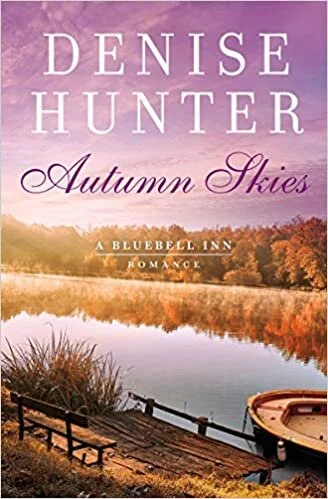
Spotlight: Autumn Skies by Denise Hunter

autumn-skies.jpg

From the bestselling author of The Convenient Groom and A December Bride (now beloved Hallmark Original movies) comes the third and final novel in the Bluebell Inn series!

When a mysterious man turns up at Grace’s family-run inn, it’s instant attraction. But she’s already got a lot on her plate: running the Bluebell Inn, getting Blue Ridge Outfitters off the ground, and coping with a childhood event she’d thought was long past.

A gunshot wound has resurrected the past for secret service agent Wyatt Jennings, and a mandatory leave of absence lands him in Bluebell, North Carolina. There he must try and come to grips with the crisis that altered his life forever.

Grace needs experience for her new outfitters business, so when Wyatt needs a mountain guide, she’s more than happy to step up to the plate. As their journey progresses, Grace soon has an elusive Wyatt opening up, and Wyatt is unwittingly drawn to Grace’s fresh outlook and sense of humor.

There’s no doubt the two have formed a special bond, but will Wyatt’s secrets bring Grace’s world crashing down? Or will those secrets end up healing them both?

Buy on Amazon | Audible

About the Author

denise-hunter.jpg

Denise Hunter is the internationally published bestselling author of more than 25 books, including A December Bride and The Convenient Groom, which have been adapted into original Hallmark Channel movies. She has won The Holt Medallion Award, The Reader’s Choice Award, The Carol Award, The Foreword Book of the Year Award, and is a RITA finalist. When Denise isn’t orchestrating love lives on the written page, she enjoys traveling with her family, drinking green tea, and playing drums. Denise makes her home in Indiana where she and her husband are rapidly approaching an empty nest.

Connect with Denise: Website | Facebook | Twitter | Instagram

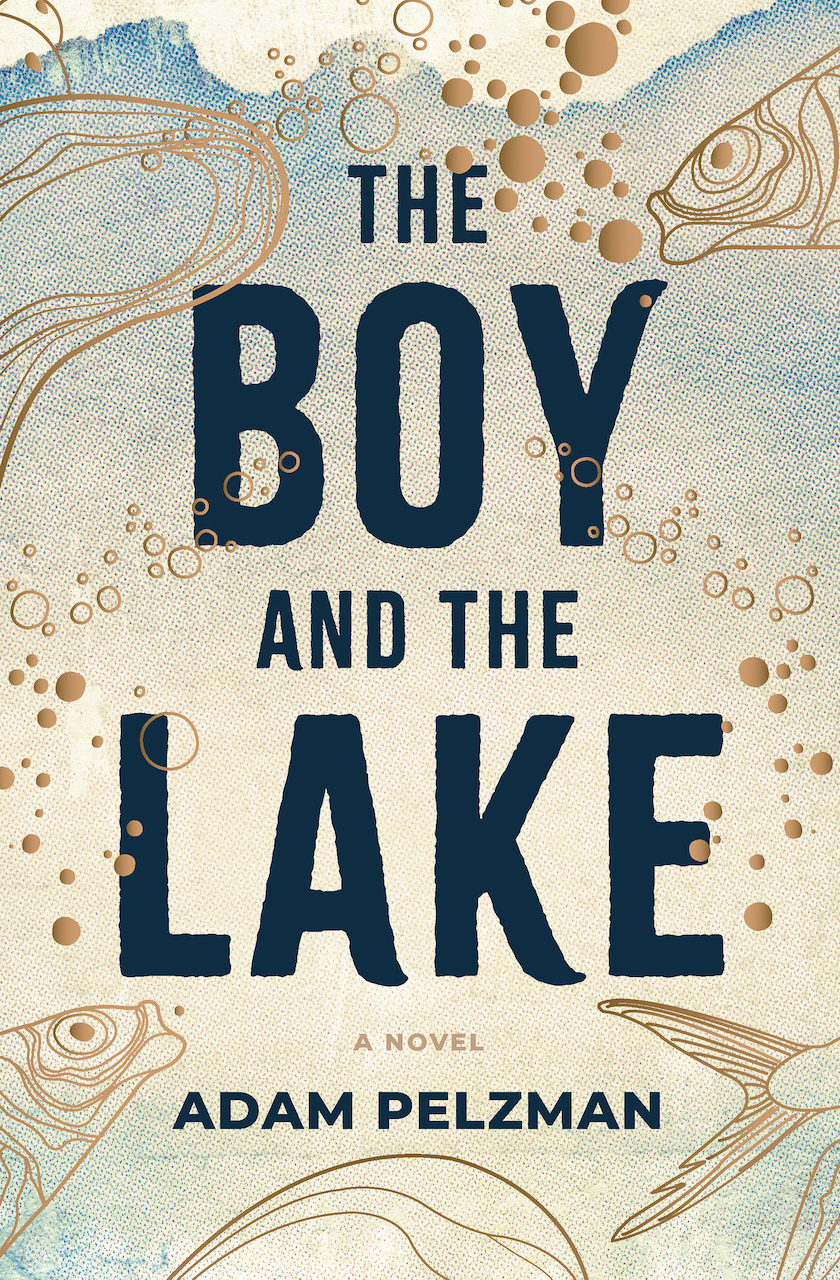
Spotlight: The Boy and the Lake by Adam Pelzman

Blitz-and-Tour-Banner-facebook-cover (18).jpg
dd0b5fb11509480b9ce953fb948c36a9.png

Family Saga Fiction. Literary Fiction

Date Published: October 7th, 2020

Haunted by his discovery of a beloved neighbor's body floating lifeless in the lake where he's fishing, 16-year-old Benjamin Baum is convinced she was murdered despite her death being deemed an accident.  While those around him tire of his fixation on finding a supposed killer, Ben's alienation leads to drinking and the reader begins to wonder if he's a reliable narrator. The plot takes a shocking twist, revealing the terrifying reality that things are not what they seem—that, beneath a façade of prosperity and contentment, darkness lurks. 

Excerpt

Chapter 1

June 1967

I can recall with near perfect clarity the moment I saw Helen Lowenthal’s bloated body slide up through a carpet of emerald water lilies and bob on the water’s surface like a ghostly musk turtle. In the seconds before her lifeless ascent, a constellation of fireflies—tiny flickering furnaces—danced and glowed in the early summer dusk; a white egret, all legs and neck, landed atop Split Rock and stood regal guard over the lake; a long-eared bat carved wicked arcs through the sky before devouring a plump imperial moth.

From the direction of Second Beach, Nathan Gold’s pontoon boat—the Ark—puttered along the shoreline with four prosperous couples reveling in their evening cocktails. A symphony of big bands, laughter, and giddy howls poured off the boat and tumbled across the lake’s still water. Nathan and his wife, Bea—a gregarious, stocky woman—called out to me as they passed, and I waved back with delight, wondering how two people could be so festive, so happy, so often.

Bonnie Schwartz, my mother’s friend, was also on the boat. She was considered by many to be the prettiest woman on the lake, as was her mother before her. I waved to her with the hope of some reciprocity—maybe a nod or a simple smile in my direction—but this auburn beauty, distracted by her empty martini glass, did not notice me—an omission that punished my fragile sixteen-year-old heart.

I sat on the edge of the dock, my feet immersed in the water of our beloved New Jersey lake. As the Ark turned north toward the clubhouse, the boat’s wake caused the pungent, algal water to lap against my calves. I held a wooden fishing pole that Papa, my grandfather, had given me when I was six. The hook baited with a throbbing night crawler, I watched as the red-and-white bobber teased me with a quick downward thrust, only to rise to the surface and drift with rippled ease. Clever fish, I thought.

A few seconds before the swollen body emerged, I turned back to look at my grandparents’ summerhouse. I could see Nana flitting about the screened-in porch, setting the table for yet another dinner party, while Papa probed the lawn for moles, angling empty glass bottles into their holes with the open ends facing downward. “Makes a howling noise, Ben,” he once told me as he guided a beer bottle into the earth. “Drives them crazy, like psychological warfare.”

What I noticed first in the water before me was not a body, but a flutter in the lilies that I mistook for a jumping frog. It was only when the attenuated rays of the descending summer sun flashed off Helen’s gold and diamond watch that I realized something terrible had occurred. I gasped and leapt to my feet. “God,” I mumbled and raised my right foot as if to take a step forward, toward the body. “Papa!” I yelled, dropping the rod to the dock. “Papa, come down!”

Despite his old age, my grandfather was a lithe and energetic man who, after numerous injuries and surgeries, had somehow managed to retain much of the athleticism of his youth. He was alarmed by the distress in my voice, for he threw a bottle to the ground and dashed down the slate path to the water’s edge. I glanced up to my grandmother, who stood frozen on the porch, right hand on chest, her mouth open.

“There!” I shouted to Papa and pointed to the blue-white body of his next-door neighbor. Helen Lowenthal, whose rare kindness had evoked in me the greatest loyalty, was dressed in a pink tennis skirt and matching top. Barefoot, she floated on her back, her face dappled with lake slime, her dyed blonde hair draped over a mat of lilies, her pale arms elevated above her head as if she were a surrendering soldier. I took another step closer, toward the water. I found myself drawn to her body, to its deadness, to its serene, haunted passage, as one is drawn to the very things—once beautiful, now rotten—that intrigue us, that repulse us with their incomprehensible transformation.

Papa reached the dock and grabbed my arm. He stared at the body in silence, then, as if looking for a clue, scanned the shoreline and the lake’s expanse. A hundred feet from the dock, in a pool of quiet water, an elderly couple fished from an anchored motorboat; the Ark continued its journey toward the clubhouse, a familiar Ella Fitzgerald melody drifting off the stern; a small sailboat floated in the windless dusk; and the white egret elevated from Split Rock, relinquishing its perch in search of food. “Go inside and call the police,” Papa cried. “It’s Helen, you know.” He wiped the sweat from his face then, panting, bent over at the waist. “Helen … Lowenthal,” he said through heavy breaths, before stepping down, fully-clothed, into the shallow water.

I watched as he struggled to traverse the muddy lake floor, the water rising from his knees, to his waist, to his chest. When he reached Helen, he touched a small bruise on her forehead. He then grasped her left hand and guided her—belly-up—toward the shore, her body slicing through the water with ease and purpose. As I watched this scene unfold, I was immobilized by my first close contact with death. I stared at her corpse with a vast fear, with a revulsion that shamed me, and, I would later acknowledge, with something approximating wonderment.

With great care, Papa placed his palm on the side of Helen’s head—a tender movement that protected her from hitting a protruding rock. Now just feet from the shore, the water knee-deep, he turned to me. “Go, Ben,” he demanded. “Go now!”

Unable to divert my eyes from the scene before me, I moved slowly up the dock. I watched as Papa stepped up onto the shore, his legs heavy from the weight of his sodden pants. I watched as he lifted Helen, as he groaned in exertion, and then gently laid her down on the spongy moss. I took one last look at the woman. She wore the fancy watch her husband had given her for their twentieth anniversary, and on her left hand was an engagement ring, the one with a diamond so large that some of the women from the bridge club had started a rumor that the stone was fake. I glanced at her toenails, painted cherry red, and at her slime-lacquered face.

“Go!” Papa screamed, now with fury in his eyes. And then I ran to the house and into my grandmother’s fleshy, perfumed embrace. I ran to a safe place.

Buy on Amazon

About the Author

8ba7708838304de1bc89f98820a8f867.png

Adam Pelzman was born in Seattle, raised in northern New Jersey, and has spent most of his life in New York City. He studied Russian literature at the University of Pennsylvania and went to law school at UCLA. His first novel, Troika, was published by Penguin (Amy Einhorn Books). He is also the author of The Papaya King, which Kirkus Reviews described as "entrancing," "deeply memorable" and "devilishly smart social commentary." The Boy and the Lake, set in New Jersey during the late 1960s, is his third novel.

Connect:

Website: https://www.adampelzman.com

Facebook: https://www.facebook.com/adam.pelzman.5

Goodreads: https://www.goodreads.com/author/show/7341058.Adam_Pelzman

Instagram: https://www.instagram.com/adampelzman/