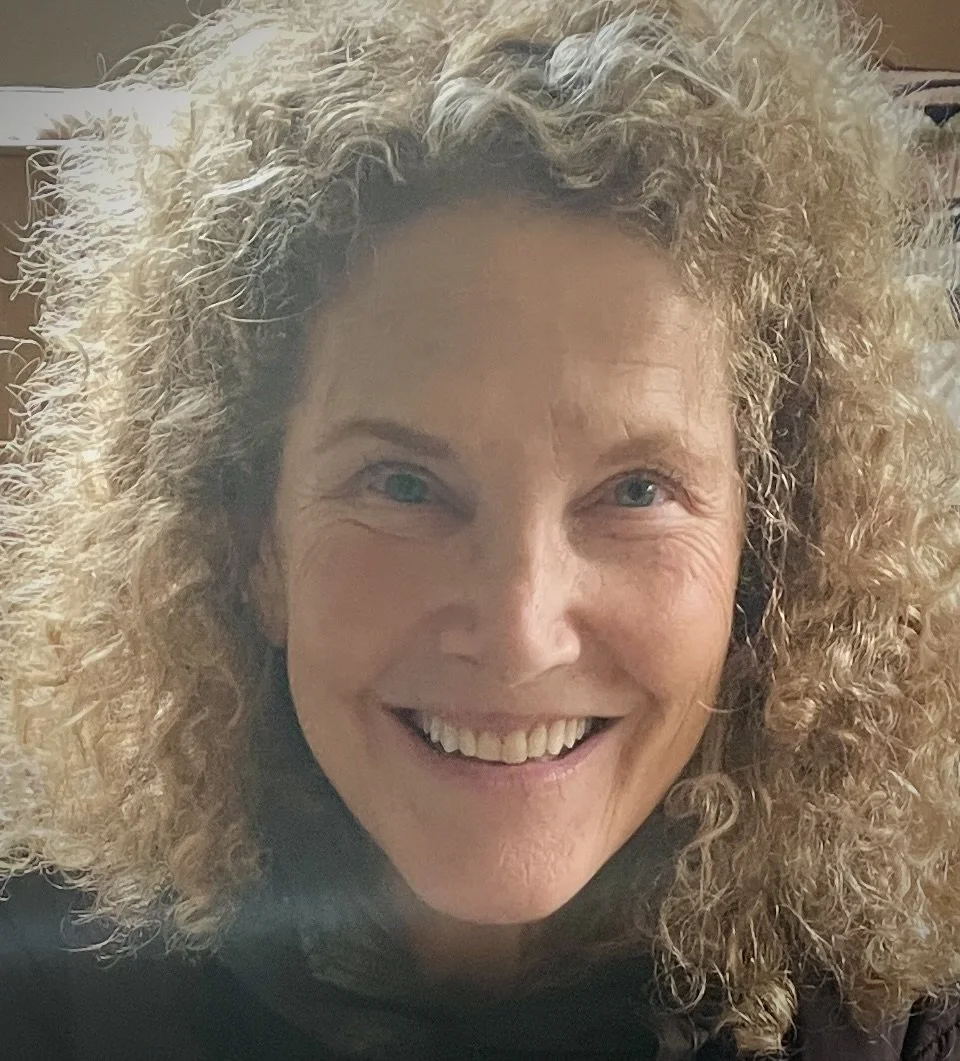
Q &A with T. Dasu author of SPY, INTERRUPTED: THE WAITING WIFE

What inspired you to write SPY, INTERRUPTED: THE WAITING WIFE?

I grew up reading literary espionage novels but there was something lacking. I wondered about the emotional lives and relationships of those involved in the espionage business. What does it take for them to earn their partner’s trust in their relationships? Is it possible for such a person to be normal? What’s it like to be married to someone whose job it is to lie and deceive on a daily basis? Is their spouse always second-guessing their actions and motives

After a major tragedy in the novel, Stephen asks Nina to sing. Nina sings a song in Urdu. Are you familiar with music in other languages? 

I come from a very musical family filled with composers, poets, singers, musicians. Both my parents sang and listened to Indian classical music constantly, where the compositions were often in Sanskrit. I am fluent in Telugu and Hindi and music in those languages, I can understand some Urdu, and, thanks to my husband, I know many popular Tamil songs. I have no musical talent unfortunately.

Stephen, the protagonist, reveals his perspective on the ethics of torture in times of war. How did you negotiate this topic as you were writing the novel?

That’s a tough one. Personally, I believe that people will confess to anything under duress, and there is no proof that torture provides useful information. Having said that, I can see how those that have seen battle, and experienced first hand the brutality and senselessness of the enemy, could resort to extreme measures in the hope that it could lead to any information that could prevent future tragedies.

What challenges did you face as you were writing SPY, INTERRUPTED: THE WAITING WIFE?

In the beginning, it came in a rush, like a video playing in my head and all I had to do was put it down in words. However, the actual craft of polishing it took several years and as many as 40 re-writes. The manuscript went from 120,000 words to 72,000! But I enjoyed every minute of it. I learn so much with each word I write. I hope readers will stay with me!

About T. Dasu

T. Dasu’s impressionable years were spent on multiple continents, and it is these richly varied experiences that serve as inspiration for Dasu’s writing. In addition to being a published author of both fiction and nonfiction works, Dasu also translates regional Indian fiction into English. Dasu enjoys classic stories of love and longing like Gabriel Garcia Marquez’s Love in the Time of Cholera, and literary espionage exemplified by Graham Greene’s Our Man in Havana.

About the Book

Jane Austen meets John le Carre in the riveting international romantic thriller Spy, Interrupted: The Waiting Wife, which follows a newlywed couple on an emotionally wrought journey rife with love, intrigue, and suspense.

When Nina Sharma falls in love with and marries the reclusive, New England aristocrat Stephen Edward James, she expects life will change. But she could not anticipate how. After six months of seemingly serene wedded bliss, a trip to India begins to unravel the secrets of Stephen’s hidden life—and the truth will have the pair evading terrorists and narrowly escaping with their lives. As Nina grapples with the truth about the stranger she married, Stephen must do everything in his power to keep his wife alive and bring down the men he’s hunting—and who are hunting him.

Then, the photographs start arriving…photos from a mysterious sender. Photos of Stephen and Nina in increasingly intimate moments.

Can Nina and Stephen’s fledgling love survive? Can they survive?

Filled with intriguing characters and plot twists that span multiple continents, Spy, Interrupted: The Waiting Wife is a unique and thrilling, cross-cultural novel about the strength and endurance of love.

Top Ten Little Known Facts About Myles and Brantley by Colee Firman

1.       What’s in a name – Brantley was named after her father’s best friend, who was killed in a car accident while her mother was pregnant. Her father insisted on naming their child after him, regardless of whether it was a boy or a girl.

2.       It was fate - Years before they ever met, Myles and Brantley actually walked past each other in a corridor at Princeton when she was there for an alumni luncheon with her father.

3.       Tough parents - Myles was offered full-ride football scholarships to three major universities. His mom and dad refused to let him pursue sports over academics, and he was forced to turn them down.

4.       Bad boy - Myles didn’t have any tattoos or piercings until he went to college, where he quickly made up for it.

5.       So you think you can dance - Brantley made the varsity pompon squad when she was a freshman in high school.

6.       Misery loves company - Myles and Brantley are both highly allergic to cats.

7.       Babysitters club – the only work Brantley ever did before working at Puck’s was babysitting for the kids in her neighborhood.

8.       Auto shop – Myles’ part time job during high school was at the repair shop in downtown Baylor Grove. That’s where he learned how to restore vintage motorcycles.

9.       The Windy City – When she lived in Illinois, Brantley’s favorite thing to do during the summer was hop the train into Chicago and spend the day wandering around the aquarium and Navy Pier.

10.   Never been kissed – Brantley’s first kiss didn’t come until she was sixteen when her parents finally let her start dating.

About Colee Firman

Colee Firman has always been a closet writer. As an only child, there were constantly stories swimming around in her head. In 2012, she finally started unleashing them on the world, beginning with The Unbinding Fate Series.

As a Michigan native, she never passes up a chance to escape the winter weather. When she’s not working at her day job or writing, she’s traveling with her longtime boyfriend, reading with her cat, or binging on Netflix

You can reach Colee via: Facebook | Website | Twitter | Goodreads | Amazon Author Page

About Caught Up With You

Life has a way of shaping you into what it wants you to be, regardless of how much you fight it.

Brantley Prescott is damaged. Scarred by a past she can’t forget. Hiding secrets she’s terrified to share. Searching for a future she doesn’t believe she’ll ever find.

Myles Franco is alone. Burdened by mistakes he’ll never live down. Fostering a deep resentment for the opposite sex. Unleashing his wrath on any girl who gets too close.

Brantley has worked behind the bar long enough to recognize Myles for what he is—a douchebag player with nothing on his mind but keeping a steady stream of girls flowing through his bed. With his messy dark hair, sapphire blue eyes, rock-solid body, and endless tattoos he’s impossible to ignore. But that’s exactly what she plans on doing.

After just one run-in with Brantley, Myles is even more determined to stick to the rules he lives by. She’s mouthy, blunt, and doesn’t back down—no matter how hard he pushes her. She could turn out be the one temptation that drags him down the path he’s been trying to avoid. He won’t let that happen.

Both are content living behind the solid walls they’ve built around themselves. Neither is prepared for what happens when their lives collide.

Due to sexual content and graphic language - 17+ recommended.

Ten Little Known Facts About Domino Effect by Kristin Mayer

1.    The Thrillhammer’s are a real band that allowed me to use their songs within the book. 

2.    Grandmama is based on my grandmother whom I was very close to.

3.    The Last Unicorn (a movie mentioned in both RIPPLE EFFECT and DOMINO EFFECT) was my favorite as a child. I could watch the movie repeatedly every day … all day.

4.    The timer mentioned in DOMINO EFFECT is completely made up. I’ve had a few people who got Arc’s ask where they could get the App. 

5.    Nikola is named after a dear friend whom I’ve known for a long time. I’ve always loved her name and had to use it as a characters name.

6.    Where Nikola talks about Grandmama making little red vests was actually a summer project I did with my grandmother. 

7.    Rook (card game mentioned in DOMINO EFFECT) is a family favorite.

8.    I love the Magic 8 Ball as much as Nikola does in the book. That blue triangle of wisdom

knows its stuff!

9.    The band members of The Thrillhammers are the real life players. 

10.    My browser history will never be the same after researching material for both RIPPLE EFFECT and DOMINO EFFECT. ;) 

About Kristin Mayer

Kristin Mayer is a wife, a proud mother, and a full-time Analyst and Import Manager. Since an early age, she has always enjoyed reading and writing. While visiting her father one weekend, he suggested that she should take up writing again. With family and a career, she didn’t give it a lot of thought, until a story entered her mind and wouldn’t leave. It just kept forming and developing over a couple of months.

At the beginning of 2013, she decided to sit down and write it all down, but she kept it to herself. One sentence developed into two, and before she knew it, she had the makings of a novel.

Kristin tries to live life to the fullest during every moment. She loves to travel and meet new people. She holds a degree in International Business and uses it daily in her job. Kristin now adds “author” on her list of jobs, and feels very blessed and thankful.

You can connect with Kristin via: Author Goodreads | Authorgraph | Facebook | Twitter

About Domino Effect

One small movement can impact the rest of your life, like a set of dominoes lined up one after another. It’s not until you step back and see the big picture that you realize the damage you’ve done…

Brandt Mattox had it all—love, success, and friends. One impulsive wrong decision led him down a path that ended in a prison of regrets. He now only dreams of the happiness he once had before the consequences of his actions cost him everything.

He lost his love—not just any love, but his soul mate.

Nikola Kingston has worked hard to keep the past in the past while she focuses on her career and spending time with her grandmother. On a random night, she runs into the one man who will forever hold her heart captive. Her heart knows she still loves Brandt, but her mind cannot forget the dreadful night that cost her the love of her life.

Will the domino effect of Brandt’s and Nikola’s decisions be too much to overcome? Or will the love they never thought they would get back have an everlasting effect?

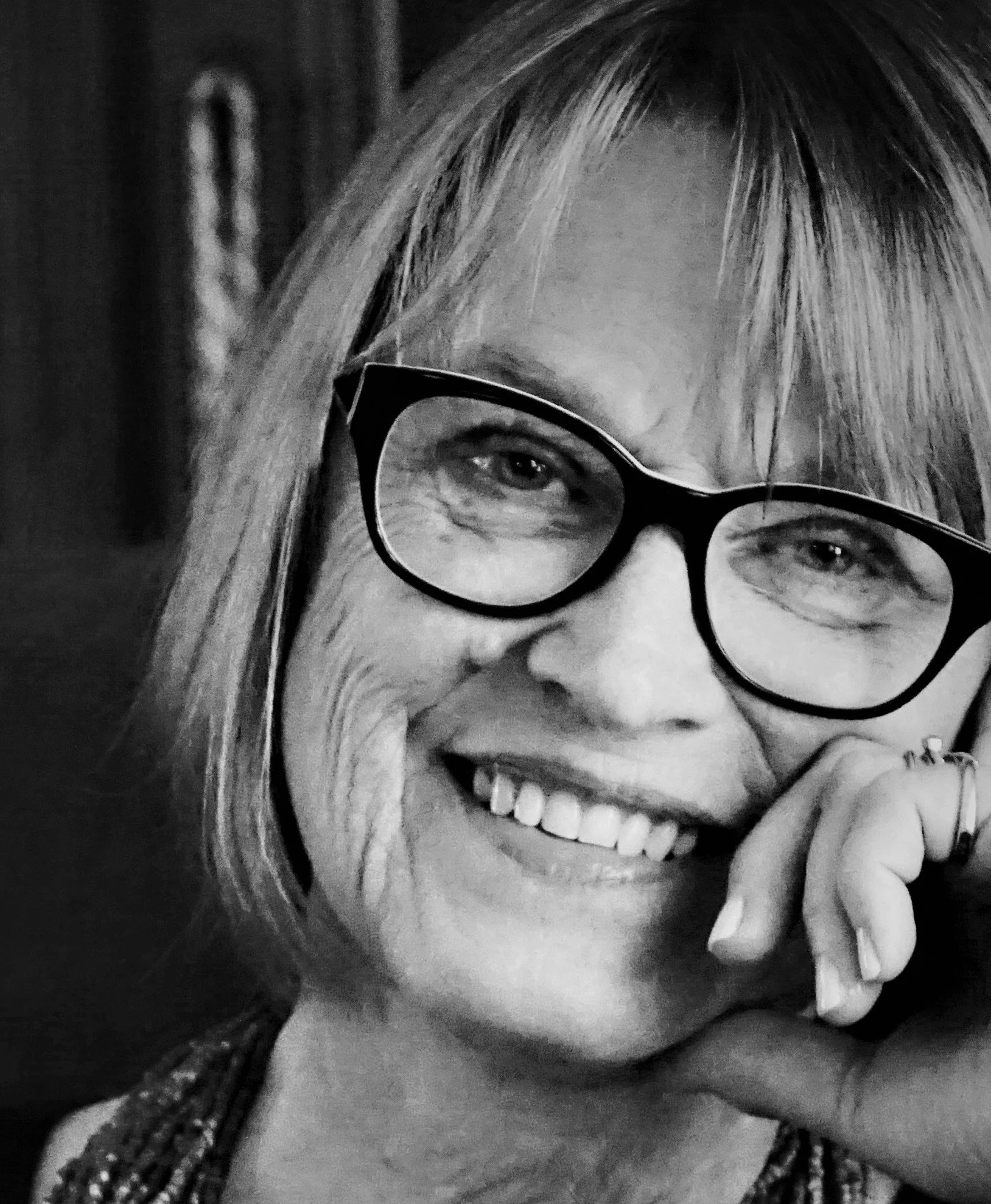
Q&A with Marie Ferrarella author of CARRYING HIS SECRET

How does it feel to be releasing your 250th book?

It feels unreal, like any second, I will wake up surrounded by all the rejection slips I received (and held onto) before my first sale. When I really have time to think about it, I get very excited. It’s that walking-on-air feeling.

After so many novels, how do you continue to come up with original and exciting plots and characters?

It just happens. I always refer to my going to write as sitting down and making magic because writing is a magical process. I hear something, see something and suddenly, it becomes a whole book. Case in point, when my kids were little and I picked them up from school, they were fighting in the back seat. Trying to quiet them down, I didn’t come to a full stop at a stop sign. Two seconds later, I was being pulled over. The patrolman took one look in my back seat, said I had enough to deal with and let me off with a warning.  He became the hero of Borrowed Baby. You just never know where the next book is coming from.

What are the three ingredients that make up a perfect romance story?

A strong hero (with a soft center he might not want to own up to), a strong, snappy heroine and my first requirement—natural sounding, quick dialogue.  When I am particularly lucky, the characters talk in my head and I just try to keep up (case in point, It Happened One Night).

If you could choose one literary hunk to come alive and jump off the pages, who would you choose? 

I am married to a hunk, so the need for that has never been great. However, if I had the power to have a hero come to life, it would be Rhett Butler. He really deserved someone so much better than Scarlett.  He was strong, kind, thoughtful and he grew as the story unfolded.

Do you have any writing rituals or quirks?

I have a schedule, but not a ritual.  I like to break up a chapter into very rough draft, then going over it to double the length (from 10 pages to 20 if possible). I do a chapter a day until it’s done, then go back to the start and take about 3-4 days to go straight through tightening, fixing, etc.  I do love buying pens and unique looking pads (in school supplies, the ones with the cute covers). To me, a new pen and pad represent endless possibilities for storytelling.  I am also fortunate in that I can write any place, any time and have done chapters in 10-20 minute increments. Better to write something than nothing.

What is the first book you remember reading by yourself as a child?  

In second grade, when I first discovered the library (it was a class field trip), I thought I had died and gone to heaven.  We each received a temporary library card and I took out a biography. There was a line of books that illustrated their books with shadows or silhouettes (now there’s a coincidence) and I don’t remember what they were really called but I always referred to them as “shadow books.”  The first one I read was: Jessica Fremont, Girl of Capitol Hill. I was so taken with the name (I’d never heard it before) that I “held” onto it until I had my daughter. Sadly, when Jessi was born, that had become the name for girls.  She had 3 other “Jessicas” in her kindergarten class and there was even a Jessica F besides her. Loved biographies, especially about women (this was pre-Women’s Lib Movement).

What are three things about you that might surprise your readers?

English is not my first language. I spoke Polish and German until I was four. I learned English watching John Wayne westerns on channel 13 (in New York) and twanged when I spoke for the first couple of years. I was determined to speak well and by 6th grade, the teacher thought I came from England because I enunciated so clearly.

My husband is my first boyfriend, my first love, my first everything. I met him when I was 14 (he sauntered into my 2nd period English class, dressed all in black—Fonzee before there was a Fonzee). We started dating when I was 18 and have been married forever.

I didn’t want to be a writer at first. I wanted to be an actress. Since there were no good parts for women in those days, I started coming up with stories with strong heroines I hoped to someday play.

What are you working on for your next book?

Currently working on three books (in different stages) at once. I love the Cavanaughs, so I’m making notes for their next book, plus I have a couple due before that one so I’m doing an outline for another Forever cowboy series as well as working on a continuity book I was tapped for. I am busier than God—and loving it.

What’s on your reading list right now?

I hardly get time to read any more. I have a current Mary Higgins Clark book and a James Patterson book (his Michael Bennett series) on my nightstand as well as a book about the Secret Service. I love mysteries.

About Carrying His Secret


When Elizabeth Shelton finds her boss murdered, her life is thrown into turmoil. But nothing shocks her more than learning she's pregnant by the man's son. She kept her attraction to mogul Whit Adair hidden for years before their one-night tryst—and now she must keep another secret…

When the killer targets her next, Whit goes from her one-time lover to her full-time bodyguard. Taking her to his ranch for safekeeping, Whit discovers the truth about the baby. He offers his protection, but Elizabeth wants more—his love. For his child and its mother, he'll do anything—even take down a murderer….

How Mimi Came to Life by Alyssa Gangeri

As a pastry chef and now author a lot of people ask me... How did you come up with this concept for a children’s picture book cookbook? Now I tend to giggle to myself every time someone asks me that because thankfully for me they are excited about my concept and not like oh lord how did you come up with this and who in god’s name published it? Because as an author and as a chef people are always constantly judging what you do. Oh your tart is to sweet, your mousse is to airy, your book is to long, your illustrations are not what I thought they would be. When you enter a career where you are constantly being judged and critiqued it almost becomes second nature to expect people to not like your product whether that be food or books. Once you realize you cannot please everyone and just giggle to yourself the world becomes a much more fun place! 

But really how did I come up with Mimi? I have spent a lot of my free time in the bookstore and when I say bookstore I mostly mean the cookbook section. Then one day I decided to roam around a little… I found myself in the magical world of the children’s section. It’s such a bright and colorful place. How could anyone not love being in there... until you see screaming children running frantic through the section because they don’t want to go home. But weirdly enough the screaming and crying inspired me more than anything (I am obviously not a mom because most moms would see and hear that and think nap time which means mommy wine time! Or well that’s what I would probably think if I was a mom)

So through the screaming and crying I thought to myself... self, why is there not more children’s cookbooks? There are some and they are cute and make sandwiches in the shapes of dinosaurs and space ships but why isn’t there a type of cookbook that gears solely just to the development of children learning to cook? Although, let’s be honest what child wants to read a boring cookbook that has some pictures but a whole lot of procedures and recipes and boring stuff. 

Through my crazy train of thought I thought to myself …. Self (as you can see I talk to myself a lot!) why is there not a children’s cookbook that is geared to entertaining and teaching kids at the same time? Why is there not something that can keep a child engaged, keep them interested in what they are learning? I think the key to learning is having fun while you learn. Wouldn’t you learn more if you had fun while you were doing it? See I told you!  From that point a light bulb went off in my head and I immediately ran home and starting writing and brainstorming all the possibilities of a children’s cookbook. Do the tools talk? Does the mixer teach you what to do? Does the stove teach you about safety? Then I realized I was thinking about this too much. Children want to learn, they are eager to learn. They are a sponge. What they see they embrace and use towards future encounters. If mom and dad watch cooking shows kids want to watch cooking shows. So why not give a child a real life story they can relate to. Why not give them a character they feel comfortable with, one that they can see as their friend. And from there Mimi was born. 

It’s funny too because a lot of people are asking me where the name Mimi came from. Well, that is a very funny story or well funny for my family who gave me that nickname. Apparently as a child I could have been a tad on the selfish side (key words “could have been”) because apparently all I said for years was Me me me…. Yes I was one of those kids. Well the name stuck. I have been Mimi for the past 29 years of my life. I am not even joking, you can ask my mom. Trust me she would LOVE to tell the story! (How about we don’t and said we did because if we ask her we may be here for a while) 

So Mimi was born! She became a real life character living in her favorite place in the world… her Nonni’s kitchen where she gets to get dirty, play with food, be creative, and really find a happy place where she belongs. She is an everyday little girl eager to learn how to bake. It’s her luck that her grandmother is one of the best bakers around (yes Nonni is based after my own grandmother even though she thought I was selfish and all about me me me she still loved me unconditionally and I think everything turned out just fine!) 

Mimi’s Adventures in Baking has been a long time in the making. She has transformed into a brand new form of cookbook for kids that enables them to be hands on in the kitchen, and gain confidence in reading and cooking. This fun book not only teaches you how to bake but also works on counting, measuring and most importantly following directions. I love this book for so many reasons but I love it because it teaches a skill that is fun and interactive. So fun kids won’t even realize all of the skills they are learning. Learning to bake is easy and fun. Baking has become very intimidating for people, but I promise with Mimi and Nonni’s help they will show you scratch baking at its finest.

Mimi has come a long way from literary agents to so many publishing houses and has finally found an amazing home at Mascot Books where they have truly brought her to life. Her desire to bake and share her joy of baking shines through every page. The recipes are easy and fun filled. Each book has one recipe. So no more flipping through cookbooks deciding what to make. With Mimi you can embark on a baking adventure where she learns to measure, mix and bake her way through the kitchen. Even if you are not a very good baking parent this book can make anyone a baker. Basic skills are needed to be able to bake and Mimi teaches you in a fun and interactive way. 

I hope you fall in love with Mimi, and find that baking and being in the kitchen is a whole new way to interact and spend quality time with you kids. If you are baking novice have no fear if Mimi can do it so can you! Also, keep an eye out for all the Adventures Mimi has coming soon! Her next adventure includes making an allergy friendly dessert for her friend which is due out later this year. I believe making children aware of allergies and how they affect others is very important in this day and age. And what better way to learn than in a fun and interactive way!

Happy baking everyone!

About the Author

Chef Alyssa has been baking since she was a little girl in her grandmother's kitchen. Since graduating from the Culinary Institute of America she has worked for famous chefs and elite companies such as the Ritz Carlton, Tom Colicchio, Norman Van Aken and Gray Kunz. She currently is the Executive Chef at Riverwalk Bar and Grill on the Historic nook of New York City, Roosevelt Island. She also has a boutique custom cake company called AllyCakesNYC where she creates cakes to appease the imagination. Through her journey of baking she developed Mimi, her very own miniature version of herself.
    
As a child she loved baking and everything that came with it. As an adult and food lover she realized there was something missing when she frequented bookstores. A interactive children's cookbook. And we are not talking about a boring old cookbook for kids with lots and lots of recipes, and some pictures. Children these days have just as much interest in the kitchen as there parents do, but the ordinary cookbook is just not going to cut it. She created Mimi's Adventures in Baking  to give children and adults a way to get into the kitchen and allow the child to become the chef and the adult the assistant. With each book has one recipe and an interactive storyline the child can read, and at the end go into the kitchen and do what Mimi did!  And for the "non-baking" parent, these elite pastry chef recipes are tested and ready for even the most inexperienced baker! Impress other moms with Mimi's creations!
    
Mimi's Adventures in Baking will also teach children how to measure, mix and bake their way through the kitchen while also giving safety tips along the way. No more boring cookbooks! Now there is a fun, exciting and educational way to learn how to bake!

About the Book

Mimi's Adventures in Baking COVER.jpg

Mimi's Adventures in Baking is the first storybook cookbook that creates a fun and interactive way of learning how to bake. Follow Mimi as she learns to measure, mix and bake her way to her very first batch of homemade chocolate chip cookies. Learning how to bake can be easy and fun with Mimi!

Navigating your way through a kitchen full of tools, ingredients and of course safety measures are brought to life in this storybook cookbook. No more flipping through endless recipes and boring procedures. Mimi makes baking fun for the whole family. Let your child take control and become the chef they always wanted to be!

Q&A with Forensic Psychologist/Author Dr. Jay Richards

What made you want to write a book after decades working as a forensic psychologist?

Actually, I tinkered around with writing fiction for decades.  I say tinker, but I was deadly serious about it.  Sometimes too serious to open up and create without perpetual, harsh self-criticism.  At some point, I decided to act on the old injunction “Physician, heal thyself.”  I stepped away from my perfectionism and got down to work.

What does a forensic psychologist do?

Forensic psychologists practice psychology in legal contexts.  They perform evaluations to answer psycho-legal questions, like: Is a defendant psychologically fit (competent) to participate in a trial? Was their crime a result of the person’s mental illness impairing their ability to know what they were doing or that the act was wrong or illegal?  How likely is it that a sexual offender or domestic violence perpetrator will repeat these kinds of crimes?  Forensic psychologists also provide forensic treatment.  This is similar to clinical treatment for mental disorders or problem behaviors, but the focus is on preventing the recurrence of dangerous behavior.

How have your experiences shaped you as a writer?

My work as a forensic psychologist involves evaluating and treating dangerous people with mental disorders.  This work has given me license to be nosy about people at a very deep level, a level of deep wonder about how people experience life.I am always aware that the stakes are high in this work.  A risk assessment that is off target or a serious misstep in therapy can obstruct the patient’s progress, expose others to unnecessary risk of violence, or lead to my being assaulted.

Doing intensive forensic assessment and forensic therapy with dangerous people required me to spend long periods of silence across the table from my patients. At times these extended silences were filled with an empty void. But at other times, they were pregnant with something (terrible or fragile) that had a momentum, something that wanted to emerge and take its chances in the external world of speech and action. 

This is great writing practice, learning how to sit with powerful emotion—those of your own, those of your patient (or character)—while you work to open up a space for something new. Of course, the exotic, often perplexing personalities I have encountered in this work have contributed to some of my characters, but the experience of sitting with them has informed everything else.

Another experience that shapes my writing is a persistent sense of justice that I’ve had my whole life. Ever since I was a child, I’ve sometimes felt an intense sense that something unfair or unjust was happening to me or to others and that no one would listen. This often led me to writing letters to my parents, teachers, and romantic interests that I was usually wise enough not to send. Writing those letters was cathartic, but they would sometimes become more than self-solace and take off on wings of their own.  I would then see my personal complaint as experiential ore for poetry and fiction, stuff that I could refine into something valuable to others through character, story and self-reflective language. 

The themes and character development of my fiction parallel this personal process.  Key characters often have a poignant awareness of injustice that sparked them to action.  Many characters—including some of the criminals—long for completion through a performance or exchange, but the experience continually eludes them until an injustice is addressed.

What made you decide to write fiction in particular?

I decided to write fiction largely because I believed I had an aptitude for it and that this capacity, or talent, came with a responsibility.  It’s similar to how the responsibility to stand witness comes from having been present for a significant event and having some degree of unique knowledge about it.

I believe that fiction, like all the arts, is a mode of knowledge. It is valuable because it allows us to feel and perceive in new ways. Those new points of view are often introduced to us by characters who are unlike the people we know in our own lives. And if the characters are familiar to us, we get a more intimate look at them. Fiction brings us “inside” these characters and shows us what the world looks like from their perspective.

Fiction is the one creative art that gives us this inside perspective through language. It is not exact knowledge. It’s more like the kind of knowledge you acquire by intensely playing a game until you dissolve into the flow of it.  There is no substitute for fiction, although you don’t need it to live. It doesn’t bake bread, it opens hearts and minds.

What inspired the plot for Silhouette of Virtue?

The plot is loosely based on a series of sexual assaults that actually occurred on the campus of a Midwestern university that I attended in the mid-70s.  In the real case, a popular African-American graduate student was accused of being involved in the crimes. Early on, I viewed these happenings as having cultural significance, especially in regard to how it forced students into two camps:

one that viewed the charges as racially motivated, and the other that insisted that race had nothing to do with his being a suspect.  I observed these events from the fringes, and after I left the university town I got only fragmented glimpses as the chain of events played out over several years.  There was no internet and the local papers buried the story, so I had no way to follow it closely. As a result, my imagination was given considerable rein.  I bumped up the ante by accelerating the pace of events and by making the both the accused man and the amateur sleuth who tries to find the truth African Americans on the university faculty.

How did people you’ve met in your years of work shape the characters for the book?

In his poem “Little Gidding,” T.S. Eliot writes of a poet who meets “a familiar compound ghost, both intimate and unidentifiable.” I consider the characters in my book combinations of real and imagined people. One of the criminals in the novel is a combination of a close childhood friend, a sadistic patient I had in a therapy group in a forensic hospital, and a black Trickster-figure character (Skeeter) from John Updike’s Rabbit Redux. There’s also a character (with a nod to Superman’s Lex Luther) that is based on an eminent scientist who tries to hide his mean streak and use his authority to mastermind crimes. The protagonist and sleuth, Dr. Nathan Rivers, is the admixture of a perpetual grad student in philosophy who had a noble and compassionate soul, and my impressions of several African-American poets, whom I’ve never met in person. And, oh yes, I shouldn’t forget, a good pinch of  Basil Rathbone as Sherlock Holmes in the 1939 film Hound of the Baskervilles.

Do you have plans to write another book soon?

I’m playing with the elements of what may become a sequel to Silhouette of Virtue. It would feature the philosophical sleuth from the first novel, Dr. Nathan Rivers, but in a totally different setting, and perhaps even a different era. I would like that book to have some of the adventure, suspense, detective themes, and investigation of racial and sexual identity (as well as wry humor and parody) that are in Silhouette.

I also have a book in progress. It’s a Bildungsroman along the lines of Joyce’s Portrait of the Artist as a Young Man and Haruki Murakami’s Norwegian Wood. It portrays a kind of coming of age story over the course of a decade and captures the tone of culture and society during that passage. The story is set in both America and Africa, and is inspired by my travels in Nigeria during my own coming of age (mid 20s) and my brief friendship with novelist Leon Forrest. Forrest was a writer who was deeply African-American and also somehow African in his sensibility, which was more like that of a lyrical epic poet or African praise singer.  Remembering and thinking about him gives me hope that I can pull together something that covers all this territory in an interesting way.

What’s one thing you want people to take away as a message from your book?

A suspense novel tells the story of a mystery about the identity and whereabouts of evildoers.  The most important clues are in the aberrant or flawed personalities of the criminals, which are always partially revealed and partially concealed in the crimes they commit.  The big message of the Silhouette of Virtue, like many detective mystery stories, is that by trying to untangle a mystery like this, we readers learn more about the mystery that is all around us and within us and others.  In other words, the take-home message is that the real world around us is a terrifying, beautiful, and mysterious place and we are part and parcel of that world.

In Silhouette, does your protagonist, Dr. Nathan Rivers, reflect your own view of the world and how it operates?

Yes, I think so, but he acts on that worldview more consistently and courageously than I can.  He’s a lot less worried about making big mistakes. Like Rivers, I’ve always been drawn to people of diverse backgrounds, ethnicities, and complexities of all kinds. Also, I’ve always wanted to understand what it means to lead a well-lived life, which is a central motive that drives Rivers in the book. Finally, as a black man myself, I share with Rivers the “double-consciousness” that African Americans often develop as being in the American society, but not of it in many ways. This dual identity frees me, like Rivers, to look at America from “the outside” and propose something that I believe is ultimately more American.

JAY RICHARDS, Ph.D. is a forensic psychologist whose specialty is the evaluation and treatment of violent offenders, such as homicide perpetrators, mentally ill killers, and sexually violent predators. In the field of criminal psychology, he is known for ground-breaking research, innovative and provocative theoretical papers, and evocative and insightful case studies of psychopaths and other mentally disordered offenders. With more than three decades of experience diagnosing and studying psychopaths and sex offenders, Richards offers an authentic portrayal of complex characters. His exploration of moral dilemmas, choices, and character motivations results in a psychological thriller that weaves together the culture and politics of the era with racial tension, mystery, and suspense.

About Siloutte of Virtue

It is 1973. A small college town in Southern Illinois is terrorized by a spree of sadistic assaults. The rapist tells the victims—all Asian women—that he is making them pay for America’s betrayal in Vietnam. When the only other black faculty member is accused of the crimes, African-American philosophy professor Nathan “Ribs” Rivers struggles to suspend his doubt about his colleague’s innocence. Rivers reluctantly yields to the urgings of his students and takes up leadership of a campus coalition formed to advocate for a fair trial.
Rivers embarks on a vision quest for the truth that is as much about his character as it is about the crimes—a quest that threatens to topple his family and career, ignites a spiritual crisis and plunges him headlong toward lethal unknowns.

SILHOUETTE OF VIRTUE is based, in part, on actual crimes that occurred on a university campus during the mid-1970s, and is also informed by experiences gained by the author while studying and teaching African literature in West Africa later in that decade.