Spotlight: Penelope March Is Melting by Jeffrey Michael Ruby

9781524718282.jpg

An icy-cold mystery adventure to warm your heart—perfect for fans of The Mysterious Benedict Society and Escape from Mr. Lemoncello’s Library!

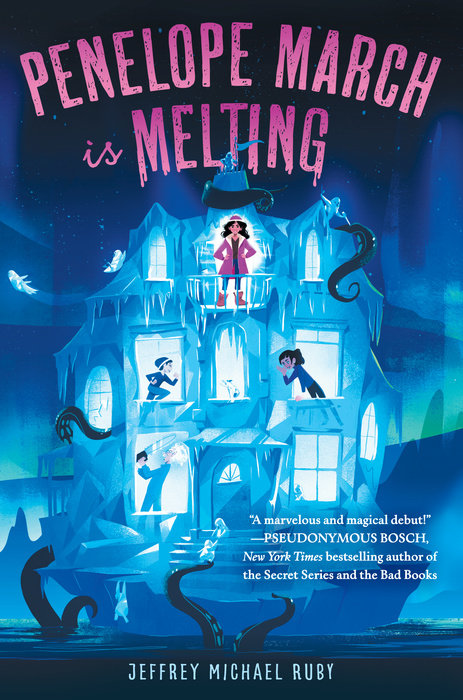
Something sinister has come to Glacier Cove, an icy-cold town that sits on top of an iceberg  . Nothing bad ever happens here. Until now. And it’s up to Penelope March to stop it. 
 
Mmm-hmm, that Penelope—the bookworm who lives in the ramshackle house with her brother, Miles. The girl with the mom who—poof!—disappeared. The one everyone ignores . . . except strange Coral Wanamaker, a tiny thing with raven-black hair and a black coat.
 
When Penelope meets someone who seems to know secrets not only about Glacier Cove but about Penelope herself, she and Miles are pulled into an ancient mystery. Together, they’ll face the coldest, cruelest enemy ever known. Looks like the girl who only reads about adventures is going to start living one.

Magic cookies! Volcanoes! Penguins! Sea monsters! And a girl hero with the strength and imagination to spring into action.

Excerpt

CHAPTER 1

Years ago, scientists spotted a strange iceberg floating a hundred miles off the coast of Antarctica. That part of the world is full of icebergs, so one off by itself in the middle of nowhere isn’t so odd. The odd part is what the scientists found when they studied satellite images of the iceberg.

It was hard to tell from the grainy photos, but there appeared to be people living on the iceberg. A whole town, with roads and cars and houses. A school and a church. One image seemed to show a man walking a dog.

Three countries—­the United States, Argentina, and Japan—­sent explorers in small planes to the coordinates where the iceberg had been spotted. All three found nothing. The American and Argentinean planes returned with no answers; the Japanese plane never returned. Whether the iceberg had continued to float farther out into the ocean, or sunk, or melted, no one knew. But it was gone. As disappointed as they were, the scientists moved on to projects more sensible than looking for populated ice­bergs.

Penelope March woke up in her hammock with her lips stuck to page 287.

Most mornings, she opened her eyes to find a book over her face or tucked in her arm or under her head and serving as a terribly ineffective pillow. But on this particular morning she had to separate her dry mouth from the page. Painful as it was, far worse was the notion that she had only fifty-­one pages left and would have to finish it later.

Penelope was twelve years old and loved books. Magazines. Signs. Instructional manuals. Anything with words, really. Her fingers often grabbed whatever was closest without her telling them to, like the time at the doctor when her hands got so itchy she spent an hour reading a pamphlet about the dangers of pancreatitis.

But Penelope especially gravitated toward books that included a “plucky heroine,” a brassy and clever girl who saved the day using nothing but her wits and cunning. She was currently reading The Impossible Glories and Misfortunes of Nicola Torland, M. Winston McCann’s thick and unforgiving book about an orphan who woke up with one of her ears missing and spent the next twenty-­eight chapters figuring out who, why, and how. By the end of part one, Nicola Torland had become a double agent, a world-­class archer, and the most respected philosopher in her country. And she was only fourteen. And had one ear.

Penelope examined her reflection in the bathroom mirror. She had two healthy ears and she had not yet become much of anything. She’d studied her own face so many times—­the big eyes, the rowdy mop of hair, the chin so wide the freckles on one side did not seem to know about the freckles on the other—­that she could no longer tell if she was pretty or hideous or somewhere in between. And she had tried desperately to stop caring.

She gave up and opened the medicine chest in search of toothpaste. Taped to the toothpaste inside the medicine chest was a note in blocky handwriting:

What word becomes shorter when you add two letters to it?

Penelope smiled. Oh, Miles.

Her little brother had been leaving riddles and jokes for her lately. Penelope and Miles shared a room in a tiny house on Broken Branch Lane, a drab street tucked into a valley on the south side of Glacier Cove. Their room had two hammocks, a desk, a little window, and not much space to maneuver. Privacy was out of the question.

Even on their modest block, neighbors whispered about the poor state of the family’s house, a ramshackle structure that appeared to be held together by little more than spit, tape, and luck. On unpleasant days, it waved and buckled like drapes in the wind. “That shack,” sneered their next-­door neighbor, Mrs. Shaw, to her husband. “I thought last night’s storm would send it flying away, with the three of them inside it.”

Though the house embarrassed their father to no end, Penelope and Miles gave no indication that it bothered them. They had never known anything different. Both were simply grateful for the roof over their heads.

Glacier Cove did not qualify as a wealthy town, but some inhabitants certainly had more than ­others. The lucky ones dressed in nicer clothes, ate better food, lived in larger homes. However, even the lucky ones had to admit that Glacier Cove did not live up to its promising name. Sure, there was the Ice Lantern Festival in December, when every citizen over the age of six lit their own homemade orb, charging the sky with a rich orange glow that lasted for ten glorious minutes if it wasn’t a windy night. And every other February, there were the Deep-­Freeze Games, a grand extravaganza of athletic competitions.

But the town was cold and dreary, and the snow that fell was not a peaceful, soft white but rather was rough and gray. If a child was foolish enough to try catching a snowflake on his tongue, he usually got an ice pebble in the eye. If you fell asleep with a runny nose, which was pretty much always, you woke up with a boogersicle. As you can imagine, dealing with a boogersicle that’s been forming on your face for nine hours is not an ideal way to start your day. Most people prefer breakfast.

In Glacier Cove, that breakfast usually included turnips, which grew in abundance, regardless of the season. How could a place so miserably cold, where the ground had been covered with thick layers of ice for as long as anyone could recall, produce so many turnips, which only grow in warm climates? The truth was, no one knew, and no one questioned it. Local scientists had taken advantage of the oddity and developed ways to use turnips to produce both gasoline and electricity. This was perhaps the town’s greatest miracle, unless you count the time the Funkhauser twins got frozen inside their chimney for six hours and only broke free by peeing on each other.

But Glacier Cove had floated alone in the middle of the ocean for as long as anyone could remember. In spite of the people’s ingenuity, they had a blind spot when it came to exploration. If there was a larger world out there, they certainly didn’t wish to brave the icy waters to find out.

Instead, they ate their turnips and wore their coats outdoors and indoors. For twenty-­three hours and fifty-­nine minutes a day, they bundled up in gloves and hats, shivering and sniffling.

The other minute was even worse, because that was when the people of Glacier Cove showered. During that dreadful sixty seconds, off came layer upon layer of clothes, which smelled like a mix of dried sweat and rotting turnips. The typical Glacier Covian would turn on the shower, which spat out thick blasts of freezing water, and he would jump around and shriek like a blind baboon while he fumbled for the soap, which also smelled like turnips, to rub against various unpleasant parts of his pasty skin that ended up splotchy and irritated, angry at even a minute of exposure to the brutal air.

You don’t want to know about their baths.

After a frosty shower, Penelope walked into the kitchen with Nicola Torland tucked under her arm. She found her brother and father eating identical breakfasts: a bowl of Turnip Flakes, a glass of turnip juice, and a turnip. They had set the same breakfast for her.

“So, today’s riddle,” Miles said over the scrape and ding of spoon to bowl. “What word becomes shorter when you add two letters to it?”

Penelope knew it was a trick question, like all Miles’s riddles were. But the more she thought about it—­Shorter? How was that even possible?—­the more her head hurt.

“Pen, Pen, Pen,” Miles chided through a goofy grin that could not be stopped by the heaps of cereal he was shoveling into his mouth. “I’m disappointed in you.” He glanced at Penelope’s book. “Did you know M. Winston McCann wrote naked? Every day, he took off his clothes and gave them to his wife. Then he locked himself in his room to write.”

“Why?”

“To keep himself from going to the pub.”

“Eat your breakfast,” mumbled their father, a large man with bloodshot eyes and a hurricane of a beard. He’d grown accustomed to their inside jokes, though he usually found himself on the outside. “You’re going to be late for school.”

“Come on, Miles!”

They tramped through the snow on Silver Sky Road, Penelope’s younger brother a good ten paces behind her. All elbows and ears, Miles tried to work himself out of a pair of handcuffs he’d found behind the police station last week. He had wriggled the handcuffs over his head with his double-­jointed arms, but his bulky gloves certainly didn’t help. “Hey, wait for me!” he called. “Look! I’ve almost got it.”

Though a year younger than Penelope, Miles stood roughly the same height. Old ladies constantly mistook them for twins. But he and his sister were very different.

Miles liked books just fine; he just happened to prefer people. And people liked Miles, because he was always himself, and that self was happy. You know how newborn babies enter the world crying? Baby Miles did not cry. He slid out, wet and wild, rubbed his eyes, and glanced around the delivery room as if searching for answers. Finding none, he broke into what would be called a toothy smile if he’d had any teeth. It wasn’t until a nurse cut the umbilical cord that Miles began wailing, and that seemed more out of confusion. Hey, isn’t that part of my body you’re throwing away there? When he realized he didn’t need the cord after all, his grin returned.

On Silver Sky Road, even after wincing at the grotesque snap of his shoulder—­which Miles had popped out of its socket so he could pick the handcuff lock with a paper clip—­he smiled. He fumbled for a moment; then, click, the cuffs slipped into the snow at his feet.

As he reached down, though, Miles’s smile faded. His body froze as his eyes locked on something in the distance.

“Miles? Are you okay?”

Penelope followed her brother’s gaze across Silver Sky Road, past a bleak expanse of dirty slush, and the daily stab of fear nicked her chest.

The Ice House.

The kids had heard all the stories. The Ice House—­a big, creepy mansion with an ice roof, ice walls, an ice door, ice windows, an ice driveway, and an ice porch with a swing forever frozen in place—­had been built by a black-­toothed vampire who slept in an igloo in the basement, guarded by a dog named Wolfknuckle that barked like a foghorn and bit like a tiger. If that wasn’t scary enough, a pair of testy ice gargoyles scowled from the roof at anyone who dared catch their hollow eyes. The only thing that moved was a giant clock over the front door, tick-­tick-­ticking to mark the minutes you had left should you dare to enter.

Some said the house’s halls were decorated not with furniture but with children. The foolish ones who had ventured inside, usually on a dare, had immediately turned to ice, their faces frozen forever in shock and fear at whatever horrible thing they had seen in their last moment.

All anyone knew for certain was that a strange old man named Buzzardstock lived there and that he had thin green hair and a mole on his nose with so much hair of its own that it looked like a small broccoli. On this particular morning, the thought of Buzzard­stock’s broccoli mole was enough to convince Penelope to avoid the Ice House.

Miles bent to pick up the handcuffs, slow and quiet, so as not to risk disturbing Wolfknuckle. He bit his lip and popped his rubbery shoulder back into its socket.

“Let’s go,” said Penelope, grabbing her brother’s hand.

The siblings ran all the way to school, their boots squeaking in the fresh snow. On the way, Penelope noticed a small crack in the ice that perpetually covered Archibald Fountain in front of city hall, but she gave it no thought. She and Miles arrived sweaty and gasping for breath, just two more noisy children dashing up the school steps two at a time to make it to first period.

The bell rang, teachers tapped their chalkboards until things quieted down, and another day at Glacier Cove Academy began.

The whole school might not have been so carefree had they known that right beneath them, something terrible was happening. And if they continued with their lives as they were, they would all be dead within the year.

Excerpted from Penelope March Is Melting by Jeffrey Michael Ruby. Copyright © 2017 by Jeffrey Michael Ruby. All rights reserved. No part of this excerpt may be reproduced or reprinted without permission in writing from the publisher.

Buy on Amazon | Barnes and Noble

About the Author

Jeffrey Michael Ruby is the chief dining critic of Chicago magazine. He is the coauthor of Everybody Loves Pizza: The Deep Dish on America’s Favorite Food, and has also played college basketball in Ireland, assisted in an autopsy, and sumo wrestled in front of 20,000 people in New Jersey. He lives in Chicago with his wife and three children. Penelope March Is Melting is his first novel. Visit Jeffrey at jeffrubymedia.com, @dropkickjeffy on Twitter, and instagram.com/dropkickjeffy.

Spotlight: Would You Dare. . . ? by Min Flyte and Illustrated by Matt Hunt

9780763696191.jpg

When a plucky little jungle explorer sets out on an adventure, he meets all sorts of scary creatures, from a great big elephant to the scariest-looking vampire bat you’ve ever seen! Children will love lifting the flaps to reveal the frightening animals lurking in the jungle and deciding which route to take. Would you dare to sail past ferocious piranhas or a truly terrifying crocodile? But that’s not all — there’s something scary following the explorer, too! What can it be?

Buy on Amazon | Barnes and Noble

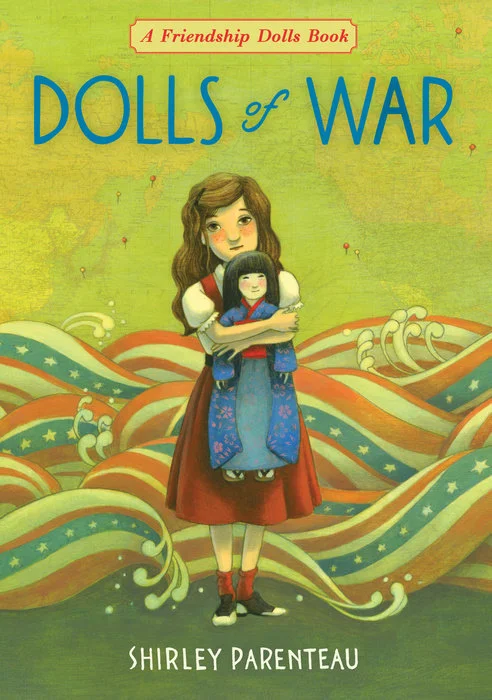
Spotlight: Dolls of War by Shirley Parenteau

9780763690694.jpg

When America and Japan go to war, will Macy’s feelings for her beloved Japanese Friendship Doll change? Here is a moving addition to the Friendship Dolls series.

In 1941, eleven-year-old Macy James lives near the Oregon coast with her father, the director of a small museum. Miss Tokyo, one of fifty-eight exquisite friendship dolls given to America by Japan in 1926, is part of the museum’s collection — and one of Macy’s most treasured connections to her mother, who recently passed away. When the Japanese bomb Pearl Harbor, many of Macy’s neighbors demand that Miss Tokyo be destroyed. When her brother joins the Navy and devastating news from the war begins to pour in, Macy starts having doubts — does remaining loyal to Miss Tokyo mean being disloyal to America? Bringing the story of the Friendship Dolls forward to World War II, Shirley Parenteau delivers another thoughtful historical novel inspired by a little-known true event.
Buy on Amazon | Barnes and Noble

Spotlight: I Won’t Eat That by Christopher Silas Neal

9780763679095.jpg

Cat has no idea what he wants — until it’s right in front of him.

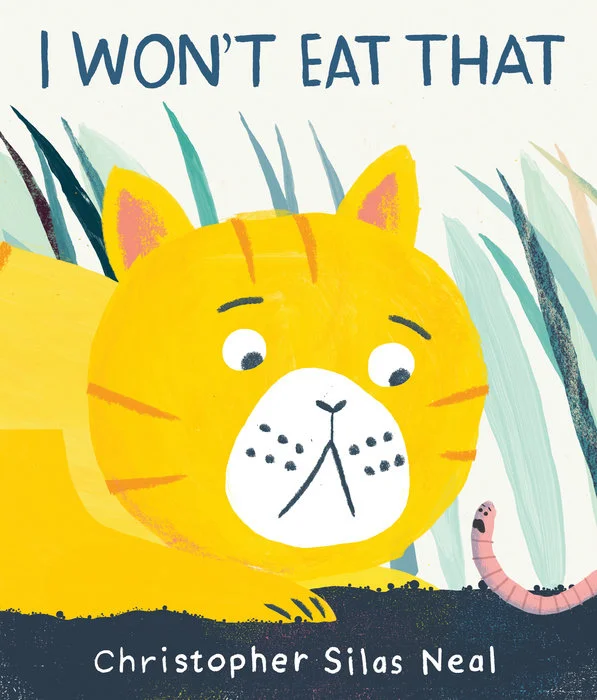
Cat is very hungry. But cat food is dry and dull and not at all yummy. So what in the world should Cat eat instead? Turtle eats worms, but worms are too wiggly. Fox eats rabbits, but rabbits are too bouncy. What everyone else loves to eat is thoroughly unappetizing to Cat. Until, by chance, the thing Cat really wants to eat appears right in front of him. What could it be? Christopher Silas Neal’s retro-style illustrations and easy-to-follow story are the perfect match for even the pickiest eaters — and the patient souls that feed them.

Buy on Amazon | Barnes and Noble

Spotlight: A Song for Snow by Lita Judge

A young owl experiences the magic of a first snowfall—the quiet wintery wonder, the pristine beauty, and snowballs!—in this follow-up to the adorable Hoot and Peep

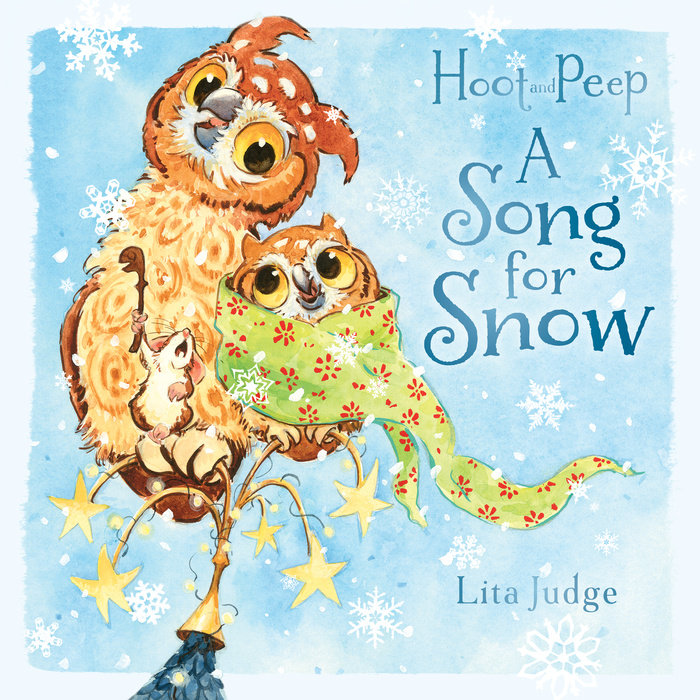
It’s Peep’s first winter, and it’s going to snow very, very soon. Peep has so many questions for her older brother Hoot: Does snow drop, polppety splop, like the rain’s song? Does it scrinkle scrattle like falling leaves? But Hoot can’t remember snow very well. The one thing he knows for sure is that it is worth waiting for.

But Peep doesn’t have his patience, and as she flies around the gorgeous Paris skies, she tries her best to make up her own snow song. But once those first snowflakes start to fall, Peep realizes just how wise her older brother really is for waiting…and just who she wants to cuddle up to when the snow starts to really sing.

With all the wonder and the joy of a first snow day, and perfect for fans of The Quiet Book and Little Owl’s Night, this tender follow-up to Hoot and Peep is certainly worth waiting for, too.

Buy on Amazon | Barnes and Noble

About the Author

Lita Judge is the author/illustrator of over a dozen picture books, including the modern classic Red Sled, the Oppenheim Toy Portfolio Gold Medal winner Born to Be Giants, and the IRA Children’s Book Award winner One Thousand Tracings. Lita lives with her husband, two cats, and a little green parrot named Beatrix Potter in Peterborough, New Hampshire.

Spotlight: Furthermore by Tahereh Mafi

9781101994771.jpg

Inspired by her childhood love of books like A Secret Garden and The Chronicles of Narnia, bestselling author Tahereh Mafi crafts a spellbinding new world where color is currency, adventure is inevitable, and friendship is found in the most unexpected places.

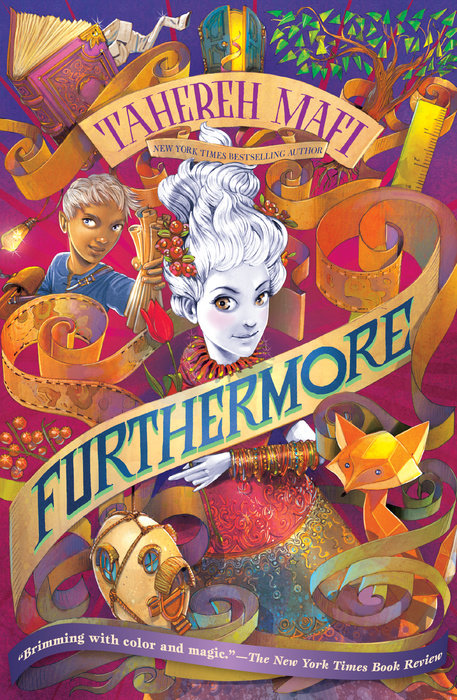
There are only three things that matter to twelve-year-old Alice Alexis Queensmeadow: Mother, who wouldn’t miss her; magic and color, which seem to elude her; and Father, who always loved her. The day Father disappears from Ferenwood he takes nothing but a ruler with him. But it’s been almost three years since then, and Alice is determined to find him. She loves her father even more than she loves adventure, and she’s about to embark on one to find the other.

But bringing Father home is no small matter. In order to find him she’ll have to travel through the mythical, dangerous land of Furthermore, where down can be up, paper is alive, and left can be both right and very, very wrong. It will take all of Alice’s wits (and every limb she’s got) to find Father and return home to Ferenwood in one piece. On her quest to find Father, Alice must first find herself—and hold fast to the magic of love in the face of loss. 

Excerpt

The sun was raining again.

Soft and bright, rainlight fell through the sky, each drop tearing a neat hole in the season. Winter had been steady and predictable, but it was quite poked through now, and spring was peeking out from underneath it. The world was ready for a change. The people of Ferenwood were excited for spring, but this was to be expected; they had always been fond of predictable, reliable sorts of changes, like night turning into day and rain turning into snow. They didn’t much care for night turning into cake or rain turning into shoelaces, because that wouldn’t make sense, and making sense was terribly important to these people who’d built their lives around magic. And squint as they might, it was very difficult for them to make any sense of Alice.

Alice was a young girl and, naturally, she was all the things you’d expect a young girl to be: smart and lively and passionate about any number of critical issues. But Alice was also lacking a great deal of something important, and it was this—her lack of something important—that made her so interesting, and so very unusual. More on that soon.

***

The afternoon our story begins, the quiet parts of being alive were the busiest: wind unlocking windows; rainlight nudging curtains apart; fresh-cut grass tickling unsocked feet. Days like this made Alice want to set off on a great adventure, and—at almost twelve years old—she’d very nearly figured out how to fashion one together. The annual Surrender was only a single pair of days away, and Alice—who was determined to win—knew it was her chance to set sail for something new.

She was on her way home now, occasionally peeking over her shoulder at the glittering town in the distance. The village square was undergoing no small transformation in honor of the upcoming festivities, and the clamor of instruction and construction rang out across the hills. Alice jumped from flagstone to flagstone, her face caught in the rainlight glow, her hands grasping for a touch of gold. The town’s excitement was contagious, and the air was so thick with promise Alice could almost bite into it. She smiled, cheeks appled in delight, and stared up at the sky. The light was beginning to spark and fade, and the clouds were still hard at work weaving together, breaking and building as they had been all week. One more day of this, Alice thought, and everything would change.

She couldn’t wait.

She’d moved on to the main road now, a dirt path flanked by green. She held tight to her basket as neighbors passed, nodding hello and waving good-bye, happy to have remembered her clothes today. Mother was always bothering her about that.

Alice plucked a tulip from her pocket and bit off the top. She felt the petals pressing against her tongue; she could taste the velvet, the magenta of it all. She closed her eyes and licked her lips before biting into the stem. Not quite green but brighter, more vibrant; there was a song in that color and she could feel it singing inside of her. She bent down to greet a blade of grass and whispered,Hello, me too, me too, we’re still alive.

Alice was an odd girl, even for Ferenwood, where the sun occasionally rained and the colors were brighter than usual and magic was as common as a frowning parent. Her oddness was evident even in the simplest things she did, though most especially in her inability to walk home in a straight line. She stopped too many times, wandering off the main path, catching deep breaths and holding them, too selfish to let them go. She spun until her skirts circled around her, smiling so wide she thought her face would break and blossom. She hopped around on tiptoe, and only when she could stand it no longer would she exhale what wasn’t hers to keep.

Alice would grow up to be a wildflower, Father once said to her. A wildflower in flowing skirts, braided hair dancing from head to knee. She’d always hoped that he was right, that maybe Mother had gotten it wrong, that Alice was never meant to be such a complicated thing with all these limbs and needs. She often wanted to plant herself back into the earth to see if she’d grow into something better this time, maybe a dandelion or an oak tree or a walnut no one could crack. But Mother insisted (the way she often did) that Alice must be a girl, and so she was.

Alice didn’t like Mother very much. She found her a bit old and confusing, and didn’t like the way Mother worried about walls and doors and the money that put them there. But Alice loved Mother, too, in the way that children did. Mother was soft and warm, and Mother’s smiles came easily when she looked at Alice. Anger and tears, too, but those Alice never cared for.

Alice gripped her basket tighter and danced down the road to a song she found in her ear; her toes warmed the earth, and her hair, too heavy for her head, tried to keep up. Her bangles mimicked the rain, simple melodies colliding in the space between elbows and wrists. She closed her eyes. She knew this dance the way she knew her own name; its syllables found her, rolled off her hips with an intimacy that could not be taught.

This was her skill, her talent, her great gift to Ferenwood. It was her ticket to greatness. She’d been practicing for years and years and was determined that it would not be for nothing.

It would not b—

“Hey there! What are you doing?”

Alice startled. Something tripped and fell, and she looked around in dismay to realize it had been her. Crumpled skirts and silent bangles, the rainlight gone from the sky. She was late. Mother would be upset again.

“Hey!” The same voice as before. “What are you—”

Alice gathered her skirts and fumbled in the dark for her basket, reaching blindly as panic set in. Don’t talk to strangers, Mother had always said—especially strange men.Being afraid meant it was okay to forget your manners. If you’re afraid, you never have to be nice. Do you understand?

Alice had nodded.

And now Mother was not here and she could not explain why, exactly, but Alice was afraid. So she did not feel the need to be nice.

The stranger wasn’t much of a man at all, it turned out. More like a boy. Alice wanted to tell him very firmly to go away, but she’d somehow gotten it into her head that being quiet meant being invisible and so she prayed that her silence would somehow make him blind, instead of louder.

Unfortunately, her wish seemed to work on both of them.

The sun had folded itself away and the moon was in no hurry to replace it. Darkness engulfed her. Alice’s basket was nowhere to be felt or found.

She was very worried.

Suddenly Alice understood all about being worried and she promised herself she would never judge Mother for being worried all the time. Suddenly she understood that it is a very hard thing, to be afraid of things, and that it takes up so much time. Suddenly she understood why Mother rarely got around to doing the dishes.

“Does this belong to you?”

Alice turned just a bit and found a chest in her face. There was a chest in her face and a heart in that chest and it was beating quite hard. She could hear the pitters, the patters—the blood rushing around in ebbs and flows.Don’t be distracted, she told herself, begged herself. Think of Mother.

But, oh.

What a heart.

What a symphony inside that body.

Alice gasped.

He’d touched her arm, so, really, she had no choice but to punch him. Her bangles were helpful in this regard. She punched and kicked and screamed a little and she wrenched her basket from his hands and she ran all the way home, out of breath and a little excited, so glad the moon had finally decided to join her.

***

Alice never did get to tell Mother her story.

Mother was so upset Alice was late that she nearly bit off her daughter’s hands. She didn’t give Alice a chance to explainwhy her skirts were dirty or why the basket had broken (only a little bit, really) orwhy her hair was so full of grass. Mother made a terrible face and pointed to a chair at the table and told Alice that if she was late one more time she would knot her fingers together. Again.

Oh, Mother was always threatening her.

Threatening made Mother feel better but made Alice feel bored. Alice usually ignored Mother’s threats (If you don’t eat your breakfast I will whisk you into an elephant,she once said to her, and Alice half hoped she really would), but then one time Alice took her clothes off at the dinner table and Mother threatened to turn her into aboy, and that scared her so dizzy that Alice kept on her outerthings for a whole week after that. Since then, Alice had often wondered whether her brothers had been boys to begin with, or whether they’d just been naughty enough to deserve being tricked into it.

***

Mother was unpacking Alice’s basket very carefully, paying far more attention to its contents than to any of her four children sitting at the worn kitchen table. Alice ran her hands along its weathered top, the bare boards rubbed smooth from years of use. Father had made this table himself, and Alice often pretended she could remember the day he built it. That was silly of course; Father had built it long before she was born.

She glanced toward his place at the table. His chair was empty—as it had grown accustomed to being—and Alice dropped her head, because sadness had left hinges in her bones. With some effort she managed to look up again, and when she did, she found her brothers, whose small forms took up the three remaining chairs, staring at her expectantly, as though she might turn their tunics into turnips. On any other occasion she would’ve liked to, had she been so inclined, but Mother was already quite mad and Alice did not want to sleep with the pigs tonight.

Alice was beginning to realize that while she didn’t much like Mother, Mother didn’t much like her, either. Mother didn’t care for the oddness of Alice; she wasn’t a parent who was predisposed to liking her children. She didn’t find their quirks endearing. She thought Alice was a perfectly functional, occasionally absurd child, but on an honest afternoon Mother would tell you that she didn’t care for children, never had, not really, but here they were. (There were plenty of nice things Mother had said about Alice, too, but Mother was never very good at making sure she said those things out loud.)

Alice picked out a blossom from her dinner and dropped it on her tongue, rolling the taste of it around in her mouth. She loved blossoms; one bite and she felt refreshed, ready to begin again. Mother liked dipping them in honey, but Alice preferred the unmasked taste. Alice liked truth: on her lips and in her mouth.

The kitchen was warm and cozy, but only halfheartedly. Alice and Mother did their best in the wake of Father’s absence, but some evenings all the unspoken hurts piled high on their plates and they ate sorrow with their syrup without saying a word about it. Tonight wasn’t so bad. Tonight the stove glowed lavender as Mother stoked the flames and tossed in some of the berries Alice had collected. Soon the whole house smelled of warm figs and peppermints and Alice was certain that if she tried, she could lick the air right out of the room. Mother was smiling, finally content. Ferenberries always succeeded in reminding Mother of happier times with Father, of days long ago when all was safe and all was good. The berries were a rare treat for those lucky enough to find them (they were a fruit especially difficult to procure), but in Father’s absence Mother had become obsessed. The trouble was, she needed Alice to find the ferenberries (I’ll explain why later), and Alice always did, because life at home had been so much better since the berries. Alice had been late and she’d been lazy, messy and argumentative, but she had never not come home with the berries.

She almost hadn’t tonight.

Alice always felt Mother was using her for the berries; she knew they were the only medicine that helped Mother’s heart in Father’s absence. Alice knew Mother needed her, but she did not feel appreciated; and though she felt sad for Mother, she felt more sorry than sad. She wanted Mother to grow up—or maybe grow down—into the mother she and her brothers really needed. But Mother could not unbecome herself, so Alice was resigned to loving and disliking her just as she was, for as long as she could bear it. Soon, Alice thought, very soon, she would be on her way to something better. Something bigger. The seasons were changing in Ferenwood, and Alice had waited long enough.

She would win the Surrender and she would show Mother she could make her own way in the world and she would never need a pair of stockings again. She would be an explorer! An inventor! No—a painter! She would capture the world with a few broad strokes! Her hand moved of its own accord, making shapes in her honey-laden plate. Her arm flew up in a moment of triumph and her paintbrush fork flew from her hands only to land, quite elegantly, in her brother’s hair.

Alice ducked down in her chair, the future forgotten, as Mother came at her with a ladle.

Oh, she would be sleeping with the pigs tonight.

Excerpted from Furthermore by Tahereh Mafi. Copyright © 2016 by Tahereh Mafi. All rights reserved. No part of this excerpt may be reproduced or reprinted without permission in writing from the publisher.

Buy on Amazon | Barnes and Noble

About the Author

Photo: © Tana Gandhi

Photo: © Tana Gandhi

Tahereh Mafi is the New York Times and USA Today bestselling author of the Shatter Me series and Furthermore. She can usually be found over-caffeinated and stuck in a book. You can find her online just about anywhere at @TaherehMafi or on her website, www.taherehbooks.com.