Spotlight: The Longest Story: How Humans Have Loved, Hated and Misunderstood Other Species by Richard Girling
/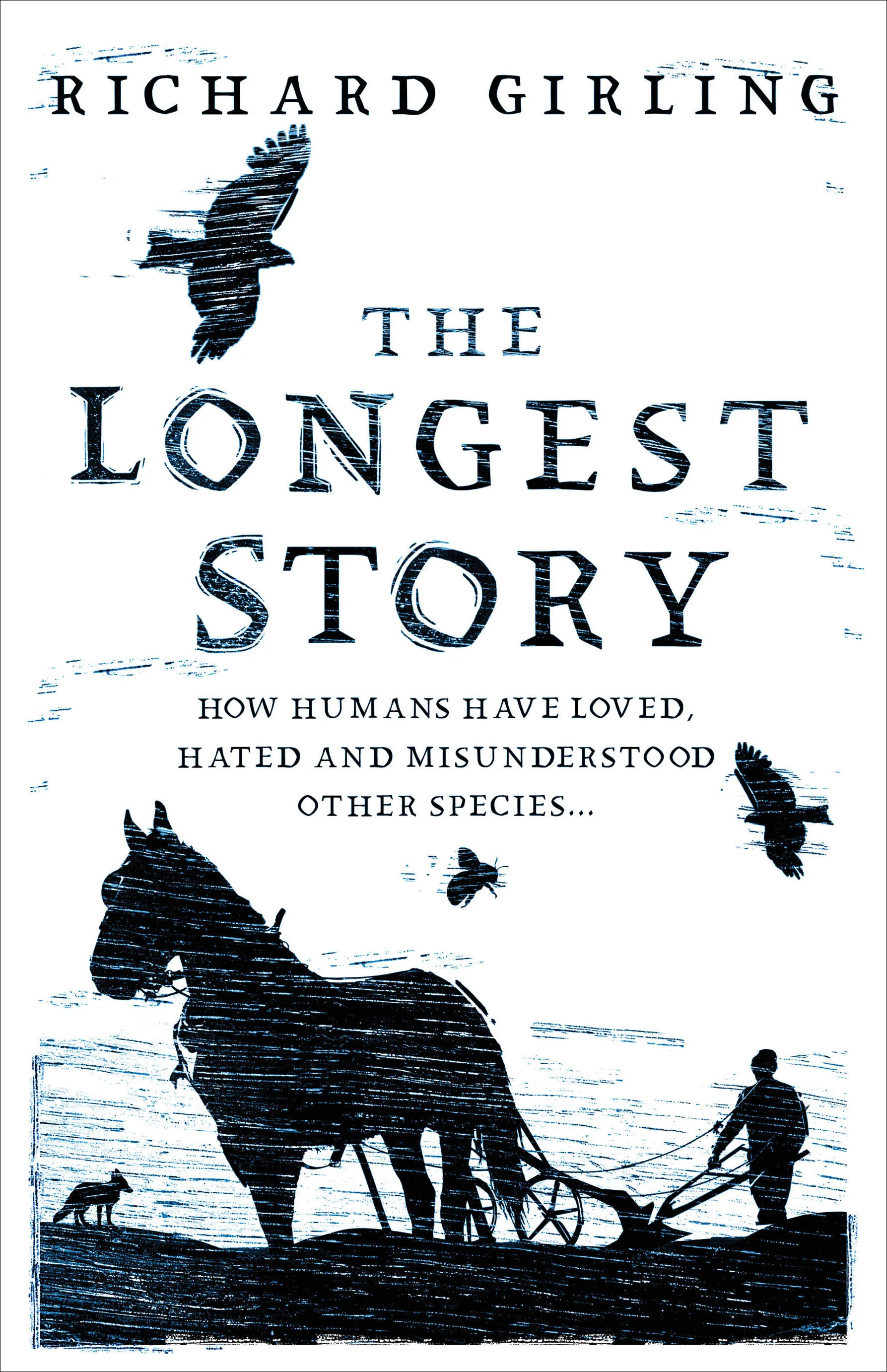
Without animals there would be no us. We are all fellow travelers on the same evolutionary journey. In The Longest Story: How Humans Have Loved, Hated and Misunderstood Other Species (releasing October 12, 2021) Richard Girling charts the love–hate story of people and animals, from their first acquaintance in deep prehistory to the present and beyond. The Longest Story reveals how and where our attitudes towards animals began – and how they have persisted, been warped and become magnified ever since.
In dazzling prose, The Longest Story tells of the cumulative influence of theologians, writers, artists, warriors, philosophers, farmers, activists and scientists across the centuries, now locking us into debates on farming, extinction, animal rights, pets, experiments and religion.
Excerpt
The Longest Story
We will walk together for an awfully long time. Man and beast. Them and us. Best friend, worst enemy. The hunter and the hunted.
In the beginning we are inseparable. We are them, they are us; all slime from the same swamp. It will take hundreds of millions of years for anyone to understand what is now happening: organisms dividing, crystallising into species, crawling towards the random moment that we will call the Creation. Relationships develop that are variously symbiotic, parasitic or murderous. Nothing stays the same. Everything is changing into something else, sprouting fins, wings, scales and fur to prepare each one for its niche. Legs appear. Small, weasel-like animals grow and stretch, and go on stretching until they can reach up into trees. They live in the forest, where their long arms and short legs are perfect for swinging through the branches and picking fruit. We are still with them, in them, alive but unborn. We travel with them when they move from the forest on to the plain, and stay with them as they begin to change their posture and their shape. Arms shorten, legs lengthen, necks stretch. Upright, on two feet, we walk until we are them no more.
For a while we lead parallel lives, us and all the others. We gather from the same plains and forests, eat the same fruit, run from the same predators. Time passes, lots of time, perhaps a millennium or two, and we have learned to make tools out of stone. It means we can kill things and eat meat. We grow stronger, more intelligent, and see our intelligence as a mark of our superiority over all other living things. It is how we are. It is how we are meant to be. Supreme.
More centuries go by, and now we are in the north, fighting the cold in central Europe. Hunting and gathering have a different rhythm here. We do not decide what we will eat: we take only what is offered. For it is not just the ice that has to be endured. Hunger, too, is an insatiable taker of life. There is no green abundance to be gathered. Even reindeer find it hard to stay alive when scraps of grass and lichen are all that winter provides. What saves us is our brains. Our heads have swollen with the growing weight of them, and we have learned to use them well. We think. We reason. We understand that actions have consequences. We know that if we steal from another person, then he will steal from us, and that he will kill us if he has to. We know also that if we give to that person, then he will give to us in return. More than this. We know that if we hunt together, we will have more to eat than if we hunt alone. Our tools and weapons are sharper now, which makes us better hunters, and the meat makes our bones and brains even stronger. We do not submit to fate. If the ice swallows our land, then we migrate like reindeer towards the sun.
Always, we hunt. We share our hunting grounds with wolves, and we can see how alike we are. Like us, they follow a leader and work in packs to kill animals bigger than themselves. Like us, they kill only what they need, share it among themselves and feed their young. But our brains are bigger than theirs. We understand them in ways they do not understand us. We know how important it is not to waste anything. We have found good uses for skins and horns and sinews as well as meat. Because we live in this way, because we have reasoned, we know there will always be enough animals left for us to hunt, and that their fur will keep us warm.
And we have magic. By painting animals on the walls of our caves, by creating them from nothing, we can make new life. By carving the head of a lion on to the body of a man, we can steal the lion’s power. We know there is a world of spirits that we cannot see.
Buy on Amazon Kindle | Hardcover | Bookshop.org
About the Author
"Richard Girling is an award-winning writer and the author of eight critically acclaimed books, including The Man Who Ate the Zoo. He has been centrally involved in environmental journalism since the mid 1970s, pioneering writing about climate change and species loss in national newspapers. He lives in North Norfolk."