Spotlight: At the Island's Edge by C. I. Jerez
/
An Iraq War veteran returns to Puerto Rico to reconnect with—and confront—the past in a heart-wrenching novel about duty, motherhood, and the healing power of home.
As a combat medic, Lina LaSalle went to Iraq to save the lives of fellow soldiers. But when her convoy is attacked, she must set aside her identity as a healer and take a life herself.
Although she is honored as a hero when she returns to the US, Lina cannot find her footing. She is stricken with PTSD and unsure of how to support her young son, Teó, a little boy with Tourette’s. As her attempts to self-medicate become harder to hide, Lina realizes she must do the toughest thing yet: ask for help.
She retreats to her parents’ house in Puerto Rico, where Teó thrives under her family’s care. Lina finds kinship, too—with a cousin whose dreams were also shattered by the war and with a handsome and caring veteran who sought refuge on the island and runs a neighborhood bar.
Excerpt
Chapter One
I hate the taste of desert earth and fuel exhaust.
The wind from the helicopter above us lifts the papers attached to my clipboard. After completing my walk-around, I scrawl a messy signature at the bottom of the page, finalizing the inspection of our Humvee. I pull at my sweaty uniform, already damp from another sweltering morning as we wait to leave the wire. Truth is, I’m exhausted, battle weary, and ready to end my second tour across the pond.
I knew what I was getting into returning to Iraq, but the situation with my son back home is worsening, making the normal pressures of war even heavier. I’d just graduated from high school the year I turned on the television and watched the towers fall on 9/11. I burned with protest, wanting to take a stand and fight back. We’ve occupied Iraq for six years now, and after last week’s losses, I’m beginning to wonder if I’d made the wrong choice.
I look out at the soldiers ahead, loading their packs and checking their own vehicles. They have families, too. Kids, just like me. Do they wonder if they’re missing out on what really matters—at home? I do.
Except right now I can’t think like that. Anything can happen during a convoy. If someone gets injured, I’ll need to operate at my best. Which means it’s time to tuck away my doubts and the images of the explosion during last week’s “routine” convoy. Worst case: life and death hinge on my ability to do my job.
Stay alert, stay alive.
I cap my pen, slide it into the pen pocket on my sleeve, and strap into the passenger seat of our truck. Reaching down, I tap my medical bag for assurance, transitioning for what still lies ahead.
I tally the vehicles, one behind another, seven trucks in total. Mine is second to last—the designated ambulance. The unit chaplain sits alone in the back seat. His graying temples indicate he’s probably been at this awhile.
The executive officer’s voice breaks through the static on the radio.
“Convoy in position. All soldiers prepare for departure.”
I tucked an extra stethoscope into one of my pant pockets and a roll of wound-packing gauze in the other. The last mission served as a painful lesson of all the things that could go wrong when you’re not readily prepared. I once ran out of nasopharyngeal airways for the number of wounded soldiers that needed them, the same mission where I reached for rusted scissors that didn’t allow for a clean and efficient gauze cut. I won’t let anything like that happen again.
Wiping the sweat from my brow, I close my eyes for a moment before glancing down at my watch. It’s only five thirty in the morning, but time is irrelevant here—it’s always hot. The Iraqi dry heat has turned the cab into an oven, and I’m baking to a golden perfection underneath my armored plates. Sergeant Fuentes, our driver, swings open his door and moves into position. He reaches down to the console between us and reviews the order detailing our mission.
“Hope you two hit the latrines, because we aren’t stopping for potty breaks,” he says with way too much cheer. “And remember, there’s a no-return policy on this cab. All sales are final once we hit the road.” He smiles when he turns to me. “Buckle up, buttercup.”
I give him a half-hearted smile in return. I can’t imagine it’s easy to keep a sense of humor under the circumstances. I certainly don’t. But that’s because I’m wondering whether my little boy will ever truly understand why I had to deploy, not once but twice. I don’t know much about my driver, but I know he doesn’t have kids. I’d already asked.
Fuentes just arrived from a sister unit south of us. Rumor is he had contact with the enemy, but survived and insisted on staying in country to finish his tour. He’s still getting his bearings shifting in his seat, pressing buttons, running the wipers.
The radio below the dashboard crackles to life, filling the truck with static.
“All clear,” the commander calls.
I release a deep sigh of relief. “Finally.” I look over at Fuentes. “I hope the rumors about your good luck are true. On our last mission, two soldiers didn’t make it back alive.”
“Don’t you worry, Sergeant,” Fuentes chides. “Only the good die young. Isn’t that right, sir?”
The chaplain looks over and smiles softly. “Oh, I don’t know about that. I think we all have a date, and when the time’s up, it’s up. Nothing anyone can do about it.”
I shake my head. “Sir, respectfully, I don’t agree. A lot of people die because they aren’t paying attention or refuse to take proper pre- cautions. Not me. I’ll make damn sure I get back home. My son, Teó, is counting on it.”
“Gotta lotta fight in ya, Sergeant,” he says, revealing his thick Irish brogue. “Good for ya. For us, too, I suppose.”
I do have a lot of fight. It comes from mornings like today when I wake up angry. Last night I used the remaining ten minutes on my pre- paid phone card to call home, only to hear Teó’s getting worse. It’s been nine months since his diagnosis of Tourette’s syndrome, and because I had to deploy only a month after we found out, I still don’t fully under- stand what we’re up against.
The military pediatrician had assured us his condition could be easily managed in my absence. He signed off on my deployment paperwork, stating Teó would likely grow out of this around his eighteenth birthday, like nine more years wasn’t a big deal. Nothing more than an adjustment, he’d said. Nothing to worry about.
The doctor was wrong. He never considered the bullies in the schoolyard, or the impact they and his absent mother would have on worsening his symptoms.
Tía Kika, one of my father’s two sisters and the only family I have in the continental US, left her life and her city—twice—and relocated to North Carolina to take care of Teó for me. Not wanting to worry me yesterday, she kept it light, but I could still hear what she wasn’t saying: His health is declining. He needs more medical care. He needs his mother.
And I need the army to provide that medical care.
My foot taps impatiently as each truck, front to back, confirms its readiness over the speaker. At our turn Sergeant Fuentes leans closer to the radio. “Vehicle six, ambulance, confirmed. I’m here with our medic, Sergeant Lina LaSalle, and the chaplain, Captain Michael McGinnis. Vehicle six, out.”
I like how he says my name. If I had to guess, I think Sergeant Fuentes is either Puerto Rican or Cuban. I’ll have to ask him once we get on the road.
I pull down my sunglasses and watch the tires up ahead rotate.
Here we go. One more convoy, Teó, then Mamá is coming home to take proper care of you.
Fuentes doesn’t look nervous. It’s as good a time as any to ask. “I heard an accent. Where are you from?”
He glances over at me and smiles. “Puerto Rico.” The two words are full of pride.
I return his smile. “Me too. Except I left twelve years ago. My parents sent me to live with my aunt so I could go to high school in Florida and pursue the American dream. I never went back.”
He frowns. His eyes shift over to the road.
I bet he thinks I’m a traitor for leaving the island and not returning.
What does he know?
I force myself to focus, knowing my duties to the US government force my little boy to once again wonder if I’ll make it back alive. Today it’s up to me to do exactly that.
###
It’s been nearly two hours, halfway there, and nothing but standard radio traffic. The engine’s hum is still the only sound on the quiet stretch of road. So far, so good.
My head nods with the hypnotic lull of sleep threatening to take over. The increasing heat makes fighting the drowsiness damn near impossible.
Breaking the hum, the truck swerves to the left, avoiding a large pothole. My helmet collides with the armored door, jostling me awake.
I look up to see beyond the vehicle in front of us. Buildings are scattered up ahead. The sun’s fiery rays are blinding, despite the standard-issue Oakleys.
Sergeant Fuentes radios in an update. “Vehicle six is green. We are all good.”
“Are we?” My newly racing pulse heightens my senses. The army has trained our bodies to shift in one instant from relaxed and sleeping on a convoy to battle ready.
Something doesn’t feel right. I can sense the danger like a storm cloud moving in fat with rain.
Fuentes leans his head down toward his shoulder playfully. “Relax. It was just a pothole. Sounds to me like you need a distraction. Tell me, Sergeant, why do they call you ‘Stone Cold’? Is the rumor true? Do you get ice cold when you’re in action?”
I keep my eyes straight ahead, watching the empty horizon, straining to see what no one else can.
“Come on,” he presses. “What did you do to get that nickname?”
He’s flirting. He’s definitely Puerto Rican. “Let me guess. You talked to the infantry guys, right?”
His smirk answers for him.
“And what did they tell you, Fuentes? Why did they say they call me ‘Stone Cold’?”
“Listen, in my defense, I wasn’t asking about you,” he says with a laugh. “When I told ’em I was driving the ambulance, they warned me to watch out for the sexy medic. They said your pretty brown eyes could melt hearts but that I shouldn’t be fooled because you were stone-cold ice.”
“I’ve been demoted. I was a stone-cold healer before. Do you want to hear the real story?”
“For sure.” He chuckles, but his focus remains straight ahead.
“So last week they cried and I didn’t when the unit’s rescue mutt, Sparky, died. I tried to help him, but it was too late. One of the infantry guys said I was stone cold. I guess the name stuck.”
He considers my recount. “So why didn’t you cry? No feelings, LaSalle?”
My chin rises. “I have feelings, Fuentes. I just don’t act on them when I’ve got a job to do. I tuck them away, exactly how my father taught me. I think it makes me a damn good medic.”
None of these guys need to know how I returned to my CHU that night and cried for the dog or whispered a prayer for his journey over the rainbow bridge. They don’t get that while it’s all right for them to cry in public, the standards are different for me. Crying in front of them would only push the narrative that I am weak, emotional, and a lesser soldier than they are. I need them to trust me with their lives. So I tuck it away until later, when I’m alone.
Fuentes turns and winks at me. “And you got great hands. I bet that makes you a damn good medic, too.”
I ignore him but find myself staring down at my long, slender fingers.
“Fuentes, don’t you have some pretty girl back home waiting for you?”
My question grounds him. He reaches up and wipes the sweat from his brow, smiling wistfully. “Yeah, actually, I do. She’s pretty special, for sure. I think she might be the one.”
I purse my lips. “I bet she has great hands, too.”
“Ah, come on, LaSalle. I’m messing around,” he teases. “Can’t blame a guy for noticing how pretty you are. But I’m harmless, I promise. Besides, I bet you get hit on all the time. I’m surprised your family in Puerto Rico didn’t push you to compete in the beauty pageants. You know how competitive we are when it comes to fighting for the Miss Universe title.”
His compliment makes me blush. “My mother did. At first. But I was a lost cause—too much of a tomboy. No surprise I ended up in combat boots and camouflage.”
Fuentes isn’t wrong about getting hit on. Guys here do flirt, maybe because I’m one of only four women in the unit. Some of them watch me, even whistle when I brush my long hair back into a bun. I have kept myself in good shape. My job demands it, and the guys notice, but it’s not for them; it’s for me. I need power and strength to execute a fireman carry on a wounded soldier.
The rhythm of the convoy changes. The engine’s hum shifts, accelerating and decelerating, buzzing alongside the clanging of the truck’s metal frame. We slow to a jostle along the graveled desert road. Clouds of gray dust splay across the windshield under darkening skies.
Sergeant Fuentes and I lock eyes, realizing at the same time that it’s not dust—it’s ash from the smoke ahead.
We are entering into danger. I feel it. The darkness means an explosion.
I sit up straighter, immediately picturing my son. I’m coming home to you, papito.
That’s it. That’s all I can allow.
I force my mind to go blank. If I want to stay alive and do my job, I must be focused.
The convoy slows even more. The truck ahead is closing in, forcing us to crawl to a complete stop. The darkened air against a blaring sun makes visibility noticeably difficult.
The radio crackles again. “Possible IED, one hundred meters ahead. Stop to deploy the robot.”
The robot sits in the large truck behind us. It can detect an explosive device and provide visuals to soldiers in harm’s way. This is not good.
I look up, channeling my grandmother, Mama Lina. I was only seven when she died. Ever since, I’ve prayed to the woman who loved me best.
Please protect us.
My head whips from left to right. I’m scanning the perimeter, forcing my breath to quiet so that I can hear anyone call for a medic. Stay alert, stay alive.
Sergeant Fuentes calls into the radio. “Vehicle six, requesting further instruction.”
It’s too late to turn back and change course. I’ve done this enough to know the commander will insist we press through.
The village outside Fuentes’s window is awakening. The danger from the explosion heightens the tension in the air. I can tell by the tightening in his jaw that he feels it, too.
I look through his window to see a commotion of movement from the village. My heart pounds but holds a steady pace—my training taking effect. Open doors from the stacks of rectangular clay buildings slam shut. Five or six groups of Iraqi men huddled together stand less than fifteen meters from where we’ve stopped. They sprinkle the landscape on street corners and storefront entrances, watching suspiciously as our convoy comes to a complete stop.
My watch reads 7:50 a.m.—too early for them to be out gathering. Something is up.
The cab crackles to life again as the commander’s voice breaks through. “Vehicle Six, make sure the medic is on standby. We have a visual. Possible IED.”
Now my toes and fingertips are tingling as my body releases adrenaline to keep me alive. “Ay bendito,” I whisper. This can’t be happening. Not now. I picture Teó in distress on the other side of the world. This is fear taking over. I can’t let that happen, not when I’m so close to going home.
I reach down and lift my medical bag onto my lap and scan my area of operation. I need to lean into my training to regain control. If I don’t, I’m the one stacking the odds in the wrong direction. I can’t do that. I take a deep inhale, the familiarity of my tools grounding me back into muscle memory. Don’t be nervous, Lina, be ready. Stone cold.
The radio crackles desperately. The convoy commander is now shouting. “All personnel dismount and set up a perimeter. We need to take a defensive position.”
Dismount? My head whips over to Sergeant Fuentes. “Is he for real? We are stopped, wide open. Those guys out there are watching us. This is not good, Fuentes. We are sitting ducks.”
“LaSalle, move,” he says, his words curt. “He gave a command.” Fuentes leans over the seat. “Sir, you too.”
The chaplain, silent until now, reaches for the door, transitioning into action. We all know the drills. There’s no ignoring the reality of our situation. This is a war zone, and our convoy is in danger.
I pull open my door, ignoring the pressure in my chest from fear’s grasp. After grabbing my stuff, I shuffle to the front tire on the passenger side of the truck, knuckles stretched tight from the death grip on my medical bag. I can’t see the village from this side, but my job is to listen and be ready when and if someone shouts for a medic.
The two-man team in the vehicle ahead move their truck forward before coming to a full stop and widening the gap between us. The truck’s lights shut off as the driver and the lieutenant beside him dismount.
Angry yells carried by desert winds echo in the distance, growing wilder. I can faintly hear the shouts from our unit commanding the villagers to get back and the angry Arabic responses. From what I gather, no one is really listening on either side.
An eerie calm comes over me as I begin to assess. I want to run back to the safety of my Humvee until we get the “all clear” and I can return home, where I’m needed most, but my system knows instinctually what to do. I lean in.
Scanning my right flank, I identify movement behind a crumbling stone wall approximately fifteen meters away on the opposite side of the village. It’s the only activity on this side of the convoy. My side. The hostility from the villagers grows on our left.
A puff of dirt floats up from the ground in the shuffling of loose rocks. I strain to focus, but the noise surrounding us distracts me. The lieutenant up ahead runs toward the beginning of the convoy, essentially leaving me wide open.
I shake my head. There goes the LT trying to play the hero.
My eyes move back, following the chalky cloud of dust to the dirt-smudged face of a young man still lacking the confidence of a seasoned adult. He struts a few steps forward with intention, but the look in his eyes is so similar to my son’s when he’s unsteady and afraid.
My heart pounds with familiarity. I’m on the other side of the world, and yet the stubbled skin of a beard not yet grown in and those large almond eyes, blinking with regret, remind me so much of how Teó will look during his transition to manhood.
With quivering steps, he moves around the stone edge, stopping to assess us. He looks right at me. My instincts are to run out and push him back where he will be safer, but I know that’s impossible. Moving from my position would endanger my unit. I strain to catch his gaze, ignoring the reality of what is right in front of me, and silently urge him to return behind the wall.
The rustling behind him draws my attention. There’s movement. Someone else is behind that same wall—yelling. An older man. He pushes the trembling volunteer forward.
The man’s face juts out. He’s still shouting in a tone that sounds like a command. I strain to listen. He hollers again in Arabic: “Ezhab!” Go. The man is urging, directing his protégé farther out into the open and into view.
The young man looks back. His eyes wide with terror, shaking his head. “La,” he says. No.
“Go,” the bearded man shouts.
I watch as he stumbles forward. My gaze narrows, and I pray that somehow his course will change at the last minute. It’s obvious he’s scared.
He looks back in my direction, raising his hands slowly and clasping them behind his head.
My eyes trail down, confirming what I already knew in my gut to be true. His soccer jersey rises, revealing the olive-green edges of a belt wrapped around his waist. A glint of foil exposes shiny duct-taped bricks tucked into the belt’s pockets.
The pounding against my ears intensifies, while I helplessly search the row of trucks and endless miles of sky and sand, wondering whether anyone else has noticed this threat. But the convoy is spread out now, and the only other person on my side is the unarmed chaplain facing the rear.
Darting back to look at the older bearded man, I see that his other hand is holding something much more dangerous. A cell phone. A detonator.
My stomach drops with a horrific realization. We are all going to die. Not only will Teó be left alone in this world by a father who abandoned him before he was born, but by a mother who broke her promise and never returned home. A second passes where I can’t tell the difference between my son and hers . . . whoever this boy’s mother may be.
No. He can’t take me from my son. I won’t let him.
My heart hurts at how much this young man looks like Teó. He still retains soft, rounded cheeks and the familiar messy dark curls. How can such innocence be the enemy? In many ways he’s still just a child with a world of possibilities ahead of him.
My eyes shoot over to the bearded man. I want him to be my target, but he is even farther back. No way I can get an accurate shot with a pistol at this distance.
I peer across the front of the truck, shouting, “Sergeant Fuentes, there’s a threat. One hundred meters at my three o’clock. He is wearing a vest.”
My sentence is capped with an explosion from the village in the opposite direction of the convoy from where I stand. The ground shakes below us as the skies darken further. I try to hold my breath and calm my pounding heart.
Fuentes peers from around the other side of the front bumper. “What, LaSalle? Can’t hear you.”
I open my mouth to shout again, but Fuentes is still hollering commands in my direction.
“Stay low. Snipers . . . Get ready to help.”
The voices around me are growing louder. A series of directions stream through the radio in the vehicle. Even with my door open, I can’t make it out clearly, but there’s something about the robot being deployed to the IED. I look back, but the team behind us is not coming across my side.
The young man takes a step forward.
He is crying. I can easily still see the little boy within the changing body of a man. Gray streams of dirt, sweat, and tears slide down his cheeks.
Please, I beg, please stop. Let me help you. I want nothing more than to rip that damn belt from his body.
Almost as if he can hear my thoughts, he hesitates.
Come on, kid. Don’t take another step. You don’t have to do this.
I can see it in his face. He doesn’t want to do this. Neither do I.
The man behind the wall shouts again. The resolve is too strong, his features shift, conjuring determination. He isn’t going to stop. I reach down to touch the 9-millimeter on my hip. If he won’t stop, then neither can I.
“Sergeant Fuentes!” I shout again, but there’s no response.
“No hay otra,” I whisper tragically. If I don’t do something right now, my son will be left an orphan.
I won’t let that happen.
“I’m moving, LaSalle,” Sergeant Fuentes finally says in the distance, but two shots—enemy fire from the village—punctuate the end of his sentence.
The chaplain and I drop conjointly to the ground.
In the distance, I hear, “Take cover! We need to get back!”
Another round of fire fills the air. “I’m hit. LaSalle, help.”
Sergeant Fuentes lands with a thud in front of our vehicle. I smell the iron rust of blood before I see it. But from my position on the gravel, I have a direct view beneath the cab. Our eyes meet. The light behind his expression is fading.
Oh God. No, please.
I rise to render aid, but from my periphery I see the young man push through his hesitancy and begin advancing toward us.
“Sir, Sergeant Fuentes is down. Help him,” I scream at the chaplain, pointing to the front of our cab.
The chaplain looks up and sees the young man slowly approaching and the obvious bulk at his waist. His eyes fill with the horrid realization I’d discovered only a moment before.
“Jesus, Mary, and Joseph,” he shouts, rising to his feet, crouching low. He runs past me to Sergeant Fuentes and grabs Fuentes’s rifle.
He doesn’t have the training to use it. I do. “Give me his weapon,” I yell.
The chaplain slides it over to me.
Bullets firing from both sides fill the skies.
I grab Fuentes’s rifle and lie on my stomach, elbows firmly planted in the dirt. I peer through the scope and settle on my sight picture.
The target has stopped moving. His hands are on his knees, his chest palpitating, leaning forward. His body is weighed down by the heavy explosives, giving me precious seconds to take proper aim.
I point the muzzle slightly above his head, ensuring an accurate shot, and focus inward, holding my breath.
Now, Lina. Do it.
I force the transition. He is not someone’s son; this is a target, a black silhouette on a white sheet of paper. An enemy combatant. A weapon.
I pull back my trigger finger, numb, and brace against the blast of my rifle.
My nose fills with the peppered scent of metal and sulfur as his skinny body falls to the ground.
A few seconds pass, then another rifle shot rings out. This time it comes from the vehicle up ahead. The team finally saw the bearded boogeyman behind the wall. He falls in a crumpled heap at the wall’s edge. The detonator tumbles to the ground beside him.
My head drops to my chest. It’s not over yet. The vest could still detonate.
I close my eyes and wait, picturing my sweet baby boy’s big blue eyes and wide, silly grin. If I’m about to die, I want to be thinking of my tesoro, my little treasure, when it happens.
A quiet breeze passes along the back of my neck. Still holding my breath, I wait, but mercifully, the young man’s vest does not detonate. I exhale, my lungs pounding. The sulfur of gunpowder combines with the scent of Sergeant Fuentes’s rusty blood, trailing beside me like a river in search of an ocean.
The rifle tumbles from my hands to the ground. My chest aches with the pressure of what I’ve just done. I swallow it deep and hold it down. I cannot break. Not yet.
“You saved us,” the chaplain says, kneeling above me.
I don’t believe him. The team ahead of us took out the real threat— the man with the detonator. What if I had just waited another couple of seconds?
“Look at me, Lina,” he says, using my first name.
I raise my head but don’t turn to face him. My focus is out on the horizon. Murderer. The word repeats itself over and over in my head.
I imagine a mother somewhere in the distance, mourning the loss of her son and all the dreams she held for his life. Over and over I see her son’s body crumpling to the ground.
I had to do it.
I had to stay alive for my son. I had no choice. I swallow and repeat the words in my head.
I had to do it.
My heart pounds at the realization that somewhere out there a mother has just lost her son. Now she will be forced to bury him and sever the living connection between them. And it is all my fault.
Murderer.
When I finally look over at the chaplain, his fingers move deftly down his face and across his chest. “You did the right thing,” he offers gently.
I know in my head I had no other choice . . . didn’t I? No. Teó needs me. I had to do it.
There’s a famous saying in Puerto Rico my father used to quote in his darkest moments: Tanto nadar para morir en la orilla. I’ve swum sofar, only to drown on the coastline.
Buy on Amazon Kindle | Audible | Paperback | Bookshop.org
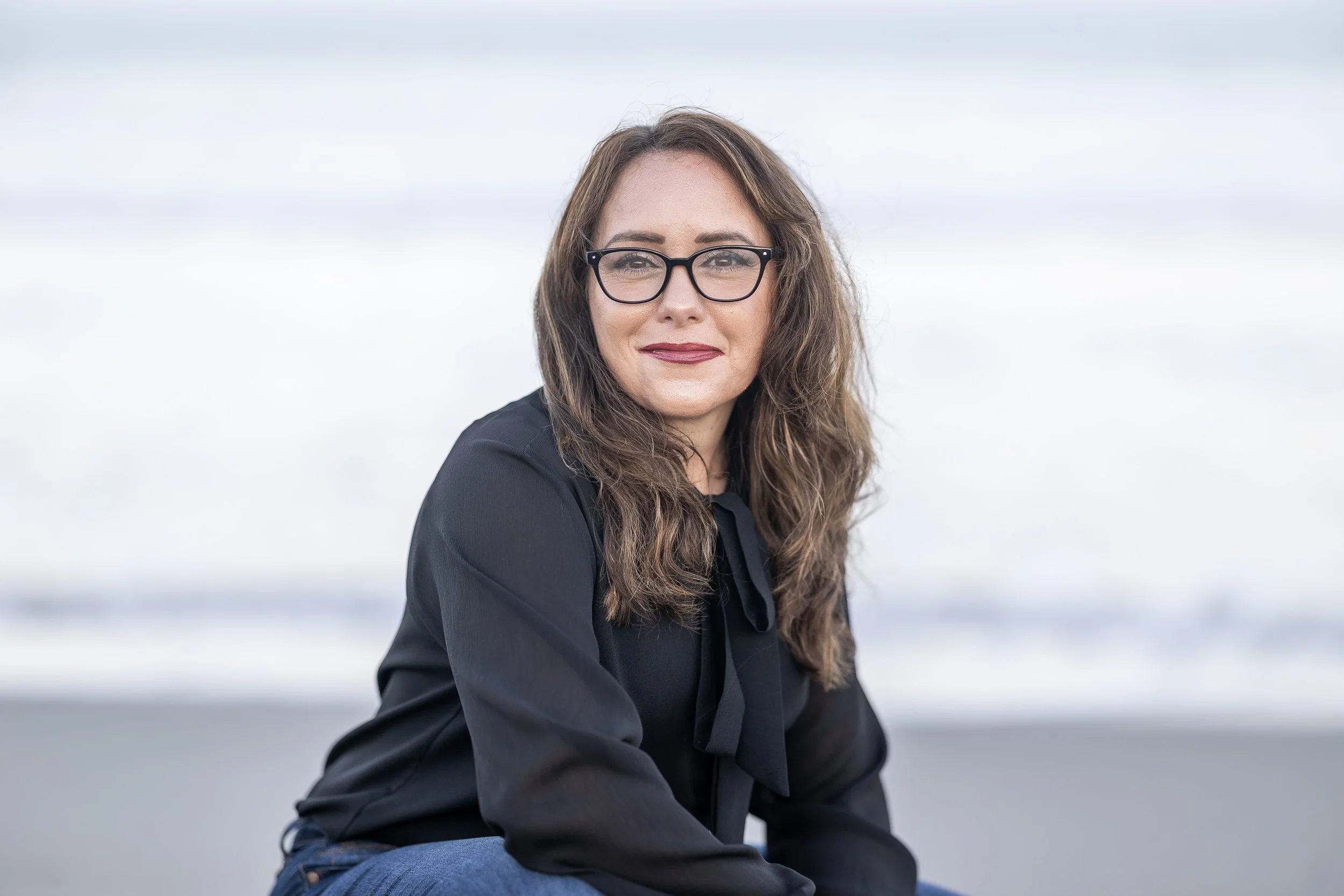
About the Author
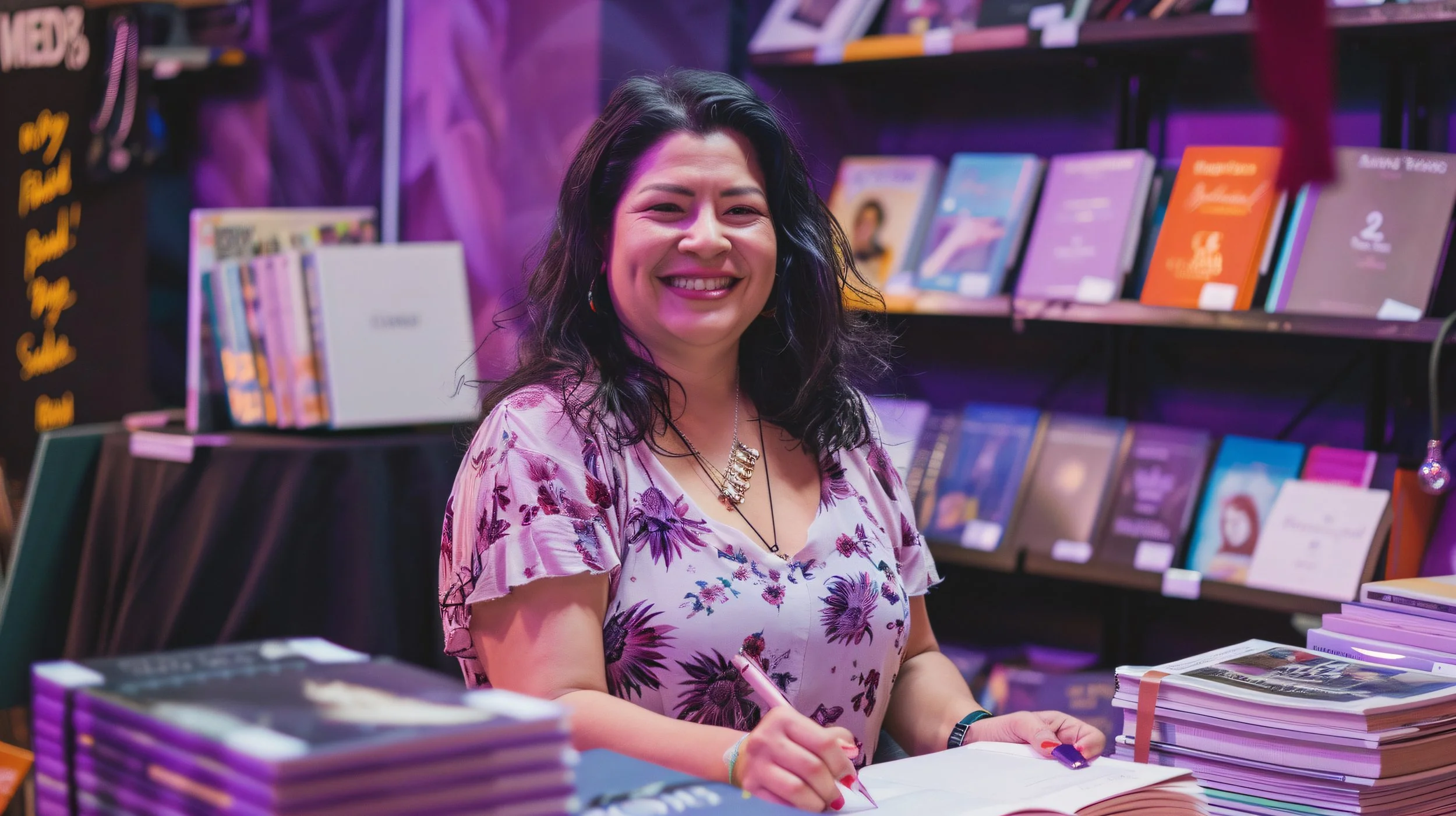
C.I. Jerez is a proud Latina who was born in Miami. Her mother, a native New Yorker, blessed her with both Puerto Rican and Irish roots, while her father, a Cuban immigrant, inspired her to embrace the culture of the Caribbean. These multicultural influences, including growing up on the West Texas border in El Paso, have shaped her desire to bring Latina and Latino characters to life in her stories.
After graduating from the University of Texas at El Paso, she commissioned as a signal officer in the US Army and rose to the rank of Major before transitioning out of the military. She holds an MBA from Webster University and a doctorate in international business from Liberty University. When not writing, she serves as cofounder and vice president for Ashire Technologies & Services Inc., a cybersecurity firm specializing in securing federal information systems. She lives in central Florida. For more information, visit www.cijerezbooks.com.