Spotlight: You Will Smile Again by Rodney D. Nielsen
/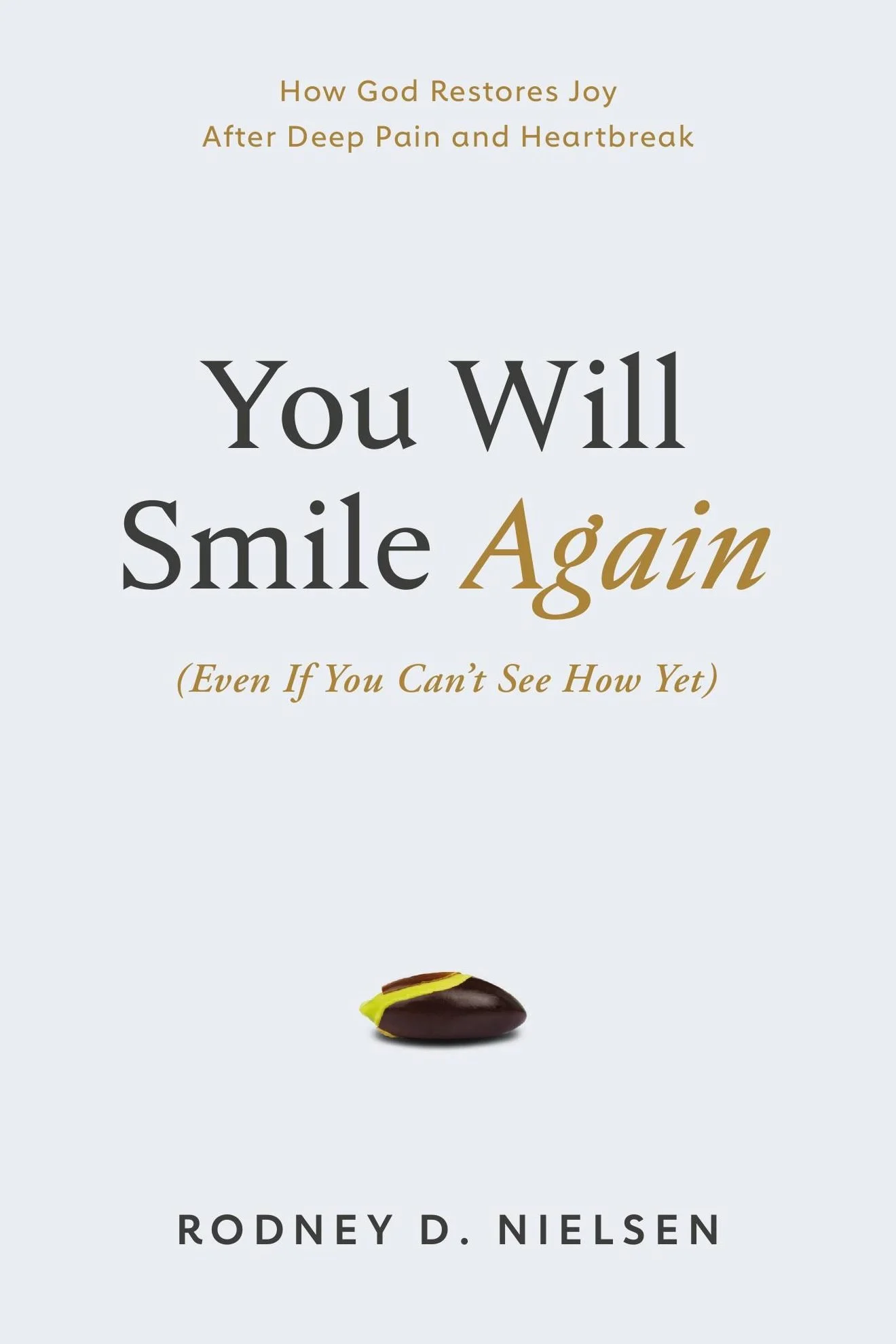
You will smile again. Even if tonight you can't see how.
It's 3 a.m. and the worst moment is playing again. You pray, you replay, you bargain - and in church on Sunday you smile like nothing happened. Hear this: you are not crazy, and you are not faithless. You are wounded. And you are seen.
After 32 years of walking with people through their darkest nights - and surviving his own (losing his sight at twenty, a heart attack at thirty-eight, financial collapse, and the marital betrayal that broke his world) - Pastor Rodney D. Nielsen wrote the book he wishes someone had handed him: not a memoir, not another pep talk, but a practical, biblical pathway out of pain.
Whatever broke your heart - the grief no one sees, a marriage ending in divorce or separation, rejection or betrayal by someone you trusted, shame, shattered dreams, even church hurt that left scars instead of healing - this book meets you in your pain and walks you home to joy:
Name your hurt honestly - and stop faking fine
Escape the traps that keep hurting people stuck
Discover where God actually is when it hurts most
Practice daily habits that rebuild joy, step by step
Heal specific heartbreaks - betrayal, grief, broken relationships - with guided prayers and exercises
Walk the built-in 30-day devotional until the smile that returns is real
God is close to the brokenhearted. Your story doesn't end with pain - and you don't have to walk out of it alone.
For anyone hurting tonight - and a gift that says what you can't find words for.
Excerpt
An excerpt from Chapter 2 of You Will Smile Again (Even If You Can't See How Yet)
Let me share a very personal story from my own family — my father's.
From the very beginning, his life seemed unwanted. He was born premature, weighing only two pounds. He was so tiny that the doctors weren't sure he would survive. While he lay in that hospital, fighting for his life, his own father tried to "solve" the problem by offering to give him away. He told his brother John, who had no children, that if John would just pay the hospital bill, he could have the baby. My grandmother refused. She put a stop to it.
But you can imagine how that kind of heart shows up later in words: "I tried to give you to my brother, but your mother wouldn't let it happen."
He grew up in a house ruled by an alcoholic, violent father and a mother so emotionally crushed by that abuse she could barely function. Home was not a refuge. It was a battleground.
When his father came home drunk, the atmosphere shifted in a moment. Rage filled the house. Words flew like knives. My grandfather would look at his own son and say things no child should ever hear:
"I regret the day you were born."
"You should go live on the streets and beg like a dog.”
Those sentences didn't just sting in the moment—they branded him. Somewhere inside, a quiet question kept forming: Am I really that worthless . . . or is there more to my life than this?
By about eight years old, my father started doing something no child should ever have to do: He tried to stand between his father and his mother. He would literally step into the path of violence to shield her from blows. Between the ages of eight and fourteen, he suffered at least five concussions and even a broken back. He was still just a boy, but his body already carried the marks of war.
As he moved into the latter part of his childhood and early teens, the violence in the home only escalated. In one explosive family altercation, he was stabbed by his elder sister. The injury was serious, and it took a very long time for him to recover physically. Emotionally, it was another brutal reminder that in that house, he was never truly safe—from anyone.
At one point, his own mother had him thrown into juvenile hall. She called him an out-of-control delinquent, not because he was some hardened criminal, but very likely because she couldn't cope with the pressure and chaos in the home.
When he was finally released, a police officer pulled him aside and said something that marked him for life:
"Son, the best thing you could ever do is, the minute you turn eighteen, get as far away from your family as you can."
Think about that. A stranger in uniform could see what his own parents would not: Staying there would destroy him.
By fourteen, he was basically a street kid. He never knew what it felt like to come home to warmth, kindness, or the steady love of a nurturing parent. He knew what it meant to be afraid. He knew what it meant to feel unwanted. But he didn't know what it meant to be cherished.
Looking at his life then, you would have assumed the ending: angry, broken, maybe addicted, repeating the same cycle. That's what the past was writing over his future.
But God was not finished with his story. At eighteen years old, my father walked into a church. No fanfare, no spotlight. Just a broken young man stepping into a sanctuary, almost out of options. That day, he felt something he had never felt before: love. Real love. The love of God and the love of God's people.
In that atmosphere, he surrendered his heart to Christ. He didn't just "try church" for a season. He gave his whole life to Jesus.
By the time I was seventeen, I realized something that still moves me when I think about it: The man I admired most in the world, the man I respected more than any other, my very best friend—was my father. In my entire lifetime, I have never heard my father speak violently to my mother, to me, or to my siblings. Not once. A man who grew up with violence in his ears and in his bones made a decision—by the grace of God—that it would stop with him. He refused to be what his father had been.
That doesn't mean it was easy. Wounds like that leave marks. They create triggers. Certain tones, certain looks, certain situations can suddenly pull old memories and old emotions to the surface. My father carried those memories. He fought those battles internally more times than I will ever know.
He also carried the physical side effects of that violence for the rest of his life. Those injuries didn't simply vanish. They left him with pain, limitations, and reminders in his own body of what he had survived. But here's the miracle: While his body never fully forgot those wounds, God healed the wounds in his spirit. The bitterness didn't take root. The hatred didn't win. The cruelty that was poured into him did not come back out of him.
He became the most loving, patient, and kind father I could have imagined. Growing up, he was the dad every kid on the block wished they had. I watched my friends gravitate toward him because they felt safe around him.
His life has been completely poured out for others—a life dedicated to serving people, caring for the hurting, loving the unlovable. The chain broke.
My father's life is living proof that your past doesn't have to become your children's future. If God could take that boy and turn him into the most loving father I've ever known, then you have to stop and ask: What might He want to do with your story?
Buy on Amazon | Bookshop.org
About the Author
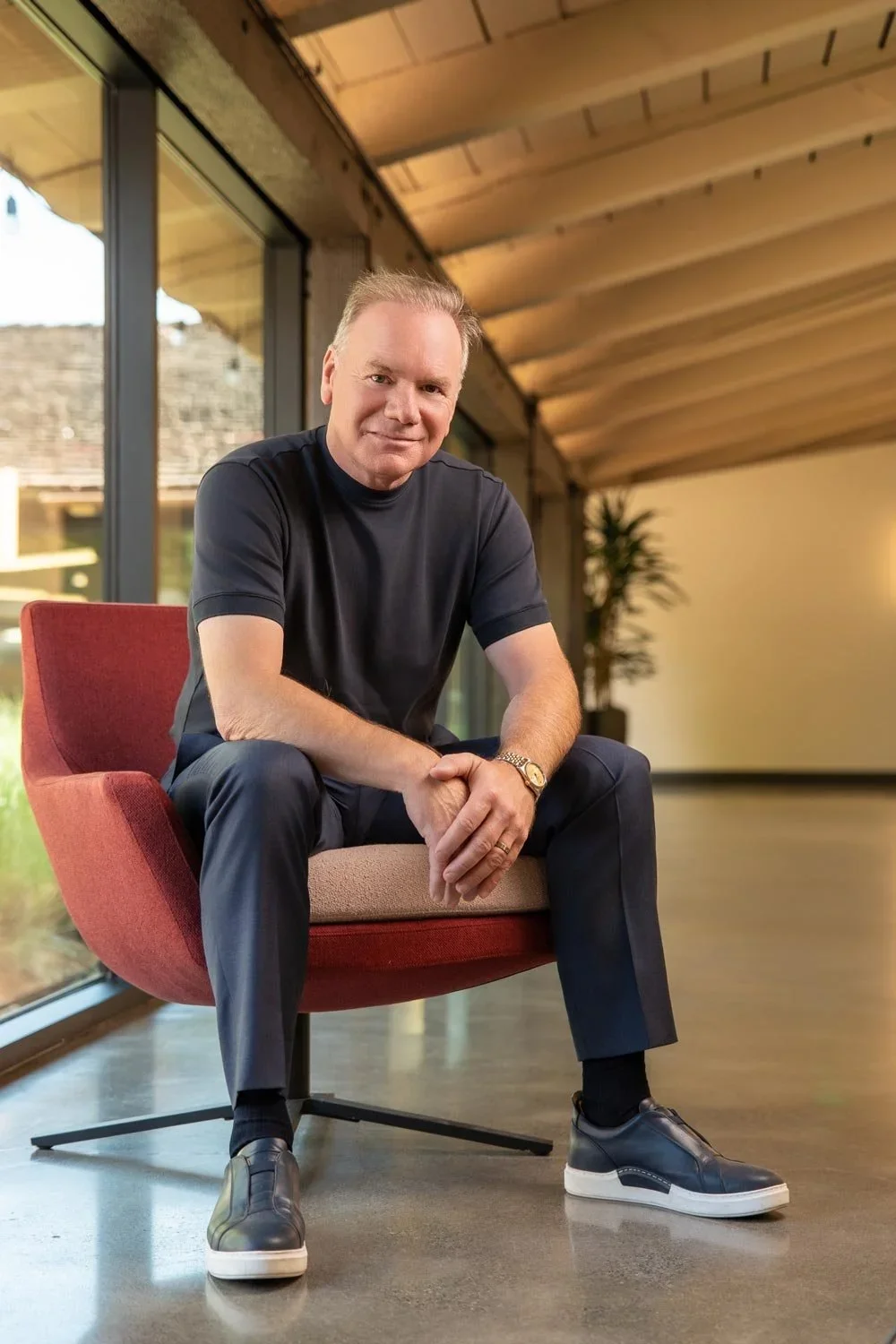
Rodney D. Nielsen writes for people trying to find their way back to joy after loss. He is the senior pastor of East Valley Pentecostal Church, one of the largest churches in California's Silicon Valley, and has spent more than thirty-two years sitting with grieving and brokenhearted people.
He has also been one of them. Rodney has walked through the loss of his health, the collapse of everything he had built, the end of his marriage, and grief he never expected to survive. He found his way back to joy.
You Will Smile Again (Even If You Can't See How Yet): How God Restores Joy After Deep Pain and Heartbreak is his first book. It details the path he took, written down so someone else can walk it. It offers a practical, biblical path back to joy after grief, betrayal, divorce, church hurt, and the kind of pain that does not resolve on schedule.
Rodney and his wife Jenale live in Northern California and have four children. When he is not writing or preaching, he is usually out on a long ride, working in the family walnut orchard, or tending a bonsai.