Spotlight: The Museum of Unusual Occurrence by Erica Wright
/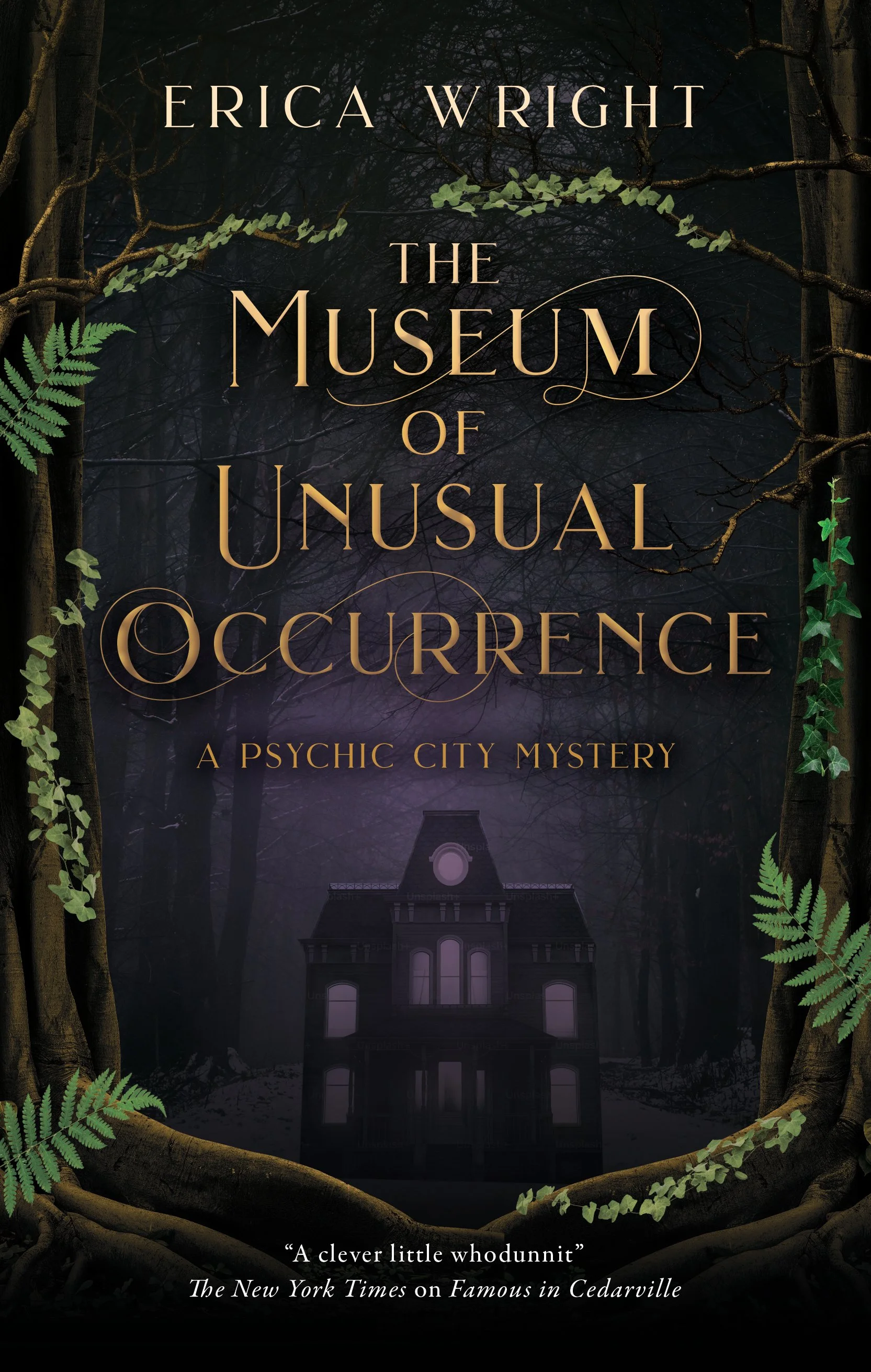
Welcome to the Museum of Unusual Occurrence―a place full of strange exhibits and even stranger murders. The first in the new Psychic City mystery series by talented author Erica Wright.
“Every small town thinks it’s special―That might be true, but this one actually is.”
Rational and cynical Aly Orlean’s life in her psychic hometown of Wyndale, Florida couldn’t be more hectic. It’s all about running her business, raising a teenage sister, sending out holiday greetings―and her new task: finding a killer.
For her Museum of Unusual Occurrence not only houses odd curiosities but now has a brand-new display: The body of Rose Dempsey, a local twenty-year-old, set up in one of the exhibits as if she has been ritually sacrificed.
With the police clueless, Aly is worried that this is a vicious warning for her and her solitary way of life. Fearing for her sister Merope’s well-being, she’s determined to find out why the killer murdered Rose and how her body was placed in Aly’s museum . . . But might the killer be someone hiding in plain sight?
Excerpt
Having never died, I don’t know for sure what death is like. Others in this town will tell you it’s a dollhouse with endless, open rooms or the inside of a tortoise shell. They’ll say that we maintain our last corporeal form and wander the nearest copse of trees. That we turn to stardust or light or water. That our souls rest or writhe. Don’t believe them. They don’t know either. That’s the way it goes around here, everybody jostling for an audience. I wanted the museum to be different. I wanted the museum to show that the truth could be interesting, too. Then a girl got killed, and the truth twisted into unrecognizable shapes. Neither dog nor wolf, it was something unworldly. And believe me, I’m the last person who wants to admit that. Still, I will recount events as accurately as I can, even when the light hits my face at unflattering angles.
It happened on a Thursday. I remember because my sister woke up that morning reciting a César Vallejo poem. Something about dying in Paris, something about a Thursday. She whispered the lines, shaking her head at the scrambled eggs I offered. Looking back, the exact words seem important, significant in some foggy way I can’t decipher. But she had a new boyfriend, and the new boyfriend liked poetry, so Merope liked poetry. I was impressed she remembered so many words. Then again, she’d always demonstrated that sort of recall, for better or for worse. Able to describe her fifth birthday in detail, including the unicorn cake and the gray color it turned when rain poured unexpectedly onto our campsite party. The exact lakeside location where she hid until her big feelings passed. That sort of thing.
Earlier I had checked one bulb after another on the antique chandelier, a frustrating hunt that was all too familiar. Every few months, the lights would flicker in warning then plunge the whole museum into darkness. If the catastrophe fell between nine and five when the place was open, visitors could be heard shrieking in fear. They’d squeeze their children’s hands a little too hard, resulting in more distress, more noise that I had to yell over.
“Try not to panic. A power outage is all. Lights’ll be back on in a snap.”
A snap meant the time it took to grab the extension ladder from our supply closet, clamber up to the top, and find the errant bulb. That morning it was barely past dawn, though, and I had the building to myself, all ten thousand square feet of it. The light fixture hung above a marble lobby, the floor’s pattern a series of diamonds meant to resemble spikes if you peered down from the second-story railing. The nineteenth-century architect, one William Gladson III, had a wicked sense of aesthetic despite his rather stuffy name. But of course, if you dug a little, that wasn’t his real name, and he wasn’t a real architect. Wyndale, Florida was filled with those kinds of stories as if the river running through its center bred frauds and cheats rather than trout, flinging them onto the banks with wild abandon.
I wanted to be a no-nonsense kind of curator who happened to curate a museum full of nonsense. Less nonsense since I took over. Gone were the lurid photographs of half-naked “mermaids,” replaced with an exhibit on spirit photography, complete with placards indicating how the various ghostly effects might be accomplished using late-nineteenth-century technology. No, I did not consider myself a cheat. I thought of myself as a woman fed up with checking ninety-eight lightbulbs only to find the one that—
Ah ha!
The chandelier sputtered to life, and I turned off my headlamp. The lobby lights came on as well, then the stairs and other levels. An electrician might have scolded me for not flipping the breaker during my repairs, but local electrician Ernest Towers had never checked ninety-eight lightbulbs while running down to the basement and back up again. Also, Ernest Towers was a cheat.
Crisis averted, I left everything up and running, shutting the door that separated the business from our living quarters. In a convoluted will, my father had left the museum to me, but the residential rooms to my mother who thought their home and the whole town was a step above “a gator-infested swamp overrun with leeches.” Mama Orlean had hightailed it over to Tampa and sent cheerful postcards to the daughters she left behind. Mama Orlean drinking a daiquiri. Mama Orlean holding a parrot. Mama Orlean with some old man I tried not to think about.
For all my complaints about my mother, she was deliberate with her words, always had been, especially what she called us. Never nicknames beyond the occasional “honey” or “sweetheart.” Always Alcyone (al·sai·uh·nee) with an emphasis on “sai.” For Merope (mee·rowp), she’d hit the “p” sometimes so that it sounded like a bubble popping. Three-year-old Merope had loved that little trick.
“Merry, you up?”
My shout was met with the stomping of combat boots. The expiration date on the eggs had passed, but I cracked a few into a bowl anyway and whisked. I was pulling our cast-iron skillet down when Merope walked into the kitchen, muttering the Vallejo lines and clutching her backpack like it was a life jacket and we were going down with the Titanic.
Buy on Amazon Kindle | Hardcover | Bookshop.org
About the Author
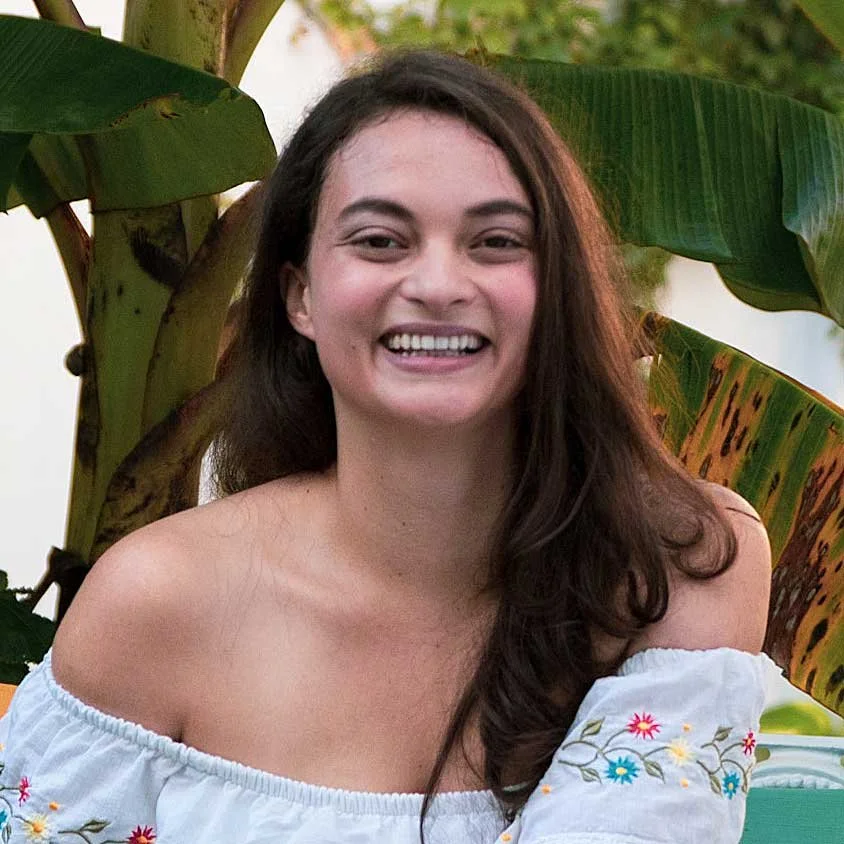
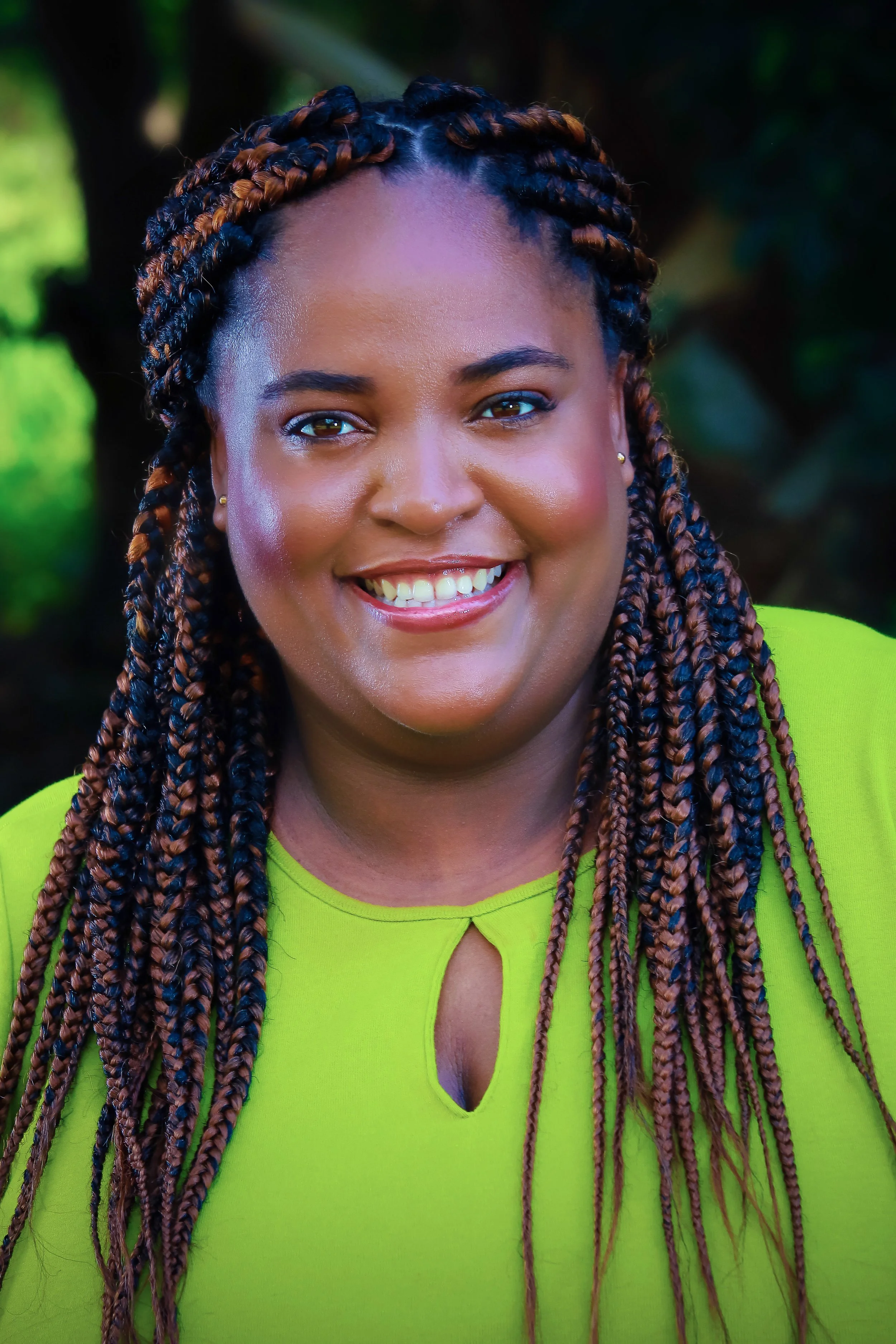
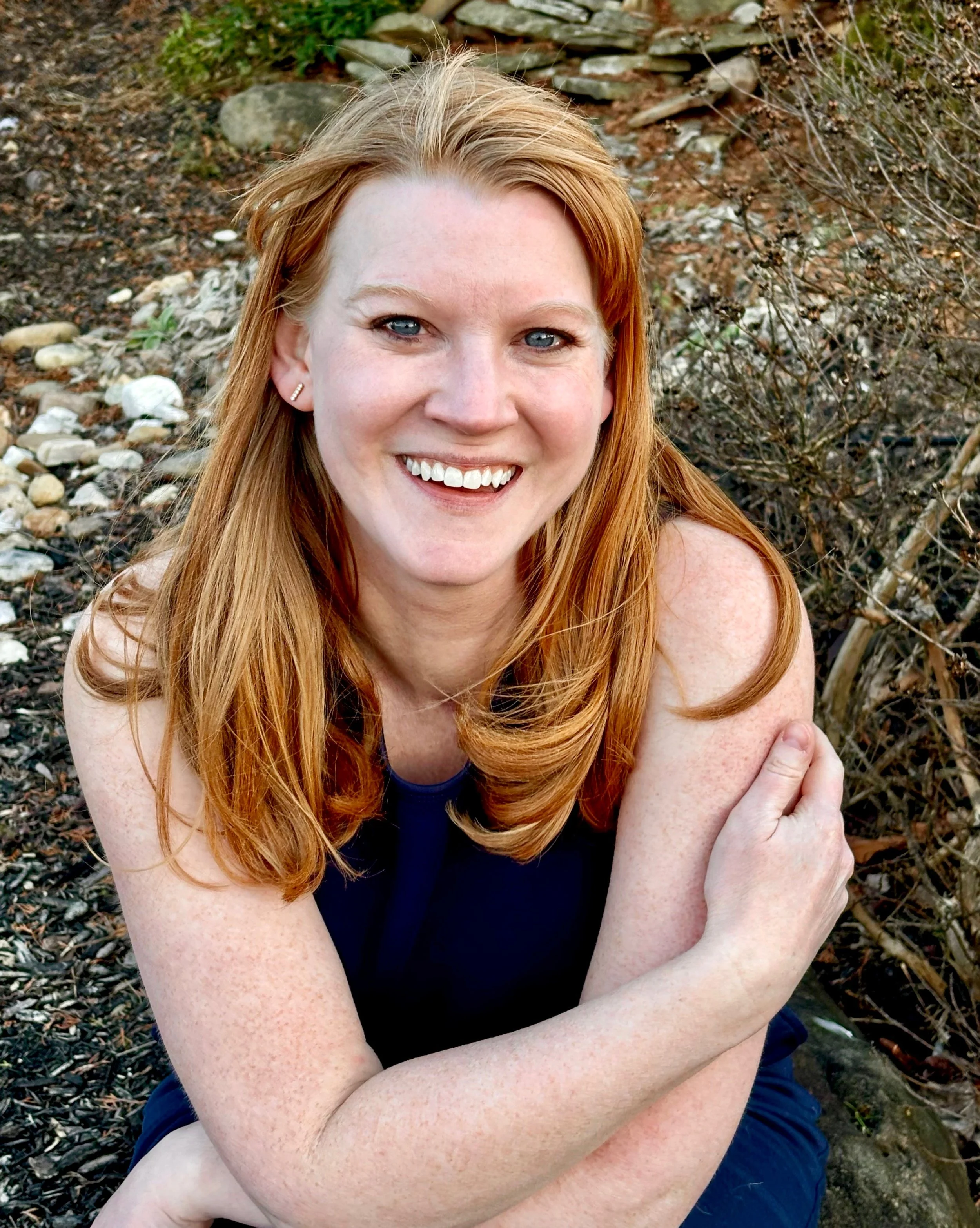
Erica Wright is the author of eight books, including the essay collection Snake and the crime novels Famous in Cedarville and Hollow Bones. For more than a decade, she was the Poetry Editor at Guernica Magazine and currently teaches at Bellevue University. She holds degrees from New York University and Columbia University. She lives in Knoxville, Tennessee with her family.