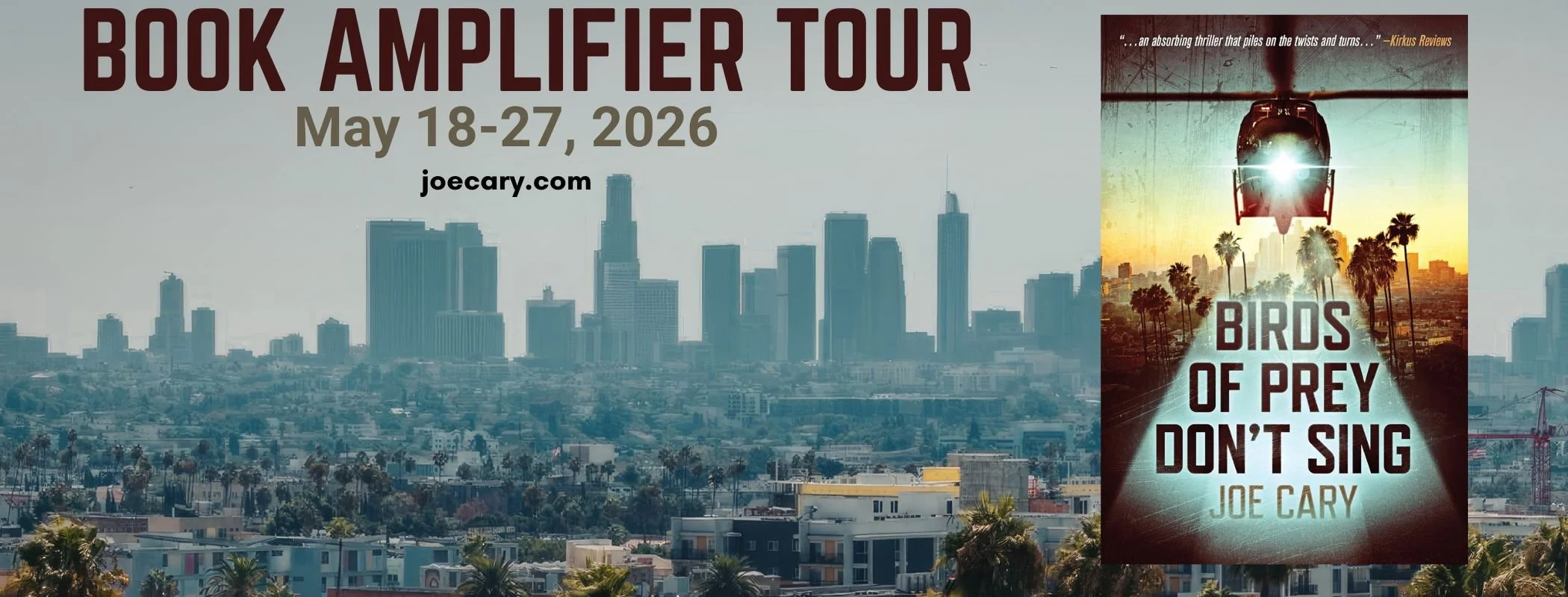
Spotlight: Birds of Prey Don't Sing by Joe Cary
/
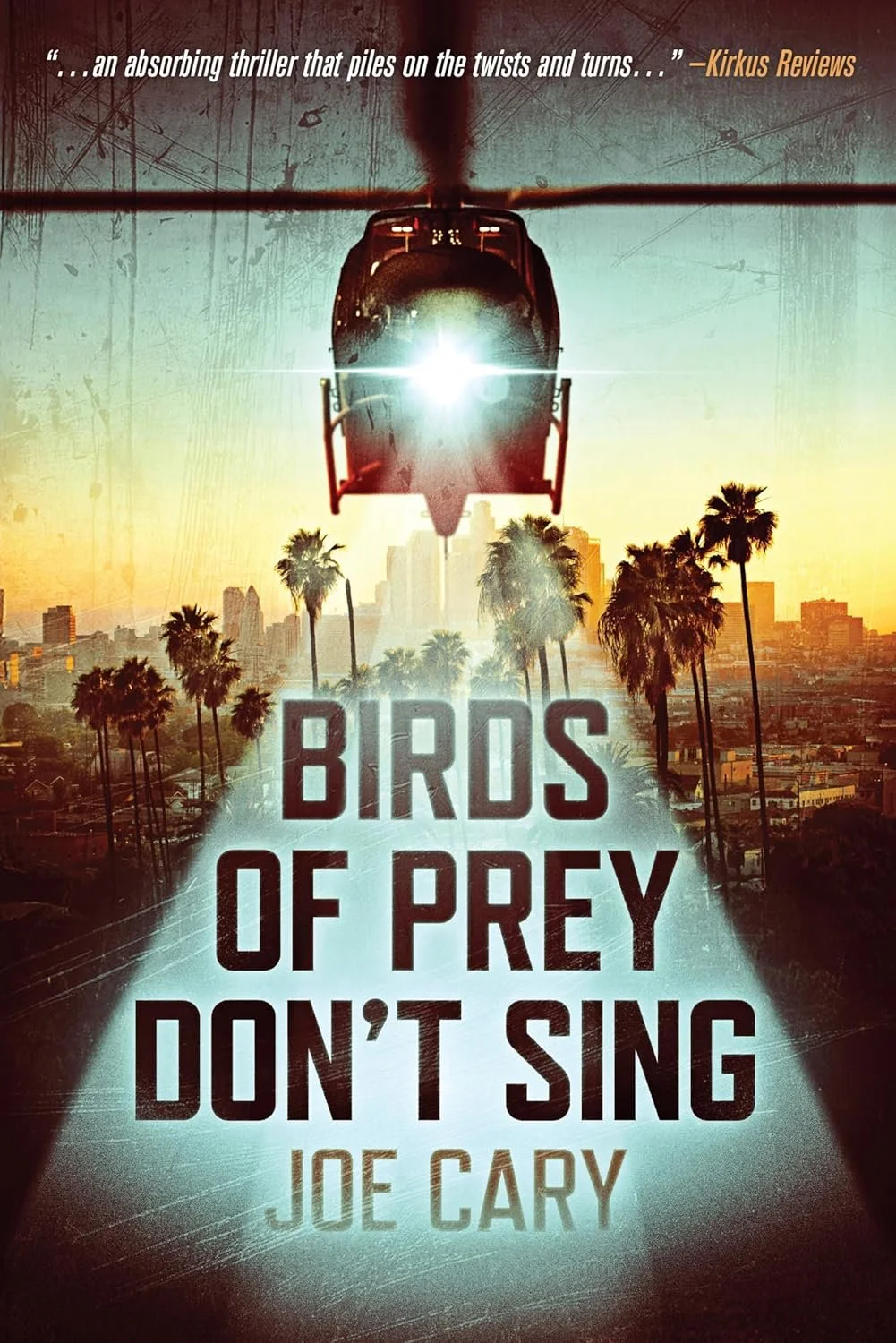
Questions of misdirection and consequence run throughout Birds of Prey Don’t Sing by Joe Cary. The story follows an assassin attempting to contain a dangerous unraveling while an investigator pushes deeper into a case that refuses to follow familiar rules.
For years, Michael Harrier has relied on a system that makes his work nearly impossible to trace. Every assignment is constructed around deception. One person dies, another takes the blame, and Harrier moves on untouched.
A contract centered on the murder of a priest is supposed to be another successful operation. Instead, the situation begins slipping out of control. Harrier is forced into unfamiliar decisions after a woman with a violent history disrupts the balance he carefully maintains. As mistakes accumulate, the possibility of exposure becomes more real than ever before.
Meanwhile, LAPD homicide sergeant Jordan Becker is trying to untangle a case where nothing stays consistent for long. Evidence points in conflicting directions, stories shift without warning, and Becker becomes convinced he is dealing with someone who understands how to stay invisible.
As both men push deeper into dangerous territory, the consequences surrounding every move grow harder to contain.
Excerpt
1. Self-righteousness
(n) a form of justification with a universal adapter
1988
The chaos quelled the urge to squeeze the trigger. A churning wall of fire and smoke consumed the horizon along the open savanna of Manovo-Gounda Saint Floris stretched before him. Thirty minutes earlier, it had looked serene, majestic even, the Africa of travel agency posters. But now Michael watched it burn. Belly down on a low ridge, he centered his eye on the scope and trained the crosshairs on the elephant charging east. Six hundred meters out. Smoke from a second fire streamed westward over her sloped forehead, hinting at the adjustment needed for wind drift. If the cross-wind swept the expanse, his targets might not hear the reports of his armor-piercing rounds. Michael breathed slowly and consciously and set his heartbeat as his metronome, as his father had taught. The distance implied six inches of error on each shot, but he expected less. Much less.
He pivoted his M21 on its bipod, keeping the elephant in the crosshairs. She was graceful in full stride and really trucking—until one of her hind legs gave out. She staggered, and a tusk struck the ground, wrenching her neck as she collapsed beside a lone doka tree. Michael winced, and his breathing went to hell. Under splinters of shade, she raised her head and curled her trunk to trumpet at the sky, then heaved and surged to her feet. Divots of rusty dirt exploded around her as she lumbered forward, trampling a new path through the tall grass.
Michael swung his rifle to the left, moving his sight picture one hundred meters west to the battered personnel carrier giving chase. The open-topped truck was World War II salvage, and it looked like it had served in every regional conflict since. Eleven men bounced and jostled on the benches behind the driver. A steadier man rode shotgun, standing in the footwell, one elbow over the windshield for support, firing AK47 bursts at the massive creature. The brush fire crept behind the truck as the men inside chased the elephant, two leopards, a rhino, and wild dogs into the trap ahead—the second fire. Michael’s gut clenched. He drew a deep breath and exhaled slowly until the rifle felt like a third arm again. The crosshairs drifted across his target, so he dialed in a parallax adjustment on the AO ring. Then he fired his first shot, cold bore. He missed the shooter, but the driver’s head snapped sideways in a red flash. The truck careened and slammed side‐ long into a dry runoff, hurling the rear passengers through the air in a barrage of arms, legs, and rifles. The shooter with the AK-47 had keeled over the windshield frame and smashed into the hood, his broken neck now so torqued that his chin was over his shoulder blade.
His second shot ruptured the front right tire of the idling truck. Six of the survivors scrambled behind the vehicle—the only cover in sight—while the other five ransacked the tall grass for their weapons. He shot calmly at the exposed ones, each time letting the blast and recoil surprise him and each time dropping his target. Michael’s goals were clear: to protect those that couldn’t protect themselves, to turn poaching into a transi‐ tion game—and, although he would never admit it, to prove something to his old man. Never in his practice had rage surfaced like this—an ally at last—directing each round into a skull or ribcage. In ninety seconds, thirteen poachers with bountiful quarries became seven dead and six sheltered human animals. Spades, his father would have called them, but Michael secretly scoffed at such tired labels. Skin color was bark at best, and ignorant justification at worst.
The six survivors behind the truck didn’t offer themselves as targets, and Michael knew better than to guess at their speculations. Clearly they couldn’t place his shots to locate him, because when those with weapons did return fire, they didn’t expose themselves. All Michael saw was the blind fear of barrels peering around the truck, each firing in a different direction. Not that their AKs could reach him at his range. And even if they were ten feet away, he was sure they wouldn’t have seen through his camouflage.
Buy on Amazon Kindle | Paperback
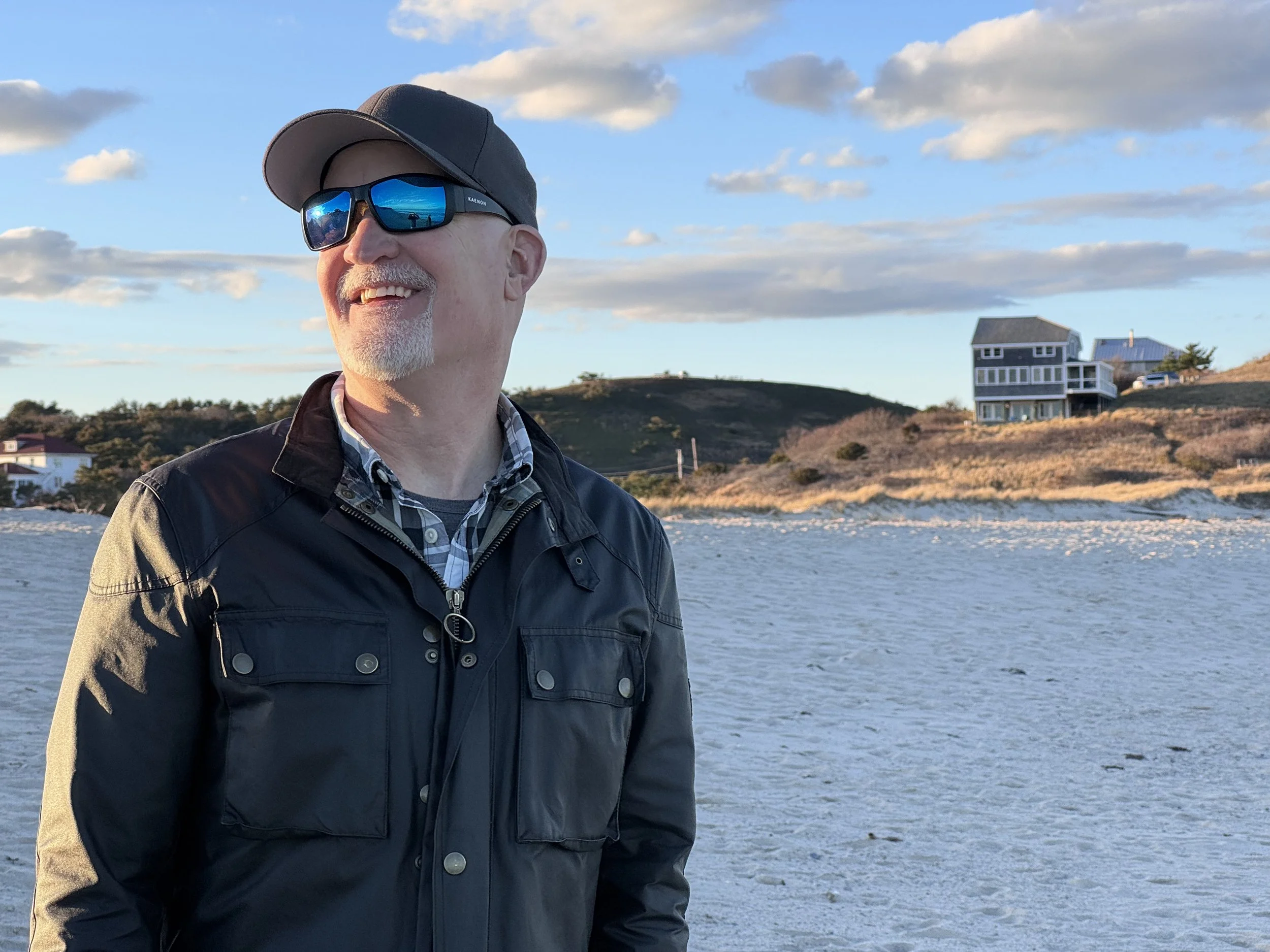
About the Author
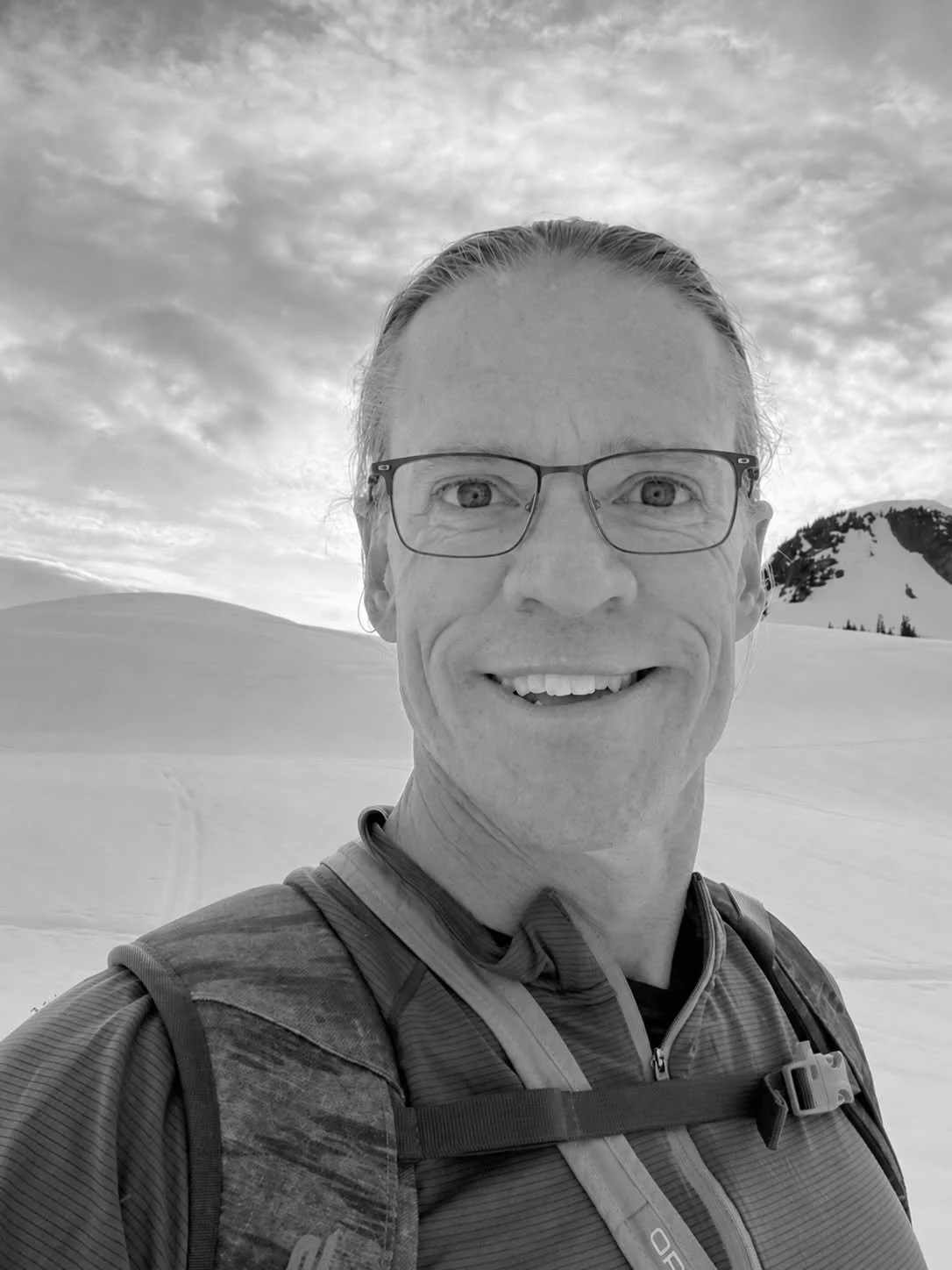
Joe Cary’s short stories have appeared in One Story, XRAY Literary Magazine, BULL, and MonkeyBicycle, and have also earned a Special Mention in the 2020 Pushcart Prize Anthology and a Best of the Net nomination. BIRDS OF PREY DON'T SING is his first novel.
A former Angeleno, Joe currently lives with his family in Philadelphia where he fights money laundering, fraud, and other financial crimes. When he isn’t writing, he enjoys coaching his daughter’s flag football team and throwing frisbees to his dog, Pepper. He has also been a volunteer adult literacy tutor in four cities.
Visit Joe at his website.