Spotlight: Day by Day: There is Always a Little Bit More by James Robertson
/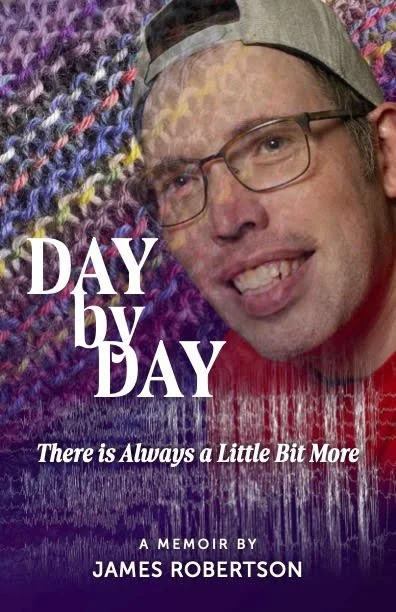
Early reviewers, family friends, and medical professionals have called James Robertson’s memoir, Day by Day: There is Always a Little Bit More everything from “gut-wrenching” to “beautiful and touching.” These comments encapsulate the more than forty years of caring for their special needs son, Graham, who is not just James and his wife, Kari’s, eldest child, but also a beloved brother, uncle, and friend, who has never been defined by his disability, a rare form of epilepsy called Lennox-Gastaut Syndrome. The story is mostly told from a father’s perspective but also includes chapters from immediate family members, and a life-long special friend who helped Graham tell his side of the story too. The raw, vulnerable, and often difficult to read intensity of this story is intentional but the author’s hope is to encourage other families struggling with the challenges of supporting a loved one with special needs—from navigating an under resourced medical system to finding much needed and often elusive programs and dwindling government funding— to reach out for support and also to know that they are not alone.
Excerpt
April 29, 1985
Graham climbed up in the dentist chair. The light overhead was adjusted slightly to meet his pearly whites. “Open wide, please, Graham,” Dr. Frank instructed his almost four-year-old patient. Dr. Frank was a man of large stature; when in his presence, you knew you were in good hands. Dr. Frank’s big hand, having just adjusted the overhead light and now holding a dental instrument, approached as gently as a summer breeze . . . then stopped. “Graham, what is wrong?” His thick Hungarian accent filled the room. Sitting to Graham’s left, I observed Graham’s hand reaching skyward as though in search of comfort. But Dr. Frank’s tone told me this was not the case. He was leaning over the chair with his hands touching Graham’s shoulders and his eyes fixed on Graham’s face for what was a mere second or two, but it felt like time had stood still.
Rising from my stool and rounding the tilted chair, I found my son in the midst of a grand mal seizure. In the moment, I had no idea what was happening. His body was stiff, lifeless, and grey. I froze. Fortunately, Dr. Frank took charge. He scooped Graham up in his arms, held him against his six-foot-plus height, and asked his receptionist to call the hospital. Both of us, him still holding Graham, sprinted down the hall to the elevator.
I hardly noticed the pouring rain soaking me as my pound- ing chest propelled me one foot in front of the other, rushing to get my car and bring it to the front door. Dr. Frank climbed into the back seat, cradling Graham in his arms. “I think his colour is getting better,” I remember him saying. I glanced in the rear- view mirror. I saw no difference. My hand leaned on the horn, but no one acknowledged my panic by moving out of the way. We didn’t have far to go, and even though I was in a panic, I watched my speed. Back in those days the emergency department at the children’s hospital had parking available immediately beside the entry, a blessing. We entered the emergency department, where Graham was handed to a waiting nurse, who quickly administered oxygen while at the same time asking Dr. Frank if he needed the same. I was naive enough to not appreciate fully what had hap- pened. Dr. Frank, however, was alarmed by the fact that one of his patients was in such a state. I didn’t even notice Dr. Frank leaving, presumably returning to his office.
My thoughts turned to Kari. I had to call her; she needed to be here. What should I tell her? How should I tell her? The phone rang and she answered. My words spilled out and the panic returned. It seemed as if only seconds later, Kari bounded through the swinging doors. We lived only a few blocks from the Isaak Walton Killam Hospital for Children, a blessing we appreciated for years to come. The IWK provides a high level of specialized care and is the only pediatric hospital in the Atlantic Provinces that provides neurology services for children. By this time Graham was coming around and responsive. The suggested diagnosis was a fainting spell; however, a neurologist was summoned and we waited for his diagnosis.
Buy on Amazon | Bookshop.org
About the Author
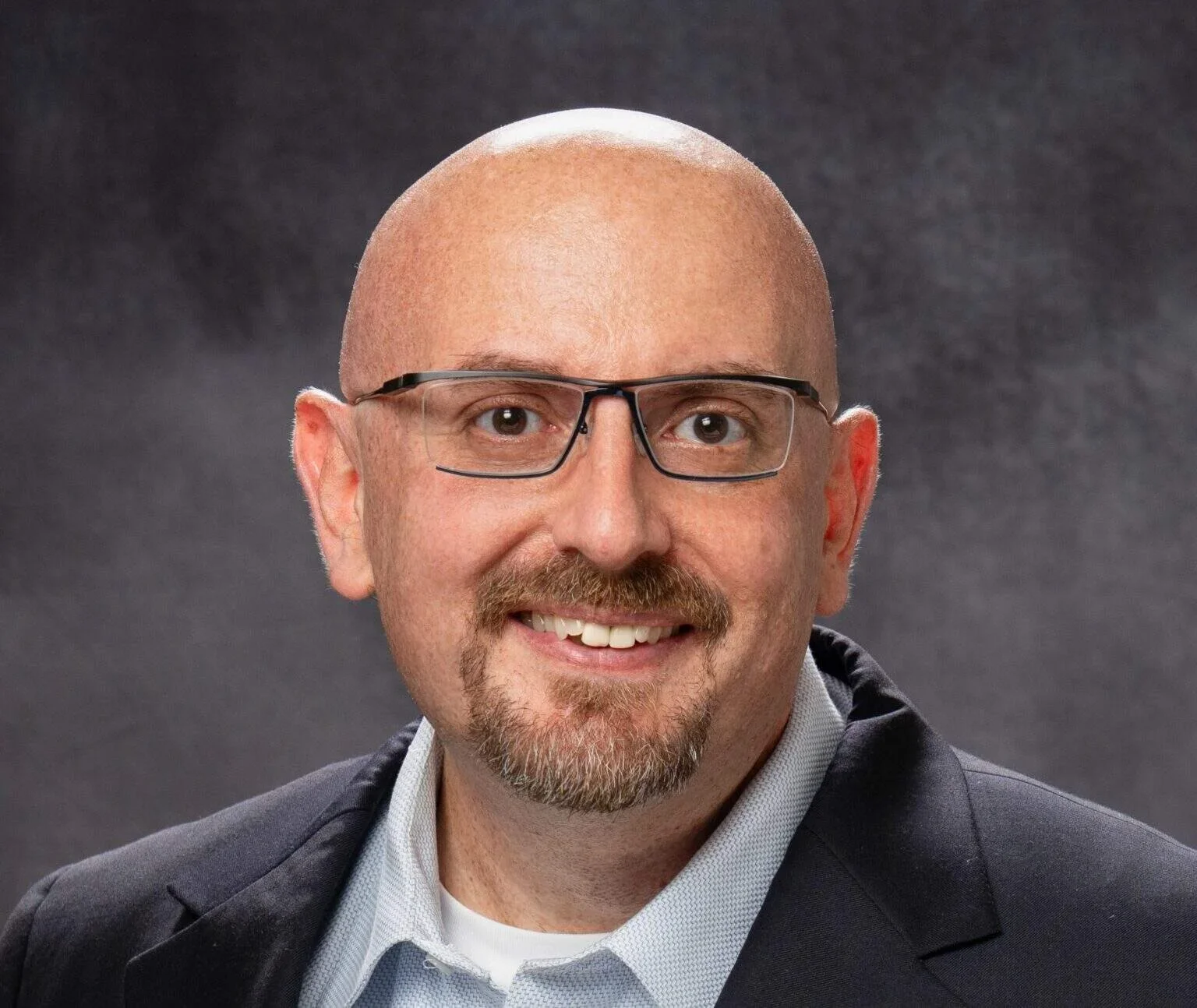
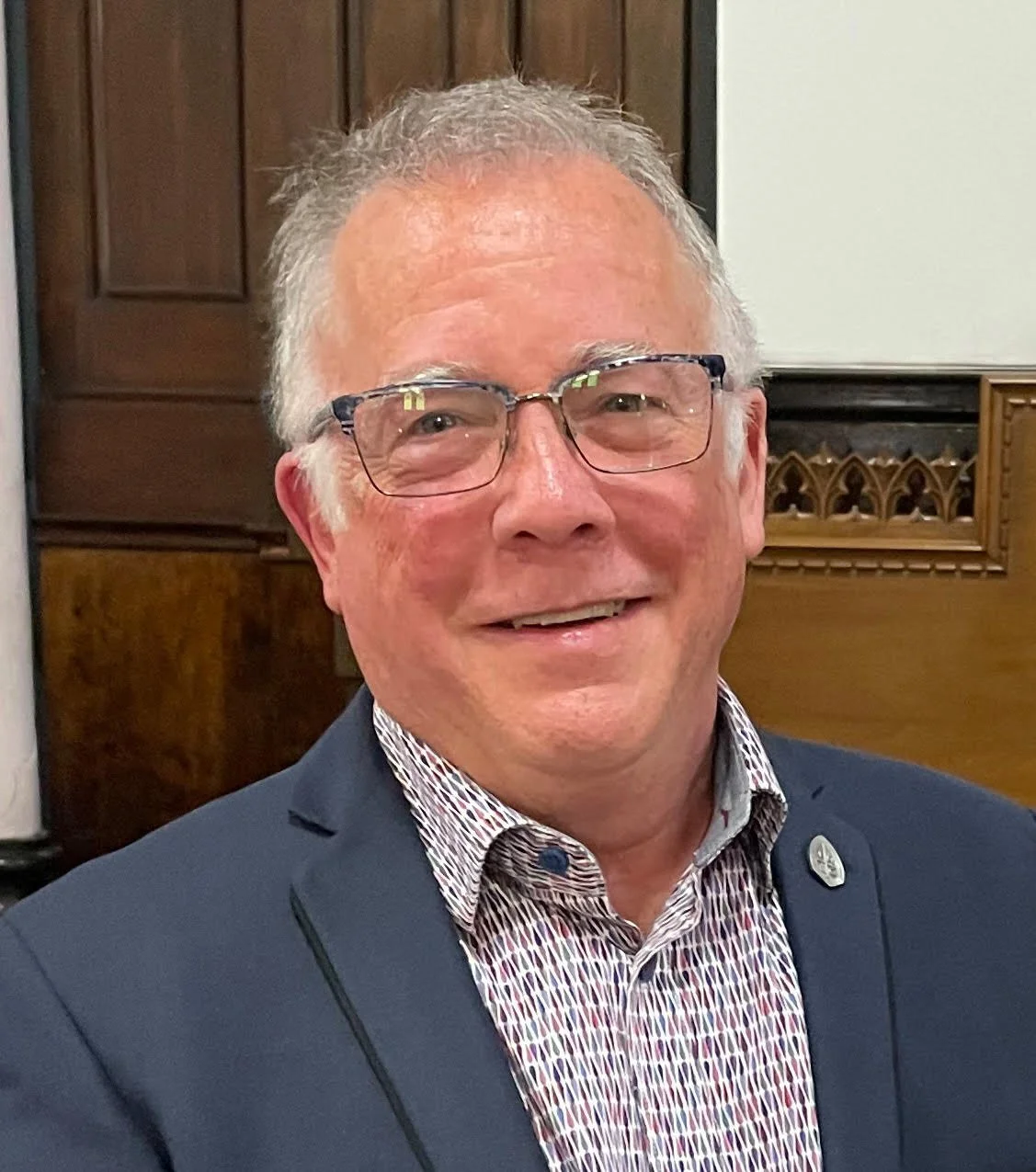
James Robertson was born into an “old Halifax family”, his ancestors having built a local hardware business in the mid-1800s—Wm. Robertson & Son Ship Chandlery (now the Maritime Museum of the Atlantic)—on the waterfront in downtown historic Halifax.
James grew up in the south end of the city and was educated in both private and public schools: Halifax Ladies College (for kindergarten), Gorsebrook School, Queen Elizabeth High School, and then Dalhousie University (BComm, 1977).
During his professional career he held roles in accounting, sales, and customer service. Throughout his life he has always been active in the community through his church (Fort Massey United, Bedford United), the Epilepsy Association of the Maritimes, Scouts Canada, Special Olympics, Club Inclusion, and the Alliance of Information and Referral Services (AIRS).
James is the recipient of the Provincial Volunteer of the Year Award; the Canada 125 Medal; and the Queen Elizabeth II Golden Jubilee Medal. He and his wife, Kari, received the Cassidy Megan Award from the Epilepsy Association of the Maritimes in 2022, and in 2025, he received the William S. Fong Volunteer Award, presented by Fort Massey United Church. He has been married for forty-seven years to Kari, and they have three children and six grandchildren.