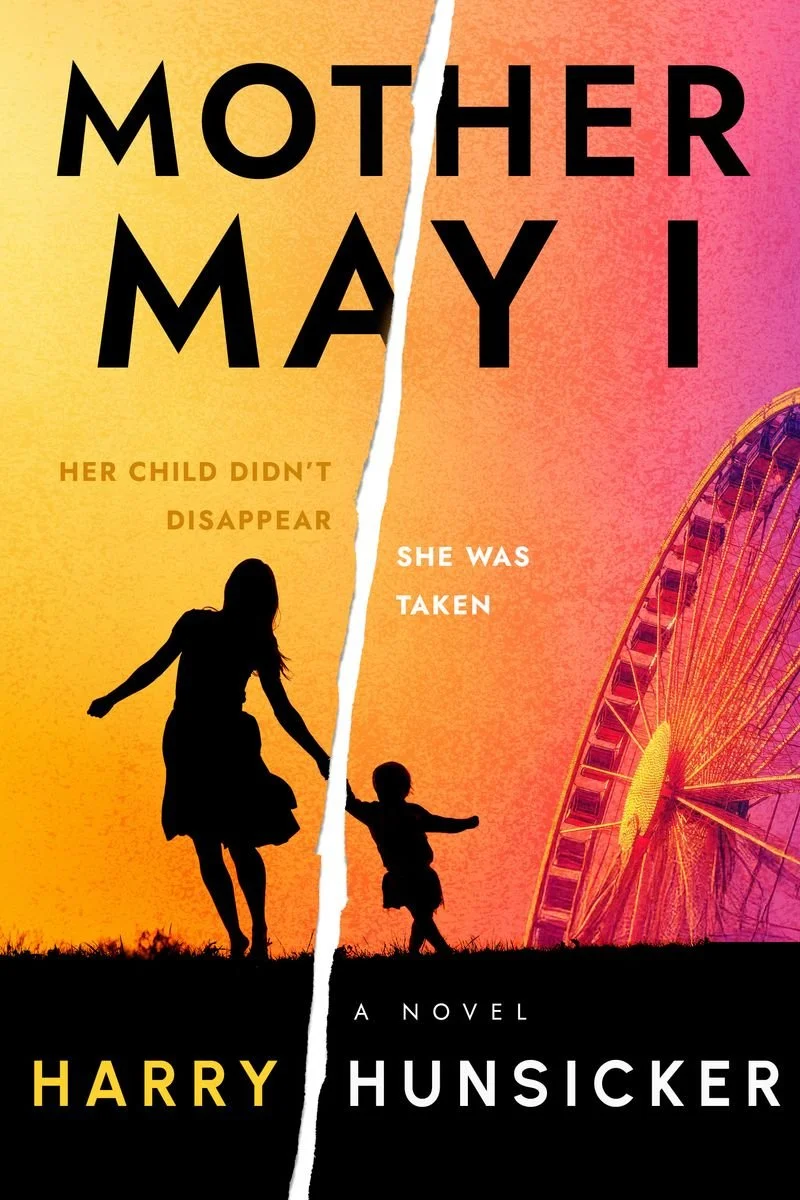
Spotlight: Mother May I by Harry Hunsicker

She lost everything. Except the will to fight. 

When former CIA operative Meg Dalton finds a shocking clue that suggests her long-missing daughter might still be alive, she's forced into a desperate, high-stakes search for the truth. Fifteen years after little Ivy vanished without a trace at a Texas fair, Meg has built a career as a covert "operator" a soldier-for-hire who takes on dangerous black ops missions for the government.

But during a botched assignment in Los Angeles, Meg encounters a woman wearing her daughter's distinctive butterfly necklace, and everything she believes unravels. As Meg defies her handlers and goes rogue to chase the lead, she's thrust into a deadly conspiracy linking global espionage, human trafficking, and her own past sins.

Hunted by both her employers and foreign agents, Meg must decide how far she's willing to go and what lines she'll cross to uncover the truth and reclaim her child. Mother May I is a gripping, emotionally charged thriller about loss, obsession, and the unbreakable bond between a mother and her daughter.

Excerpt

Fifteen Years Ago 

You’d think a mother’s intuition would count for something—a hunch, if nothing else. A vague feeling that the events unfolding that day were amiss.

But no. There was none of that. 

There was only a beautiful fall afternoon and the two of us together—my daughter, Ivy, and me. Happy in the moment. 

Same as it ever was. Us against the world. 

To say I loved her—to say only that—was a failure of words. 

All the writers who ever lived couldn’t properly express how I felt about my child. Not the ones I studied in Mrs. Novotny’s AP English class, nor those I’d never even heard of. 

Ivy clutched my hand. She had just turned three, and this was her first time at the fair. 

”It’s so loud, Mommy.” She looked up at me and smiled, squeezing my fingers.

I grinned back at her, remembering my first time at the fair. I was about her age, walking beside my father. The Dashing lights, the noise, the smells—so much happening all at once. 

I held tightly to her hand as we wove through the throngs of people. Fe passed the petting Roo, the ring toss, the shooting gallery—carnies calling out to us as we walked by their booths. 

I was eighteen, and I’d been coming to this fair my whole life. It was the biggest thing to happen in our little town—an event that drew people from all over the county and beyond, even from as far as Austin and San Antonio. 

The crowd thickened as we neared the tent where the polka band played. People jostled us, so I hoisted Ivy onto my hip. 

She looped an arm around my neck. Her skin smelled like shampoo and fresh milk. The necklace she always wore—a tiny silver butterfly with ruby red eyes—glinted in the sun. 

”Don’t let me go, Mommy.” 

”I won’t, baby.”  I kissed her forehead. ”You and me. Always-always.”

 She pressed her face into my neck. ”Always-always, Mommy.” 

The Ferris wheel loomed ahead, not far beyond the tent. That’s where we were headed—to meet Ivy’s father, Rusty. 

He and I weren’t together. Or not together anymore, but it’s not like we were ever a real couple. Sometimes I wished we had been. Other times, not so much. Me and Ivy—we did pretty well on our own.

 ”Daddy’s by the rides,” I said. ”We’re almost there.”

I was a senior in high school. Rusty had just turned nineteen, graduated last May. He’d been first-string for the football team all four years—running back. There had been talk of college scholarships, but he’d hurt his knee senior year and started hanging out with his uncle, a pot dealer. Now, he worked at the feed store, wrangling sacks of deer corn and fertilizer bags.

”Can we go on the ferris wheel, Mommy?” 

 ”We sure can,” I said. ”Just as soon as we find your dad.”

 That is, if he brought money, I thought. 

Ivy and I lived with my grandmother. Her Social Security had run out this month before I could pay the electric bill at the trailer, so cash was tight. 

Two men drinking beer brushed past on their way to the tent, nearly bumping into us. 

I hugged Ivy close. We should have come earlier. Too many drunks later in the day. 

Buy on Amazon | Bookshop.org

About the Author

Harry Hunsicker is the best-selling author of ten crime thrillers and numerous short stories, including The Life and Death of Rose Doucette, shortlisted for a 2025 ITW Thriller Award, and Still River, his debut, which was nominated for a Shamus Award. Hunsicker splits his time between Dallas, Texas and Santa Fe, New Mexico.
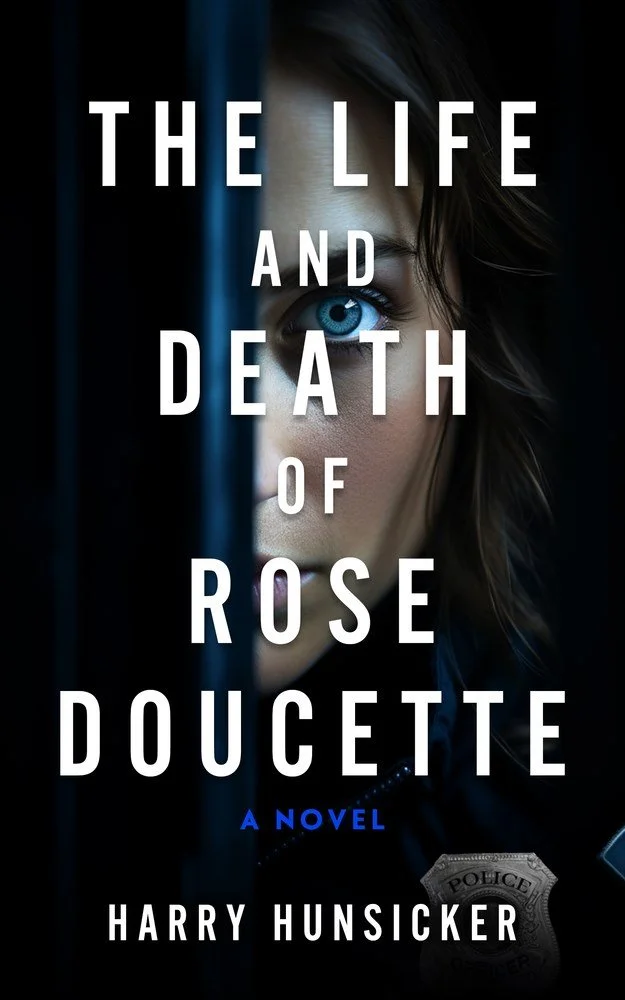
Spotlight: The Life and Death of Rose Doucette by Harry Hunsicker

Dallas PI Dylan Fisher thought he was done with his ex-wife—but now he’s solving her murder

Dallas private investigator Dylan Fisher hasn’t seen his ex-wife, Rose, in three years—which is why he’s surprised when she asks him to meet her at a hotel. Rose Doucette is a homicide detective, and she wants Dylan’s help with a murder investigation that she’s been asked to step back from but can’t seem to let go.

They review the details of the case and part ways—but as Rose is leaving the parking lot, Dylan sees a suspicious car begin to follow her. Feeling uneasy, he tails the car and tries to warn Rose, but he’s too late—the driver of the car shoots her, killing her instantly, before speeding away.

The police are determined to pin the murder on Dylan, so he’s left with no choice but to find the killer himself. Teaming up with Rose’s widower, a defense attorney named Tito, the pair dive into Rose’s past to figure out who could’ve wanted to kill the woman they both loved—and what they were trying to hide.

Excerpt

We hadn’t seen each other in three years. 

A long time, but not long enough to forgive. 

She’d reached out to me with the request to meet and suggested the location, a bar in a hotel where rooms started at seven hundred a night. Not a place either of us would have ever considered staying. 

An odd choice, but my ex-wife was an odd woman. Or maybe I was the odd one, and I just didn’t realize it. Introspection was never my strong suit. 

The bar smelled of vanilla-scented candles and leather. It was dimly lit, decorated with oil paintings of fox-hunting aristocrats and Rubenesque women lounging about naked. An English gentleman’s club transported to the plains of North Texas. 

A waiter led me to her table in the corner. 

She smiled as I approached. “Hello, Dylan.” 

“Rose.” 

Silence ensued, which I’d say was awkward but maybe, like the oddness, I was wrong about that too. I remained standing, trying not to stare too long into those eyes of hers. They were the color of mahogany and had always been a weakness of mine. 

After a moment, she pointed to an empty chair. “Would you like to join me? It’s been a while, hasn’t it?”

“A little over a thousand days, but who’s counting,” I said, sitting down and sliding the chair so that my back was to the wall. 

Old habits for both of us. Rose was in a similar position against the wall perpendicular to mine. 

The waiter took our order. Club soda for me, a martini for her. 

When he left, I said, “Since when do you drink martinis?” 

Back when we were together, she’d preferred merlot, and then only a glass or two a week. Her stepfather had been an alcoholic prone to violence, and that tended to stay with a person. 

“I’d like to hire you,” she said, ignoring my question. Her eyes fixed on mine as if she was trying to gauge my reaction. 

“So much for the small talk, huh?” 

I had left the police department and gone private around the time we split. My workload was typical for a cop turned PI— missing persons, asset retrieval, insurance cases. 

Rose, however, had stayed on the force, and I couldn’t imagine her ever leaving. 

“And what’s with meeting here?” I asked. “You working vice these days?” 

Despite being a luxury hotel, the lodging of choice for presidents and pop stars, the bar had a reputation as a good place to hook up with a high-end call girl. When I’d been on the force—a patrol officer in those days—a county commissioner had died from a heart attack while in the missionary position with one in a room upstairs.

Last I heard, Rose was still a homicide detective with the Dallas police department, and a very good one at that. She taught classes at Quantico, consulted with other departments on cases they couldn’t solve, and had a clearance rate in the nineties. Vice would be a big step down, and Sergeant Rose Doucette never went backwards for anything or anyone. 

“Still on the murder beat.” She paused. “So how have you been? You look good.” 

“I’m upright. Beats the alternative.” I debated what to say next. 

“You look . . . good too.” 

That last part sounded stiff, and I hoped she didn’t notice. 

The truth was she looked anything but good. Her skin, normally olive, was sallow; dark circles cupped her eyes. She’d always skewed petite, five-four or so, one ten-ish. Now the navy blazer she wore draped her shoulders like an oversized blanket, her cheeks hollow and sunken. 

She was forty-two, a year younger than me, but she seemed used up, like there wasn’t much gas left in the tank. 

“I look like roadkill,” she said with a chuckle. “But thanks for saying otherwise.” 

The waiter brought our drinks. While he fussed with cocktail napkins and a bowl of salted nuts, I watched Rose scan the room, eyes darting from one corner to the next, clearly uneasy. It was a little before lunch. Other than a pair of men at the bar wearing Dockers and golf shirts—business traveler chic—we were the only customers present. 

The waiter departed. 

“To old friends.” She raised her glass, took a drink. 

I tilted my club soda in her direction. “Interesting choice of words. Old friends.” 

“Does that mean there’s no chance you’d ever think of me as a friend?” she asked. “You still hate me?”

I didn’t reply because I wasn’t sure. The line between hate and something else was as thin as a strand of hair. 

The two guys at the bar left. The room felt lonely and cold. 

“Thanks for meeting with me,” she said. “Guess I’m the last person on earth you want to see. For what it’s worth, you’re still the most standup guy I know.” 

I wondered if I’d made a mistake coming here. “Tell me why you need a PI.” 

Occasionally, an old colleague from the force would reach out for assistance with a matter that required someone with the skills of a police officer, but who wasn’t burdened by the regulations associated with a badge. 

I was usually happy to oblige, especially if it meant helping someone who was getting a raw deal from the system. I liked to think of myself as a GPS for justice, a way to get that particular concept back on the right road when it got lost. 

“I’m in a bind, Dylan. I need help.” She took another drink. “From someone I trust.” 

I looked at her more closely. 

In addition to the fatigue, there was something else wrong that I couldn’t identify, an air about her that clouded the table like cigarette smoke. The way she held her arms, the angle of her head. The tendons along her jaw line tight against her skin. 

With a start, I recognized what it was, an emotion I’d never seen from her before.

Fear. 

Rose Doucette, a twenty-year veteran of the Dallas police department, was afraid.

Buy on Amazon Kindle | Paperback | Bookshop.org

About the Author

Harry Hunsicker is the best-selling author of The Life and Death of Rose Doucette, along with numerous crime novels and short stories. His novels include Shadow Boys, The Devil’s Country, The Contractors, and the Shamus Award-nominated Still River, among others. Hunsicker is a fourth-generation native of Dallas, Texas, where he currently resides with his wife, Alison.